

Note: This article contains affiliate links. If you click on these links and make a purchase, I may earn a small commission at no extra cost to you. This helps support my research and content. Read my full affiliate disclosure here.
If your 2004-2015 Nissan Titan is showing rough idle, poor fuel economy, or inconsistent throttle response, the mass air flow sensor is often a likely culprit. Choosing the right replacement sensor matters because the Titan depends on accurate intake airflow readings to set fuel trim and ignition timing. A poor fit or marginal accuracy can leave you chasing intermittent drivability issues.This guide covers a short list of the top MAF sensor options for the 2004-2015 Nissan Titan, selected for correct fitment, reliable airflow measurement, and robust construction. We evaluate each candidate on accuracy, durability, and ease of installation so you can choose the sensor that best restores proper engine performance. Read on for practical guidance and troubleshooting steps before you buy.
Looking for other parts? See all Nissan Titan parts & accessories.
Top Picks at a Glance
| Best Overall The best all-around choice for most situations | LLNSEAUTO Mass Air Flow Sensor 22680-7S000 |  |
| Best Quality Built to a higher standard if you want something more solid | Delphi AF10141 Mass Air Flow Sensor |  |
| Best Value The sweet spot between price and what you get | C-Tzu Mass Air Flow Sensor 22680-7S000 Replacement |  |
| Best Budget The cheapest option that still gets the job done reliably | Humoony Mass Air Flow Sensor 22680-CA000 Compatible with Select Nissan, Infiniti, Suzuki |  |
| Most Popular A crowd favorite that many people choose with confidence | A-Premium Mass Air Flow Sensor (5-Pin) — Model 226807S00A |  |
| Best Seller A high-volume bestseller chosen again and again | RLP Mass Air Flow (MAF) Sensor 22680-7S000 Compatible with Nissan/Infiniti Vehicles |  |
1. LLNSEAUTO Mass Air Flow Sensor 22680-7S000

| Measurement Accuracy | +/- 2% |
|---|---|
| Mounting Type | Flange Mount |
| Output Type | Analog |
| Response Time | 15 milliseconds |
This LLNSEAUTO mass air flow (MAF) sensor is a direct replacement-style unit that measures the mass of intake air and sends an analog signal to the engine control unit so the fuel delivery can be adjusted. It is built with a metal body, a flange mount, and a listed response time of 15 milliseconds with measurement accuracy within about +/-2 percent. Installers should clean the air box and replace the air filter before fitting to avoid contamination. In practice this sensor works as a straightforward swap for vehicles in the specified fitment range and benefits drivers by restoring correct air-fuel metering, which can reduce rough idle, stalling, and poor fuel economy caused by a failing MAF. The analog output and simple mounting make it suitable for DIY replacement or shop installation, but buyers should verify the exact engine and year compatibility for their Titan and expect basic OE-level performance rather than performance tuning gains.
Best for: A balanced buyer who wants a reliable, factory-style replacement MAF to restore proper engine drivability and fuel economy on a 2004–2015 Nissan Titan without chasing performance upgrades.
Less Ideal for: Drivers seeking performance-tuned airflow gains or a high-end aftermarket MAF with digital outputs and calibration options should look elsewhere.
- Built with metal housing for durability
- Fast response time of 15 milliseconds for responsive ECU readings
- Measurement accuracy specified at about +/-2%
- Flange mount and analog output for simple, direct replacement fitment
- Not a performance upgrade; intended as a factory-style replacement
- Compatibility must be confirmed against specific year and engine variants before purchase
Verdict: Choose this sensor if you want a durable, factory-style replacement that restores correct air measurement and drivability for a 2004–2015 Nissan Titan.
2. Delphi AF10141 Mass Air Flow Sensor

| Measurement Accuracy | ±3% |
|---|---|
| Mounting Type | Flange Mount |
| Output Type | Digital |
| Response Time | 15 milliseconds |
The Delphi AF10141 is a direct-replacement mass air flow (MAF) sensor that supplies the engine control module with fast, accurate digital airflow data to help restore correct air-fuel metering. It uses multiple sensing elements and heated probe technology for stable readings across a wide temperature range and claims a response time around 15 milliseconds, which helps the ECU react quickly to load changes. Typical use is swap-in replacement during diagnostics for rough idle, poor fuel economy, or throttle hesitation; installation is straightforward for technicians and experienced DIYers when the inlet duct and connector match. Practical benefits include improved drivability and fuel control after a failing MAF, plus Delphi’s OE-focused testing and calibration to reduce the chance of drivability callbacks. Limitations are that fitment must match the vehicle application exactly and this unit replaces the sensor probe assembly rather than offering vehicle-specific performance tuning; any performance gains are restorative rather than increasing peak power.
Best for: Drivers focused on restoring precise air-fuel control and throttle response on a performance-oriented truck who prioritize accurate airflow readings and quick ECU response over aftermarket power mods.
Less Ideal for: Buyers looking for parts that increase airflow or add bolt-on horsepower should consider intake or tuning upgrades instead, as this sensor is intended as a factory-quality replacement.
- Fast response time (~15 ms) for quick ECU feedback under changing load conditions
- Multiple sensing elements and heated probe design for stable readings in varied temperatures
- Factory-level calibration and testing aimed at matching OEM signal characteristics
- Direct-replacement form factor simplifies installation and repair
- Not a performance-tuning part; it restores factory airflow accuracy rather than increasing airflow or power
Verdict: Choose this Delphi MAF if you want a factory-quality replacement that restores precise, fast airflow measurement to keep a performance-oriented Nissan Titan running cleanly and responsively.
3. C-Tzu Mass Air Flow Sensor 22680-7S000 Replacement

| Maximum Supply Voltage | 12 Volts (DC) |
|---|---|
| Measurement Accuracy | Comparable to OEM specifications |
| Measuring Range | 0-20000 kg/h |
| Mounting Type | Flange Mount |
This C-Tzu mass air flow sensor is a direct-replacement unit intended to restore accurate airflow readings for vehicles that use part number 22680-7S000 and compatible equivalents. It mounts in place of the factory sensor and supplies a standard electrical output so the engine control module can correctly adjust fuel delivery and idle. Notable features include a flange-mount design, claimed measurement accuracy comparable to factory specs, and construction using metal, ceramic, and polymer components. In practice this means it can cure issues like rough idle, hesitation, or reduced fuel economy when the original sensor has failed. Installation is straightforward for anyone comfortable with basic under-hood work and the sensor ships with the expected connector interface. Limitations are typical of aftermarket MAFs: fit and long-term durability can vary between units, and proper operation depends on correct vehicle match and clean intake plumbing. The product carries a one-year warranty and replaces multiple OEM part numbers, which helps simplify sourcing for repairs.
Best for: Buyers who want a cost-effective, practical repair part to restore proper engine airflow and fuel control without unnecessary extras, and who prioritize straightforward fitment and replacement of a failed sensor.
Less Ideal for: Shoppers seeking a lifetime performance upgrade or a sensor engineered for motorsport tuning should consider specialty or OEM-upgrade options instead.
- Direct-replacement design that matches common OEM part numbers for easy fitment
- Manufacturer states measurement accuracy comparable to factory specifications
- Flange-mount form and standard electrical output for straightforward installation
- Constructed from metal, ceramic, and polymer materials for expected durability
- Aftermarket units can vary in long-term reliability compared with factory parts
- Requires confirming exact vehicle compatibility to ensure proper fit and function
Verdict: A practical, direct-fit replacement MAF that restores factory-like airflow measurement for routine repairs on supported Nissan Titans.
4. Humoony Mass Air Flow Sensor 22680-CA000 Compatible with Select Nissan, Infiniti, Suzuki

| Mounting Type | Flange Mount |
|---|---|
| Output Type | Analog |
| Included Components | 1* Mass Air Flow Sensor |
| Model | 22680-CA000 |
This Humoony mass air flow sensor replaces factory-style MAF units for a wide range of Nissan, Infiniti, and Suzuki applications listed in the fitment. It reads the volume, temperature, and density of incoming air and sends that information to the engine control unit so fuel delivery and ignition timing remain correct. Typical use is as a budget replacement when a vehicle shows symptoms like rough idle, poor fuel economy, or a check engine light tied to airflow readings. The sensor uses a flange mount and an analog output to match the original signal style, and the listing includes many OEM replacement part numbers for cross-reference. Practical benefits are straightforward: it restores proper air measurement without the cost of a dealer part and comes with a one-year warranty. Limitations to consider are modest brand recognition and mixed user feedback on long-term durability compared with higher-end aftermarket or factory units, so buyers who need a long-term, high-mileage solution may want to consider higher-tier options.
Best for: Owners looking for an affordable, drop-in replacement to restore correct air metering and resolve airflow-related drivability or fuel-economy issues without paying dealer prices.
Less Ideal for: Those seeking a premium, long-life performance or high-mileage rebuild solution should consider OEM or higher-end aftermarket sensors instead.
- Direct-replacement fitment listed for many Nissan, Infiniti, and Suzuki models
- Measures air mass, temperature, and density to provide the ECU with required airflow data
- Flange mount and analog output match factory signal type
- Includes a one-year warranty
- Brand is lesser known and some reviews indicate variable long-term reliability
Verdict: A cost-conscious replacement MAF that restores proper air measurement for affected Nissan Titan-era engines without the premium price of dealer parts.
5. A-Premium Mass Air Flow Sensor (5-Pin) — Model 226807S00A

| Terminal Quantity | 5 |
|---|---|
| Number of Bolt Holes | 2 |
| Mounting Type | Bolt-on |
| Material | PBT+GF30 & Aluminum Alloy |
| Maximum Supply Voltage | 17 Volts |
This A-Premium MAF sensor measures intake air flow and sends that data to the engine computer so fuel delivery and idle control remain accurate. It installs in the factory MAF location and uses a 5-pin connector and two-bolt flange mounting, so it is intended as a direct replacement for vehicles that match the listed reference numbers. The sensor advertises high measurement accuracy (±2%) and a measuring range up to 560 kg/h, which in practice helps restore proper air/fuel balance, reduce rough idle, and clear airflow-related trouble codes when the original sensor fails. Construction uses PBT+glass-fiber body with aluminum alloy components for durability. Limitations include reliance on correct vehicle fitment and proper diagnostics before replacement since MAF-related drivability issues can have other causes, and the part does not include a housing or additional installation hardware. For buyers focused on dependable, budget-friendly replacement airflow sensing, this unit provides a practical OEM-style option when matched to the correct model and engine application.
Best for: Buyers who want a cost-conscious, factory-style replacement MAF that restores proper air/fuel metering on compatible Nissan or Infiniti engines and who prioritize documented compatibility and peer-reviewed reliability.
Less Ideal for: Anyone who has not confirmed the MAF as the root cause of their issue or who needs a sensor with integrated housing or custom calibration for modified engines.
- Direct-replacement design with 5-pin connector and two-bolt flange for straightforward swap-in
- Advertised high measurement accuracy (±2%) and wide measuring range to cover typical engine airflow demands
- PBT+GF30 body and aluminum alloy parts aimed at corrosion resistance and durability
- Covers many Nissan and Infiniti reference numbers for broad compatibility within the listed vehicles
- Does not include housing or extra mounting hardware so additional parts may be needed for some installs
- Fitment must be confirmed by VIN or trouble-code scan because wrong MAF can create new faults
Verdict: A budget-friendly, factory-style 5-pin replacement MAF that restores accurate airflow readings for properly matched Nissan and Infiniti engines.
6. RLP Mass Air Flow (MAF) Sensor 22680-7S000 Compatible with Nissan/Infiniti Vehicles
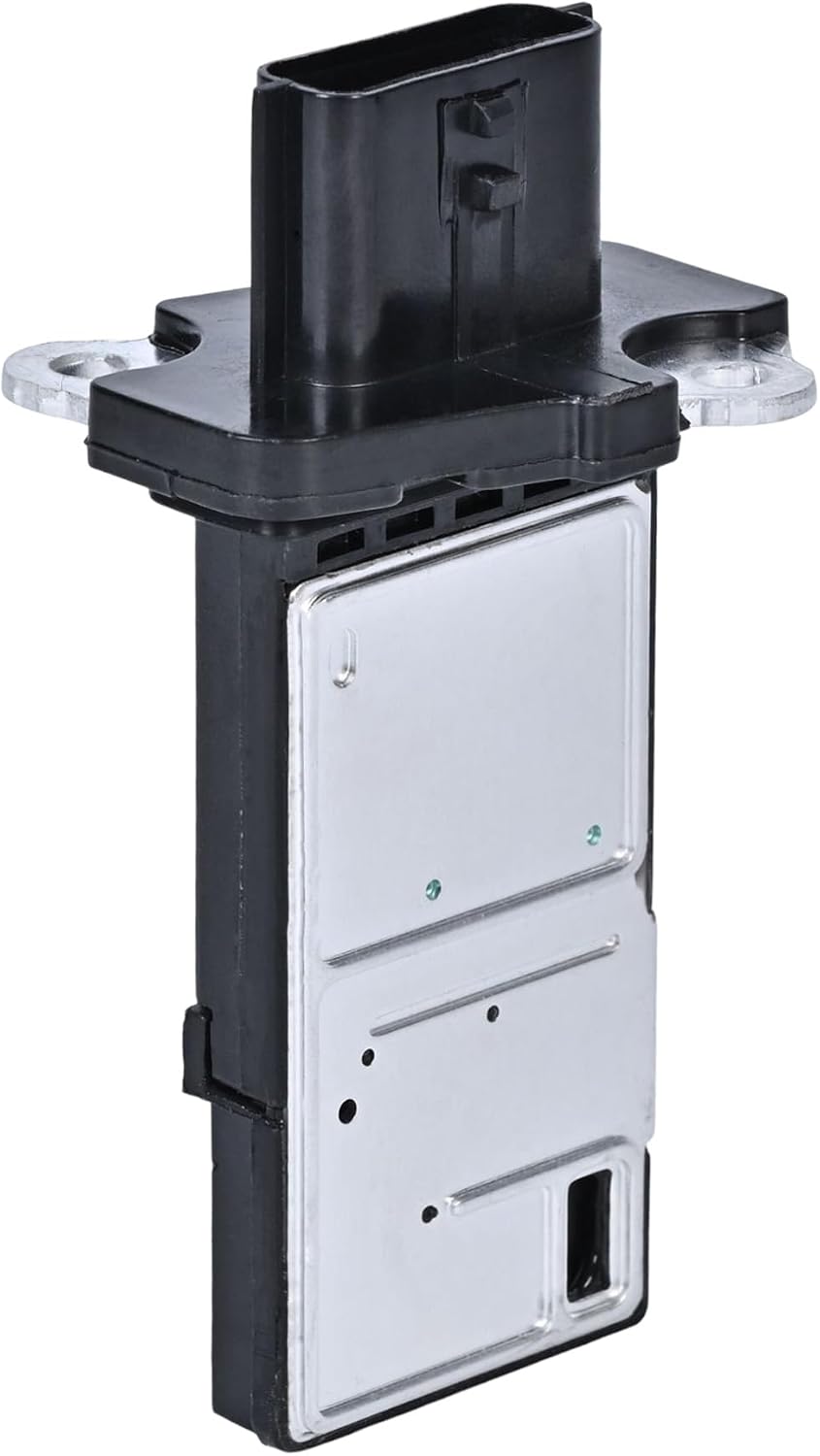
| Maximum Supply Voltage | 12 Volts |
|---|---|
| Measurement Accuracy | ±1% |
| Mounting Type | Flange Mount |
| Upper Temperature Rating | 120 Degrees Celsius |
This RLP mass air flow sensor is a replacement airflow meter designed to fit a range of Nissan and Infiniti engines and deliver measured airflow data to the vehicle computer. Installed in the intake tract near the air box, it replaces failing or out-of-spec sensors to restore correct air/fuel calculations, idle stability, and throttle response. The unit claims ±1% measurement accuracy, flange mounting for straightforward bolt-in fit, and stainless steel construction for corrosion resistance. Practical benefits include compatibility with many model years used in Titan lineups and a compact, OE-style form that makes swapping the sensor simple for anyone comfortable with basic engine-bay work. Limitations are that fitment must be confirmed against the vehicle parts list and that some buyers prefer an OEM-branded sensor for absolute factory match; diagnostic tools may still be needed to clear stored fault codes after installation. The product comes with a 12-month warranty and is sold as a single sensor unit.
Best for: Buyers who want a straightforward replacement MAF that restores proper engine air measurement with minimal fuss and who prioritize reliable, tested fitment over brand prestige.
Less Ideal for: Those seeking a factory-branded OEM part or professional tuners who need a performance-calibrated airflow sensor for modifications.
- Direct-replacement design intended for many Nissan and Infiniti applications
- Reported ±1% measurement accuracy for precise airflow readings
- Flange mount and OE-style form make physical installation simple
- Stainless steel components for improved durability
- Includes one sensor and backed by a 12-month warranty
- Not branded as factory OEM which some buyers prefer
- Requires verification of exact fitment and may need ECU code clearing after install
Verdict: A practical, accurately specified replacement MAF sensor aimed at restoring correct air measurement on compatible Nissan/Infiniti engines with easy bolt-in installation.
Choosing the Right 2004-2015 Nissan Titan Mass Air Flow Sensor: Key Factors to Consider
Fitment and Electrical Compatibility
Correct physical fit and electrical compatibility are the first priorities because an ill-fitting sensor can cause vacuum leaks or connector issues that trigger fault codes. For the 2004-2015 Nissan Titan, the sensor must match the factory mounting pattern and plug into the original harness without splicing.
Electrical compatibility means the sensor's signal type and voltage range must be within the specifications expected by the Titan's engine control unit. Mismatched signal output can produce incorrect air mass readings and unstable idle or drivability problems. Double-check connector shape, pin count, and wiring colors where possible to avoid installation pitfalls.
Sensor Accuracy and Response Time
Accuracy affects how precisely the ECU calculates fuel delivery and ignition timing. A sensor that reads air mass consistently across idle-to-wide-open-throttle transitions helps maintain stable air-fuel ratios and reduces the chance of stumble or hesitation. Response time matters during sudden throttle changes; sluggish sensors can lag and create temporary lean or rich conditions.
Look for sensors with tight tolerances and stable outputs under varying intake temperatures. While absolute laboratory-level precision is not required for most repairs, significant deviations from OE behavior will show up as poor driveability or increased emissions.
Durability and Environmental Sealing
The MAF sensor sits in the intake tract and is exposed to temperature swings, moisture, and airborne contaminants. Durable housings, sealed electronics, and corrosion-resistant terminals reduce the chance of premature failure. For Titans used in dusty or humid environments, a sensor with enhanced sealing and robust connector covers will last longer.
Vibration resistance and thermal cycling durability are also important; cheap housing materials can crack or warp over time, allowing unmetered air or debris into the sensor. Prioritize sensors with proven materials and construction that withstand everyday engine bay stresses.
Ease of Installation and Serviceability
Many owners will install a replacement MAF sensor themselves, so installation complexity matters. Sensors that mount with common fasteners, use the factory harness, and do not require calibration or complicated adaptors shorten repair time and reduce errors. Clear instructions and straightforward connector access make the job easier on the workbench or driveway.
Consider also how easy it is to inspect or clean the sensor during routine maintenance. Some sensors are more tolerant of cleaning, while others have delicate sensing elements that can be damaged by improper cleaning techniques. If you plan to maintain the sensor rather than replace it, choose a unit designed for safe servicing.
Long-Term Reliability and Warranty Support
Long-term reliability reduces the total cost of ownership and avoids repeated repairs. Warranty length and the manufacturer's reputation for honoring claims can be important if a sensor fails prematurely. For vehicles like the Titan that may see heavy-duty use, choose sensors with documented reliability under load and adequate warranty coverage.
Warranty terms also indicate the manufacturer's confidence in their product. Keep in mind that warranty coverage often depends on correct installation and avoiding damage from oil or aftermarket intake modifications, so follow service instructions to maintain coverage.
Signal Compatibility With Diagnostics
A replacement sensor should produce diagnostic-friendly signals so you can interpret live data and fault codes accurately. When diagnosing issues such as a P0100-style code or other MAF-related trouble codes, having a predictable voltage or frequency range makes it easier to confirm whether the sensor or another component is at fault.
Consider how the sensor behaves on a scan tool and whether its output is stable under different engine loads. Sensors that generate erratic readings complicate troubleshooting and can mask underlying issues, so predictable diagnostic signals are a practical buying criterion.
Common MAF Sensor Symptoms on the 2004-2015 Titan
Mass air flow sensor problems often present as rough idle, hesitation, loss of power, or poor fuel economy. On the Titan, these symptoms can arise gradually as the sensing element becomes contaminated or abruptly if the sensor fails electrically.
Other telltale signs include surging at steady throttle, difficulty accelerating from low speeds, and frequent triggering of check engine lights with MAF-related codes. Understanding symptom patterns helps you decide whether to clean, test, or replace the sensor.
- Rough or unstable idle that improves when unplugging the sensor
- Hesitation or stumble during acceleration
- Noticeable drop in fuel economy
- Check engine light with airflow-related codes
Basic Diagnostic Steps Before Replacement
Run a visual inspection first: check the intake tract for leaks, inspect the sensor housing and connector for corrosion or damage, and confirm the wiring harness is seated properly. Intake leaks and dirty housings are common contributors to incorrect readings.
Use a scan tool to view live MAF readings at idle and during revs. Typical diagnostic steps include comparing live airflow values to expected ranges, monitoring for sudden signal drops, and checking for related fuel trim or oxygen sensor codes.
- Visually inspect wiring and connector pins for corrosion or bent terminals
- Check for intake air leaks at the airbox and intake tubing
- Monitor live MAF sensor output with a scan tool during idle and throttle blips
Cleaning the Mass Air Flow Sensor Safely
Cleaning can resolve issues when the sensor element is contaminated with dirt or oil, but it must be done with the correct products and a gentle technique. Only use a cleaner specifically formulated for MAF sensors and follow the instructions to avoid damaging the sensing wire or film.
Allow the sensor to dry completely before reinstalling. Avoid touching the sensing element and do not use compressed air to blow directly on delicate parts. If readings do not return to normal after careful cleaning, replacement is the safer option.
- Use only approved MAF sensor cleaner sprays
- Do not scrub or touch the sensing element
- Let the sensor air dry fully before reinstalling
How to Test a MAF Sensor on the Titan
Testing involves checking the sensor's power, ground, and signal circuits and comparing live signal values to expected ranges. You can use a digital multimeter for basic voltage checks or a scan tool to observe live data across idle and acceleration.
A typical bench or in-car test includes confirming reference voltage to the sensor, verifying a stable ground, and ensuring the signal changes smoothly as airflow increases. Erratic or non-changing signals usually indicate a failing sensor rather than a wiring issue.
- Confirm reference voltage and ground at the sensor connector
- Measure signal voltage or frequency while revving the engine
- Compare readings to expected ranges and watch for smooth signal changes
Installation Tips to Avoid Common Mistakes
When installing a replacement sensor on the 2004-2015 Titan, ensure the mounting surface is clean and the gasket or O-ring is seated correctly to prevent intake leaks. Tighten fasteners to the factory torque and avoid over-tightening plastic housings, which can crack.
Make sure the electrical connector is fully engaged and locked. After installation, clear any stored codes and verify the engine runs smoothly at idle and under load. If a code returns, recheck wiring and connector seating before assuming the new part is defective.
- Clean the mounting surface and replace gaskets if needed
- Hand-tighten then torque fasteners to spec to avoid housing damage
- Clear codes and verify live MAF readings after installation
When to Replace Instead of Clean
Cleaning is a cost-effective first step for lightly contaminated sensors, but replacement is the right choice when the sensing element is visibly damaged, when electrical faults are present, or when cleaning does not resolve drivability problems. Replacing a failing sensor restores predictable airflow data for the engine control unit.
Consider replacement if you see intermittent signal loss, persistent fault codes after cleaning, or if the sensor housing or connector is physically compromised. For Titans that see heavy duty or off-road use, proactive replacement can prevent unexpected failures.
- Replace if the sensing element is cracked or physically damaged
- Replace after failed electrical diagnostics or persistent codes
- Replace proactively for heavy-duty or high-mileage vehicles
Still looking for the perfect fit?
Select your Nissan Titan configuration to see the most relevant Mass Air Flow Sensors recommendations
How We Chose the Best 2004-2015 Nissan Titan Mass Air Flow Sensor
We limited our shortlist to sensors that meet strict fitment and electrical compatibility requirements for the 2004-2015 Nissan Titan engine management system. Primary evaluation criteria included airflow measurement accuracy, long-term durability under heat and vibration, and connector and mounting compatibility with factory wiring harnesses. We also prioritized sensors built with sealed housings and corrosion-resistant contacts to reduce failure rates from moisture and road contaminants.Other criteria included responsiveness to transient throttle changes, which affects drivability, and whether the sensor's output is within OE voltage or frequency ranges so it integrates cleanly with stock engine controls. Ease of installation and whether standard hand tools and basic mechanical skills are sufficient were also considered. Sensors that required wiring modifications, non-standard adaptors, or extensive calibration were excluded.We excluded units with inconsistent compatibility reports, weak housings, or unclear electrical specifications. The final selections reflect options that balance accurate mass airflow sensing, reliable long-term operation, and straightforward installation for Titan owners.
Our full evaluation process is outlined in our review methodology.
FAQ
What causes a MAF sensor to fail on a 2004-2015 Nissan Titan?
MAF sensors commonly fail from contamination by oil, dirt, or road grime, or from water intrusion and corrosion at the connector. Vibration and thermal cycling can also degrade internal components over time.
Can I clean the MAF sensor myself and how often should it be done?
You can clean the sensor yourself using a purpose-made MAF cleaner, but only when contamination is light. Cleaning frequency depends on driving conditions; dusty or oily intake systems may require more frequent inspection and cleaning.
Will a bad MAF sensor cause the check engine light to come on?
Yes, a failing MAF sensor often triggers engine fault codes related to airflow and fuel trim, which will illuminate the check engine light. Diagnosing live sensor values helps confirm whether the MAF is the source.
How will I know if a replacement MAF sensor is installed correctly?
After installation, steady idle, normal throttle response, and stable live MAF readings on a scan tool indicate correct installation. Also verify there are no intake leaks and that any previous fault codes have cleared.
Is it worth testing the MAF sensor before replacing it?
Yes, basic electrical and live-data tests can distinguish between wiring issues and a faulty sensor, and they can save unnecessary replacements. Testing is especially useful if symptoms are intermittent.
Will replacing the MAF sensor fix poor fuel economy on the Titan?
Replacing a properly diagnosed faulty MAF sensor often restores correct air-fuel balance and can improve fuel economy. However, if other components or vacuum leaks are causing the issue, replacing the sensor alone may not fully resolve fuel consumption problems.
Final Verdict
For the 2004-2015 Nissan Titan, prioritize a replacement mass air flow sensor that matches factory fit and electrical specifications, offers stable and accurate airflow readings, and has robust sealing to resist contamination. Balancing accuracy, durability, and straightforward installation will minimize downtime and restore reliable drivability.We recommend focusing on sensors that provide predictable diagnostic signals, require no wiring changes, and come with reasonable warranty coverage. That approach reduces risk and helps you select a MAF sensor that keeps your Titan running smoothly.
Explore More:
- Check out all Nissan Titan parts & accessories
- Explore Mass Air Flow Sensors Maintenance & Repair Guides
- Explore Engine
- Browse all Auto Parts
