

Note: This article contains affiliate links. If you click on these links and make a purchase, I may earn a small commission at no extra cost to you. This helps support my research and content. Read my full affiliate disclosure here.
If you plan to add ground clearance, fit larger tires, or update the look of your Honda Pilot, choosing the right lift kit matters more than you might think. The wrong kit can change ride quality, handling, and wheel alignment in ways that affect daily driving and off-road confidence. This guide covers the top shortlisted lift kits for the Honda Pilot, chosen to match common goals like improved clearance, predictable handling, and compatibility with OEM and aftermarket wheels.Below you will find concise notes on each top pick along with the criteria we used to evaluate them, so you can decide which approach best fits your intended use and installation options.
Looking for other parts? See all Honda Pilot parts & accessories.
Top Picks at a Glance
| Best Overall The best all-around choice for most situations | Tema4x4 Complete 40mm Lift Kit for Honda Pilot 2008–2015 |  |
| Best quality Built to a higher standard if you want something more solid | Truxxx Front 2.0" / Rear 1.75" Lift Kit for Honda Pilot (2016–2022) and Passport (2019–2025) |  |
| Best Value The sweet spot between price and what you get | Truxxx 202031 Front 1.75" & Rear 1.5" Lift Kit for Honda Pilot and Passport (includes sway bar links) | |
| Highest Rated A top-rated pick with lots of positive feedback | Truxxx 1.5" Front Leveling Kit for Honda Ridgeline (2017-2026) and Honda Pilot (2016-2022) |  |
| Best Seller A high-volume bestseller chosen again and again | Freedom OffRoad 2.5" Rear Lift Kit for 2003–2008 Honda Pilot |  |
1. Tema4x4 Complete 40mm Lift Kit for Honda Pilot 2008–2015

| Auto Part Position | Rear |
|---|---|
| Material Type | Polyurethane (PU) |
| Maximum Lifting Height | 40 Millimeters |
| Included Components | coil spacers,strut spacers |
This Tema4x4 lift kit uses polyurethane strut and coil spacers to add a measured 40 mm of rear lift to Honda Pilot models from 2008 through 2015. Installation is straightforward for a competent DIYer or shop: the kit replaces factory spacers with durable PU components to increase clearance for rough roads, snow, higher curbs, and slightly larger aftermarket wheels and tires. The kit is compact and light, so it does not require major suspension disassembly beyond the normal spacer/strut work and it preserves the existing suspension geometry better than longer springs. Practical benefits include improved approach clearance and a subtler stance change without needing full suspension replacement. Limitations are that the lift is modest so it will not transform off-road capability, and being spacer-based it does not change spring rates or load capacity, so handling under heavy loads may remain unchanged.
Best for: Balanced buyers who want a simple, factory-light lift to improve clearance and stance on a 2008–2015 Honda Pilot without replacing the entire suspension.
Less Ideal for: Not a good choice for drivers seeking major off-road height increases, altered handling characteristics, or increased payload capacity.
- Adds a precise 40 mm of rear lift to increase ground clearance and allow slightly larger wheels
- Polyurethane construction resists deformation and is more durable than cheap plastics
- Includes both coil and strut spacers for a complete rear lift solution
- Lightweight kit that installs without replacing springs or major suspension components
- Spacer lift does not change spring rate or improve load-carrying capacity
- Modest lift amount is not intended for serious off-road use
Verdict: A compact, durable spacer kit that gives 2008–2015 Honda Pilot owners a modest 40 mm rear lift for better clearance and improved stance without replacing the suspension.
2. Truxxx Front 2.0" / Rear 1.75" Lift Kit for Honda Pilot (2016–2022) and Passport (2019–2025)

| Maximum Lifting Height | 2 Inches |
|---|---|
| Material | Carbon Steel |
| Included Components | Front struts, rear struts, sway bar links, hardware and instructions |
| Automotive Fit Type | Vehicle Specific Fit |
| Model | Pilot (2016-2022) AWD & FWD | Passport (2019-2025) AWD & FWD |
This Truxxx kit is a bolt-on strut spacer leveling kit built specifically for the Honda Pilot (2016–2022) and Passport (2019–2025). It uses the vehicle’s original struts and includes front and rear spacers, sway bar links, hardware, and instructions so you can gain about 2.0 inches front and 1.75 inches rear without replacing the factory struts. The kit is laser-cut from North American steel and coated for corrosion resistance to provide a precise fit and improved ground clearance for larger all-terrain tires up to about 30.5 inches. Installation is intended to be straightforward for a competent DIYer but can expose worn suspension components, so some buyers find additional parts or professional labor required. Riders can expect a more confident stance and preserved car-like handling when followed by a proper alignment, though build and coating quality reports vary among users.
Best for: Performance-oriented Honda owners who want a modest, factory-friendly lift to fit larger tires and improve off-road capability while keeping on-road handling predictable.
Less Ideal for: Buyers seeking a full suspension overhaul, maximum lift, or a plug-and-play kit that guarantees zero additional parts or shop time should consider more comprehensive lift systems or professional packages instead.
- Vehicle-specific design preserves factory strut use and handling characteristics
- Laser-cut steel components for precise, bolt-on fitment
- Includes sway bar links and hardware for a more complete installation
- Raises clearance to accept larger all-terrain tires without rubbing when aligned properly
- Some users reported inconsistent coating quality and occasional weld failures on spacer studs
- Installation can reveal worn suspension parts, increasing total cost and time
Verdict: A precision, vehicle-specific leveling kit that lifts a Pilot or Passport enough for larger tires while aiming to keep factory ride and handling, but expect possible extra suspension work during installation.
3. Truxxx 202031 Front 1.75" & Rear 1.5" Lift Kit for Honda Pilot and Passport (includes sway bar links)
| Compatible Vehicles | Honda Pilot (2016-2022), Honda Passport (2019-2025) |
|---|---|
| Front Lift | 1.75 Inches |
| Rear Lift | 1.5 Inches |
| Included Components | Front struts, rear struts, sway bar links, hardware and instructions |
This Truxxx lift kit is a practical, vehicle-specific solution to give a Honda Pilot (2016–2022) or Passport (2019–2025) a modest front and rear lift without replacing factory shocks. The kit includes front and rear strut spacers, sway bar links, hardware, and instructions for bolt-on installation at a typical shop. Because it is designed to work with the factory struts and shocks, you retain the stock ride quality and do not need aftermarket dampers for most everyday driving. The included sway bar links restore proper geometry after lift and help maintain predictable handling. Construction from carbon steel and the use of standard hardware suggest durability for daily driving and light off-road use, though it is not intended as a heavy-duty suspension conversion. Buyers should expect installation at a workshop unless they have suspension experience, and a professional alignment after fitting is recommended to avoid uneven tire wear.
Best for: Practical optimizers who want an affordable, factory-friendly way to level and slightly lift their Pilot or Passport while preserving daily comfort and reliability.
Less Ideal for: Drivers seeking substantial lift for large tires, heavy off-road use, or those who want a full aftermarket shock and spring upgrade should consider more aggressive suspension systems.
- Vehicle-specific fit for Honda Pilot (2016–2022) and Passport (2019–2025) for straightforward compatibility
- Designed to retain factory shocks and struts so stock ride quality is preserved
- Includes sway bar links and hardware for a more complete installation and corrected suspension geometry
- Carbon steel construction and standard-grade hardware for everyday durability
- Modest lift heights only; not suitable for large tire or heavy off-road builds
Verdict: A budget-conscious, vehicle-specific leveling kit that raises the Pilot or Passport slightly while keeping the factory ride and avoiding shock replacement.
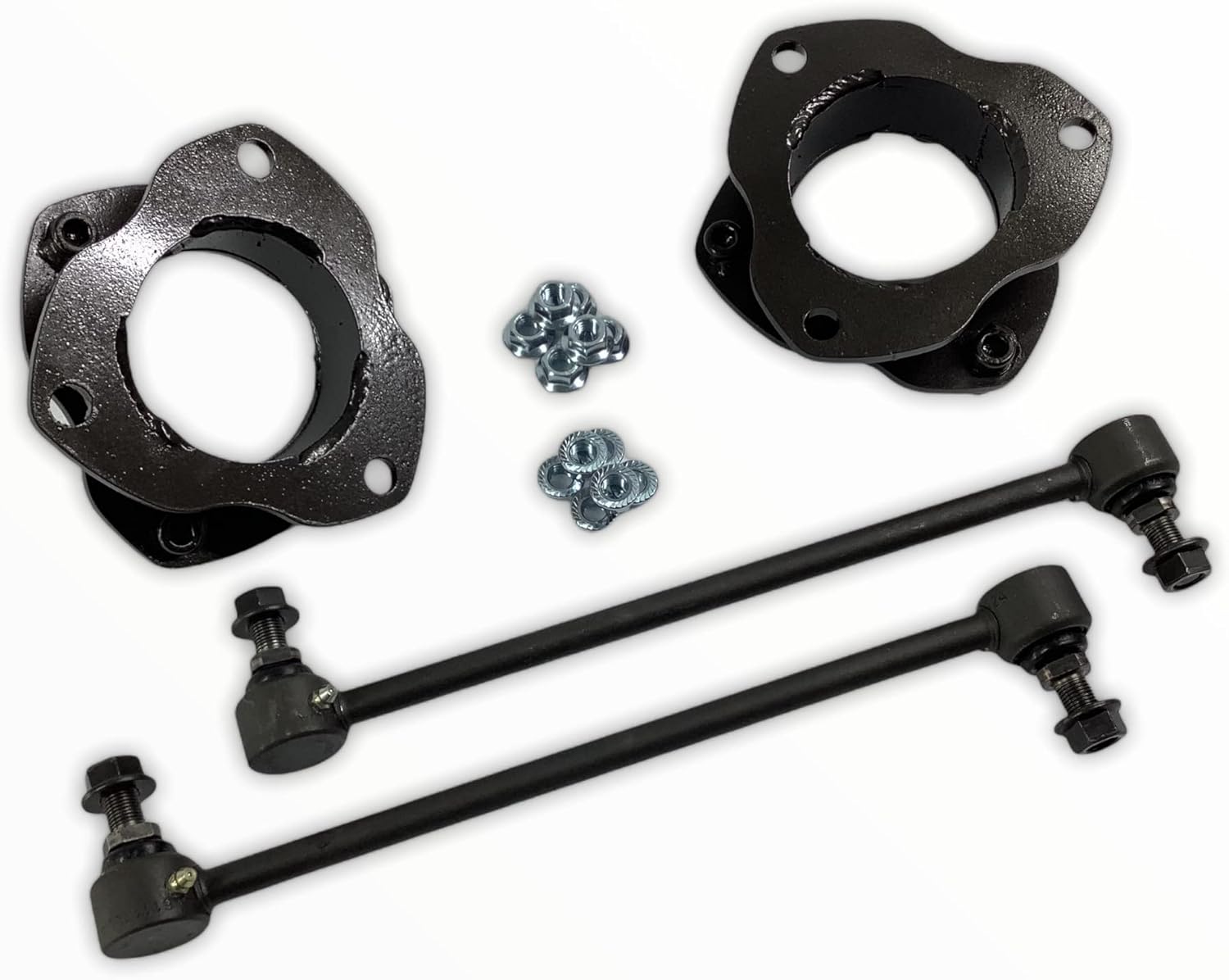
4. Truxxx 1.5" Front Leveling Kit for Honda Ridgeline (2017-2026) and Honda Pilot (2016-2022)
| Auto Part Position | Front |
|---|---|
| Material | Carbon Steel |
| Included Components | Front struts, sway bar links and hardware. |
| Maximum Lifting Height | 1.5 Inches |
| Automotive Fit Type | Vehicle Specific Fit |
This Truxxx 1.5-inch front leveling kit lifts the nose of compatible Honda Pilots to give a more level stance without replacing factory shocks. The kit includes fabricated carbon steel strut spacers, sway bar links, and hardware and is made to fit the vehicle's front mounting points so it works with factory suspension components. In practice it is used to correct front rake, improve ground clearance, and allow slightly larger tires; buyers commonly have it installed at a shop because some disassembly and alignment are required. Notable benefits are factory-style fitment, US-made steel construction, and a design that avoids the cost of aftermarket shocks. Limitations are that installation can be time consuming for home mechanics, some supplied fasteners may need replacement, and you will need a four-wheel alignment and headlight adjustment after installation.
Best for: Drivers who prioritize a reliable, factory-compatible leveling solution to correct front rake and improve ground clearance while keeping the stock ride quality.
Less Ideal for: Buyers seeking a full suspension lift, or those who want a plug-and-play install with minimal mechanical work and no alignment or headlight adjustment.
- Vehicle-specific design for Honda Ridgeline and Pilot that works with factory struts and shocks
- Fabricated from carbon steel and produced in-house for consistent fit
- Includes sway bar links and hardware needed for front installation
- Raises front by 1.5 inches to improve stance and ground clearance while allowing larger tires
- Installation is moderately difficult and often requires a shop or experienced mechanic
- Some users report supplied flange nuts or hardware that may be unusable
- Requires post-installation four-wheel alignment and headlight adjustment
Verdict: A reliable, vehicle-specific 1.5-inch front leveling kit that preserves factory ride by working with stock struts and shocks.
5. Freedom OffRoad 2.5" Rear Lift Kit for 2003–2008 Honda Pilot

| Auto Part Position | Rear |
|---|---|
| Material | Carbon Steel |
| Included Components | sway bar |
| Maximum Lifting Height | 2.5 Inches |
This Freedom OffRoad rear lift kit is designed specifically to raise the back of a 2003–2008 Honda Pilot by 2.5 inches. Installation uses carbon steel spacers and heavy duty extended sway bar endlinks so you can lift the rear without compressing springs, which simplifies the job for a DIYer or a shop. The kit is intended for standard suspension mounting points and is useful when matching a front lift or gaining modest clearance for light off-road use or larger tires. Practical benefits include a straightforward install path and parts built for durability rather than cosmetic styling. Limitations are that it only lifts the rear 2.5 inches so it will change vehicle rake unless paired with a front lift, and the kit does not include detailed instructions in some listings so you may need mechanical experience or shop support for proper alignment and torque specifications. Fitment is vehicle-specific, so expect a direct bolt-in for compatible Pilot model years.
Best for: Risk-averse Pilot owners who prioritize a proven, vehicle-specific rear lift to gain modest clearance and prefer a straightforward install that a competent DIYer or local shop can handle.
Less Ideal for: Drivers seeking a full-height, matching front-and-rear lift or a complete suspension overhaul for extreme off-road use should consider more comprehensive kits.
- Vehicle-specific fit for 2003–2008 Honda Pilot rear suspension
- Simple spacer design allows lift without a spring compressor
- Includes extended heavy duty sway bar endlinks to preserve handling
- Carbon steel construction for strength and durability
- Only raises the rear 2.5 inches so front/rear balance may require an additional front lift
- Some listings and reviews note missing or minimal installation instructions
Verdict: A straightforward, vehicle-specific 2.5-inch rear lift for 2003–2008 Honda Pilot that boosts clearance with a simple spacer design but will need a front lift to maintain level stance.
Choosing the Right Honda Pilot Lift Kit: Key Factors to Consider
Lift Method and Components
How a kit raises the vehicle affects ride feel, alignment, and long-term durability. Spacer-style lifts use strut or spring spacers to gain height and are often easier to install, but they can change suspension geometry and may increase stress on original components. Coil spring replacements or taller coils restore correct spring rates for the new ride height and usually produce a more balanced ride. Full suspension assemblies replace multiple components and can offer the most refined handling, but they are heavier and more complex.
Understanding which parts are included helps you anticipate additional work. For example, kits that include extended brake lines, sway bar links, or alignment camber kits reduce the need for aftermarket add-ons and simplify installation planning.
Intended Use and Ride Quality
Decide whether the lift is primarily cosmetic, for mild off-road use, or for serious rough-terrain driving. Light lifts aimed at aesthetics or slightly larger tires should prioritize comfort and street manners. Off-road-focused kits often sacrifice some on-road refinement to gain articulation and durability, with firmer springs and different damping characteristics. Tuning choices like bump stops, damping rate, and spring rate all influence how the vehicle responds to bumps, cornering, and loaded conditions.
Matching the kit to your typical driving conditions reduces unwanted tradeoffs. A kit that feels great off-road may feel harsh on daily commutes, while a comfort-focused kit may limit extreme wheel travel when off-road.
Compatibility With Wheels and Tires
One main reason owners lift a vehicle is to fit larger tires. Verify the kit's recommended tire size limits and whether wheel offset or backspacing adjustments are needed. Some lifts allow modest increases in tire diameter without trimming, while larger jumps may require fender rolling or trimming. Pay attention to clearance at full compression and full steering lock to avoid rubbing on control arms, brake lines, or bodywork.
Wheel width and offset interact with lift height, so plan wheel choices together with the lift to ensure proper bearing loads and brake cooling. Mistmatched combos can lead to accelerated wear or compromised handling.
Installation Complexity and Tools
Installation time and difficulty vary widely. Spacer kits and some coil-swap kits can be completed with common garage tools and a spring compressor if needed, whereas full suspension replacements may require specialty tools, alignment post-install, and more advanced mechanical skills. Consider whether you will do the work yourself or use a qualified shop, and whether the kit includes all mounting hardware and instructions.
Also check whether additional services like an alignment, brake-line extension, or driveshaft modification are typically required. Knowing these needs up front helps estimate total time and effort beyond just the parts in the box.
Effect On Handling and Safety
Raising the center of gravity changes vehicle dynamics and can increase body roll or alter steering responsiveness. Well-engineered kits compensate by selecting appropriate spring rates, sway bar links, and geometry-correcting components to maintain predictable handling. Poorly matched lifts can create torque steer, reduced stability during emergency maneuvers, or premature component wear.
Evaluate whether the kit designers considered safety-related factors like brake line length, ABS sensor routing, and driveshaft angles. Opting for kits that preserve or improve these systems reduces the chance of unintended handling or reliability issues.
Durability and Maintenance Implications
Lifts expose suspension components to new loads and angles that may accelerate wear on bushings, ball joints, and CV joints if not properly addressed. Choose kits that specify heavy-duty hardware where needed and consider whether parts like shocks are rated for the new height and loads. Some designs require more frequent inspections or specific maintenance intervals to preserve performance.
Also consider warranty coverage for the components and whether replacement parts are readily available. Longevity matters if you plan to keep the vehicle lifted for many years, particularly if you use it for towing or frequent off-road driving.
How We Chose the Best Honda Pilot Lift Kit
We focused on what actually matters when altering ride height and suspension geometry on a Honda Pilot. Key filters included fitment precision to the vehicle chassis and model years, the type of lift hardware (strut spacers, coil spring replacements, or full suspension assemblies), and whether the kit preserved factory steering and brake clearances. We evaluated ride quality effects, considering how different lift methods change damping, rebound, and noise. Installation practicality was another criterion, covering typical tools, required modifications, and whether alignment adjustments are straightforward. Load capacity and how the kit affects towing or roof load behavior were included to reflect real-world use.We excluded kits that required extensive frame cutting, unproven modification techniques, or that lacked clear vehicle-specific fitment documentation. Cosmetic-only spacers with no documented safety data were also removed. The resulting list favors solutions that balance durability, predictable handling, and manageable installation for owners who want improved clearance or larger tires without sacrificing day-to-day drivability.
Our full evaluation process is outlined in our review methodology.
FAQ
How much lift is safe for a Honda Pilot?
A modest lift that preserves factory suspension geometry is usually safer and easier to manage. Many owners opt for lifts in the 1 to 2.5 inch range to gain clearance or fit larger tires without extensive modifications. Higher lifts often require additional changes to steering, brake lines, and alignment to maintain predictable handling.
Will a lift kit allow me to fit larger tires without trimming?
It often depends on the amount of lift and wheel offset. Small increases in tire diameter can sometimes be accommodated with a low-profile lift, while larger tires may require trimming or different wheel offsets to avoid rubbing. Check the kit's documented tire clearance recommendations before committing to a specific tire size.
Can I install a lift kit myself, or should I use a shop?
Some spacer-style or bolt-on coil kits are within the skill set of experienced DIYers with proper tools, while full suspension swaps and kits that require alignment or brake modifications are better handled by a professional. Consider your tools, experience, and whether the installation requires specialized equipment like spring compressors or press tools.
How does a lift affect towing and roof load capacity?
Raising the ride height can change the vehicle's handling and the way loads are distributed. While the gross vehicle weight ratings do not automatically change, altered suspension geometry and spring rates can affect trailer handling and roof-mounted cargo stability. Choose a kit that preserves load-carrying characteristics or is specifically rated for towing scenarios.
Do I need an alignment after installing a lift kit?
Yes. Any change to ride height or suspension components typically affects toe, camber, and caster settings. A professional alignment after installation helps ensure predictable steering, even tire wear, and proper handling.
What maintenance should I expect after lifting a vehicle?
Expect to inspect suspension bushings, ball joints, and shock mounts more frequently, especially during the first few thousand miles after installation. Components under increased stress may need earlier replacement, and periodic checks of fastener torque and brake-line routing are advisable.
Conclusion
Choosing the right lift involves balancing the gains in clearance and tire fitment against effects on ride quality, handling, and long-term durability. Prioritize kits that match your main use case, whether daily driving, light off-road use, or more demanding terrain, and that include the components needed to preserve safe steering and braking geometry.Plan for installation needs like alignments, potential brake-line or sway-bar adjustments, and any wheel or tire changes so you can budget time and labor realistically. Doing that will help ensure the lift delivers the capability and reliability you expect without unwanted surprises.
Explore More:
- Check out all Honda Pilot parts & accessories
- Explore Suspension & Steering
- Browse all Accessories
