

Note: This article contains affiliate links. If you click on these links and make a purchase, I may earn a small commission at no extra cost to you. This helps support my research and content. Read my full affiliate disclosure here.
If you drive a Honda Pilot, selecting the right ball joint matters for steering precision, ride comfort, and long-term suspension health. Faulty or worn joints can lead to uneven tire wear, steering play, and compromised handling, so choosing a quality replacement helps maintain safe, predictable driving.This guide covers seven shortlisted options that meet common fitment and durability expectations for the Honda Pilot. We evaluated each pick against core factors like build quality, fit accuracy, and expected longevity to help you narrow choices before installation.
Looking for other parts? See all Honda Pilot parts & accessories.
Top Picks at a Glance
| Best Reviewed A top-rated pick with lots of positive feedback | TRQ Rear Upper Control Arm with Ball Joint Set (2-Piece) |  |
| Most Popular A crowd favorite that many people choose with confidence | Detroit Axle Front Lower Control Arms with Ball Joints for 2001–2006 Acura MDX / 2003–2008 Honda Pilot (2pc) |  |
| Best Quality Built to a higher standard if you want something more solid | Detroit Axle Front Lower Control Arms with Ball Joints (Pair) for 2009–2015 Honda Pilot |  |
| Best Budget The cheapest option that still gets the job done reliably | MOOG K100199 Rear Upper Suspension Ball Joint |  |
| Most Sold A high-volume bestseller chosen again and again | maXpeedingrods 10‑Piece Front Suspension Kit for Honda Pilot (2009–2015) | 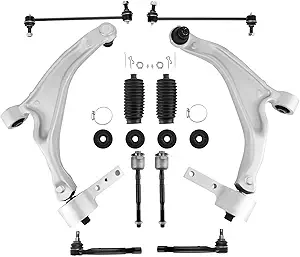 |
| Best Value for Money The sweet spot between price and what you get | Metrix Premium Chassis Parts Front Left Lower Control Arm with Ball Joint |  |
| Best Overall The best all-around choice for most situations | TRQ Front Left Lower Control Arm with Ball Joint for 2009–2015 Honda Pilot |  |
1. TRQ Rear Upper Control Arm with Ball Joint Set (2-Piece)

| Fitment | Honda Pilot 2009-2015 rear upper |
|---|---|
| Quantity | 2 Piece |
| Design | Adjustable |
| Material | Alloy Steel |
This TRQ two-piece rear upper control arm with integrated ball joints replaces the rear upper control arms on compatible Honda Pilot model years and is sold as a matched driver and passenger set. Intended as a direct-fit replacement, the parts arrive pre-assembled and adjustable, which helps restore rear suspension geometry and correct uneven tire wear after worn arms or ball joints are removed. Installation is typically a garage or DIY job using standard suspension tools and penetrating fluid on corroded fasteners; TRQ also provides installation videos to guide the process. The alloy steel construction and machined exterior aim to provide a more durable factory-quality replacement compared with worn stock components. Limitations to note are that this is a vehicle-specific rear upper kit only, so it does not address front suspension or other linkage wear, and alignment is necessary after installation to ensure correct handling and tire life.
Best for: Reliability-focused Honda Pilot owners who prioritize restoring factory-quality rear suspension performance with a direct-fit, durable replacement and prefer parts that simplify a DIY or workshop repair.
Less Ideal for: Drivers who need a full suspension refresh or who are replacing front-end components should look for comprehensive kits that cover those areas instead.
- Sold as a matched driver and passenger rear upper set for complete rear repair.
- Adjustable design lets you fine-tune rear alignment during installation.
- Pre-assembled components simplify installation and reduce labor time.
- Alloy steel construction with machined exterior for improved durability over worn originals.
- Fits only the rear upper position and does not replace front control arms or other suspension components.
- Requires a post-install wheel alignment to restore correct handling and tire wear.
Verdict A durable, adjustable rear upper control arm and ball joint set built as a direct-fit reliability-minded replacement for compatible Honda Pilot rear suspension repairs.
2. Detroit Axle Front Lower Control Arms with Ball Joints for 2001–2006 Acura MDX / 2003–2008 Honda Pilot (2pc)

| Fit Type | Vehicle Specific Fit |
|---|---|
| Auto Part Position | Front |
| Manufacturer | Detroit Axle |
| Special Features | Control Arms with Ball Joints |
These Detroit Axle front lower control arms replace the factory front lower arms and include preinstalled ball joints so you get a ready-to-install assembly. Intended for 2003–2008 Honda Pilot fitment, the pair is used to restore steering geometry and suspension stability after worn arms or noisy ball joints. The assemblies arrive painted black and report a close fit to factory mounting points, which simplifies installation and alignment for a do-it-yourselfer or a quick shop swap. Notable features are the ball joints included with each arm and the brand's stated testing for impact, wear, and fatigue. Practical benefits are faster installation compared with replacing separate joints and arms, plus a consistent aftermarket option backed by a long warranty claim in the listing. Limitations to consider are mixed user reports on ball-joint longevity and occasional need to replace rusty mounting hardware on older vehicles during install. For owners prioritizing convenience and an OEM-like fit, these arms streamline the repair but may require attention if you need long-term high-mileage durability.
Best for: Convenience-focused Honda Pilot owners who want a ready-to-install replacement that reduces install time and complexity and who prefer a direct-fit aftermarket part over sourcing separate components.
Less Ideal for: Drivers seeking the longest-lasting, heavy-duty suspension parts for frequent towing or severe off-road use should consider heavier-duty aftermarket options or OEM replacements instead.
- Includes ball joints preinstalled for a faster, simpler replacement
- Vehicle-specific fit for 2003–2008 Honda Pilot to match factory mounting points
- Reported consistent fit and easy installation for DIY or quick shop jobs
- Manufacturer states products undergo impact, wear, and fatigue testing
- Some users report premature ball-joint wear on high-mileage vehicles
- May require replacement of rusty or seized mounting bolts during installation
Verdict If you want a convenient, direct-fit repair for a 2003–2008 Honda Pilot, these control arms with preinstalled ball joints make the job quicker, but ball-joint longevity can vary.
3. Detroit Axle Front Lower Control Arms with Ball Joints (Pair) for 2009–2015 Honda Pilot

| Fitment | 2009–2015 Honda Pilot |
|---|---|
| Includes | 2x Front Lower Control Arms with Ball Joints |
| Material | Alloy Steel |
| Auto Part Position | Front Lower |
This Detroit Axle kit provides two front lower control arms with preinstalled ball joints intended to replace worn factory components on 2009–2015 Honda Pilot vehicles. Designed as direct-fit replacements, the arms install in the front lower suspension to restore steering geometry and ride stability after bushing or ball joint wear. The parts are made from alloy steel with a reinforced structure to resist impact and corrosion, and the ball joints arrive assembled which streamlines installation and reduces shop time. Buyers report solid fitment and improved handling compared with heavily worn originals, and the set is backed by manufacturer durability testing. Limitations to consider are that aftermarket fitment can vary by vehicle and some users have reported isolated quality or warranty-handling issues, so professional installation and post-install alignment are recommended. This kit is practical for routine suspension refreshes but expect standard shop labor for removal, installation, and alignment to get the full benefit.
Best for: Balanced buyers who want a reliable, ready-to-install suspension refresh for a Honda Pilot and prioritize a combination of fit, durability, and value.
Less Ideal for: Drivers seeking factory-brand parts with manufacturer dealer support or those wanting a premium performance upgrade beyond stock replacement specifications should consider other options.
- Direct-fit replacement for 2009–2015 Honda Pilotfront lower arms reduces modification or fabrication
- Arms ship with ball joints preinstalled to simplify installation and save labor time
- Alloy steel construction and reinforced design for improved resistance to wear and impact
- Designed and tested for suspension durability to meet fit, form, and function expectations
- Some buyers report isolated quality or warranty-service problems that required returns or replacements
- Heavy item packaging can be subject to shipping damage if not packed securely
Verdict A practical, direct-fit control arm pair for 2009–2015 Honda Pilot owners who want a cost-effective, ready-to-install replacement to restore handling and steering stability.
4. MOOG K100199 Rear Upper Suspension Ball Joint

| Brand | MOOG |
|---|---|
| Model | K100199 |
| Exterior | Machined |
The MOOG K100199 rear upper ball joint is a direct replacement part intended to restore proper camber and caster alignment and improve steering feel on compatible Honda Pilots. It installs in the rear upper control arm and is used when worn joints produce play, uneven tire wear, or vague steering. MOOG emphasizes problem-solver design features and machined exterior construction, which translates to a precise fit and straightforward installation for mechanics and experienced DIYers. The joint claims improved handling and long-lasting performance compared with worn components, and its factory-style design helps maintain suspension geometry without additional modification. Limitations include that it is a single-component replacement rather than a full control-arm assembly, so buyers replacing multiple worn suspension parts may need additional components. Also it requires basic mechanical tools and alignment after installation to fully restore vehicle handling.
Best for: Budget-conscious buyers seeking a cost-effective, factory-replacement rear upper ball joint to address play or alignment issues on a Honda Pilot and willing to perform or pay for basic installation and alignment.
Less Ideal for: Drivers who prefer replacing entire control arms or who want a complete suspension overhaul kit should consider more comprehensive assemblies instead of a single ball joint.
- Factory-style design aimed at restoring original suspension geometry
- Machined exterior construction for a precise fit
- Engineered to improve steering feel and handling
- Designed for straightforward installation by technicians and experienced DIYers
- Sold as a single ball joint rather than a complete control-arm assembly
- Requires alignment after installation to correct camber and caster
Verdict A cost-conscious, factory-replacement rear upper ball joint that restores steering geometry on a Honda Pilot but is sold as a single component so additional parts or alignment may be needed.
5. maXpeedingrods 10‑Piece Front Suspension Kit for Honda Pilot (2009–2015)
| Fit Type | Vehicle Specific |
|---|---|
| Auto Part Position | Front |
| Material | Alloy Steel |
| Manufacturer | maXpeedingrods |
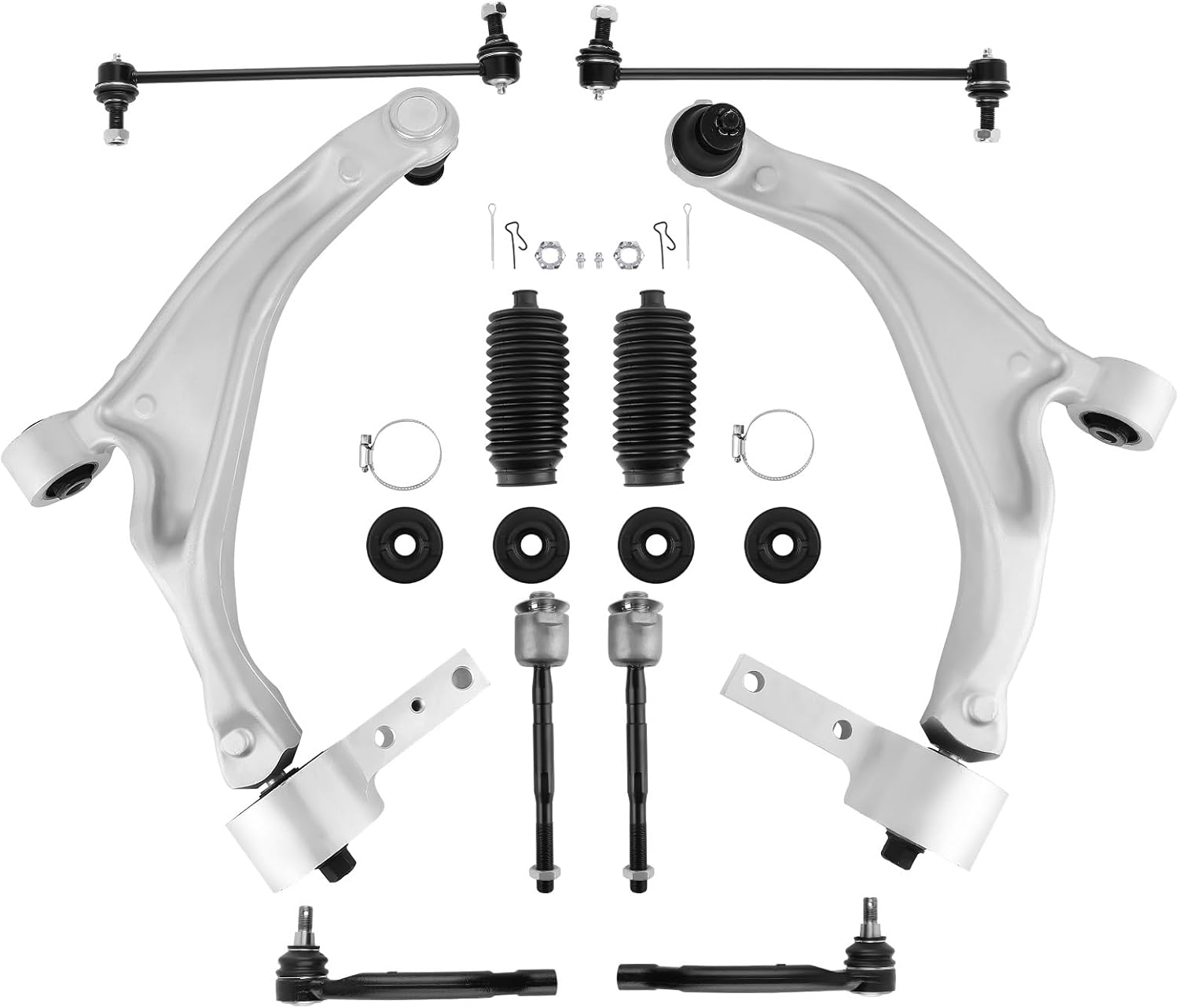
This maXpeedingrods kit bundles the two front lower control arms (with preinstalled ball joints), inner and outer tie rods, stabilizer bar links, and protective boots to refresh the front suspension on a Honda Pilot (2009–2015). Typical use is a full front-end refresh during DIY maintenance or when multiple steering and suspension parts show wear. The control arms are stamped alloy steel with a powder-coated finish to resist corrosion, and including ball joints and bushings installed saves installation time. Buyers will appreciate that the kit is vehicle specific so fitment is intended to be straightforward and it eliminates mixing parts from different suppliers. Limitations to note are that aftermarket ball joints and tie rods may not match factory tolerances exactly for every vehicle and one reported fitment issue with a ball joint stud size on a specific year, so verify fit for your model year before installation. The kit is a practical option for replacing several worn components at once, but careful inspection and torqueing to factory specs are recommended during installation.
Best for: Risk-averse mainstream buyers who prefer replacing multiple worn front-end parts at once with a vehicle-specific kit to minimize follow-up trips to the parts store.
Less Ideal for: Drivers seeking an exact factory match for every single steering dimension or performance tuners who need upgraded geometry or heavy-duty race components.
- Complete front-end kit replaces control arms, inner and outer tie rods, and sway bar links in one purchase
- Control arms come with preinstalled ball joints and bushings to reduce installation steps
- Powder-coated alloy steel construction for corrosion resistance and longer service life
- Vehicle-specific fitment targets Honda Pilot 2009–2015 to simplify replacement and reduce modification needs
- Some users reported a mismatched ball joint stud size on certain model years so double-check fitment
- As an aftermarket kit, component tolerances may vary slightly from factory-spec parts
Verdict A convenient, vehicle-specific front suspension kit that replaces multiple worn parts at once, but verify ball joint fitment for your Pilot model year before installing.
6. Metrix Premium Chassis Parts Front Left Lower Control Arm with Ball Joint

| Fitment | 2003–2008 Honda Pilot |
|---|---|
| Position | Front left lower |
| Material | Cast Iron |
| Includes | Ball joint and bushing assembly |
| Manufacturer part number | 47410MT |
This Metrix front left lower control arm is a direct replacement assembled with a pressed-in ball joint and bushing intended for routine suspension repairs on compatible Honda Pilots. It installs where the factory lower control arm connects the wheel hub to the chassis and is typically used during suspension overhauls after wear, corrosion, or collision damage. Notable features include vehicle-specific fitment for 2003–2008 Honda Pilot applications and cast iron construction with a machined exterior that aims to match factory geometry. Buyers will appreciate the part arriving ready to bolt in, which can simplify installation and reduce shop hours compared with rebuilding an old arm. Reviews indicate consistent fit and factory-like appearance. Limitations to consider are that alignment may still be required after installation and some users reported fitment nuances that made the part better as a repair rather than a high-performance upgrade. This is a practical, budget-conscious replacement for returning a worn suspension to safe, factory-like operation on the Pilot rather than a performance enhancement.
Best for: Practical optimizers who want a cost-effective, ready-to-install suspension replacement that restores factory handling and lets them extend the life of a Honda Pilot without unnecessary upgrades.
Less Ideal for: Enthusiasts seeking performance suspension upgrades or owners who need parts rated for heavy-duty or off-road use should look at specialized aftermarket options instead.
- Vehicle-specific fit for 2003–2008 Honda Pilot which simplifies replacement.
- Integrated ball joint and bushing arrive assembled to reduce installation time.
- Cast iron construction and machined exterior for a factory-style fit and finish.
- Manufactured to certified quality standards per brand claims which supports reliability.
- Not positioned as a performance upgrade so it does not improve handling beyond factory levels.
- May still require professional alignment and occasional minor adjustments after install.
Verdict A practical, vehicle-specific replacement control arm that restores factory-style suspension function on Honda Pilot models without breaking the budget.
7. TRQ Front Left Lower Control Arm with Ball Joint for 2009–2015 Honda Pilot

| Fitment | 2009–2015 Honda Pilot Front Left Lower |
|---|---|
| Material | Aluminum |
| Ball Joint Mounting Type | Machined |
| Bushings Included | Yes |
This TRQ front left lower control arm replaces the factory unit on 2009–2015 Honda Pilot models and arrives as a preassembled drop-in part to simplify installation. It is aluminum with a machined ball joint mount and includes bushings installed at the factory so you avoid pressing in components during replacement. Typical use is a like-for-like repair when a worn arm causes clunking, wandering steering, or uneven tire wear; the machined exterior and factory-style assembly aim to restore steering stability and ride quality. Practical benefits include reduced install time for DIYers and shops because the ball joint and bushings come ready to bolt in, and the lighter aluminum construction helps resist corrosion compared with untreated steel. Limitations to consider are that the ball joint is not greaseable and long-term durability depends on driving conditions, and aluminum arms can be less forgiving than stamped steel in high-impact situations. Confirm fitment for your Pilot year before ordering and plan a professional alignment after replacement.
Best for: Reliability-focused owners prioritizing a dependable, near-factory replacement to restore steering stability and ride quality on a Honda Pilot from 2009 to 2015.
Less Ideal for: Drivers looking for heavy-duty or performance-tuned suspension upgrades or those who prefer fully serviceable greasable ball joints should consider other specialist options.
- Direct-fit design with preinstalled bushings and ball joint for faster installation
- Aluminum construction and machined exterior for corrosion resistance and a factory-quality look
- Preassembled unit reduces need for specialist tools or pressing components during replacement
- Ball joint is not greaseable which may limit serviceability over the long term
- Aluminum construction may be less impact-tolerant than heavier steel alternatives
Verdict A convenient, factory-style aluminum replacement that restores steering stability on 2009–2015 Honda Pilots but is not the best choice if you need a greasable or heavy-duty performance arm.
Choosing the Right Honda Pilot Ball Joint: Key Factors to Consider
Fitment and Compatibility
Correct fitment ensures the ball joint registers with the suspension geometry exactly as the original part did. If the joint does not seat properly you can get premature wear, misaligned steering, and abnormal tire wear.
Verify threaded stud size, mounting pattern, and taper dimensions for accurate seating. Confirm whether the part is designed for the Pilot's front lower or upper mounting locations, since each has different load and articulation demands.
Material and Corrosion Resistance
Ball joints face constant movement and exposure to road salts and moisture, so materials matter for longevity. Hardened steel balls and heat-treated housings resist deformation under load while robust plating or coatings prevent rust from seizing moving surfaces.
Good seals and protective boots are essential to keep grease in and contaminants out. Consider products specified with grease ports or lifetime lubrication if you expect heavy use or drive in corrosive environments.
Seal and Boot Design
The seal and boot preserve grease and block dirt and water, directly affecting how long a joint will function before failing. A poorly designed boot can split, letting abrasive particles accelerate wear on bearing surfaces and the stud.
Look for flexible yet tough materials that withstand heat and repeated articulation. Reinforced bead edges and double-lip seals add redundancy and reduce the chance of early leaks during routine operation.
Load Capacity and Durability
Ball joints must support both vertical loads from the vehicle weight and lateral forces from steering inputs and cornering. Components rated for higher dynamic loads tend to last longer under mixed driving conditions.
Durability ties to manufacturing tolerances, heat treatment, and the quality of bearing surfaces. When a joint is well engineered for the expected loads, you will usually see longer service intervals and fewer symptoms like looseness or clunking.
Serviceability and Installation
Ease of installation affects total repair time and cost when you replace a joint yourself or have it serviced. Some joints are designed for straightforward press-in installation, while others may require special tools or subassembly removal.
Check whether the design allows reuse of factory hardware, if a ball joint press tool is recommended, and whether greasable fittings are accessible after installation. Reduced labor complexity can be a deciding factor when replacing front lower or upper ball joints.
Warranty and Support
Warranty terms reflect manufacturer confidence and provide protection if a component fails prematurely. A clear warranty with reasonable coverage period reduces risk when selecting replacement parts.
Also consider availability of technical documentation and customer support in case fitment questions arise. Transparent return policies and documented torque specs help ensure correct installation and peace of mind.
FAQ
What are common ball joint symptoms on a Honda Pilot?
Common signs include steering play, a clunking noise when going over bumps, and uneven tire wear. You may also notice vibration through the steering wheel at certain speeds. These symptoms often develop gradually and can vary with load and road conditions.
How long do ball joints typically last?
Lifespan varies with driving conditions, vehicle load, and maintenance, but ball joints often last many tens of thousands of miles under normal use. Exposure to rough roads, frequent towing, or corrosive environments can shorten service life and lead to earlier replacement.
Can I replace a ball joint myself?
Many mechanically inclined drivers can replace a ball joint with moderate tools and a safe workspace, but some installations need a press tool and experience with suspension reassembly. If you are unsure about alignment or torque requirements, professional installation is safer.
Should I replace upper and lower ball joints at the same time?
It depends on wear patterns and condition. Replacing only the worn joint is acceptable if the other shows healthy movement and no play. However, replacing both can be more efficient and can prevent repeat labor if the remaining joint is approaching end of life.
How do I check for a bad ball joint safely?
With the vehicle securely lifted, grasp the tire at the 12 and 6 o'clock positions and attempt to rock it. Excessive vertical movement or a clunk suggests looseness in the joint. Also inspect the boot for tears and check for grease loss or visible corrosion.
Does wheel vibration always mean a bad ball joint?
Not always. Wheel vibration can come from unbalanced tires, wheel damage, or worn suspension and steering components. A worn ball joint can contribute to vibration if it causes misalignment or uneven tire wear, so evaluate all likely causes when diagnosing.
How We Chose the Best Honda Pilot Ball Joint
We focused on components specifically suited to the Honda Pilot and evaluated options using measurable, vehicle-relevant criteria. Key filters included fitment accuracy to factory steering and suspension geometry, material and seal quality to resist corrosion and contamination, and load-bearing specifications that reflect expected lifespan under normal driving loads. We also assessed ease of installation based on common service procedures, compatibility with standard removal and press tools, and the availability of user-centric warranty coverage.Items were excluded if they lacked clear vehicle-specific fitment information, used unclear material specifications, or omitted protective seals that guard against water and grit. We prioritized products that balance robust mechanical design with straightforward serviceability and documented compatibility with Honda Pilot front suspension assemblies.
Our full evaluation process is outlined in our review methodology.
Conclusion
Prioritize fitment accuracy, robust sealing, and proven load capacity when choosing a Honda Pilot ball joint. These factors most directly affect steering feel, component life, and the likelihood of follow-up repairs.Balance ease of installation and warranty coverage against durability needs based on how you drive. Taking time to confirm compatibility and serviceability will reduce the chance of early failure and keep the vehicle handling predictably.
Explore More:
- Check out all Honda Pilot parts & accessories
- Explore Ball Joints Maintenance & Repair Guides
- Explore Suspension & Steering
- Browse all Auto Parts
