

Note: This article contains affiliate links. If you click on these links and make a purchase, I may earn a small commission at no extra cost to you. This helps support my research and content. Read my full affiliate disclosure here.
If you drive a Hyundai Santa Fe, the intake manifold plays a key role in engine breathing, drivability, and emissions control. Choosing the right intake manifold affects throttle response, fuel distribution, and the likelihood of vacuum or gasket leaks in everyday use. This guide shortlists the top options for the vehicle and explains the practical differences that matter for installation and long-term reliability.The selections below were evaluated on fitment, construction material, and sealing reliability, with attention to symptoms that commonly lead owners to replace the manifold. Read on to see the top picks and what to expect during installation.
Looking for other parts? See all Hyundai Santa Fe parts & accessories.
Top Picks at a Glance
| Best overall The best all-around choice for most situations | WMPHE Intake Manifold for Hyundai Santa Fe 2.4L (Compatible 2017–2020) |  |
| Best quality Built to a higher standard if you want something more solid | A-Premium Intake Manifold Assembly with Gasket for Hyundai Santa Fe 2.0L |  |
| Best Value The sweet spot between price and what you get | NEWZQ Intake Manifold Replacement for Hyundai Santa Fe 3.5L / Kia 3.5L (28310-3CAA0) |  |
| Best Budget The cheapest option that still gets the job done reliably | WMPHE Intake Manifold for Hyundai Santa Fe 3.5L V6 (replacement for 28310-3CAA0) |  |
| Highest Rated A top-rated pick with lots of positive feedback | TRQ IMA51554 Intake Manifold for Hyundai and Kia 2.4L Engines |  |
| Most Popular A crowd favorite that many people choose with confidence | TRQ Intake Manifold IMA44194 for 2.4L G4KJ Engines (select Hyundai/Kia 2011–2016) |  |
| Best Seller A high-volume bestseller chosen again and again | Dorman Improved Design Intake Manifold (615-472) for select Hyundai/Kia models |  |
1. WMPHE Intake Manifold for Hyundai Santa Fe 2.4L (Compatible 2017–2020)

| Fitment engine | 2.4L L4 |
|---|---|
| Compatible years | 2017-2020 Santa Fe |
| Manufacturer | WMPHE |
| Replaces part number | 283102GGA0 |
This WMPHE intake manifold is a direct-style replacement intended to restore the breathing side of a 2.4L Hyundai Santa Fe engine. It installs where the original manifold sat and routes intake air to the engine’s cylinders, so it is typically used when the factory manifold is cracked, leaking, or otherwise degraded. The listing emphasizes OEM-compatible construction and heat-resistant materials to limit deformation at operating temperatures, and installation guidance calls for clean mating surfaces, new gaskets, and gradual bolt torque in a diagonal sequence. In practice that means you can expect a part that fits the factory interface, returns lost engine smoothness and idle stability, and avoids premature softening under normal use. The unit comes with user-facing notes to avoid over-tightening and to check alignment to prevent vacuum leaks. Limitations are typical of aftermarket replacements: success depends on correct gasket replacement and installation technique, and buyers who need an exact manufacturer part number match or factory brand may prefer sourcing from the dealer instead.
Best for: Buyers seeking a balanced, reliable replacement that restores engine performance on a 2017–2020 Hyundai Santa Fe 2.4L without the premium of dealer parts.
Less Ideal for: Owners who prioritize getting a dealer-branded Hyundai component or who plan to modify the intake system for performance upgrades should consider other options.
- Designed to replace the factory intake manifold for 2017–2020 Hyundai Santa Fe 2.4L, providing direct fitment to the engine interface
- Constructed from heat-resistant materials advertised to resist high-temperature softening and aging
- Guidance provided for installation including bolt sequence and gasket preparation to reduce leak risk
- User feedback reports successful fits and restored drivability on compatible vehicles
- Requires correct gasket replacement and proper torqueing to avoid leaks or deformation
- Not a factory-branded Hyundai part, so those seeking dealer-sourced components may prefer the OEM part
Verdict: A practical, factory-style replacement that restores airflow and drivability on 2017–2020 Hyundai Santa Fe 2.4L models if installed with correct gaskets and torque procedures.
2. A-Premium Intake Manifold Assembly with Gasket for Hyundai Santa Fe 2.0L

| Fitment | Hyundai Santa Fe 2013-2016 L4 2.0L |
|---|---|
| Type | Direct Replacement |
| Material | Plastic |
| Single or Dual Plane | Single Plane |
| Includes | Gasket, quantity 1 |
This intake manifold assembly replaces the factory unit on 2.0L Hyundai Santa Fe engines to restore proper air delivery and engine response. It is a single-plane, direct-replacement plastic manifold supplied with a gasket and intended for bolt-on installation by a mechanic or experienced DIYer. The smooth inner walls and precision molding are intended to improve airflow uniformity, which helps reduce hesitation under acceleration and can make throttle response feel sharper. Because it mirrors factory mounting points and the OEM reference number is provided, fitment for Santa Fe 2013–2016 2.0L engines is straightforward. Limitations are typical for aftermarket molded plastic manifolds: long-term durability depends on installation torque and engine bay heat cycles, and this part does not include sensors or ancillary hardware beyond the gasket. Buyers wanting absolute lifespan parity with factory metal units should consider that plastic intake components can be more sensitive to extreme heat or oil-soaked conditions.
Best for: Performance-oriented buyers seeking a high-quality replacement that restores airflow and throttle response on a 2.0L Santa Fe and who prioritize engine responsiveness over maximum longevity.
Less Ideal for: Drivers seeking a heavy-duty metal upgrade for extreme-duty or modified engines should consider aftermarket performance manifolds or a metal unit instead.
- Direct-replacement fit for Hyundai Santa Fe 2.0L engines for straightforward installation
- Smooth internal surface and precision molding designed to improve airflow and throttle response
- Includes gasket so the intake is ready for installation without sourcing additional sealing parts
- Matches OEM reference number for easier verification of compatibility
- Made from plastic which can be more vulnerable than metal alternatives in very high-heat or oil-contaminated environments
- Does not include sensors or extra hardware that some full replacement kits provide
Verdict: A factory-fit replacement that restores airflow and throttle feel for 2.0L Santa Fe owners who want a performance-minded, bolt-in solution without a full performance upgrade.
3. NEWZQ Intake Manifold Replacement for Hyundai Santa Fe 3.5L / Kia 3.5L (28310-3CAA0)

| Manufacturer | NEWZQ |
|---|---|
| Manufacturer Part Number | 283103CAA0 28310-3CAA0 |
| OEM Part Number | 28310-3CAA0 283103CAA0 |
| Compatible Engines | 3.5L Hyundai/Kia models (see fitment) |
This NEWZQ intake manifold is offered as a factory-style replacement for 3.5L Hyundai Santa Fe and compatible Kia models. It replaces part number 28310-3CAA0 and is installed in place of the original manifold when the factory unit develops leaks, cracks, or other intake-air issues. Typical use is a direct swap during engine maintenance or repair; technicians will bolt it to the cylinder heads and reconnect vacuum lines and sensors. The listing highlights compatibility with 2010–2013 Santa Fe and select 2011–2014 Kia models. Practical benefits include restoring proper air routing to avoid vacuum leaks and rough idle, and the product arrives ready to install without modification in most cases. Limitations to expect are variability in fit or sensor port alignment with aftermarket parts and occasional reports of check-engine light issues requiring verification of PCV/connector seating; professional installation and inspection of mating surfaces is recommended. This is a budget-focused replacement that aims to get the vehicle back on the road quickly rather than offer performance gains.
Best for: Practical optimizers who prioritize restoring reliable daily drivability on a budget and prefer a direct replacement to avoid lengthy downtime.
Less Ideal for: Buyers seeking performance upgrades, precision OEM-matched fitment guarantees, or custom intake solutions should consider other options.
- Fits factory part number 28310-3CAA0 for straightforward replacement on specified Hyundai and Kia 3.5L engines
- Supplied ready for installation to restore intake air routing and resolve vacuum-leak symptoms
- Budget-friendly option for owners needing a cost-effective repair without upgrades
- Aftermarket fit can vary so final alignment of sensors and hoses may require adjustment
- Not designed to improve performance over the original factory manifold
Verdict: A practical, budget-focused replacement manifold that restores intake function for 3.5L Hyundai Santa Fe and compatible Kia models.
4. WMPHE Intake Manifold for Hyundai Santa Fe 3.5L V6 (replacement for 28310-3CAA0)

| Fitment | Hyundai Santa Fe 2010-2012; Kia Sedona 2011-2013; Kia Sorento 2014 |
|---|---|
| Engine | 3.5L V6 3470CC DOHC |
| Manufacturer Part Number | 283103CAA0 |
| Exterior | Metallic Finish |
This WMPHE intake manifold is a cost-focused replacement intended for 3.5L V6 Hyundai Santa Fe applications and similar Kia models. It replaces the factory upper intake to restore proper air distribution to each cylinder after the original part cracks or leaks. Typical installation involves removing clamps and the old air inlet hose, fitting the new manifold and re-tightening fasteners; the listing notes an installation video is available. The part is marketed as matching factory performance and uses a metallic finish for durability and heat resistance. Buyers report mixed outcomes: many users found it fit and cured driveability issues, while several reported shipping damage, fitment alignment problems, or casting defects. As a budget option it can return a non-running or rough-running engine to normal operation at low cost, but quality control and packaging appear inconsistent so careful inspection at receipt and possible fastener swaps may be needed.
Best for: Budget-conscious owners looking to replace a failed intake manifold and prioritize low cost and quick restoration of driving ability over premium aftermarket fitment or finish.
Less Ideal for: Buyers seeking a perfect factory-match or long-term high-performance upgrade should consider higher-end or dealer-sourced manifolds and professional inspection before installation.
- Designed as a direct replacement for specified 3.5L V6 Hyundai/Kia applications to restore airflow and eliminate vacuum leaks
- Marketed to match factory performance and manufactured to OEM specifications
- Metallic finish and materials intended for good high-temperature resistance and longer service life
- Includes clear installation guidance and an online video to help DIY installers
- Reports of inconsistent quality control including occasional warped castings or shipping damage
- Some buyers experienced fitment/alignment issues requiring adjustments or different fasteners
Verdict: An affordable, do-it-yourself friendly intake manifold replacement for 3.5L Hyundai Santa Fe owners who need a low-cost fix to restore engine performance.
5. TRQ IMA51554 Intake Manifold for Hyundai and Kia 2.4L Engines
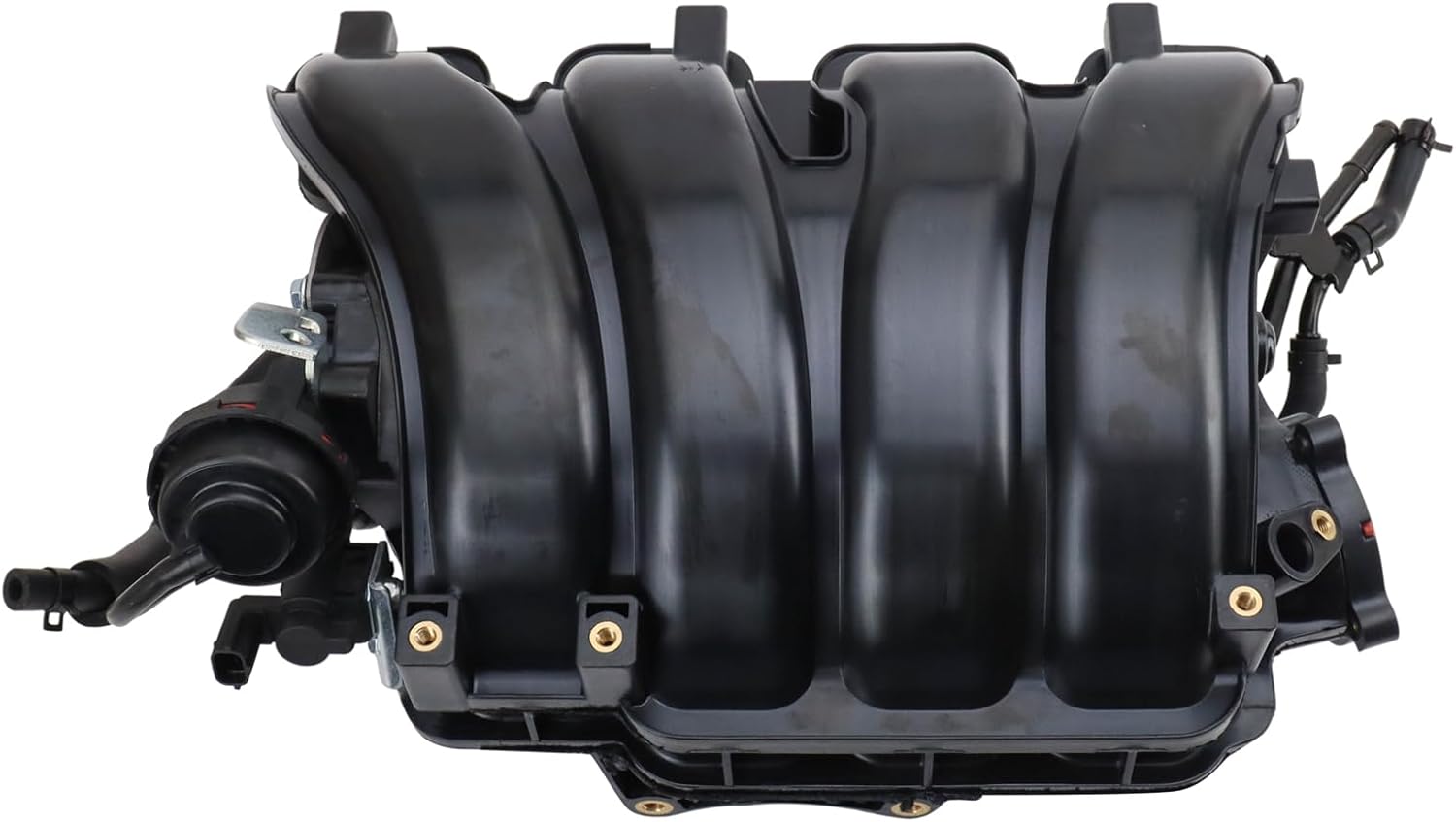
| Material | Plastic |
|---|---|
| Gasket Included | Yes |
| Manufacturer Part Number | IMA51554 |
| OEM Reference Number | 283102G700 |
This TRQ intake manifold replaces the factory unit on compatible 2.4L Hyundai and Kia engines and is intended as a direct-fit replacement for common repairs. It is molded from plastic with a machined exterior and ships with the intake gasket, which simplifies installation for a competent DIYer or technician. TRQ provides step-by-step installation videos and pre-assembled features that reduce swap time and help avoid common fitment hassles. In practice the manifold restores proper air delivery and idle behavior when the original manifold is cracked or leaking, and many users report good fit and quieter operation after installation. Some buyers have reported intermittent rattles or internal baffle issues on different vehicle applications, so long-term durability may vary by engine and driving conditions. The unit replaces the referenced OEM part number and uses conventional bolt and sensor locations, but confirm vehicle fitment carefully before purchase and plan for routine inspection after installation.
Best for: Buyers focused on reliable, factory-style repairs who want a straightforward replacement that restores engine breathing without aftermarket performance changes.
Less Ideal for: Drivers looking for a heavy-duty or performance intake solution or those who prefer metal components for extreme-duty use should consider other options.
- Direct-fit replacement for specified 2.4L Hyundai and Kia engines, reducing modification and labor time
- Ships with intake gasket to simplify installation and reduce parts hunting
- Machined exterior and pre-assembled details aimed at consistent fitment
- Access to TRQ installation videos that guide DIY repairs and reduce installation errors
- Made from plastic which can be less durable than metal units in high-heat or high-stress situations
- Some users have reported internal baffle breakage or rattles on certain vehicle applications
Verdict: A practical, direct-fit replacement intake manifold that restores factory air delivery and simplifies installation for reliability-minded repairs.
6. TRQ Intake Manifold IMA44194 for 2.4L G4KJ Engines (select Hyundai/Kia 2011–2016)

| Brand | TRQ |
|---|---|
| Model | IMA44194 |
| Material | Plastic |
| Gasket Or Seal Included | Yes |
| OEM Part Number | 283102G700 |
This TRQ intake manifold is a direct-replacement designed for 2.4L G4KJ GDI engines used on Hyundai Santa Fe Sport and several Hyundai and Kia models between 2011 and 2016. It arrives pre-assembled and includes a gasket, which simplifies a DIY swap or shop replacement and reduces time spent sourcing parts. The unit is machined plastic and aimed at matching factory fitment so the map sensor and other components relocate to the same mounting points. In practice it restores intake sealing and drivability when the original manifold is cracked or leaking. Buyers report generally good fit and quiet operation at first, though some aftermarket manifolds can develop internal rattles on a small number of installs, so torquing fasteners properly and following the fitment checklist is important. This is a convenience-focused option for owners who want a ready-to-install, factory-style replacement without custom work, but users who need an upgraded performance manifold should look elsewhere.
Best for: Convenience-driven owners who want a ready-to-install, factory-style replacement to fix intake leaks or restore normal drivability without sourcing extra parts.
Less Ideal for: Drivers seeking a performance upgrade, long-term heavy-duty durability beyond typical OEM expectations, or a metal intake should consider alternative upgraded manifolds.
- Direct-fit design for 2.4L G4KJ GDI engines that reduces installation time
- Ships with gasket included to avoid sourcing a separate seal
- Pre-assembled, machined plastic construction aimed at matching factory mounting points
- TRQ provides DIY installation resources and compatibility guidance
- Made of plastic which may be less durable than some factory metal options in high-heat or long-term use
- A minority of users report internal baffle or rattle issues after extended use
Verdict: A convenience-focused, direct-fit replacement intake manifold that restores sealing and saves installation time for 2.4L G4KJ Hyundai and Kia engines.
7. Dorman Improved Design Intake Manifold (615-472) for select Hyundai/Kia models

| Manufacturer Part Number | 615-472 |
|---|---|
| Manufacturer | Dorman Products |
| Exterior | Ready To Paint If Needed |
| OEM Part Number | 283103CAA0 |
This Dorman intake manifold replaces the factory lower manifold on affected Hyundai Santa Fe and select Kia models and is engineered to address the common failure of the variable-intake flapper shafts. It uses thicker flapper valve shafts and additional bearings to reduce stress and improve longevity, so drivers who experienced rough running or P200A codes from a broken shaft can expect a more durable repair. Installation is straightforward for experienced DIYers or shops since the part matches factory dimensions, but attention is needed when tightening brass inserts and the integrated position sensor to avoid binding. Buyers report the manifold clears check-engine lights and restores normal operation, and Dorman backs the design with failure-mode testing. The unit arrives ready to paint if desired and fits specific model years only, so confirm trim compatibility before ordering. Expect a solid factory-quality replacement that focuses on fixing the original weak point rather than cosmetic upgrades.
Best for: Risk-averse mainstream buyers looking for a reliable, long-lasting repair for a known intake manifold failure who prefer a tested, factory-style replacement.
Less Ideal for: Drivers who need a performance upgrade or cosmetic enhancement rather than a durability-focused factory replacement should consider other options.
- Reengineered flapper shafts and extra bearings for improved durability over the factory part
- Exact-fit design that matches original manifold dimensions for straightforward installation
- Quality-tested with failure-mode analysis aimed at preventing the common shaft shear issue
- Brass threaded inserts can spin if bolts are overtightened, requiring careful hand tightening
- Position sensor clearance may require adjustment to prevent binding of the flapper mechanism
Verdict: A direct-fit, reengineered intake manifold that fixes the common variable-intake shaft failure with a stronger, longer-lasting design.
Choosing the Right Hyundai Santa Fe Intake Manifold: Key Factors to Consider
Fitment And Compatibility
Correct fitment is critical because intake manifolds must align with cylinder head ports, throttle body, and mounting points. A manifold that does not match the Santa Fe's port geometry or bolt pattern can cause poor sealing, vacuum leaks, or require costly adjustments.
Compatibility also extends to accessory interfaces such as sensors, vacuum lines, and coolant passages that may run through or around the manifold. Choosing a part made for the specific engine and model year reduces installation time and avoids functionality issues.
Material And Construction
Materials influence heat resistance, weight, and long-term stability. Aluminum manifolds offer good heat tolerance and rigidity but can be heavier and more expensive to machine. Composite or plastic manifolds are lighter and can reduce heat soak but must resist deformation over time and exposure to engine bay temperatures.
Inspect construction details such as ribbing, wall thickness, and joint quality since these affect durability and the risk of cracks under thermal cycling.
Sealing Design And Gasket Quality
A reliable seal between the manifold and the cylinder head prevents vacuum leaks and potential coolant or oil intrusion. Look for manifolds designed with robust gasket surfaces and clearly defined sealing faces to ensure even compression.
Gasket material and thickness matter because they compensate for minor surface irregularities. Some designs include integrated gaskets or recommend specific gasket types and torque sequences—details that directly affect leak resistance and long-term reliability.
Intake Flow And Port Geometry
Port shape and internal runner design determine how air is distributed to each cylinder and ultimately influence throttle response and efficiency. Smoother internal transitions and optimized runner lengths can improve flow uniformity and reduce turbulence.
While exact performance gains vary by engine and tuning, choosing a manifold with thoughtfully designed ports reduces hotspots for carbon buildup and supports more consistent combustion across cylinders.
Installation Accessibility
Some manifolds are easier to install because bolt patterns, sensor locations, and vacuum fittings are readily accessible. Ease of access reduces labor time and the risk of damaging nearby components during installation.
Consider whether the manifold requires ancillary part removal, special tools, or a specific torque sequence. Clear instructions and straightforward torque specs simplify the process for both DIYers and professional technicians.
Maintenance And Serviceability
Consider how easy it will be to inspect, clean, or replace the manifold and related seals over time. Manifolds that allow straightforward removal and reinstallation reduce the effort of addressing intake manifold symptoms such as vacuum leaks or buildup.
Serviceability includes availability of replacement gaskets and clear guidance on torque specs and cleaning procedures. Parts that facilitate routine cleaning or inspection can extend engine life and reduce the likelihood of recurring issues.
How We Chose the Best Hyundai Santa Fe Intake Manifold
We focused on parts designed specifically for the Hyundai Santa Fe to ensure proper fit and reliable operation. Our evaluation prioritized accurate fitment and mounting interfaces, construction materials that resist heat and warping, and gasket or sealing solutions that reduce the chance of vacuum or coolant leaks. We also considered ease of installation for typical DIY and professional mechanics, including access to bolt locations and compatibility with common intake components.Additional filters included manufacturing quality and aftermarket support for replacement parts and torque guidance. We excluded universal or generic manifolds that require major modification, custom-fabricated units, and components intended for racing-only applications. The final list emphasizes manifolds that balance sealing reliability, material durability, and practical installability for the Hyundai Santa Fe.
Our full evaluation process is outlined in our review methodology.
FAQ
What are common intake manifold symptoms on a Hyundai Santa Fe?
Common symptoms often include rough idle, reduced power, unusual hissing sounds indicating a vacuum leak, or check engine light codes related to airflow. Some symptoms can stem from gasket degradation or warped sealing surfaces. Diagnosing the issue usually involves a visual inspection, listening for leaks, and using basic diagnostic tools to check for vacuum loss.
When should I consider intake manifold replacement instead of repair?
Replacement is usually considered when the manifold has visible cracks, severe warping, or when sealing surfaces are too damaged for reliable gasket repair. Persistent vacuum leaks or coolant intrusion that recur after gasket replacement may also indicate the manifold itself needs replacement. Professional inspection helps determine whether repair or replacement is the more reliable long-term option.
Can an intake manifold leak cause coolant loss?
Yes, if the manifold interfaces with coolant passages, a compromised seal or a cracked manifold can allow coolant to leak into the intake or externally. The specific risk depends on the engine design. Identifying coolant loss sources often requires pressure testing and careful inspection of gasket areas and mating surfaces.
How important are torque specifications when installing an intake manifold?
Following proper torque specs and tightening sequence is important for achieving an even seal and preventing distortion of the manifold or head. Under-torquing can lead to leaks while over-torquing can deform bolt holes or sealing faces. Most manufacturers provide torque values and sequences that should be followed during installation.
Will intake manifold cleaning help resolve performance issues?
Cleaning can help if carbon buildup or deposits are restricting airflow or disturbing sensor readings. Routine cleaning of the manifold and ports can restore smoother airflow and help with idle or throttle response problems. However, cleaning will not fix structural damage or warped surfaces that cause leaks.
Conclusion
Prioritize fitment and sealing reliability when choosing an intake manifold for a Hyundai Santa Fe. Material choice, gasket design, and port geometry all influence long-term performance and the likelihood of vacuum or coolant leaks.Balance ease of installation and serviceability against durability. Following proper torque specs and maintenance practices helps avoid common failures and keeps the intake system functioning reliably over time.
Explore More:
- Check out all Hyundai Santa Fe parts & accessories
- Explore Intake Manifolds Maintenance & Repair Guides
- Explore Engine
- Browse all Auto Parts
