

Note: This article contains affiliate links. If you click on these links and make a purchase, I may earn a small commission at no extra cost to you. This helps support my research and content. Read my full affiliate disclosure here.
When your 2007-2018 Jeep Wrangler is showing drivability issues or you are planning an engine refresh, choosing the right intake manifold matters. The intake manifold affects airflow balance, throttle response, and how well the engine resists vacuum leaks, all of which influence day-to-day performance and long-term reliability. This guide focuses on intake manifolds suitable for the Wrangler JK and JKU years covered by the 2007–2018 range, and it highlights options that address common symptoms such as rough idle, loss of power, and vacuum leaks. Below are the shortlist of top intake manifolds selected for fit and function on the 2007-2018 Jeep Wrangler. The picks target both replacement reliability and potential performance upgrade paths. Read on to learn the evaluation criteria used and the practical tradeoffs to consider before you install a new manifold.
Looking for other parts? See all Jeep Wrangler parts & accessories.
Top Picks at a Glance
| Best Overall The best all-around choice for most situations | MILIPARTS Aluminum Intake Manifold with Gasket for 3.2/3.6L V6 |  |
| Best Quality Built to a higher standard if you want something more solid | TEMSONE Aluminum Lower Intake Manifold with Gasket for 3.6L V6 |  |
| Best Value The sweet spot between price and what you get | maXpeedingrods Intake Manifold with Gasket for 3.6L V6 Pentastar |  |
| Best Budget The cheapest option that still gets the job done reliably | LLNSEAUTO Lower Intake Manifold with Gasket (3.6L V6) |  |
| Most Popular A crowd favorite that many people choose with confidence | MITZONE Intake Manifold with Gasket and Bolts for 3.6L Pentastar V6 | 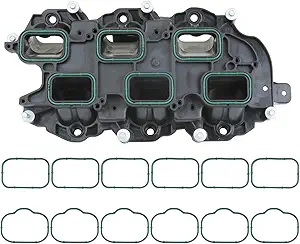 |
| Best Seller A high-volume bestseller chosen again and again | YEHERIT Full-Aluminum Lower Intake Manifold for 3.6L Pentastar |  |
1. MILIPARTS Aluminum Intake Manifold with Gasket for 3.2/3.6L V6

| Material Type | Aluminum |
|---|---|
| Included Components | Intake Manifold, gasket |
| Compatibility Engines | 3.2L and 3.6L V6 (listed fitments) |
| Manufacturer | MILIPARTS |
This MILIPARTS aluminum intake manifold replaces the common plastic unit on 3.2L and 3.6L V6 engines and is offered as a direct-style replacement with a gasket and some hardware. In use it provides a stiffer, metal alternative that resists cracking and broken bolt extraction problems that plague older plastic manifolds. Installation is typical for an intake manifold swap: remove the old manifold, clean sealing surfaces, fit the included gasket, and torque the bolts to spec. Customers report good sealing at injector ports and solid fitment on compatible vehicles, though the casting may have small rough edges that benefit from light deburring. A recurring practical limitation is bolt fitment: some long upper-mount bolts for certain Wrangler/Charger applications are not always included, so you may need to source a few specific M5 bolts or reuse factory fasteners. The aluminum construction improves durability but also requires attention to correct torque and threadlocker where recommended to avoid leaks or stress issues.
Best for: Buyers who want a durable, metal replacement for a failing plastic intake manifold and value long-term reliability over keeping the original plastic part.
Less Ideal for: If you prefer a complete hardware kit out of the box or lack access to correct fasteners, this part may require extra sourcing and is not ideal for a zero-surprise quick swap.
- Aluminum construction is far more durable than the factory plastic manifold and resists cracking.
- Included gasket simplifies sealing during replacement.
- Direct-replacement design matches original mounting points for straightforward installation on listed vehicles.
- Multiple customer reports of good injector fit and leak-free operation when installed correctly.
- Some necessary upper mounting bolts are not always supplied, requiring buyers to source specific M5 bolt lengths for certain applications.
- Exterior casting can have small sharp points or aluminum dust that may need light filing and cleaning before install.
Verdict: Choose this aluminum replacement if you want a stronger, longer-lasting swap to replace fragile plastic intake manifolds on 3.2L/3.6L V6 vehicles.
2. TEMSONE Aluminum Lower Intake Manifold with Gasket for 3.6L V6

| Fitment engine | 3.6L V6 |
|---|---|
| Compatible years | 2011-2018 Jeep Wrangler and other 3.6L V6 models listed |
| Material Type | Aluminum |
| Package contents | Intake manifold, gaskets, bolts |
This aluminum lower intake manifold swaps the factory plastic plenum for a more durable metal unit made for 3.6L V6 engines. It installs in place of the original lower manifold and ships with multiple gaskets and a set of bolts to simplify replacement. In real-world use the aluminum construction resists heat-related swelling and offers a firmer mounting surface that can reduce gasket movement and persistent vacuum or oil leaks that sometimes affect plastic manifolds. Several buyers report good fitment on Jeep Grand Cherokee and Wrangler applications and praise the part's machining and alignment. Expect to verify bolt quality and torque hardware before installation because some customers replaced the supplied fasteners with stronger bolts or reused factory fasteners to avoid breakage. Seals supplied appear adequate for many installs but some installers prefer higher-quality aftermarket gaskets. Overall this is a strong option if you want a longer-lasting, performance-minded replacement lower manifold, but plan to check or upgrade the supplied bolts and gaskets during installation.
Best for: Buyers aiming to upgrade durability and thermal stability of the lower intake on 3.6L V6 Jeeps who prioritize a solid, performance-oriented replacement over stock plastic parts.
Less Ideal for: If you want a completely bolt‑and‑go kit without inspecting or swapping fasteners and gaskets, this may add unexpected small sourcing or machine-shop steps.
- Full-aluminum construction resists heat-related deformation and is more durable than plastic.
- Includes gaskets and a comprehensive set of bolts for a mostly complete installation.
- Machined alignment and threaded holes reported to match cylinder head locations well.
- Improves mounting stability which can reduce long-term gasket wear and vacuum leaks.
- Some supplied bolts are reported weak or prone to breaking so buyers may need stronger hardware.
- Included seals have inconsistent quality for some users, prompting replacement with branded gaskets.
Verdict: Choose this aluminum lower intake manifold to replace fragile factory plastic for a more durable, performance-focused foundation on 3.6L V6 Jeep applications.
3. maXpeedingrods Intake Manifold with Gasket for 3.6L V6 Pentastar

| Application engine | 3.6L V6 |
|---|---|
| Package included | Intake manifold with seal |
| Material | Plastic |
| Manufacturer part number | HQ30XM |
This maXpeedingrods lower intake manifold is a direct-replacement design for Chrysler 3.6L Pentastar V6 applications and is intended to restore a failing or cracked factory manifold. It installs in the lower intake position and comes with a seal and bolts so you can swap it in during a maintenance or repair job. The part is made of plastic to keep cost and weight down, but the casting and mating surfaces look consistent with factory-style fitment. Practical benefits include full gasket and hardware inclusion and broad vehicle coverage for model years that use the 3.6L engine. Reported issues center on the supplied bolts, which several installers found to be softer than factory fasteners and in a few cases too short for some applications, so plan to use replacement high-strength bolts or verify bolt lengths before final torque. Expect a straightforward repair if you are comfortable removing the upper intake and following torque specs; this is best for restoring proper sealing and drivability rather than for performance gains.
Best for: A practical buyer looking to replace a cracked or leaking lower intake on a 3.6L V6 Wrangler who values a ready-to-install unit that restores sealing and drivability with minimal fuss.
Less Ideal for: Drivers seeking upgraded airflow or performance parts should look at purpose-built performance manifolds instead, and those wanting fully OEM-grade fasteners may prefer sourcing their own hardware before installation.
- Direct-fit replacement for 3.6L Pentastar V6 engines, simplifying installation
- Ships with gasket and most mounting hardware for a one-purchase repair
- Plastic construction keeps the unit lightweight and cost-effective
- Good fitment reported by multiple users when factory torque procedures are followed
- Supplied bolts have documented durability and length issues compared with factory fasteners
Verdict: A cost-conscious, direct-fit replacement that gets a leaky or damaged 3.6L Pentastar lower intake back to factory-style sealing with minimal parts hunting.
4. LLNSEAUTO Lower Intake Manifold with Gasket (3.6L V6)

| Manufacturer | LLNSEAUTO |
|---|---|
| Manufacturer Part Number | 5184199AF |
| Engine | 3.6L V6 |
| Fitment years | 2011-2021 |
This LLNSEAUTO lower intake manifold is a direct replacement assembly for 3.6L V6 applications and ships with gaskets and mounting hardware to simplify installation. It is typically used when the original manifold develops vacuum or coolant leaks, triggers engine codes, or causes poor running and oil consumption. The included upper and lower gaskets plus bolts mean you can swap the part without sourcing extra pieces, and multiple customer reports indicate good fitment on Ram 1500 and Jeep models. Being a budget-focused aftermarket option, the manifold appears to deliver factory-quality fit and restores proper sealing and engine performance for higher-mileage engines. Expect a service-level product rather than a performance upgrade: it restores stock function but does not improve flow or add horsepower. Compatibility is focused on the Chrysler/Dodge/Jeep/Ram 3.6L engines listed, so verify year and engine before buying. Installation still requires moderate mechanical skill and basic tools.
Best for: Buyers looking for an affordable, ready-to-install replacement to fix intake-manifold related leaks or check-engine issues on 3.6L Jeep/Chrysler/Dodge/Ram vehicles who prioritize value and complete hardware included.
Less Ideal for: Do not choose this if you want a performance manifold or are building an upgraded intake system; professional shops seeking branded OEM reman parts may prefer other sources.
- Comes with necessary gaskets and mounting bolts for a complete replacement
- Reported to fit factory mounting points on listed 3.6L V6 models
- Restores sealing and engine function for vehicles with intake manifold leaks
- Several buyer reports of straightforward installation and good fitment
- Aftermarket unit aimed at replacement rather than improving performance
Verdict: A budget-friendly, complete replacement lower intake manifold that restores factory sealing on 3.6L Chrysler-family engines without added performance.
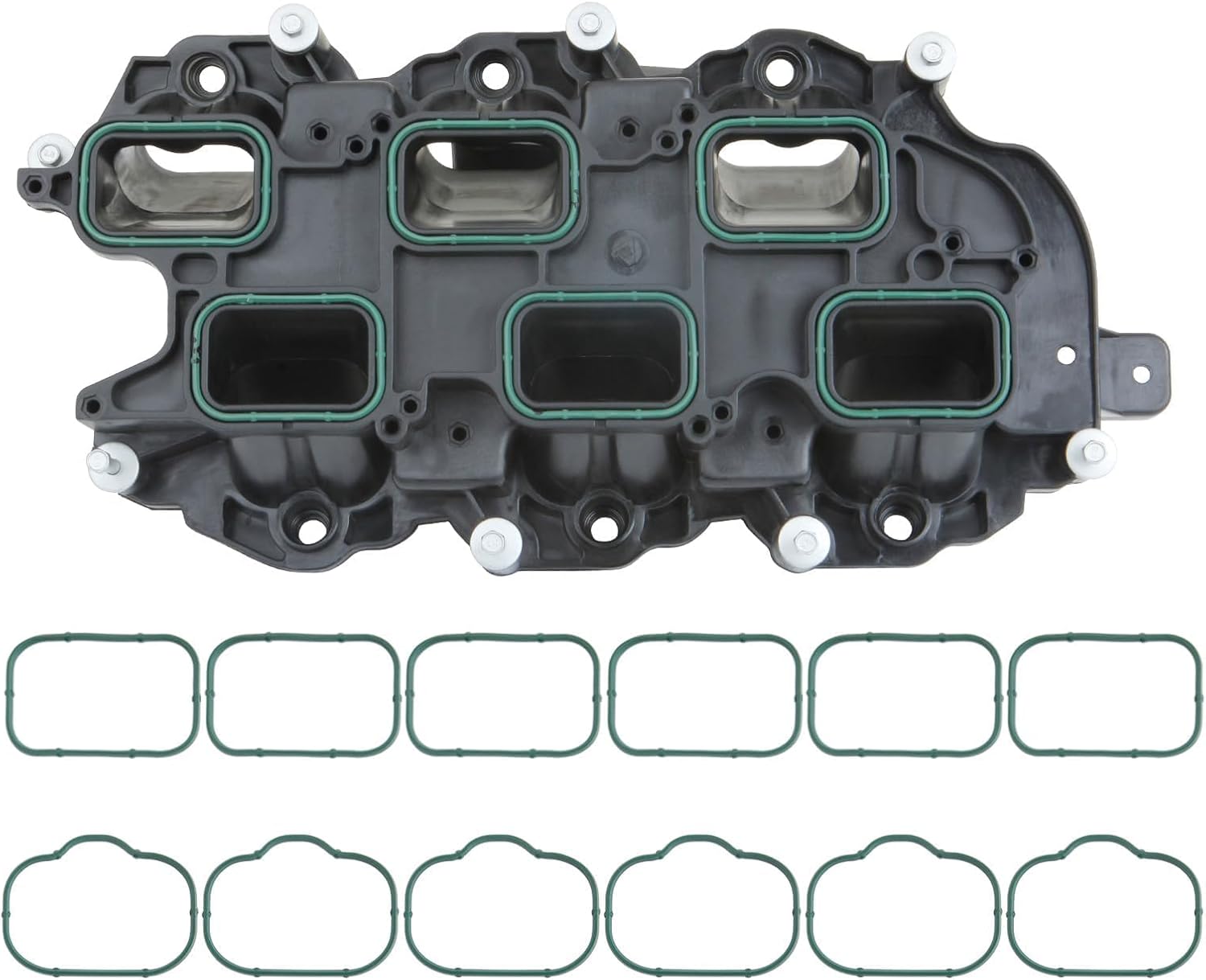
5. MITZONE Intake Manifold with Gasket and Bolts for 3.6L Pentastar V6
| Compatible engine | 3.6L Pentastar V6 |
|---|---|
| Included components | Intake manifold, gasket, bolts |
| Exterior material | ABS |
| Position | Inside |
This MITZONE intake manifold is a direct-style replacement for the 3.6L Pentastar V6 lower intake, sold as a kit with gaskets and bolts for a one-stop swap. It is molded from ABS and designed to resist high temperatures and warping that can cause leaks in older plastic manifolds. Typical use is to repair vacuum or coolant leaks and eliminate cracked housings without needing the original factory part. Buyers report that the part fits well, installs straightforwardly, and seals cleanly when torqued in sequence; the included hardware simplifies installation if original bolts are damaged. Expect decent durability for a non-factory aftermarket piece, though gasket quality appears variable across some reports so experienced installers sometimes reuse OEM gaskets. Also some customers describe the supplied bolts or gaskets as lower quality, so plan to have basic hand tools and possibly replacement gaskets on hand. For a cost-conscious repair that restores sealing and stops leak-related fault codes, this kit covers the essentials and installs with minimal fuss.
Best for: Buyers who want an affordable, ready-to-install replacement to stop leaks and restore reliable sealing on a 3.6L Pentastar V6 without sourcing multiple parts separately, and who prefer options supported by multiple positive user reports.
Less Ideal for: Drivers seeking a factory-branded OEM part or a long-term performance upgrade should consider dealer parts or performance manifolds instead of this aftermarket replacement.
- Designed to resist heat and deformation compared with older plastic housings
- Ships as a kit with gaskets and bolts for a ready-to-install replacement
- Fits the 3.6L Pentastar lower intake pattern and connects cleanly to upper intake on reported installs
- Some buyers report variable gasket and bolt quality requiring replacement parts in a few cases
Verdict: A practical, budget-friendly replacement kit that reliably stops leaks and gets a 3.6L Pentastar V6 back to service with minimal fuss.
6. YEHERIT Full-Aluminum Lower Intake Manifold for 3.6L Pentastar

| Fitment | 3.6L Pentastar engines (listed model years 2011–2021) |
|---|---|
| Material | Full aluminum |
| Manufacturer part number | 05184199AF |
| Includes | Gaskets and mounting hardware |
This YEHERIT lower intake manifold replaces the common plastic unit on 3.6L Pentastar engines with a full-aluminum casting intended to resist corrosion and cracking. It is used when repairing the valley area for oil cooler or intake-related work or as a preventative upgrade to avoid stripped bolt wells and plastic failures. The kit ships with gaskets and mounting hardware and most buyers report straightforward fitment on compatible vehicles; some reviewers noted brittle supplied screws and a missing bolt in one kit so inspect hardware before installation. Aluminum construction should improve long-term durability and reduce the risk of stripped threads during repeat service, but precise machining and sealing are critical; a few users reported tuning or check-engine issues that may indicate sealing or port-surface finish problems. Expect to spend standard shop time for manifold removal and reinstalling associated components like the oil cooler and sensors. For a risk-averse buyer this is a sensible durability upgrade if you or your shop will verify mating surfaces and torque carefully.
Best for: Buyers who want a longer-lasting, more serviceable replacement for the fragile plastic lower manifold on 3.6L Pentastar engines and who prefer a part that reduces the chance of stripped bolt wells during maintenance.
Less Ideal for: Shoppers who want a plug-and-play, guaranteed-perfect factory match without inspecting mating surfaces or verifying hardware before installation should consider a direct factory-quality replacement instead.
- Full-aluminum construction resists corrosion and is stronger than the original plastic lower manifold
- Designed specifically for 3.6L Pentastar fitment across many model years, simplifying parts selection
- Ships with gaskets and mounting hardware for a mostly complete replacement
- Many buyers report straightforward fit and improved durability after installation
- Some supplied fasteners reported as fragile or missing, so hardware may need replacement
- A few reviews mention fitment or sealing/machining issues that produced drivability codes on some engines
Verdict: A durable aluminum replacement aimed at preventing the common plastic lower-manifold failures on 3.6L Pentastar engines when installed and inspected carefully.
Choosing the Right 2007-2018 Jeep Wrangler Intake Manifold: Key Factors to Consider
Fitment and Generation Compatibility
Correct fitment is the single most important factor when selecting an intake manifold for a 2007-2018 Jeep Wrangler. The JK and JKU generation began in 2007 and carried through most of this range, while early JK and JKU models overlap late in the window. Manifolds must align precisely with intake ports, throttle body mounting patterns, and coolant or vacuum passages. Even small misalignment can cause gasket failure, sensor errors, or require adapter plates. When evaluating fit, check whether the manifold is specifically listed for the 2007-2018 Wrangler chassis codes and whether it uses factory bolt patterns and hose connections. Proper fitment reduces installation time and eliminates the need for aftermarket adapters, which can introduce leak points or require additional machining.
Sealing and Gasket Design
A reliable gasket interface prevents intake manifold leaks that commonly manifest as rough idle, fluctuating vacuum readings, or coolant contamination in some models. Look for manifolds that use multi-layer gaskets, captured O-rings, or raised sealing surfaces to maintain compression over time. Materials that resist heat cycling and exposure to oil or coolant will extend service life. Consider whether replacement gaskets and seal kits are readily available. Manifolds that integrate replaceable sealing components make routine maintenance or future repairs simpler and less expensive than sealed-for-life assemblies.
Internal Runner Geometry and Airflow
The internal shape and length of the runners determine how air flows into each cylinder and how the engine responds across the rev range. Short, large-diameter runners typically favor peak power at higher RPM, while longer, tapered runners tend to help low-end torque and throttle response—useful for off-road and towing situations common with Wrangler owners. Assess how the manifold balances throttle response versus top-end power relative to how you use the vehicle. A modestly tuned runner profile can improve everyday drivability without sacrificing reliability or forcing changes to fuel delivery and tuning.
Material and Thermal Resistance
Manifolds are commonly cast aluminum or reinforced thermoplastic. Aluminum offers durability and easier repairability but can transfer heat into the intake charge if not properly insulated. High-quality polymer manifolds reduce heat soak and can be lighter, but they must be engineered to resist deformation from under-hood temperatures and chemical exposure. Consider the thermal environment of a Wrangler that sees off-road low-speed work or long highway hauls. Materials that resist warping and maintain consistent internal volumes under heat cycling will preserve tune stability and reduce the likelihood of vacuum leaks.
Serviceability and Installation
How easy a manifold is to install and service affects both upfront labor and long-term ownership. Look for designs that provide clear access to spark plug wells, sensors, and vacuum fittings. Manifolds that reuse factory fasteners and maintain original torque spec patterns simplify installation and lower the risk of cross-threading or component damage. Evaluate whether the manifold requires special tools, modified fasteners, or re-torquing procedures. Availability of clear installation instructions and replacement hardware reduces install time and the chance of installation-related leaks or failures.
Compatibility With Engine Accessories and Tuning
Many Wrangler owners modify intake systems, throttle bodies, or superchargers. Select a manifold that either retains factory sensor ports and vacuum takeoffs or provides documented provisions for common accessory interfaces. This ensures you can add performance parts without extensive fabrication. Also consider how the manifold affects calibration needs. Significant changes to airflow can require fuel map adjustments or additional sensors. If you want a bolt-on upgrade that works with stock engine management, prioritize manifolds built to preserve OEM airflow characteristics or that include tuning guidance.
Understanding Common Intake Manifold Symptoms
Intake manifold symptoms on the 2007-2018 Jeep Wrangler often begin as drivability issues that are easy to notice during daily use. Typical signs include rough idle, stalling at low speeds, decreased throttle response, or unexplained check engine lights tied to mass airflow, manifold absolute pressure, or misfire codes.
Vacuum leaks around the manifold gasket or failed seals can also create fluctuating vacuum readings that affect cruise stability and idle control. Early diagnosis helps avoid collateral damage such as fouled spark plugs or degraded fuel economy.
- Rough or inconsistent idle that improves with RPM increase
- Hissing sounds from the intake area indicating a leak
- Loss of low-end torque or hesitation on throttle tip-in
- Coolant contamination in intake passages on engines where coolant flows near the manifold
Diagnosing Intake Manifold Leaks on JK and JKU Wranglers
Diagnosis starts with a visual inspection of the gasket perimeter and fasteners. On the JK and JKU era Wranglers, check the manifold-to-head mating surface for cracks or pitted sealing faces and ensure all bolts are torqued to spec. A handheld vacuum or smoke machine can quickly reveal leaks around gaskets or vacuum fittings.
Sensor readings provide additional clues. Compare manifold absolute pressure and mass airflow readings at idle and during steady cruise. Sudden changes or inconsistencies often point to a leak or a failed seal. For vacuum leak diagnosis, carefully trace vacuum lines and intake port plugs that are common on these engine variants.
- Use a smoke machine to locate elusive leaks
- Monitor MAP and MAF sensor data for inconsistent readings
- Inspect vacuum hoses and PCV connections for cracks
- Check torque on manifold bolts per factory torque sequence
When to Replace Versus Repair the Intake Manifold
Minor gasket failures and degraded seals are often repairable by replacing gaskets and sealant. If the manifold's sealing surface is intact and the structure is sound, gasket replacement preserves factory geometry and is typically the most cost-effective route. Gasket replacement also restores vacuum integrity without changing airflow characteristics.
Replace the manifold when you find cracks, significant warpage, or damage to integrated fittings that cannot be reliably repaired. Replacement is also the better option if you want a performance-oriented internal runner design or materials that the original manifold does not offer.
- Repair when sealing surfaces are smooth and structure is undamaged
- Replace if there is cracking, significant warpage, or missing mounting features
- Consider replacement for material upgrades such as thermal-resistant polymers
Installation Tips and Torque Practices
Follow the factory torque sequence and stages when installing a new manifold to prevent distortion. Many issues stem from under- or over-torqued bolts that compromise sealing. Clean mating surfaces thoroughly and replace all manifold fasteners if they show stretch or corrosion.
Use a calibrated torque wrench and follow a stepped torque pattern, bringing bolts up in stages. For the 2007-2018 Wrangler engines, refer to the vehicle's service manual for exact torque specs and sequences. After installation, recheck torque after an initial heat cycle to ensure no fasteners have relaxed.
- Hand-start all bolts before final torquing to avoid cross-threading
- Tighten in multiple stages and follow the proper bolt sequence
- Re-torque after the first heat cycle if recommended by the manufacturer
- Replace gaskets and any pre-installed O-rings during installation
Upgrading for Performance Versus Daily Reliability
If your priority is everyday drivability and longevity, choose a manifold that preserves stock runner lengths and sealing integrity. These maintain predictable vacuum behavior and minimize calibration needs. For owners seeking extra top-end power or support for forced induction, look for manifolds with larger plenums or shorter runners that favor higher RPM flow.
Keep in mind that performance-oriented manifolds may require fuel system upgrades or ECU tuning to fully realize gains. Balancing expected power benefits against the need for supporting modifications helps avoid unpleasant surprises after installation.
- Performance manifolds often improve peak power but can shift torque curve
- Stock-like replacements preserve idle quality and diagnostic stability
- Factor in potential calibration or fueling changes for performance builds
- Consider thermal management for sustained high-load operation
Maintaining the Intake Manifold: Cleaning and Inspection
Routine inspection and cleaning extend manifold life and help prevent vacuum leaks. Carbon buildup in the runners and throttle body bores can affect airflow balance and sensor readings, so periodic cleaning of accessible surfaces is beneficial. Use intake-safe cleaning methods and avoid aggressive solvents that may damage polymer manifolds.
During maintenance, inspect gasket faces, vacuum ports, and PCV connections for wear. Replace any brittle hoses and ensure that clamps and fittings seat properly to avoid future leaks.
- Clean throttle body bore and accessible runner surfaces carefully
- Inspect gasket surfaces for pitting or corrosion
- Replace brittle vacuum hoses and worn clamps
- Perform regular checks after off-road or high-load driving sessions
Still looking for the perfect fit?
Select your Jeep Wrangler configuration to see the most relevant Intake Manifolds recommendations
How We Chose the Best 2007-2018 Jeep Wrangler Intake Manifold
We prioritized intake manifolds that offer durable sealing, correct port alignment, and consistent airflow for the 2007-2018 Jeep Wrangler JK and JKU era vehicles. Our evaluation criteria emphasized fitment accuracy to factory mounting points and throttle body interfaces, gasket and sealing design to minimize vacuum and coolant leaks, and internal runner geometry that supports both low-end torque and midrange power on stock and mildly modified engines. We also considered material and manufacturing quality, looking for options with robust casting or reinforced polymer construction that resist warpage and heat soak. Additional filters included ease of installation with standard torque spec compatibility, availability of serviceable gaskets and fasteners, and compatibility with common Wrangler intake-related sensors and vacuum lines. Items excluded from the shortlist were manifolds that required extensive, irreversible engine modification, unsupported CNC-only prototype pieces, or units lacking clear documentation for 2007-2018 Wrangler fitment. The final selection balances long-term reliability, straightforward installability, and meaningful airflow improvements for everyday and off-road driving.
Our full evaluation process is outlined in our review methodology.
FAQ
What are the most common signs of a failing intake manifold on a 2007-2018 Wrangler?
Common signs include rough idle, loss of low-end torque, hissing noises near the intake, and diagnostic trouble codes related to airflow or misfires. Vacuum leaks at the manifold often cause fluctuating idle and reduced fuel efficiency.
Can I replace the intake manifold gasket myself on a JK and JKU Wrangler?
Yes, a competent DIYer can replace the intake manifold gasket if they have basic hand tools and follow the factory torque sequence. Ensure mating surfaces are clean and use correct torque specs. Complex cases with warped manifolds or integrated coolant passages may require professional attention.
How do I check for an intake manifold vacuum leak?
Start with a visual inspection and pressurize or smoke-test the intake to find leaks. You can also monitor MAP and MAF sensor readings for inconsistencies at idle and steady throttle. Careful use of intake-safe spray cleaners around gasket seams while the engine is running can reveal leak points by changing idle speed.
Does intake manifold cleaning improve performance on these Wranglers?
Cleaning can restore lost airflow and smooth out idle if carbon buildup is restricting runners or the throttle bore. Benefits are usually modest and most noticeable when buildup was severe. Cleaning does not replace the need to repair leaks or address damaged sealing surfaces.
Will changing the intake manifold affect engine tuning or sensors?
Significant changes to runner geometry or plenum volume can alter airflow characteristics and may require tuning adjustments to maintain optimal air-fuel ratios. If a replacement preserves OEM sensor ports and vacuum lines, it is less likely to require additional calibration.
How long should a properly installed intake manifold last on a Wrangler?
With correct installation and regular inspection, an intake manifold can last many years. Lifespan depends on material quality, exposure to heat cycles, and maintenance. Replacing gaskets and addressing vacuum lines proactively helps extend service life.
Final Verdict
Prioritize fitment, sealing, and material quality when choosing an intake manifold for your 2007-2018 Jeep Wrangler. Good sealing and correct bolt torque protect against vacuum leaks and drivability issues, while thoughtful runner geometry preserves the torque and throttle response that suit off-road and everyday use. If you want a straightforward reliability upgrade, favor manifolds that match factory interfaces and gasket systems. If you seek performance gains, be prepared to address tuning and supporting upgrades to fully benefit from changes to airflow.
Explore More:
- Check out all Jeep Wrangler parts & accessories
- Explore Intake Manifolds Maintenance & Repair Guides
- Explore Engine
- Browse all Auto Parts
