

Note: This article contains affiliate links. If you click on these links and make a purchase, I may earn a small commission at no extra cost to you. This helps support my research and content. Read my full affiliate disclosure here.
If your 1997-2006 Jeep Wrangler is showing rough idle, hard starts, or reduced power, the ignition coils are a common and serviceable cause. For TJ, LJ, and TJU-generation Wranglers built in this 1997-2006 span, coil failure often presents as intermittent misfires that affect drivability off-road and on pavement. This guide covers the top shortlisted ignition coils suitable for the 1997-2006 Wrangler, explains why fitment and electrical specs matter, and outlines practical checks you can use. We evaluated coils against durability and electrical output, plus plug boot fit and connector compatibility to make sure the replacements are dependable for typical Wrangler use. Read on to see the top options and the factors to weigh before you buy.
Looking for other parts? See all Jeep Wrangler parts & accessories.
Top Picks at a Glance
| Best Overall The best all-around choice for most situations | ENA Ignition Coil Pack Compatible with Jeep 4.0L L6 (single) |  |
| Best Quality Built to a higher standard if you want something more solid | MSD 82738 Ignition Coil Pack for 2000–2006 Jeep 4.0L |  |
| Best Value The sweet spot between price and what you get | BDFHYK Ignition Coil Pack UF296 — Single Replacement Coil |  |
| Best Budget The cheapest option that still gets the job done reliably | ECCPP Ignition Coil Pack UF97 (single) |  |
| Highest Rated A top-rated pick with lots of positive feedback | NGK Ignition Coil for Jeep TJ 4.0L L6 (2000–2006) |  |
| Most Popular A crowd favorite that many people choose with confidence | ECCPP Ignition Coil UF296 — Single Replacement Coil for 2000–2006 Jeep 4.0L/2.5L/2.4L |  |
1. ENA Ignition Coil Pack Compatible with Jeep 4.0L L6 (single)
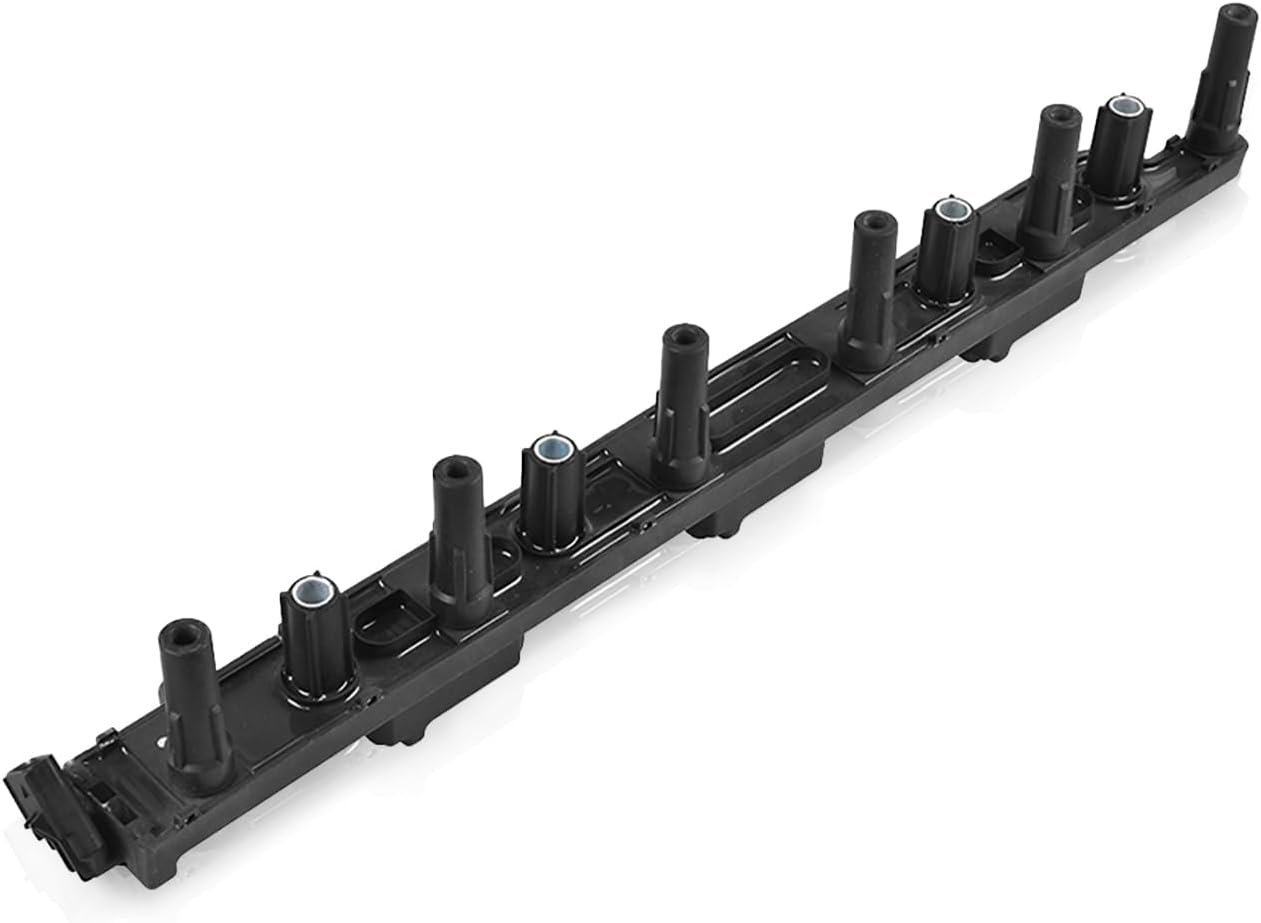
| Compatible Vehicle Type | Jeep |
|---|---|
| Voltage | 12V |
| Terminal Quantity | 4 |
| Installation Type | Bolt-On |
| Connector Gender | Male |
This ENA ignition coil pack is a direct replacement designed for Jeep 4.0L inline-six engines from the early 2000s and installs as a bolt-on unit. It supplies spark to four terminals, connects via a male connector, and runs on standard 12V electrical systems. In practice the coil pack is used to restore reliable ignition on Cherokee, Grand Cherokee, and TJ Wrangler models that suffer misfires or open-circuit coil failures. Buyers report straightforward installation and improved running when the unit fits correctly, and the plug-and-play form saves time for DIYers and independent shops. Notable features include multiple OEM-equivalent part numbers for cross-reference and vehicle-specific fitment to simplify matching. However, some users have reported variation in connector alignment and missing mounting hardware, so expect to reuse existing fasteners and double-check plug orientation during install. Build quality appears mixed across reviews, so routine testing after fitting is sensible if you want to confirm resolution of misfire codes.
Best for: Drivers who need a straightforward, budget-conscious replacement to fix misfires on early 2000s Jeep 4.0L inline-six engines and prefer an easy bolt-on fix they can install or have fitted quickly.
Less Ideal for: Shoppers seeking premium aftermarket ignition performance upgrades or who want a unit with guaranteed factory-matching connector geometry and included mounting hardware.
- Vehicle-specific fit for 4.0L Jeep L6 applications simplifies selection
- Bolt-on, plug-and-play design speeds DIY installation
- Lists several OEM-equivalent part numbers for easy cross-referencing
- Standard 12V operation and male connector match factory wiring harnesses
- Some reports of connector alignment differences that can complicate plugging in
Verdict: A practical, vehicle-specific replacement coil pack that gets early 2000s 4.0L Jeeps running again with minimal fuss.
2. MSD 82738 Ignition Coil Pack for 2000–2006 Jeep 4.0L

| Model Name | MSD 82738: 2000-2006 Jeep 4.0L Ignition Coil Pack |
|---|---|
| Installation Type | Bolt-On |
| Connector Gender | Female |
| Automotive Fit Type | Universal Fit |
| OEM Part Number | 56041476AB, 56041476AA |
The MSD 82738 is a bolt-on ignition coil pack made to replace the factory unit on 2000–2006 Jeep 4.0L engines. It installs in the factory location and uses the stock connector for a straightforward swap on compatible Jeeps. MSD highlights beefier construction and factory-quality specifications, which in real-world use can translate to more consistent spark delivery, smoother throttle response, and fewer misfires compared with a worn original coil. Buyers report improved top-end performance and slightly better fuel economy after installation, and many find the unit durable. Installation can be quick for a competent DIYer but some have noted tight clips and an occasionally awkward fit behind the firewall that may make the job fiddly. The part carries a limited one-year warranty and replaces the Chrysler part numbers listed by MSD, making it a practical upgrade for owners seeking dependable ignition performance without changing the engine management system.
Best for: Jeep owners focused on restoring or improving ignition performance who want a robust, direct-fit coil pack that enhances throttle response and reliability without changing engine electronics.
Less Ideal for: Drivers who prioritize an exact OEM match for long-term warranty parity or who prefer a coil with extended manufacturer coverage should consider other options.
- Direct bolt-in design that uses the factory mounting location and connector
- Stiffer construction aimed at more consistent spark and fewer misfires
- Reported improvements in throttle response and higher-end power delivery
- Replaces specific Chrysler/Jeep part numbers for direct compatibility
- Some installers report tight clips and a fiddly fit that can slow installation
- Limited one-year warranty offers shorter coverage than some competitors
Verdict: If you want a durable, directly compatible coil pack that can sharpen throttle response and reduce misfires on a 2000–2006 Jeep 4.0L, the MSD 82738 is a practical performance-minded replacement.
3. BDFHYK Ignition Coil Pack UF296 — Single Replacement Coil

| Compatible models | Selected 2000–2006 Jeep Cherokee/Grand Cherokee/TJ/Wrangler |
|---|---|
| Interchange numbers | UF296, 56041476AA, C1263, GN10529 |
| Connector gender | male |
| Installation type | Bolt-On |
This BDFHYK ignition coil is offered as a vehicle-specific, bolt-on replacement for Jeep models that use the UF296/C1263-style coils. It functions as the high-voltage transformer that sends the spark to the plug, so swapping a failing coil for this unit should stop misfires and restore smooth idling and throttle response when fitment is correct. The design calls out PBT and PPO plastics and an original-style control chip to improve heat and corrosion resistance compared with cheaper clones. Installation is straightforward for anyone comfortable removing the engine cover and unplugging the coil connector, and the package includes mounting housing and an install manual. Customer feedback is mixed: many buyers report reliable fixes and restored performance, while some report premature failure on certain vehicles, so long-term durability can vary. Use with good-condition spark plugs and clean connectors to avoid early problems. This coil is a practical option when you need a targeted replacement rather than replacing the entire set at once.
Best for: Buyers who want a targeted, do-it-yourself replacement to stop a single-cylinder misfire and restore running quality without replacing the entire ignition set.
Less Ideal for: If you prefer a full-set replacement for preventative maintenance or want a guaranteed longer-term warranty-backed part, consider purchasing a full kit or a higher-end branded coil set instead.
- Vehicle-specific fit for 2000–2006 Jeep engines listed, simplifying installation
- Bolt-on installation with included housing and manual for DIY replacement
- Uses higher-grade PBT and PPO materials and an original-style chip for improved heat and corrosion resistance
- Interchanges with common OEM part numbers (UF296, C1263, etc.) so it matches factory replacement form and connector
- Sold as a single coil so replacing multiple failing coils requires separate purchases
- Some reviews report intermittent early failures, so longevity may be inconsistent
Verdict: A practical, bolt-on single replacement coil for fixing misfires on the listed 2000–2006 Jeep engines when you want a quick DIY repair.
4. ECCPP Ignition Coil Pack UF97 (single)

| Included Components | ignition coils |
|---|---|
| Automotive Fit Type | Universal Fit |
| Connector Gender | male |
| Installation Type | Clamp On |
This ECCPP UF97 ignition coil is an aftermarket replacement intended to restore ignition performance on older Mopar V6 and V8 engines that use the UF97 interchange. It installs like a factory unit with a clamp-on mounting style and a male electrical connector, so swap-in replacement is straightforward for anyone comfortable with basic engine work. The coil uses epoxy resin insulation and rubber contacts to resist high under-hood temperatures and vibration, which helps maintain spark delivery during normal driving. Buyers report it can cure misfires and rough idle when an original coil fails, and the single-piece listing makes it useful as a spare to replace one bad cylinder circuit without changing all coils. Limitations include variable long-term reliability compared with factory-brand coils and occasional need to adjust mounting holes during fitment; some users have reported early failures. For budget-focused repairs this coil is a practical option, but keep in mind you may want a higher-end or OEM-equivalent unit if you need maximum longevity or warranty coverage.
Best for: Owners looking for the lowest-cost way to fix a single failed coil on an older Jeep or Mopar-derived engine who prioritize immediate drivability and easy DIY replacement.
Less Ideal for: Drivers who want guaranteed long-term durability or extended manufacturer support should consider factory-quality or branded replacement coils instead.
- Built to match common UF97 interchange numbers for direct replacement fit on compatible engines
- Epoxy resin insulation and rubber contacts designed to withstand high engine temperatures
- Clamp-on installation and standard male connector make DIY swap straightforward
- Sold as a single unit so you can replace only the failed coil instead of all coils
- Aftermarket build quality is mixed so longevity can vary compared with factory-brand coils
- Some units may require minor drilling or mounting adjustments for perfect fitment
Verdict: A cost-focused single-unit replacement that restores spark and corrects misfires quickly for older Mopar engines when you need an inexpensive DIY fix.
5. NGK Ignition Coil for Jeep TJ 4.0L L6 (2000–2006)

| Automotive Fit Type | Vehicle Specific Fit |
|---|---|
| Connector Gender | Female-to-Male |
| Installation Type | Plug In |
| Compatible with Vehicle Type | Car, Truck |
This NGK-compatible ignition coil is a direct replacement intended for Jeep TJ 4.0L L6 models from 2000–2006 and comes with a plug-in installation style and a harness adapter for early model fitment. In use it replaces a failing coil to restore smooth idle, consistent spark delivery, and eliminate misfires that commonly affect older Wranglers. The product emphasizes fit — connector is female-to-male and the listing notes vehicle-specific compatibility — which reduces the chance of wiring modifications during installation. Practical benefits include straightforward plug-in installation for DIYers and the inclusion of an adapter for 1999-style harnesses where needed. Limitations are that the part is targeted at a narrow set of model years and engine variants and may not interchange with other manufacturers' coils, so confirming fitment before purchase is essential. Buyers should expect a functional, no-frills replacement rather than upgraded performance or extended service features beyond factory-spec repair.
Best for: Buyers who prioritize dependable, factory-style repairs for older Jeep TJ Wranglers and want a straightforward, install-and-forget replacement to restore reliable running and eliminate ignition-related drivability issues.
Less Ideal for: Shoppers looking for performance upgrades, long-term warranty enhancements, or broad multi-vehicle interchangeability should consider other options.
- Direct vehicle-specific replacement for Jeep TJ 4.0L L6 (2000–2006) which simplifies fitment
- Plug-in installation with included harness adapter for earlier harness variants eliminates splicing
- Female-to-male connector matches factory-style electrical connections
- Designed to restore proper ignition performance and reduce misfires
- Compatibility is limited to specified TJ 4.0L years and may not be interchangeable with other coil designs
Verdict: Choose this coil when you need a dependable, factory-style replacement to quickly restore reliable ignition on 2000–2006 Jeep TJ 4.0L engines.
6. ECCPP Ignition Coil UF296 — Single Replacement Coil for 2000–2006 Jeep 4.0L/2.5L/2.4L

| Compatible models | Jeep Cherokee/Grand Cherokee/TJ/Wrangler 2000–2006 (listed engines) |
|---|---|
| Included components | 1 ignition coil |
| Installation type | Bolt-On |
| Connector gender | Female-to-Male |
| Manufacturer warranty description | 1 year |
This ECCPP UF296 ignition coil is a direct-fit replacement for specified Jeep 4.0L, 2.5L and 2.4L engines from the 2000–2006 era and installs as a bolt-on with the factory-style connector. It supplies the high-voltage pulse to the spark plug and is commonly used to cure misfires, restore throttle response, and clear check-engine codes linked to ignition failures. The coil is built with epoxy insulation and a rubber contact boot intended to resist heat and reduce leakage under heavy engine temperatures. Buyers report straightforward installation and reliable service on high-mileage Jeeps, though a few reviews note occasional fitment boot issues or early failures on non‑matched vehicles. This is a single-coil part sold with one year of support and is best used when replacing a known bad coil or swapping worn units during tune-ups; replacing all coils at once can be prudent on older engines to ensure uniform performance. Keep an eye on the rubber boot during removal and installation to avoid leaving pieces behind in the spark-plug well.
Best for: A buyer who wants a vehicle-specific, budget-friendly replacement to fix misfires or revive performance on a 2000–2006 Jeep Wrangler/TJ/Cherokee and values peer-reviewed reliability before buying.
Less Ideal for: Drivers who prioritize longest possible lifespan or factory-brand assurance for every component should consider higher-end or OEM-branded coils instead.
- Direct bolt-on design with factory-style connector for easy installation on listed Jeep models
- Epoxy resin insulation and rubber contact boot intended to resist high engine temperatures and reduce leakage
- Multiple user reports of successfully curing misfires and restoring engine performance on high-mileage Jeeps
- Some users reported the rubber boot can stick or detach during removal or not seat easily, requiring careful handling
- A few reviews describe early failures on non‑matched vehicles, so longevity is not guaranteed across all use cases
Verdict: A practical, vehicle-specific replacement coil that fixes misfires and gets older Jeeps running smoothly again with simple bolt-on installation and broad positive user feedback.
Choosing the Right 1997-2006 Jeep Wrangler Ignition Coil: Key Factors to Consider
Electrical Output and Spark Energy
Correct electrical output determines whether the coil can generate sufficient spark energy to ignite the fuel-air mixture reliably. Coils with the appropriate primary and secondary resistance values produce consistent spark across a range of engine loads, which reduces misfires and improves throttle response. On a 1997-2006 Wrangler, where ignition systems rely on predictable spark under variable RPM and vacuum conditions, pay attention to the spec sheet for voltage and resistance. A coil that is marginal in output may run acceptably at idle but fail under load or during hard acceleration, causing hesitation and potential catalytic converter stress.
Fitment and Connector Compatibility
Mechanical fitment is critical because coil mounting bosses, boot length, and electrical connectors must match the Wrangler's ignition harness and rocker cover layout. Even small differences in boot diameter or terminal type can cause poor contact, arcing, or difficulty seating the spark plug properly. Make sure replacement coils specify fitment for the 1997-2006 Wrangler and detail connector type and boot length. Correct fitment reduces installation time and avoids modifications that can compromise sealing or electrical integrity, which is especially important for vehicles used off-road where moisture and vibration are common.
Thermal and Vibration Durability
Wranglers are often driven in conditions that expose ignition coils to heat cycles and continuous vibration. Components that resist thermal breakdown and have reinforced windings and potting compounds will last longer and maintain consistent performance over time. Look for coils with materials and assembly methods rated for under-hood temperatures and frequent engine heat cycles. Vibration-resistant mounting and robust internal adhesives limit fatigue failures that show up as intermittent misfires after extended driving or rough-road use.
Insulation and Crossfire Prevention
Insulation quality and internal separation between windings affect the likelihood of crossfire or arcing to the engine block. Crossfire can cause multiple cylinders to misfire or trigger erratic engine behavior under load. A coil with good potting, a solid high-voltage boot, and reliable secondary insulation reduces the chance of stray arcing. For the Wrangler, this lowers the risk of unpredictable misfires that are hard to diagnose and helps maintain consistent idle and acceleration characteristics.
Serviceability and Installation Ease
For many Wrangler owners, the ability to swap a coil as a DIY task is an important consideration. Coils that install with basic hand tools and include clear connector and boot interfaces reduce installation time and the chance of installation errors. Consider whether the replacement requires additional seals, specific torque values, or special tools to seat the boot. Products that clearly document these steps and match OEM form factors make DIY replacement more successful and less likely to generate follow-up problems.
Warranty and Replacement Support
A reasonable warranty or support policy provides peace of mind if a coil fails prematurely. While warranty length is not a performance metric, it signals manufacturer confidence in build quality and materials. Evaluate warranty coverage in terms of duration and what it requires for claims. For the Wrangler, where driving conditions can be harsh, a warranty that accounts for vibration and heat-related failures is more useful than one that covers only static defects.
Why Ignition Coils Fail on 1997-2006 Wranglers
Ignition coils on 1997-2006 Wrangler engines typically experience failure modes tied to heat, vibration, and age. Repeated thermal expansion and contraction can crack internal windings or degrade insulation, leading to loss of spark energy or intermittent misfires.
Exposure to moisture, oil leaks, or persistent engine bay dirt can accelerate insulation breakdown and promote tracking or crossfire. Vibration from off-road use or loose mounting hardware can also produce fractures in internal components over time.
Understanding these common failure causes helps prioritize replacements built for thermal stability and mechanical resilience. When diagnosing a misfire, consider coils alongside spark plugs, wiring, and connectors because symptoms overlap and multiple elements can fail simultaneously.
- Heat cycles degrade internal insulation
- Vibration can crack windings or mounts
- Contamination promotes electrical tracking
- Age-related wear reduces spark energy
Common Symptoms That Point to a Bad Coil
Symptom patterns for coils in this Wrangler range often include a rough idle, a sudden drop in power under acceleration, and engine misfire codes on the ECU. Hard starts and elevated fuel consumption are also frequent indicators.
Misfires that come and go or only present under specific conditions, such as high load or when the engine is hot, often suggest a coil with thermal or intermittent failure rather than a permanently open circuit. Testing and observation help separate coil issues from spark plugs or fuel-related faults.
- Rough idle and stalling
- Intermittent or constant misfire codes
- Hard starting and poor throttle response
- Decreased fuel economy
Essential Tools and Parts for Replacement
Replacing ignition coils on a 1997-2006 Wrangler is straightforward with the right tools. Commonly needed items include a ratchet set, appropriate socket for spark plug well access, dielectric grease, and a torque wrench for final fasteners. A basic multimeter helps verify coil resistance and continuity before installation.
Keep a set of new spark plug boots and dielectric grease on hand to ensure a reliable seal and prevent arcing. If you plan to replace multiple coils, verify the coil-to-plug connector orientation and have any small mounting bolts or insulators ready to avoid delays during the job.
- Ratchet and socket set
- Torque wrench
- Multimeter for resistance checks
- Dielectric grease and clean rags
How Proper Coil Choice Affects Engine Performance
Choosing a coil with the correct electrical characteristics helps maintain stable combustion timing and avoids the uneven firing that reduces power and increases emissions. On the 1997-2006 Wrangler, consistent spark across RPMs ensures smoother throttle response and better drivability, especially when towing or climbing steep grades.
A coil designed with robust insulation and proper boot sealing reduces misfires caused by moisture or arcing. That predictability translates to fewer on-road failures and less time diagnosing intermittent faults during off-road outings.
- Stable combustion timing
- Fewer misfires under load
- Lower risk of moisture-related arcing
- Improved throttle response
Simple Diagnostic Steps Before Replacing a Coil
Before swapping coils, perform basic checks: inspect spark plug condition and gap, verify wiring and connectors for corrosion or looseness, and read stored ECU codes. A coil that only shows issues under certain conditions may test within spec cold but fail when hot, so account for that in your diagnostic steps.
Use a multimeter to measure primary and secondary resistance and compare readings to the expected range for the replacement options. When resistance numbers are out of range or show open circuits, replacement is justified. Also consider swapping coils between cylinders to see if the misfire follows the coil.
- Inspect spark plugs and gaps
- Check connectors and wiring harness for corrosion
- Use a multimeter to measure resistance
- Swap coils to isolate the failing unit
Maintaining Ignition System Reliability Long Term
Regular inspection of ignition boots, wiring, and coil mounting hardware reduces the chance of surprise failures. Keeping the engine bay clean and promptly addressing oil or coolant leaks prevents contamination that can accelerate coil deterioration.
When installing new coils, apply dielectric grease to the plug boots and confirm proper torque on fasteners. Periodic re-checks after initial installation help spot loosening hardware or connector issues that can develop after a few heat cycles and driving miles.
- Inspect boots and connectors during routine maintenance
- Keep engine bay clean and dry
- Use dielectric grease when installing boots
- Re-check mounting hardware after initial heat cycles
Still looking for the perfect fit?
Select your Jeep Wrangler configuration to see the most relevant Ignition Coils recommendations
How We Chose the Best 1997-2006 Jeep Wrangler Ignition Coil
We narrowed candidate ignition coils for the 1997-2006 Jeep Wrangler by applying practical, vehicle-focused filters that reflect how owners use and maintain these trucks. Key evaluation criteria included ignition coil electrical output and spark energy consistency, because correct voltage and secondary current directly affect misfire rates and drivability. Thermal and vibration durability were considered next, since Wrangler use often includes off-road vibration and extended idling in hot conditions. Fitment accuracy and connector compatibility were essential; coils had to match factory mounting, boot length, and OEM-style electrical plugs to avoid installation hassles. Resistance and insulation quality were reviewed to limit crossfire and premature breakdown. Ease of installation and clear part identification were also considered to support DIY replacement. We excluded partial or universal listings without explicit fitment information for the 1997-2006 Wrangler and any items lacking technical specs on primary/secondary resistance or connector type. The final picks balance electrical performance, longevity, and straightforward fitment for TJ, LJ, and TJU-generation Wranglers within the stated years.
Our full evaluation process is outlined in our review methodology.
FAQ
What are the most common symptoms of a failing ignition coil on a 1997-2006 Wrangler?
Common symptoms include rough idle, intermittent misfires, hard starting, and decreased power under acceleration. Problems that appear only when the engine is hot often point to a coil with thermal or intermittent failure.
Can I test a Wrangler ignition coil at home?
Yes. A basic multimeter can check primary and secondary resistance to see if values are within the expected range. Swapping coils between cylinders and observing whether the misfire follows the coil is another practical diagnostic method.
Should I replace all coils at once or only the bad one?
It depends on age and symptom spread. If one coil fails and the others are original with high mileage, replacing all at once can restore consistent performance. If only one shows clear signs and others test within spec, replacing only the failed coil is reasonable.
How does poor connector fit affect coil performance?
Loose or corroded connectors can cause voltage drops, intermittent contact, or arcing, which mimic coil failure. Ensuring clean, tight connectors prevents false diagnostics and improves long-term reliability.
Are there DIY safety tips for replacing ignition coils on this Wrangler?
Yes. Work with the engine cool, disconnect the negative battery terminal if you will be working on electrical connectors, avoid touching high-voltage components immediately after the engine has run, and use dielectric grease on boots for proper sealing.
Will a bad ignition coil trigger the check engine light?
Often it will. The ECU commonly stores misfire-related trouble codes when a coil is failing, but intermittent faults can sometimes clear or be harder to capture without targeted driving conditions.
Final Verdict
When choosing ignition coils for a 1997-2006 Jeep Wrangler, prioritize electrical output consistency, correct fitment, and thermal durability. Coils that match the Wrangler's connector and boot layout and that specify resistance and insulation quality reduce diagnosis time and the chance of repeat failures. Balance the benefits of replacing a single failed coil against replacing multiple units when age and mileage suggest widespread wear. Focus on proven fitment and spec sheets to choose coils that restore reliable starts and reduce misfires for everyday driving and off-road use.
Explore More:
- Check out all Jeep Wrangler parts & accessories
- Explore Ignition Coils Maintenance & Repair Guides
- Explore Engine
- Browse all Auto Parts
