

Note: This article contains affiliate links. If you click on these links and make a purchase, I may earn a small commission at no extra cost to you. This helps support my research and content. Read my full affiliate disclosure here.
If your Honda Pilot is showing rough idling, hesitation, or reduced fuel economy, choosing the right fuel injector can make a big difference in everyday drivability. The right injector restores proper spray pattern and flow, which helps the engine run more smoothly and efficiently. This guide narrows the field to the top shortlisted options for the Honda Pilot, focusing on fitment, flow consistency, and durability. Below you will find the top picks and a clear explanation of the evaluation criteria to help you pick the best injector for your needs.
Looking for other parts? See all Honda Pilot parts & accessories.
Top Picks at a Glance
| Best Reviewed A top-rated pick with lots of positive feedback | AISHAN 8-Hole Fuel Injectors Kit (6-Pack) for Honda 3.5L/3.0L V6 |  |
| Most Popular A crowd favorite that many people choose with confidence | Frezon 6-Pack Fuel Injectors for Honda Pilot 3.5L (2016–2020) |  |
| Best Quality Built to a higher standard if you want something more solid | Zxyculture Fuel Injector (replacement 16010RLV315) for 2016–2020 Honda Pilot / 2017–2019 Ridgeline / 2018–2019 Odyssey 3.5L |  |
| Best Budget The cheapest option that still gets the job done reliably | Usucrre Upgraded Fuel Injectors 6-Pack (Direct Replacement) |  |
| Most Sold A high-volume bestseller chosen again and again | SeyPon Set of 6 GDI Fuel Injectors for 3.5L Honda (Pilot 2016–2020) |  |
| Best Value for Money The sweet spot between price and what you get | NECATUO Set of 6 Fuel Injectors (FJ485) – Replacement for Honda 3.0L/3.5L |  |
| Best Overall The best all-around choice for most situations | Gledewen 6-Pack Fuel Injectors (8-Hole) for V6 Honda |  |
1. AISHAN 8-Hole Fuel Injectors Kit (6-Pack) for Honda 3.5L/3.0L V6

| Fitment | Honda Pilot 3.5L V6 (specified years in product listing) |
|---|---|
| Nozzle | 8 holes |
| Terminals | 2 pins |
| O-ring material | Viton |
| Package | 6 injectors |
These AISHAN fuel injectors are sold as a set of six designed to replace the factory injectors on compatible Honda V6 engines. They use an 8-hole atomizing nozzle and preinstalled Viton O-rings, which aims to deliver a finer fuel spray for more even combustion and reduced cylinder wear. In practice the kit is used when an engine is running rich, misfiring, or showing rough idle and the goal is to restore smooth running and fuel economy without costly dealership parts. Reviewers report straightforward performance improvements after install, and the atomized spray pattern helps with throttle response and reduced shaking. Installation on a Honda Pilot typically requires removal of the air intake and moderate mechanical skill; one reviewer noted a minor plastic cap covering spray holes that needed trimming. These are aftermarket replacements made to factory specifications rather than an OEM-branded part, so buyers should expect typical aftermarket variation and follow proper testing and cleaning procedures after fitting.
Best for: Reliability-focused buyers who prioritize restoring stable engine operation and fuel economy on a Honda Pilot and prefer replacing all injectors at once to avoid uneven wear.
Less Ideal for: Drivers seeking an OEM-branded injector or those without tools or experience for intake removal and injector installation should consider professional installation or alternative options.
- Sold as a full six-injector kit to replace all cylinders at once
- 8-hole atomizing nozzle for finer fuel spray and more uniform combustion
- Preinstalled Viton O-rings to simplify installation and improve seal longevity
- Made to match factory-style fit and two-pin electrical connector for direct replacement
- Aftermarket unit so performance and longevity can vary compared with factory-brand injectors
- Some units required minor trimming of protective plastic from the spray tip before installation
Verdict AISHAN’s six-pack of 8-hole injectors is a practical, reliability-focused aftermarket option to restore smooth operation on Honda Pilot V6 engines, with the caveat of typical aftermarket variability.
2. Frezon 6-Pack Fuel Injectors for Honda Pilot 3.5L (2016–2020)

| Brand | Frezon |
|---|---|
| Material | Metal |
| Outlet Connection Type | Threaded |
| Number Of Pieces | 6 |
These Frezon fuel injectors are sold as a six-piece, direct-replacement kit intended to replace the factory injectors on a Honda Pilot 3.5L (2016–2020). The injectors are flow matched and pressure, leak, spray and flow tested to help ensure consistent fuel delivery across cylinders, which can clear emission codes and smooth idle when faulty injectors are the cause. Installation is straightforward for a technician or competent DIYer because the parts are marketed as direct-fit and use the same connections as the factory units. The practical benefits are improved engine balance and the possibility of eliminating check-engine notifications tied to injector faults without needing fuel system modifications. Expect some variation in quality control based on user reports; a number of buyers report good results but a minority received used or faulty units and required seller support. If you prioritize convenience and a full set swap instead of individual troubleshooting, this kit provides a ready-to-install option for owners who want a complete injector replacement without aftermarket tuning.
Best for: Convenience-driven buyers who want a single, ready-made injector set for a one-session replacement to clear injector-related drivability and emission issues.
Less Ideal for: Drivers seeking long-term OEM-backed durability or those who prefer purchasing individual injectors for targeted repairs should consider factory-quality dealer parts or OEM alternatives.
- Flow-matched and pressure tested to promote even fuel delivery across cylinders
- Sold as a complete six-injector kit for one-step replacement of all bank injectors
- Designed as direct-fit replacements to simplify installation with factory connections
- Some buyers reported receiving used or faulty units indicating inconsistent quality control
- No warranty information included in the listed product details
Verdict A convenient, flow-matched six-injector kit that makes full injector replacement simple for Honda Pilot owners, but watch for occasional quality-control problems.
3. Zxyculture Fuel Injector (replacement 16010RLV315) for 2016–2020 Honda Pilot / 2017–2019 Ridgeline / 2018–2019 Odyssey 3.5L

| Compatible vehicles | 2016–2020 Honda Pilot 3.5L; 2017–2019 Ridgeline 3.5L; 2018–2019 Odyssey 3.5L |
|---|---|
| Replacement part numbers | 16010RLV315, 16010RLV305, 16010-RLV-315, 16010-RLV-305 |
| Exterior | Stainless Steel |
This Zxyculture fuel injector is an aftermarket direct-replacement unit intended for 3.5L Honda V6 engines used in the 2016–2020 Pilot, 2017–2019 Ridgeline, and 2018–2019 Odyssey. It installs as a straight swap for the factory injector number 16010RLV315 and is built to provide improved fuel atomization and balanced delivery that can help recover lost power, smooth idle, and improve responsiveness. The listing emphasizes corrosion-resistant construction and a stainless exterior, which suggests durability in everyday driving and under moderate heat cycles. Typical use is a one-for-one replacement during routine maintenance or when diagnosing a misfire or poor fuel economy. Practical benefits include easy installation with no modification, claimed OEM-fit compatibility, and potential fuel economy gains from better spray pattern. Limitations are the usual ones for aftermarket parts: long-term durability and exact flow matching to the original injector depend on manufacturing tolerances, and professional cleaning, calibration, or engine coding may be needed in some service scenarios.
Best for: Performance-oriented Honda owners who prioritize restoring or improving engine responsiveness and drivability with a direct replacement injector and value a straightforward installation.
Less Ideal for: Drivers who require guaranteed factory-identical flow testing, comprehensive performance tuning, or parts backed by OEM long-term service data should consider dealer or fully calibrated injector options instead.
- Direct-fit replacement for specified 3.5L Honda V6 applications, simplifying swap-in installation
- Stainless exterior and corrosion-resistant construction aimed at longer service life
- Designed to improve fuel atomization for smoother idle and restored throttle response
- No modifications required for installation when matched to the correct part number
- Aftermarket part so long-term reliability and exact flow calibration may vary from factory injector
- No explicit flow-rate or electrical specs provided, so bench-matching to original injectors is not verifiable
Verdict A solid, performance-minded direct-replacement injector for select Honda 3.5L V6s that prioritizes fit and improved fuel atomization but lacks published flow calibration data.
4. Usucrre Upgraded Fuel Injectors 6-Pack (Direct Replacement)

| Compatible engines | 3.5L V6 (listed applications include Pilot 2005-2011) |
|---|---|
| Material | Stainless Steel |
| Connections | Threaded inlet, NPT outlet |
| Number of injectors | 6 pack |
These Usucrre fuel injectors are sold as a direct replacement set intended to restore consistent fuel delivery for affected 3.5L V6 Honda engines. They install as a plug-and-play swap and are flow-matched to provide even fuel distribution across cylinders, which helps eliminate rough idle, hesitation, and poor acceleration. The injectors use stainless steel components, threaded inlet and NPT-style outlets, and include vibration-resistant electrical connectors aimed at durability in typical road conditions. For a budget-focused replacement they offer an immediate, practical benefit: quicker troubleshooting and return to normal engine operation without reprogramming or complex modifications. Limitations to consider are that these are aftermarket parts rather than factory-brand units and long-term durability versus an OEM injector is not guaranteed by supplied data; buyers should expect to monitor performance after installation and keep replacement O-rings and seals handy. Installation is straightforward for anyone comfortable with basic fuel-system work, but professional fitting is recommended if you lack experience working with fuel rails.
Best for: Budget-conscious owners prioritizing a cost-effective fix for rough idle or poor throttle response on a Honda Pilot 3.5L V6 who want a straightforward, do-it-yourself replacement to get the vehicle running smoothly again.
Less Ideal for: Drivers seeking a factory-branded injector or those who prioritize long-term proven lifespan over lower upfront cost should consider OEM replacements or higher-end aftermarket options.
- Sold as a matched 6-pack for full-bank replacement to ensure balanced fuel flow
- Plug-and-play fit claimed for direct swap into compatible 3.5L V6 Honda applications
- Stainless steel construction and vibration-resistant connectors for corrosion and road-vibration durability
- Designed to restore smooth idle and throttle response quickly after installation
- Aftermarket part so long-term reliability compared with factory replacements is not documented
- Specified inlet/outlet connection types may require checking compatibility with some fuel-rail setups
Verdict A budget-friendly, plug-and-play six-pack that restores fuel delivery for Honda Pilot 3.5L V6 engines, with sensible performance for the price but without OEM longevity guarantees.
5. SeyPon Set of 6 GDI Fuel Injectors for 3.5L Honda (Pilot 2016–2020)
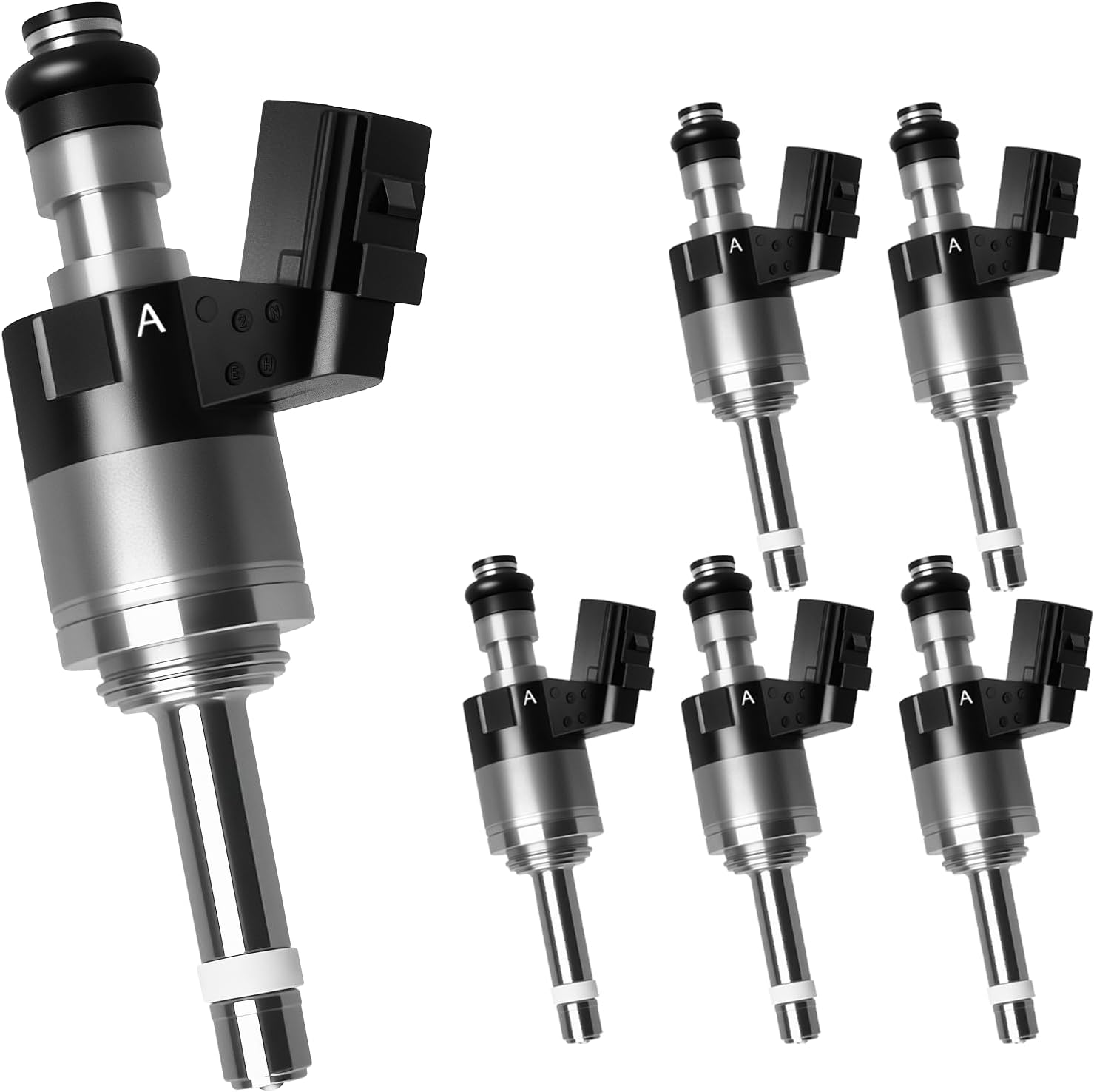
| Compatible engines | 3.5L Honda Pilot (2016-2020) |
|---|---|
| Pack quantity | 6 pieces |
| Manufacturer | SeyPon |
| Manufacturer part number | US241227DP01 |
These SeyPon fuel injectors are sold as a complete set of six to replace the GDI injectors on a 3.5L Honda Pilot (2016–2020). They are intended for full-bank replacement after injector failure or as part of a refresh to restore engine smoothness and fuel delivery. The kit lists factory part numbers for direct fit and includes preinstalled seals and O-rings to simplify installation. In practice the metal and plastic components look well made, electrical connectors seat reliably, and users report improved idle quality and fuel economy after installation. Expect a labor-intensive install because intake and fuel rail access on the V6 requires several components to be removed. The pack arrives without sealed fuel-test packaging so store them carefully if you do not install immediately. These injectors offer a practical, lower-risk alternative to dealership units for mainstream owners who want a direct-replacement solution, but professional installation or careful DIY work is recommended to avoid damage during fitting.
Best for: Risk-averse mainstream buyers seeking a direct-replacement injector set for routine repair or maintenance who prioritize a straightforward fit and predictable results over bargain aftermarket options.
Less Ideal for: Owners looking for performance-tuned or flow-matched injectors for modifications should consider higher-spec options; those wanting a plug-and-play swap without intake disassembly may prefer professional fitting services.
- Sold as a complete 6-piece set for full-bank replacement
- Lists factory part numbers for straightforward fit confirmation
- Preinstalled seals and O-rings reduce preparation and speed installation
- Solid metal and plastic construction with reliable electrical connectors
- Arrives in unsealed packaging which may require storage precautions
- Installation is labor-intensive and typically needs engine intake removal
Verdict A practical six-injector replacement set that matches factory part numbers and delivers a reliable, cost-effective fix for 3.5L Honda Pilot owners willing to handle a more involved installation.
6. NECATUO Set of 6 Fuel Injectors (FJ485) – Replacement for Honda 3.0L/3.5L

| Item model number | FJ485 |
|---|---|
| Manufacturer | NECATUO |
| Manufacturer Part Number | NEC-PYZ2-6P-FJ485 |
| OEM Part Number | FJ485, 800-1492N, 16450-RCA-A01, 16450-RGL-A01 |
These NECATUO injectors are sold as a complete set of six intended to replace worn or failed injectors on Honda 3.0L and 3.5L engines, including Pilot models that use the FJ485 family of part numbers. Installed in the fuel rail, they meter fuel to each cylinder to correct symptoms such as rough idle, poor acceleration, or reduced fuel economy. The kit claims factory-style fit and uses corrosion-resistant composite components and high-temp viton O-rings for durability. In real-world use this means you can expect plug-and-play replacement in most cases and smoother, more consistent fueling once bad injectors are swapped. Customer feedback is mixed: many buyers report straightforward fit and reliable operation, but a notable minority found faulty units or poor O-rings that required replacement. That variability suggests you should inspect and bench-test injectors before installation and keep replacement seals on hand. For a buyer optimizing cost and function on a Honda Pilot, this kit can restore drivability at a much lower outlay than OEM injectors, but there is some risk of receiving units that need minor rework or warranty exchange.
Best for: Practical optimizers seeking the most cost-effective way to restore drivability on a Honda Pilot prioritize upfront savings and are willing to verify and prep parts before installation.
Less Ideal for: Buyers who demand guaranteed out-of-the-box reliability or who prefer dealer-sourced factory-quality parts should consider OEM replacements or professional remanufactured injectors instead.
- Sold as a complete set of six for full-bank replacement so all cylinders get matched injectors
- Designed to match factory fitment and plug directly into existing connectors on compatible Honda 3.0L/3.5L engines
- Corrosion-resistant composite construction and high-temp viton O-rings aimed at durability
- Lower cost compared with factory-quality replacement injectors, good value for cost-conscious repairs
- Quality control appears inconsistent with some reports of dead or leaking injectors on receipt
- Some users needed to replace O-rings or service individual injectors before installation
Verdict A budget-friendly full set for Honda Pilot fuel-injector replacement that can restore performance if you accept some variability in QC and inspect parts before install.
7. Gledewen 6-Pack Fuel Injectors (8-Hole) for V6 Honda

| Quantity | 6 pieces |
|---|---|
| Nozzle type | 8 holes |
| Compatible engines | V6 Honda models (listed fitment) |
This Gledewen 6-pack supplies replacement 8‑hole fuel injectors designed to replace the factory units on compatible V6 Honda engines. The set is used when injectors wear or clog and the engine shows misfires, rough idle, or reduced fuel economy; you install them directly into the fuel rail and intake after clearing any fuel system faults. Notable points include the 8‑hole spray design aimed at finer atomization for improved combustion and the full six‑injector kit so you can service an entire bank at once. Buyers can expect straightforward swap‑in fitment when matched to the correct engine and part numbers, and many reports show restored smoothness and fewer misfires after replacement. Limitations to consider are variable quality control observed by some users and the fact that these are aftermarket replacements rather than factory-brand parts, which can affect long‑term durability on higher‑mileage engines. If you need OEM‑level testing or extended longevity guarantees, a branded remanufactured injector may be preferable.
Best for: Balanced all‑round buyers who want a cost‑effective, full‑kit solution to restore smooth running and reduce misfires on their Honda V6 without overpaying for dealer parts.
Less Ideal for: Drivers looking for factory‑remanufactured injectors with extended validated life or warranty support should consider branded remanufactured options instead.
- Full six‑injector kit covers all cylinders at once for consistent performance across the engine
- 8‑hole nozzle design promotes finer fuel atomization and can improve combustion smoothness
- Advertised direct fit to factory part numbers for straightforward installation when matched properly
- Some customers reported occasional poor units out of the box indicating uneven quality control
- Aftermarket part may not match the long‑term durability of manufacturer remanufactured injectors
Verdict A budget‑minded full six‑injector replacement with an 8‑hole spray pattern that restores running quality for V6 Honda engines but carries the usual aftermarket variability in long‑term durability.
Choosing the Right Honda Pilot Fuel Injector: Key Factors to Consider
Flow Rate And Matching
Flow rate determines how much fuel an injector delivers at a given pulse width. Matching flow rates across all injectors is critical because even small differences can lead to uneven cylinder fueling, rough idle, and increased vibration. When replacing injectors, aim for units that match the factory flow specifications or the flow profile recommended for the engine.
Manufacturers often provide nominal flow numbers in cc/minute; installers should verify that replacement injectors are within a close tolerance of each other. If you plan performance modifications, consider how higher flow rates affect fuel trim and whether the engine management can compensate. In short, accurate and matched flow keeps combustion balanced and drivability consistent.
Spray Pattern And Atomization
The injector spray pattern affects how fuel mixes with air in the intake and combustion chamber. A uniform, fine atomization promotes efficient combustion, reduces unburned hydrocarbons, and helps maintain smooth throttle response. Poor spray patterns cause pooling or uneven distribution, which often shows up as hesitation or surging.
Look for injectors designed to reproduce the factory spray geometry for the Honda Pilot engine. Some aftermarket options advertise improved atomization, which can aid combustion stability, but the key consideration is consistent, repeatable spray behavior across the set to avoid cylinder-to-cylinder variability.
Seal Quality And Leak Resistance
Injector seals and O-rings form the barrier between the fuel rail, intake port, and the injector body. High-quality seals resist heat, fuel additives, and compression set, which reduces the risk of external or internal leaks. Leaks can cause rich conditions, fuel odor, or hard starting and may be mistaken for other issues.
When selecting injectors, check the materials used for O-rings and any sealing interfaces. Replacements that include new, correctly sized seals reduce installation risk. Also consider whether the injector design reduces the number of sealing surfaces to minimize potential leak points.
Electrical Compatibility And Connector Fit
Proper electrical connection ensures consistent injector actuation and correct pulse timing. Mismatched connectors or poor pin fit can cause intermittent operation, misfires, or communication faults with the engine control unit. Confirm that replacement injectors use the same connector type and pin layout as the factory units for the Honda Pilot.
Wiring harness adapters are a workaround but add complexity and potential failure points. Choosing units with direct plug-in compatibility simplifies installation and reduces the chance of electrical issues that mimic injector failure.
Durability And Corrosion Resistance
Injectors operate in a harsh environment of heat, fuel, and vibration. Materials that resist corrosion and wear extend service life and maintain consistent performance. Stainless steel bodies, plated internals, and robust pintle or valve materials reduce the likelihood of sticking or degradation over time.
Consider injector options that specify resistance to common fuel additives and contain protective finishes on electrical terminals. Durability matters because a failing injector can cause progressive engine damage or repeated troubleshooting and repairs.
Serviceability And Maintenance
Some injectors are easier to test, clean, and service than others. Options that allow for ultrasonic cleaning or that have replaceable filters and screens can be refreshed rather than replaced, which may extend usable life. Being able to perform bench flow testing or use standard diagnostic procedures simplifies troubleshooting.
Think about how accessible the injectors are in the engine bay and whether routine maintenance like injector cleaning will be practical. Serviceable designs reduce long-term ownership costs and help maintain consistent performance.
FAQ
How do I know if a Honda Pilot fuel injector is failing?
Signs often include rough idle, hesitation under acceleration, decreased fuel economy, or an illuminated check engine light with misfire codes. You may also notice fuel odor or irregular engine RPM. These symptoms are common but not exclusive to injectors, so diagnostic testing is usually necessary to confirm the injector as the source.
Can I replace a single bad fuel injector or should I replace the whole set?
Replacing a single injector is possible if diagnostics verify only one unit is out of spec. However, because injectors on the same engine age together, many technicians recommend replacing all injectors in the set to ensure matched flow and consistent performance. The best choice depends on injector condition, mileage, and long-term plans for the vehicle.
Is fuel injector cleaning effective and when should it be done?
Cleaning can restore performance when deposits are the main issue and the injector is otherwise mechanically sound. Professional ultrasonic cleaning or fuel-system cleaning procedures often improve spray pattern and flow. If an injector has internal mechanical damage or electrical faults, cleaning will not resolve those problems.
What tests confirm a fuel injector is working correctly?
Common checks include a resistance measurement with a multimeter, pulse verification with an oscilloscope or noid light, and flow testing on a bench or via measured fuel trims during operation. Visual inspection for leaks and listening for consistent injector clicking can also help. A combination of electrical and flow tests gives the most reliable diagnosis.
Could a leaking injector cause starting or running problems?
Yes, leaks that allow fuel to seep into the intake or combustion chamber can cause hard starting, rough running, or strong fuel smell. Leak symptoms may be intermittent and worsen when the vehicle sits. Proper sealing and correct installation are important to prevent leak-related issues.
Will higher-performance injectors require changes to engine management?
Upgrading to injectors with higher flow capacity often requires adjustments to fueling strategy, either through ECU tuning or recalibration of fuel delivery parameters. Without proper tuning, larger injectors can cause rich conditions or poor driveability. Plan for management changes if you go beyond factory flow rates.
How We Chose the Best Honda Pilot Fuel Injector
We evaluated candidate injectors based on fitment accuracy to Honda Pilot engine specifications, measured flow consistency across the injector set, spray pattern quality, materials and seal durability, electrical connector compatibility, and ease of installation. Flow consistency matters because uneven delivery causes rough idle and cylinder imbalance. Spray pattern quality influences combustion efficiency and emissions. Durable seals and corrosion-resistant materials reduce the chance of leaks and long-term failures. Connector and mounting compatibility reduce installation time and the risk of poor electrical contact. We also considered whether injectors were serviceable for cleaning and testing. Exclusions: we omitted units that did not match factory flow rates, lacked clear fitment data for the Honda Pilot, or used nonstandard electrical connectors. The goal was to surface reliable, properly sized injectors that restore correct fuel delivery and long-term reliability.
Our full evaluation process is outlined in our review methodology.
Conclusion
Choosing the right injector for a Honda Pilot means balancing flow accuracy, spray pattern, and long-term durability. Prioritize injectors that match factory flow rates, use reliable seals, and plug in without electrical modifications.Also weigh serviceability and corrosion resistance to reduce future maintenance. Focusing on those factors helps restore smooth idling and consistent throttle response while minimizing repeat repairs.
Explore More:
- Check out all Honda Pilot parts & accessories
- Explore Fuel Injectors Maintenance & Repair Guides
- Explore Fuel System
- Browse all Auto Parts
