

Note: This article contains affiliate links. If you click on these links and make a purchase, I may earn a small commission at no extra cost to you. This helps support my research and content. Read my full affiliate disclosure here.
If your 2013-2017 Honda Accord is showing rough idle, inconsistent throttle response, or reduced fuel economy, the injectors could be the cause. Replacing injectors that no longer atomize fuel correctly or that leak can restore drivability and help the engine run cleaner. This guide focuses specifically on fuel injectors compatible with the 2013-2017 Accord engine families and lists six shortlisted options chosen for fitment, flow accuracy, and durability.Below you will find our top picks followed by practical guidance on what to consider, how injectors are evaluated, and common maintenance and troubleshooting steps to help you select the right injector for this Accord range.
Looking for other parts? See all Honda Accord parts & accessories.
Top Picks at a Glance
| Best Overall The best all-around choice for most situations | yeedaky Fuel Injector Set FJ1208 (164505LAA01) — 4-Pack |  |
| Best Quality Built to a higher standard if you want something more solid | X AUTOHAUX 16450-5LA-A01 Flow-Matched Fuel Injectors (4-pack) |  |
| Best Value The sweet spot between price and what you get | NECATUO Set of 4 Fuel Injectors (FJ1208) |  |
| Best Budget The cheapest option that still gets the job done reliably | ANGLEWIDE Fuel Injectors 4-Pack for Honda Accord/CR-V 2.4L (2013–2017) |  |
| Highest Rated A top-rated pick with lots of positive feedback | GAGOLCAR Fuel Injector Replacement Kit (4-Pack) FJ1208 |  |
| Most Popular A crowd favorite that many people choose with confidence | MACAX Set of 4 Fuel Injectors FJ1208 Compatible with 2013–2017 Honda Accord 2.4L |  |
1. yeedaky Fuel Injector Set FJ1208 (164505LAA01) — 4-Pack

| Part number | FJ1208, 164505LAA01 |
|---|---|
| Fitment | Honda Accord 2013-2017; CR-V 2015-2017; Acura ILX 2016-2017; TLX 2015-2017 |
| Quantity | 4 pieces |
| Manufacturer | yeedaky |
This four-piece injector kit replaces the factory injectors on 2.4L Honda and Acura engines used in 2013–2017 Accords, 2015–2017 CR-Vs, and select ILX and TLX models. Each injector is built to the original mounting and electrical interface so installation follows the factory procedure and fits into the stock fuel rail. In use the injectors restore the correct spray pattern and fuel metering, which can cure rough idle, cold-start hesitation, and poor fuel economy caused by worn or clogged injectors. The pack is intended as a full-bank replacement, so you get matched flow across all four cylinders. Buyers should plan to replace single-use fuel rail fittings and seals during the swap and follow torque and seal-installation guidance to avoid leaks. The product emphasizes quality control and seller support, but it is an aftermarket unit so expect slight differences from factory parts in finish and sourcing documentation.
Best for: Someone who wants a straightforward, matched-bank replacement to restore factory-style performance and drivability on a 2013–2017 2.4L Honda or Acura engine and who values practical maintenance results over OEM branding.
Less Ideal for: If you prioritize factory-sourced parts with original manufacturer paperwork or need injectors for engines outside the listed 2.4L Honda/Acura applications, look elsewhere.
- Full set of four injectors for bank replacement ensures matched flow between cylinders
- Designed to the original mounting and electrical interface for direct fitment
- Restores correct spray pattern to improve idle, cold starts, and fuel economy
- Seller provides pre- and after-sales technical support
- Aftermarket unit so documentation and finish may differ from factory-sourced parts
Verdict: Choose this matched four-pack when you need a direct-fit, full-bank replacement to restore smooth idle and fuel economy on 2.4L 2013–2017 Honda and Acura engines.
2. X AUTOHAUX 16450-5LA-A01 Flow-Matched Fuel Injectors (4-pack)

| OE numbers | 16450-5LA-A01, 16010-5LA-306, 16010-5LA-305 |
|---|---|
| Flow type | 6 Holes Disc |
| Voltage | DC 12V |
| Pin count | 2 Pins |
These X AUTOHAUX injectors are sold as a direct replacement set matched to the original flow and coil resistance for the 2.4L Honda/Acura applications listed. They are used as a one-for-one swap into the fuel rail and come with preinstalled O-rings and a six-hole disc orifice intended to reproduce the OEM spray pattern. In practice they restore proper fuel delivery after worn or leaking injectors, help stabilize idle and throttle response, and can reduce roughness that develops from inconsistent flow between cylinders. The listing notes high-impedance coils for compatibility with factory wiring and recommends professional installation and a tune or ECU reset after fitment. Practical limitations are that these are aftermarket parts rather than factory-brand injectors, so long-term durability can vary and proper fitment checks are required before installation. Also, replacing injectors may reveal other fuel- or ignition-related issues that need attention to get the full performance benefit.
Best for: Drivers seeking to regain or improve engine responsiveness and consistent fueling on 2013–2017 2.4L Honda/Acura engines who prioritize matched flow and a direct-fit replacement over buying dealer-brand parts.
Less Ideal for: Buyers wanting a factory-brand injector with a known long-term warranty or those unwilling to have a technician perform installation and post-install tuning.
- Flow-matched to original specifications to help restore consistent cylinder fueling
- Preinstalled high-temperature O-rings to reduce risk of fuel leaks
- High-impedance coil design compatible with factory electrical systems
- Four-injector package includes all pieces needed for a bank replacement
- Aftermarket part with variable long-term durability compared with factory-brand injectors
- Installation requires mechanical skill and a recommended tune or ECU adjustment after fitment
Verdict: A cost-effective, flow-matched direct replacement for restoring consistent fueling and throttle response on 2013–2017 2.4L Honda and Acura engines.
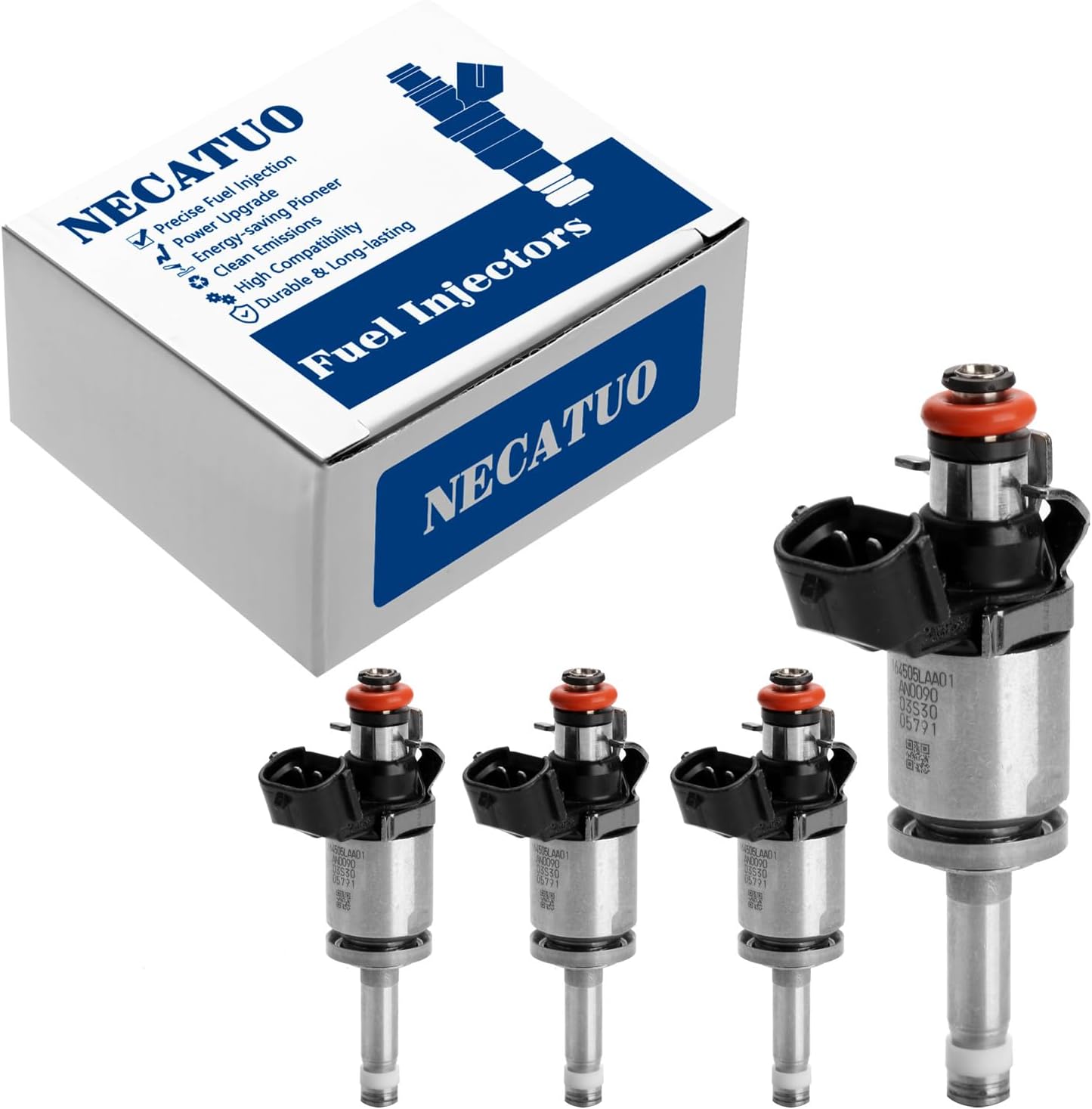
3. NECATUO Set of 4 Fuel Injectors (FJ1208)
| Exterior Finish | Composite with Viton O-Rings |
|---|---|
| Inlet Connection Type | O-ring |
| Outlet Connection Type | Push Fit |
| Thread Size | FJ1208 |
| Valve Type | Fuel Injector |
These NECATUO fuel injectors are a direct-replacement style kit sold as a set of four for compatible 2.4L Honda/Acura applications. They use corrosion-resistant composite bodies and high-temperature Viton O-rings, and connect via O-ring inlet and push-fit outlet for factory-style installation. In real-world use they restore balanced fuel delivery for symptoms like rough idle, poor acceleration, or reduced power when original injectors wear. The composite construction keeps the injector lightweight and resistant to corrosion, while the Viton seals improve longevity under heat and ethanol blends. Installation is typical for fuel injector swaps and should be straightforward for a DIYer with basic engine access; fuel system safety and a proper fitment check are required before purchase. Limitations include the lack of detailed flow-rate or calibration data, so they may require verification for precision-tuned engines or systems needing matched flow values. The kit is marketed with a one-year support promise but purchasers should confirm fitment against their vehicle before installation.
Best for: Buyers wanting a practical, cost-conscious replacement to restore drivability on 2013–2017 Accord 2.4L engines who value a straightforward swap and durable seals.
Less Ideal for: Do not choose these injectors if you need measured flow-matched injectors for performance tuning or if you require manufacturer flow documentation for dyno-level calibration.
- Direct-replacement design compatible with listed 2.4L Honda/Acura part numbers
- Composite body resists corrosion for longer service life
- High-temperature Viton O-rings improve seal durability with modern fuels
- O-ring inlet and push-fit outlet match factory connection styles
- No published flow rate or calibration specs for precision matching
Verdict: A practical, factory-style four-pack replacement that restores fuel delivery and durability for 2.4L Honda/Acura engines without premium calibration data.
4. ANGLEWIDE Fuel Injectors 4-Pack for Honda Accord/CR-V 2.4L (2013–2017)

| Fitment | 2013–2017 Honda Accord 2.4L and listed CR-V models 2.4L |
|---|---|
| Number of Pieces | 4 |
| Inlet Connection Type | Standard automotive fuel injector connection |
| Outlet Connection Type | NPT |
| O-Rings Included | Yes |
These ANGLEWIDE injectors are an aftermarket, direct-replacement set intended for 2.4L Honda Accords and compatible CR-V models from 2013–2017. They come as a four-piece kit with O-rings and factory-style electrical terminals so a DIYer or technician can swap them in without major modifications. The listing emphasizes precise injection control and an adjustable nozzle angle to help restore fuel delivery, which in practice should improve idle smoothness and throttle response on engines with worn or leaking injectors. Build appears to use metal-composite and plastic components and the kit is prepared for straightforward installation, though the product note about possible apron fitment means you may need to swap or adjust the sealing sleeve in some vehicles. This is a budget-focused alternative to factory replacements: it gives a reasonable way to repair fuel delivery symptoms at lower cost, but it is an aftermarket part so long-term durability and exact match to factory flow rates may vary compared with factory-quality injectors.
Best for: Buyers who need an affordable, straightforward replacement to restore fuel delivery and smooth running on 2013–2017 2.4L Honda Accords or compatible CR-Vs and who are comfortable installing or having a mechanic install aftermarket parts.
Less Ideal for: Drivers seeking a guaranteed factory-identical flow match or long-term OEM-equivalent durability should consider factory-replacement injectors or serviced remanufactured units instead.
- Sold as a ready-to-install four-pack with O-rings and OEM-style terminals
- Promotes precise fuel metering to improve idle and throttle response
- Compatible with many 2.4L Accord and CR-V model years listed for direct replacement
- Lower-cost aftermarket option compared with factory replacement injectors
- Aftermarket construction may not exactly match factory flow characteristics or long-term durability
- May require replacing or adjusting the injector apron/seal on some vehicles for a proper fit
Verdict: A budget-friendly, ready-to-install four-pack that restores fuel delivery and drivability on 2013–2017 2.4L Honda Accords and compatible CR-Vs without the cost of factory replacements.
5. GAGOLCAR Fuel Injector Replacement Kit (4-Pack) FJ1208

| Brand Name | GAGOLCAR |
|---|---|
| Model Number | FJ1208 |
| Number of Pieces | 4 |
| Number of Ports | 8 |
These GAGOLCAR fuel injectors are a direct replacement kit intended to replace common factory part numbers for 2.4L Honda/Acura engines. They are used to restore proper fuel delivery when injectors are clogged, leaking, or failing and are installed in-line at the intake rail during routine engine repairs. Construction notes list corrosion-resistant composite bodies and high-temperature Viton o-rings, which should help durability in a hot engine bay, and the parts are manufactured to meet OEM-style specifications for spray pattern and flow balance. For a reliability-focused buyer this kit can return smooth idle, steady acceleration, and more consistent fuel economy compared with worn injectors. The product is a basic replacement rather than a performance upgrade, so expect factory-level flow rather than increased horsepower. Fitment depends on matching the listed part numbers to your vehicle and proper installation and calibration; inexpensive kits sometimes vary in long-term consistency compared with factory parts, so professional installation and a proper fuel system cleaning are recommended.
Best for: Buyers prioritizing dependable, factory-style replacements to restore smooth idle and consistent fueling in 2013–2017 Honda Accord 2.4L engines who want a complete set for a single service job.
Less Ideal for: Drivers seeking performance upgrades, altered flow rates, or tunable injectors for modified engines should choose purpose-built performance injectors instead.
- Matches multiple factory part numbers for straightforward replacement
- Corrosion-resistant body and Viton o-rings designed for high-temperature durability
- Sold as a complete four-piece kit for full-bank replacement
- Manufactured to OEM-style specifications for balanced fuel delivery
- Kit is a factory-replacement style product rather than a high-performance injector
- Long-term consistency may vary compared with original factory units
Verdict: Choose this four-pack when you want a direct, OEM-style replacement set to restore reliable fueling in a 2.4L Honda Accord from 2013–2017.
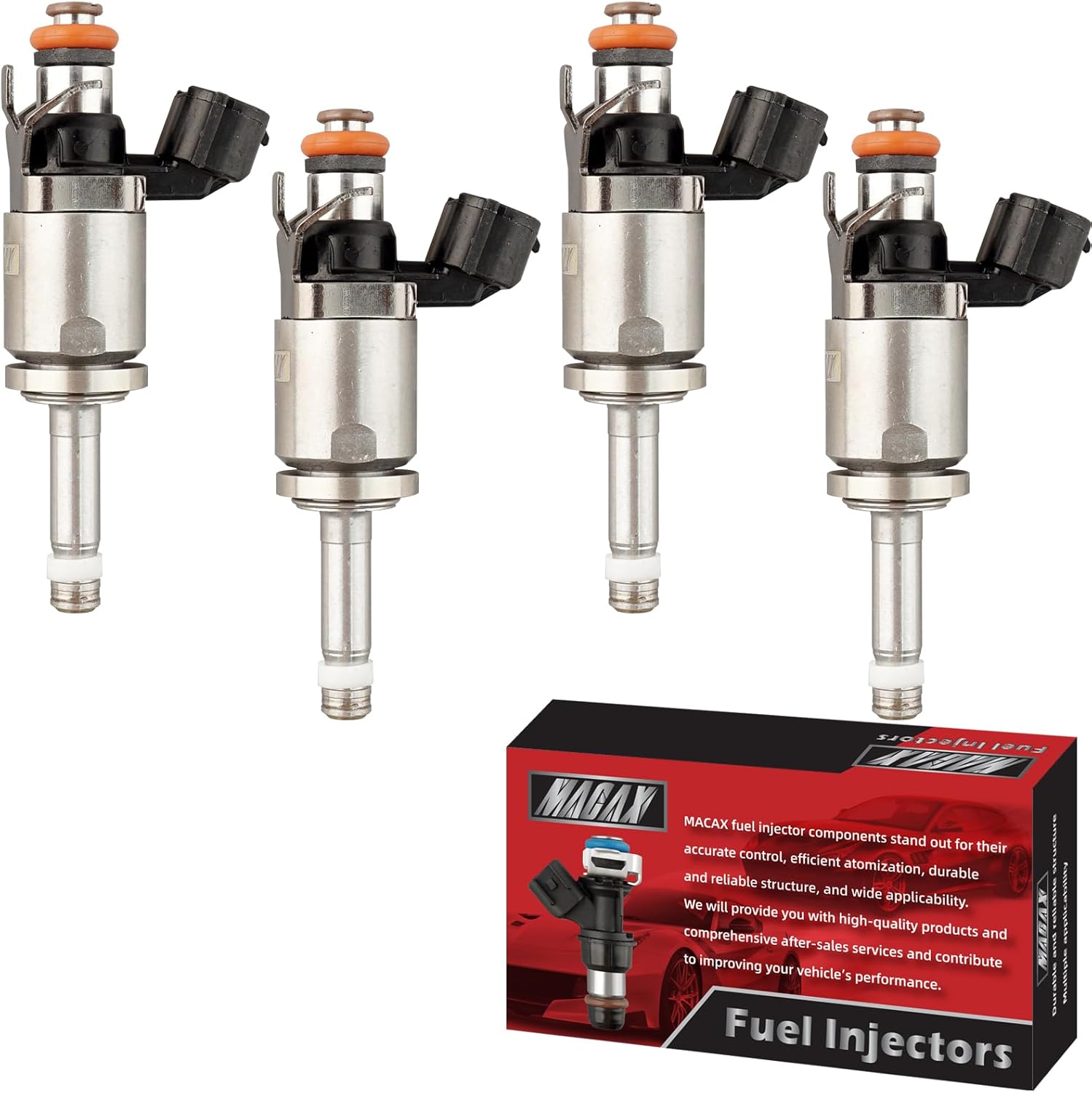
6. MACAX Set of 4 Fuel Injectors FJ1208 Compatible with 2013–2017 Honda Accord 2.4L
| Compatible engines | Accord 2.4L 2013-2017 |
|---|---|
| Replaces part numbers | FJ1208, 16010-5LA-305, 06160-5LA-305, 06160-5A2-305 |
| Material feature | Corrosion-resistant composite |
| O-ring type | High-temp viton |
These MACAX injectors are sold as a complete set of four intended to replace the factory units on 2013–2017 Honda Accord 2.4L engines. They are presented as factory-style replacements with corrosion-resistant composite bodies and high-temp viton O-rings, so installation follows the same steps as OEM injectors: seat the seals, press the fuel rail into place, torque the rail bolts and check for leaks. For buyers they promise smooth engine operation and more balanced fuel delivery compared with worn injectors, and the package includes basic installation guidance and a one-year after-sales policy. User feedback is mixed which is important to note: several buyers report straightforward installs and restored performance while others experienced misfires or internal leaks that required returns or reprogramming the engine computer. Expect good value when the parts arrive in spec, but be prepared to verify leak-tight seating, test for misfires after installation, and involve a technician for calibration or troubleshooting if needed.
Best for: Buyers looking to replace all four injectors on a 2013–2017 Accord 2.4L who prioritize cost savings and are comfortable verifying fit and post-install troubleshooting or using a shop for calibration.
Less Ideal for: Drivers who want a guaranteed, worry-free OEM-level part without any possibility of rework or who lack access to diagnostic tools or a mechanic for setup and verification.
- Full set of four injectors covers all cylinders for consistent replacement
- Designed to match multiple OEM part numbers for direct-fit compatibility with 2.4L Accord engines
- Corrosion-resistant composite body and high-temp viton O-rings for improved durability
- Includes installation guidance and a one-year after-sales replacement service
- Customer reports show inconsistent quality control with some units leaking or causing misfires
- May require ECU adaptation or professional tuning after installation on some vehicles
Verdict: A cost-effective complete injector kit for 2013–2017 Accord 2.4L owners who want to replace all cylinders at once and are willing to verify installation and address occasional quality or tuning issues.
Choosing the Right 2013-2017 Honda Accord Fuel Injector: Key Factors to Consider
Flow Rate and Consistency
Accurate flow rate is essential because uneven delivery will cause some cylinders to run richer or leaner than others, producing rough idle, misfires, and increased emissions. For the 2013-2017 Accord, choose injectors with published flow specs that match or closely mirror factory output. Flow consistency matters both across the set and over time; look for data on shot-to-shot variability and tolerance ranges.
When comparing options, consider flow at the engine's typical operating fuel pressure rather than only at low-pressure lab values. Consistent flow reduces the need for heavy ECU trim corrections and helps maintain steady fuel trims, which in turn keeps drivability smoother and avoids triggering long-term fuel trim faults.
Electrical Compatibility and Connector Fit
Injectors must match the Accord's electrical connector, pinout, and coil resistance to function reliably with the factory wiring and ECU. Mismatched resistance can change injector pulse width requirements and lead to fueling errors or trigger fault codes. Confirm coil impedance specifications and ensure the connector housing aligns precisely with the factory harness to prevent poor contacts.
A secure plug fit also prevents intermittent signals caused by vibration. For installations where length of wiring or terminal type differs, expect to replace connector ends or use proper OEM-style pigtails rather than splicing, which reduces risk of future electrical faults.
Seal Materials and Leak Resistance
Fuel injector O-rings and seals must resist heat, fuel blends, and age-related hardening. Poor seal materials lead to external leaks, fuel odor, and potential engine bay fire hazards. For the Accord, select injectors whose O-rings are rated for automotive fuels and elevated underhood temperatures found near the intake manifold.
Beyond the O-rings, inspect injector inlet and pintle seat machining quality. Tight tolerances and consistent surface finish reduce the chance of press-fit leaks at the rail or intake. Durable sealing prolongs time between services and reduces the chance of air ingestion that would upset fueling.
Spray Pattern and Atomization
Proper atomization determines how well fuel mixes with incoming air and therefore directly affects cold starts, throttle response, and emissions. The 2013-2017 Accord's intake and combustion chamber geometry expects a particular spray shape and droplet size distribution. Choose injectors designed to reproduce a similar multi-hole or targeted spray pattern to ensure good mixture preparation across engine speeds.
Poor atomization increases raw fuel deposits on intake ports and valves, escalating throttle body and intake cleaning intervals. For performance or mileage-oriented owners, spray quality is as important as raw flow rate because it influences how efficiently the engine can combust the supplied fuel.
Resistance to Deposits and Maintainability
Fuel quality and driving patterns influence how quickly injectors accumulate varnish or carbon. Some injector designs use internal coatings, improved filters, or materials that slow deposit formation. For the Accord, especially on higher-mileage engines, picking injectors with proven deposit resistance can reduce the frequency of professional cleaning.
Also consider whether the injector assembly allows basic service like replacing O-rings or inlet screens without full replacement. Maintainable components and availability of service parts reduce lifetime ownership costs and simplify routine injector maintenance.
Fitment and Installation Considerations
Even when injector specs match, physical dimensions such as overall length, skirt diameter, and spray tip position must align with the Accord intake to ensure correct seating and clearance. Improperly seated injectors can bind, leak, or have altered spray targeting. Verify manufacturer fitment notes for 2013-2017 Accord engine variants and inspect for matching retainer clip style.
Installation factors also include whether new O-rings and retainers are provided and whether any special tools are required. Straightforward installation reduces labor time and lowers the chance of error during replacement.
Common Symptoms That Point to Injector Problems
Injectors that are leaking, clogged, or electrically failing produce symptoms that overlap with other fuel or ignition issues. Typical signs on a 2013-2017 Accord include rough idle that improves when tapping the fuel rail, hesitation or stumbling at cruise or acceleration, and a noticeable drop in fuel economy without other changes to driving habits.
You may also encounter check engine lights with misfire or fuel trim-related codes. Fuel odor in the engine bay suggests external leakage, while a persistent rich condition can indicate dribbling injectors that fail to close completely.
- Rough idle or misfires under light load
- Poor throttle response or hesitation on acceleration
- Strong fuel smell around the intake or fuel rail
- Unexplained drop in mpg or black smoke from the exhaust
- Intermittent misfires that sometimes clear after restarting
Diagnostic Steps Before Replacing Injectors
Start with basic checks that isolate the injector as the root cause. Use fuel injector testing tools or a scan tool to view short-term and long-term fuel trims and per-cylinder misfire counts. High negative trims or cylinder-specific misfires point toward uneven fueling.
A noid light can confirm injector pulse from the ECU, while resistance checks across the injector coil can reveal open or shorted windings. If you suspect leakage, a visual inspection with the engine running can reveal wetness at the injector O-rings.
- Scan for misfire and fuel trim codes
- Use a noid light to verify injector pulses
- Measure injector coil resistance and compare to spec
- Perform a fuel pressure and leakdown check
When to Clean Injectors Versus Replace
Fuel injector cleaning can restore spray pattern and flow if the issue is deposit-related and the injector is otherwise mechanically and electrically sound. Ultrasonic cleaning and professional flow-bench services remove varnish and rebalance flow in many cases. For the 2013-2017 Accord, cleaning is a reasonable first step when symptoms are mild and electrical tests pass.
Replace injectors when coil resistance is out of spec, when there is physical damage to the tip or housing, or when cleaning does not restore flow consistency. Also consider replacement if sealing surfaces show scoring or O-rings repeatedly fail.
- Consider cleaning for slight spray degradation or deposits
- Replace if electrical tests fail or mechanical damage exists
- Use flow testing to confirm cleaning effectiveness
Installation Tips for the 2013-2017 Accord
Prepare the intake and fuel rail before installing new injectors: clean the injector bores, replace all O-rings with new, correctly sized parts, and lubricate seals with clean engine oil or manufacturer-recommended lubricant. Ensure fuel pressure is relieved before removal to avoid spray and fuel loss.
Tighten fuel rail hardware uniformly and double-check connector seating. After installation, run the engine and inspect for leaks at each injector. Reset fuel trims by allowing the ECU to relearn or by following the specific relearn procedure for this Accord range if required.
- Always use new O-rings and seals
- Relieve fuel pressure before removal
- Check for leaks at idle after installation
- Allow ECU to relearn or follow relearn steps if needed
Maintaining Injector Performance Over Time
Regular fuel system maintenance helps extend injector life. Use quality fuels and consider periodic fuel system cleaning if the vehicle accumulates many short trips or experiences frequent idling, conditions that accelerate deposit formation. Monitoring fuel trims and engine performance can catch degradation early.
Keep replacement seals on hand and address minor leaks promptly. If you install higher-flow or modified injectors for performance reasons, be aware that ongoing maintenance needs may increase, and tuning may be required to keep air-fuel ratios safe.
- Use recommended fuel grades and avoid prolonged idling
- Schedule periodic professional cleaning when necessary
- Address any fuel leaks immediately to avoid secondary damage
Still looking for the perfect fit?
Select your Honda Accord configuration to see the most relevant Fuel Injectors recommendations
How We Chose the Best 2013-2017 Honda Accord Fuel Injector
We shortlisted injectors based on criteria directly relevant to the 2013-2017 Honda Accord platform. Primary evaluation points included measured flow consistency to ensure even fuel distribution across cylinders, OEM-equivalent electrical and hydraulic fitment to guarantee correct connector and spray pattern engagement, and sealing reliability to prevent inlet or fuel rail leaks that commonly affect longevity. Durability factors such as resistance to varnish and deposits, materials for internal pintle and seat construction, and tolerance to fuel additives were also weighed.Serviceability and compatibility with standard fuel pressures used on the Accord were checked, along with availability of repairable components such as replaceable filters or O-rings. We excluded injectors lacking clear flow specifications, those with non-standard electrical pinouts, or parts that required injector body modifications. Final selections balance reliable fitment, predictable flow behavior, and durable sealing to minimize installation surprises and reduce repeat service work.
Our full evaluation process is outlined in our review methodology.
FAQ
How do I test injectors on my 2013-2017 Accord?
Begin with a scan for misfire and fuel-trim data, then use a noid light to confirm injector pulse from the ECU. Measure coil resistance and compare to the factory spec and, if available, perform a flow or balance test to check shot-to-shot delivery.
Can injector cleaning fix a rough idle on this Accord?
Often it can if deposits are the root cause and the injector is electrically intact. Cleaning improves spray pattern and flow, but if electrical faults, leaks, or mechanical damage exist, cleaning may not fully resolve the issue.
What causes fuel injector leaks in the Accord intake manifold?
Common causes include hardened or damaged O-rings, improper seating, or scoring on the injector body where the seal contacts. Age-related deterioration and exposure to heat accelerate seal failure.
Will replacing injectors affect engine tuning or ECU operation?
Replacing injectors with like-for-like flow and impedance generally requires minimal ECU adjustment beyond normal relearn. Significant changes in flow rate or injector dynamics may necessitate fueling recalibration or tuning to maintain correct air-fuel ratios.
How often should injectors be cleaned on a 2013-2017 Accord?
Cleaning intervals vary depending on fuel quality and driving patterns, but many owners consider inspection or cleaning every 50,000 to 80,000 miles if symptoms arise. Preventive cleaning can be scheduled sooner for high-mileage or stop-and-go driven vehicles.
What are signs of a leaking injector on the engine bay?
You may notice a strong fuel smell, wetness around the injector base or fuel rail, chafed wiring from fuel exposure, or persistent rich running conditions. In severe cases, a fuel leak can be visible while the engine is idling.
Final Verdict
When selecting injectors for a 2013-2017 Honda Accord, prioritize correct flow specification and durable sealing above all else. Matching electrical characteristics and ensuring proper spray pattern will minimize drivability issues and reduce the need for repeated servicing. Balance the choice between cleaning and replacement based on test results, and follow correct installation procedures to prevent leaks.Ultimately, pick injectors that align with the Accord's fuel pressure and connector standards, invest in good seals and fitment, and monitor performance after installation so you can address any remaining calibration or maintenance needs quickly.
Explore More:
- Check out all Honda Accord parts & accessories
- Explore Fuel Injectors Maintenance & Repair Guides
- Explore Fuel System
- Browse all Auto Parts
