

Note: This article contains affiliate links. If you click on these links and make a purchase, I may earn a small commission at no extra cost to you. This helps support my research and content. Read my full affiliate disclosure here.
If your 1997-2001 Toyota Camry is showing rough idle, poor throttle response, or higher fuel consumption, the fuel injectors are a common place to investigate. Choosing the right fuel injector matters because fitment, spray pattern, and flow rate directly affect drivability and emissions on these engines. This guide shortlists the top options that fit the 1997–2001 Camry and explains the key technical and practical differences to help you pick the right replacement.The selections below cover direct-fit and performance-minded injectors that match the Camry's fuel rail and electrical connectors. We evaluated each choice for flow consistency, sealing, and long-term reliability so you can address common injector-related faults with confidence. Read on for installation considerations, maintenance tips, and the factors that should guide your decision.
Looking for other parts? See all Toyota Camry parts & accessories.
Top Picks at a Glance
| Best Overall The best all-around choice for most situations | NewYall Pack of 6 Fuel Injectors for 1998–2001 Toyota Camry and compatible models |  |
| Best Quality Built to a higher standard if you want something more solid | AURUS Remanufactured Denso Fuel Injector Set (6) for 3.0L 1MZ-FE |  |
| Best Value The sweet spot between price and what you get | EMTMOUN 6-Pack Fuel Injectors for Toyota 3.0L V6 (Fits 1997–2004 Toyota/Lexus) |  |
| Best Budget The cheapest option that still gets the job done reliably | IXGKHC Replacement Fuel Injector Kit for Toyota 2.2L (Set of 4) |  |
| Highest Rated A top-rated pick with lots of positive feedback | AISHAN 6-Pack Fuel Injectors Compatible with Toyota Camry V6 3.0L (1994–2001) |  |
| Most Popular A crowd favorite that many people choose with confidence | JDMON Fuel Injector Set, Replacement for 3.0L V6 Toyota/Lexus (6‑pack) |  |
| Best Seller A high-volume bestseller chosen again and again | TRQ Fuel Injector Set for 1992–2000 Toyota 2.2L and 1998–2000 RAV4 2.0L (4‑pack) |  |
NewYall Pack of 6 Fuel Injectors for 1998–2001 Toyota Camry and compatible models

| Number of Ports | 6 |
|---|---|
| Valve Type | electromechanical |
| Inlet Connection Type | Flange |
| Outlet Connection Type | Flange |
These NewYall injectors are sold as a pack of six to replace the original injectors on compatible Toyota and Lexus V6 engines from the late 1990s and early 2000s. They are electromechanical injectors with flanged inlet and outlet connections and brass and stainless-steel exterior components. Buyers will install the set when repairing a misfire, poor idle, or fuel delivery issue and want a full-bank replacement to restore even fueling. The practical benefit of a full set is matched injector flow across cylinders and lower cost compared with buying factory parts individually. Some customers report easy fitment and straightforward installation while others found O-ring sizing or minor leaks required replacing seals after installation, so plan to check for leaks and have replacement O-rings handy. These are a budget aftermarket alternative that can return drivability for an aging Camry but may require a little extra verification at install compared with a factory-quality injector.
Best for: Buyers who want a cost-effective, full-bank replacement to restore fueling balance and driveability on an older Camry and prefer to repair rather than replace the vehicle.
Less Ideal for: Anyone who prioritizes a direct factory-quality part with no inspection or adjustment on install or who is unwilling to check and possibly swap O-rings during installation should consider a factory replacement instead.
- Sold as a complete six-injector set for full-bank replacement
- Electromechanical valve type matches common fuel injector systems for the vehicle era
- Metal exterior components (brass and stainless steel) for corrosion resistance
- Flanged connections designed to match factory-style mounting and plumbing
- Some reports of incorrect or loose O-rings leading to fuel leaks requiring replacement seals
Verdict: A budget-friendly six-pack of direct-fit aftermarket injectors that gets an older Camry running smoothly again when you need a full-bank replacement.
AURUS Remanufactured Denso Fuel Injector Set (6) for 3.0L 1MZ-FE

| Connector Type | Sumitomo port |
|---|---|
| Valve Type | 4-hole nozzle |
| Set Quantity | 6 pieces |
| Resistance | 14.7 Ohm |
| Flow Rate | 23.2 lb/hr (244 cc/min) |
This six-piece remanufactured Denso fuel injector set from AURUS is built to replace the long EV1 injectors on Toyota 3.0L 1MZ-FE engines and is intended as a direct-fit option for late 1990s Camry models. Each injector is cleaned, refurbished with new seals and filters, ultrasonic cleaned, flow-matched within plus or minus 2 percent, and pressure and spray-pattern tested to restore even fuel delivery across cylinders. The Sumitomo port connectors and four-hole nozzle design support even atomization, which helps smooth idle, reduce misfires, and can improve throttle response when the system is in good condition. These injectors are remanufactured to factory-spec resistance and flow rates rather than upgraded for high-boost or race applications, so they are best used for restoring stock performance or slight performance tuning on otherwise stock engines. Included seals, o-rings, and filters simplify installation, but buyers wanting higher flow for significant power increases should look to purpose-built high-flow injectors instead.
Best for: Drivers focused on restoring or refining factory-like performance on a 3.0L 1MZ-FE engine who want matched injectors and a direct-fit replacement without modifying fueling tables.
Less Ideal for: Owners planning major power upgrades, forced induction, or high-flow fueling increases should choose purpose-built high-flow injectors instead.
- Flow-matched within ±2% to promote balanced fuel delivery across cylinders
- Ultrasonic cleaning and replaced seals, filters, and springs as part of remanufacturing
- Direct-fit long EV1 Sumitomo port design for straightforward installation
- Four-hole nozzle promotes finer atomization for smoother idle and better response
- Remanufactured to stock flow rates so not suitable for high-horsepower, high-flow builds
Verdict: AURUS remanufactured Denso injectors give matched, direct-fit replacement performance for 3.0L 1MZ-FE engines to restore smooth fueling and throttle response.
EMTMOUN 6-Pack Fuel Injectors for Toyota 3.0L V6 (Fits 1997–2004 Toyota/Lexus)

| Compatible engines | Toyota 3.0L V6 |
|---|---|
| Replaces OEM numbers | 23250-0A010, 23250-20020, 23209-0A010, 23209-20020 |
| Set quantity | 6 injectors |
| Manufacturer | EMTMOUN |
These EMTMOUN injectors are sold as a six-piece direct-replacement set intended for Toyota 3.0L V6 engines used in late 1990s and early 2000s Camry and Lexus vehicles. They are designed to match original injector specifications, with flow and leak testing reported by the manufacturer to help ensure consistent spray pattern and stable fuel flow. In practice they are used to repair misfires, rough idle, hesitation, or loss of power by restoring even fuel delivery across all cylinders. Installation is straightforward for a competent DIYer or mechanic because the unit matches OEM form factor and electrical connectors for the listed engines. Buyers can expect improved throttle response and smoother running if the original injectors were worn. Reported issues include occasional fitment mismatches and O-ring sizing problems that can cause air leaks or extra fuel consumption, so verify fit and plan to swap seals if needed. These injectors are a practical, lower-cost alternative to factory parts for restoring drivability on 1997–2001 Camry V6 engines, with long-term durability still dependent on installation and vehicle condition.
Best for: A practical owner who wants to restore drivability on a 1997–2001 Toyota Camry V6 without paying factory prices and who is comfortable verifying fitment and doing or overseeing installation.
Less Ideal for: Drivers seeking guaranteed long-term OEM-level reliability or a plug-and-play warranty-backed factory part should consider purchasing authorized replacement injectors from a dealer instead.
- Sold as a complete six-injector set to service all cylinders at once
- Manufactured to match original injector specifications for straightforward installation
- Flow, leak, and electrical response testing claimed to ensure consistent performance
- Consistent spray pattern design can improve combustion and throttle response
- Some buyers reported O-rings that do not seal correctly requiring replacement or modification
- Fitment is vehicle-specific and a few users reported the injector did not fit despite listing
Verdict: A cost-effective six-injector replacement set that restores fuel delivery and smooths running on 1997–2001 Toyota Camry V6 engines when fitment and seal details are confirmed.
IXGKHC Replacement Fuel Injector Kit for Toyota 2.2L (Set of 4)
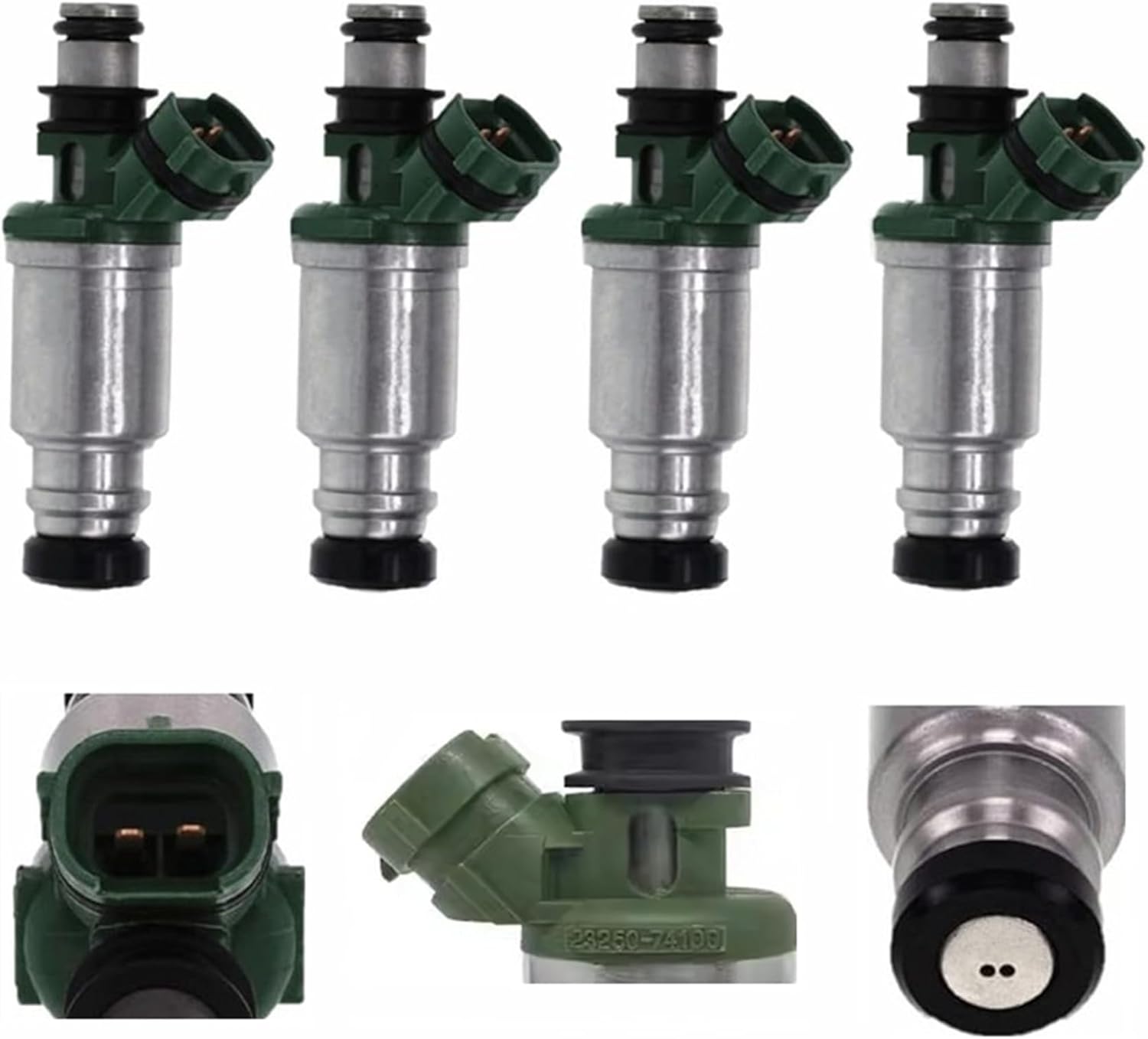
| Inlet Connection Type | National Pipe Tapered |
|---|---|
| Outlet Connection Type | NPT |
| Number of Ports | 2 |
| Valve Type | electromechanical |
This IXGKHC set of four fuel injectors is offered as a direct-fit replacement for 2.2L Toyota engines from the 1990s and is intended to restore balanced fuel delivery and smooth idle when original injectors are failing. Installation replaces worn injectors to address symptoms such as rough idle, misfires, rich running, and poor fuel economy. The kit claims factory-spec construction and includes multiple inlet/outlet threads and electromechanical valve operation consistent with modern injectors. In practice the injectors can improve drivability if matched to the vehicle, but several user reports note fit and calibration issues: some units ran rich or caused intermittent misfires after warm-up, and the seals are different from factory parts which can complicate installation. For a budget repair this kit is attractive because it replaces all four injectors at once, but expect possible extra time for seal installation and be prepared to verify fuel trims after fitting or have a technician bench-test the injectors first.
Best for: Buyers prioritizing the lowest-cost route to replace all four injectors on an older Camry and willing to trade plug-and-play certainty for savings and the option to bench-test or tune after installation.
Less Ideal for: Drivers who need guaranteed factory-equivalent performance out of the box or who lack tools/experience to bench-test injectors and verify fuel trims should choose a tested remanufacturer or professional service instead.
- Sold as a complete four-injector kit so all cylinders are renewed at once
- Designed to match factory-style electromechanical operation for direct replacement
- Includes common NPT inlet/outlet/thread types compatible with typical fuel rail fittings
- Mixed user reports of rich running, misfires, and fitment differences from factory injectors
- Seals differ from factory parts which can make installation fiddly and increase leak risk
Verdict: A low-cost way to replace all four 2.2L Toyota injectors at once if you are budget-focused and prepared to verify fitment and operation after installation.
AISHAN 6-Pack Fuel Injectors Compatible with Toyota Camry V6 3.0L (1994–2001)

| Material | Stainless Steel and composite plastic |
|---|---|
| Number of Ports | 2 |
| Number of Terminals | 2 pins |
| O‑ring | Viton pre-installed |
This six-pack of AISHAN fuel injectors is built to replace the factory injectors on 3.0L V6 Camry models from the mid 1990s to 2001 and is intended for complete bank replacement. Each injector uses a two‑hole, two‑pin design with Viton O‑ring seals and a mix of stainless steel and composite plastic construction. In practice you would swap all six injectors at once to restore balanced fuel delivery, reduce misfires and smooth rough idle. The atomized spray pattern and reinforced O‑rings aim to cut leakage and improve fuel metering compared with worn originals, which can translate into steadier throttle response and slightly better economy. These fit-and-forget replacements are a straightforward option for DIY installations but buyers should confirm exact year and engine before installing since compatibility is limited to the specified V6 Camry/Sienna/Avalon/Solara/ES300 range. There is no lab warranty listed and longevity will depend on installation and fuel quality, so expect factory‑level performance when matched properly to the vehicle and maintained correctly.
Best for: Buyers who want a practical, do-it-yourself replacement set to restore reliable fueling and smooth engine operation on a 1997–2001 Camry V6 without chasing individual injectors.
Less Ideal for: Drivers seeking a long factory-backed warranty, remanufactured OEM units, or performance-tuned injectors should consider dealer parts or specialist performance injectors instead.
- Complete six‑injector set allows replacing the entire bank at once to restore balanced fueling
- Viton O‑ring seals and stainless steel components reduce risk of fuel leaks under pressure
- Two‑hole atomizing spray design promotes even fuel distribution and smoother idle
- Direct electrical two‑pin connections match factory harnesses for straightforward installation
- Fitment is restricted to specific 3.0L V6 Toyota/Lexus models so it is not universal
- No explicit manufacturer warranty listed on the product page
Verdict: AISHAN’s six-pack offers a straightforward, factory‑style replacement to restore reliable fuel delivery and smooth running on 3.0L V6 Camry models from the late 1990s to 2001.
JDMON Fuel Injector Set, Replacement for 3.0L V6 Toyota/Lexus (6‑pack)

| Number of Ports | 6 |
|---|---|
| Valve Type | electromechanical |
| Exterior Finish | Stainless Steel |
| Inlet Connection Type | Female Threaded |
| Outlet Connection Type | Female Threaded |
This JDMON six-pack is presented as a direct replacement for 3.0L V6 Camry and related Toyota/Lexus engines and is meant to restore injector function without modification. Installation is typical for injector swaps: remove the fuel rail, swap injectors and seals, and reassemble. The listing emphasizes stainless steel construction, female threaded connections, and an electromechanical valve designed to deliver an OEM-style spray pattern and fuel volume for smoother idle and improved atomization. Practical benefits reported by users include resolved misfires, steadier idle, and a noticeable improvement in throttle response and fuel economy for older Camry engines. Reliability appears mixed across reviews: some buyers saw immediate, durable improvements while others encountered leaks or early failures and chose to replace O-rings or return the set. For a Camry owner prioritizing cost-effective repairs, this set can fix injector-related drivability issues, but consider inspecting and replacing O-rings during installation and be prepared to test for leaks and proper spray before finishing the job.
Best for: Buyers who want a budget-focused repair with social proof from other Camry owners and are comfortable validating parts on arrival and doing basic leak and spray checks during installation.
Less Ideal for: People who need a guaranteed long-term OEM-level warranty or who prefer dealer-sourced injectors with documented bench testing and certification.
- Sold as a full six-injector set to simplify replacement of all cylinders at once
- Designed to meet factory spray angle, pattern, and fuel volume for 3.0L V6 engines
- Stainless steel construction and standard threaded connections for straightforward install
- Mixed quality control reported, with some buyers experiencing leaks or premature failure
- O-rings may be low quality and often replaced at installation to prevent leaks
Verdict: An affordable six-injector replacement that can restore Camry 3.0L V6 drivability quickly if you inspect seals and verify spray quality during install.
TRQ Fuel Injector Set for 1992–2000 Toyota 2.2L and 1998–2000 RAV4 2.0L (4‑pack)

| Number of Ports | 4 |
|---|---|
| Material Type | Stainless Steel |
| Included Components | 4 Fuel Injectors |
| Manufacturer Warranty Description | 2 years |
This TRQ four-piece fuel injector set is marketed as a direct-fit replacement for older Toyota 4‑cylinder engines and is intended for use when original injectors fail or cause misfires. The kit contains four stainless steel injectors with a machined finish and is supplied as a unit count of one with installation videos available from the manufacturer. In practice these injectors are used to restore smooth idle, improve throttle response and resolve cylinder misfires when worn injectors leak or clog. Buyers report straightforward plug‑and‑play fitment when matched to the listed vehicles, and the stainless construction and machined finish suggest decent corrosion resistance and finishing quality. Important limitations include reported variability in longevity and some units arriving without replacement seals or o-rings, so plan to confirm seal inclusion before installation or source seals separately. There are mixed customer service reports, so if you prefer near-zero risk, factor that into your purchase decision.
Best for: Buyers who want a ready‑to‑install replacement to fix misfires or poor throttle response on older Toyota 4‑cylinder Camry engines and prefer parts backed by fitting guidance and DIY resources.
Less Ideal for: People who require guaranteed long‑term warranty support or those unwilling to source seals or perform basic verification of parts before installation should consider alternatives with bundled seals and stronger after‑sales coverage.
- Direct-fit replacement designed for compatible Toyota 4‑cylinder engines to simplify installation.
- Stainless steel construction and machined finish that resist corrosion and provide a factory‑like appearance.
- Includes four injectors in one kit so all cylinders can be serviced at once.
- Manufacturer provides step‑by‑step installation videos to assist DIY installers.
- Some customers report units arriving without o-rings or seals, requiring a separate purchase before installation.
- Mixed reports on long‑term reliability and inconsistent durability between units.
Verdict: A convenient four‑injector direct‑fit kit that gets aging Toyota 4‑cylinder engines running smoothly again with DIY installation support.
Choosing the Right 1997-2001 Toyota Camry Fuel Injector: Key Factors to Consider
Mechanical Fitment and Connector Type
Correct mechanical fitment is the first practical filter when selecting an injector for a 1997–2001 Toyota Camry. The nozzle length, mounting flange, and O-ring diameters must match the Camry's intake runner and fuel rail to avoid leaks and ensure proper sealing. Electrical connector type and pin spacing should be compatible with the factory harness to prevent the need for splicing or adapters.
If the injector does not seat fully or uses the wrong O-rings, you can get vacuum leaks, hard starts, or fuel odors. Verifying part dimensions against factory service specifications avoids installation delays and reduces the risk of damaging the fuel rail or intake when swapping injectors.
Flow Rate and Consistency
Flow rate, typically measured in cc/min or lb/hr, determines how much fuel the injector delivers at a given duty cycle and pressure. For the 1997–2001 Toyota Camry, choosing injectors with flow rates near OEM specification keeps air/fuel ratios within the calibrated window under most driving conditions.
Even more important than nominal flow is consistency across all injectors. Small differences between cylinders force the engine control unit to compensate with fuel trims, which can cause rough idle and reduced fuel economy. Prefer injectors with tight flow tolerances and documented flow testing to minimize per-cylinder imbalance.
Spray Pattern and Atomization
Spray pattern and droplet size affect how fuel mixes with intake air before combustion. The Camry's intake and port geometry respond better to injectors with a focused, centered spray that promotes quick vaporization, particularly during cold starts and cruise.
Poor atomization leads to wet ports, increased emissions, and inconsistent combustion. When evaluating options, consider injector designs intended for port injection that produce fine, evenly distributed spray rather than wide, uneven plumes.
Sealing Durability and Leak Resistance
Fuel injector leak symptoms can include fuel odor, hard starts, and visible dampness at the intake manifold. For a Camry that may sit for periods or see seasonal temperature swings, injector seals and body materials must resist degradation.
Inspect O-ring material compatibility with modern fuels and look for robust injector bodies with corrosion-resistant finishes. Long-term sealing reduces the chance of vacuum or fuel leaks that compromise drivability and safety.
Electrical Response and Injector Dead Time
Injector dead time is the delay between the electrical pulse and the start of fuel flow. For precise fueling on the 1997–2001 Camry, predictable dead time across injectors helps the ECU calculate pulse widths accurately, especially at idle and low-load conditions.
Choose injectors with documented electrical characteristics that match the Camry's fueling strategy. Mismatched solenoid response can alter short pulse fueling and affect cold idle stability and low-RPM drivability.
Maintenance, Cleaning, and Serviceability
Regular fuel injector cleaning or replacement is part of long-term engine care for an older Camry. Consider injectors that are straightforward to access and replace without extensive removal of ancillary components on the 1997–2001 engine layout.
Also evaluate whether the injector style tolerates common cleaning methods and whether replacement O-rings and filters are readily available. Choosing serviceable components reduces downtime and makes periodic cleaning or testing more practical.
Signs Your Camry Needs Injector Service
Understanding common symptoms of bad fuel injector behavior helps you diagnose whether injectors are the likely cause. For the 1997–2001 Camry, look for persistent rough idle, hesitation under acceleration, and uneven idle speed that does not improve after basic tune-up work.
Other indicators include increased fuel consumption that cannot be explained by tires or driving habits, black smoke on deceleration, and a strong fuel odor around the intake manifold. Intermittent misfires that shift between cylinders often point to flow inconsistency or partial clogging.
- Rough or fluctuating idle that persists after spark plug and ignition checks
- Hesitation or stumble when accelerating from a stop
- Higher than normal fuel consumption
- Fuel odor near the intake or fuel rail
- Intermittent misfires and uneven cylinder performance
When to Repair Versus Replace Injectors
Deciding between cleaning, servicing, or replacing injectors depends on condition and diagnostic results. Light fouling or varnish can often be addressed with professional ultrasonic cleaning or a targeted chemical service, which restores spray pattern and flow in many cases.
However, if injectors show signs of internal leakage, mechanical wear, or inconsistent electrical response during testing, replacement is the more reliable option. For the 1997–2001 Camry, age-related seal hardening and corrosion are common reasons to favor replacement when symptoms persist after cleaning.
- Clean if flow variation is minor and electrical tests pass
- Replace if there is visible internal leakage, severe flow deviation, or failed electrical testing
- Consider replacing the full set when one injector fails to maintain balanced fueling
Practical Steps for Fuel Injector Testing on a Camry
Basic testing can narrow down injector issues before removal. Start with a visual inspection for fuel dampness and cracked O-rings. Then use a multimeter to check coil resistance against the vehicle's service specification to identify open or shorted solenoids.
More comprehensive testing includes an injector sweep or balance test to measure relative flow between cylinders and dynamic testing with a noid light to confirm pulse signal from the ECU. If tests indicate a problem, remove injectors for bench flow testing or cleaning.
- Visual check for leaks and damaged O-rings
- Measure coil resistance with a multimeter
- Perform an injector balance or flow test if possible
- Use a noid light to verify injector pulsing from the ECU
Installation Tips for Direct-Fit Injectors
When installing replacement injectors on a 1997–2001 Camry, prepare by relieving fuel system pressure and disconnecting the battery. Replace injector O-rings and seats as a preventive measure, and lightly lubricate new O-rings with clean engine oil or approved lubricant to avoid tearing during installation.
Torque fuel rail mounting bolts to specification and inspect for leaks at initial startup. After installation, allow the engine to reach operating temperature and monitor fuel trims and idle stability to confirm the new injectors are performing as expected.
- Relieve fuel pressure before disconnecting fuel lines
- Replace O-rings and lubricate before installation
- Check for leaks at the fuel rail and intake after startup
- Monitor fuel trims and idle after installation
Fuel Injector Cleaning Methods and Considerations
Cleaning can restore performance for lightly fouled injectors, but results vary. Common methods include on-vehicle cleaning using a pressurized cleaning kit and off-vehicle ultrasonic cleaning with flow testing. Each method has tradeoffs in effectiveness and cost.
For the 1997–2001 Camry, on-vehicle cleaning may remove varnish but will not address internal mechanical wear or injector spool damage. Ultrasonic cleaning combined with bench flow testing gives a clearer picture of recoverable performance versus irreversible wear, helping you decide on replacement.
- On-vehicle cleaning can improve spray pattern for mild deposits
- Ultrasonic off-vehicle cleaning with flow testing is more thorough
- Cleaning will not fix internal mechanical failure or worn solenoids
Considering Performance Upgrades for Injectors
Some owners consider fuel injector performance upgrades to support higher horsepower goals or forced-induction conversions. For the period-correct Camry engines, modest injector upsizing can help if you plan other fuel system modifications, but it must match ECU control and fueling strategy.
Upgrading injectors without adjusting fueling maps or ensuring proper dead-time calibration can cause drivability issues. If you plan a performance upgrade, ensure supporting modifications and tuning are part of the plan so that larger injectors deliver predictable air/fuel ratios across the rev range.
- Match flow increase to other engine modifications and fueling needs
- Ensure ECU control and dead-time compensation are addressed
- Avoid oversized injectors that force the ECU to operate at very low duty cycles
Still looking for the perfect fit?
Select your Toyota Camry configuration to see the most relevant Fuel Injectors recommendations
How We Chose the Best 1997-2001 Toyota Camry Fuel Injector
We evaluated candidates against criteria that matter for the 1997–2001 Toyota Camry engine family and common owner concerns. First, we confirmed mechanical and electrical fitment specifics such as nozzle length, O-ring sizing, and connector type to ensure straightforward installation without fuel-rail modification. Second, we prioritized measured flow consistency because uneven flow leads to misfire, rough idle, and uneven fuel trims in this vehicle.Third, spray pattern and atomization were considered since proper fuel dispersion affects cold starts and drivability on these engines. Fourth, long-term sealing and materials were assessed to reduce the risk of injector leaks and fuel rail corrosion. Fifth, responsiveness to standard camry fuel pressures and compatibility with factory fuel management electronics were required.We excluded units that required substantial fuel system changes or custom wiring. Units lacking documented compatibility with the 1997–2001 Camry or insufficient technical specifications were also omitted. The final list balances fitment certainty, flow performance, and durability for typical maintenance or light-performance upgrades.
Our full evaluation process is outlined in our review methodology.
FAQ
How can I tell if a fuel injector is leaking on my 1997–2001 Camry?
A leaking injector often shows fuel smell near the intake, visible wetness around the injector base, or fuel pooling on the intake manifold. Hard starts and a rich running condition can also indicate external leakage.
Is it safe to replace only the failed injector or should I replace all of them?
You can replace a single failed injector, but replacing the full set helps ensure consistent flow and simplifies calibration. For older Camrys with high mileage, a matched set reduces the chance of uneven fueling and recurring issues.
Will on-vehicle cleaning fix poor injector performance?
On-vehicle cleaning can help with light varnish and deposits and may restore spray pattern in some cases. It will not repair internal mechanical wear, damaged solenoids, or persistent flow imbalance that shows up during bench testing.
What tests should I run before deciding to replace injectors?
Start with a visual leak inspection and coil resistance check with a multimeter. Follow with an injector balance or flow test and verify injector pulsing with a noid light. Combine those results with symptoms like misfire patterns to make an informed decision.
Can upgraded injectors improve throttle response on this Camry?
Upgraded injectors can improve fueling capacity for modified engines, which may indirectly improve throttle response if used with corresponding engine modifications and tuning. For a stock engine, larger injectors can create calibration challenges without noticeable benefits.
How often should fuel injectors be cleaned or inspected on a 1997–2001 Camry?
Inspection during routine service intervals is sensible, especially after prolonged storage or when fuel quality is suspect. Cleaning intervals vary, but checking spray pattern and watching for symptoms annually or every major service is a practical approach.
Final Verdict
Focus on fitment, flow consistency, and sealing when choosing fuel injectors for a 1997–2001 Toyota Camry. Prioritize injectors that match OEM flow rates and electrical characteristics to maintain stable idle and consistent fuel trims. If injectors show leakage, severe flow deviation, or failed electrical tests, replacement is usually the most reliable remedy.Balance the desire for improved performance against the need for proper tuning and ECU compatibility. For routine maintenance, select injectors that are serviceable and offer documented flow data so you can restore drivability with minimal fuss.
Explore More:
- Check out all Toyota Camry parts & accessories
- Explore Fuel Injectors Maintenance & Repair Guides
- Explore Fuel System
- Browse all Auto Parts
