

Note: This article contains affiliate links. If you click on these links and make a purchase, I may earn a small commission at no extra cost to you. This helps support my research and content. Read my full affiliate disclosure here.
If you drive a 1998-2002 Honda Accord and are dealing with clutch chatter, vibration, or poor engagement, the flywheel is often a key component to inspect. Choosing the right flywheel affects clutch feel, engine balance, and long-term transmission reliability. This guide covers six shortlisted flywheels that suit the Accord's specifications across the 1998 through 2002 model years, explaining the practical differences and why each type was considered.You will find clear notes on fitment, resurfacing options, noise and vibration considerations, and what to expect during installation. The evaluation emphasizes compatibility, durability, and installation practicality to help you pick the best flywheel for your Accord's condition and driving needs.
Looking for other parts? See all Honda Accord parts & accessories.
Top Picks at a Glance
| Best Overall The best all-around choice for most situations | EFORTISSIMO Exedy Clutch Kit with EFT Cast Iron Flywheel for 1998–2002 Honda Accord (4‑cyl) |  |
| Best Quality Built to a higher standard if you want something more solid | EFORTISSIMO Racing Exedy Clutch Kit with Fidanza Aluminum Flywheel for 1998–2002 Honda Accord 2.3L |  |
| Best Value The sweet spot between price and what you get | EFORTISSIMO Heavy-Duty Cast Flywheel for 2.2L/2.3L Honda 4‑cyl |  |
| Best Budget The cheapest option that still gets the job done reliably | Marketplace Auto Parts Flywheel for 1990–2002 Honda Accord (manual) |  |
| Highest Rated A top-rated pick with lots of positive feedback | EFORTISSIMO EFT HD Clutch Kit with Cast Flywheel for Honda 2.2L/2.3L 4‑cyl |  |
| Most Popular A crowd favorite that many people choose with confidence | EFT Stage 2 Clutch Kit with HD Flywheel (220mm, 24-spline) |  |
1. EFORTISSIMO Exedy Clutch Kit with EFT Cast Iron Flywheel for 1998–2002 Honda Accord (4‑cyl)

| Vehicle application | 1998–2002 Honda Accord 2.3L SOHC F23 |
|---|---|
| Clutch disc | 219 mm, 24 spline |
| Flywheel type | EFT HD cast iron, dynamically balanced |
| Manufacturer | Exedy + EFORTISSIMO |
This kit pairs an Exedy replacement clutch with an EFT HD cast iron flywheel to provide a full, factory‑style clutch service for 1998–2002 Honda Accord 2.3L four‑cylinder cars. It ships with the pressure plate, 219mm 24‑spline clutch disc, release bearing, alignment tool, and a dynamically balanced cast flywheel, so you can replace the entire assembly in one job. The cast flywheel is heavier than lightweight performance units, which helps smooth idle, reduce vibration, and retain drivability for daily use or lightly modified engines. The kit is positioned as a direct factory replacement and should fit without modification when installed correctly. Expect easier balancing and fewer break‑in surprises compared with a resurfaced used flywheel. The main compromises are weight and sportiness: this package is tuned for longevity and smooth operation rather than aggressive throttle response or faster revving that a lightweight or performance flywheel would give.
Best for: Buyers who want a dependable, all‑in‑one replacement that restores factory drivability and minimizes installation hassle for a 1998–2002 Honda Accord 2.3L.
Less Ideal for: Enthusiasts seeking a lighter, race‑oriented flywheel for faster engine response or high‑RPM track use should consider performance alternatives.
- Complete kit includes flywheel, pressure plate, disc, release bearing, and alignment tool for one‑job replacement
- EFT cast iron flywheel is dynamically balanced and uses new ring gear and dowel pins for factory‑quality fit
- Designed as a direct factory replacement for 1998–2002 Accord 2.3L, reducing fitment hassles
- Good for daily drivability thanks to heavier flywheel mass that smooths idle and reduces vibration
- Cast iron flywheel is heavier, so it does not improve throttle response or engine revving compared with lightweight options
Verdict: A turnkey, factory‑style clutch and cast flywheel package that restores smooth daily drivability for 1998–2002 Accord 2.3L cars.
2. EFORTISSIMO Racing Exedy Clutch Kit with Fidanza Aluminum Flywheel for 1998–2002 Honda Accord 2.3L

| Flywheel material | Fidanza 6061 T6 billet aluminum |
|---|---|
| Clutch disc diameter | 219 mm |
| Clutch spline | 24 spline |
| Vehicle fitment | 1998–2002 Honda Accord 2.3L SOHC F23 |
This package combines a genuine Exedy replacement clutch kit with a Fidanza 6061 T6 billet aluminum flywheel to provide a durable, lighter-than-stock rotating assembly for 1998–2002 Honda Accord 2.3L cars. It includes an Exedy pressure plate and 219 mm, 24-spline clutch disc, release bearing, alignment tool, and installation guide, so it covers the parts needed for a full clutch job. The billet flywheel reduces rotational mass compared with many cast stock flywheels, which helps the engine rev more quickly and makes throttle response feel sharper—an asset for spirited driving or mild performance tuning. Because the kit uses Exedy components, buyers get factory-quality replacement parts sized for the F23 engine. The main compromises are that the lighter flywheel can make low-speed drivability a bit more abrupt and may increase starter load, and this kit is aimed at stock or lightly modified cars rather than high-power builds. Fitment is specific to the listed Accord years and engine, so verify match before purchase.
Best for: Drivers who want a direct-fit clutch refresh with improved engine responsiveness for spirited street driving and occasional track use, prioritizing drivability gains over heavy-duty race duty.
Less Ideal for: Not the best choice for high-power builds or racers who need extreme clamping force and long-duration high-heat performance; those users should choose a competition-specific setup.
- Complete kit includes flywheel, pressure plate, clutch disc, release bearing, alignment tool, and guide for a single purchase and install.
- Billet 6061 T6 aluminum flywheel reduces rotating mass for crisper throttle response and quicker revving.
- Exedy pressure plate and clutch disc are known factory-quality replacements designed to match the vehicle's driveline characteristics.
- Lighter flywheel may cause slightly harsher low-speed engagement and greater starter effort.
- Designed for stock or lightly modified setups and not intended for high-horsepower competition use.
Verdict: If you want a direct-fit clutch kit that sharpens throttle response with a lightweight billet flywheel while keeping factory-quality clutch components, this package is a strong choice for 1998–2002 Accord F23 owners seeking performance-oriented street upgrades.
3. EFORTISSIMO Heavy-Duty Cast Flywheel for 2.2L/2.3L Honda 4‑cyl

| Fits vehicles | 1990-2002 Honda Accord; 1992-2001 Prelude; 1997-1999 Acura CL (2.2L/2.3L 4‑cyl) |
|---|---|
| Material | Cast iron |
| Includes | New ring gear and dowel pins |
| Balance | Dynamically balanced |
This EFORTISSIMO heavy-duty cast flywheel is a direct replacement designed for 2.2L and 2.3L four-cylinder Hondas from the late 1990s and early 2000s. It is sold as a new, pre-balanced unit with a new ring gear and dowel pins so installation is straightforward for a clutch job rather than relying on a resurfaced core. Typical use is as a factory-style upgrade when replacing a worn flywheel or doing a clutch replacement; the cast construction and dynamic balancing aim to reduce vibration and restore smooth engagement. Notable features include the new hardware and the manufacturer warranty covering defects for 12 months or 12,000 miles. The practical benefit is less machine shop time and uncertainty versus resurfacing, which can save downtime and simplify parts procurement. Limitations are that it is a cast, not lightweight billet or performance-machined unit, so it will not reduce rotating mass for quicker rev response and is intended as a durable, budget-focused replacement rather than a performance part.
Best for: Buyers who want a reliable, no-fuss replacement flywheel during a clutch job and value minimizing machine shop time and extra parts sourcing.
Less Ideal for: Drivers seeking a performance-focused, lightweight flywheel for quicker revving or track use should consider purpose-built performance units instead.
- Sold new with new ring gear and dowel pins so no core or resurfacing required
- Dynamically balanced to reduce vibration and improve engagement smoothness
- Backed by a 12 month or 12,000 mile manufacturer defect warranty
- Cast construction provides durable, budget-friendly replacement for standard driving
- Not a lightweight or performance-machined flywheel so it will not improve throttle response or reduce rotational inertia
Verdict: A practical, ready-to-install cast replacement flywheel that eliminates the need for resurfacing and minimizes downtime during a clutch job.
4. Marketplace Auto Parts Flywheel for 1990–2002 Honda Accord (manual)

| Compatible Vehicle Type | Car |
|---|---|
| Fit Type | Vehicle Specific Fit |
| Operation Mode | Manual |
| Shape | Round |
This Marketplace Auto Parts flywheel is a direct replacement aimed at older Honda Accord manual transmissions. It fits a wide range of model years and engine variants listed for the 1990–2002 Accord family and is intended for bolt-in installation when swapping a worn or damaged flywheel. The unit’s round steel construction provides the mass needed for smooth clutch engagement and engine idle stability under normal street driving. Typical use is as a budget-friendly factory-style replacement during clutch service or engine repairs. Because it is made for vehicle-specific fitment, you can expect correct bolt pattern and ring gear alignment on matching Accord models, which reduces installation hassle. Limitations are that this is a basic replacement part without performance upgrades, so drivers seeking lighter or high-performance designs should look elsewhere. Also material labeling in the listing is inconsistent, so confirm part number and fitment before purchase to avoid returns.
Best for: Buyers replacing a worn flywheel on an older Accord who prioritize an affordable, direct-fit replacement to complete a clutch or transmission repair.
Less Ideal for: Enthusiasts upgrading to a lighter or performance-oriented flywheel or anyone needing a flywheel for non-Accord vehicles should consider other options.
- Vehicle-specific fit for many 1990–2002 Honda Accord manual models reduces fitment guesswork
- Designed for manual transmissions to restore factory-style clutch engagement
- Simple steel construction provides the rotational mass needed for smooth idle and torque transfer
- Not a performance or lightweight flywheel option for racing or high-rev builds
Verdict: A budget-minded, vehicle-specific replacement that restores factory-style clutch engagement for 1990–2002 Honda Accord manual models.
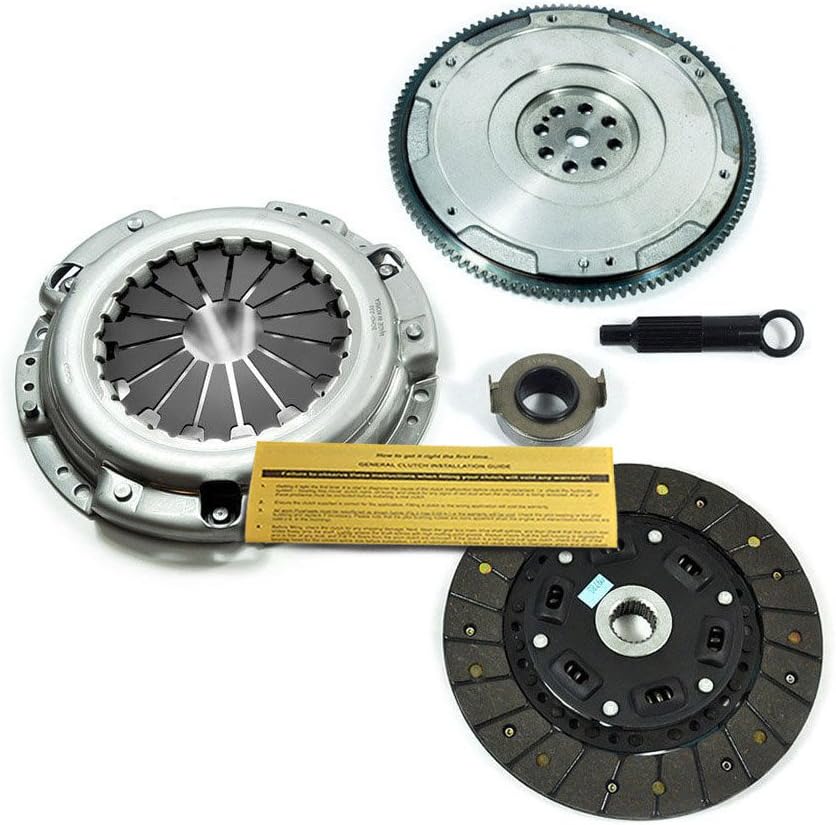
5. EFORTISSIMO EFT HD Clutch Kit with Cast Flywheel for Honda 2.2L/2.3L 4‑cyl
| Compatible engines | 2.2L and 2.3L 4‑cylinder SOHC/DOHC |
|---|---|
| Clutch disc diameter | 219 mm |
| Clutch disc spline count | 24 splines |
| Flywheel type | EFT HD cast flywheel |
| Warranty | 12 months/12,000 miles |
This EFT HD clutch kit supplies everything needed to replace a worn factory clutch on compatible Honda and Acura 2.2L/2.3L 4‑cylinder cars, including a cast flywheel, pressure plate, 219mm clutch disc (24 splines), release bearing, alignment tool, and basic instructions. It is intended as a one‑step upgrade from stock for reliability and stronger clamp load, with induction‑hardened components and testing for torque capacity, spline tolerance, and vibration dampening. In practice the kit aims to deliver smoother engagement, better modulation under moderate load, and reduced drivetrain vibration compared with an aged factory unit. The inclusion of the cast flywheel and matched pressure plate simplifies installation without machining in many cases, but installers should verify flywheel surface condition and follow torque specs. This kit targets stock to lightly modified cars rather than high‑power builds, and while the company backs components with a 12‑month warranty, buyers seeking ultra‑lightweight performance flywheels or motorsport clutches will want a different product.
Best for: Buyers prioritizing a durable, factory‑style replacement that improves clutch engagement and drivability on 1998–2002 Accord 2.2L/2.3L cars and who want a complete kit to simplify the service.
Less Ideal for: Drivers building high‑output or track‑focused setups who need a lightweight or performance‑specific clutch should choose a dedicated racing kit instead.
- Complete kit includes cast flywheel, pressure plate, disc, release bearing, and alignment tool for a single purchase solution
- Cast flywheel and matched pressure plate designed to improve clamp load and engagement consistency over worn factory units
- Components are load‑tested for torque capacity, spline tolerance, and vibration dampening to enhance reliability
- Includes basic installation guide to aid competent DIY installers or professional fitters
- Designed for stock or lightly modified engines and not intended for high‑power or racing applications
Verdict: A complete, durability‑focused clutch kit with a cast flywheel that restores reliable engagement and drivability for 1998–2002 Accord 2.2L/2.3L cars.
6. EFT Stage 2 Clutch Kit with HD Flywheel (220mm, 24-spline)

| Horsepower rating | 300 HP |
|---|---|
| Torque capacity | 289 ft/lbs |
| Disc size | 220 mm |
| Spline | 24 spline |
| Flywheel type | HD cast flywheel (19 lbs) |
This EFT Stage 2 clutch kit bundles a heavy-duty pressure plate, carbonized stage 2 disc, release bearing, alignment tool and a cast HD flywheel sized for the factory 220mm, 24-spline setup. It is intended as a direct factory-replacement kit for 2.2L and 2.3L Honda and Acura four-cylinder SOHC engines and is commonly used by drivers upgrading from stock for stronger clutch holding and crisper power transfer. The carbonized friction material and heat-treated sprung center are aimed at higher burst strength and improved heat tolerance so the clutch can handle about 300 hp and increased torque loads without early glazing. The included HD flywheel reduces rotating mass compared with heavier steel options while still providing durability for spirited street use and occasional track sessions. Installation is straightforward because it uses factory fitment and comes with an alignment tool and guide. Expect firmer engagement than stock and a bit more pedal effort; this is a performance-oriented replacement rather than a luxury-smooth upgrade.
Best for: Buyers who want a dependable, performance-minded clutch upgrade with factory fitment and real-world durability supported by other owners' experiences.
Less Ideal for: Drivers who prioritize ultra-smooth, light pedal feel or who only need a like-for-like OEM replacement for mild daily driving.
- Complete kit includes pressure plate, carbonized friction disc, release bearing, alignment tool and installation guide
- Designed for direct factory fitment to 2.2L/2.3L four-cylinder Honda/Acura applications so no modifications are required
- Carbonized friction material and heat-treated sprung center increase heat tolerance and holding capacity over stock
- Rated for roughly 300 HP and higher torque loads, suitable for spirited street driving and occasional track use
- Firmer engagement and increased pedal effort compared with stock, which may feel abrupt for daily city driving
Verdict: A straightforward Stage 2 clutch and HD flywheel combo that gives 1998–2002 Accord drivers a reliable, street-capable power upgrade with factory-fit ease.
Choosing the Right 1998-2002 Honda Accord Flywheel: Key Factors to Consider
Fitment and Bolt Pattern
Correct fitment is the primary concern for the 1998-2002 Honda Accord flywheel because the crank flange, bolt circle diameter, and dowel pin locations must match exactly. A flywheel that does not align perfectly can cause starter engagement issues, uneven clutch wear, and premature failure of crankshaft seals.
When choosing a replacement, confirm the flywheel's specified compatibility with the 1998 through 2002 Accord crank. If a flywheel lists multiple engine codes, verify it includes the Accord year range and the same transmission type used in your car. Installing a mismatched unit often requires modification that increases labor and risk, so prioritize direct-fit units.
Material and Construction
Flywheels are typically cast, forged, or billet; each material choice affects weight, heat handling, and durability. For the 1998-2002 Accord, material determines how the flywheel responds to heat cycles from normal city and highway driving. Cast units are economical but may be more prone to hairline cracking under repeated overheating. Forged or machined steel options usually resist warpage better and stand up to higher clutch clamp loads.
Consider the intended use of the vehicle. For daily-driven Accords that see occasional spirited driving, a sturdier construction delivers longer service life and more consistent clutch engagement. For strictly stock replacement, a correctly specified cast or machined unit with documented balance is often sufficient.
Resurfacing and Serviceability
Whether a flywheel can be resurfaced matters for long-term maintenance and cost. A resurfacing-capable flywheel allows you to correct wear, hot spots, and minor heat-checking without replacing the entire unit. For the 1998-2002 Honda Accord, a machine-friendly clutch surface with adequate thickness is important to ensure safe material removal during resurfacing.
When a flywheel has limited thickness or poor material quality, resurfacing can push it beyond safe limits and necessitate replacement. Check manufacturer guidance on minimum thickness and compatibility with resurfacing processes before choosing a flywheel.
Balance and Runout
Imbalance or excessive runout on the flywheel surface causes vibration, accelerated throwout bearing wear, and poor clutch feel. The 1998-2002 Accord drivetrain is sensitive to flywheel balance because vibration can transmit through the bellhousing and be felt in the drivetrain and cabin. Look for units that specify static and dynamic balance tolerances or that come prebalanced for your engine-transmission combination.
During installation, measure runout at the friction surface and confirm it is within acceptable limits. A properly balanced flywheel minimizes the chance of driveline vibration and contributes to a quieter, smoother-engaging clutch.
Ring Gear and Starter Engagement
Ring gear fit and tooth profile must match the Accord starter's engagement geometry. Poorly fitted ring gear can cause starter grinding, rapid tooth wear, or difficulty starting. For the 1998-2002 Accord, ensure the replacement flywheel either reuses the OEM ring gear or includes a ring gear that matches factory specifications.
Confirm the ring gear press-fit procedure and whether heat or staking is required. Secure ring gear mounting prevents slippage that would otherwise cause noise, starter damage, and potential failure to start.
Thermal Performance and Heat Resistance
Flywheels are exposed to clutch heat during engagement and slipping events. Materials and machining finish affect how heat is dissipated and whether hotspots develop. For 1998-2002 Accords, especially those used in stop-and-go traffic or towing light loads, a flywheel with good thermal characteristics helps prevent glazing, cracking, or surface hardening that compromises clutch contact.
Consider surface treatments, heat-tolerant alloys, and thickness when evaluating thermal performance. This factor ties directly to both longevity and the frequency of resurfacing or replacement.
Common Symptoms of a Failing Flywheel
Recognizing early symptoms helps avoid collateral damage to the clutch and transmission. Vibration during idle or while engaging the clutch often points to imbalance or excessive runout on the flywheel surface. You may notice a judder when releasing the clutch or a pulsation through the pedal.
Noise is another telltale sign. A grinding or growling sound on startup can indicate ring gear issues or loose mounting, while a high-pitched squeal under load may be related to surface glazing or heat-related hard spots. Inconsistent engagement, where the bite point shifts or engagement feels grabby, also suggests the flywheel surface may be uneven or contaminated.
- Vibration felt through the clutch pedal or floor
- Grinding noise when starting
- Judder or shudder during engagement
- Shifting engagement point or grabby clutch feel
Resurfacing Vs Replacement: When to Choose Either
If the flywheel has minor scoring, heat spots, or glazing, resurfacing can restore a flat, clean contact surface and extend useful life. Resurfacing is economical when the unit still meets minimum thickness and has no structural cracks. Confirm the flywheel's specified minimum thickness before machining.
Replacement becomes necessary when cracks, excessive runout beyond factory limits, or severe material loss are present. Also consider replacement if the ring gear or bolt holes show wear or elongation that compromises secure mounting. For owners who prefer a longer-term solution or who want a flywheel with a different construction material, replacement is the safer choice.
- Resurface for minor wear when minimum thickness is maintained
- Replace for cracks, severe warpage, or ring gear damage
- Use replacement for long-term durability or material upgrades
Installation Tips for the 1998-2002 Accord
Proper installation is crucial to avoid introducing vibration or premature wear. Torque flywheel bolts to the manufacturer-specified sequence and values, using new crank bolts if the service procedure recommends them. Always check and follow the factory tightening sequence to maintain even clamping.
Before installation, verify the flywheel surface runout with a dial indicator and confirm the ring gear seating. Clean mating surfaces, inspect the pilot bearing or bushing, and apply appropriate threadlocker where specified. After installation, perform a road test under varied throttle and clutch conditions to detect any abnormal vibration or noise early.
- Use correct bolt torque and tightening sequence
- Check surface runout with a dial indicator
- Inspect and/or replace pilot bearing or bushing
- Recheck starter engagement and free play after install
Diagnosing Flywheel Noise and Vibration
Start diagnosis with a visual inspection and a simple engine start test. Listen for starter grinding which usually points to ring gear or starter alignment issues. With the vehicle safely raised, rotate the engine by hand to feel for rough spots or resistance that could indicate damaged teeth or a warped surface.
For in-drive vibration, use a dial indicator to measure runout at the friction face. If runout exceeds acceptable tolerances, vibration under load is likely. Also inspect clutch components for uneven wear patterns, which often mirror flywheel surface defects and can help pinpoint the source of noise or vibration.
- Perform visual and listen tests for starter noise
- Rotate engine by hand to feel for roughness
- Measure runout with a dial indicator
- Inspect clutch disc for uneven wear patterns
Weight Considerations and Clutch Feel
Flywheel mass affects engine response and clutch bite. Heavier flywheels smooth engine RPM changes and can make clutch engagement feel more forgiving, which suits daily-driven Accords. Lighter flywheels reduce rotational inertia and can make throttle response feel sharper, but they may also increase low-speed chatter and make smooth, everyday driving less comfortable.
When selecting a flywheel, think about how you drive your Accord. If you prioritize smoothness and easy engagement in traffic, a unit with stock-like mass is appropriate. If you want crisper response for occasional spirited driving, a lighter option might be considered, keeping in mind the possible tradeoffs in drivability.
- Heavier flywheels smooth RPM and make engagement forgiving
- Lighter flywheels improve response but may increase chatter
- Match weight choice to driving style and daily use
Maintaining Longevity After Installation
Proper break-in and sensible use extend flywheel and clutch life. Avoid prolonged slipping during break-in and minimize clutch abuse such as riding the pedal or aggressive launching. Periodic inspection for oil leaks from the rear main seal or transmission input shaft can prevent contamination that ruins the friction surface.
If resurfacing is needed later, ensure a reputable machine shop follows correct machining tolerances. Keep records of runout measurements and resurfacing thickness to guide future service decisions and to ensure safe material limits are not exceeded during repeated machining.
- Avoid prolonged clutch slipping and aggressive launches
- Check for oil contamination and rear main seal leaks
- Use documented machining tolerances for resurfacing
Still looking for the perfect fit?
Select your Honda Accord configuration to see the most relevant Flywheels recommendations
How We Chose the Best 1998-2002 Honda Accord Flywheel
We focused editorial selection on criteria that matter most for flywheels on 1998-2002 Honda Accord models. First, correct fitment and crank bolt pattern compatibility were nonnegotiable filters to ensure direct replacement without custom machining. Second, material and construction—single-piece forged, cast steel, or billet—were evaluated for expected longevity and resistance to warpage under typical Accord driving loads. Third, friction surface finish and the potential for resurfacing were considered because resurfacing can extend service life while preserving clutch alignment. Fourth, runout and balance specifications were prioritized to reduce vibration and NVH after installation. Fifth, heat tolerance and resistance to fretting around ring gear mounting were assessed given typical clutch heat cycles. Finally, ease of installation, including whether the unit requires flywheel resurface or additional balancing at install, influenced selection.We excluded any units that required extensive crank or transmission modification, nonstandard bolt patterns, or designs intended only for racing use. Units lacking clear manufacturing tolerances, insufficient documentation of balance/runout, or known fitment ambiguity for the 1998-2002 Accord were not considered. The result is a short list emphasizing serviceability, correct fit, and durable performance for everyday and light performance use.
Our full evaluation process is outlined in our review methodology.
FAQ
How do I know if my Accord needs a flywheel replacement or just resurfacing?
It often depends on the condition of the friction surface and the flywheel thickness. Small scoring and glazing can usually be corrected by resurfacing if the unit meets minimum thickness specs. Cracks, excessive runout, or damaged ring gear typically require replacement.
Can a warped flywheel cause clutch chatter in a 1998-2002 Accord?
Yes. Excessive runout or surface irregularities transmit through the clutch disc and release mechanism, producing a judder or chatter during engagement, especially at low speeds.
Is it necessary to replace the pilot bearing when changing the flywheel?
Pilot bearing condition should be inspected and usually replaced when the transmission is removed. A worn pilot bearing can cause misalignment and premature clutch or flywheel wear, so replacement is a low-cost precaution.
Will a lighter flywheel improve throttle response on my Accord?
A lighter flywheel reduces rotational inertia and can make the engine feel more responsive. However, it may also increase low-speed vibration and lead to a harsher engagement feel, so weigh response gains against everyday drivability.
How important is flywheel balance when installing on the Accord?
Balance is critical. Poor balance causes vibration, accelerated bearing wear, and can affect transmission longevity. Choose a flywheel with documented balance tolerances or one that can be balanced for your engine-transmission combination.
Can I reuse the original ring gear on a replacement flywheel?
Sometimes the OEM ring gear can be transferred if it is undamaged and fits securely. However, ensure proper seating and check for wear. If there is any doubt about teeth condition or press-fit security, use a correctly specified replacement ring gear.
Final Verdict
For 1998-2002 Honda Accord owners, the right flywheel balances fitment accuracy, material durability, and serviceability. Prioritize correct bolt pattern and crank compatibility first, then consider construction and resurfacing potential to match your driving habits. Take balance and thermal resistance seriously to avoid vibration and repeat service.Decide between resurfacing and replacement based on measurable runout, thickness, and structural condition. When in doubt, choose the option that preserves smooth engagement and reduces the risk of starter or transmission issues, and follow proper installation and break-in procedures to ensure the best long-term result.
Explore More:
- Check out all Honda Accord parts & accessories
- Explore Flywheels Maintenance & Repair Guides
- Explore Transmission & Drivetrain
- Browse all Auto Parts
