

Note: This article contains affiliate links. If you click on these links and make a purchase, I may earn a small commission at no extra cost to you. This helps support my research and content. Read my full affiliate disclosure here.
If you own a 1997-2006 Jeep Wrangler, replacing worn or damaged fender liners is a quick way to protect the body, suspension components, and electrical wiring from mud, water, and road debris. The right 1997-2006 Jeep Wrangler fender liner restores factory protection and can reduce road noise without complicating routine maintenance. This guide covers six top fender liner options chosen for their fitment, material durability, and installation simplicity specific to the 1997–2006 Wrangler generation. We evaluate each choice for how well it resists corrosion, handles off-road exposure, and aligns with common owner priorities like ease of install and long-term serviceability. Read on to find the best option for your use case and driving conditions.
Looking for other parts? See all Jeep Wrangler parts & accessories.
Top Picks at a Glance
| Best Overall The best all-around choice for most situations | Hooke Road Front & Rear Inner Fender Liners Kit for 1997–2006 Jeep Wrangler TJ/LJ |  |
| Best Quality Built to a higher standard if you want something more solid | Hooke Road Front and Rear Inner Fender Liners Kit for 1997–2006 Jeep Wrangler TJ (4-piece) |  |
| Best Value The sweet spot between price and what you get | u-Box Steel Rear Inner Fender Liners for Jeep Wrangler TJ 1997–2006 |  |
| Best Budget The cheapest option that still gets the job done reliably | Nilight Rear Inner Fender Liners for 1997–2006 Jeep Wrangler TJ & LJ (2-Pack) |  |
| Highest Rated A top-rated pick with lots of positive feedback | Hooke Road Front Inner Fender Liners for 1997–2006 Jeep Wrangler TJ & LJ (2-Pack) |  |
| Most Popular A crowd favorite that many people choose with confidence | Nilight Front Inner Fender Liners for 1997–2006 Jeep Wrangler TJ & LJ (2‑Piece Steel, Front) |  |
1. Hooke Road Front & Rear Inner Fender Liners Kit for 1997–2006 Jeep Wrangler TJ/LJ

| Fitment | 1997–2006 Jeep Wrangler TJ & LJ |
|---|---|
| Material | 16-gauge steel |
| Finish | Black powder-coated |
| Installation | Bolt-on using factory mounting holes |
This Hooke Road kit replaces the stock inner fenders on 1997–2006 Jeep Wrangler TJ and LJ models with full-coverage steel liners front and rear. Constructed from 16-gauge steel and finished in black powder coat, the liners are intended to block rocks, mud, and road debris while helping manage airflow around the engine bay. The front pieces include a decorative honeycomb steel plate and acrylic accents that can be painted for a custom look. Installation is bolt-on using the factory mounting holes so no cutting or drilling is required, making it achievable with basic hand tools. The heavy gauge steel should hold up well to off-road impacts and provide a neater wheel-well appearance compared with worn plastic liners, but the steel construction adds weight and can be more prone to dents if struck hard. These liners suit drivers who want durable protection plus a rugged, tactical aesthetic, though they require periodic inspection for surface corrosion and may need touch-up paint after rock strikes.
Best for: Buyers who want a durable, factory-replacement style liner that improves protection and gives a rugged, customized look without complicated installation, suitable for regular off-road use and street driving.
Less Ideal for: Drivers who prioritize the lightest possible components or who want a completely maintenance-free plastic liner solution should consider alternatives.
- 16-gauge steel construction for strong impact resistance compared with plastic liners
- Black powder-coat finish improves corrosion resistance and visual durability
- Bolt-on installation using factory mounting holes requires no drilling or cutting
- Full-coverage front and rear design helps block rocks, mud, and debris from the wheel well
- Front honeycomb plate and paintable acrylic accents allow simple visual customization
- Heavier than plastic liners which can add unsprung weight and may dent on hard impacts
- Paintable acrylic accents and powder coat can be scratched by road debris and require touch-up
Verdict: A heavy-duty, bolt-on steel liner kit that delivers better protection and a rugged tactical look for 1997–2006 Jeep Wrangler TJ and LJ owners who want durability plus style.
2. Hooke Road Front and Rear Inner Fender Liners Kit for 1997–2006 Jeep Wrangler TJ (4-piece)

| Compatible Vehicle Type | 1997-2006 Jeep Wrangler TJ |
|---|---|
| Material Type | Carbon Steel |
| Included Components | 2 front and 2 rear inner fender liners plus mounting hardware |
| Exterior Finish | Textured black powder coat |
These steel inner fender liners replace the stock inner wheelwell panels to give heavy-duty protection and extra clearance for larger tires on Jeep Wrangler TJs. Made from 16-gauge carbon steel with a black powder coat, the front and rear pieces fully enclose the wheel wells to guard the engine bay and suspension components from rocks, mud, and debris encountered during spirited off-road use. The kit ships with mounting hardware and is a direct bolt-on using factory mounting points, so installation is straightforward for anyone with basic tools. Design touches include a honeycomb steel plate and detachable plastic accent plate you can repaint for a custom look. Because they are steel, these liners add robust impact and abrasion resistance compared with plastic liners but weigh more and will need corrosion protection if frequently exposed to salt or deep water. Some minor trimming of other aftermarket flares or accessory fitment may be required to achieve perfect clearance with highly modified setups.
Best for: Buyers upgrading a TJ for aggressive off-road use who prioritize protection, durability, and extra tire clearance while keeping a mostly bolt-on installation approach.
Less Ideal for: Drivers seeking the lightest possible option or those who want completely maintenance-free plastic liners for daily street use should consider alternatives.
- 16-gauge carbon steel construction for strong impact and abrasion resistance
- Powder coat finish for added corrosion resistance and durable appearance
- Direct bolt-on design using factory mounting points with included hardware
- Detachable plastic accent plate allows customization or repainting
- Precision cuts reserve extra clearance for larger tires and modified accessories
- Steel construction increases weight compared with plastic liners and can rust if coating is damaged
Verdict: If you want durable, bolt-on steel liners that protect components and free up tire clearance for aggressive TJ builds, this kit is a clear performance-focused upgrade.
3. u-Box Steel Rear Inner Fender Liners for Jeep Wrangler TJ 1997–2006

| Compatible vehicle | Jeep Wrangler TJ 1997-2006 |
|---|---|
| Material | Carbon Steel |
| Construction | 16-gauge steel |
| Finish | Black powder coat |
| Includes | Driver and passenger liners, hardware kit |
These rear inner fender liners for the Jeep Wrangler TJ are heavy-duty steel panels intended to fully enclose the rear wheel well and block gravel, mud, and road debris from contacting the body and suspension. Built from 16-gauge carbon steel with a textured black powder coat, they are meant for offroad use where rocks and packed mud are common. The set includes both driver and passenger pieces plus a hardware kit for a bolt-on installation that does not require cutting or drilling on a straight fender. In practice they add a tidy, protected look and should reduce corrosion and mud buildup behind the wheel. Expect some trial fitting and minor shaping on vehicles with previously bent or modified fenders since one reviewer reported a slightly tweaked panel out of the box. They are heavier than plastic liners, which helps durability but adds vehicle-side weight and may need occasional touch-up to the powder coat if scratched during trail use.
Best for: Buyers who prioritize durable, protective upgrades to keep mud, gravel, and debris out of the rear wheel wells while maintaining a clean appearance during regular offroad use.
Less Ideal for: People looking for the lightest possible liners or a no-fuss, flexible plastic option for occasional street-only driving should consider other materials.
- 16-gauge carbon steel construction offers strong resistance to rocks and trail debris
- Durable textured black powder coat finish for added corrosion protection
- Bolt-on installation with included hardware requires no drilling or cutting
- Includes both driver and passenger rear liners and installation instructions
- Heavier than plastic alternatives which increases unsprung mass
- May require minor fitting or adjustment if vehicle fenders are bent or modified
Verdict: A rugged, bolt-on steel solution for Wrangler TJ owners who want durable rear wheel well protection for frequent offroad use.
4. Nilight Rear Inner Fender Liners for 1997–2006 Jeep Wrangler TJ & LJ (2-Pack)

| Fitment | 1997–2006 Jeep Wrangler TJ & LJ |
|---|---|
| Material Type | Alloy Steel |
| Exterior Finish | Black Powder Coat |
| Included Components | 2 rear inner fender liners and mounting hardware |
These Nilight rear inner fender liners are a budget-friendly steel replacement for the factory plastic liners on 1997–2006 Jeep Wrangler TJ and LJ models. Made from high-strength alloy steel with a black powder coat and E-coat rust protection, they offer more durable, impact-resistant coverage against mud, gravel, sticks, and road spray. The set includes mounting hardware and is intended as a bolt-on installation that uses existing mounting points; installers report the fit is generally good though some alignment patience and basic tools are required. The liners provide full wheel-well coverage and a clean, modern look and can be repainted for a custom accent panel. Expect a heavier, more robust feel than factory plastic but also a bit more installation time and occasional hole alignment fiddling. For owners who want a long-lasting, low-cost way to protect the rear wheel wells from off-road debris, these deliver solid value, but they are not a direct drop-in for every vehicle without some adjustment.
Best for: Jeep owners looking for an inexpensive, long-lasting replacement to protect rear wheel wells from off-road debris who prioritize durability and value over factory-style materials.
Less Ideal for: Buyers who want a perfect, out-of-the-box cosmetic match to factory plastic or who prefer lightweight, maintenance-free materials should consider other options.
- Made from high-strength alloy steel with black powder coat and E-coat for corrosion resistance
- Full wheel-well coverage protects engine bay and suspension from mud, gravel, and debris
- Includes complete mounting hardware and installation instructions
- Durable, more impact-resistant alternative to factory plastic liners
- Steel construction can require more effort to align and install compared with molded plastic liners
Verdict: A tough, low-cost steel upgrade that adds real wheel-well protection for 1997–2006 Wrangler TJs while keeping repair bills down.
5. Hooke Road Front Inner Fender Liners for 1997–2006 Jeep Wrangler TJ & LJ (2-Pack)
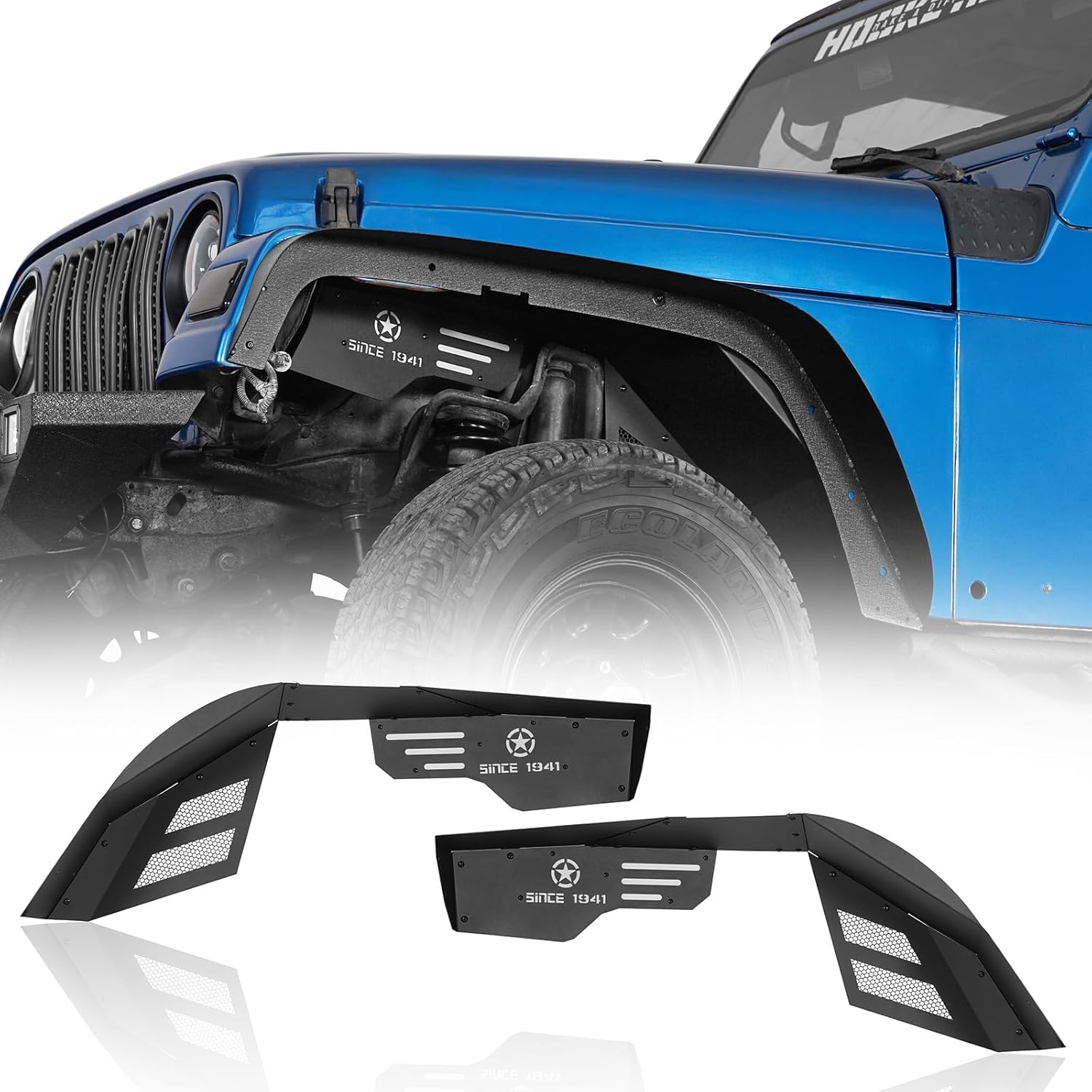
| Compatible Vehicles | 1997-2006 Jeep Wrangler TJ & LJ |
|---|---|
| Material | Carbon Steel (16-gauge) |
| Included Components | 2 front liners, installation instructions, mounting hardware kit |
| Finish | Textured black powder coat |
These Hooke Road front inner fender liners are heavy-duty steel replacements designed to protect the engine bay and wheel wells on 1997–2006 Jeep Wrangler TJ and LJ models. Constructed from 16-gauge carbon steel with a black powder coat, they aim to resist rust and hold up to off-road debris better than thin plastic liners. The kit includes mounting hardware and instructions for a direct bolt-on fit that uses factory mounting points, so installation is straightforward with basic tools and typically needs no drilling. The liners are decorated with a honeycomb plate and a detachable plastic insert that can be repainted for a custom look. They are cut to leave clearance for larger tires and some aftermarket accessories, which helps if you run lifted setups. Key limitations are that the steel construction makes them heavier than plastic alternatives and some buyers report fitment gaps around the frame or shock tower that can reduce splash protection unless you retain parts of the original liners. For drivers prioritizing durable, long-lasting protection over lightweight parts, these are a practical upgrade.
Best for: Buyers who want a long-lasting, rugged replacement liner that trades lower weight for stronger protection and are willing to prioritize durability and corrosion resistance over the lightest option.
Less Ideal for: Drivers seeking the lightest possible liners or a perfect factory-sealing fit without any modification should consider other materials or retain parts of the original liners.
- 16-gauge carbon steel construction improves durability against rocks and off-road impacts
- Black powder coat finish adds corrosion resistance for longer service life
- Direct bolt-on installation with included mounting hardware and instructions
- Design reserves clearance for larger tires and some modified accessories
- Detachable plastic insert offers a simple cosmetic customization option
- Heavier than plastic liners which adds weight to the vehicle
- Some reviewers report imperfect fitment near frame or shock tower reducing splash sealing
Verdict: A rugged, steel front inner fender liner kit that favors long-term durability and off-road protection for 1997–2006 Wrangler TJs and LJs.
6. Nilight Front Inner Fender Liners for 1997–2006 Jeep Wrangler TJ & LJ (2‑Piece Steel, Front)

| Fitment | 1997–2006 Jeep Wrangler TJ & LJ |
|---|---|
| Material | Alloy Steel |
| Finish | Black powder coat with E‑coat |
| Included | 2 front liners and mounting hardware |
These Nilight front inner fender liners are a direct replacement intended to protect the wheel wells and lower engine bay from mud, rocks, gravel, snow, and other off‑road debris on 1997–2006 Jeep Wrangler TJ and LJ models. Constructed from high‑strength alloy steel with E‑coat and a black powder coat finish, they offer a level of durability and corrosion resistance above typical plastic liners. Installation is a bolt‑on process using the included hardware and generally lines up with factory mounting points, though some buyers report tight holes and only modest instructions so expect a 1–3 hour DIY job if you are doing both sides. The liners provide full coverage and a more rugged look; the removable decorative panel can be repainted for a custom accent. Limitations are that steel liners add weight compared with plastic and may require a little patience during fitment or minor adjustments to align perfectly. For drivers who want stronger protection and a tougher appearance, these are a practical factory‑style replacement.
Best for: Buyers who value rugged, long‑lasting protection and a tougher aesthetic for their 1997–2006 Wrangler TJ/LJ and are comfortable doing a hands‑on installation or paying for modest shop time.
Less Ideal for: If you prioritize the lightest possible replacement or want a plug‑and‑play solution with minimal fitting, a factory‑style plastic liner may be a better choice.
- Made from high‑strength alloy steel with E‑coat and powder coat for improved rust and corrosion resistance
- Full wheel‑well coverage protects engine bay from mud, gravel, snow, and off‑road debris
- Includes complete mounting hardware and installation instructions for bolt‑on fitment
- Removable decorative panel that can be repainted for a customized look
- Heavier than factory plastic liners which may slightly increase unsprung mass
- Installation can take time and some holes may require careful alignment or minor adjustment
Verdict: Choose these steel front inner fender liners when you want tough, long‑lasting wheel‑well protection and an upgraded rugged look for a 1997–2006 Wrangler TJ/LJ.
Choosing the Right 1997-2006 Jeep Wrangler Fender Liner: Key Factors to Consider
Fitment and Chassis Compatibility
Correct fitment matters because the 1997–2006 Jeep Wrangler uses specific wheel opening dimensions and factory mounting points that affect coverage and fastening. A liner that matches the original attachment points reduces the need for trimming, extra brackets, or drilling, which lowers installation time and preserves factory rust-proofing treatments. Fitment also influences protection coverage. A liner cut for the Wrangler will better shield suspension components, brake lines, and wiring harnesses from splash and debris. For owners referencing generation codes such as TJ, LJ, and TJU for this era, confirm that the liner aligns with TJ, LJ, and TJU body contours and mounting hole patterns to ensure a secure, rattle-free install.
Material and Durability
Material choice determines how well a fender liner resists punctures, cracking, and UV degradation. Common materials include molded plastic and denser thermoplastic blends. Thicker plastics usually resist impact from rocks and grit better, while more flexible blends absorb repeated flexing without cracking, which matters on Wrangler vehicles that see off-road articulation. Consider how materials respond to salt, mud, and high temperatures. A liner that becomes brittle in cold or softens in heat can fail prematurely. Durability also covers seam strength and reinforcement at mounting points, since those areas see concentrated stress during suspension movement and wheel impacts.
Coverage and Protection Level
Coverage refers to how much of the wheel well, inner fender, and lower body apron the liner protects. More comprehensive coverage reduces the chance of road grime reaching metal panels and helps prevent rust in common trouble spots on older Wranglers. Coverage that extends under splash paths or behind suspension arms gives better defense against stone chips. Assess whether the liner protects wiring and undercarriage items without interfering with drain paths or heat sources like exhaust components. Properly routed drain channels and cutouts preserve water evacuation while still blocking direct spray from tires.
Ease of Installation and Hardware
Many owners replace fender liners themselves, so ease of installation is a major buying factor. Liners that reuse original factory fasteners and align with OEM holes usually install faster and require fewer additional tools. Kits that include compatible hardware or clear instructions remove guesswork and reduce risk of improper fastening, which can lead to squeaks or early failure. Also consider whether the liner requires trimming for lifted or modified Wranglers. If you prefer a straightforward swap, select a liner that requires minimal modification for stock ride height and wheel offset.
Maintenance and Service Access
Fender liners should protect components while still allowing access for routine maintenance tasks like changing brake pads, inspecting shocks, or servicing the steering. Designs that include removable panels or that fasten in ways that expose key service areas make routine work simpler. If you frequently inspect wheel bearings or electrical connectors, choose a liner that does not obscure those access points or that can be trimmed without compromising protection. Consider how fasteners age and whether replacement clips are readily available.
Resistance to Corrosion and Environmental Exposure
For a vehicle that may see salted roads or muddy trails, a liner must help keep moisture and salt away from metal body edges and mounting locations. Materials that trap moisture or hold debris against metal can accelerate corrosion, so look for designs that deflect water and promote drainage. UV resistance matters for Wranglers kept outdoors; prolonged sun exposure can embrittle some plastics. Also evaluate how the liner interfaces with existing rust-prone panels and whether it uses coated or stainless fasteners to limit corrosion at attachment points.
Why Fender Liners Matter on Older Wranglers (1997–2006 TJ, LJ, and TJU)
The 1997–2006 Wrangler body panels and frame seams are particularly vulnerable to road salt and mud intrusion as vehicles age. A properly fitted fender liner acts as a first line of defense, preventing stones and moisture from reaching seams and bracketry that are costly to repair if allowed to corrode.
For owners who reference the TJ, LJ, and TJU designation for this generation, replacing compromised liners restores the factory barrier and can extend the life of exposed components. Maintaining liners is a relatively low-cost preventative step compared with body or suspension repairs caused by long-term exposure.
- Reduces direct spray to inner panels and frame rails
- Protects brake lines, wiring, and shock mounts
- Helps maintain quieter cabin conditions by dampening road noise
Common Signs You Need a New Inner Fender Liner
Several visual and tactile signs indicate it is time to replace a fender liner. Look for cracks, large holes, or sections that have detached from mounting points. Excessive rust or accumulated mud behind the liner often means protection has been compromised for some time.
Other symptoms include increased road noise from the wheel well area, water ingress into the cabin or trunk areas, and visible wear where tires have contacted the liner during articulation. If you find missing fasteners or severely deformed panels after off-road use, plan to replace the liner and address any underlying rust.
- Cracks or punctures visible when turning the wheel fully
- Missing or damaged mounting clips
- Sustained rust behind the liner or on inner panels
Installation Tips for Front and Rear Fender Liners
Before starting, clean the wheel wells to remove mud and loose debris so you can inspect attachment points and existing fasteners. When replacing the front fender liner, turn the wheel to the full lock to gain access to lower fasteners and check for any obstructions from suspension components.
Reuse serviceable OEM clips where possible and replace brittle or corroded fasteners. If the liner requires trimming for minor fit issues, mark and trim conservatively and test-fit before final fastening. Keep torque light on plastic fasteners to avoid cracking the liner.
- Turn wheel to access tight fasteners on front liners
- Clean and dry mounting surfaces before installing new liners
- Test-fit before tightening all fasteners
Materials Comparison: Plastic Vs Denser Thermoplastic Liners
Molded plastic liners are common and offer a lightweight, cost-effective solution. They provide good coverage but vary in thickness and flexibility. Thinner plastic can be more prone to cracking under repeated impacts or when flexed at cold temperatures.
Denser thermoplastic blends or reinforced liners tend to handle repeated flex and rock strikes better. They may add slight weight but improve longevity, especially for Wranglers that see off-road use. When choosing, balance the need for impact resistance with the desire to keep replacement and handling simple.
- Plastic: lighter, often less expensive, variable durability
- Denser thermoplastic: better impact resistance, improved longevity
Addressing Fender Liner Fitment With Lifted or Modified Wranglers
Owners who lift their 1997–2006 Wrangler or run wider tires should expect some liners to require trimming or custom mounting. Stock-fit liners suit unmodified TJ, LJ, and TJU Wranglers best. If your vehicle has a modest lift, choose liners that allow some trimming without compromising critical coverage.
When making modifications, preserve access to brake and suspension service points. Test-fit a liner before committing to trimming and consider using additional fasteners to secure custom edges that would otherwise be unsupported.
- Stock liners work best on unmodified Wranglers
- Expect trimming or custom brackets for larger lifts or tire upgrades
Maintaining and Inspecting Fender Liners Over Time
Regular inspection helps catch trapped debris or minor damage before it leads to rust. Remove and clean liners periodically, especially after heavy off-road trips, and check for trapped moisture or salt that can accelerate corrosion on mounting points.
Replace missing clips promptly and repair small cracks with suitable adhesives or rivets when appropriate. Keeping the area behind the liner clean and dry will extend both liner and body life.
- Inspect after off-road use and at least annually for street-driven vehicles
- Clean trapped mud and salt from behind the liner
- Replace damaged fasteners to prevent additional movement
Still looking for the perfect fit?
Select your Jeep Wrangler configuration to see the most relevant Fender Liners recommendations
How We Chose the Best 1997-2006 Jeep Wrangler Fender Liner
To assemble this shortlist we focused on the factors that matter most to owners of 1997-2006 Jeep Wrangler vehicles. We prioritized correct fitment to the Wrangler chassis used across the 1997–2006 years, resistance to salt and abrasion, and materials that balance stiffness with impact resistance. Installation characteristics were weighted heavily because many owners perform this replacement at home; we looked for liners that reuse factory mounting points, require minimal trimming, and include clear hardware guidance. Corrosion and debris protection were assessed by considering material type and coverage area rather than specific brand claims. Long-term durability was evaluated by expected resistance to cracking from flex and temperature cycles. We excluded options that required major body modifications or that depend on non-factory mounting brackets. Also omitted were liners designed only for heavily modified wheel arches where clearance is radically different from stock. The final selections represent parts that fit the specified Wrangler scope, perform well in on-road and light off-road use, and keep installation effort reasonable.
Our full evaluation process is outlined in our review methodology.
FAQ
How long do fender liners typically last on a 1997–2006 Wrangler?
Lifespan varies with use and environment. On a street-driven Wrangler, liners can last many years, while frequent off-road use or exposure to road salt may shorten service life. Regular inspection helps catch wear early.
Can I replace just the damaged section of a wheel well liner?
Sometimes small cracks or holes can be repaired with adhesive or patching, but larger damage or deformed mounting areas usually warrant a full replacement to restore proper coverage and fitment.
Will installing new liners reduce road noise in my Wrangler?
Yes, properly fitted liners can dampen tire and road noise by blocking direct spray and reducing air turbulence in the wheel well. The effect depends on material density and how securely the liner is mounted.
Do I need special tools to replace front fender liners on a TJ, LJ, and TJU Wrangler?
Most installations require basic hand tools such as screwdrivers, pliers for clip removal, and possibly a trim panel tool. A floor jack and wheel removal may be needed for easier access on front liners.
Are replacement liners compatible with stock bumpers and fenders?
Replacement liners designed for the 1997–2006 Wrangler should be compatible with stock bumpers and fenders when they match factory fitment. Confirm the liner aligns with OEM mounting points to avoid interference.
How should I handle rusted mounting points when installing new liners?
Clean and treat rusted areas before installation. Replace severely corroded clips or fasteners and consider using coated or stainless hardware to slow future corrosion at attachment points.
Final Verdict
On a 1997–2006 Jeep Wrangler, a properly chosen fender liner restores essential protection against road spray, debris, and corrosion while helping keep maintenance access straightforward. Prioritize liners that match TJ, LJ, and TJU fitment and mounting patterns, use durable materials suited to your driving environment, and include reliable hardware for a quiet, rattle-free fit. Balance protection against installation needs: if you drive mainly on pavement, a lighter molded liner with good fitment may be the most practical choice, while off-road users will benefit from denser, more impact-resistant materials and reinforced mounting. Use the evaluation criteria in this guide to select the liner that best matches your Wrangler's condition and intended use.
Explore More:
- Check out all Jeep Wrangler parts & accessories
- Explore Fender Liners Maintenance & Repair Guides
- Explore Body & Exterior
- Browse all Auto Parts
