

Note: This article contains affiliate links. If you click on these links and make a purchase, I may earn a small commission at no extra cost to you. This helps support my research and content. Read my full affiliate disclosure here.
If your Hyundai Sonata is showing performance loss, noise, or fumes, choosing the right exhaust manifold matters for reliable operation. The wrong manifold can cause leaks, heat buildup, or poor fit that affect drivability and emissions. This guide highlights six shortlisted exhaust manifolds that meet common repair and upgrade needs. We explain the evaluation criteria used and what to look for so you can pick an option suited to your Sonata. Read on to see the top picks and the factors we considered.
Looking for other parts? See all Hyundai Sonata parts & accessories.
Top Picks at a Glance
| Best Overall The best all-around choice for most situations | Walker Ultra 16528 Direct-Fit Catalytic Converter with Integrated Exhaust Manifold for Hyundai Sonata |  |
| Best quality Built to a higher standard if you want something more solid | FortunaFlow High-Flow Catalytic Converter (Front) for Hyundai Sonata 2.4L 2016-2019 |  |
| Best Value The sweet spot between price and what you get | A-Premium Exhaust Manifold Catalytic Converter Kit for Hyundai Sonata & Kia 2.0/2.4L |  |
| Best budget The cheapest option that still gets the job done reliably | SIZZER Catalytic Converter with Exhaust Manifold & Gasket Kit for Hyundai Sonata/Optima 2.4L (2009–2014) |  |
| Highest Rated A top-rated pick with lots of positive feedback | FortunaFlow Exhaust Manifold Catalytic Converter for Hyundai Sonata 2.4L Front |  |
| Best Seller A high-volume bestseller chosen again and again | PHILTOP Front Catalytic Converter Kit for Hyundai/Kia 2.0–2.4L |  |
1. Walker Ultra 16528 Direct-Fit Catalytic Converter with Integrated Exhaust Manifold for Hyundai Sonata
| Manufacturer | Walker Exhaust |
|---|---|
| Brand | Walker |
| Item model number | 16528 |
| EPA compliant | For use on OBDII vehicles |
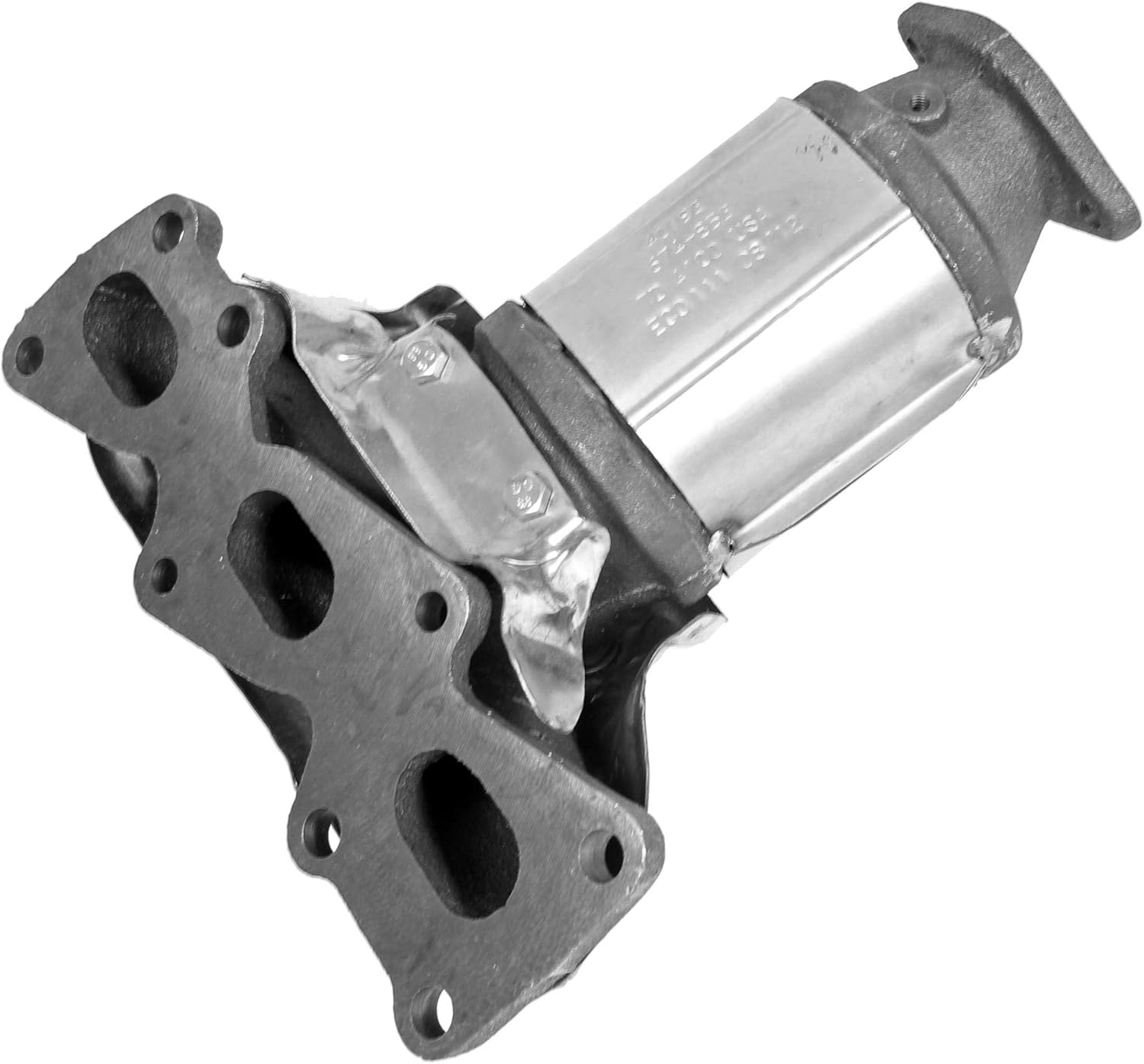
The Walker Ultra 16528 is a direct-fit catalytic converter with an integrated exhaust manifold made to replace the factory assembly on compatible Hyundai Sonata engines. It installs as a bolt-on, bolt-off unit that matches downstream connections and includes OE-style flanges and heat shields where originally equipped. Walker specifies a high-technology washcoat and optimized precious metal load to meet emissions reduction requirements for OBDII vehicles, so it restores catalytic function and clears related fault codes when correctly matched to the vehicle. The stainless-steel construction and thick flanges aim to provide long service life compared with cheaper universal converters. Because this is a direct-fit, installation time and alignment issues are reduced versus custom-fit solutions, but you must confirm exact year and engine fitment before purchase and follow local regulations on aftermarket converters. For street-driven Sonatas needing a factory-quality replacement, this unit balances durability, emissions compliance, and straightforward installation.
Best for: Balanced, all-round buyers who want a factory-quality replacement that restores emissions function and minimizes installation hassle on a Hyundai Sonata.
Less Ideal for: Buyers looking for a low-cost universal converter, or those who need a custom-fit performance header for modified engines should consider other options.
- Direct-fit integrated manifold reduces installation time and aligns with factory downstream connections
- Engineered washcoat and precious metal loading to meet EPA emissions requirements for OBDII vehicles
- Stainless-steel construction with thick flanges for improved durability over basic universal converters
- Includes OE-style heat shielding when originally equipped to protect undercarriage from heat
- Compatibility is limited to specific Hyundai Sonata model years and related platforms so fitment must be verified
- Higher-cost than basic universal or generic aftermarket converters
Verdict: A direct-fit, EPA-compliant catalytic converter with integrated manifold engineered to restore emissions control and simplify replacement on compatible Hyundai Sonata applications.
2. FortunaFlow High-Flow Catalytic Converter (Front) for Hyundai Sonata 2.4L 2016-2019
| Vehicle fitment | Hyundai Sonata 2016-2019 2.4L |
|---|---|
| Manufacturer | FortunaFlow |
| Model | HSF152.4 |
| Exterior | Machined |
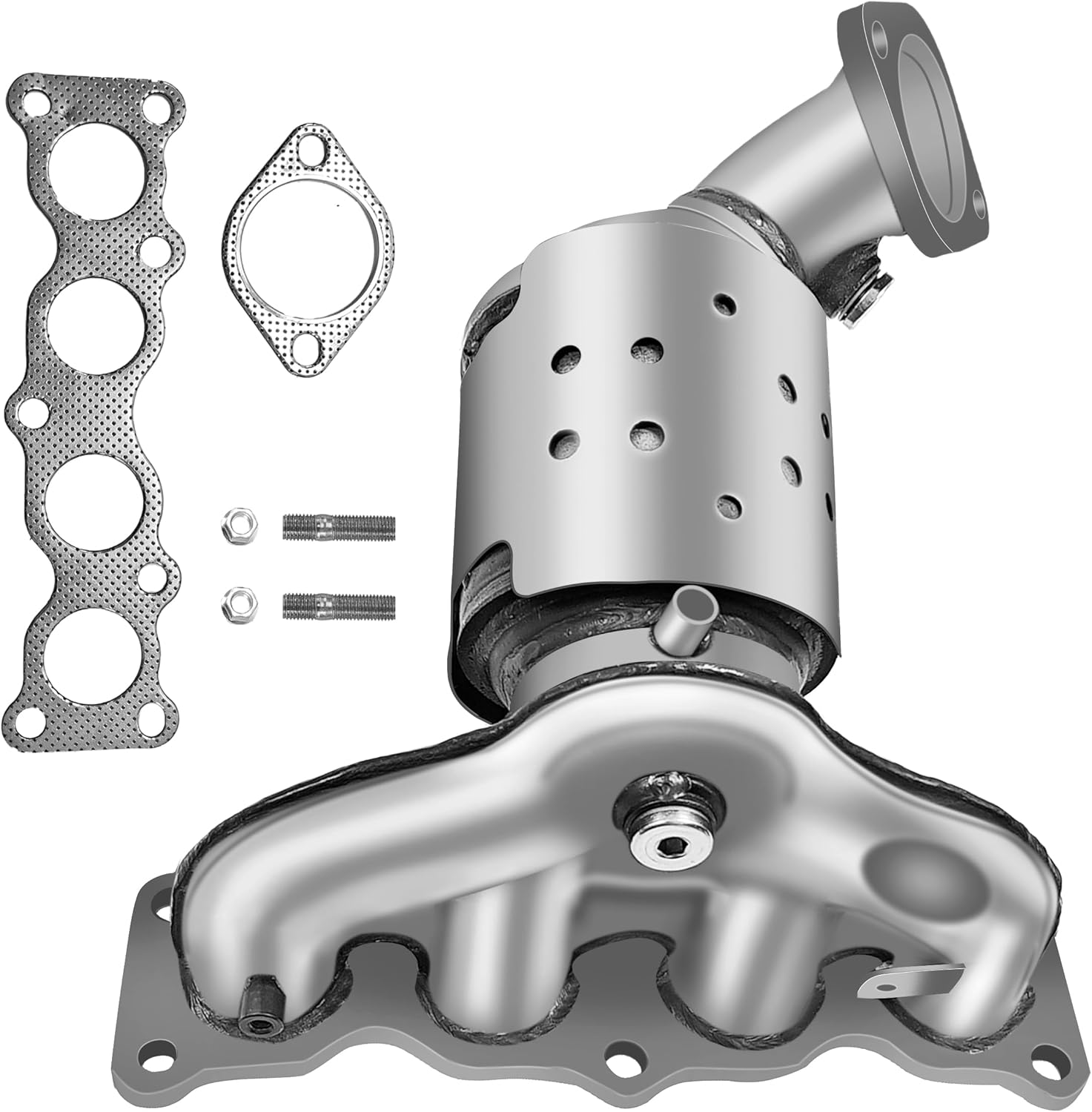
This FortunaFlow catalytic converter is a direct-fit front assembly engineered for the 2016–2019 Hyundai Sonata 2.4L and replaces the factory front converter without major modification. It is used as a replacement unit when a clogged or failing converter triggers OBD-II codes or reduces performance. The product emphasizes high-flow internals and a machined flange with included gaskets and hardware to simplify installation and meet factory-style fitment. In practice it restores drivability and can clear P0420/P0430 codes while often improving throttle response compared with a restricted core. Buyers should note it is sold as a two-piece assembly in some shipments and the supplied clamp/hardware quality varies between units, which can require careful tightening or a stronger clamp for a long-term seal. The part is stated EPA compliant but cannot be shipped to certain states, so confirm local regulations before purchasing.
Best for: Performance-oriented owners seeking a factory-fit, high-flow front catalytic replacement to restore throttle response and reduce obstruction-related drivability issues.
Less Ideal for: Drivers who need a guaranteed emissions-certified unit for states with stricter local regulations or those who prefer a single-piece OEM dealer replacement should consider alternatives.
- Direct-fit design with machined flange and included gaskets/hardware for simplified installation
- High-flow construction that can restore performance and help clear OBD-II P0420/P0430 codes
- Built to match factory fitment dimensions for the specified Sonata 2.4L years
- Multiple customer reports of improved acceleration and reliable sealing when installed correctly
- Some units ship in two pieces and the included clamp or fasteners may be lower quality requiring replacement
- Not available for sale or shipment to certain states due to local emissions rules
Verdict: A quality direct-fit high-flow front catalytic converter for performance-focused Sonata 2.4L owners who want improved response at a fraction of dealer cost, but check state emissions rules and consider stronger clamps if needed.
3. A-Premium Exhaust Manifold Catalytic Converter Kit for Hyundai Sonata & Kia 2.0/2.4L

| Vehicle Emissions Specifications | Federal Emissions |
|---|---|
| E.P.A. Compliant | Yes |
| Body Material | Stainless Steel |
| Gasket & Bolts Included | Yes |
| Outlet Mounting Hole Quantity | 2 |
This A-Premium kit combines an exhaust manifold and catalytic converter into a single direct-fit assembly intended for Hyundai Sonata (selected 2009, 2011–2015 2.4L and 2015 hybrid) and compatible Kia 2.0/2.4L models. It is supplied with gaskets and bolts and is offered as an EPA-compliant replacement for federal-emissions vehicles. In use the unit bolts up like a factory replacement and can be installed by a competent DIYer or a shop; several owners report straightforward fitment and quick installation. Practical benefits include stainless steel construction and included mounting hardware that reduce parts sourcing and help get the vehicle back on the road faster. However user reports are mixed on long-term durability and alignment of mounting surfaces, with some buyers needing to modify brackets or encountering early failures that caused exhaust leaks and engine codes. Also this specific part is restricted from sale or use in California, Colorado, New York, and Maine due to state regulations, so it is only suitable where federal aftermarket converters are allowed.
Best for: Practical optimizers looking to save money and replace a worn manifold/converter with a single, ready-to-install assembly to get an older Sonata back on the road quickly.
Less Ideal for: Buyers in states with strict emissions rules or anyone who prioritizes long-term reliability over initial cost should consider factory-quality or higher-end aftermarket options instead.
- Direct-fit combined manifold and catalytic converter simplifies replacement and reduces installation time.
- Included gaskets and bolts mean fewer extra parts to buy during installation.
- Stainless steel body offers corrosion resistance compared with cheaper stamped units.
- Some customers report warped mounting surfaces or misaligned brackets that required drilling or modification.
- Several reviews describe premature internal failure of the converter leading to codes or secondary damage.
Verdict: A convenient, budget-minded direct-fit manifold with integrated catalytic converter that gets federal-emissions Sonatas back on the road quickly.
4. SIZZER Catalytic Converter with Exhaust Manifold & Gasket Kit for Hyundai Sonata/Optima 2.4L (2009–2014)
| Fitment | Sonata 2.4L 2009-2014; Optima 2.4L 2009-2014 |
|---|---|
| EPA Status | EPA OBD-II Approved (federal models only) |
| Shell Material | Industrial Grade Stainless Steel |
| Substrate Material | Ceramic |
| Oxygen Sensor Ports | 2 |
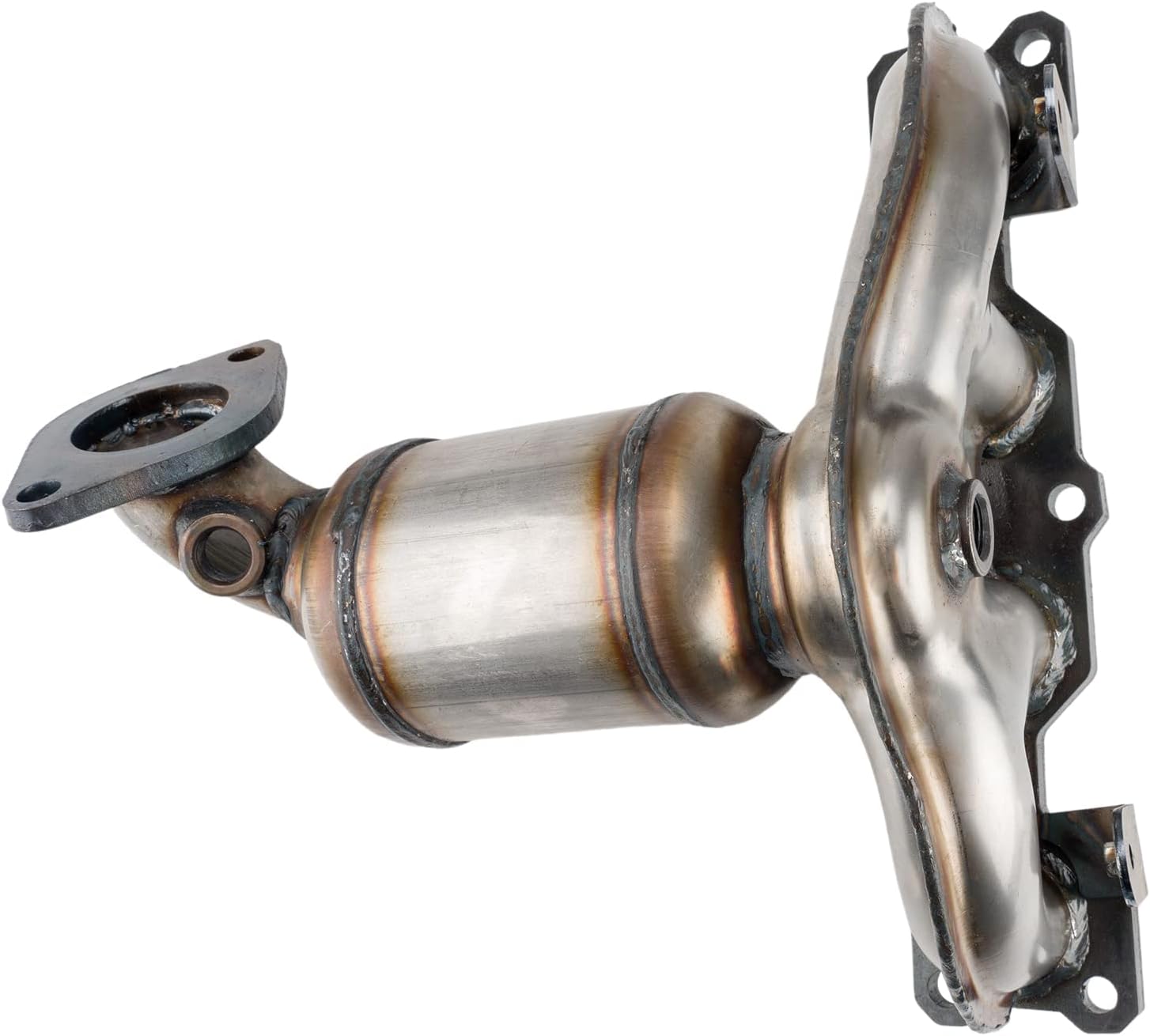
This SIZZER unit is a budget-focused replacement catalytic converter sold as a complete kit with gaskets and mounting hardware for direct bolt-on installation to the front exhaust location on 2.4L Sonata engines (2009–2014). It uses an industrial-grade stainless steel shell, a ceramic substrate, and laser-welded joints to reproduce factory fit and function, and the listing notes EPA OBD-II approval for federal emissions models. In practice the kit simplifies repair by including the manifold-style converter and needed accessories so you can swap the failed part without sourcing extra pieces. Buyers will appreciate the rust-resistant anodized finish and two oxygen sensor ports for straightforward reconnecting. Limitations are craftsmanship variability reported by some installers and the unit is not legal in California, New York, Colorado, or Maine emissions models, so it is only appropriate for federal-compliant vehicles. Expect a good low-cost option when you prioritize a working replacement over an OEM-priced part, but inspect welds and packaging on arrival before installation.
Best for: Budget-conscious Hyundai Sonata owners who need an affordable, ready-to-install front catalytic converter replacement and prioritize value and straightforward repairs.
Less Ideal for: Owners in states with strict emissions regulations or buyers seeking factory-authorized parts and highest-end build quality should consider alternatives.
- Complete kit with catalytic converter, gaskets and hardware for a one-stop installation.
- Industrial-grade stainless steel shell and ceramic substrate aimed at durability and heat resistance.
- Designed for direct fit to Hyundai Sonata/Kia Optima 2.4L 2009–2014 to reduce installation time.
- EPA OBD-II approved for federal emissions models and includes two oxygen sensor ports.
- Not legal for emissions-controlled states including California, New York, Colorado, and Maine.
- Some buyers reported inconsistent weld quality and occasional defects requiring replacement.
Verdict: A cost-conscious, all-in-one catalytic converter and manifold kit that restores emissions hardware for federal-compliant 2.4L Sonata models but is not legal in several states and may show variable fit or weld quality.
5. FortunaFlow Exhaust Manifold Catalytic Converter for Hyundai Sonata 2.4L Front

| Manufacturer | FortunaFlow |
|---|---|
| Model | HSF09102.4 |
| Position | Front |
This FortunaFlow catalytic converter assembly is a direct-fit front replacement for the Hyundai Sonata 2.4L and is intended to resolve check-engine codes and restore proper emissions performance. Typical use is as a one-for-one replacement when a factory unit is clogged or damaged; the listing notes it fits the 2009–2014 Sonata 2.4L lineup. The flange and mounting holes are built to match factory specifications and the part ships with gaskets and hardware to simplify installation for a DIY mechanic or professional shop. Buyers report improved acceleration and elimination of P0420/P0430 codes after installation, and the machined exterior and weld quality shown in listings suggest decent build consistency. Limitations include regional sales restrictions that prevent use in certain states and that some sellers ship the assembly in two pieces with a clamp joiner rather than a single-piece unit, which can affect perceived fit or require extra clamps during installation. Expect a product that restores drivability and emissions compliance for non-restricted states but verify exact fitment for mid-year model changes before ordering.
Best for: Reliability-focused buyers who prioritize getting a dependable, factory-quality replacement to clear emissions faults and restore normal driveability on a Hyundai Sonata 2.4L.
Less Ideal for: Owners in states with restricted emissions rules or anyone who requires a single-piece OEM integrated manifold design should consider alternatives or confirm local compliance before purchasing.
- Direct-fit flange and mounting holes matched to factory specifications for straightforward installation
- Ships with gaskets and necessary hardware to reduce additional parts hunting
- Machined exterior and solid welds indicate consistent build quality
- Customer reports indicate it clears P0420/P0430 codes and restores acceleration
- Not available for sale or shipment to certain states due to local regulations
- Some listings ship the unit in two pieces with a clamp connection that may require extra attention during installation
- May be louder than the original unit due to higher flow characteristics
Verdict: A practical, direct-fit catalytic converter assembly that restores emissions compliance and drivability for non-restricted Hyundai Sonata 2.4L models, with occasional two-piece shipments to watch for.
6. PHILTOP Front Catalytic Converter Kit for Hyundai/Kia 2.0–2.4L

| Position | Front |
|---|---|
| Manufacturer Part Number | 8541EXP294XUS |
| OEM Part Number | 641461, 40963 |
| Compatible Engines | 2.0L / 2.4L |
| EPA Compliance | Federal emissions (not for certain states) |
This PHILTOP kit replaces the front catalytic converter assembly on compatible Hyundai Sonata and Kia 2.0/2.4L applications and is sold as a direct-fit replacement with included gaskets and hardware. It uses a stainless steel aluminized body and a double-layer ceramic honeycomb substrate aimed at higher flow and improved oxygen storage, which the listing says can reduce backpressure and help restore drivability and fuel economy when an old converter is clogged. The kit ships with OE-style bolts, gaskets, and O2 sensor fitment to simplify installation for a competent DIYer or a local shop; many buyers report straightforward installs but a few report fitment or flange alignment that needed minor modification. The unit is EPA-compliant for federal emissions states but not approved for some states with stricter rules, so confirm local regulations before purchase. Customer experiences vary from reliable fit and reduced noise to isolated failures, so consider professional installation and inspection after fitment.
Best for: Risk-averse mainstream buyers who want a factory-style replacement that restores emissions function and drivability without chasing high-performance gains.
Less Ideal for: Do not choose this if you live in a state that requires CARB-compliant converters or if you need a guaranteed bolt‑perfect OEM match for a heavily modified exhaust; professionals seeking certified state-specific units should look elsewhere.
- Designed as a direct replacement with included gaskets and hardware to simplify installation
- Stainless steel aluminized piping and double-layer ceramic substrate aim to improve flow and oxygen storage
- Includes O2 sensor fitment and OEM-style mounting points for easier hookup to existing exhaust
- EPA-compliant for federal emissions states, enabling legal replacement outside certain restricted states
- Not approved for installation in states with stricter aftermarket converter rules such as California
- Some buyers report flange alignment or length differences requiring modification or shop work
- A subset of reviews describe premature internal failure on certain vehicles
Verdict: A direct-replacement front catalytic converter kit aimed at restoring emissions function and drivability for Sonata/Forte/Optima 2.0–2.4L applications.
Choosing the Right Hyundai Sonata Exhaust Manifold: Key Factors to Consider
Fitment and Flange Alignment
Correct fitment ensures the manifold mates cleanly to the cylinder head and the rest of the exhaust system, which reduces the chance of leaks and simplifies installation. Misaligned flanges can cause gasket extrusion, uneven bolt loading, and difficulty torquing studs to specification.
Check that port shapes and bolt patterns match your Sonata's head. Even small discrepancies can require machining or adapter plates, which adds labor and potential failure points. A properly aligned manifold also helps maintain correct exhaust backpressure, which matters for engine responsiveness.
Material and Thermal Durability
Materials determine how well the manifold withstands repeated heating and cooling cycles. Cast iron is common for its durability under thermal stress, while stainless steel variants offer lighter weight and corrosion resistance. Each material behaves differently under high temperatures and vibration.
Consider how the material handles thermal expansion and whether coatings are applied to reduce surface oxidation. A manifold that resists cracking and warping will maintain sealing surfaces and bolt torque over time, lowering the chance of future repairs.
Sealing Surfaces and Gasket Compatibility
The interface between the manifold and the cylinder head depends on flat, consistent sealing surfaces and the correct gasket type. Poorly finished flanges or incorrect gasket profiles can cause exhaust leaks, which manifest as noise, reduced performance, and potential exhaust fumes in the engine bay.
Verify that the manifold surface finish is compatible with OEM-style gaskets or specified replacement gaskets. Some designs integrate a flange that requires a particular gasket thickness to maintain correct exhaust port alignment and compression.
Heat Shielding and Thermal Management
Heat from the exhaust affects nearby components and underhood temperatures. Manifolds with integrated heat shields or those designed to accept shields help protect wiring, hoses, and intake components. Managing radiant heat also reduces underhood noise to a degree.
Evaluate whether the manifold design includes provisions for heat shielding and how it attaches. Good thermal management reduces the risk of heat-induced damage to adjacent parts and can improve longevity of the manifold itself by moderating temperature gradients.
Resistance to Cracking and Warping
Cracking is a common failure mode caused by thermal cycling and stress concentration around bolt holes and junctions. Designs that distribute stresses and use reinforcement around high-stress areas tend to last longer. Manufacturing quality, such as uniform wall thickness and post-casting heat treatment, influences durability.
Look for features that reduce stress risers, such as filleted transitions and robust bolt bosses. A manifold that resists warping maintains gasket compression and reduces the frequency of maintenance.
Installation Accessibility and Hardware
Ease of installation affects labor time and the likelihood of correct assembly. Consider access to mounting studs, whether studs or bolts are used, and the need to remove ancillary components to reach mounting points. Hardware quality, including high-temperature fasteners and anti-seize provisions, matters for reassembly and future service.
A design that minimizes the need to remove other parts saves time and reduces the chance of lost or damaged components. Clear hardware specifications and inclusion of necessary gaskets or studs simplify the repair process and reduce installation uncertainty.
How We Chose the Best Hyundai Sonata Exhaust Manifold
We focused on parts designed specifically for the Hyundai Sonata and prioritized fitment, heat tolerance, and long-term sealing because these dimensions most directly affect engine performance and durability. Our editorial filters emphasized correct flange alignment and port matching to avoid installation headaches and exhaust leaks. We evaluated materials and coating options for thermal stress resistance and corrosion protection, as well as the quality of gasket surfaces and fastener interfaces. Durability under repeated thermal cycles and resistance to cracking were key considerations given the high-heat environment of exhaust manifolds. Ease of installation, including access to studs and compatibility with common engine configurations, was also assessed. Units that required extensive modification or that lacked clear fitment data were excluded. We did not include options intended for other vehicle models or those with unclear manufacturing specifications.
Our full evaluation process is outlined in our review methodology.
FAQ
What are common exhaust manifold symptoms on a Hyundai Sonata?
Common signs include a ticking or tapping noise during cold start that can change with engine load, reduced engine responsiveness, and a noticeable exhaust odor in the engine bay. You may also see decreased fuel efficiency or a check engine light if sensors detect abnormal exhaust conditions.
How can I diagnose an exhaust manifold leak?
You can listen for changes in exhaust noise near the manifold area, especially during acceleration. A visual inspection for black soot around flange joints or a quick smoke test can reveal escaping gases. Tightening hardware to spec and checking gasket condition helps confirm the source.
When is an exhaust manifold gasket needed versus replacing the manifold?
If the manifold and flange faces are flat and undamaged, replacing the gasket often restores a proper seal. However, if the flange is warped, cracked, or the manifold shows structural damage, replacing the manifold is usually the more reliable solution. Evaluate both the gasket and the mating surfaces before deciding.
What causes an exhaust manifold crack?
Cracks commonly result from repeated thermal cycling, high localized stresses, or corrosion that weakens the material. Improper torqueing of fasteners or previous repairs that altered the component can create stress risers. Addressing the root cause, such as excessive heat or improper installation, helps prevent recurrence.
How should I plan for installation difficulty and time?
Installation time depends on engine layout, access to mounting points, and whether surrounding components must be removed. Plan for extra time if studs are rusted or if heat shielding and sensors need to be detached. Using the recommended hardware and following torque sequences reduces rework and ensures a durable seal.
Is it worth swapping to an aftermarket manifold on a Hyundai Sonata?
An aftermarket manifold can be worth it when the original is damaged or when a better-specified component offers improved materials or fit. The decision often depends on expected durability, compatibility with exhaust components, and whether the design addresses known failure points. Balance the benefits against installation complexity and long-term reliability.
Conclusion
Prioritize fitment accuracy, material durability, and proper sealing when choosing an exhaust manifold for a Hyundai Sonata. Those factors have the biggest impact on noise, performance, and long-term reliability. Weigh tradeoffs between ease of installation and thermal management features. Address any underlying causes of heat or corrosion to reduce the risk of repeat failures and ensure the repair lasts.
Explore More:
- Check out all Hyundai Sonata parts & accessories
- Explore Exhaust Manifolds Maintenance & Repair Guides
- Explore Exhaust & Emissions
- Browse all Auto Parts
