

Note: This article contains affiliate links. If you click on these links and make a purchase, I may earn a small commission at no extra cost to you. This helps support my research and content. Read my full affiliate disclosure here.
If your Mitsubishi Lancer feels rough during acceleration or you notice extra vibration and noise at idle, the engine mounts could be the cause. Choosing the right Mitsubishi Lancer engine mount matters because mounts control how the engine sits, absorb vibration, and protect drivetrain components from excess stress.This guide covers seven shortlisted engine mounts that represent the top options in this category, and explains the criteria used to evaluate durability, fitment, and noise and vibration control. Read on to understand the practical tradeoffs so you can pick the right mount for your driving needs.
Looking for other parts? See all Mitsubishi Lancer parts & accessories.
Top Picks at a Glance
| Best Overall The best all-around choice for most situations | RP Remarkable Power Engine and Transmission Mount Kit for 2002–2007 Mitsubishi Lancer 2.0L AT (4‑Piece) |  |
| Best Quality Built to a higher standard if you want something more solid | ENA Engine and Transmission Mount Kit, Set of 4 for Mitsubishi Lancer 2.0L (2002–2007) |  |
| Best Value The sweet spot between price and what you get | Beck/Arnley Engine Mount 104-2224 |  |
| Best Budget The cheapest option that still gets the job done reliably | ONNURI Rear Engine Motor Mount (GP3132 / A5423) |  |
| Highest Rated A top-rated pick with lots of positive feedback | URO Parts Front Engine Mount 22116760448 |  |
| Most Popular A crowd favorite that many people choose with confidence | SCITOO Engine and Transmission Mount Set for Mitsubishi Lancer (2002–2007) |  |
| Best Seller A high-volume bestseller chosen again and again | A-Premium Engine and Transmission Mount Set for Mitsubishi Lancer 2002–2007 2.0L (Automatic) |  |
RP Remarkable Power Engine and Transmission Mount Kit for 2002–2007 Mitsubishi Lancer 2.0L AT (4‑Piece)

| Fitment | 2002–2007 Mitsubishi Lancer 2.0L Automatic FWD |
|---|---|
| Package Contents | 4 pieces (A6647 front, A4617 rear, A4606 right, A4641 trans) |
| Manufacturer Part Number | RP_G068_G1 |
| Brand | RP Remarkable Power |
This RP Remarkable Power kit supplies the four mounts commonly replaced together when a Lancer’s engine and transmission start to vibrate or shift under load. It includes front, rear, right and transmission mounts intended to hold the engine and gearbox steady, which reduces vibration and improves driving comfort compared with worn mounts. Installers report the pieces fit many 2002–2007 Lancer 2.0L automatic models without modification, though alignment can require some maneuvering during installation and professional fitting is recommended. The kit is sold as the parts only and does not include sensors, hardware, or an installation manual, so you will need bolts and torque specs from the vehicle or a shop. Build and material quality are generally acceptable for an aftermarket replacement, but some buyers reported occasional parts with poor hole alignment that required exchange or adjustment. For a balanced buyer who wants a full mount replacement at once, this kit is a practical option if you can handle or pay for a proper installation and inspect each piece before fitting.
Best for: Balanced all-round buyers who want a single, budget-conscious replacement kit to restore quiet and stability to a 2002–2007 Mitsubishi Lancer 2.0L automatic without overprioritizing premium brand parts.
Less Ideal for: Drivers looking for a dealer-level factory-quality replacement or a plug-and-play kit with all hardware and instructions included should consider OEM or premium aftermarket options instead.
- Complete four-piece set covering front, rear, right engine mount and transmission mount for a single purchase
- Designed specifically for 2002–2007 Mitsubishi Lancer 2.0L automatic FWD for direct-fit intent
- Reduces engine/transmission movement to lower vibration and improve ride comfort when installed correctly
- Does not include mounting hardware or installation instructions so additional parts or shop time may be required
- Some reported fitment or manufacturing alignment issues on a minority of pieces that required replacement or modification
Verdict: A convenient four-piece aftermarket kit that restores stability and comfort to Lancer 2.0L automatics at a competitive value, provided you arrange proper installation and check fitment.
ENA Engine and Transmission Mount Kit, Set of 4 for Mitsubishi Lancer 2.0L (2002–2007)

| Set Name | Set of 4 |
|---|---|
| Model Number | EMT9181 |
| Material Type | Rubber |
| Mounting Location | Front Left or Rear Right |
This ENA kit supplies all four critical mounts—front, front right, rear engine mounts and a transmission mount—matched to 2.0L Mitsubishi Lancer models with automatic transmissions. Built from rubber bonded to alloy steel, the mounts are intended as direct replacements to reduce vibration and driveline noise and restore engine positioning after worn factory mounts. Installation is typical for a mount swap: remove the old mounts, line up the new pieces, and torque to factory specs; some users report one piece may need minor adjustment to fit perfectly. The practical benefit is a quieter, more stable ride and reduced engine movement under acceleration which helps shift quality and driveline longevity. Expect OEM-style performance rather than upgraded stiffness for racing use; the rubber construction favors NVH control over track-focused firmness. Fitment is restricted to the listed Lancer years and automatic transmission models, so confirm compatibility before ordering.
Best for: Performance-oriented owners who want to restore firm, predictable engine mounting and reduce vibration while preserving street drivability and shift quality.
Less Ideal for: Drivers seeking stiff, race-oriented mounts or modifications for track use should choose performance-grade aftermarket mounts instead.
- Complete 4-piece kit covers front, right, rear engine mounts and transmission mount for a full replacement job
- Rubber bonded to alloy steel construction balances vibration isolation with structural support
- Direct-replacement design simplifies installation and restores proper engine alignment
- Not engineered for track or high-performance stiffness; focused on NVH reduction and comfort
- A few users reported fitment variation requiring minor adjustments during installation
Verdict: A complete factory-style 4-piece mount kit that restores engine stability and reduces noise for 2.0L Mitsubishi Lancer automatics.
Beck/Arnley Engine Mount 104-2224

| Mounting Type | Engine Mount |
|---|---|
| Manufacturer | Beck/Arnley |
| Model | 104-2224 |
This Beck/Arnley engine mount is designed as a direct-fit replacement that matches factory form, fit and function for the specified application. It is typically used when the original mount fails and needs replacing to restore normal engine positioning and vibration isolation. The part is described as meeting foreign nameplate specifications and uses premium materials intended for underhood durability, so you can expect solid vibration damping and an application-specific fit. Installation is straightforward for a mechanic familiar with Mitsubishi Lancer mounts because the unit is marketed as an exact match to factory mounting types. Limitations to note are that fitment can be specific to engine and model year combinations, and some buyers reported missing features on certain variants, so confirming exact Lancer model fit before ordering is important. The mount is a practical, lower-cost alternative to dealer parts that aims to balance reliability and value for routine replacement jobs.
Best for: Practical optimizers who want a factory-quality replacement for their Mitsubishi Lancer without paying dealer prices and who prioritize straightforward repairs and long-term value.
Less Ideal for: Those restoring a show car or seeking dealer-branded parts for warranty continuity should consider OEM dealer options instead.
- Designed to match factory form, fit and function for the specified application
- Built from premium materials intended for long-lasting vibration damping
- Application-specific design helps ensure correct fit for the vehicle
- Includes additional factory parts where applicable to simplify installation
- Fitment varies by engine and model year so exact compatibility must be verified
- Some buyers reported missing vacuum or bolt holes on certain vehicle variants
Verdict: A value-oriented, factory-spec replacement engine mount for Mitsubishi Lancer owners who want reliable vibration control without dealer pricing.
ONNURI Rear Engine Motor Mount (GP3132 / A5423)
| Compatibility | 2008–2015 Lancer 2.0L; 2009–2015 Lancer 2.4L |
|---|---|
| Part Type | Rear motor mount |
| Model | GP3132 / A5423 |
| Brand | ONNURI |
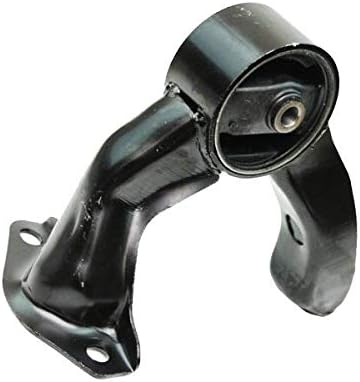
This rear motor mount from ONNURI is a straightforward factory-replacement option for owners needing an affordable rear engine mount for compatible Mitsubishi Lancer models. It installs where the engine's rear is supported and is intended to restore alignment and reduce vibration compared with a worn mount. The part lists compatibility with 2008–2015 Lancer 2.0L and 2009–2015 Lancer 2.4L, and the unit ships singly so you can replace only the failed mount. Construction combines steel and rubber, which helps damp engine movement and keep cabin noise down compared with a missing or fatigued mount. As a budget aftermarket part it offers value and a simple fit for routine repairs, but it may not match premium factory-quality refinements or long-term durability from higher-end brands. Expect typical wear over years of use and be prepared to check alignment and related hardware during installation. The seller also requests VIN and transmission details if you need fitment help.
Best for: Budget-conscious Mitsubishi Lancer owners looking for an inexpensive, direct rear-mount replacement to get a reliable everyday driver back on the road.
Less Ideal for: Drivers seeking the longest-lasting, highest-precision factory-quality replacement or performance mounts should consider premium branded alternatives.
- Lists direct compatibility with 2008–2015 Mitsubishi Lancer 2.0L and 2009–2015 Lancer 2.4L models
- Simple one-piece replacement that installs in the rear mount location
- Steel-and-rubber construction provides basic vibration damping and reduced cabin noise
- Affordable option for cost-conscious repairs
- May not deliver the same long-term durability or refined fit as higher-end or factory-brand mounts
Verdict: A wallet-friendly rear motor mount that restores basic engine support for compatible Mitsubishi Lancers but may not match premium factory-quality longevity.
URO Parts Front Engine Mount 22116760448

| Finish Type | Powder Coated |
|---|---|
| Manufacturer | APA Industries |
| Manufacturer Part Number | 22116760448 |
| OEM Part Number | 1042294, 22 11 6 760 448, 22116760448 |
This URO Parts front engine mount is a direct replacement designed to restore engine positioning and cut down on vibration and noise caused by a failed mount. Installed at the front engine location, it supports the engine at factory-aligned points so drivability and shifting feel return closer to original. The part uses a machined alloy body with an elastomer element and a powder-coated finish intended to resist heat and ozone degradation, which helps longevity in everyday driving. Fitment notes and customer feedback indicate reliable compatibility with Mitsubishi Lancer applications when the original mount fails. Practical benefits include simple bolt-on replacement and a design meant to match factory mounting points so no modification is required. Limitations are standard for aftermarket mounts: it replaces a worn mount but will not correct issues elsewhere in the drivetrain or worn adjacent components, and long-term durability depends on installation and operating conditions.
Best for: Reliability-focused owners seeking a straightforward, factory-quality front engine mount replacement to restore smooth operation and minimize vibration for routine driving.
Less Ideal for: Buyers wanting performance-oriented mounts for aggressive driving or those looking to fix vibration caused by mounts elsewhere in the drivetrain should consider other solutions.
- Designed to align and support the engine at factory mounting points to reduce vibration
- Machined alloy construction with elastomer element for heat and ozone resistance
- Powder-coated finish helps resist corrosion and surface wear
- Reported by users to fit Mini Cooper and related applications, indicating accurate fit manufacturing
- May not address other drivetrain or suspension sources of vibration
- Longevity depends on operating conditions and installation quality
Verdict: A dependable, factory-style front engine mount replacement aimed at restoring smooth, vibration-free operation for owners prioritizing reliability.
SCITOO Engine and Transmission Mount Set for Mitsubishi Lancer (2002–2007)

| Fitment | Mitsubishi Lancer 2002-2007 |
|---|---|
| Set Name | Engine & Transmission Mount Set (8 Piece) |
| Material Type | Rubber, Metal |
This SCITOO eight-piece engine and transmission mount set replaces the worn rubber-and-metal mounts that isolate engine and drivetrain vibration on 2002–2007 Mitsubishi Lancer models. The kit includes the primary engine and transmission mounts and uses bonded rubber-to-metal construction with a powder-coated finish for corrosion resistance. In daily use the set restores engine stability, reduces vibration and drivetrain movement under acceleration, and can make the car feel noticeably smoother compared with badly worn mounts. Installation is typical for mount replacement and may require basic tools and lift access for the transmission mount; the set approach ensures matching mounting characteristics across components. Build quality is serviceable for routine street driving and the price point makes it a convenient option for owners who want a full replacement kit in one purchase. Some buyers report mixed longevity compared with higher-end OEM-style parts, so drivers seeking the longest service life may prefer premium replacements or professional-specified units.
Best for: Convenience-driven buyers who want a one-stop replacement kit to quickly restore ride comfort and drivetrain stability without sourcing multiple parts separately.
Less Ideal for: Drivers prioritizing maximum longevity or heavy-duty performance should consider premium or professional-grade mounts specified for extended life.
- Complete eight-piece kit covers engine and transmission mounts for a single purchase
- Rubber bonded to metal construction restores vibration isolation and engine stability
- Powder-coated metal parts help resist corrosion for typical service conditions
- Affordable option compared with buying individual factory replacements
- Some customers report shorter lifespan than higher-end factory-quality mounts
Verdict: A convenient, full replacement mount kit that restores engine stability and reduces vibration for 2002–2007 Mitsubishi Lancer owners.
A-Premium Engine and Transmission Mount Set for Mitsubishi Lancer 2002–2007 2.0L (Automatic)
| Fitment | Mitsubishi Lancer 2002-2007 L4 2.0L Automatic |
|---|---|
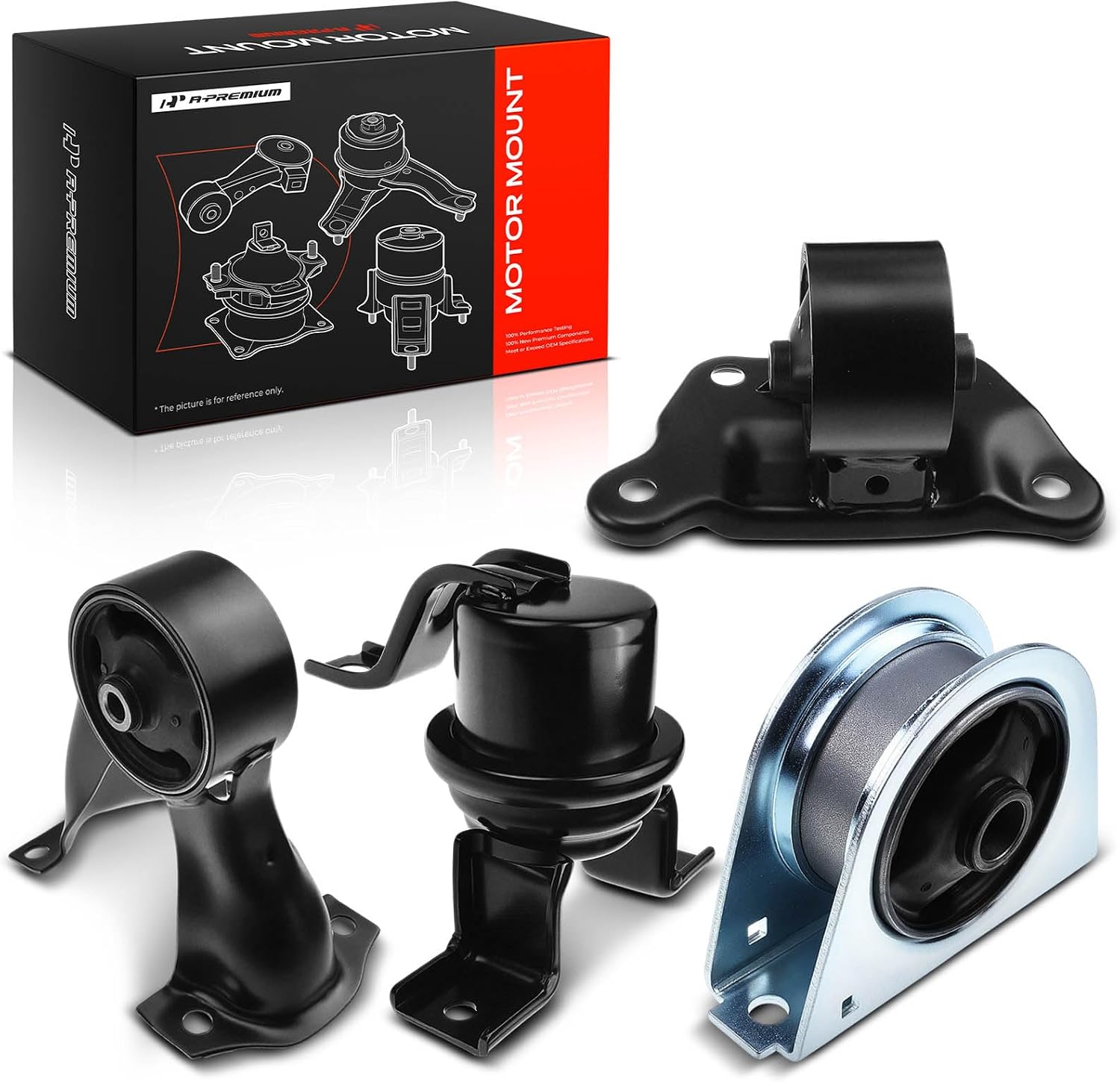
| Included Components | Front motor mount, Front right motor mount, Rear motor mount, Transmission mount |
| Material Type | Alloy Steel, Rubber |
| Manufacturer Warranty Description | One Year Unlimited Mileage Quality Guarantee |
This A-Premium kit replaces the front, front-right, rear engine mounts and the transmission mount for 2002–2007 Mitsubishi Lancer 2.0L automatic models. It is typically used during routine engine or transmission mount replacement to reduce vibration and restore factory alignment after worn mounts cause engine movement. The mounts are made from alloy steel with rubber components and are offered as a full set so you can replace all major mounts at once. Practical benefits include restoring smoother idle, reducing drivetrain noise and preventing premature wear caused by excess engine movement. Several buyers report good fit and straightforward installation, though a number of reviews note quality-control issues such as misaligned holes or variations that required adjustment. The kit comes with a one-year unlimited-mileage guarantee that covers the cost of the parts themselves. Expect to inspect fitment carefully before installation and allow modest adjustment or minor fabrication in case of fit variations.
Best for: Risk-averse mainstream buyers seeking a full factory-style mount replacement kit to restore smooth operation and reduce vibration after wear.
Less Ideal for: Buyers who want a premium performance mount or a vibration-isolating aftermarket upgrade should consider stiffer performance mounts or OEM replacements instead.
- Complete four-piece kit replaces both engine mounts and the transmission mount for one-stop repairs
- Alloy steel construction with rubber elements for vibration damping and durability
- Packaged to match the factory replacement pattern for the listed Lancer 2002–2007 2.0L automatic models
- Includes a one-year unlimited-mileage parts guarantee
- Some user reports of poorly aligned mounting holes and inconsistent fit requiring adjustment or rework
- Quality control appears variable between production batches
Verdict: A convenient, full replacement mount kit for 2002–2007 Mitsubishi Lancer 2.0L automatics that restores factory-style vibration control.
Choosing the Right Mitsubishi Lancer Engine Mount: Key Factors to Consider
Fitment and Compatibility
Correct fitment is the foundation of any engine mount decision. A mount designed specifically for the Mitsubishi Lancer offers the right bolt pattern, alignment, and clearance to avoid stress on studs, brackets, or the transmission. If a mount is even slightly off in dimensions it can lead to premature wear, stripped threads, or misalignment that transfers load to other components.
Carefully check OEM-style mounting points and the listed vehicle years, engine variants, and transmission pairings when choosing a mount. Proper compatibility reduces installation time and lowers the chance of vibration issues caused by improper seating.
Isolation and Vibration Damping
The primary job of an engine mount is to isolate engine motion and reduce vibration transmitted to the chassis. Different designs use solid rubber, fluid-filled hydraulics, or layered constructions to tune damping characteristics. A mount with effective damping will reduce low-frequency shake on acceleration and minimize high-frequency buzz at idle.
Consider your driving conditions when selecting damping levels. A softer mount may improve comfort but allow more engine movement during hard acceleration. A stiffer mount limits movement and may feel harsher but can improve perceived responsiveness and protect intake or exhaust links from excessive motion.
Material Quality and Durability
Materials determine how long a mount will last and how well it resists oil, heat, and mechanical fatigue. High-quality rubber compounds and corrosion-resistant metal brackets typically last longer under road and engine bay conditions. Look for mounts that specify heat-treated steel or plated finishes on brackets and hardware to resist corrosion.
Durability matters because a failing mount can accelerate wear on surrounding parts and create recurring repair needs. Choose options with clear material specifications and construction methods that match expected vehicle use, whether daily driving or more demanding conditions.
Torque Control and Mount Stiffness
Engine torque creates rotational forces that mounts must resist. Mounts designed to handle torque reaction reduce engine sag and movement under load. The stiffness of the mount affects how much the engine rocks during acceleration, deceleration, and gear changes.
If you drive aggressively or tow, a mount with higher stiffness or a specialized torque mount design helps maintain driveline alignment. For primarily comfort-focused drivers, a mount tuned for smoother damping may be preferable even if it allows slightly more engine movement.
Hardware and Installation Fit
Included hardware and the condition of fasteners influence installation quality and long-term reliability. A mount that ships with correct studs, bolts, and washers reduces the chance of cross-threading or using improper fasteners. Thread engagement length and bolt grade affect clamping force and fatigue life.
Consider whether the mount requires any adapter brackets or special tools. Choosing a mount with complete installation hardware and clear instructions simplifies the job, reduces the risk of installation errors, and improves overall safety.
Noise and Secondary Effects
Failing mounts commonly lead to increased engine mount noise, clunks, or more pronounced vibration feeling through the steering wheel and floor. A properly designed mount minimizes these noise signatures while avoiding transmitting impacts to adjacent components.
Also consider the potential secondary effects of mount characteristics. Excessive engine movement can strain hoses, wiring, and exhaust components. Look for mounts that balance noise control with limiting movement to preserve the longevity of connected parts.
Why the Mitsubishi Lancer Engine Mount Matters
Engine mounts are a small component with an outsized impact on how your Mitsubishi Lancer feels and performs. They secure the engine to the chassis, control torque reactions during acceleration and shifting, and isolate vibration and noise from the cabin. A properly functioning Mitsubishi Lancer engine mount helps maintain driveline alignment, reduces stress on hoses and wiring, and preserves transmission and subframe longevity.
Because the Lancer's compact layout concentrates mass and torque in a small area, mount design and condition influence driving refinement as much as they affect mechanical reliability. Whether you drive a daily commuter or a spirited variant, understanding what the engine mount does makes it easier to decide when to replace, upgrade, or maintain this component.
- Secures engine to chassis and maintains alignment
- Controls torque movement to prevent stress on drivetrain components
- Dampens engine vibration and reduces cabin noise
- Impacts long-term wear on transmission mounts, hoses, and mounts adjacent to the engine
Common Failure Modes and Practical Diagnosis
Engine mounts degrade in predictable ways: rubber elements crack or delaminate, fluid-filled mounts leak, and metal brackets corrode or fatigue. For the Mitsubishi Lancer, pay attention to mount rubber deterioration from age, heat exposure, and oil contamination. Symptoms often develop gradually but can become pronounced after a hard acceleration or a recent roadside repair that disturbed engine alignment.
Diagnosing a failing mount on a Lancer can be straightforward with controlled checks. Visual inspection should look for torn or separated rubber, oil-soaked mount faces, or bent brackets. Next, with the engine idling and transmission in park or neutral with the parking brake set, observe for excessive rocking or clunking when applying light throttle and releasing. While this is not a substitute for a lift inspection, it helps isolate mounts that allow excessive torque movement or lack isolation.
- Look for cracked, compressed, or oil-contaminated rubber
- Listen for clunks or bangs during rapid throttle changes
- Notice increased vibration in the cabin at idle and while driving
- Check for misalignment or strain on adjacent hoses and wiring
How Failure Presents: Vibration, Noise, and Drivability Effects
When a mount loses its damping ability, vibration transfers into the chassis and becomes noticeable through the steering wheel, floor, or seats. Engine mount symptoms vibration typically shows as a low-frequency shake at idle that worsens under load. Separately, failing mounts produce mechanical noises as metal meets metal — a sharp knock or clunk when torque is applied is a common engine mount noise sign.
Beyond comfort and noise, a compromised mount alters drivability. You may feel a delay or harshness in throttle response as the engine shifts position, or experience accelerated wear of CV boots, exhaust hangers, and accessory brackets due to increased movement. Early detection limits collateral damage and keeps repair scope manageable.
- Vibration at idle and during acceleration
- Knocking or clunking on gear changes or hard throttle
- Perceived misalignment or dragging components
- Uneven wear on adjacent engine bay components
Replacement Options for the Mitsubishi Lancer: OEM, Aftermarket, and Materials
When selecting a replacement, you will choose between original equipment style parts and a range of aftermarket options. OEM engine mount vs aftermarket considerations include fit fidelity, material formulation, and the intended balance between comfort and control. OEM-style units are designed to match factory isolation characteristics, while aftermarket choices range from direct-replacement rubber mounts to stiffer torque-focused designs.
Material choices matter. Solid rubber mounts prioritize comfort and noise reduction but may allow more torque movement. Fluid-filled or hydraulic-style mounts improve damping of a broader frequency range. Polyurethane and performance-oriented compounds offer increased stiffness for better torque control but can transmit more vibration into the cabin. Choose the material that matches your driving needs, since changing stiffness changes NVH and driveline load paths.
- Direct-replacement rubber: balanced NVH and cost-effective
- Hydraulic/fluid mounts: better damping across frequencies
- Polyurethane/performance mounts: improved torque control at the expense of increased vibration
- Steel-reinforced brackets: better longevity in corrosive environments
Installation, Torque Specs, and Service Considerations
Correct installation preserves the intended behavior of the replacement mount and prevents early failure. Mount bolts should be torqued to factory specification and checked after the first heat cycle. Improper torqueing can allow the mount to shift or tear, or it can preload rubber elements and accelerate wear. For owners doing their own work, note that some mounts require aligning the engine to a neutral position before tightening to avoid preloading.
Professional shops will typically recommend replacing any mounting hardware that shows corrosion or thread damage and inspecting surrounding components during the job. If you are comparing repair options, ask whether the installer re-torques bolts after initial engine heat cycles and whether any alignment or driveline checks are included.
- Tighten mount fasteners to the specified torque and recheck after heat cycles
- Replace corroded or stretched bolts rather than reusing
- Ensure engine is supported and positioned correctly before tightening
- Inspect adjacent hoses, wiring, and exhaust hangers while mounts are removed
Cost Considerations and Service Planning
Costs vary with part type and whether additional hardware or labor is required. Basic engine mount replacement on a Mitsubishi Lancer commonly involves a single mount change, though multiple mounts are sometimes replaced together to ensure balanced behavior. When budgeting, account for the part type chosen, the condition of mounting bolts, and whether alignment or related repairs are needed.
If minimizing downtime is important, schedule a pre-repair inspection so the shop can identify any supplemental parts ahead of time. This reduces surprises on the day of service and usually shortens turnaround. Keep warranty and expected lifespan in mind when choosing between economy replacements and higher-end mounts designed for longer service life or harsher operating conditions.
- Plan for potential replacement of corroded bolts or brackets
- Consider replacing companion mounts if one shows advanced wear
- Ask shops if a post-install torque recheck is included
- Factor in longer-lasting materials for vehicles used in demanding conditions
Practical Upgrades and when to Choose a Stiffer Mount
Some Lancer owners choose stiffer torque mounts to reduce engine movement during spirited driving or towing. A firmer mount improves perceived throttle response and can reduce wheel hop or driveline lash, but expect increased engine mount noise and more vibration in the cabin. Upgrading should be driven by a specific need rather than preference for a firmer feel alone.
If you plan upgrades, match mount stiffness to other drivetrain modifications. For example, a stiffer mount on an otherwise stock setup may increase NVH without a noticeable performance benefit. Conversely, if you have enhanced power output or transmission modifications, a stiffer mount can help control torque-induced movement and protect drivetrain components.
- Choose a performance mount only if it solves a specific drivability issue
- Match mount choice to power and transmission upgrades
- Expect trade-offs between reduced engine movement and increased cabin vibration
- Have a competent installer verify overall driveline alignment after upgrade
Pre-purchase Checklist for a Replacement Mount
Before buying a replacement Mitsubishi Lancer engine mount, gather the vehicle details and check the part number or OEM reference to ensure fitment. Confirm whether your Lancer has any special mounting brackets or factory options that affect the mount footprint. If the vehicle has aftermarket modifications, document those changes so the correct mount geometry is selected.
Ask the supplier or installer about warranty, expected lifespan, and return policy. Request torque specifications and installation notes for the chosen mount type so you can verify correct installation. Finally, organize a basic timeline for the repair that includes a follow-up inspection after the initial thermal cycles to catch early settlement or hardware loosening.
- Confirm vehicle VIN, model year, and engine configuration for exact fit
- Request install notes and torque specs with the part
- Check warranty and return terms
- Schedule a post-installation inspection after the first few heat cycles
How We Chose the Best Mitsubishi Lancer Engine Mount
Our shortlist reflects parts that meet real-world expectations for fit, durability, and vibration control on the Mitsubishi Lancer. We focused on mounts designed specifically for this vehicle to ensure correct bolt patterns and attachment points. Key evaluation criteria included material construction and expected lifespan, rubber or hydraulic isolation performance for vibration damping, mounting hardware quality and thread integrity, dimensional accuracy and fitment tolerances, and durability under typical driving loads including torque reaction.We excluded universal mounts and any parts that required significant modification to fit. We also set aside options lacking clear manufacturer specifications or proper mounting hardware. The result is a list that emphasizes correct fit, long-term damping performance, and robust attachment details that matter most for safe, quiet operation.
Our full evaluation process is outlined in our review methodology.
FAQ
What are common symptoms of a bad engine mount on a Mitsubishi Lancer?
Common signs often include increased vibration at idle, noticeable clunks or thuds during acceleration or shifting, and more engine movement under load. You may also notice unusual noises or additional vibration transmitted into the cabin. These symptoms usually develop gradually but can become obvious after a mount starts to fail.
Can I replace an engine mount myself?
Many engine mounts can be replaced by a competent DIYer with basic tools and a motor support method to safely hold the engine. The job typically involves supporting the engine, removing mounting bolts, and swapping the mount. However, some mounts require access or procedures that are more complex, so evaluate whether you have the proper tools and experience before attempting the replacement.
How long do engine mounts typically last?
Lifespan depends on materials, driving conditions, and exposure to oil or heat. Under normal driving, mounts often last several years to over a decade. Aggressive driving, fluid leaks, or harsh environmental conditions can shorten service life. Regular inspections help catch deterioration early.
Will a stiffer mount reduce engine vibration?
A stiffer mount can reduce engine movement and the sensation of torque-related rocking, but it may transmit more high-frequency vibration into the cabin. The right choice balances reduced engine travel with acceptable comfort. For most drivers, a mount tuned for damping offers a better tradeoff between comfort and control.
What causes engine mount noise or clunking?
Noise or clunking usually results from degraded isolation material or excessive engine movement allowing metal-to-metal contact. Worn mounts can allow the engine to shift enough that chassis components or brackets contact each other. Addressing worn mounts typically reduces these noises and prevents secondary damage.
Final Verdict
When choosing a Mitsubishi Lancer engine mount, prioritize correct fitment and vibration isolation first, then consider material quality and how the mount handles torque reaction. Balance damping characteristics against stiffness based on whether you value comfort or a firmer engine location.Also inspect installation hardware and expected durability to avoid repeat service. By focusing on fit, isolation performance, and construction quality you can select a mount that reduces vibration and protects drivetrain components for years of dependable use.
Explore More:
- Check out all Mitsubishi Lancer parts & accessories
- Explore Engine Mounts Maintenance & Repair Guides
- Explore Engine
- Browse all Auto Parts
