

Note: This article contains affiliate links. If you click on these links and make a purchase, I may earn a small commission at no extra cost to you. This helps support my research and content. Read my full affiliate disclosure here.
Replacing the cooling fan on a Mitsubishi Lancer matters because a properly functioning fan keeps engine temperatures stable, prevents overheating, and supports consistent HVAC performance. You want a unit that moves enough air, integrates cleanly with the vehicle electrical system, and fits without major modification.This guide highlights seven shortlisted Mitsubishi Lancer cooling fans selected for their fitment, airflow, and motor reliability. We evaluated installation ease, electrical compatibility, and cooling performance to help you pick the right option. Read on for what to look for and the factors that influenced our short list.
Looking for other parts? See all Mitsubishi Lancer parts & accessories.
Top Picks at a Glance
| Best overall The best all-around choice for most situations | OTN TONG YANG Radiator Cooling Fan Assembly for 2008–2017 Mitsubishi Lancer 2.0/2.4L |  |
| Best quality Built to a higher standard if you want something more solid | munirater Radiator Cooling Fan Assembly for Mitsubishi Lancer (2008–2017) |  |
| Best Value The sweet spot between price and what you get | TYC 622450 Cooling Fan Assembly for Mitsubishi Lancer |  |
| Best Budget The cheapest option that still gets the job done reliably | FEIPARTS Radiator Cooling Fan Assembly for Mitsubishi Lancer (2008–2017) |  |
| Highest Rated A top-rated pick with lots of positive feedback | Dorman Engine Cooling Fan Assembly 621-368 for Select Mitsubishi Models |  |
| Most popular A crowd favorite that many people choose with confidence | Hayden Rapid-Cool 3680 12" Universal Add-On Cooling Fan Kit |  |
| Best Seller A high-volume bestseller chosen again and again | DNA Motoring 12" High-Performance Slim Electric Radiator Fan with Mount Kit |  |
1. OTN TONG YANG Radiator Cooling Fan Assembly for 2008–2017 Mitsubishi Lancer 2.0/2.4L

| Power Connector Type | 2-pin/2-pin |
|---|---|
| Voltage | 13.5 Volts |
| Wattage | 60 watts |
| Maximum Rotational Speed | 1900 RPM |
| Noise Level | 49 Decibels |
This radiator cooling fan assembly is a direct-fit replacement for the 2008–2017 Mitsubishi Lancer with 2.0 or 2.4L engines and connects via a 2-pin power connector. It replaces the factory unit to restore proper radiator airflow for normal driving, traffic and A/C loads. The unit uses an upgraded motor and balanced blades to reduce vibration and operating noise, with manufacturer testing indicating noise around 49 dB and a maximum speed near 1900 RPM. Installation is typical for a fan assembly and should slot into the original mounting points when the OE number and connector are confirmed. Practical benefits include restoring engine temperature control and helping prevent overheating after the original fan fails. Limitations are fitment sensitivity and variable quality control reported by some users, so double-check the part number and connector before ordering and inspect fasteners after installation. The product comes with a one-year manufacturer warranty.
Best for: Balanced buyers who want a straightforward, factory-style replacement to restore cooling on a Mitsubishi Lancer and value a sensible mix of durability and quiet operation.
Less Ideal for: Drivers who need a heavy-duty performance cooling upgrade for track use or who prefer to custom-fit universal fan solutions should look elsewhere.
- Vehicle-specific design meant to match mounting points for 2008–2017 Mitsubishi Lancer 2.0/2.4L
- Upgraded motor and balanced blades to reduce vibration and lower operating noise
- Direct replacement for listed OEM numbers to simplify fitment when matched correctly
- Tested performance metrics provided including voltage, wattage and max RPM
- Fitment requires careful verification of OEM number and connector to avoid compatibility issues
- Some buyers reported inconsistent quality control and loose fasteners on arrival
Verdict: A sensible, quiet direct-replacement fan assembly for 2008–2017 Mitsubishi Lancer owners who want to restore factory-style cooling, provided you confirm fitment before buying.
2. munirater Radiator Cooling Fan Assembly for Mitsubishi Lancer (2008–2017)
| Fitment | 2008–2017 Mitsubishi Lancer models (multiple trims listed) |
|---|---|
| Power Connector Type | 4-Pin |
| Wattage | 60 watts |
| Cooling Method | Air, Water |
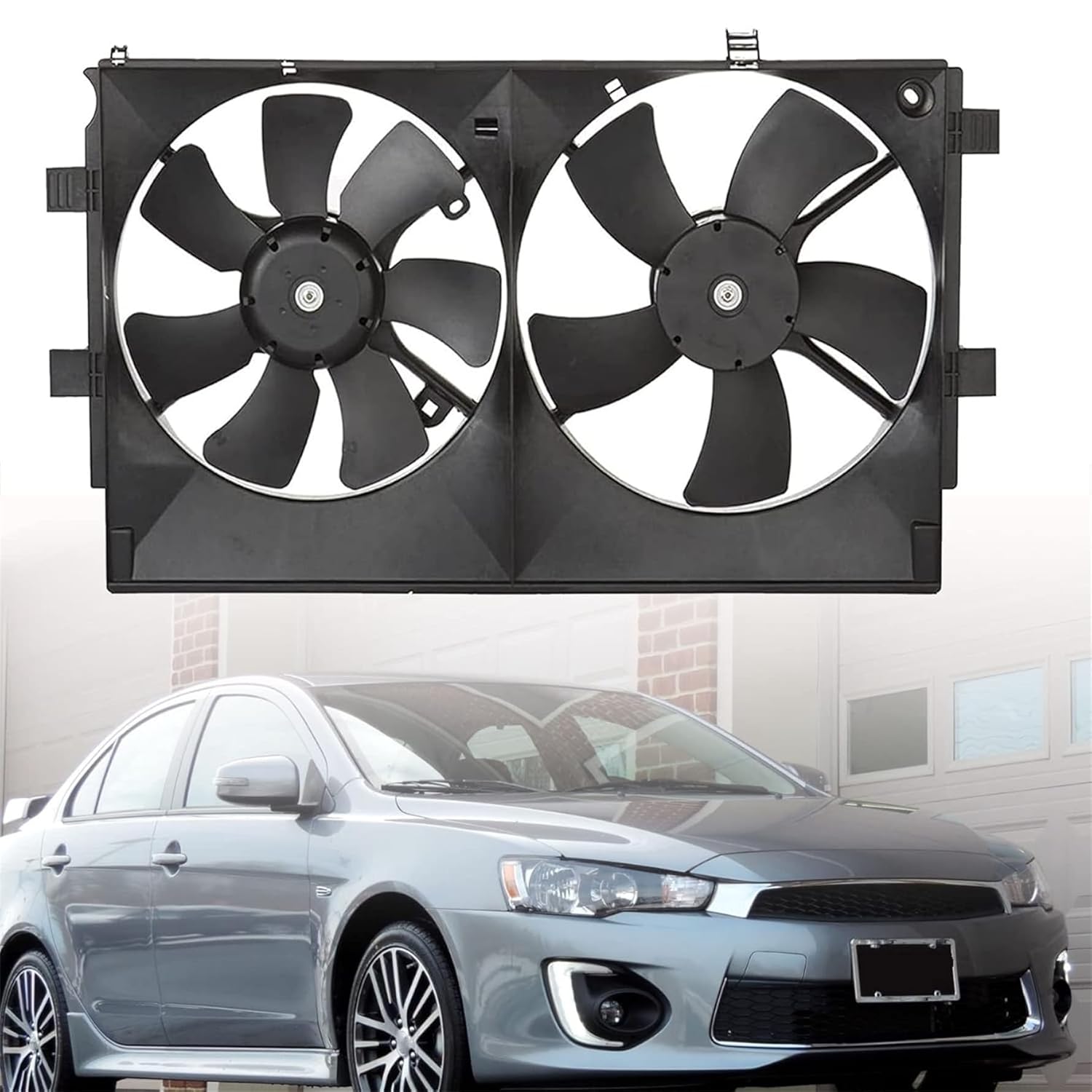
This radiator cooling fan assembly replaces the factory unit on many 2008–2017 Mitsubishi Lancer variants and uses a dual-fan layout to boost airflow across the radiator. It is intended for bolt-in replacement and is commonly used when a worn or failed fan causes overheating, poor A/C performance, or noisy operation. Notable features include a four-pin power connector, an enlarged blade area from the dual-fan design for higher air volume, and a plastic shroud that keeps the package light and easy to handle. In practice the increased airflow helps the engine reach and maintain safe operating temperature faster during idles and traffic, and it can improve cabin A/C cooling under load. Installation is straightforward for a mechanically inclined owner and typically avoids dealer labor. Limitations are that the unit is an aftermarket plastic assembly so long-term durability may vary compared with higher-end factory-quality parts, and electrical specs listed are inconsistent so installers should verify vehicle connector and fuse requirements before fitting.
Best for: Performance-oriented Lancer owners who prioritize improved cooling under heavy load or in stop-and-go driving and who are comfortable fitting a direct-replacement part themselves.
Less Ideal for: Owners seeking an OEM-branded long-term factory-quality part or those who prefer professional shop installation and diagnostics rather than a DIY replacement.
- Direct-fit replacement for 2008–2017 Mitsubishi Lancer models, simplifying installation
- Dual-fan design and increased blade area for higher air volume and improved cooling at low speed
- Four-pin power connector matches common Lancer wiring harnesses for straightforward hookup
- Aftermarket plastic construction may not match the longevity of premium factory-quality assemblies
- Listed electrical specifications appear inconsistent and should be confirmed before installation
Verdict: A budget-friendly, higher-airflow dual-fan replacement that improves cooling for performance-minded Mitsubishi Lancer drivers but uses aftermarket plastic construction that may affect long-term durability.
3. TYC 622450 Cooling Fan Assembly for Mitsubishi Lancer

| Power Connector Type | 3-Pin |
|---|---|
| Voltage | 1.8 Volts |
| Wattage | 1.8 watts |
| Maximum Rotational Speed | 2500 RPM |
| Compatible Devices | Mitsubishi Lancer |
This TYC 622450 cooling fan assembly is a complete drop-in replacement that includes the motor, fan blade, and shroud to simplify swapping the original unit on a Mitsubishi Lancer. It is designed to match factory-style airflow and mounting with a 3-pin power connector so installation is usually straightforward for a DIYer or mechanic. TYC says the assembly is tested for corrosion resistance, vibration, and endurance, and the licensed shroud and blade designs aim to deliver comparable cooling performance. In real-world use it restores radiator airflow and fan control without fabricating brackets or wiring, and several installers report an easy fit and reliable operation. Expect some variability in fit for specific model years or trims, so double-check connector and mounting alignment before installation. This is a cost-conscious replacement that balances usability and performance but is not a performance-upgrade fan for heavy-duty towing or motorsport cooling demands.
Best for: Practical optimizer buyers who want a low-cost, vehicle-specific replacement that restores factory cooling without extra modification or custom work.
Less Ideal for: Drivers who need upgraded cooling for heavy towing, track use, or increased engine output should choose a performance-oriented fan instead.
- Complete assembly with motor, blade, and shroud for one-step replacement
- Designed to match factory mounting and 3-pin connector for straightforward installation
- Manufacturer testing for corrosion, vibration, and endurance improves durability expectations
- Uses licensed shroud and blade designs intended to reproduce factory airflow characteristics
- Voltage and wattage specs listed are unusually low compared with typical automotive fans and may reflect labeling differences rather than performance
- Some buyers reported fitment issues on certain model years so verification is advised
Verdict: A budget-friendly, drop-in replacement that restores factory cooling for Mitsubishi Lancer owners who prioritize practicality over performance.
4. FEIPARTS Radiator Cooling Fan Assembly for Mitsubishi Lancer (2008–2017)

| Power Connector Type | 3-Pin or 4-Pin |
|---|---|
| Voltage | 12 Volts |
| Wattage | 5 watts |
| Cooling Method | forced air |
This FEIPARTS cooling fan assembly is an aftermarket replacement intended to restore or improve airflow through the radiator on compatible Mitsubishi Lancer models. It installs as a direct-fit assembly using the included mounting provisions and can be configured as a pusher or puller, so it suits routine repairs after a failed factory fan. The unit uses a 12V motor with sealed ball bearings and balanced blades for smoother operation and longer life compared with generic open designs. Practical benefits include straightforward installation without modifications and compatibility across many Lancer trims and years, which makes it a convenient budget repair option. Limitations to consider are that this is an aftermarket part rather than a factory unit and seller-provided fitment lists must be checked carefully to confirm exact year and submodel compatibility before purchase.
Best for: Budget-conscious Lancer owners who need an affordable, serviceable replacement fan to get their cooling system back to working condition without spending on OEM parts.
Less Ideal for: Owners seeking an exact factory-original part or who prioritize brand-authorized replacements and verified OEM fitment should consider factory-quality alternatives.
- Direct-fit mounting provisions for drop-in installation on listed Lancer years
- Sealed ball bearing motor and balanced blades for smoother, longer-running performance
- Can be mounted as either a pusher or puller to match vehicle setup
- Covers a wide range of Mitsubishi Lancer model years and trims listed by the seller
- Aftermarket unit that may differ slightly from factory original in materials or finish
- Fitment requires careful verification against the vehicle list to ensure correct submodel match
Verdict: An affordable, direct-fit aftermarket fan assembly that restores radiator airflow for many 2008–2017 Mitsubishi Lancer models.
5. Dorman Engine Cooling Fan Assembly 621-368 for Select Mitsubishi Models
| Power Connector Type | 2-Pin |
|---|---|
| Voltage | 12 Volts |
| Wattage | 80 watts |
| Maximum Rotational Speed | 3500 RPM |
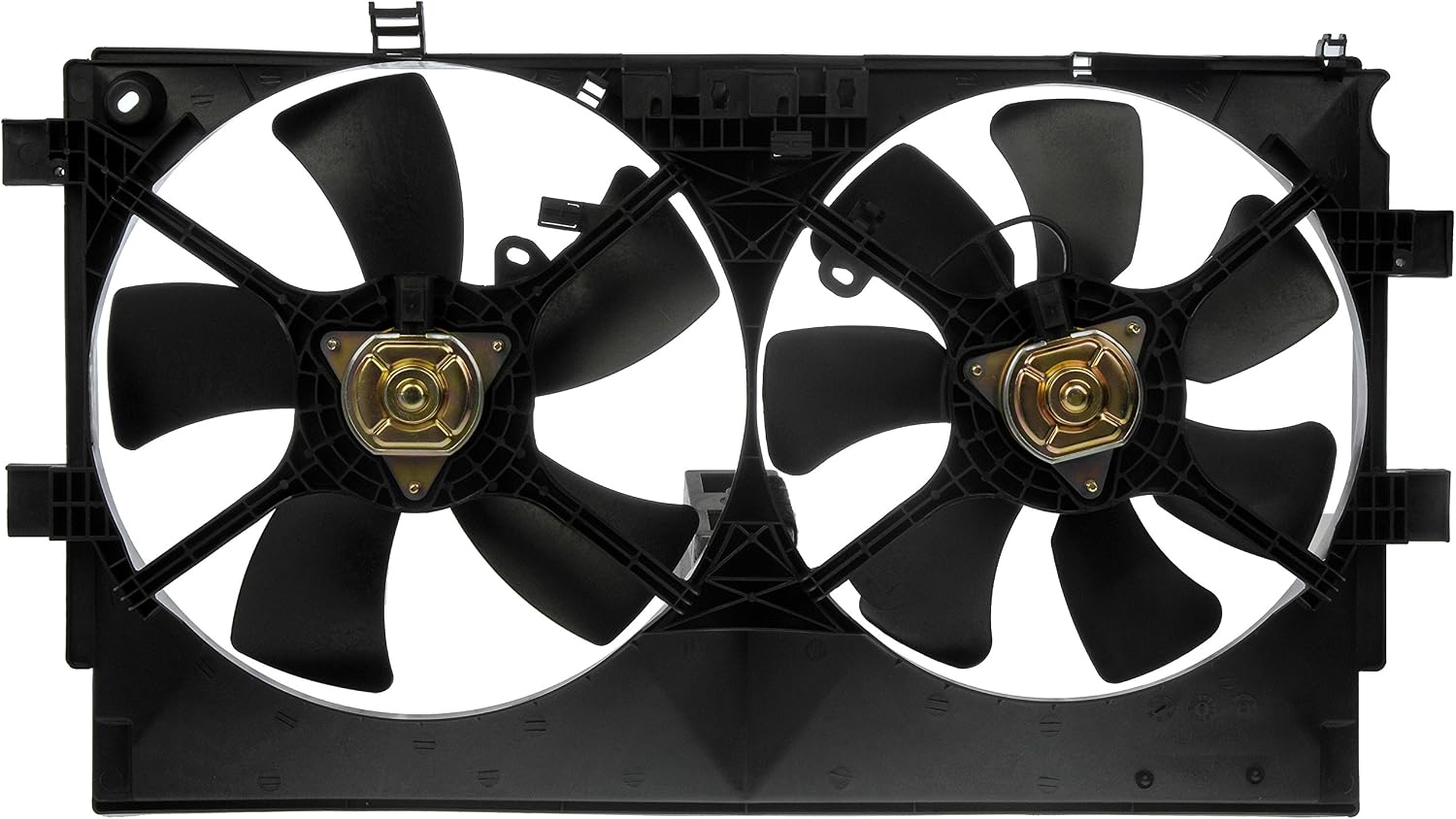
This Dorman engine cooling fan assembly replaces the vehicle radiator fan with a preassembled motor and shroud meant to match factory fit and function for select Mitsubishi Lancer and RVR model years. It is sold as a complete package so installers can remove the old assembly and fit the replacement without hunting for separate motor or shroud parts. The motor has been lab-tested and the assembly uses aluminum components and a painted finish intended to resist corrosion. In practice this provides dependable cooling performance comparable to the original part and simplifies repair for owners performing a DIY swap or for independent shops. Buyers should note fitment is vehicle-specific so confirming trim and year is required before purchase, and this aftermarket unit may differ slightly in connector style or minor hardware compared with a dealer part. For reliability-focused owners it delivers a cost-effective, ready-to-install option to restore proper cooling without replacing the radiator or other cooling components.
Best for: Reliability-focused owners who prioritize restoring factory-level cooling with a ready-to-install replacement and want a dependable, workshop-friendly part that reduces downtime.
Less Ideal for: Buyers seeking a universal or multi-vehicle fan assembly or those who prefer dealership-sourced parts with exact original connectors and packaging should consider alternatives.
- Complete assembled unit for quicker installation compared with sourcing separate parts
- Engineered to match stock fit and cooling performance for specified Mitsubishi models
- Motor tested in laboratory settings for performance verification
- Aluminum construction and painted exterior help resist corrosion and extend service life
- Fitment is limited to specific model years and trims so incorrect selection can lead to incompatibility
- May have minor differences in connectors or mounting hardware compared with dealership parts
Verdict: A ready-to-install, factory-matching cooling fan assembly that restores reliable radiator cooling for specified Mitsubishi Lancer and RVR model years.
6. Hayden Rapid-Cool 3680 12" Universal Add-On Cooling Fan Kit

| Voltage | 12 Volts |
|---|---|
| Power Connector Type | 3-Pin |
| Air Flow Capacity | 800 Cubic Feet Per Minute |
| Maximum Rotational Speed | 1800 RPM |
| Noise Level | 30 Decibels |
The Hayden Rapid-Cool 3680 is a thin-profile 12-inch add-on electric fan kit intended to boost radiator airflow where space is limited. It mounts as a universal auxiliary fan and can be installed as a pusher or puller with the supplied mounting hardware and a 3-pin power connector. Notable features include an 800 CFM rated airflow (675 CFM across a radiator), a relatively quiet 30 dB noise level, and a motor built to Hayden quality specs with a maximum speed around 1800 RPM. In practice this fan is useful when the factory fan and shroud do not provide sufficient airflow at low speeds or in hot climates, or when replacing a failed aftermarket motor for a compact fit. Because it is universal rather than a factory replacement, fitment requires measuring the Lancer's available core space and adapting the mount points, so expect some trimming or custom brackets on certain Mitsubishi Lancer model years. Buyers should also account for wiring to the vehicle electrical system and the fan's 8.8 amp high draw when planning a relay and fuse setup.
Best for: Convenience-driven buyers who want a compact, easy-to-source auxiliary fan to improve cooling without a full radiator or shroud replacement and who prefer a straightforward aftermarket solution.
Less Ideal for: Owners seeking a direct factory-quality replacement or a plug-and-play fan specific to a particular Mitsubishi Lancer year should consider vehicle-specific kits or OEM-style units instead.
- Thin aerodynamic profile fits tight radiator spaces better than full-depth fans
- High airflow rating (800 CFM) provides meaningful cooling improvement at low speeds
- Reversible push or pull operation increases installation flexibility
- Includes mounting kit for easier universal installation
- Quiet operation around 30 dB for minimal cabin noise impact
- Universal design means it is not a direct factory-quality replacement and may need custom mounting
- May not fit all Lancer model years without measuring and modification
- Plastic blade and shroud may feel less robust than heavier-duty alternatives
Verdict: A compact, high-airflow universal fan that improves low-speed cooling on a Mitsubishi Lancer but requires measurement and possible custom mounting rather than direct fitment.
7. DNA Motoring 12" High-Performance Slim Electric Radiator Fan with Mount Kit

| Voltage | 12 Volts (DC) |
|---|---|
| Wattage | 80 watts |
| Power Connector Type | 4-Pin |
| Maximum Rotational Speed | 2250 RPM |
| Air Flow Capacity | 1730 Cubic Feet Per Minute |
This slim 12-inch electric radiator fan from DNA Motoring is a compact aftermarket fan intended to boost cooling for the radiator and other engine-bay components. It is commonly used as a supplemental or replacement fan where space is tight, installed as a push or pull unit using the included mounting tabs and zip-tie style kit. Notable features are a high advertised airflow rating and a 4-pin power connector that supports direct 12V wiring; the package also often includes a temperature sensor and relay for automatic control. In practical use the slim profile gives good clearance for modified or crowded Mitsubishi Lancer engine bays, and users report quiet operation at lower voltages with strong airflow at full voltage. Limitations include basic plastic construction that may not match premium OEM longevity and occasional missing or mismatched mounting parts or color variants in some shipments, so expect minor fitment work and verify the fan direction for push versus pull setups. Overall it is a space-saving, effective cooling supplement when you need extra airflow without a bulky shroud.
Best for: A risk-averse mainstream buyer who wants a proven, compact aftermarket fan to add reliable supplemental cooling to a Mitsubishi Lancer with limited engine-bay space.
Less Ideal for: Not a great choice for buyers seeking a direct factory-quality replacement with OEM-level durability or for heavy-duty racing applications that demand maximum airflow and hardened construction.
- Slim design fits tight engine bays and allows room for other modifications.
- High advertised airflow suitable for supplemental cooling of radiator, intercooler, or A/C condenser.
- Includes simple mounting tabs and zip-tie kit for quick installation without specialist brackets.
- 4-pin connector and included temp sensor/relay options let you wire the fan for automatic operation.
- Plastic housing and components may wear faster than higher-end factory-quality fans.
- Mounting kit is minimal and may require fabrication or additional fasteners for secure long-term fitment.
Verdict: A slim, high-airflow 12-inch fan that delivers extra cooling in tight Mitsubishi Lancer engine bays with an easy zip-tie installation.
Choosing the Right Mitsubishi Lancer Cooling Fan: Key Factors to Consider
Fitment and Mounting
Correct fitment is essential because a fan that does not align with mounting points or the radiator will be difficult to secure and may contact other components. Check that the fan assembly matches the Mitsubishi Lancer mounting pattern and that the fan shroud assembly seats properly against the radiator to maintain airflow direction.
Poor fitment often leads to vibration, premature wear, or reduced cooling efficiency. Ensuring correct mounting reduces the risk of interfering with hoses, wiring, or the A/C condenser and avoids additional modifications during installation.
Airflow and Blade Design
Airflow capacity determines how much heat the fan can move away from the radiator and engine. Consider blade count, pitch, and shape since these factors influence static pressure and free-air throughput, both important when the vehicle is idling or stuck in traffic.
A fan with well-designed blades will provide better cooling at lower speeds and may run quieter. When selecting, prioritize rated CFM or manufacturer airflow figures and consider blade geometry if you need improved heat rejection under heavy load or hot-climate driving.
Motor Type and Electrical Load
The cooling fan motor affects startup torque, durability, and how the fan interacts with the vehicle electrical system. Brushless or higher-quality motors usually offer longer service life and more consistent performance than lower-grade alternatives. Pay attention to amperage draw and voltage compatibility so the fan does not overload the circuit or require wiring changes.
Understanding the motor specs also helps anticipate relay and fuse requirements. A motor that draws significantly more current than stock may need upgraded wiring or a dedicated relay to prevent electrical issues.
Noise Level and Vibration
Noise and vibration are practical concerns because loud fans or those that vibrate can be annoying and may signal imbalance or improper mounting. Manufacturers sometimes list decibel ratings or provide notes about quiet operation; consider these if cabin noise matters to you.
Balanced rotors and solid shroud integration reduce vibration. Choosing a fan that runs smoothly under typical duty cycles helps preserve bearings and mounting hardware, reducing the chance of future failures.
Electrical Connectors and Controls
Compatibility with the Mitsubishi Lancer wiring and control strategy matters for plug-and-play installation. Confirm connector type, pinout, and whether the fan is designed for direct relay control, thermostatic switching, or ECU-driven operation. Mismatched control approaches can cause the fan to run at inappropriate times or not run when needed.
If the fan requires an external controller or different relay, factor in the extra components and wiring time. Choosing a fan with matching connectors and control logic simplifies installation and reduces troubleshooting.
Durability and Environmental Resistance
Fans operate in a harsh environment with heat, vibration, and exposure to fluids and debris. Materials used for the blades, motor housing, and shroud affect longevity. Look for corrosion-resistant finishes, sealed motor housings, and reinforced mounting tabs for extended service life.
A durable assembly is less likely to suffer from cracking, bearing failures, or electrical shorts. Considering environmental resistance is especially important if you drive in areas with extreme temperatures, road salt, or frequent stop-and-go traffic.
How We Chose the Best Mitsubishi Lancer Cooling Fan
We focused on components specifically suited to the Mitsubishi Lancer platform and prioritized attributes that affect durability and real-world cooling performance. Key evaluation criteria included airflow volume and fan blade design to ensure sufficient heat rejection, motor type and amperage draw to gauge electrical compatibility, and build quality of the cooling fan assembly and fan shroud assembly for long-term durability. We also considered connector types and mounting points to minimize installation time, plus noise level under load since cabin and engine-bay noise matter to daily driving.We excluded any universal-fit or heavily modified adapters that require structural changes to the radiator or cooling system. We did not include parts lacking clear vehicle-specific fitment data or those with inconsistent electrical specs. The final selections reflect items that balance cooling capacity, electrical reliability, and straightforward installation for the Mitsubishi Lancer.
Our full evaluation process is outlined in our review methodology.
FAQ
What are common cooling fan symptoms that indicate a problem?
Common signs include the engine temperature rising above normal at idle, the radiator fan not running when the engine is hot, unusual noise from the fan area, or intermittent cooling performance. These symptoms often point to issues with the fan motor, relay, fuse, or a failing temperature switch. Diagnosis should begin with visual inspection and checking electrical continuity before assuming the fan assembly is defective.
Can I replace the Mitsubishi Lancer cooling fan myself?
Many enthusiasts with basic mechanical skills can replace a cooling fan, especially when the assembly is accessible and uses factory connectors. Typical steps include disconnecting the battery, removing any obstructing components, unplugging electrical connectors, and unbolting the fan assembly. However, if wiring modifications or radiator removal are required, professional assistance may be advisable.
How do I know if the cooling fan motor is failing?
Signs of a failing motor include the fan spinning slowly, making grinding or whining noises, running intermittently, or not running at all despite proper electrical supply. Testing with a multimeter for voltage at the motor and checking for excessive current draw can help identify motor issues. If the motor shows abnormal resistance or overheats quickly, replacement is usually the best option.
Does the fan shroud assembly affect cooling performance?
Yes. The shroud directs airflow through the radiator core so the fan moves air effectively where it is needed. A damaged or improperly fitted fan shroud assembly can allow air to spill around the radiator, reducing cooling efficiency and causing higher operating temperatures. Ensuring the shroud is intact and correctly mounted helps maintain consistent engine temperatures.
Is an electric cooling fan better than a mechanical fan for the Lancer?
Electric fans often offer more precise control because they can be thermostatically or electronically activated and can run at variable speeds. Mechanical fans are driven directly by the engine and run whenever the engine is turning, which can be less efficient. The best choice depends on the vehicle setup and whether you prioritize control, noise, or simplicity.
Conclusion
When choosing a Mitsubishi Lancer cooling fan, prioritize correct fitment, sufficient airflow, and electrical compatibility with the vehicle control system. Balance motor durability and noise characteristics against installation complexity.Expect tradeoffs between ease of installation and performance enhancements. Focus on a fan assembly that matches mounting points and connector types, delivers reliable airflow for your driving conditions, and uses a robust motor to minimize future maintenance.
Explore More:
- Check out all Mitsubishi Lancer parts & accessories
- Explore Cooling Fans Maintenance & Repair Guides
- Explore Cooling System
- Browse all Auto Parts
