

Note: This article contains affiliate links. If you click on these links and make a purchase, I may earn a small commission at no extra cost to you. This helps support my research and content. Read my full affiliate disclosure here.
Picking the right coolant for a 2011-2019 Ford Explorer matters more than many owners realize. The wrong fluid can accelerate corrosion, foul hoses and gaskets, or shorten the service interval for a cooling system that already works hard in varied driving conditions. You need a formulation that matches Ford's chemistry expectations, offers reliable freeze and boil protection, and resists breakdown over time.This guide shortlists the top 7 coolant options suited to the Explorer's cooling system and explains the evaluation criteria used. It covers compatibility notes, longevity, and maintenance considerations so you can choose a coolant that keeps the coolant passages, radiator, and thermostat working reliably. Read on for practical buying guidance before you open the radiator cap or schedule a flush.
Looking for other parts? See all Ford Explorer parts & accessories.
Top Picks at a Glance
| Best Overall Coolant Top pick balancing corrosion protection, longevity, and DIY convenience | Zerex Dex‑Cool 50/50 Ready‑to‑Use Antifreeze/Coolant, 1 Gallon |  |
| Best Budget Coolant Low-cost, ready-to-use coolant that covers basic freeze/boil protection | Zerex Pre-Charged 50/50 Heavy Duty Antifreeze/Coolant, 1 gal |  |
| Best OEM Ford Coolant Factory-formula coolant matched to Ford specifications and OEM chemistry | Ford Genuine Antifreeze/Coolant VC-13DL-G |  |
| Best Extended-Life OAT Coolant Organic-acid technology coolant designed for long service intervals and durability | PEAK OET Extended Life Orange 50/50 Prediluted Antifreeze/Coolant, 1 Gal |  |
| Best Prediluted 50/50 Coolant Ready-to-use 50/50 mix that saves time and eliminates on-vehicle dilution | Valvoline Multi-Vehicle 50/50 Ready-to-Use Antifreeze Coolant, 1 Gallon |  |
| Best Concentrate Coolant Concentrated coolant for users who prefer to mix to exact ratios with distilled water | Valvoline Zerex G05 Phosphate-Free Antifreeze/Coolant Concentrate, 1 Gallon |  |
| Best Universal All-Vehicle Coolant Broad-fit formula marketed as compatible with many makes and coolant types | PEAK All-Vehicle 50/50 Prediluted Antifreeze & Coolant, 1 Gal |  |
1. Zerex Dex‑Cool 50/50 Ready‑to‑Use Antifreeze/Coolant, 1 Gallon
Best Overall Coolant

| Brand | Valvoline |
|---|---|
| Model | Dex-Cool |
| Formulation | 50/50 ready-to-use |
| Technology | Organic Acid Technology (OAT) |
Zerex Dex‑Cool is a ready-to-use, 50/50 antifreeze/coolant designed for modern passenger cars and light trucks that require an orange OAT formula. It is typically used for topping off radiators or performing a full coolant flush and refill. The organic acid technology and carboxylate inhibitor package reduce corrosion, scale, and deposits on aluminum and other cooling-system metals, which helps keep radiators and water pumps running clean. Because it is premixed, you can pour it in without measuring or adding distilled water, making it convenient for DIY maintenance. The formula is silicate- and phosphate-free and avoids amines, borates, nitrates, and nitrites, which lowers the risk of certain chemical incompatibilities. One limitation is that this product is specifically the Dex‑Cool type; it must be used only in vehicles that call for an orange OAT Dex‑Cool coolant rather than a green or Dex‑Cool‑incompatible formula, so verify your 2011–2019 Ford Explorer cooling system specification before use.
Best for: DIYers who want a single, ready-to-pour coolant that provides broad corrosion protection and simplifies routine maintenance on compatible vehicles.
Less Ideal for: Owners who are unsure which coolant their Explorer requires or who need a green or hybrid formula should avoid this and consult the vehicle specification or a dealer.
- Premixed 50/50 formula ready for direct use without dilution
- Organic Acid Technology resists corrosion and protects aluminum components
- Formulated to prevent scale and deposits, prolonging cooling-system life
- Designed to meet manufacturer specifications for vehicles requiring orange Dex‑Cool coolant
- Only suitable for systems that specify Dex‑Cool or compatible orange OAT coolant
Verdict: Choose this when you want a reliable, well-rounded coolant that protects the engine, resists corrosion, and is easy for a DIY mechanic to use during routine maintenance.
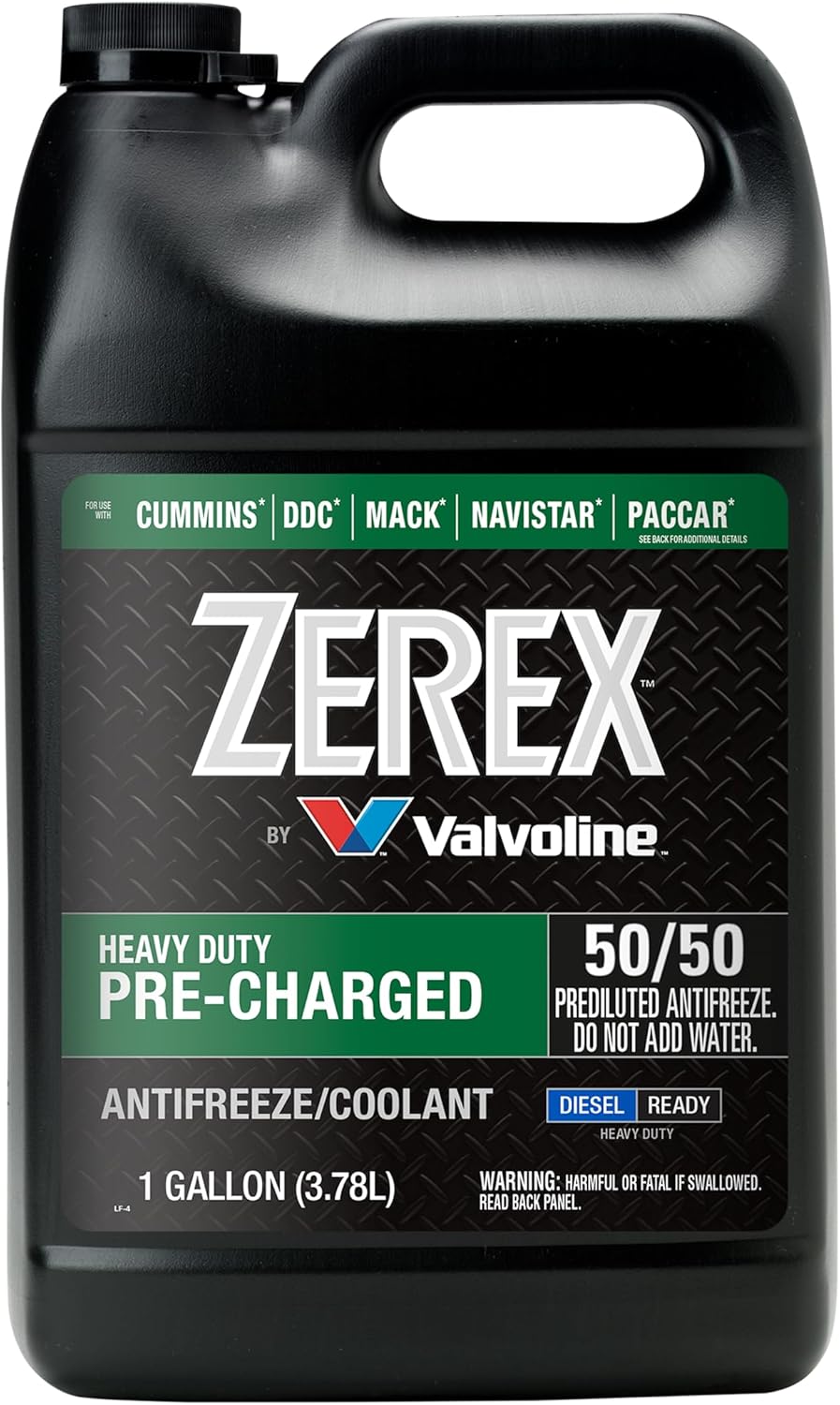
2. Zerex Pre-Charged 50/50 Heavy Duty Antifreeze/Coolant, 1 gal
Best Budget Coolant
| Formulation | 50/50 prediluted ready-to-use |
|---|---|
| Intended use | Heavy-duty diesel; universal for cars and light trucks |
| Corrosion inhibitors | Nitrite, low-silicate formula |
| Service life claim | 3 years / 150,000 miles |
Zerex Pre-Charged 50/50 is a one-gallon, ready-to-use coolant designed to top off or refill cooling systems without measuring or mixing. It is formulated for heavy-duty diesel applications but is described as a universal coolant that also suits gasoline engines and light trucks. The low-silicate, nitrite-charged formula includes corrosion, scale and rust inhibitors plus a defoamer so it protects aluminum and other metals while minimizing foam and harm to gaskets and hoses. For someone working on a 2011–2019 Ford Explorer, the convenience of a pre-mixed green coolant removes guesswork when performing a flush or top-up and its 3 year/150,000 mile performance claim gives long service intervals. The product is not a vehicle-specific OEM fluid, so always confirm compatibility with Ford coolant specs before a full system refill. Its heavy-duty chemistry may be overkill for drivers who prefer Ford factory-specified blue or long-life formulations intended for specific cooling-system chemistries.
Best for: Buyers who want a low-cost, ready-to-use coolant to quickly restore proper freeze and boil protection during a flush or top-off and who prioritize convenience over matching vehicle-specific chemistry.
Less Ideal for: Drivers seeking a Ford factory-designated long-life coolant or those who require a coolant formulated to a particular manufacturer specification for warranty or service reasons.
- Comes prediluted 50/50 for instant use with no mixing required.
- Formulated with nitrite and low silicate to protect against pitting, cavitation and corrosion.
- Includes defoamer and inhibitors that are safe for gaskets, hoses and aluminum components.
- Long service interval claim of up to 3 years or 150,000 miles when used per instructions.
- Not a vehicle-specific factory replacement; verify it meets Ford coolant specifications before replacing a full system.
Verdict: Pick this if you need a cheap, pre-mixed coolant that restores proper freeze/boil protection without extra mixing or specialty chemistry.
3. Ford Genuine Antifreeze/Coolant VC-13DL-G
Best OEM Ford Coolant

| Manufacturer | Ford |
|---|---|
| Model | VC-13DL-G |
| Manufacturer Part Number | VC-13DL-G |
| OEM Part Number | VC13DLG |
This Ford Genuine VC-13DL-G antifreeze is a factory-formulated coolant intended to preserve corrosion inhibitors and cooling system chemistry specified by Ford. It is used like any ready-to-mix or pre-diluted coolant (check label for dilution) when flushing and refilling a vehicle cooling system, and is especially relevant during scheduled coolant service or when topping off after repairs. The product's alignment with Ford specifications helps maintain compatibility with aluminum engine components and mixed-metal systems found in many Ford vehicles. Practical benefits include predictable corrosion protection and chemistry that supports warranty-friendly service records. Limitations are straightforward: it is a single-purpose coolant so you must verify dilution and compatibility with your vehicle's service manual before use, and it does not replace other maintenance items like thermostat or hoses. Buyers should also confirm whether their Explorer requires this specific Ford formula or a long-life ethylene glycol formula at the time of service.
Best for: Buyers who want a factory-formulated coolant that preserves Ford-specified corrosion inhibitors and supports warranty-friendly maintenance for 2011–2019 Explorers.
Less Ideal for: Drivers who prefer universal or aftermarket extended-life coolants with different additive packages or those who need a multi-vehicle coolant solution.
- Factory-formulated to meet Ford specifications for coolant chemistry
- Designed to protect mixed-metal cooling systems and aluminum components
- Helps maintain manufacturer-recommended corrosion inhibitors
- Widely recognized product with long availability and dealer backing
- May require verification of proper dilution and specific Ford formula for certain model years
Verdict: Select this when you prefer factory-formulated coolant that meets Ford's specifications and helps maintain original corrosion inhibitors and warranty-friendly chemistry.
4. PEAK OET Extended Life Orange 50/50 Prediluted Antifreeze/Coolant, 1 Gal
Best Extended-Life OAT Coolant

| Dilution | 50/50 prediluted |
|---|---|
| Volume | 1 gallon |
| Technology | Organic Acid Technology (OAT) |
This 1-gallon PEAK OET Extended Life Orange coolant is an organic acid technology formula sold prediluted 50/50 for quick top-offs and routine maintenance. It is designed for North American vehicles that specify an orange OAT coolant and is intended to protect engine cooling components from rust and corrosion over long service intervals. The formula promises extended-life protection when used as part of a full flush and fill, and the prediluted mix removes the guesswork during topping off. In practice it works as a direct fill or supplement for systems requiring orange OAT chemistry, offers convenience for DIYers, and reduces mixing errors. Important limitations are that it must be used only in vehicles compatible with OAT orange formulas and it is not a one-size-fits-all coolant for cars that require different chemistries. Also the extended-life claim applies when the coolant is installed during a complete system service rather than simply topping up an old mixture.
Best for: Buyers looking for an orange OAT extended-life coolant that simplifies maintenance and reduces service frequency for modern North American engines.
Less Ideal for: Do not choose this if your vehicle specifies a different coolant chemistry or if you need concentrate to custom-mix ratios.
- Prediluted 50/50 for immediate use and easy topping off
- OAT formulation provides long-term corrosion protection for aluminum and mixed-metal systems
- Extended-life formulation intended to reduce frequency of full coolant changes when installed during a flush and fill
- Formulated specifically for North American vehicles that call for orange OAT coolant
- Not compatible with vehicles requiring non-OAT or different chemistry coolants
- Extended-life warranty and mileage protections apply only after a complete flush and fill procedure
Verdict: Use this label for coolants formulated with OAT chemistry that provide longer replacement intervals and strong corrosion protection for modern engines.
5. Valvoline Multi-Vehicle 50/50 Ready-to-Use Antifreeze Coolant, 1 Gallon
Best Prediluted 50/50 Coolant

| Size | 1 Gallon |
|---|---|
| Vehicle Service Type | Automobiles and light-duty trucks |
| Flash Point | 250 Degrees Fahrenheit |
| Automotive Fit Type | Universal Fit |
Valvoline Multi-Vehicle 50/50 Ready-to-Use is a one-step coolant intended for topping off or refilling automotive cooling systems without mixing. It arrives pre-diluted to a 50/50 concentration so it provides immediate freeze and boil protection and can be poured straight into the radiator or reservoir. The formula includes Valvoline’s Alugard Plus additive for cross-compatibility with other ethylene glycol-based coolants and is designed to protect aluminum and other cooling-system metals from corrosion, scaling, and deposits. Practical benefits include convenience for do-it-yourself service, compatibility with mixed-color systems, and protection across a wide temperature range. Important limitations are that it is an ethylene glycol product only and therefore should be used where that base is specified; it is not a concentrated coolant for custom mix ratios and is intended for automobiles and light-duty trucks, not heavy-duty or specialty applications. For routine maintenance or a refill on compatible vehicles, it simplifies the job while maintaining factory-style protection.
Best for: Buyers who want a convenient, no-mix coolant for routine refill or system top-off on compatible passenger vehicles and light trucks and prefer a ready-to-use product that delivers correct protection right away.
Less Ideal for: People who need a concentrate to create custom mix ratios, require propylene-glycol based coolants, or work on heavy-duty or non-automotive cooling systems should consider other options.
- Pre-mixed 50/50 ready to use with no onsite mixing required
- Alugard Plus additive allows compatibility with other ethylene glycol coolants and mixed colors
- Formulated to protect aluminum and common cooling system metals from corrosion and deposits
- Provides freeze protection to -34F and boil protection to 265F when used as labeled
- Not a concentrated product so you cannot adjust mix strength for custom applications
Verdict: Choose a prediluted 50/50 coolant when you want a no-mix solution that delivers correct freeze and boil protection straight from the bottle.
6. Valvoline Zerex G05 Phosphate-Free Antifreeze/Coolant Concentrate, 1 Gallon
Best Concentrate Coolant

| Brand | Valvoline |
|---|---|
| Model | G05 |
| Formulation | Concentrate |
| Chemistry | Hybrid Organic Acid Technology (HOAT) |
Zerex G05 concentrate is a hybrid organic acid technology (HOAT) coolant designed for long-life protection of modern engines. You mix the concentrate with water to set the freeze and boil points you need, which makes it useful for topping off a partially drained system or for a full flush and refill where a specific ratio is desired. Its low-silicate, phosphate-free formula targets corrosion, deposits, cavitation in diesel liners, and protection for aluminum components, while deposit-control additives help keep radiators and water pumps clear. Practical benefits include broad metal protection, suitability for gasoline and diesel engines, and factory-style chemistry aimed at meeting manufacturer specs. Limitations are that it is a concentrate requiring dilution before use and it is formulated for vehicles specifying G05/HOAT chemistry, so it is not a universal swap for every coolant type or color system without confirmation of compatibility.
Best for: Buyers who want to control coolant concentration for precise freeze and boil protection and who will match chemistry to their vehicle when topping off or refilling the cooling system.
Less Ideal for: Drivers who prefer ready-to-use antifreeze straight from the bottle or who cannot verify their vehicle’s required coolant specification should choose a pre-mixed or differently specified product.
- Concentrated formula lets you mix precise freeze/boil protection for climate-specific needs
- HOAT chemistry protects aluminum and other cooling system metals from corrosion
- Additives reduce deposits and help keep radiators and water pumps clean
- Contains nitrites to guard diesel cylinder liners from cavitation
- Requires correct dilution and handling since it is a concentrate
- Formulated to G05/HOAT specification so must be matched to vehicle coolant requirements
Verdict: Pick a concentrate if you want to mix your own coolant ratio for precise freeze/boil protection or to top off a partially drained system.
7. PEAK All-Vehicle 50/50 Prediluted Antifreeze & Coolant, 1 Gal
Best Universal All-Vehicle Coolant

| Compatible with Vehicle Type | Car, Truck, Motorcycle, SUV |
|---|---|
| Automotive Fit Type | Universal Fit |
| Container Type | Jug |
| Liquid Volume | 1 Gallons |
This PEAK 50/50 prediluted antifreeze/coolant is designed for easy top-offs and coolant changes when working on multiple vehicles, including the 2011–2019 Ford Explorer. As a ready-to-use gallon, it removes the need to mix concentrate and is marketed to be compatible with different coolant chemistries and colors, so you can add it without worrying about matching factory color codes. It claims long-lasting protection against rust and corrosion for cooling system metals and advertises extended life coverage for years and high mileage. For a DIYer servicing Explorers, the jug format and universal fit simplify maintenance and reduce the risk of mixing errors. Limitations to note are that formulations can vary between manufacturers, so vehicles with specific dealer-required fluids or unusual cooling system requirements may still need factory-replacement coolant, and prediluted fluids offer less flexibility for custom concentration adjustments in climates needing different freeze/boil protection. Follow the Explorer service manual for proper drain, flush, and fill procedures when switching coolants.
Best for: DIYers who service multiple passenger vehicles and light trucks and want a hassle-free, ready-to-use coolant that minimizes mixing and color-matching concerns.
Less Ideal for: Technicians or owners required to use a specific factory-specified coolant chemistry for warranty or performance reasons, or those who need to tailor freeze/boil protection for extreme climate conditions.
- Prediluted 50/50 formula ready to use with no mixing required.
- Advertised universal compatibility lets DIYers top off different vehicles without matching coolant colors.
- Jug packaging is convenient for garage use and multiple services.
- Claims long-life corrosion protection for aluminum and other cooling system metals.
- May not satisfy manufacturer-specific coolant requirements for certain vehicles that require a particular formula.
- Prediluted mix removes ability to adjust concentration for extreme climates.
Verdict: Use this slot for universal coolants that advertise cross-compatibility and simple use across different vehicle chemistries for DIYers who service multiple cars.
Choosing the Right 2011-2019 Ford Explorer Coolant: Key Factors to Consider
Chemical Formulation and Inhibitor Type
Coolant chemistry determines how the fluid protects the cooling system from corrosion and cavitation. The 2011-2019 Ford Explorer uses an aluminum-heavy cooling system and mixed metal alloys, so a coolant with inhibitors designed for aluminum and mixed metals matters. Organic Acid Technology (OAT) blends, hybrid OATs, or extended-life inhibitor packages each behave differently over time, and matching the inhibitor type to Ford's recommendations helps avoid accelerated wear.
Inhibitor compatibility also affects what you can mix during top-offs or partial drains. Mixing incompatible chemistries may cause rapid loss of protection or gel formation, so identify the formulation before adding fluid. For maintenance planning, know whether the coolant is a concentrate requiring dilution or a pre-mixed ready-to-use product.
Longevity and Service Interval
Service life is a practical concern for owners who want fewer maintenance events. Long-life coolants advertise extended intervals, but actual longevity depends on operating conditions and contamination. For the Explorer, typical intervals vary based on whether the cooling system has had prior contamination or corrosion; a fresh system will retain inhibitor performance longer than one with rust or scale.
When choosing a coolant, consider both the manufacturer-recommended interval and conservative real-world guidance. Longer service intervals cut down on labor and disposal costs, but only if the coolant maintains protective properties for the entire interval. Look for manufacturer data on inhibitor depletion and suggested drain intervals for road-driven vehicles.
Compatibility With Seals, Hoses, and Plastics
Coolant interacts continuously with rubber seals, hose materials, and plastic components in the Explorer's cooling circuit. Some formulations are more aggressive toward certain elastomers or can cause swelling, shrinkage, or hardening over time. The right coolant will maintain elasticity and preserve the integrity of gaskets, heater hoses, and radiator upper tanks common to this model.
If you plan to top off between services, use a product labeled compatible with common automotive elastomers. During a full system flush and fill, inspect hoses and seals and replace aging components before putting the new coolant in service to avoid trapping degraded materials that shorten coolant life.
Freeze and Boil Protection at Typical Concentrations
Coolant needs to protect against freezing in cold climates and raise boiling point when the engine is under load. The effective protection depends on the ethylene glycol or propylene glycol concentration after mixing, so knowing whether the product is concentrated or pre-mixed helps you set the right ratio. For many owners, maintaining a 50/50 mix offers balanced freeze and boil protection; vehicles in extreme climates may need adjustments.
Consider the local climate and the Explorer's common use cases, such as towing or long highway driving, which can push operating temperatures. Choose a coolant whose performance at recommended concentrations provides adequate safety margins without exceeding material compatibility limits.
Corrosion and Cavitation Protection for Aluminum Components
The Explorer's engine and radiator use significant aluminum components that are vulnerable to pitting and galvanic corrosion. Coolants with inhibitors that specifically guard aluminum and prevent cavitation erosion will extend component life. Cavitation protection is particularly important for water pumps and the areas around cylinder liners where vapor bubble collapse can cause pitting.
Evaluate available technical data on corrosion test results and whether the coolant includes addenda to reduce cavitation risk. Regular maintenance and keeping electrochemical imbalances in check also help, but starting with a coolant formulated for aluminum systems is a practical first step.
Serviceability and Top-Off Practices
How you plan to maintain the cooling system affects the best coolant choice. If you prefer to perform partial top-offs or infrequent flushes, choose a stable long-life coolant that tolerates partial additions without rapid performance loss. If you follow a strict flush-and-fill schedule, compatibility with pre-existing residue in the system becomes the priority.
Also consider whether the coolant requires mixing and whether your local disposal options favor longer intervals. The ability to easily test coolant condition with test strips or handheld testers can guide timely maintenance and avoid unnecessary early replacement.
Understanding Ford's Coolant Recommendations for 2011-2019 Explorer
Ford provides guidance on coolant chemistries that are compatible with the Explorer's materials and warranty expectations. For the 2011-2019 model range, that guidance emphasizes inhibitor types that protect aluminum and mixed-metal systems. Even if a product claims long life, confirm it aligns with the chemistry class that Ford specifies for that year range.
Consulting the vehicle's service manual or a dealer technical bulletin will tell you whether a cooling system requires a specific type of inhibitor. If the system already contains a particular formulation, avoid mixing different inhibitor families during top-offs.
- Check the owner manual or service documentation for Ford's recommended coolant family
- Do not mix incompatible inhibitor types during partial top-offs
- When in doubt, perform a full drain and flush before changing inhibitor families
When to Do a Full Coolant Flush on an Explorer
A full coolant flush is recommended if the system shows signs of contamination, such as discolored fluid, visible rust, or a history of overheating. For vehicles with their original coolant, a scheduled replacement at the interval recommended by the coolant manufacturer or by conservative shop guidance helps maintain corrosion protection.
You should also consider a full flush before switching inhibitor chemistry families. Flushing removes deposits and residual inhibitors that could react poorly with the new formulation. Finally, if you find degraded hoses, a leaky radiator, or a failing water pump, address those repairs before refilling with fresh coolant to avoid premature contamination.
- Flush when fluid is discolored or has particulates
- Perform a flush before changing coolant chemistry families
- Replace suspect hoses and clamps during the service
Top-Off Guidelines and Mixing Best Practices
If you top off the coolant between services, use the same chemistry type already in the system. For the 2011-2019 Explorer, mismatched top-offs are a common source of shortened coolant life. When adding fluid, confirm whether the product is concentrated or pre-diluted and follow the recommended mixing ratios to maintain freeze and boil protection.
For convenience and to eliminate dilution errors, many owners choose ready-to-use formulations when they are unsure of the existing mix. Keep a maintenance record that notes the product type and date so future top-offs remain consistent.
- Match inhibitor chemistry when topping off
- Follow manufacturer dilution ratios if using concentrate
- Consider ready-to-use fluids to avoid mixing errors
Signs of Coolant Degradation and When to Test
Look for common indicators of coolant aging: rusty or brown fluid, a sweet smelling leak, brittle hoses, or white deposits around filler caps. Reduced heater performance in winter can also signal low coolant concentration or degraded inhibitors. Testing the coolant with pH strips or freeze/boil point testers gives objective data on whether a service is needed.
Regularly inspect the reservoir and radiator cap area during routine oil changes. If you detect contamination or inconsistent test results, plan for a flush and refill rather than repeated top-offs.
- Check fluid color and clarity every few months
- Use simple test tools for freeze/boil and pH checks
- Address physical signs like hose brittleness or deposits promptly
Maintenance Tips to Maximize Coolant Life in the Explorer
Routine visual inspections, prompt repairs of leaks, and replacing aged hoses and clamps will extend coolant life. Keeping the cooling system sealed and free from air reduces oxidation and inhibitor depletion. When servicing the system, use clean tools and a proper draining procedure to limit contamination.
Plan coolant refreshes alongside other scheduled maintenance items so you can take advantage of coordinated labor and minimize downtime. Document what product you used and the date of service to make future decisions straightforward.
- Inspect hoses and clamps at each oil change
- Replace the radiator cap if it shows age
- Keep maintenance records noting coolant product and service date
Still looking for the perfect fit?
Select your Ford Explorer configuration to see the most relevant Coolants recommendations
How We Chose the Best 2011-2019 Ford Explorer Coolant
We prioritized compatibility with the 2011-2019 Ford Explorer cooling system and looked for coolants that address the common failure modes on this vehicle. Key evaluation criteria included chemical formulation and inhibitor package, longevity and recommended service interval, corrosion protection for aluminum and mixed-metal systems, and compatibility with existing gasket and hose materials used on the Explorer.We also considered freeze and boil point performance under typical operating concentrations, documented manufacturer recommendations and technical bulletins relevant to Ford vehicles in this model range, and third-party lab data where available for inhibitor depletion rates. Ease of use and whether a coolant requires pre-mixing versus being ready-to-use were factored in, since that affects installation and service consistency.Excluded from consideration were fluids designed only for heavy commercial equipment, single-use racing fluids without long-term corrosion protection, and any products that explicitly conflict with Ford-specified chemistries for this year range. The resulting shortlist focuses on fluids that balance protection, longevity, and fitment for the 2011-2019 Explorer.
Our full evaluation process is outlined in our review methodology.
FAQ
Can I mix a new coolant with the old coolant in my 2011-2019 Explorer?
Mixing depends on the inhibitor chemistry. If both fluids share the same chemistry family and are marked compatible, a small top-off is usually acceptable. If you cannot confirm compatibility, perform a full drain and flush before switching to avoid loss of protection or reactions that can form deposits.
How often should I replace coolant in a 2011-2019 Ford Explorer?
Replacement intervals vary by coolant type and condition, but many long-life formulations recommend several years between changes. Check the coolant maker's guidance and inspect fluid condition periodically; severe contamination or degraded appearance warrants earlier replacement.
What concentration should I use for freeze and boil protection?
A 50/50 mix of coolant concentrate and water is commonly recommended for balanced freeze and boil protection. Depending on local climate extremes, you may adjust the concentration, but avoid concentrations that exceed material compatibility or the coolant maker's guidance.
Is there a test to know if the coolant is still good?
Yes. Use handheld freeze/boil point testers and pH or test strip kits to check glycol concentration and acid levels. Visual inspection for color changes, particulates, or deposits is also useful. Combined testing gives the best indication of when service is needed.
Should I replace hoses and the radiator when changing coolant?
You do not always need to replace hoses or the radiator, but inspect them carefully. If hoses are soft, swollen, cracked, or the radiator shows corrosion or leaks, replacing those components during a coolant change prevents rapid recontamination and extends the new fluid's service life.
Does Ford require a specific OEM coolant for the Explorer?
Ford documents recommended coolant chemistries for the Explorer. Owners should follow the vehicle's service documentation and choose a coolant that matches Ford's specified inhibitor family. If you are unsure, a full flush and selecting a compatible long-life formulation is a safe approach.
Final Verdict
Choose a coolant that matches Ford's recommended chemistry, offers corrosion protection for aluminum components, and provides the service interval you prefer. Prioritize compatibility with seals and hoses, and plan maintenance so that flushing and component replacement happen before contamination shortens coolant life.Balancing longevity against material compatibility is the key tradeoff for the 2011-2019 Explorer. When in doubt, flush the system and use a compatible long-life coolant while keeping detailed service records so future top-offs remain consistent and effective.
Explore More:
- Check out all Ford Explorer parts & accessories
- Explore Fluids & Chemicals
- Browse all Accessories
