

Note: This article contains affiliate links. If you click on these links and make a purchase, I may earn a small commission at no extra cost to you. This helps support my research and content. Read my full affiliate disclosure here.
Picking the right coolant matters for a 2003-2008 Subaru Forester because coolant chemistry and service interval directly affect corrosion protection, overheating risk, and head gasket longevity. Older Subaru flat-four engines can be sensitive to the coolant formulation and maintenance history, so choosing an appropriate coolant helps preserve cooling system components and reduces the chance of coolant-related failures.This guide outlines the top coolant options we shortlisted for the 2003-2008 Forester and explains how we evaluated compatibility, corrosion inhibitors, and service life. Use the evaluation criteria to match a coolant to your maintenance plan and local climate before you perform a coolant flush or top-up.
Looking for other parts? See all Subaru Forester parts & accessories.
Top Picks at a Glance
| Best Overall Coolant The best all-around coolant for most DIY automotive needs | Zerex Asian Vehicle Green 50/50 Ready-to-Use Antifreeze/Coolant, 1 Gallon |  |
| Best Budget Coolant An affordable coolant that still meets basic protection standards | Recochem OEM Asian Vehicles Extended Life 50/50 Antifreeze/Coolant, 1 Gallon |  |
| Best Long-Life Coolant Formulated for extended service intervals and reduced drain frequency | PEAK OET Extended Life Green Concentrate Antifreeze/Coolant, 1 Gal |  |
| Best Hybrid (HOAT) Coolant Hybrid organic/inorganic formula balancing longevity and silicate protection | Prestone MAX Asian Green 50/50 Antifreeze Coolant |  |
| Best Concentrated Coolant Undiluted concentrate for custom mix ratios and storage efficiency | Valvoline Zerex G48 Concentrate Antifreeze/Coolant, 1 Gallon |  |
1. Zerex Asian Vehicle Green 50/50 Ready-to-Use Antifreeze/Coolant, 1 Gallon
Best Overall Coolant

| Brand | Zerex |
|---|---|
| Formula | Hybrid Organic Acid Technology (HOAT) |
| Mix | 50/50 ready-to-use |
| Contains | Phosphate additive |
| Silicate/borate | Free |
Zerex Asian Vehicle Green is a ready-to-use 50/50 antifreeze formulated with Hybrid Organic Acid Technology and a phosphate additive to protect aluminum and other cooling-system metals. For a 2003–2008 Subaru Forester this coolant is used for routine top-offs and full system flushes to guard against corrosion, scale, freezing and boiling. Its silicate- and borate-free formula helps prevent deposits while protecting water pumps, radiators and hoses, and the pre-mixed gallon eliminates mixing errors for DIY maintenance. The product is designed to meet OEM-style specifications common to Asian makes and is pitched toward long-term protection rather than short-term performance swaps. Limitations include the single green HOAT chemistry, so users should not mix it with different-colored coolants or different chemistries, and the one-gallon size may require multiple bottles for a full flush depending on how much coolant the Forester’s system holds.
Best for: DIY owners maintaining a 2003–2008 Subaru Forester who want a factory-style, ready-to-use coolant that prioritizes corrosion protection and straightforward top-offs or system flushes.
Less Ideal for: Drivers looking for a universal coolant to mix with different chemistries or those who need specialty performance formulations beyond standard corrosion and freeze/boil protection.
- Ready-to-use 50/50 mix removes need to dilute and reduces user error
- HOAT formula with phosphate additive protects aluminum and other metals from corrosion
- Silicate- and borate-free chemistry minimizes deposit formation
- Designed to meet Asian vehicle coolant specifications for compatible applications
- Single-chemistry green coolant must not be mixed with different coolant types or colors
Verdict: The best all-around coolant that balances corrosion protection, freeze/boil performance, and ease of use for most DIY mechanics' routine maintenance.
2. Recochem OEM Asian Vehicles Extended Life 50/50 Antifreeze/Coolant, 1 Gallon
Best Budget Coolant

| Formulation | Ethylene glycol extended life |
|---|---|
| Mixture | 50/50 premix |
| Volume | 1 gallon |
This Recochem extended life 50/50 antifreeze is a ready-to-use ethylene glycol coolant designed to provide freeze protection and long-term corrosion control for compatible Asian vehicle cooling systems. It contains no silicates, phosphates, borates, nitrates, nitrites or amines and includes additives for high-temperature aluminum protection, which helps protect heads and blocks during normal driving and highway use. The premixed gallon is convenient for DIY top-offs or full flush-and-fills without measuring concentrate, and the bitterant reduces accidental ingestion risk. It is positioned as a basic extended-life formula rather than a premium, additive-packed treatment, so it pairs well with factory-style coolant service intervals and straightforward maintenance. Limitations include lack of specialized chemistry for mixed-fleet or heavy-duty applications and no included testing strips, so verify compatibility with your vehicle's specified extended-life coolant before use.
Best for: DIY owners seeking an inexpensive, factory-style extended-life coolant for routine maintenance who prioritize simplicity and reliable freeze and corrosion protection.
Less Ideal for: Drivers who need a coolant formulated for mixed-fleet compatibility, heavy-duty use, or who require specific manufacturer-specified chemistry not listed on the label should consider a different product.
- Ready-to-use 50/50 premix simplifies DIY top-offs and flush-and-fill jobs
- Ethylene glycol extended-life formula offers long-term corrosion control and aluminum protection
- Free of silicates, phosphates, borates, nitrates, nitrites and amines to match many extended-life specs
- Includes bitterant to discourage accidental ingestion
- Not formulated with specialized additives for mixed-metal or heavy-duty cooling systems
Verdict: The best low-cost coolant for DIYers who want reliable freeze and corrosion protection on a tight budget without extra premium additives.
3. PEAK OET Extended Life Green Concentrate Antifreeze/Coolant, 1 Gal
Best Long-Life Coolant

| Product type | Concentrate antifreeze/coolant |
|---|---|
| Volume | 1 gallon |
| Chemistry | Phosphate-enhanced Organic Acid Technology (POAT) |
| Intended vehicles | Asian vehicles (green POAT) |
This PEAK OET Extended Life Green concentrate is a phosphate-enhanced organic acid technology (POAT) coolant designed for use in Asian vehicles and for DIY coolant service. As a concentrate it is suitable for flushing and filling or topping off a cooling system after dilution to the manufacturer 50/50 mix. The formula focuses on corrosion protection and claims extended service life when installed as part of a full flush and fill, which translates to fewer coolant changes over time. Practical benefits include broad compatibility with vehicles that specify a green POAT-type coolant and a concentrate format that is convenient for larger systems or partial refills. The product contains a bittering agent to discourage ingestion. Limitations: you must dilute it properly before use, and it is intended for vehicles that require a green POAT formula, so confirm compatibility with a 2003-2008 Subaru Forester before swapping coolants. Also the extended-life claim depends on following the recommended installation procedure including a complete flush and fill.
Best for: DIY mechanics who want to minimize how often they change coolant and are comfortable performing a full flush, diluting concentrate accurately, and verifying that their vehicle calls for a green POAT coolant.
Less Ideal for: People who prefer ready-to-use 50/50 premixed coolants or who are unsure of their Forester's required coolant chemistry should consider alternatives.
- Concentrated formula lets you mix to the exact 50/50 ratio for system-specific fill levels.
- POAT extended-life chemistry formulated to resist rust and corrosion in compatible cooling systems.
- Designed for many Asian vehicles, matching OEM-style coolant specs where green POAT is required.
- Guaranteed extended service life when used with a complete flush and fill procedure.
- Not pre-diluted so incorrect mixing can affect freeze/boil protection.
- Specific green POAT chemistry may not be compatible with non-POAT or other manufacturer-specified coolants.
Verdict: The best long-life coolant for DIY mechanics who prefer fewer flushes and longer protection intervals between coolant changes.
4. Prestone MAX Asian Green 50/50 Antifreeze Coolant
Best Hybrid (HOAT) Coolant
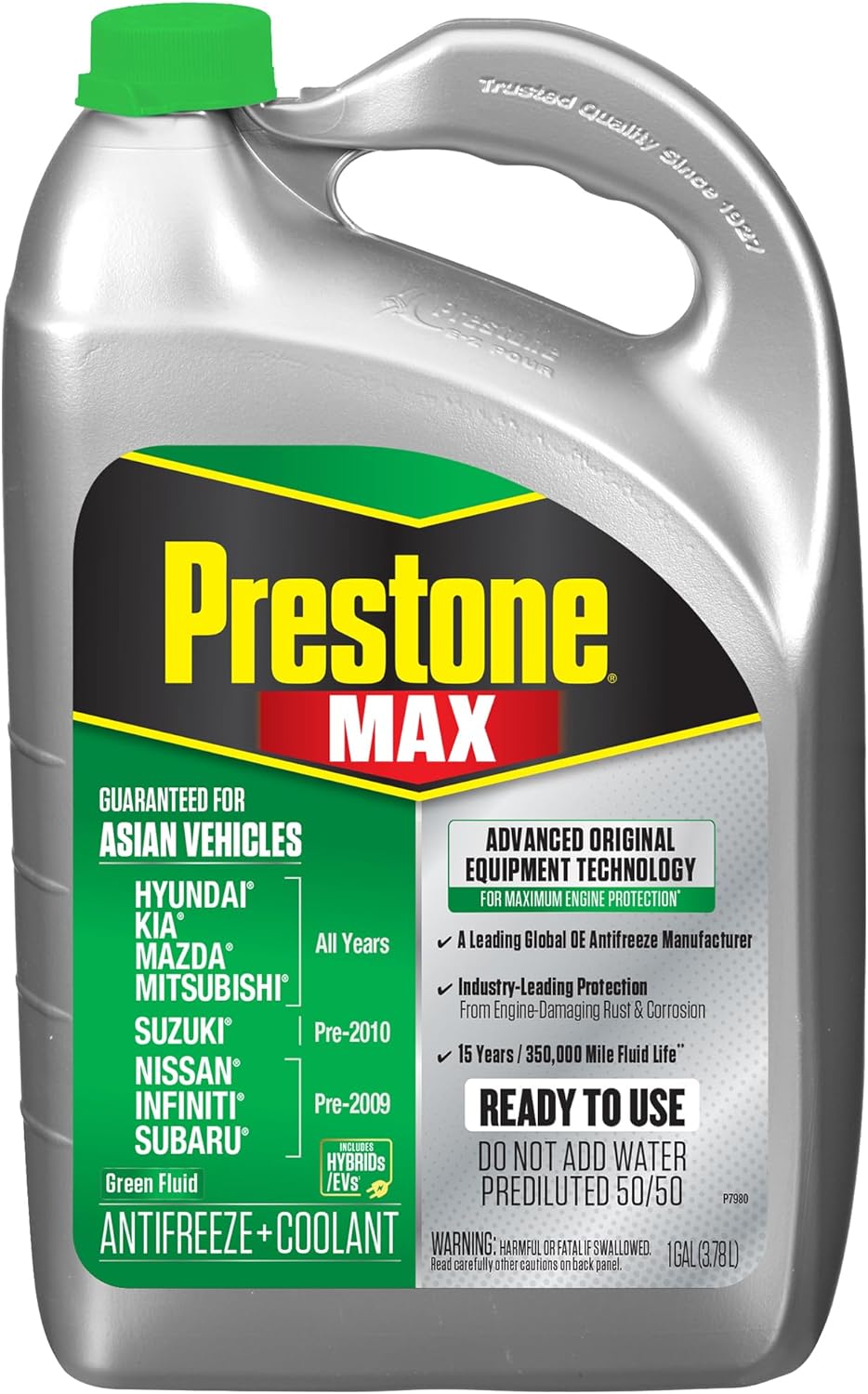
| Formula | 50/50 premix |
|---|---|
| Technology | Prestone CorGuard |
| Model | AF6610/F |
| Item Weight | 9.17 pounds |
This Prestone MAX Asian Green 50/50 antifreeze is a ready-to-use hybrid (HOAT) coolant designed for vehicles requiring Asian-formula protection. It mixes organic acid technology with silicate-based additives to guard aluminum and other vulnerable metals while delivering long-lasting corrosion control. The 50/50 premix simplifies topping off and service without needing dilution, and the formula advertises extended temperature protection to help the cooling system run efficiently through hot summers and cold winters. Practical benefits include reduced maintenance hassle from a long-life formulation and built-in bitterant to discourage accidental ingestion. Limitations are that it is an Asian-spec formula, so fitment should be limited to vehicles that specify Asian green HOAT coolants, and users who need concentrate or custom mixing ratios will find the premix less flexible. Expect typical coolant handling precautions during service and to follow your vehicle maker's coolant-change intervals for best results.
Best for: Buyers who want a maintenance-friendly, long-life hybrid coolant that protects aluminum and other engine metals while avoiding the need to mix concentrate.
Less Ideal for: Do not choose this if your vehicle requires a different coolant chemistry or if you need concentrated coolant to custom mix specific ratios.
- Ready-to-use 50/50 premix removes need for dilution and reduces installation errors.
- Hybrid HOAT formulation combines organic acids with silicate protection for vulnerable metals.
- Prestone CorGuard technology marketed for extended temperature and corrosion protection.
- Includes bitterant to reduce risk of accidental ingestion.
- Asian-specific formula may not be appropriate for vehicles that call for different coolant chemistries.
Verdict: The best hybrid (HOAT) coolant for owners who want the extended life of organic acids combined with silicate-based protection for vulnerable metal surfaces.
5. Valvoline Zerex G48 Concentrate Antifreeze/Coolant, 1 Gallon
Best Concentrated Coolant

| Brand | Valvoline |
|---|---|
| Formulation | Concentrate, ethylene glycol with organic acid technology |
| Volume | 1 gallon |
| Item model number | 861583 |
Valvoline Zerex G48 is a one-gallon concentrated coolant designed to be mixed to the desired 50/50 or other dilution for year-round freeze and boil protection. It uses a hybrid carboxylate formulation with organic acid technology in an ethylene glycol base to protect cooling system metals, including aluminum, and is intended for extended service intervals. For DIYers working on a 2003–2008 Subaru Forester, the concentrate lets you tailor freeze/boil points and maintain a spare supply without buying premixed jugs. The product is commonly used for topping off after a flush or for a complete system refill, and the thicker formulation helps minimize corrosion and deposits over time. Mixing requires distilled water and attention to the correct ratio to meet Subaru coolant recommendations; incorrect dilution reduces protection. As a concentrate, it also requires safe handling and spill cleanup compared with ready-to-use fluid, and you must verify compatibility with Subaru specifications before use.
Best for: DIY owners of 2003–2008 Subaru Forester who prefer to mix their own coolant to set precise freeze and boil protection levels and keep spare concentrate for future top-offs or full system fills.
Less Ideal for: Drivers who want a ready-to-use, no-mix solution or who are uncomfortable measuring and diluting automotive fluids should choose a premixed coolant instead.
- Concentrated formula lets you mix to the freeze/boil protection you need.
- Hybrid carboxylate organic acid technology for extended corrosion protection, including aluminum components.
- One-gallon pack is convenient for multiple top-offs or keeping a spare on hand.
- From an established brand with formulation designed for long service life.
- Requires correct mixing with distilled water and verification against Subaru coolant specs.
- Concentrate demands careful handling and storage compared with ready-to-use coolant.
Verdict: The best concentrated coolant for DIYers who want to mix to a specific freeze/boil protection level, save on shipping, or keep spare fluid on hand.
Choosing the Right 2003-2008 Subaru Forester Coolant: Key Factors to Consider
Coolant Chemistry and Inhibitor Type
The chemical formulation determines how the coolant protects aluminum heads, the water pump, and the radiator against corrosion. Organic acid technology and hybrid formulations behave differently over time; some maintain a steady inhibitor concentration for longer service intervals while others require more frequent changes. For a 2003-2008 Subaru Forester, compatibility with aluminum and mixed-metal systems is critical because inappropriate inhibitor types can accelerate pitting or cause scale buildup.
Pay attention to whether the coolant is pre-mixed or concentrated and what type of corrosion inhibitors it uses. That affects both how you mix the product and how long the protection lasts. Owners who drive in varied climates should favor chemistries with broad protection and documented performance for aluminum engines.
Service Interval and Longevity
Service interval is a practical consideration that affects long-term maintenance costs and the frequency of coolant flushes. Some coolant formulations advertise extended-life performance measured in years or miles, while conventional solutions recommend more frequent changes. For Forester owners, longer intervals reduce the labor and disruption of cooling system service, but only if the inhibitor package reliably maintains protection for that period.
Consider your vehicle's maintenance history: if you are unsure when the coolant was last changed or if OEM recommendations have not been followed, a more conservative change interval during initial service may be prudent. Also factor in whether you prefer a one-time extended-life refill or routine shorter-interval maintenance.
Freeze and Boilover Protection
Freeze point and boiling point (with proper pressure cap) determine how well the coolant performs across seasons. If you live in an area with cold winters, adequate freeze protection prevents block and radiator damage. If you face hot summers or heavy loads, robust boilover protection reduces the risk of overheating.
Check recommended coolant-to-water dilution ratios since those affect both freeze and boilover points. For the 2003-2008 Forester, matching the dilution to local climate and driving conditions ensures the cooling system remains within safe temperature ranges throughout the year.
Compatibility With Seals, Hoses, and System Materials
Coolants interact with rubber hoses, O-rings, plastic reservoirs, and the water pump. Some formulations can swell or shrink seals over time or accelerate degradation of softer materials. Ensuring material compatibility prevents leaks and premature component failure.
When selecting a coolant for a Forester, review the product guidance about compatibility with automotive elastomers and plastics. If your vehicle has older hoses or seals, consider that some coolants are gentler on aging materials, which can reduce the risk of immediate leaks after a flush.
Mixing Requirements and Ease of Use
Some coolants are sold pre-mixed, others as concentrated formulas that require precise dilution. Pre-mixed products remove the guesswork and reduce the chance of incorrect ratios that impair protection. Concentrates allow owners to tailor freeze/boil protection for their climate but demand careful measurement.
If you plan to perform the coolant flush yourself, choose a product with clear instructions and straightforward dilution guidance. Also account for local water quality; using distilled water with concentrates often yields better long-term protection than hard tap water.
Maintenance History and Pre-Existing Conditions
The state of the existing coolant and cooling system components influences which coolant is appropriate. If the system contains rust, scale, or unknown coolant chemistry, it may require a thorough flush and perhaps a short-term conditioning approach before switching to an extended-life product.
Assess hoses, clamps, the radiator cap, and the thermostat during service. If these parts show age or wear, addressing them at the same time as a coolant change helps ensure the new coolant performs as intended and prevents early failures.
When to Flush the Cooling System
Timing a coolant flush depends on the current fluid condition, past maintenance, and the coolant chemistry in use. Typical signals for a flush include coolant color change, visible debris or rust in the reservoir, overheating episodes, or a service interval that has passed. For the 2003-2008 Forester, a visual inspection and a coolant test strip can help determine whether a full system flush is needed.
If the vehicle's maintenance history is unknown, performing a complete flush and refill during initial service is often the safest choice. After flushing, follow the chosen coolant's dilution and break-in guidance, and recheck the system for leaks and proper thermostat operation.
- Look for discolored or muddy coolant in the overflow reservoir
- Test pH and inhibitor concentration if possible
- Address any coolant loss or overheating before relying on a simple top-up
Mixing and Dilution Best Practices
Follow manufacturer instructions for dilution precisely. Most concentrates are designed for a 50/50 mix with distilled water, which balances freeze protection and corrosion inhibition. Deviating from recommended ratios can reduce inhibitor effectiveness or change freeze/boil points.
Use distilled or deionized water when mixing to avoid mineral deposits. When topping up between services, match the existing coolant chemistry if known to avoid unwanted chemical interactions.
- Always measure concentrate and water by volume or with markings on a clean container
- Bleed trapped air from the cooling system after refill to prevent hot spots
- Replace the radiator cap with a rated cap if the original is weak or leaking
Signs of Coolant-Related Problems Specific to Forester Engines
Watch for persistent overheating, white smoke on startup, or milky oil, which can indicate head gasket issues or coolant intrusion. While these symptoms may have multiple causes, coolant condition and chemistry can influence how quickly such issues develop in older Forester engines.
Also monitor the water pump for leaks and unusual noises after a coolant change. A sudden change in coolant chemistry can reveal weak seals or marginal components that had been stable under the previous fluid.
- Overheating under load or on warm days
- Coolant loss without external leaks
- White exhaust smoke during cold starts
Storage and Handling of Coolant Products
Store concentrated coolants in a cool, dry place away from direct sunlight and sources of ignition. Keep containers tightly sealed to preserve inhibitor performance. Proper storage helps ensure the product performs to its stated service life once mixed and installed.
When handling coolant, use gloves and eye protection, and avoid skin contact. Dispose of drained coolant according to local regulations; do not pour it into the ground or a storm drain.
- Label any partially used containers with mix date and ratio
- Keep coolant out of reach of children and pets
- Rinse tools and funnels thoroughly after use
Tips for Seasonal Maintenance
Before winter, verify your coolant dilution provides adequate freeze protection for the lowest expected temperature. Before summer, confirm the cooling system is free of air pockets and the radiator cap maintains system pressure for proper boilover protection.
If you plan to store the vehicle for extended periods, a full service including a coolant check reduces the chance of corrosion during storage.
- Check coolant level and condition before seasonal temperature changes
- Perform a pressure test if you suspect a slow leak
- Consider inspecting hoses and clamps annually
Still looking for the perfect fit?
Select your Subaru Forester configuration to see the most relevant Coolants recommendations
How We Chose the Best 2003-2008 Subaru Forester Coolant
We focused on factors that matter specifically to 2003-2008 Subaru Forester engines and their cooling systems. Selection began with coolant chemistry: we prioritized formulations known for compatibility with aluminum heads and mixed-metal systems, and we checked typical service intervals claimed by manufacturers. Corrosion inhibition performance and long-term stability under heat were weighted heavily because the Forester uses aluminum components that are vulnerable to pitting and galvanic corrosion.We also evaluated freeze and boil-over protection ranges to ensure suitability across climates owners commonly drive in. Ease of use and mixing requirements were considered so owners performing a coolant flush can follow clear instructions. Material compatibility with hoses, seals, and plastics used in the Forester cooling circuit was another essential filter. Finally, we favored options with clear instructions for dilution and change intervals.Excluded from consideration were coolants lacking published corrosion inhibitor details, formulations clearly intended only for racing or heavy-duty commercial applications, or products without guidance for dilution and service life. The resulting list reflects balance between protection, longevity, and practical maintenance for the 2003-2008 Forester.
Our full evaluation process is outlined in our review methodology.
FAQ
Can I mix different coolant types in my 2003-2008 Forester?
Mixing coolant chemistries can reduce corrosion protection and cause unwanted reactions. It usually depends on the specific formulations, but when possible avoid blending different types. If you must change chemistry, perform a thorough flush first.
How often should I change coolant in a 2003-2008 Subaru Forester?
Recommended intervals vary by coolant chemistry and maintenance history. Extended-life formulations may advertise multi-year service, while conventional fluids require more frequent changes. If the system history is unknown, consider an initial conservative change and then follow the product guidance.
Will using distilled water with concentrate make a difference?
Yes. Distilled or deionized water minimizes mineral deposits and helps the corrosion inhibitors work as intended. Using hard tap water can shorten the effective life of the coolant and promote scale formation.
What signs indicate coolant is no longer protecting the cooling system?
Look for discolored or sludgy fluid, visible rust or debris in the reservoir, persistent overheating, or a drop in freeze protection on test strips. Any of these suggest the inhibitors are depleted and a flush may be necessary.
Is it necessary to replace the radiator cap when changing coolant?
Not always, but a worn or weak radiator cap can lower system pressure and reduce boilover protection. Inspect the cap for seal damage and replace it if it shows wear or if pressure test results are below specification.
Final Verdict
Choose a coolant that matches the 2003-2008 Subaru Forester's material compatibility and your expected service interval. Prioritize formulations with proven corrosion protection for aluminum components and clear dilution guidance to protect hoses and seals.Balance convenience and longevity: extended-life coolants reduce service frequency but require confidence in prior system condition and proper flushing. If in doubt, flush the system and select a coolant whose chemistry and service interval line up with your maintenance plans to keep the cooling system reliable.
Explore More:
- Check out all Subaru Forester parts & accessories
- Explore Fluids & Chemicals
- Browse all Accessories
