

Note: This article contains affiliate links. If you click on these links and make a purchase, I may earn a small commission at no extra cost to you. This helps support my research and content. Read my full affiliate disclosure here.
If your Hyundai Sonata feels loose in turns or you notice unusual vibrations, the control arms could be the source. Choosing the right control arm affects steering precision, ride comfort, and suspension longevity, so picking a durable, well-fitting replacement matters.This guide shortlists the top control arms for the Hyundai Sonata based on key criteria like fitment accuracy, bushing and joint durability, and ease of installation. Read on to see why each option made the list and what to check before you install.
Looking for other parts? See all Hyundai Sonata parts & accessories.
Top Picks at a Glance
| Best Reviewed A top-rated pick with lots of positive feedback | TRQ Rear Lower Control Arm Set for 2011–2015 Hyundai Sonata |  |
| Most Popular A crowd favorite that many people choose with confidence | Detroit Axle Front Lower Control Arms with Ball Joints (2‑pc) for Hyundai Sonata / Kia Optima |  |
| Best Quality Built to a higher standard if you want something more solid | TRQ Front Upper and Lower Control Arm with Ball Joint Set (6-Piece) for 2006 Hyundai Sonata |  |
| Best Budget The cheapest option that still gets the job done reliably | XQSMWF Right Front Lower Control Arm 54501L1000 for Hyundai Sonata / Kia K5 |  |
| Most Sold A high-volume bestseller chosen again and again | A-Premium Front Suspension Control Arm and Steering Kit for Hyundai Sonata (2006–2008) |  |
| Best Value for Money The sweet spot between price and what you get | HHCM 2pc Front Lower Control Arm Kit for Hyundai Sonata (2006–2010) |  |
| Best Overall The best all-around choice for most situations | TRQ Front Lower Control Arm and Ball Joint Set (2‑Piece) for Hyundai Sonata |  |
1. TRQ Rear Lower Control Arm Set for 2011–2015 Hyundai Sonata

| Fit Type | Vehicle Specific Fit |
|---|---|
| Auto Part Position | Rear Lower |
| Material Type | Aluminum |
| Quantity | 2 Piece |
| Item Type Name | Control Arm Set |
This TRQ rear lower control arm set replaces both driver and passenger rear lower arms on compatible Hyundai Sonata models to restore suspension geometry and rear stability. It ships as a two-piece kit with pre-installed bushings and is cast aluminum to match factory-style components, so installation is straightforward and typically done as a bolt-in replacement during a rear suspension repair or when correcting rear camber and uneven tire wear. The manufacturer provides fitment guidance for specific Sonata trims and includes DIY installation resources, which helps DIYers and independent shops save time. The main benefits are factory-style fit, pre-assembled bushings that reduce install steps, and materials intended to resist corrosion better than some aftermarket steel options. Limitations are that this is vehicle-specific so you must confirm exact year and trim fitment, and while aluminum saves weight and resists rust it can be less forgiving than steel in heavy-impact scenarios.
Best for: Reliability-focused buyers who prioritize restoring factory handling and preventing premature tire wear with a direct-fit replacement that simplifies installation and reduces repeated repairs.
Less Ideal for: Buyers looking for heavy-duty or off-road suspension upgrades or those who need a universal or multi-vehicle aftermarket arm should consider stronger aftermarket steel options instead.
- Direct-fit two-piece kit replaces both rear lower arms for matched geometry
- Pre-installed bushings reduce installation time and alignment prep
- Cast aluminum construction resists corrosion and matches factory-style components
- Includes fitment guidance and DIY installation resources
- Fitment is vehicle- and trim-specific so verification is required before purchase
- Aluminum construction can be less impact-tolerant than heavier steel alternatives
Verdict A factory-style, direct-fit rear lower control arm set that restores rear suspension alignment and durability for 2011–2015 Hyundai Sonata owners focused on reliable, long-lasting repairs.
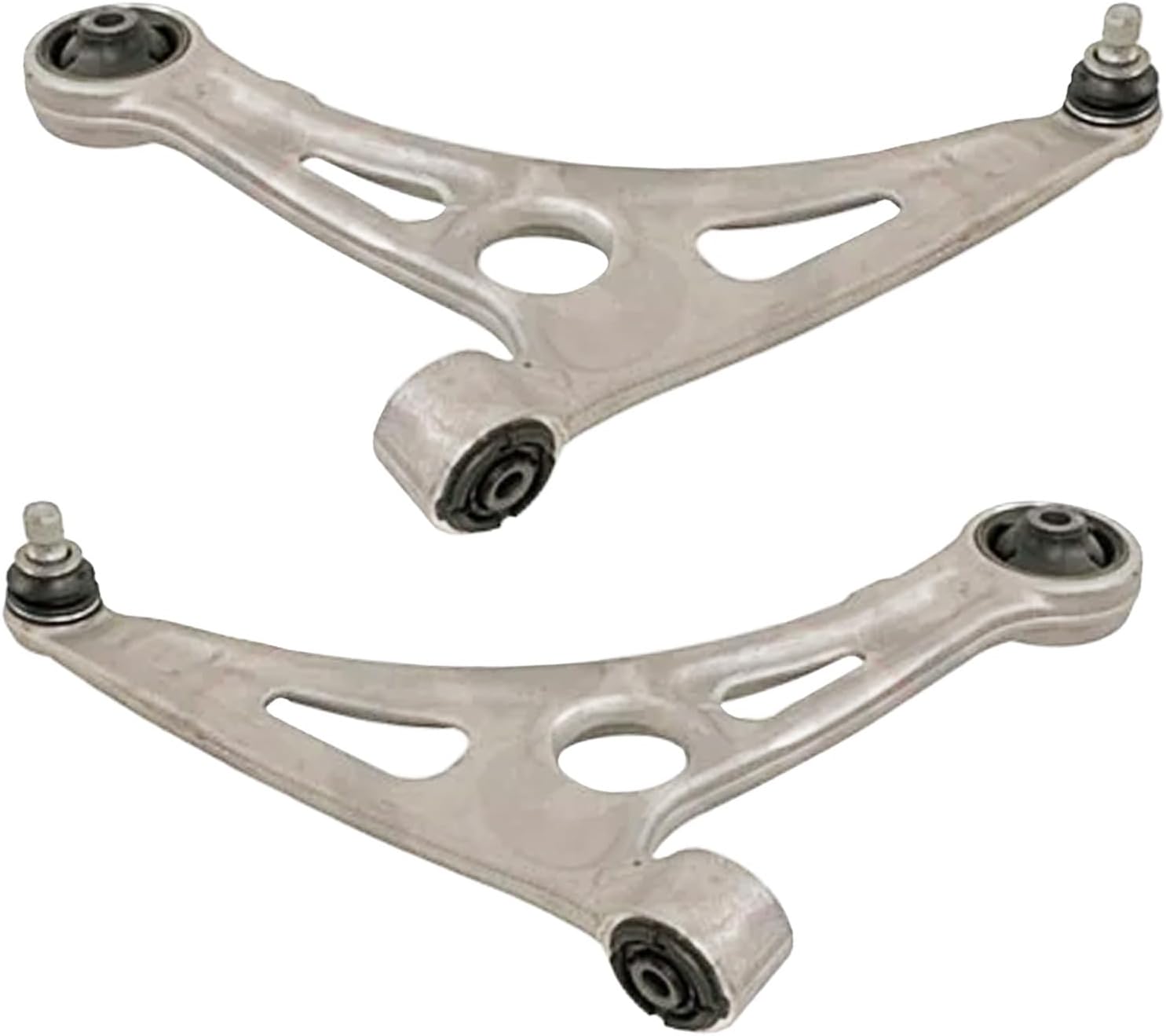
2. Detroit Axle Front Lower Control Arms with Ball Joints (2‑pc) for Hyundai Sonata / Kia Optima
| Fit Type | Vehicle Specific Fit |
|---|---|
| Auto Part Position | Front Lower |
| Material Type | Alloy Steel |
| Unit Count | 2.0 Count |
This Detroit Axle kit supplies both front lower control arms with preinstalled ball joints as a straightforward replacement for worn factory parts on Hyundai Sonata (2016–2019) and compatible Kia Optima models. The assemblies arrive ready to install and are intended to restore steering geometry and suspension stability after bushing or ball-joint failure. They are made from alloy steel, come with a factory-style fitment, and include a protective coating that reviewers say resists rust and presents a clean finish. Practical benefits include saving time compared with rebuilding individual components and reducing alignment headaches caused by worn bushings. Some users report the rear mounting bracket can be tight to seat and may require a clamp or soapy-water lubrication during installation, so expect a bit of extra effort on stubborn original mounts. The kit carries a long-specified warranty and is best used when you need a direct, convenience-focused swap that gets the front end back to factory geometry without fabricating or sourcing separate parts.
Best for: Convenience-driven buyers who want a ready-to-install, vehicle-specific replacement to quickly fix front-end play and restore handling without sourcing separate parts or rebuilding components.
Less Ideal for: Drivers seeking fully serviceable, greasable ball joints or those who prefer to replace individual suspension components rather than swapping complete arms should consider other options.
- Comes as a complete pair with ball joints preinstalled for a fast, direct replacement
- Vehicle-specific fit reduces the need for modification and helps restore correct alignment
- Alloy steel construction with corrosion-resistant coating improves durability
- Well-reviewed by many buyers for fit and finish, simplifying DIY or shop installation
- Some reviewers needed clamps or extra effort to properly seat the rear mounting bracket during installation
- Ball joints are sealed and not serviceable, so the entire arm must be replaced if the joint fails
Verdict A convenient, ready-to-install pair of front lower control arms that restores factory-style fit and steering control for Sonata owners who want a fast swap.
3. TRQ Front Upper and Lower Control Arm with Ball Joint Set (6-Piece) for 2006 Hyundai Sonata

| Fit Type | Vehicle Specific Fit |
|---|---|
| Auto Part Position | Front Upper |
| Material Type | Alloy Steel, Aluminum |
| Unit Count | 6.0 Count |
This TRQ six-piece kit replaces both upper and lower front control arms plus two lower ball joints for a complete front suspension refresh on a 2006 Hyundai Sonata. Each arm comes with pre-installed ball joints where applicable, so installation is straightforward and aligns with factory mounting points for a typical DIY or shop replacement. The mix of alloy steel and aluminum aims to balance strength with manageable weight, and customers report improved steering feel and reduced looseness after installation. TRQ also publishes installation videos to simplify the process. Expect OEM-style fit and easier alignment after replacement, but buyers should note occasional variability in hardware details such as supplied nuts and the long-term durability versus higher-end aftermarket or factory parts can vary. This kit is best when you need a full front-end overhaul and want quicker installation without pressing, bending, or sourcing separate ball joints.
Best for: Performance-oriented buyers who prioritize restoring tight, responsive front-end handling on a 2006 Hyundai Sonata and prefer a ready-to-install, full-kit's convenience.
Less Ideal for: Buyers seeking the absolute longest-lasting, heavy-duty factory-quality components or those who only need a single control arm replacement should consider individual premium options instead.
- Complete six-piece kit covers upper and lower front control arms plus lower ball joints for a single-purchase front-end refresh.
- Pre-assembled ball joints on applicable arms reduce bench work and save installation time.
- Vehicle-specific fit for the 2006 Hyundai Sonata, which simplifies alignment and avoids modification.
- Manufacturer provides DIY installation videos to help home mechanics complete the job correctly.
- Long-term durability may be mixed compared with premium OEM-level parts based on user reports.
- Some customers report missing or non-ideal replacement hardware such as pinch nuts that may require reusing originals.
Verdict A convenient, vehicle-specific six-piece kit that restores front-end responsiveness for a 2006 Hyundai Sonata with easier installation, though durability can vary versus top-tier factory-quality parts.
4. XQSMWF Right Front Lower Control Arm 54501L1000 for Hyundai Sonata / Kia K5

| Fit Type | Vehicle Specific Fit |
|---|---|
| Auto Part Position | Front Right Lower |
| Auto Part Orientation | Front |
This XQSMWF right front lower control arm is a direct-fit replacement intended for Hyundai Sonata 1.6L, 2.0L, and 2.5L models from 2020 to 2022 and the same-generation Kia K5. It installs at the front lower position to reconnect the wheel hub to the chassis and restore proper suspension geometry and steering response. The part includes the control arm with pre-mounted bushings and a ball joint to simplify swapping the worn factory piece for a like-for-like repair. In practical use it reduces play, road noise, and vibration compared with a degraded arm and returns predictable handling when aligned. As a budget-focused aftermarket option it offers basic, functional tooling for routine repairs but may lack the refined corrosion protection and long-term durability of higher-end factory-quality replacements. Expect a straightforward bolt‑in installation for competent DIYers or shops, and plan for a wheel alignment after fitting to ensure correct tire wear and handling.
Best for: Budget-conscious buyers who need a straightforward, vehicle-specific replacement to restore handling and quietness without paying for premium brand parts.
Less Ideal for: Owners seeking an upgraded performance arm or a long-life factory-quality replacement should consider higher-tier parts with documented materials and finishes.
- Vehicle-specific fit for Hyundai Sonata 2020–2022 and Kia K5 of listed engines, simplifying replacement
- Includes bushings and ball joint for a one-piece swap that reduces installation steps
- Restores steering geometry and reduces suspension noise and vibration compared with a worn arm
- Aftermarket budget construction may not match factory-quality corrosion resistance or longevity
- Limited official specifications provided about materials or treated finishes
Verdict A practical, budget-friendly right front lower control arm that restores handling on compatible Hyundai Sonata and Kia K5 models but may not match premium longevity.
5. A-Premium Front Suspension Control Arm and Steering Kit for Hyundai Sonata (2006–2008)

| Fit Type | Vehicle Specific Fit |
|---|---|
| Auto Part Position | Front |
| Material Type | Iron |
| Auto Part Orientation | Front |
This A-Premium kit supplies a full front suspension and steering refresh for 2006–2008 Hyundai Sonata L4 2.4L and V6 3.3L models by including both upper and lower control arm assemblies plus tie rod ends, sway bar links, lower ball joints and rack boots. It is intended as a direct-fit, vehicle-specific replacement to address common symptoms such as clunking, steering wander, uneven tire wear and degraded handling. The package simplifies a larger repair by providing matched components so you can replace the entire front-end wear items at once. Material is listed as iron, which should give robust strength, but one long-term reviewer reported fast surface rusting so expect to inspect and protect exposed metal if corrosion resistance matters in your climate. The kit includes both left and right components and cut-to-fit rack boots to speed installation, but installation still requires alignment after replacement. This is a practical option for replacing aging suspension parts and restoring predictable steering, with the caveat that surface finish and long-term corrosion protection may be limited compared with higher-end coated parts.
Best for: A risk-averse mainstream buyer who prefers replacing worn suspension components with a complete, matching kit to restore factory-like steering behavior and avoid piecemeal repairs.
Less Ideal for: Buyers who need premium corrosion-resistant coatings or who want individual high-end aftermarket performance parts should consider alternatives tailored for longevity or performance.
- Comprehensive kit replaces most front suspension and steering wear parts in a single purchase.
- Vehicle-specific fit for Hyundai Sonata 2006–2008 L4 2.4L and V6 3.3L simplifies parts matching.
- Includes both left and right control arm assemblies and cut-to-fit rack boots to speed a full-front rebuild.
- Iron construction provides sturdy, durable replacement components for load-bearing suspension parts.
- Surface finish appears prone to corrosion based on user report, so additional rust protection may be needed.
- Does not include alignment service or hardware like wheel alignment adjustment, so professional setup is required after installation.
Verdict A practical, all-in-one front suspension and steering replacement kit for 2006–2008 Hyundai Sonata that restores handling but may need extra rust protection for long-term durability.
6. HHCM 2pc Front Lower Control Arm Kit for Hyundai Sonata (2006–2010)

| Fit Type | Vehicle Specific Fit |
|---|---|
| Auto Part Position | Front Lower |
| Unit Count | 2.0 Count |
| Manufacturer | HHCM |
| Manufacturer Part Number | K641391 K641392 |
This HHCM kit supplies the two front lower control arms needed to refresh the Sonata front suspension. Designed as vehicle-specific replacements for 2006–2010 Hyundai Sonata, the arms arrive ready to install and are intended to restore proper steering alignment and suspension geometry after wear. The listing emphasizes factory-quality standards and precision tolerances, which reviewers say translate to a straightforward fit and improved steering feel once installed. Built materials and construction aim for durability, and the kit includes left and right arms so you replace both sides at once. Important caveats are mixed user experience on long-term durability and occasional reports of premature ball-joint wear, so expect to inspect joints after initial miles. Installation is typical for suspension work and may require alignment afterwards. This kit is a practical replacement for owners who want a complete front-lower arm swap without sourcing individual parts, but those prioritizing ultimate longevity or heavy-duty use might consider higher-end aftermarket options.
Best for: Practical optimizers looking to restore handling and alignment on a 2006–2010 Hyundai Sonata without paying for premium brand parts, prioritizing straightforward fit and value.
Less Ideal for: Buyers seeking the strongest heavy-duty or performance-focused control arms for severe use should consider reinforced or premium aftermarket options instead.
- Vehicle-specific fit for Hyundai Sonata 2006–2010 improves fitment and reduces modification during install
- Sold as a complete left-and-right kit so both front lower arms are replaced together
- Manufacturer states factory-quality standards and precision tolerances for easier alignment
- Several customer reports note clear improvement in steering tightness and fit after installation
- Some customers reported early ball-joint failure on a minority of units indicating variable long-term durability
- Requires professional tools and alignment after installation which adds to total cost
Verdict A budget-friendly, vehicle-specific pair of front lower control arms for the Hyundai Sonata that restores fit and steering feel, but watch for mixed reports on long-term ball-joint durability.
7. TRQ Front Lower Control Arm and Ball Joint Set (2‑Piece) for Hyundai Sonata

| Fit Type | Vehicle Specific Fit |
|---|---|
| Auto Part Position | Front Lower |
| Material Type | Alloy Steel |
| Item Type Name | Control Arm with Ball Joint Set |
This TRQ two-piece front lower control arm and ball joint set replaces both driver and passenger lower arms on compatible Hyundai Sonata models and arrives with the ball joints preinstalled to speed up installation. Typical use is a front-end refresh when worn bushings or loose ball joints produce steering play, uneven tire wear, or a soft, unsettled ride. The arms are made from alloy steel and are sold as vehicle-specific, direct-fit pieces intended to match factory mounting points so you can reinstall without modifications. Practical benefits include easier DIY installation thanks to preassembled parts and TRQ's library of step-by-step videos, plus improved steering tightness and ride stability after replacement. Limitations to note are mixed long-term durability reports in some reviews and the included hardware may not exactly match every factory fastener preference, so you should inspect supplied nuts and pins during installation and reuse original fasteners if needed.
Best for: Practical, balanced buyers who want a reliable, direct-fit replacement to restore steering feel and front-end stability on a Hyundai Sonata without paying dealer prices or needing professional fabrication.
Less Ideal for: If you prioritize heavy-duty commercial use or plan significant suspension modifications, choose a performance or heavy-duty aftermarket arm designed for those demands instead.
- Preinstalled ball joints reduce install time and eliminate separate press‑in work
- Vehicle-specific direct-fit design aligns with factory mounting points for straightforward replacement
- Made from alloy steel for a sturdy, factory-style feel
- Includes both driver and passenger lower arms so both sides can be replaced at once
- Extensive installation videos available to support DIY repairs
- Some users report variable long-term durability compared with original factory parts
- Included hardware may differ from factory fasteners requiring reuse of original nuts or pins
Verdict A practical, direct-fit lower control arm set for Hyundai Sonata owners who want an easier DIY replacement that restores front-end tightness without major modifications.
Choosing the Right Hyundai Sonata Control Arm: Key Factors to Consider
Fitment and Compatibility
Correct fitment ensures the control arm bolts to the Sonata's suspension in the same positions and orientations as the original part. A precise match prevents undue stress on adjacent components and reduces the need for corrective modifications. Poorly fitting arms can change suspension geometry slightly, which may lead to uneven tire wear or handling quirks. When a part lists explicit vehicle-year and submodel compatibility, it helps ensure a straightforward swap and preserves factory ride characteristics.
Compatibility also affects available mounting hardware. Parts engineered for a specific vehicle often include or accommodate original-style bolts, bushings, and ball joints, reducing the chance of a loose fit or the need for aftermarket adapters. Confirming fitment ahead of time saves time during installation and lowers the risk of follow-up service.
Bushing Type and Longevity
Bushings control noise, vibration, and harshness by isolating the arm from the chassis. Materials range from rubber to polyurethane and each has tradeoffs. Softer rubber bushings usually offer quieter operation and a more comfortable ride but wear faster under heavy loads. Stiffer polyurethane bushings increase steering precision and durability but can transmit more vibration into the cabin.
Assess bushing construction and expected lifespan relative to your driving style. Also consider whether the bushing is serviceable or pressed in; serviceable designs can be replaced separately from the entire arm, which may be more economical in the long run.
Ball Joint Construction
Many control arms integrate a ball joint that connects the arm to the steering knuckle. Ball joint quality directly impacts steering feel and safety. High-quality joints use durable bearing surfaces, protective boots, and reliable lubrication retention features to reduce play over time. A worn or loose ball joint often manifests as clunking noises or imprecise steering.
Look for ball joints rated for the expected load and driving conditions. Sealed, greasable, or replaceable joints each have maintenance and longevity implications. A robust joint reduces the likelihood of early failure and helps maintain consistent alignment settings.
Corrosion Protection and Materials
Control arms are exposed to road salt, moisture, and debris, making corrosion resistance important for longevity. Materials such as stamped steel, forged steel, and aluminum each behave differently when exposed to the elements. Protective coatings, galvanization, or powder-coating extend service life and prevent structural weakening.
Consider the environment you drive in and choose finishes that resist rust. Even with durable materials, drain points and sealed welds matter because trapped moisture accelerates deterioration. Long-lasting surface protection reduces the chance of unexpected failure and keeps mounting surfaces true.
Installation and Hardware
Ease of installation affects both DIYers and technicians. Arms that include all required mounting bolts, nuts, and bushings reduce the number of parts to source separately and lower installation time. Designs that match factory torque specifications and use the same attachment method simplify the process and lessen the chance of incorrect assembly.
Also consider whether the arm is intended to be installed with the vehicle at ride height or on a lift and whether specialized tools are required. Clear installation access, standard fastener sizes, and included instructions help avoid delays and potential alignment errors after the swap.
Impact on Alignment and Handling
Replacing a control arm can change toe, camber, and caster if the new part does not match the factory geometry closely. Tight manufacturing tolerances and correct bushing compliance help maintain alignment settings or minimize the adjustment needed. Parts that alter geometry may require a full alignment to restore proper tire contact patches.
Consider how the arm's stiffness and bushing behavior will affect steering responsiveness. A firmer arm and bushing setup often sharpens handling but can increase road feedback. Understanding these tradeoffs helps you choose an arm that supports your desired balance of comfort and performance.
FAQ
How do I tell if a Hyundai Sonata control arm is bad?
Common signs include clunking noises over bumps, uneven tire wear, or a loose feeling in steering. You may also notice vibration at speed or pull to one side. A visual inspection can reveal torn bushings, excessive play in the ball joint, or rust damage. If symptoms appear, have the suspension inspected and measurements checked before driving extensively.
Can I replace a control arm myself?
Many mechanically-inclined owners can replace a control arm with basic tools, but the task often requires a lift or jack stands, torque wrenches, and sometimes a ball joint press. It usually helps to have a helper and clear instructions. After replacement, a wheel alignment is generally recommended to ensure correct handling and tire wear.
Will replacing a control arm fix alignment issues?
A new control arm that matches factory geometry can correct alignment problems caused by a worn or bent arm. However, replacing an arm often changes alignment settings, so a proper alignment check is usually needed after installation. If alignment issues stem from other worn components, those will also need attention to fully restore proper geometry.
How long do control arm bushings usually last?
Bushing life varies widely depending on material, driving conditions, and load. Rubber bushings often last several years under normal driving but may degrade faster in harsh climates or heavy-duty use. Polyurethane bushings typically last longer but can increase road noise. Regular inspection helps catch wear before it affects handling.
Are there risks to driving with a worn control arm?
Continuing to drive with a worn arm can lead to worsening steering control, uneven tire wear, and increased stress on other suspension parts. In severe cases, a failed ball joint or mounting point can compromise safe handling. If you suspect significant wear, arrange an inspection and avoid aggressive driving until repairs are made.
How We Chose the Best Hyundai Sonata Control Arm
We focused strictly on replacement control arms designed for the Hyundai Sonata and evaluated candidates against the features that matter most to owners. Our primary criteria included fitment accuracy to factory mounting points, bushing material and construction for long-term vibration control, ball joint quality for steering responsiveness, and overall manufacturing tolerances that affect alignment stability. We also considered corrosion protection and the availability of complete hardware to simplify installation.Excluded from consideration were generic universal arms and components not explicitly produced to match Hyundai Sonata mounting geometry. We did not include options that lack documented specifications for bushing type, ball joint rating, or fitment data. The result is a curated list emphasizing parts that balance durability, straightforward installation, and the ability to maintain alignment after fitment.
Our full evaluation process is outlined in our review methodology.
Conclusion
When choosing a control arm for a Hyundai Sonata, prioritize correct fitment, bushing quality, and ball joint durability to preserve steering feel and suspension geometry. Also consider corrosion protection and whether the arm includes necessary hardware to simplify installation.Balance the tradeoffs between comfort and responsiveness based on your driving habits. After installation, a professional alignment helps ensure optimal handling and even tire wear.
Explore More:
- Check out all Hyundai Sonata parts & accessories
- Explore Control Arms Maintenance & Repair Guides
- Explore Suspension & Steering
- Browse all Auto Parts
