

Note: This article contains affiliate links. If you click on these links and make a purchase, I may earn a small commission at no extra cost to you. This helps support my research and content. Read my full affiliate disclosure here.
If your Volkswagen Jetta is showing signs of reduced power or failing an emissions test, choosing the right catalytic converter matters for drivability and compliance. You want a unit that fits properly, reduces pollutants effectively, and holds up to everyday driving conditions. This guide shortlists seven top options for Volkswagen Jetta owners and explains the practical factors we considered, such as fitment, durability, and emissions performance. Read on to see which features matter most and how each shortlisted option meets those standards.
Looking for other parts? See all Volkswagen Jetta parts & accessories.
Top Picks at a Glance


1. A-Premium Catalytic Converter with Gasket Kit — Direct-Fit for Volkswagen 2.0L (Front Side)

| E.P.A. Compliant | Yes |
|---|---|
| Vehicle's Emissions Specifications | Federal Emissions |
| Position | Front Side |
| Inlet Type | 4 Bolt Welded Flange |
| Outlet Type | 2.165" OD Pipe |
This A-Premium catalytic converter replaces the front-side unit on 2.0L Volkswagen models and is sold as a direct-fit replacement with a welded 4-bolt flange inlet and two outlet pipes. It is typically used when the original converter is damaged, clogged, or failing emissions checks. Notable features include EPA compliance for permitted states, factory-style steel construction, and preformed inlet and outlet connections that simplify installation for shops or experienced DIYers. The unit does not include mounting hardware, so expect to reuse factory bolts or source replacements. Practical benefits are clean fitting welds reported by installers, an included gasket kit, and a one-year unlimited-mileage guarantee for peace of mind. Limitations include restricted sale in certain states with stricter emissions rules and the need to confirm exact engine and emissions fitment before purchase. Buyers should also plan for potential extra parts or labor because hardware is not provided.
Best for: A reliability-focused buyer who prioritizes a straightforward, factory-quality replacement to restore emissions performance and avoid repeat repairs.
Less Ideal for: Drivers in states with very strict emissions regulations or those who need a complete hardware kit and prefer a fully-bolted, plug-and-play aftermarket assembly.
- Direct-fit front-side replacement for Volkswagen 2.0L models that reduces modification during install
- EPA-compliant design for use in most federal-emissions areas
- Factory-style steel construction with welded 4-bolt flange and dual outlet for straightforward exhaust connection
- Mounting hardware is not included so additional bolts or brackets may be required
- Cannot be sold or installed in certain states with strict aftermarket converter regulations
Verdict A practical, factory-style catalytic converter for VW 2.0L owners who need a reliable front-side replacement but may need to source mounting hardware separately.
2. MagnaFlow 51354 OEM Grade Universal Catalytic Converter (2" Inlet/Outlet)

| Inlet Diameter | 2" |
|---|---|
| Outlet Diameter | 2" |
| Oxygen Sensor Location | Midbed |
| Heat Shield Included | Yes |
This MagnaFlow OEM Grade universal catalytic converter is a welded, universal-fit replacement intended to meet federal EPA OBDII emissions standards. For a Volkswagen Jetta this unit is typically used when the original converter is damaged or stolen and a welded, custom installation is acceptable. It features stainless-steel construction, integrated oxygen sensor provisions, and a clam-shell continuous seam weld that helps with thermal containment and corrosion resistance. The universal design gives flexibility in placement and orientation on the Jetta’s exhaust, but it requires cutting and welding and professional installation to ensure proper fit and O2 sensor alignment. The converter is marketed to meet federal emissions requirements for vehicles that use California-style systems in federal markets but is not for sale in California and similar states. Practical benefits include durable construction and an EPA-compliant core that can clear check engine lights when installed correctly, while limitations are the need for custom fabrication, possible additional labor cost, and that universal units may require more careful selection to match a specific Jetta model year and exhaust routing.
Best for: Convenience-driven buyers who want a durable, EPA-compliant replacement that can be adapted to their Volkswagen Jetta and prefer a quick, flexible solution over sourcing a vehicle-specific part.
Less Ideal for: Buyers who need a direct bolt-on, no-fabrication replacement or who must meet California or other state-specific emissions sale requirements should consider vehicle-specific converters or dealer-sourced options.
- Stainless-steel construction improves corrosion resistance and longevity.
- Integrated oxygen sensor port for proper O2 monitoring and check-engine light prevention.
- Federal EPA compliant design intended to meet OBDII emissions requirements.
- Clamshell continuous seam weld for improved thermal containment and structural strength.
- Universal weld-on fit requires cutting, welding, and professional labor to install correctly.
- Not legal for sale or use in California and several other states, limiting compliance in some regions.
Verdict A durable, EPA-compliant universal converter that works for a Jetta if you want a flexible, welded replacement and are prepared to pay for professional installation.
3. A-Premium Catalytic Converter with Gasket Kit for Volkswagen Jetta 2.0L (2012–2015)

| Vehicle fitment | Volkswagen Jetta 2012–2015 L4 2.0L |
|---|---|
| EPA compliant | Yes |
| Inlet type | 4 bolt welded flange |
| Outlet type | 2" OD pipe |
| Mounting hardware | Included |
This A-Premium catalytic converter is a direct-fit replacement intended for Volkswagen Jetta 2.0L models from 2012 through 2015. It replaces the factory unit using a 4-bolt welded flange inlet and a 2-inch outlet pipe, and it ships with mounting hardware and a gasket kit for straightforward installation by a competent DIYer or a shop. Constructed from stainless steel and advertised as EPA-compliant, it is built to restore emissions control and exhaust flow while resisting corrosion. The practical benefits are simple fitment, included hardware, and a one-year unlimited-mileage guarantee that gives confidence for a long run-in period. Limitations are that EPA-compliant converters cannot be used in certain states under aftermarket rules, and the inlet flange and mounting layout differ slightly from the original in some reports, which may require minor adjustment or professional alignment during installation.
Best for: Performance-oriented buyers who prioritize restoring proper exhaust flow and emissions control while keeping near-factory fit and function on a Jetta 2.0L from 2012–2015.
Less Ideal for: Owners in states with restrictive aftermarket converter laws or those who need a CARB-approved converter for strict California compliance should look for a state-legal alternative.
- Direct-fit design for Volkswagen Jetta 2012–2015 2.0L to simplify replacement
- Stainless steel construction improves corrosion resistance compared with some aftermarket units
- Includes gasket and mounting hardware for a complete install package
- EPA-compliant design intended to meet federal emissions specifications
- Not legal for sale or installation in certain states under aftermarket catalytic converter regulations
- Inlet mounting differs from the factory piece in some cases and may need alignment or adaptation
Verdict A practical, near-factory direct-fit replacement that restores emissions control and exhaust flow for Jetta 2.0L owners who need a quality aftermarket converter, provided it meets their state legal requirements.
4. PHILTOP High-Flow Rear Catalytic Converter for Volkswagen Jetta (2001–2005)
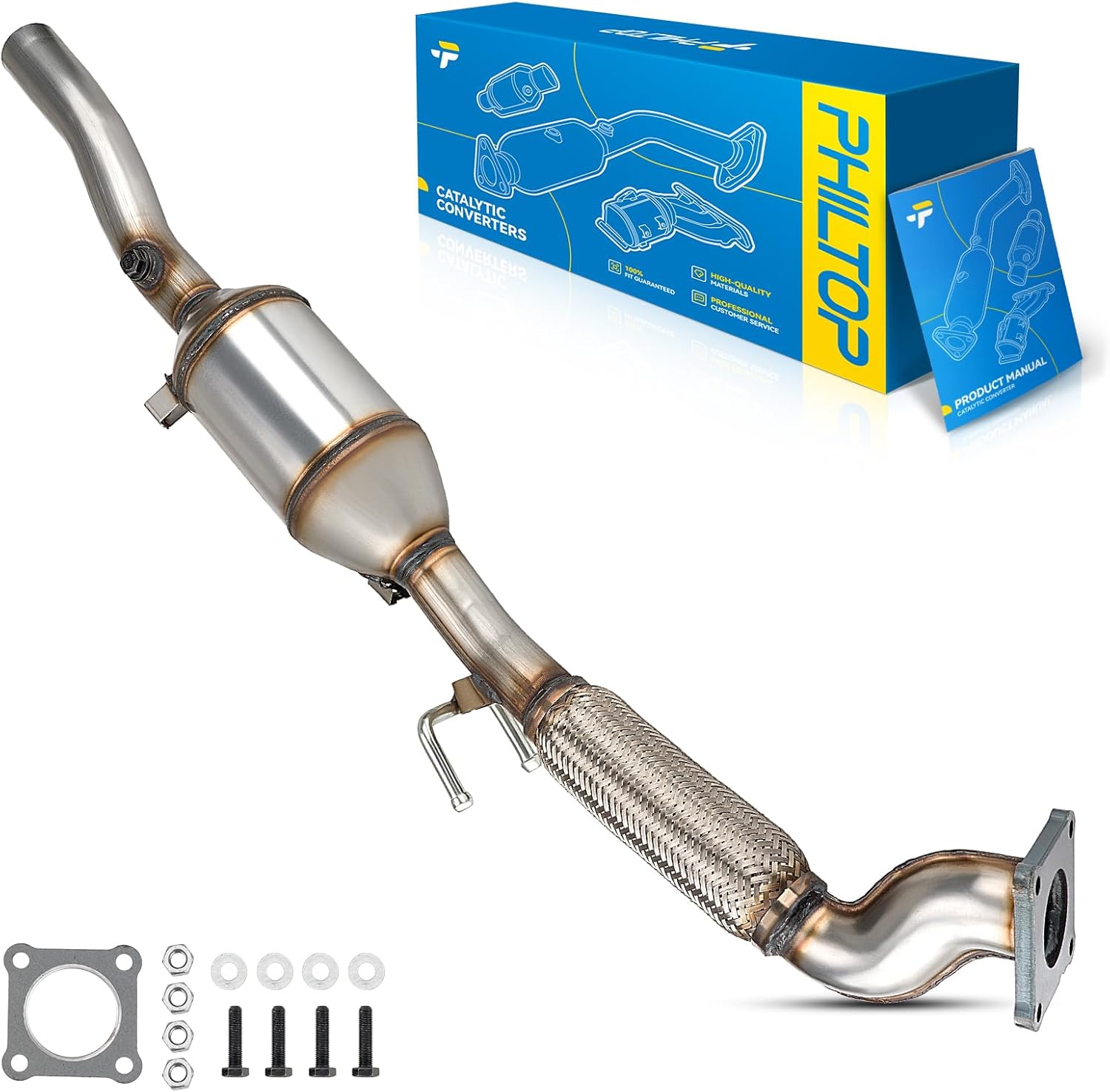
| Vehicle fitment | Volkswagen Jetta 2001–2005 2.0L |
|---|---|
| Position | Rear |
| EPA compliance | EPA compliant |
| Manufacturer part number | 3106EXP2672US |
This PHILTOP rear catalytic converter is a direct-fit replacement intended for Volkswagen Jetta 2001–2005 2.0L models and is designed to restore emissions function while improving exhaust flow. It installs using the included gaskets and hardware and provides an O2 sensor port so you do not need to modify the factory sensor location. The stainless steel body and a high-temperature ceramic carrier aim to resist corrosion and increase internal flow surface area, which can help clear codes and smooth engine operation compared with a clogged unit. Practical benefits include simpler installation for a competent DIYer or mechanic and EPA compliance for use in most states. Limitations are its non-CARB status so it cannot be used where California-style CARB compliance is required, and some buyers report that weld finish and supplied hardware quality are uneven, so minor fitting or bolt replacement may be necessary during installation. For a budget-focused replacement that balances performance and cost, this unit delivers usable results when matched to the correct Jetta fitment.
Best for: Budget-conscious buyers who prioritize a low-cost, plug-and-play replacement to clear emissions faults and restore normal exhaust flow on a VW Jetta 2001–2005 2.0L.
Less Ideal for: Owners in California-style CARB-regulated states or buyers who require a factory-quality, guaranteed fit without any potential hardware or finish issues.
- Direct-fit design for Volkswagen Jetta 2001–2005 2.0L that simplifies installation
- Includes gaskets, hardware, and an O2 sensor port to avoid sensor relocation
- Stainless steel body and high-temperature ceramic carrier for improved corrosion resistance and flow
- EPA-compliant for use in states that accept aftermarket EPA converters
- Not CARB-compliant and therefore illegal to install in CARB-required states
- Some users report uneven weld finish and lower-quality supplied hardware which may require replacement or minor fitting
Verdict A cost-effective, direct-fit rear catalytic converter that restores emissions function and improves flow for Jetta 2001–2005 2.0L owners, provided CARB rules do not apply.
5. K&E Exhaust Direct-Fit Front Catalytic Converter 2813PC-C for Volkswagen Jetta VR6 2.8L

| Compatible with Vehicle Type | Car |
|---|---|
| Installation Type | Bolt-On |
| Included Components | Bolts, Gasket |
| Item Type Name | Exhaust Catalytic Converter |
This K&E Exhaust direct-fit front catalytic converter is built as an aftermarket replacement for the 2002–2004 Volkswagen Jetta VR6 2.8L. It is intended to replace the factory front converter with a bolt-on, OEM-style unit supplied with bolts and a gasket to simplify installation. Typical use is as a like-for-like repair when the original converter has failed or when restoring emissions compliance; installers can expect a fitment-first approach rather than a performance upgrade. Notable features include a round shape that matches the factory assembly, claimed OEM-style manufacturing to maintain original exhaust routing, and included hardware to reduce the need for additional parts. Practical benefits are straightforward installation for a mechanic or experienced DIYer and components designed to integrate with the Jetta’s existing exhaust flanges. Important limitations are that this is not an emissions upgrade or high-flow performance part and it may not be legal for sale or installation in some states; buyers should verify local regulations before purchasing.
Best for: Risk-averse buyers seeking a straightforward, factory-style replacement for a 2002–2004 Jetta VR6 who prioritize maintaining original emissions function and fitment over performance gains.
Less Ideal for: Buyers looking for emissions upgrades, higher-flow performance parts, or who require parts certified for restricted-state compliance should consider alternatives.
- Direct-fit design for the 2002–2004 Jetta VR6 2.8L front converter reduces modification during installation.
- Includes bolts and gasket so fewer additional parts are required for a bolt-on replacement.
- Built to match OEM-style fit and routing to preserve exhaust alignment and sensor locations.
- Not intended as a high-flow or performance catalytic converter and will not increase horsepower.
- Product is restricted from sale in certain states which limits legal installation options.
- Limited public data on long-term durability and manufacturer warranty details are not provided in the listing.
Verdict A practical OEM-style direct-fit front catalytic converter for the 2002–2004 Jetta VR6 that focuses on easy replacement and maintaining factory fitment rather than performance or statewide regulatory coverage.
6. CIRconvert Catalytic Converter — Direct-Fit for 2005–2014 Volkswagen Jetta (EPA Compliant)

| Vehicle fitment | 2005–2014 Volkswagen Jetta 2.5L |
|---|---|
| EPA status | EPA compliant (not for certain states) |
| Manufacturer | CIRconvert |
| Warranty | 50,000-mile limited warranty |
This CIRconvert catalytic converter is a direct replacement for the 2005–2014 Volkswagen Jetta 2.5L and is built to restore emissions control and exhaust flow after a failed factory unit. It arrives as a bolt-in style converter intended to match the original mounting points and includes hardware frequently needed during installation. The unit is constructed from stainless steel with laser-cut and welded seams, which should resist heat and corrosion better than untreated alternatives. It is EPA certified for use outside of California and includes a 50,000-mile limited warranty, which adds peace of mind for longer-term ownership. Buyers report straightforward installation when fitment matches and that the part can clear related engine codes and return drivability and fuel economy to expected levels. Fitment inconsistency is the main limitation — some users have found incorrect bracket angles or the need for an extra clamp, so confirming exact manifold and pipe interfaces before installation is important. This is a budget-friendly option that trades a lower brand premium for a broadly functional, factory-style replacement when compatibility is correct.
Best for: Practical optimizers seeking a cost-effective, factory-style replacement for a Jetta 2.5L that restores emissions compliance and basic drivability without paying OEM prices.
Less Ideal for: Drivers who need a California-legal catalytic replacement or who require guaranteed, hassle-free fitment from a dealership-sourced part should consider alternatives.
- Direct-fit design intended to match factory mounting for 2005–2014 Jetta 2.5L, simplifying installation.
- Stainless steel construction with laser welding for improved heat resistance and durability.
- EPA compliant for use outside of restricted states, restoring emissions function.
- Includes mounting hardware in many cases and a 50,000-mile limited warranty for added confidence.
- Not approved for use in California, Colorado, New York, or Maine.
- Some units have reported misaligned mounting tabs or fitment differences requiring minor adjustments or extra clamps.
Verdict A budget-friendly, EPA-compliant direct-fit replacement for the Jetta 2.5L that restores emissions and performance when fitment checks out.
7. Walker Ultra 54582 Direct-Fit Catalytic Converter for Chevrolet HHR

| Brand Name | Walker |
|---|---|
| Model | 54582 |
| Material Type | Aluminum, Metal |
| Warranty Description | 25K Miles |
The Walker Ultra 54582 is a direct-fit catalytic converter built to replace a worn unit without fabrication. It is designed for OBDII vehicles and installs using OEM-style flanges, hangers and heat shields so a qualified technician can bolt it into place and reuse most existing exhaust hardware. Walker highlights a stainless-steel body and a robust internal substrate intended to control emissions to federal standards while maintaining exhaust flow. In real-world use this translates to a factory-quality replacement that can clear a check engine light, pass emissions testing, and restore drivability without a shop splice. Buyers should note it does not include gaskets or nuts and some installers report needing dealer hardware or alternate clamps to finish the job. A few users experienced flex-pipe durability concerns on long-running examples, so expect standard wear on softer exhaust sections over many years.
Best for: A balanced all-round buyer who wants a factory-style, emissions-compliant replacement that restores vehicle drivability and avoids custom exhaust work.
Less Ideal for: Not a good choice for owners seeking a performance-tuned or modified exhaust solution or those who prefer a universal or weld-in converter for custom setups.
- Direct-fit design with OEM-style hangers and flanges for bolt-on installation
- EPA-compliant for OBDII vehicles to meet emissions requirements
- Stainless-steel construction and thick flanges for improved durability
- Built-in O2 sensor bung and OE-style heat shields to match factory routing and protection
- Does not include exhaust gaskets or mounting nuts which must be purchased separately
- Some reports of flex-pipe area failing earlier than expected on high-mileage vehicles
Verdict A practical, factory-style replacement that brings a Jetta back to emissions compliance with minimal installation effort, provided you buy the small hardware separately.
Choosing the Right Volkswagen Jetta Catalytic Converter: Key Factors to Consider
Exact Vehicle Fitment
Correct fitment is the foundation of a successful catalytic converter replacement. A converter that matches the Jetta's exhaust flange layout and pipe diameters reduces installation time and minimizes the chance of leaks.
Poor fitment can force modifications to piping or hangers, which increases labor and can compromise exhaust flow. Confirming match to the vehicle year, engine type, and OEM mounting points ensures a snug, vibration-resistant installation and preserves undercarriage clearances.
Emissions Performance and Certification
Emissions performance determines whether the converter will meet local inspection standards and effectively reduce NOx, CO, and hydrocarbons. Look for units with documented testing or certification to the emissions requirements that apply in your region.
Understanding the expected reduction rates and any warranty-backed compliance statements helps you avoid failing an emissions test after replacement. Certification also signals that the internal substrate and washcoat are engineered to trap and convert pollutants efficiently.
Substrate and Material Durability
The internal substrate and housing materials affect how long the converter will function before degradation. Robust substrates resist melting or fracturing under high exhaust temperatures, while corrosion-resistant housings withstand road salt and moisture.
Long-lasting materials reduce the risk of premature failure and the associated symptoms such as rattling or loss of catalytic activity. Consider units that specify high-temperature tolerance and protective coatings for extended service life in varied driving conditions.
Installation Complexity
Installation complexity affects cost and the potential for installation-related issues. Some converters bolt directly to existing flanges and use OEM-style hangers, while others require cutting, welding, or additional adapters.
Choosing a unit that aligns with your skill level or the capabilities of a local shop lowers the likelihood of leaks or alignment problems. Also check whether gaskets, hardware, or instructions are included to streamline the replacement process.
Backpressure and Exhaust Flow
Catalytic converters alter exhaust flow and can introduce backpressure if not designed for the vehicle's engine output. Excessive backpressure can reduce engine efficiency and throttle response, while too little catalytic surface area may underperform on emissions.
Select a converter engineered to balance flow and conversion efficiency for the Jetta's engine characteristics. Manufacturer data on flow rates or design notes about internal cell density can indicate how a unit will affect drivability and engine load.
Warranty and Support
A clear warranty and accessible technical support provide protection against defects and premature failure. Warranties that cover cracking, substrate failure, or corrosion offer peace of mind, especially for components exposed to heat cycles and road conditions.
Consider the warranty term and what it requires for coverage, such as proof of professional installation. Good support resources and documentation can help diagnose issues and guide proper installation, reducing downtime and unexpected expenses.
FAQ
What are common catalytic converter symptoms on a Volkswagen Jetta?
Common symptoms often include reduced engine power, poor acceleration, and a noticeable drop in fuel efficiency. You may also hear rattling from under the vehicle if the internal substrate is damaged. Occasionally a rotten-egg odor can appear if the converter is not processing exhaust gases effectively.
Will a failing catalytic converter trigger the check engine light?
Yes, a malfunctioning catalytic converter frequently triggers the check engine light when onboard diagnostics detect inefficiency in emissions control. Diagnostic trouble codes related to oxygen sensors or converter efficiency usually point toward catalytic performance issues. Further inspection and testing are typically required to confirm the converter as the root cause.
How should I approach catalytic converter replacement for a Volkswagen Jetta?
Start by confirming fitment specifics for your Jetta's year and engine, and inspect exhaust components for corrosion or damage. Decide whether you need a direct-fit unit or a more universal solution and check for included gaskets or hardware. If you are not comfortable with cutting or welding exhaust sections, plan for professional installation to ensure proper alignment and sealing.
Can a new catalytic converter fix exhaust emissions problems?
A properly functioning converter will significantly reduce regulated exhaust pollutants and can help bring emissions back within legal limits. However, overall emissions performance also depends on engine condition, sensors, and fuel management. Addressing related issues such as faulty oxygen sensors or running problems is important to fully resolve emissions failures.
How long do catalytic converters usually last on a vehicle like the Jetta?
Service life varies with driving habits, maintenance, and environmental exposure, but converters often last many years under normal use. Factors like frequent short trips, engine misfires, or exposure to road salt can shorten lifespan. Regular inspections and prompt attention to engine issues help prolong converter life.
How We Chose the Best Volkswagen Jetta Catalytic Converter
We focused on catalytic converters designed specifically for Volkswagen Jetta vehicles and evaluated candidates against several technical and practical criteria. Key filters included exact fitment to model-specific exhaust paths, certified emissions reduction performance where available, and substrate and housing durability to resist corrosion and thermal stress. We also considered ease of installation, compatibility with common engine and exhaust configurations used in Jetta models, and availability of replacement hardware or gaskets. We excluded units that required extensive modification to the vehicle or those lacking clear fitment information for the Volkswagen Jetta. We also filtered out options without documented emissions compliance or with materials known to degrade quickly in road salt or high-heat conditions. The resulting list emphasizes components that balance long-term reliability, legal emissions performance, and straightforward installation for typical Jetta service scenarios.
Our full evaluation process is outlined in our review methodology.
Conclusion
When choosing a catalytic converter for a Volkswagen Jetta, prioritize exact fitment, proven emissions performance, and durable materials to ensure reliable operation and compliance. Balance installation complexity and warranty protection against the long-term benefits of a unit that maintains exhaust flow without introducing excessive backpressure. Carefully review fitment information and documentation about emissions and materials before purchasing. Address related engine or sensor issues to avoid repeating failures and to get the full emissions benefit from a replacement converter.
Explore More:
- Check out all Volkswagen Jetta parts & accessories
- Explore Catalytic Converters Maintenance & Repair Guides
- Explore Exhaust & Emissions
- Browse all Auto Parts
