
Note: This article contains affiliate links. If you click on these links and make a purchase, I may earn a small commission at no extra cost to you. This helps support my research and content. Read my full affiliate disclosure here.
If your Volkswagen Golf is running rough, triggering a check-engine light, or failing emissions checks, swapping the catalytic converter can address those issues. Choosing the right Volkswagen Golf catalytic converter matters because fitment, substrate type, and emissions performance directly affect drivability and regulatory compliance. This guide covers the shortlisted top options across common fitments and construction types. We evaluated fitment accuracy, emissions reduction capability, and durability to help you pick a unit that matches your vehicle's needs. Read on for what to look for and the factors that shaped our selections.
Looking for other parts? See all Volkswagen Golf parts & accessories.
Top Picks at a Glance
| Best overall The best all-around choice for most situations | Eastern 82724 Catalytic Converter |  |
| Best quality Built to a higher standard if you want something more solid | MagnaFlow California Grade Catalytic Converter 418034 (2" Inlet/Outlet) |  |
| Best Value The sweet spot between price and what you get | MagnaFlow 99355HM Universal HM-Grade Catalytic Converter |  |
| Best budget The cheapest option that still gets the job done reliably | PHILTOP High-Flow Stainless Steel Catalytic Converter (Rear) |  |
| Highest Rated A top-rated pick with lots of positive feedback | KAC Stainless Steel Catalytic Converter for 2001–2006 Volkswagen Golf/Beetle 2.0L |  |
| Most popular A crowd favorite that many people choose with confidence | PHILTOP High-Flow Stainless Steel Catalytic Converter for Volkswagen Jetta (Front) |  |
| Best Seller A high-volume bestseller chosen again and again | Walker Ultra Direct-Fit Catalytic Converter 54473 |  |
1. Eastern 82724 Catalytic Converter
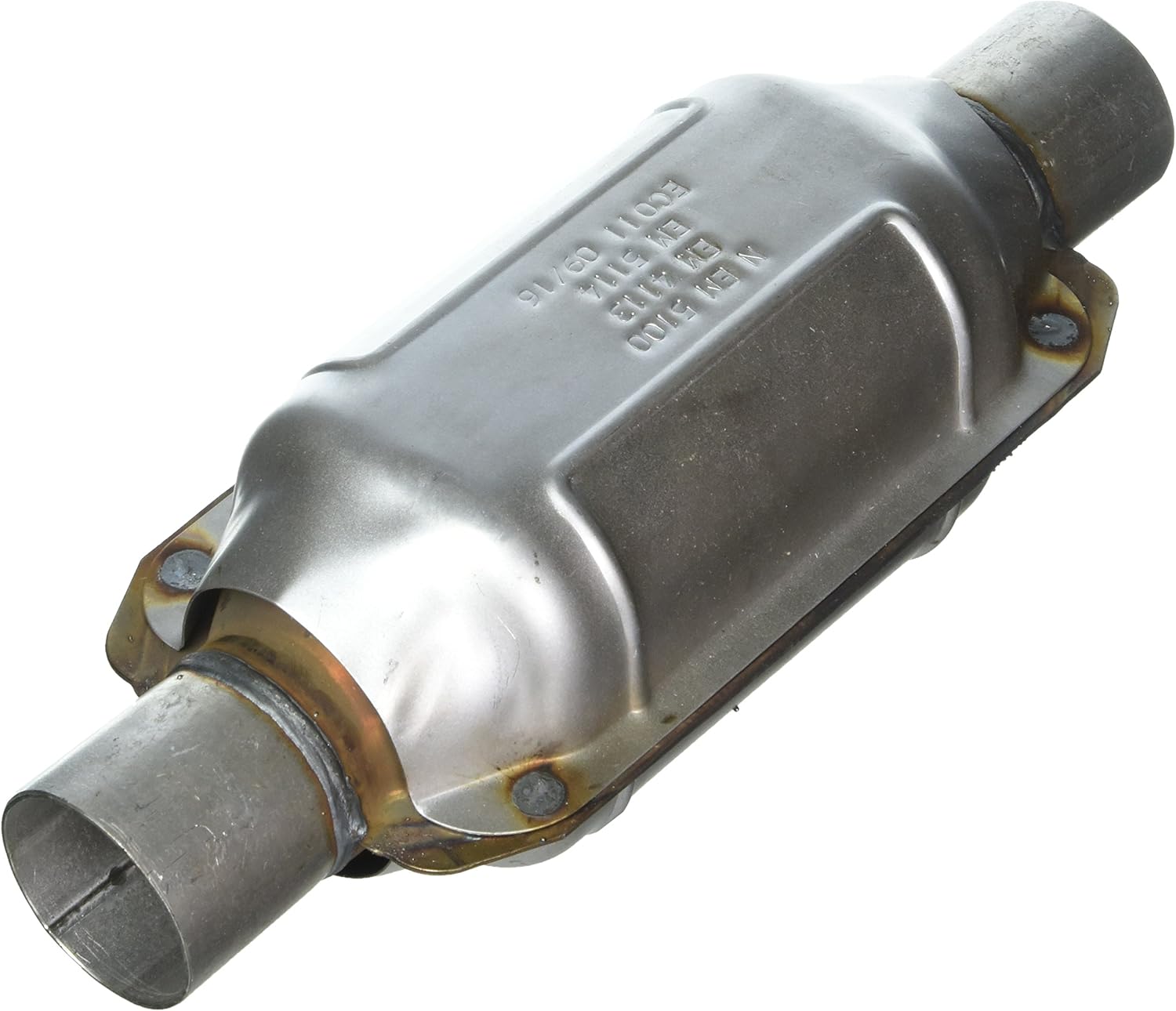
| Manufacturer | Eastern |
|---|---|
| Brand | Eastern Catalytic |
| Model | Converter |
| Manufacturer Part Number | 82724 |
This Eastern 82724 catalytic converter is a replacement exhaust emissions component designed to restore catalytic function on compatible Volkswagen Golf models. It installs in place of a failed converter and is typically welded or bolted into the exhaust line by a muffler shop or experienced DIYer. The unit is described as a machined, single-piece converter that aims to mimic factory fit and flow characteristics. In practice it can clear fault codes and return drivability when the original catalyst is degraded, and several buyers report straightforward fitment when matched to the correct application. Expect to need installation hardware and possibly welding rather than a bolt-on kit. Some reviewers reported noise from internal material movement and a small number saw check-engine light issues after install, which suggests sensor or fitment attention may be required. This is a budget-conscious, functional replacement rather than a performance or lifetime solution, so plan for professional installation if you need a precise sensor fit or guaranteed emissions testing outcomes.
Best for: Balanced buyers looking for an affordable, functional repair that restores emissions control on a Volkswagen Golf without demanding a premium OEM part. Ideal for owners who prioritize cost-effective reliability and are comfortable arranging professional installation if needed.
Less Ideal for: Buyers seeking a plug-and-play, guaranteed emissions-certified or performance-oriented converter should consider factory-quality replacements or vehicle-specific premium units instead.
- Designed as a direct replacement to restore catalytic function on compatible vehicles
- Machined exterior suggests consistent manufacturing and fitment
- Lower-cost alternative to dealer units that can resolve emissions-related drivability problems
- Simple single-piece design reduces installation complexity compared with multi-piece aftermarket assemblies
- May require welding or additional hardware for proper installation rather than being a ready-to-bolt unit
- Some users reported internal rattling noise after installation
- A few installs triggered check-engine lights, indicating possible sensor or fitment adjustments needed
Verdict: A budget-friendly, functional replacement catalytic converter for Volkswagen Golf owners who want to restore emissions performance but are prepared for professional installation and occasional fitment tuning.
2. MagnaFlow California Grade Catalytic Converter 418034 (2" Inlet/Outlet)

| Inlet/Outlet Diameter | 2" |
|---|---|
| Oxygen Sensor Location | Post Converter |
| Substrate Material | Ceramic |
| Finish | Stainless Steel |
This MagnaFlow California Grade catalytic converter is a universal, CARB-compliant replacement designed to keep the check engine light off and meet strict emissions rules. It is built with a stainless steel clamshell body, integrated heat shield, and factory-style oxygen sensor location so installers can position it where needed on the exhaust of a Volkswagen Golf; cutting and welding are required for fitment. The ceramic substrate and CARB registration mean it is intended to restore emissions control while resisting corrosion in daily driving and spirited use. Expect improved fitment options compared with vehicle-specific converters because of the adaptable universal design, but professional installation is recommended to achieve proper alignment and welding. The converter suits drivers who want a durable, emissions-legal upgrade, though it requires modification work and does not eliminate the need to ensure exact fit and clearances for a Golf exhaust layout.
Best for: Performance-oriented buyers who prioritize emissions-legal, durable exhaust components and are comfortable modifying or having their Golf's exhaust modified by a pro to achieve a precise installation.
Less Ideal for: Buyers seeking a bolt-on, vehicle-specific replacement or a DIY owner who wants a direct-fit part without cutting or welding should consider a model-specific converter instead.
- CARB-compliant for use in California and CARB states so it meets strict emissions requirements
- Stainless steel clamshell construction and aluminized steel heat shield for long-term corrosion resistance
- Factory-style oxygen sensor port location simplifies reinstalling the stock sensors
- Universal design provides flexibility to place the converter where needed on the Golf exhaust
- Ceramic substrate engineered for effective catalytic conversion under varied driving conditions
- Universal unit requires cutting and welding for installation rather than direct bolt-on fitment
- Not vehicle-specific so professional fitment is needed to ensure proper clearances and exhaust alignment
Verdict: A durable, CARB-legal universal converter that suits performance-focused Volkswagen Golf owners willing to accept professional modification for a precise fit.
3. MagnaFlow 99355HM Universal HM-Grade Catalytic Converter

| Inlet diameter | 2.25" |
|---|---|
| Outlet diameter | 2.25" |
| Oxygen sensor location | Midbed |
| Heat shield | Attached |
The MagnaFlow 99355HM is a universal, HM-grade catalytic converter built to meet Federal EPA OBDII emissions standards and intended for professional installation by cutting and welding into the exhaust. It uses a stainless steel clamshell body with an integrated heat shield and an OEM-style oxygen sensor port to help maintain factory emissions monitoring and reduce the chance of a check engine light. The universal design makes it adaptable to different exhaust layouts, and the HM-grade core is formulated to improve conversion of pollutants compared with basic aftermarket cats. Practical benefits include corrosion resistance from stainless construction and a mid-body O2 sensor location that suits many exhaust runs. Limitations are the need for fabrication or welding to fit a Volkswagen Golf application and the mixed long-term reliability reported by some users, so professional installation and careful fitment are important for lasting results.
Best for: Practical optimizers looking for a budget-conscious, factory-compliant replacement that balances emissions performance and durability while accepting that professional installation is required.
Less Ideal for: Drivers who need a guaranteed direct-fit, bolt-on replacement or who must meet state-specific certification beyond federal compliance should consider vehicle-specific converters or dealer options instead.
- Meets or exceeds Federal EPA OBDII emissions requirements for federally registered vehicles.
- Stainless steel clamshell construction with heat shield for improved corrosion resistance and durability.
- HM-grade catalyst formulation for stronger emissions conversion than basic replacement cats.
- Integrated O2 sensor port to maintain factory emissions monitoring and help prevent a check engine light.
- Universal weld-on design requires cutting and welding for fitment rather than bolt-on simplicity.
- Not approved for use in certain states with stricter rules and thus may not be legal everywhere.
- Some users report intermittent long-term reliability issues that may require replacement.
Verdict: A cost-effective, federally compliant universal cat that can restore emissions function on a Volkswagen Golf if you accept welding and careful installation.
4. PHILTOP High-Flow Stainless Steel Catalytic Converter (Rear)
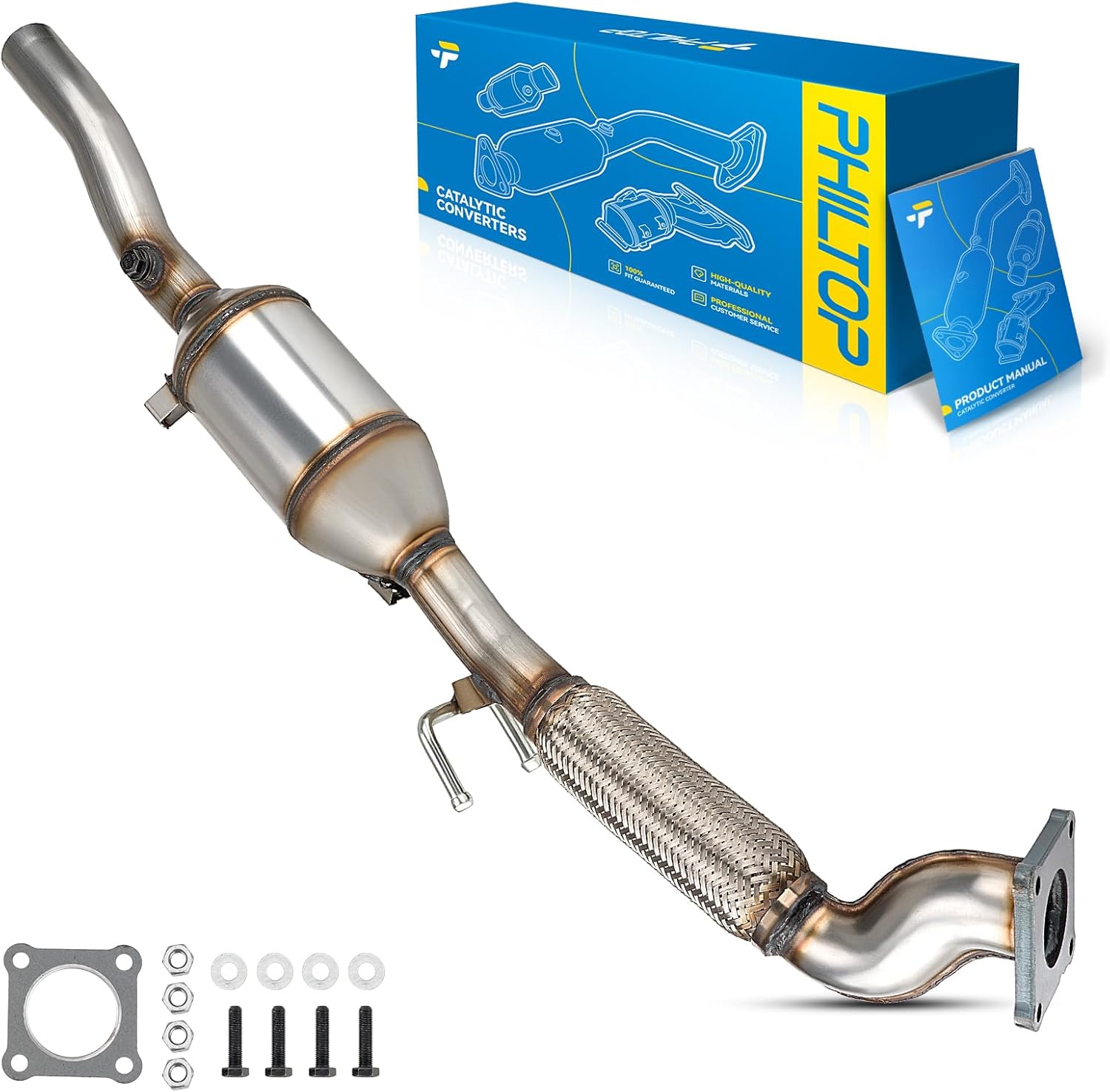
| Vehicle fitment | Volkswagen 2.0L (early 2000s) models |
|---|---|
| Position | Rear |
| Compliance | EPA compliant (not CARB) |
This PHILTOP high-flow catalytic converter is a direct-fit rear replacement intended for Volkswagen 2.0L models from the early 2000s. It installs in place of the factory rear converter and includes the necessary gaskets and hardware to simplify the swap. The stainless steel body and aluminized piping are described as corrosion resistant, while the double-layer ceramic carrier provides a dense honeycomb substrate aimed at increasing flow and oxygen storage compared with a clogged unit. In practice that means easier clearing of P0420/P0421-style codes and smoother engine operation after fitment. The converter is EPA compliant for most states, but not CARB-approved so it cannot be used where CARB compliance is required. Fitment reports show solid alignment with factory exhaust flanges, though a few buyers noted rough welds and occasional need for minor exhaust work on non-matching applications. Expect a straightforward mechanical replacement that improves flow and restores emissions performance on matching Volkswagen vehicles, but plan for a professional install if bolt removal or welding is needed.
Best for: Budget-conscious buyers who prioritize restoring emissions and engine smoothness on a Volkswagen 2.0L without paying OEM prices, and who are comfortable with a straightforward mechanical replacement.
Less Ideal for: Buyers who require CARB-compliant parts for their state or who demand factory-finish cosmetic fit and finish should look at higher-end or certified alternatives.
- Direct-fit rear replacement for compatible Volkswagen 2.0L applications
- Includes gaskets and hardware for installation
- Stainless steel body and aluminized piping resist corrosion
- High-flow double-layer ceramic carrier improves exhaust flow and oxygen storage
- Not CARB-compliant so ineligible for use in CARB-required states
- Some welds and machining can be rough compared with factory parts
Verdict: A cost-effective, direct-fit rear catalytic converter that restores flow and emissions function on compatible Volkswagen 2.0L cars, provided your state allows non-CARB aftermarket converters.
5. KAC Stainless Steel Catalytic Converter for 2001–2006 Volkswagen Golf/Beetle 2.0L

| Fitment | Volkswagen Beetle 2001-2005 / Golf 2001-2006 2.0L |
|---|---|
| Regulatory compliance | EPA OBD-II compliant (not CARB) |
| Manufacturer | KAC |
| Manufacturer Part Number | 2160EXP267KUS |
This KAC catalytic converter is a direct-fit replacement for Volkswagen 2.0L Golf and Beetle models from the early 2000s, engineered to restore emissions control and exhaust flow. It uses a fully encased ceramic honeycomb carrier with high-load precious metal catalysts to convert CO, HC, and NOx and is offered as a plug-and-play unit that requires no drilling or modification in most installs. The stainless steel housing and aluminized piping resist corrosion and the high-flow design aims to improve conversion efficiency and maintain engine performance. Practical benefits include easier installation for a DIYer or independent shop and EPA-compliant operation outside CARB states, which makes it a usable repair part for emissions failures. Limitations to note are that it is not CARB-compliant for California and a few other states and a minority of buyers report fitment or heat-shield alignment issues that may require minor adjustment during installation.
Best for: Reliability-focused buyers who need a straightforward, EPA-compliant replacement to clear emissions faults and restore normal exhaust function on older Volkswagen Golf/Beetle 2.0L cars.
Less Ideal for: Drivers in states that require CARB-compliant parts or owners who need a guaranteed factory-identical fit without any adjustment should consider CARB-approved or dealer-sourced options instead.
- Direct-fit design for 2001–2006 Volkswagen 2.0L models simplifies installation
- Stainless steel housing and aluminized piping improve corrosion resistance
- Honeycomb ceramic substrate with Pt, Rh, Pd catalysts for effective pollutant conversion
- High-flow design that can help maintain engine power and efficiency
- Not compliant with CARB regulations so not legal for use in certain states
- Some users report rear-section or heat-shield fitment requiring minor modifications
Verdict: A practical, direct-fit stainless steel catalytic converter that restores emissions control and exhaust flow for 2001–2006 Volkswagen 2.0L Golf and Beetle models.
6. PHILTOP High-Flow Stainless Steel Catalytic Converter for Volkswagen Jetta (Front)

| Position | Front |
|---|---|
| Manufacturer | PHILTOP |
| OEM Part Number | 54751, 1K0253058FJ, 5C0253059AM, 1K0254503C, 1K0254506T, 1K0254512R, 1K0254510T, 1K0254511P |
| EPA Compliance | EPA compliant (restricted in some states) |
This PHILTOP catalytic converter is a direct-fit replacement designed to restore emissions control and improve exhaust flow on compatible Volkswagen 2.5L front applications. It installs using the provided gaskets and hardware and includes an O2 sensor port so the original sensor can be reused, which simplifies a typical bolt-on swap. The stainless steel body and a high-temperature ceramic carrier with a dense honeycomb substrate are intended to resist rust and increase flow area, which can help clear P0420/P0421 codes and reduce backpressure compared with a clogged unit. Because it is EPA compliant, it is legal in most states but not for sale or installation in California and Colorado and may have restrictions elsewhere. Fitment appears accurate for the listed Volkswagen model years but a few users reported needing minor adjustments on non-matching vehicles, so confirm exact reference numbers before ordering. Expect professional help for rusty fasteners and occasional fit tweaks, but the unit delivers a practical, cost-effective replacement for owners needing a straightforward install and improved exhaust performance.
Best for: Buyers who prioritize convenience and a straightforward replacement that reinstalls factory-style emissions hardware without major fabrication, especially those wanting a quick fix to restore drivability and clear emissions codes.
Less Ideal for: Do not choose this if you need a CARB-compliant converter for use in California or Colorado or if you require a guaranteed bolt-on fit for a non-VW application without any modification.
- Direct-fit design with included gaskets and hardware reduces installation complexity
- Stainless steel construction resists corrosion for longer service life
- Includes O2 sensor port so existing sensor can be reused without modification
- High-temperature ceramic carrier and dense honeycomb substrate increase flow and help clear emission codes
- Not approved for sale or installation in California and Colorado
- Some units may require minor fitment adjustment or professional installation when exhaust bolts are corroded
Verdict: A practical, convenience-minded direct-fit replacement that restores emissions function and improves exhaust flow on compatible Volkswagen 2.5L front applications, provided you do not need CARB compliance.
7. Walker Ultra Direct-Fit Catalytic Converter 54473

| Brand | Walker |
|---|---|
| Item model number | 54473 |
| Applicable vehicles | OBDII vehicles 1996 and newer |
| Item Weight | 10 pounds |
This Walker Ultra direct-fit catalytic converter is a bolt-on replacement intended to restore emissions control and meet EPA requirements on compatible Volkswagen Golf models. It installs using factory-style hangers, flanges, brackets and heat shields so no welding or custom fabrication is normally required, which makes it a practical option during a muffler- or emissions-related repair. The converter uses a high-technology washcoat and a calibrated precious metal load to reduce tailpipe emissions to match the original application. Thick flanges and OE-style hangers add durability for road use, and the aluminized heat shield helps protect underbody components from heat. Buyers should note this is a vehicle-specific replacement and fitment must be verified for the Golf model year and engine; it is not a universal part. Also, while built to EPA-compliant standards, local aftermarket converter regulations vary so confirm legal use in your state before installation.
Best for: A risk-averse mainstream buyer seeking a factory-style, compliant replacement for a Volkswagen Golf who prioritizes straightforward installation and emissions conformity.
Less Ideal for: Buyers looking for a universal converter or those who need a custom-fabricated solution for modified exhaust systems should consider other options.
- Direct-fit design with factory-style hangers and flanges for bolt-on installation
- Built to EPA-compliant specifications for OBDII vehicles to restore emissions control
- OE-style washcoat and calibrated precious metal load aimed at matching original emissions performance
- Durable construction with thick flanges, brackets and aluminized heat shield for underbody protection
- Fitment is vehicle- and application-specific so verification is required before purchase
- May be restricted by local aftermarket converter regulations in some states
Verdict: A direct-fit, EPA-compliant replacement for Volkswagen Golf owners who want a factory-style catalytic converter without custom work.
Choosing the Right Volkswagen Golf Catalytic Converter: Key Factors to Consider
Fitment and Mounting Compatibility
Correct fitment is the foundation of a successful installation. A catalytic converter must match the Volkswagen Golf's exhaust layout, including pipe diameter, flange type, hanger positions, and oxygen sensor ports. Mismatched dimensions can cause leaks, stress on the exhaust system, or require costly modifications.
Confirming exact mounting points and sensor locations reduces installation time and avoids adapter use that can degrade performance. Some converters are direct-fit replacements, while others are universal and need custom adjustments. For a reliable repair, prioritize units with detailed fitment data for the specific Golf year and engine configuration.
Emissions Performance and Certification
Emissions reduction capability is the converter's primary function. Look for units tested to meet applicable regulatory standards and with clear documentation of conversion efficiency for pollutants like NOx, CO, and hydrocarbons. Certification information gives confidence that the part will help your vehicle pass inspection and reduce tailpipe emissions.
Manufacturer test data or third-party verification indicates consistent catalyst performance under a range of temperatures and operating conditions. Without this, you risk replacing a failed component with one that does not restore acceptable emissions levels.
Substrate and Catalyst Material
The internal substrate and catalyst coating determine how effectively the converter processes exhaust gases. Common substrates include ceramic monoliths or metallic substrates, each with tradeoffs in thermal shock resistance and flow characteristics. Catalyst coatings use precious metals that facilitate chemical reactions to convert pollutants.
Higher-quality substrates resist cracking and clogging, and more uniform catalyst coatings provide better long-term conversion efficiency. Consider the durability of the internal materials, especially if the vehicle sees frequent short trips or high-load operation, both of which affect catalyst longevity.
Thermal Durability and Resistance to Clogging
Catalytic converters operate under high temperatures and must withstand thermal cycling without performance loss. Thermal durability affects both the lifespan of the catalyst and its ability to maintain conversion efficiency over time. Converters that resist thermal degradation and sintering of the catalyst material will last longer.
Clogging from soot, oil contamination, or broken substrate pieces reduces exhaust flow and can cause drivability issues. Look for designs and materials that minimize risks of internal collapse and that tolerate typical engine byproducts encountered in Volkswagen Golf operation.
Sensor Integration and Backpressure
Modern vehicles rely on oxygen sensors and other monitoring devices that interface with the converter. Properly located sensor ports and predictable backpressure characteristics preserve engine management calibration and prevent false fault codes. A converter that alters backpressure significantly can affect fuel trim and performance.
Ensure the replacement accommodates your Golf's sensor count and spacing and maintains backpressure similar to the original unit. This helps keep the engine running smoothly and avoids diagnostic trouble codes related to emissions monitoring.
Installation Practicality and Serviceability
Consider how easy the converter will be to install and, if needed, remove in the future. Direct-fit units that reuse original mounting points and sensor fittings reduce labor and potential for leaks. Serviceable designs or those offering robust flanges and gaskets simplify future repairs.
Also review warranty terms and availability of replacement hardware. Parts that require extensive cutting, welding, or adapter pieces add complexity and may increase total repair time and potential points of failure.
How We Chose the Best Volkswagen Golf Catalytic Converter
We prioritized parts that provide correct fitment to Volkswagen Golf exhaust architectures and meet or exceed emissions control expectations. Key evaluation criteria included physical fit and mounting compatibility, substrate and catalyst material quality, certified emissions performance or regulatory compliance, thermal durability and resistance to clogging, and warranty and support options. We also considered ease of installation and whether the unit maintains required backpressure and sensor interfaces.Units were excluded if they lacked clear fitment data for Volkswagen Golf model lines, had no emissions certification information, or used unverified or low-grade catalyst materials. The final list focuses on converters that balance reliable emissions control, durable construction, and installation practicality for a Volkswagen Golf owner.
Our full evaluation process is outlined in our review methodology.
FAQ
What are common catalytic converter symptoms on a Volkswagen Golf?
Common signs include a persistent check-engine light, reduced engine power, rough idling, or a noticeable decrease in fuel economy. You may also notice a rotten-egg odor from the exhaust or engine hesitation during acceleration. These symptoms often indicate reduced conversion efficiency or internal blockage rather than unrelated engine issues.
Will a new catalytic converter fix a check-engine light on my Golf?
A new converter can resolve codes related to catalyst efficiency or oxygen sensor readings if the underlying cause is a failing converter. However, the light may remain if the sensors, wiring, or engine conditions that damaged the original converter are not addressed. It is usually best to diagnose the specific fault codes before replacing the part.
How important is correct CAT converter fitment for installation?
Fitment is very important because incorrect dimensions or missing sensor ports can cause exhaust leaks, improper sensor readings, and added stress on exhaust hangers. Direct-fit converters designed for the Volkswagen Golf's exhaust layout reduce modifications and help maintain factory backpressure and sensor placement. Universal parts may work but often require adaptation.
Can catalytic converter failure affect exhaust emissions on my Golf?
Yes. A failing or clogged converter reduces the vehicle's ability to convert pollutants, which can lead to higher tailpipe emissions and possible test failures. In some cases, a partially functional converter may still pass limits under certain conditions, but documented degradation usually correlates with measurable emissions increases.
What causes catalytic converter failure signs in cars like the Golf?
Failures often arise from prolonged contamination by oil or coolant, repeated short trips that prevent full catalyst light-off, physical damage from road debris, or upstream engine issues that produce excessive unburned fuel. Thermal shock from rapid temperature changes can also crack substrates and reduce effectiveness.
Is replacing the catalytic converter difficult on a Volkswagen Golf?
Difficulty varies by model year and exhaust configuration. Many direct-fit units can be installed with basic tools and moderate mechanical experience, while others may require cutting, welding, or lifting equipment. Properly matching fitment and sensor locations simplifies the job and reduces the need for additional modifications.
Conclusion
When choosing a catalytic converter for a Volkswagen Golf, prioritize correct fitment, verified emissions performance, and durable internal materials. Balance installation practicality with thermal durability and sensor compatibility to avoid future faults and maintain engine performance.Expect tradeoffs between ease of installation and universal flexibility. Focus on parts that match your Golf's exhaust layout and provide documentation of conversion efficiency to ensure reliable emissions control and long-term serviceability.
Explore More:
- Check out all Volkswagen Golf parts & accessories
- Explore Catalytic Converters Maintenance & Repair Guides
- Explore Exhaust & Emissions
- Browse all Auto Parts
