

Note: This article contains affiliate links. If you click on these links and make a purchase, I may earn a small commission at no extra cost to you. This helps support my research and content. Read my full affiliate disclosure here.
If your Corolla is running rough or showing an emissions-related alert, choosing the right catalytic converter matters for drivability and legal compliance. The correct converter restores exhaust flow, helps control pollutants, and reduces the risk of ongoing engine issues when properly matched to your vehicle.This guide presents seven shortlisted catalytic converters selected for Toyota Corolla owners. We evaluated each option for fitment accuracy, emissions effectiveness, and durability, and we explain the criteria to help you pick the best match. Read on to see which features matter most before you install a replacement.
Looking for other parts? See all Toyota Corolla parts & accessories.
Top Picks at a Glance
| Best Reviewed A top-rated pick with lots of positive feedback | ECHO AUTOMILES Catalytic Converter for Toyota Corolla L4 1.8L (2009–2013) |  |
| Most Popular A crowd favorite that many people choose with confidence | PHILTOP Catalytic Converter for 2009–2010 Toyota Corolla 2.4L (EPA Compliant) |  |
| Best Quality Built to a higher standard if you want something more solid | CIRconvert Catalytic Converter Compatible with 2009–2013 Toyota Corolla 1.8L (EPA Compliant) |  |
| Best Budget The cheapest option that still gets the job done reliably | FOMIUZY Front Catalytic Converter Kit for 2003–2008 Toyota Corolla 1.8L |  |
| Most Sold A high-volume bestseller chosen again and again | Walker CalCat 83101 Universal Catalytic Converter for Toyota Corolla |  |
| Best Value for Money The sweet spot between price and what you get | Walker Ultra Direct-Fit Catalytic Converter (model 16360) |  |
| Best Overall The best all-around choice for most situations | A-Premium Front Catalytic Converter Kit for Toyota Corolla (2009–2013) |  |
1. ECHO AUTOMILES Catalytic Converter for Toyota Corolla L4 1.8L (2009–2013)

| Vehicle fitment | Toyota Corolla 2009–2013 L4 1.8L |
|---|---|
| Emissions compliance | EPA compliant |
| Manufacturer | ECHO AUTOMILES |
| Manufacturer part number | YL420947-NEW |
This ECHO AUTOMILES catalytic converter is a direct-replacement unit intended for the 2009–2013 Toyota Corolla 1.8L (also listed for Matrix and Pontiac Vibe equivalents) and is built to meet federal EPA standards. It features a high-flow design aimed at reducing exhaust backpressure, which can help maintain engine responsiveness and support fuel efficiency after installation. Typical installation involves unbolting the old converter and welding or bolting this unit into place; several owners report minor fitment adjustments such as rotating or trimming a flange or using different hardware to align factory mounting points. The product targets emissions compliance rather than performance tuning, so you should expect a straightforward in-line replacement rather than a performance upgrade. Benefits include an EPA-compliant core and a design that supports normal drivability without triggering a check engine light when properly installed. Be aware this unit is restricted in certain states and may require small fabrication or hardware changes for perfect fit on some cars.
Best for: Reliability-focused buyers who prioritize restoring factory-level emissions compliance and steady day-to-day drivability for a 2009–2013 Toyota Corolla 1.8L without spending on dealer parts.
Less Ideal for: Buyers seeking a plug-and-play factory-identical swap with zero adjustment or those in jurisdictions that restrict aftermarket converters should look at state-approved dealer options instead.
- Built to meet federal EPA emissions standards for legal replacement in most states
- High-flow internal design to reduce backpressure and support engine responsiveness
- Matches common factory part numbers for direct-replacement intent
- Multiple customer reports of resolving check-engine issues after installation
- Some units require minor modification or flange repositioning to align with factory mounting points
- Not eligible for sale or installation in California and Colorado and restricted in some other states
Verdict A budget-friendly EPA-compliant replacement for 2009–2013 Corolla 1.8L owners who want reliable emissions performance but may need light fitment work during installation.
2. PHILTOP Catalytic Converter for 2009–2010 Toyota Corolla 2.4L (EPA Compliant)

| Vehicle fitment | 2009–2010 Toyota Corolla 2.4L |
|---|---|
| Certifications | EPA Compliant |
| Included hardware | OE-style gaskets and mounting hardware |
| Internal substrate | Honeycomb ceramic |
This PHILTOP catalytic converter is a direct replacement intended to restore emissions control and eliminate check-engine codes on a 2009–2010 Toyota Corolla 2.4L. It uses a honeycomb ceramic substrate to promote catalytic reactions while the high-flow design aims to limit backpressure, which can help maintain engine responsiveness and fuel economy. The kit ships with factory-style gaskets and hardware to match original mounting points, so most DIYers or independent shops can install it in a few hours without cutting or modification. Because it is EPA-compliant, it is suitable for federal emissions vehicles but not for states with stricter local requirements. User reports show mostly clean fitment and reduced exhaust noise when replacing a failing unit, though at least one buyer reported emissions trouble on a different vehicle, indicating that proper fitment verification and correct oxygen sensor operation remain important. Expect a reliable factory-quality replacement when the converter is matched to the Corolla listed fitment, and plan to verify compatibility before installation.
Best for: Buyers seeking a convenient, bolt-on factory-replacement catalyst for a 2009–2010 Toyota Corolla 2.4L who prioritize simple installation and restoring emissions compliance without dealer intervention.
Less Ideal for: Drivers in states with stricter local emissions regulations or those who prefer factory dealer parts and extended dealer-backed warranty support.
- Direct-fit design for the listed Corolla application so it aligns with original mounting points
- EPA-compliant for federal emissions, designed to clear emissions-related check-engine codes
- High-flow honeycomb ceramic substrate intended to reduce backpressure and help maintain drivability
- Includes OE-style gaskets and hardware to simplify installation without modifications
- Not legal for sale or installation in some states with stricter emissions rules
- Some customers on other vehicle fits reported post-installation emissions issues, so results can vary if fitment or sensors are incorrect
Verdict A convenient, direct-fit EPA-compliant replacement for the 2009–2010 Corolla 2.4L that simplifies DIY or shop installation while restoring emissions control.
3. CIRconvert Catalytic Converter Compatible with 2009–2013 Toyota Corolla 1.8L (EPA Compliant)

| Vehicle fitment | 2009–2013 Toyota Corolla 1.8L l4 |
|---|---|
| Certification | EPA certified |
| Material | High-strength stainless steel |
| Manufacturer | CIRconvert |
| Manufacturer part number | TC0913-37 |
This CIRconvert catalytic converter is a direct-fit replacement for 2009–2013 Toyota Corolla 1.8L applications and is built to meet EPA emissions standards. It installs in place of the factory unit and is intended to restore emission control, clear P0420-style codes, and return the vehicle to legal emissions levels in states that accept EPA-certified parts. The unit is manufactured from high-strength stainless steel with laser-cut flanges and welded joints for heat resistance and longer service life. Buyers will appreciate the plug-and-play fitment that in many cases avoids welding and the inclusion of a resonator section for correct exhaust routing and sound. It is not eligible for sale in California, Colorado, New York, or Maine due to local regulations, so fitment is limited geographically. Expect a solid factory-replacement style option that addresses catalytic converter failure symptoms, but budget-minded buyers should note this is a replacement part rather than an upgraded performance catalyst for power gains.
Best for: Performance-oriented buyers who prioritize restoring factory emissions control and reliable drivability on a 2009–2013 Toyota Corolla while keeping a close eye on build quality and fitment.
Less Ideal for: Buyers seeking a high-flow or competition catalytic converter to increase horsepower or those who need a California-compliant part should look at other specialized options.
- EPA-certified for emissions compliance in states that accept federal certification
- Direct-fit design for 2009–2013 Toyota Corolla 1.8L to simplify installation
- High-strength stainless steel construction with laser cutting and welded joints for corrosion and heat resistance
- Resonator-integrated design maintains correct exhaust routing and reduces installation modifications
- Cannot be sold or used in California, Colorado, New York, or Maine due to local emissions rules
- Not a performance-oriented high-flow racing catalyst so it will not increase engine power
Verdict A durable, EPA-compliant direct-fit replacement for 2009–2013 Corolla owners who want reliable emissions performance and factory-style fitment.
4. FOMIUZY Front Catalytic Converter Kit for 2003–2008 Toyota Corolla 1.8L
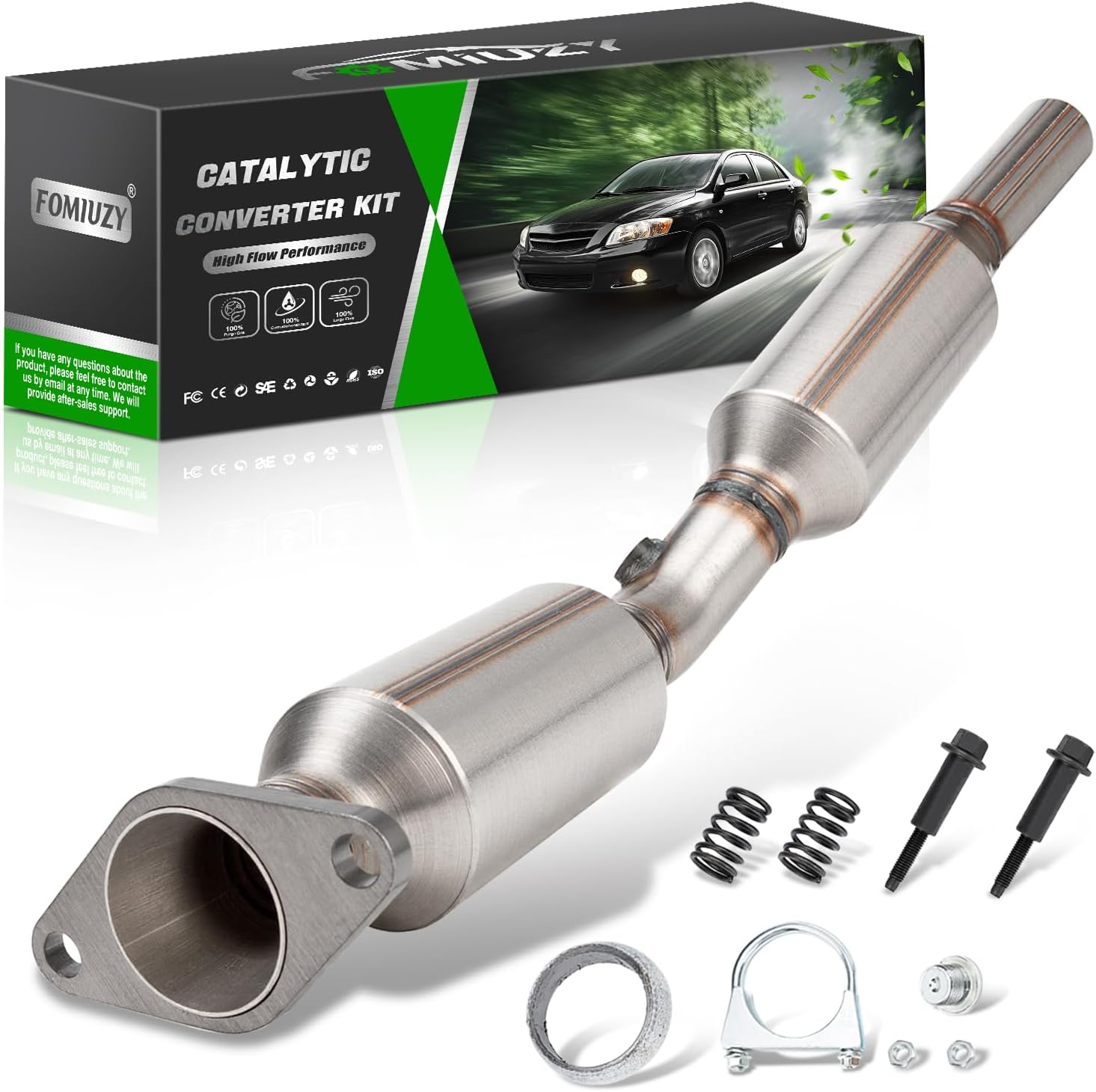
| Compatible models | 2003–2008 Toyota Corolla 1.8L |
|---|---|
| Body | Milled stainless |
| Carrier | Double-layer high-temperature ceramic |
This FOMIUZY catalytic converter kit is a budget-focused replacement designed to clear P0420 errors and restore exhaust emissions control on 2003–2008 Toyota Corolla 1.8L cars. It is supplied as a direct-replacement assembly with a milled stainless body and a high-temperature ceramic carrier intended to improve flow and oxygen storage compared with a depleted original. Installation is typically done at the manifold-to-exhaust connection and the seller recommends bolting then welding for best sealing. In real-world use the unit can return quiet idle and normalized emissions readings, and many buyers report an easy fit. However several installers report fitment mismatches, thicker flanges, short bolts, and occasional persistent check-engine lights after installation, so expect possible adjustments, gasket replacement, or welding work during installation. For owners who need a low-cost OEM-style replacement and are willing to handle or pay for minor fitting work, this kit can save money compared with dealer parts; buyers who want guaranteed perfect fitment without modification should consider factory-quality alternatives.
Best for: Budget-conscious Corolla owners who prioritize a low-cost replacement to clear emissions faults and are comfortable arranging minor shop work or modifications during installation.
Less Ideal for: Drivers seeking a guaranteed factory-exact swap with no fitment work or those in areas with stricter emission rules where certified parts are required.
- Designed specifically for 2003–2008 Toyota Corolla 1.8L fitment claims
- Stainless/aluminized piping and milled exterior resist corrosion
- High-temperature double-layer ceramic carrier for improved flow and oxygen storage
- Saves significantly versus dealer replacement parts
- Several reports of imperfect fitment to manifold or resonator requiring modifications
- Some users experienced persistent check-engine light or early failure
- Hardware in the kit may be short or inadequate, requiring aftermarket fasteners
Verdict A cost-saving replacement for 2003–2008 Corolla 1.8L owners that can fix emissions faults but may require minor fitting or hardware work during installation.
5. Walker CalCat 83101 Universal Catalytic Converter for Toyota Corolla
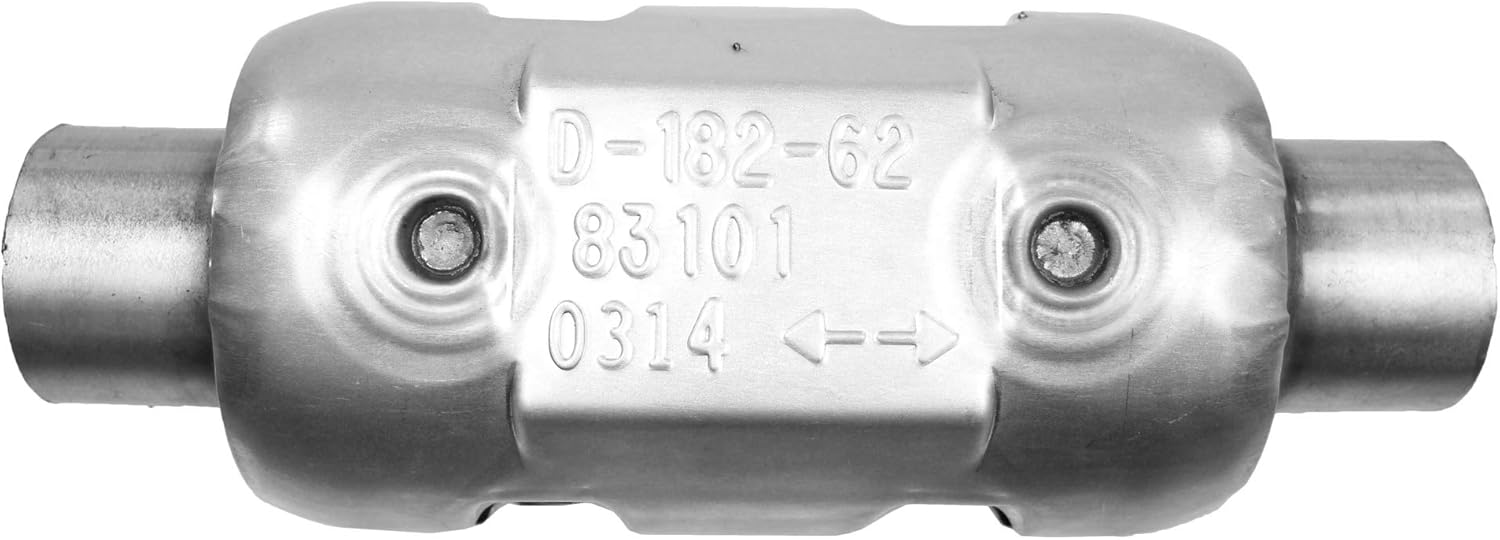
| Manufacturer | Walker Exhaust |
|---|---|
| Model | 83101 |
| CARB EO# | D-182-62 |
| Compatible vehicles | Toyota Corolla (model years listed in fitment notes) |
The Walker CalCat 83101 is a universal catalytic converter engineered to meet CARB requirements for OBDII vehicles and intended as a factory-quality replacement on Toyota Corolla models. It combines a stainless-steel body with an aluminized pipe and heat shields for improved durability, and the OE-style catalyst coating on the substrate is intended to deliver consistent emissions performance so the vehicle can meet smog checks. The unit is described as a direct-fit style with expandable bushings to simplify fitment, but it may still require some fabrication or welding depending on your exhaust layout. Technicians will appreciate that it is built for professional installation and offers a straightforward swap in many cases, while DIYers should expect to budget for shop labor if precise welding is needed. The converter balances regulatory compliance and longevity, though its universal nature means exact fitment needs verification before purchase and possible minor exhaust work during installation.
Best for: Risk-averse mainstream buyers who prioritize regulatory compliance and a durable, factory-quality replacement for a Toyota Corolla and prefer a solution installers can rely on.
Less Ideal for: Drivers seeking a bolt-on, no-modification performance converter or a strictly plug-and-play OEM-specific unit should consider a vehicle-specific direct-fit converter instead.
- CARB-compliant for states that require emissions-certified replacements
- Stainless-steel body with aluminized pipe and heat shields for corrosion resistance
- OE-style catalyst coating for consistent emissions control
- Expandable bushings and direct-fit design reduce the amount of custom piping work in many installs
- Universal design can require welding or minor fabrication for a perfect fit
- May need professional installation to ensure proper exhaust sealing and alignment
Verdict A CARB-compliant, durable universal catalytic converter made for Corolla owners who want a regulator-approved, installer-friendly replacement even if minor fabrication is sometimes required.
6. Walker Ultra Direct-Fit Catalytic Converter (model 16360)

| Brand | Walker |
|---|---|
| Model | Catalytic Converter |
| Manufacturer | Walker Exhaust |
| Item model number | 16360 |
The Walker Ultra 16360 is a direct-fit catalytic converter intended as a factory-style replacement for older Toyota applications. It installs in place of the original unit using OE-style hangers, flanges and heat shields so it can be bolted into the factory exhaust routing without welding or extensive modification. The unit is built with a high-technology washcoat and a calibrated precious-metal load to reduce tailpipe emissions to meet EPA compliance on appropriate vehicles. Practical benefits include a straightforward bolt-on installation for DIY mechanics, robust flanges and hangers that resist bending during fit-up, and heat shields where originally equipped to protect undercarriage components. Reported limitations include inconsistent inclusion of gaskets and no supplied new mounting bolts, so expect to reuse or source hardware and sealing rings separately; some buyers also noted no flow direction arrow on the body. For owners seeking an affordable, factory-replacement style converter to clear catalyst-related codes or pass inspection, this is a cost-effective option, though you should plan for small extra parts during installation.
Best for: Practical optimizers who want a budget-conscious, factory-replacement catalytic converter that restores emissions function and lets them perform a DIY installation to extend the vehicle's usable life.
Less Ideal for: Buyers seeking a performance-oriented or long-term high-mileage OEM equivalent may prefer dealer-sourced or higher-end converters; this unit is aimed at cost-effective replacement rather than premium longevity.
- Direct-fit design with factory-style hangers and flanges for bolt-on installation without welding
- EPA-compliant washcoat and precious-metal loading aimed at restoring emissions performance
- Thick flanges and brackets that add strength and simplify alignment during installation
- Includes factory-style heat shields when originally equipped to protect underside components
- Gaskets and new mounting bolts may not be consistently included, requiring additional parts purchase
- No flow direction marking on the converter body which may require confirmation before installation
Verdict A cost-effective, direct-fit catalytic converter that restores emissions compliance for older Toyota vehicles but may require separate gaskets and hardware for installation.
7. A-Premium Front Catalytic Converter Kit for Toyota Corolla (2009–2013)
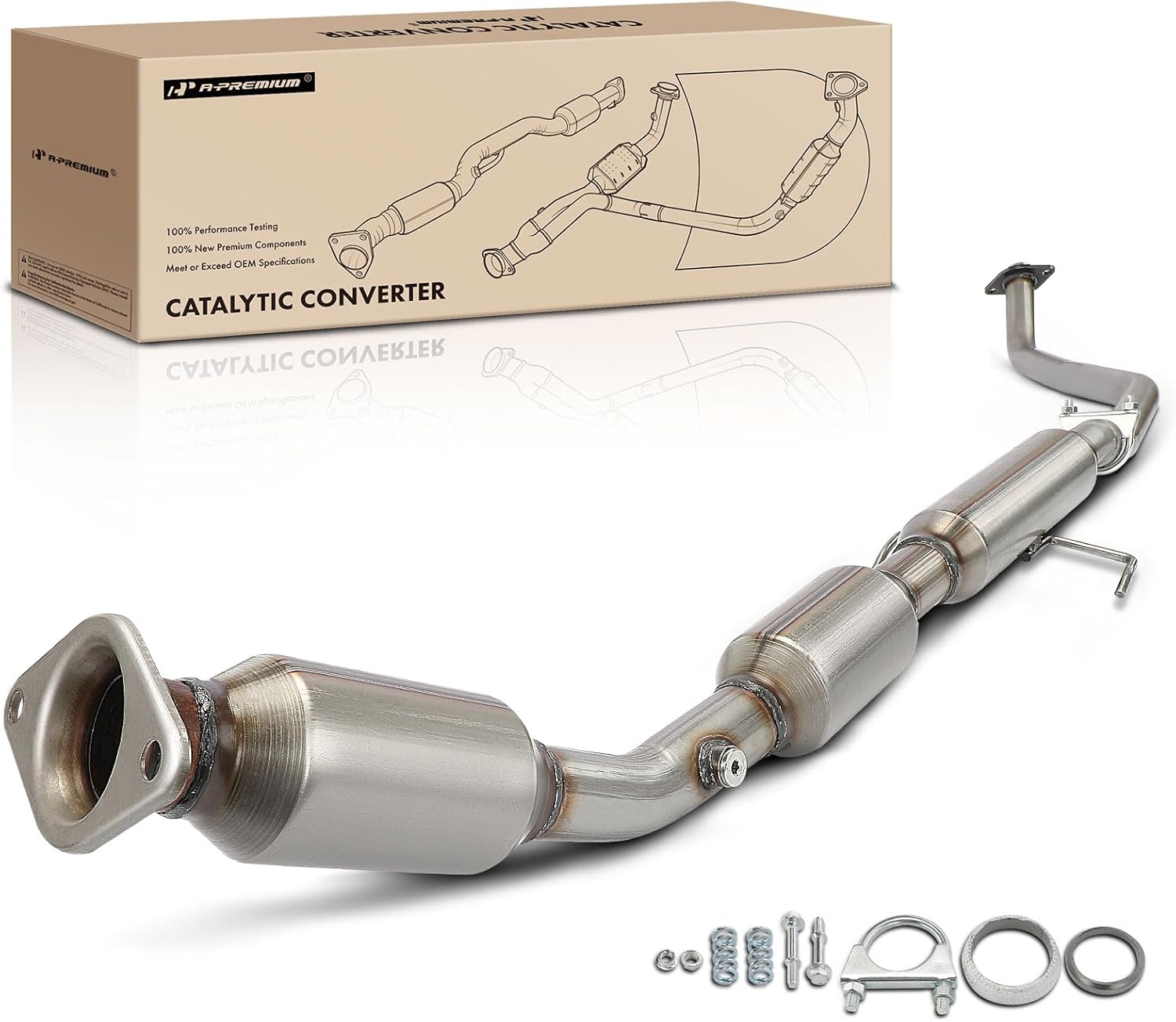
| Vehicle fitment | Toyota Corolla 2009-2013 L4 1.8L |
|---|---|
| Position | Front |
| Material | Stainless Steel |
| Inlet/Outlet | 2 Bolt Welded Flange |
| Gasket & Bolts | Included |
This A-Premium front catalytic converter replaces the factory unit on Toyota Corolla 2009–2013 1.8L engines and installs in the vehicle's front exhaust position. It is built from stainless steel with welded two-bolt flanges, includes the necessary gaskets and bolts, and claims EPA compliance for federal emissions. In practice the unit is used as a direct replacement when the original converter is damaged or has failed emissions checks; customers report correct O2 sensor bung placement and factory-style hanger locations that simplify installation and reduce the need for modification. The stainless construction and reinforced flanges should resist corrosion better than low-cost alternatives, and the kit comes with a one-year unlimited-mileage guarantee. Limitations to note are state restrictions on aftermarket EPA converters and the need for professional welding in some installs, plus a few reports of damaged units in transit that required returns.
Best for: Balanced all-round buyers who want a reliable, factory-style replacement for a Corolla's failed catalytic converter without chasing OEM parts or expensive dealer repairs.
Less Ideal for: Drivers in states with strict aftermarket converter rules or those who need a guaranteed state-compliant unit should seek a converter specifically certified for their state or a dealer-supplied part.
- Direct-fit design for Toyota Corolla 2009–2013 reduces fabrication and fitment time
- Stainless steel construction and thick flanges improve corrosion resistance and durability
- Includes gaskets and bolts so you get a complete front converter kit
- O2 sensor bung, hangers, and flange locations match factory positions for easier installation
- Not legal for sale or installation in certain states under local regulations
- Some buyers reported damaged units requiring replacement or refund
- Professional welding may be required for installation on some vehicles
Verdict A practical, direct-fit stainless steel front catalytic converter for 2009–2013 Corolla owners who want a near-factory replacement without buying OEM parts.
Choosing the Right Toyota Corolla Catalytic Converter: Key Factors to Consider
Fitment and Mounting Compatibility
Accurate fitment is the foundation of a successful catalytic converter replacement. The converter must align with factory mounting points, flange types, and oxygen sensor locations to avoid exhaust leaks and ensure correct sensor readings.
Poor fitment can lead to exhaust leaks, rattling, or stress on adjacent exhaust components. Choosing a unit with documented compatibility for your Corolla chassis and model year reduces installation time and minimizes the need for modifications.
Emissions Conversion Efficiency
The core purpose of a catalytic converter is to convert harmful gases into less harmful gases. Look for specifications about substrate cell density and washcoat formulation because these influence how effectively the converter handles hydrocarbons, carbon monoxide, and nitrogen oxides.
Higher conversion efficiency helps the vehicle meet emissions standards and reduces the likelihood of failing emissions inspections. It also contributes to more stable long-term exhaust system performance when matched to the engine’s output and fuel characteristics.
Oxygen Sensor and OBD-II Compatibility
Modern engines rely on upstream and downstream oxygen sensors to monitor catalyst performance. A replacement must maintain proper sensor positioning and signal characteristics so the vehicle’s onboard diagnostics can accurately assess catalyst efficiency.
If sensor ports are in the wrong location or the converter alters exhaust flow excessively, you may trigger check engine alerts or get incorrect feedback to the engine control unit. Verify that the unit supports the same number and placement of sensors as the original equipment.
Durability and Materials
Catalytic converters operate at very high temperatures and face exposure to road debris and corrosion. Materials and construction quality directly affect longevity. Look for corrosion-resistant shells, robust welds, and substrates designed to withstand thermal cycling.
A durable unit reduces the chance of cracks, substrate breakage, or enclosure deterioration that can diminish performance or create rattles. Consider how the converter is protected against contamination from oil or coolant leaks, which can prematurely degrade the catalyst.
Backpressure and Engine Performance
Catalytic converters introduce some restriction in the exhaust system. The right design balances conversion efficiency with acceptable backpressure for the engine. Excessive restriction can reduce power and fuel efficiency, while too little catalytic volume may compromise emissions control.
Choose a converter sized appropriately for the engine displacement and exhaust flow of the Corolla model in question. Matching backpressure characteristics helps maintain normal throttle response and keeps engine loads within designed parameters.
Legal Compliance and Certification
Emissions regulations vary by region, and some replacement converters carry certifications or emissions compliance statements. Selecting a converter that meets applicable regulatory standards helps ensure the vehicle remains legal to operate and can pass required inspections.
Check for documented certifications or compliance claims tied to specific model years and engine types. Avoid units lacking clear regulatory information if compliance is a concern in your area.
FAQ
What are common catalytic converter symptoms I should watch for?
Common signs often include a persistent check engine light, reduced engine power, poor fuel economy, or unusual exhaust smells. You may also notice rattling noises if the internal substrate is damaged. These symptoms usually develop gradually but can vary depending on the root cause.
Will a faulty catalytic converter cause a check engine light?
Yes, a failing converter frequently triggers an emissions-related check engine alert because oxygen sensor readings before and after the catalyst diverge. The vehicle’s diagnostics monitor catalyst efficiency and often set a code when conversion falls below expected levels.
Can I replace the catalytic converter myself?
DIY replacement is possible if you have moderate mechanical skills and the right tools. Successful installation depends on correct fitment, proper sensor placement, and secure exhaust connections. Some installations may require rusted hardware removal or welding, which can complicate a home repair.
How long does a catalytic converter usually last?
Lifespan varies widely depending on driving conditions, exposure to contaminants, and maintenance. Many converters last for years under normal use, but damage from oil or coolant leaks, physical impact, or prolonged engine misfires can shorten service life. Regular inspections help identify issues early.
Does the catalytic converter affect exhaust emissions?
Yes, the converter is the primary component that reduces hydrocarbons, carbon monoxide, and nitrogen oxides in the exhaust stream. Its condition directly influences whether the vehicle meets emissions standards and can impact inspection outcomes in regulated areas.
How We Chose the Best Toyota Corolla Catalytic Converter
Our selection focused on components that meet vehicle-specific fitment requirements and provide consistent emissions control for Toyota Corolla applications. We prioritized converters that match factory mounting points and flange dimensions, use appropriate substrate and washcoat formulations for effective catalytic conversion, and offer robust thermal and corrosion resistance for long service life. We also considered backpressure characteristics to avoid adverse effects on engine performance and compatibility with onboard diagnostics so the vehicle can monitor catalyst efficiency.Excluded items included universal or generic units that require extensive modification, open-cell or non-catalytic aftermarket parts, and options lacking clear fitment data for Corolla models. Final choices emphasize verified fitment details, emissions conversion efficiency, and build quality rather than price alone.
Our full evaluation process is outlined in our review methodology.
Conclusion
When replacing a Toyota Corolla catalytic converter, prioritize units with precise fitment, proper oxygen sensor compatibility, and proven emissions conversion capability. Balancing conversion efficiency with acceptable backpressure preserves engine performance while addressing emissions obligations.Consider durability and legal compliance as secondary priorities. Verifying fitment details and matching the converter to your Corolla’s engine and model year reduces installation headaches and helps ensure the replacement performs as intended over time.
Explore More:
- Check out all Toyota Corolla parts & accessories
- Explore Catalytic Converters Maintenance & Repair Guides
- Explore Exhaust & Emissions
- Browse all Auto Parts
