

Note: This article contains affiliate links. If you click on these links and make a purchase, I may earn a small commission at no extra cost to you. This helps support my research and content. Read my full affiliate disclaimer here.
If you drive a Nissan Sentra, choosing the right catalytic converter affects emissions, drivability, and long-term engine health. A properly matched unit restores exhaust control and helps maintain engine efficiency while meeting emissions expectations. This guide shortlists the top options for the Nissan Sentra and explains the main factors we considered, including fitment accuracy and emissions performance. Read on to see the key criteria used to select these top picks and to learn what to check before installation.
Looking for other parts? See all Nissan Sentra parts & accessories.
Top Picks at a Glance


1. Anytek Front Catalytic Converter compatible with Nissan Altima/Sentra 2.5L (Front)

| Position | Front |
|---|---|
| Manufacturer Part Number | 10080128-ANK02 |
| OEM Part Number | 641519, 40810, 16456 |
| Body Material | 409L Stainless Steel Shell |
| Restricted States | CA, CO, NY, ME |
This Anytek front catalytic converter is a direct-fit replacement intended for Nissan Altima and Sentra 2.5L engines from the early 2000s and is used to restore emissions control and allow the vehicle to pass inspection. It is built with a 409L stainless steel shell and high-temperature welding to resist corrosion and heat, and the internal high-flow design aims to keep exhaust flow reasonable while treating emissions. Typical installation is bolt-on where the unit matches the factory mounting, though several customers reported minor fitment and heat-shield alignment adjustments during installation. It is not certified for use in California, Colorado, New York, or Maine. Practical benefits include apparent compatibility with the referenced reference numbers and a design focused on durability for road use, plus a one-year warranty for basic support. Expect occasional adjustment work at the heatshield or minor welding in rare cases rather than perfect factory-fit precision.
Best for: A reliability-focused buyer who prioritizes restoring proper emissions performance with a durable, factory-replacement style part to keep an older Nissan functioning and street-legal.
Less Ideal for: Drivers in restricted states requiring certified converters or those wanting a guaranteed perfect factory-fit without any installation adjustments should look for alternative certified options.
- Direct-fit design for Nissan Altima/Sentra 2.5L model years listed, simplifying replacement.
- 409L stainless steel shell and high-temperature welding for corrosion and heat resistance.
- High-flow internal design that supports exhaust flow while treating emissions.
- Includes manufacturer reference numbers for matching and a one-year warranty for basic support.
- Not legal for use in California, Colorado, New York, or Maine due to restricted-state compliance.
- Some units may require minor adjustment to heat shields or bolt alignment during installation.
Verdict A durable, budget-friendly factory-style front catalytic converter for Nissan 2.5L Sentra/Altima owners who need reliable emissions replacement outside restricted states.
2. AUTOSAVER88 Catalytic Converter Compatible with 2007–2012 Nissan Sentra 2.0L

| Vehicle fitment | 2007-2012 Sentra 2.0L |
|---|---|
| Certification | EPA federal standard |
| Shell material | T409 stainless steel |
| Position | Center |
This AUTOSAVER88 catalytic converter is a direct-fit replacement for the 2007–2012 Nissan Sentra 2.0L that installs in place of the factory unit and restores exhaust emissions control. It is typically used when a vehicle throws a P0420/P0430 code or fails emissions testing and needs a like-for-like replacement. The part ships with gaskets and hardware and the flange and mounting holes are built to factory-spec dimensions so it bolts in without welding for most installs. Internally it uses a ceramic substrate with metal catalysts to provide a large reactive surface area, and the T409 stainless steel shell resists heat and corrosion for longer life. It is EPA certified and intended to meet federal emissions requirements. Practical benefits are the easier fitment compared with universal cats and lower cost versus dealer replacements. Limitations to note include mixed reports on included hardware quality and flex section durability, and some buyers experienced difficulty reaching manufacturer support for warranty help, so professional installation and inspection of supplied bolts and gaskets is recommended.
Best for: Buyers who prioritize convenience and want a ready-to-install, factory-style replacement that gets a 2007–2012 Sentra 2.0L back on the road quickly without heavy modification.
Less Ideal for: Drivers who need guaranteed long-term dealer-level support or who prefer an OEM-sourced part with direct manufacturer service should consider alternatives.
- Direct-fit design with factory-spec flange and mounting holes for bolt-on installation
- EPA federal standard certified for emissions compliance
- T409 stainless steel shell for improved heat and corrosion resistance
- Includes gaskets and hardware to simplify installation
- Some buyers report weak or incorrect installation hardware and flex-section durability issues
- Manufacturer support and warranty contactability has been reported as unreliable
Verdict A convenient, EPA-certified direct-fit replacement for the 2007–2012 Sentra 2.0L that offers factory-style fit and lower cost but watch for hardware quality and warranty support issues.
3. VAVICARS Catalytic Converter Direct-Fit for Nissan Sentra

| Fitment | Nissan Sentra 2009-2012 2.0L; 2013-2018 1.8L |
|---|---|
| Approval | EPA approved (federal models) |
| Shell material | 409L stainless steel |
This VAVICARS catalytic converter is a direct-fit replacement intended for Nissan Sentra Federal-emissions models from 2009–2018 (fit varies by engine). It installs in the exhaust system to restore emissions control and reduce pollutants, and the seller states the part is EPA approved for federal models. Construction uses 409L stainless steel and an internal ceramic substrate with metal catalysts, which promises corrosion and high-temperature resistance for longer service life. In practice this unit works like other replacement converters: professional installation is recommended and buyers should verify flange alignment and inlet/outlet lengths before installing. Several owners report excellent fit and performance, though a few found the unit required minor modification or couplers to line up with their vehicle. The EPA certification and factory-style molding make it a strong performance-focused option for someone restoring emissions compliance or replacing a failed converter, but verify exact fitment for your Sentra variant before committing to purchase.
Best for: Performance-oriented buyers who prioritize restoring factory-level emissions control and durable construction for a Nissan Sentra and want a higher-quality aftermarket replacement.
Less Ideal for: Buyers in states with stricter local emissions regulations or those unwilling to verify measurements and arrange professional installation should look elsewhere.
- EPA-approved for federal-emissions models which supports emissions compliance
- 409L stainless steel shell for improved corrosion and heat resistance
- Direct-fit design using original car mold aims to match factory mounting points
- Internal ceramic substrate with metal catalysts for longer catalytic life
- Fitment can vary by vehicle and some buyers needed couplers or minor modification to complete installation
- Not legal for sale or installation in certain states with separate emissions rules
Verdict A beefy, EPA-approved direct-fit replacement aimed at Sentra owners who want a durable, performance-focused catalytic converter if they confirm fitment for their specific vehicle.
4. PHILTOP High-Flow Stainless Steel Catalytic Converter Kit for Nissan Sentra 2013–2019
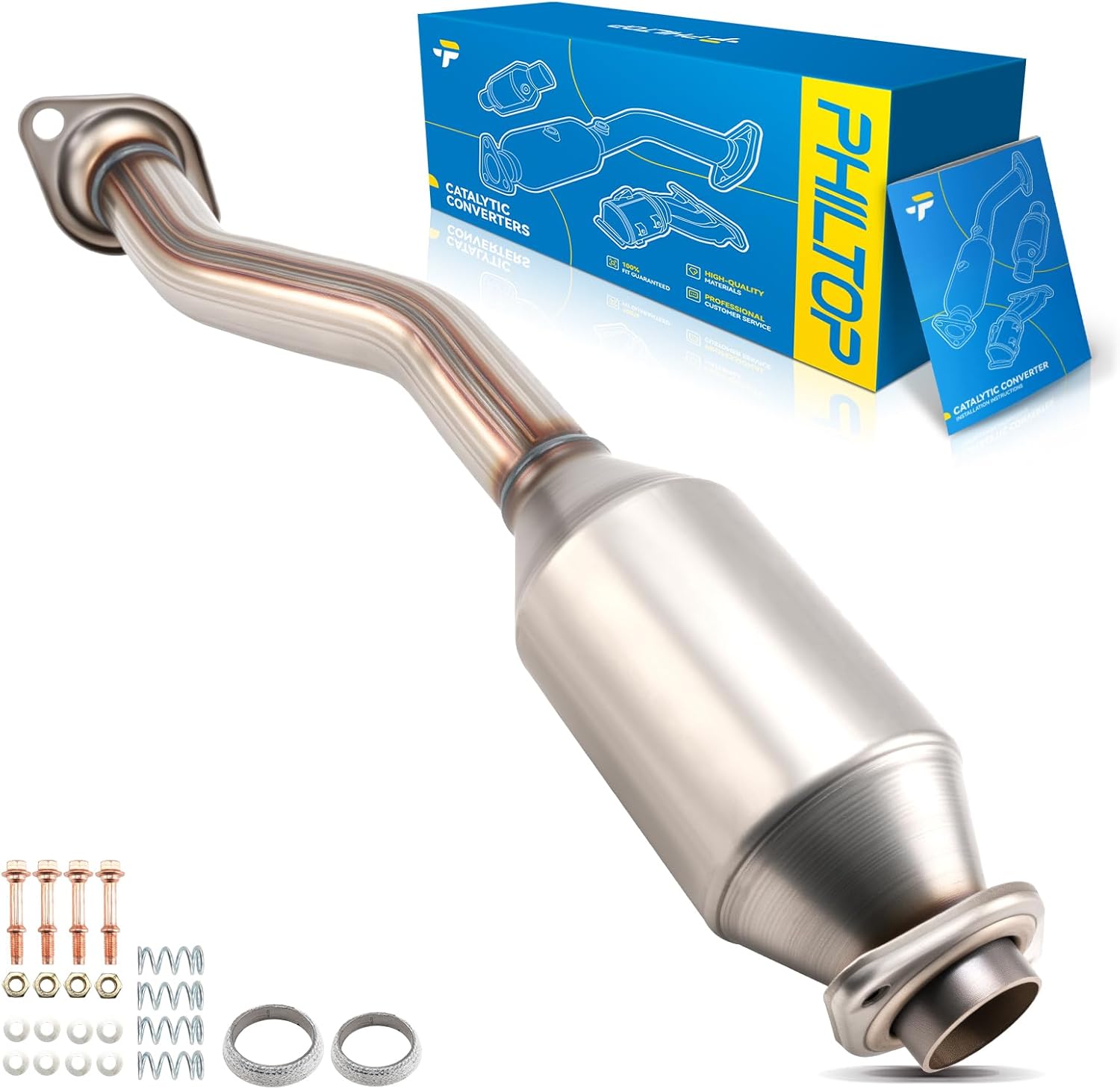
| Fitment | Nissan Sentra 2013-2019 1.8L (rear) |
|---|---|
| Shell material | 409L stainless steel |
| Position | Rear |
| EPA status | EPA compliant |
This PHILTOP kit provides a budget-friendly replacement for the rear catalytic converter on Nissan Sentra 2013–2019 1.8L vehicles. It uses a 409L stainless steel shell and welded connections intended to resist heat and corrosion, and the seller includes gaskets and hardware to simplify installation. The converter is described as plug-and-play with no modifications needed for many installs, and its high-flow design aims to restore exhaust flow and clear converter-related engine codes so the car can pass emissions checks. Customers report straightforward fitment on multiple Sentra and similar Nissan/Kia applications, though some owners needed minor pipe coupling, thread chasing for oxygen sensor ports, or better flange fasteners during install. The unit is EPA compliant, which restricts sale or installation in some states. As a lower-cost aftermarket option it offers good short-term value, but longevity and perfect fitment can vary compared with factory-quality parts, so plan for basic exhaust tools or a shop to handle any final trimming or flange work.
Best for: Budget-conscious owners who need a cost-effective replacement to restore exhaust flow and clear emissions-related codes on a Nissan Sentra 2013–2019 1.8L and who are comfortable with basic exhaust work or paying a small shop fee.
Less Ideal for: Buyers seeking a long-term factory-quality replacement or guaranteed bolt-on fit without any trimming should consider higher-end factory-replacement converters or dealer parts instead.
- Direct-fit design for Nissan Sentra 2013–2019 1.8L to replace the rear converter
- 409L stainless steel shell and welded joints for improved heat and corrosion resistance
- Includes gaskets and hardware to simplify installation and reduce parts hunting
- EPA compliant for emissions standards where allowed
- May require minor pipe coupling, trimming, or chasing oxygen sensor threads for a perfect fit
- Flange bolts supplied may be low quality and some buyers replaced them with stronger fasteners
- Not available for installation in certain states due to emissions regulations
Verdict A cost-conscious, high-flow replacement that restores exhaust function for Sentra 2013–2019 owners, though small fitment tweaks or stronger hardware may be needed for best results.
5. A-Premium Catalytic Converter Kit compatible with Nissan Sentra 2013–2019 1.8L

| Vehicle Fitment | Nissan Sentra 2013-2019 L4 1.8L |
|---|---|
| EPA Compliant | Yes (restricted in some states) |
| Inlet/Outlet Type | 2 Bolt Welded Flange (1 inlet, 1 outlet) |
| Body Material | Stainless Steel |
| Bolts Included | Yes |
This A-Premium catalytic converter kit is a direct-fit replacement intended to restore emissions control on Nissan Sentra 2013–2019 L4 1.8L models with federal emissions. It installs between the manifold and exhaust using the included 2-bolt welded flanges and comes with bolts and springs to simplify a dealer-style swap or a competent DIY installation. The unit is stainless steel and EPA-compliant for use outside restricted states, so it should clear catalyst-related check-engine codes and help the vehicle pass emissions testing when matched to the correct emissions family. Some buyers reported minor fitment alignment issues and having to reuse original gaskets or hardware in places, so expect small adjustments during installation rather than perfect factory-exact mating. The seller provides a one-year unlimited-mileage warranty and the design focuses on practical restoration of function rather than performance gains.
Best for: Risk-averse mainstream buyers who prioritize restoring factory emissions function and avoiding repeated repairs, typically owners wanting a straightforward replacement to clear a catalyst-related code and pass emissions.
Less Ideal for: Drivers in states with stricter aftermarket emissions regulations or those seeking an exact factory-original part fit without any minor installation adjustments should consider alternatives.
- Direct-fit design made for Nissan Sentra 2013–2019 1.8L federal-emissions to replace a failing converter
- Stainless steel construction that resists corrosion compared with painted or untreated parts
- Includes mounting hardware such as bolts and springs to reduce the need to source extra parts
- EPA-compliant for federal-emissions vehicles so it can resolve catalyst-related check-engine codes
- Not legal for sale or use in California, Colorado, New York, and Maine due to state emissions rules
- Some users reported minor flange misalignment and needed to reuse or modify existing gaskets during installation
Verdict A practical, direct-fit stainless catalytic converter kit to restore emissions function on federal-spec 2013–2019 Nissan Sentras, but it is not street-legal in several states and may need minor installation adjustments.
6. JT Exhaust Catalytic Converter for 2002–2006 Nissan Altima / 2002–2005 Nissan Sentra 2.5L (EPA Compliant)
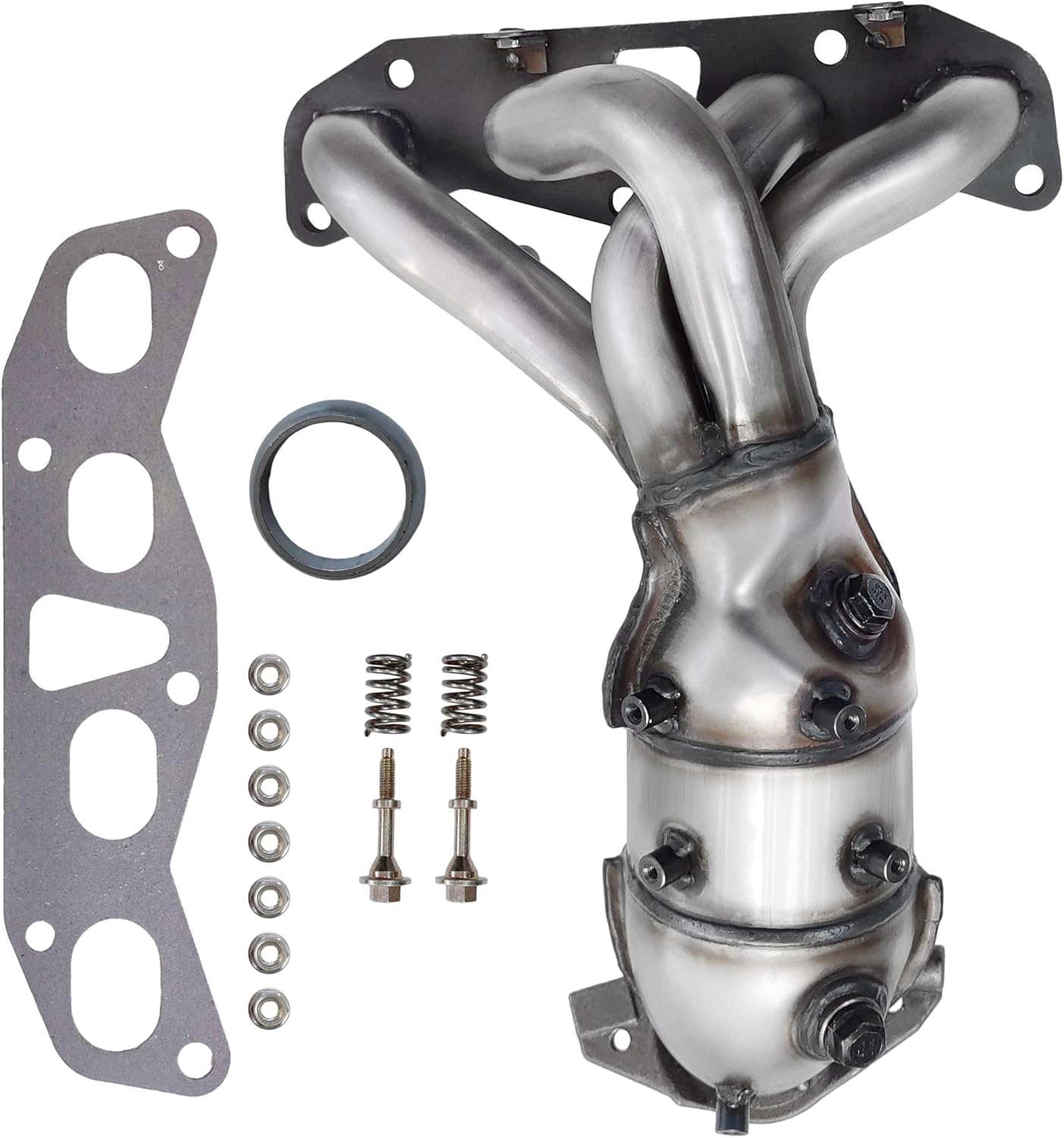
| Vehicle fit | 2002–2006 Nissan Altima; 2002–2005 Nissan Sentra 2.5L |
|---|---|
| Emission compliance | EPA OBDII |
| Substrate | OEM-grade honeycomb ceramic |
| Manufacturer | JT |
This JT Exhaust catalytic converter is a direct-fit replacement intended to restore emission control on 2002–2006 Nissan Altima and 2002–2005 Nissan Sentra 2.5L engines. It uses an OEM-grade honeycomb ceramic substrate with extra precious metal loading to improve conversion efficiency and meet EPA OBDII requirements. Installation is aimed at being straightforward thanks to a direct-fit design informed by 3D scanning, so a DIYer or independent shop can swap it in without extensive modification in most cases. Practical benefits include lower emissions to clear check-engine codes and a construction meant to match factory form and function. Reported issues in some user feedback include inconsistent weld quality and occasional missing hardware, so buyers should inspect the unit and mounting parts before installation and be prepared to address fitment or welding defects if they occur. For budget-minded buyers who need a compliant replacement that aims to balance cost and performance, this unit is a reasonable option provided you verify fit and welds on arrival.
Best for: A practical optimizer looking for an affordable, compliant replacement catalytic converter that restores emissions function and can be inspected and adjusted by a home mechanic or independent shop.
Less Ideal for: Buyers who want a guaranteed showroom-quality, weld-perfect unit out of the box or those unwilling to perform basic fitment checks and minor corrective work should consider higher-end or dealer-sourced options.
- EPA OBDII compliant design intended to meet emissions requirements
- Direct-fit design using 3D scan data for simpler installation
- Extra precious metal catalyst loading to improve conversion efficiency
- OEM-grade honeycomb ceramic substrate for factory-like performance
- Some customer reports of poor welds and fitment variation requiring repairs
- Occasional missing mounting hardware reported by buyers
Verdict A budget-focused, EPA-compliant direct-fit replacement that delivers solid emissions performance for Sentra 2.5L owners if you inspect for fitment and weld quality on arrival.
7. pulcherflow Catalytic Converter for 2007–2012 Nissan Sentra 2.5L (Front)

| Vehicle Fitment | 2007–2012 Nissan Sentra 2.5L |
|---|---|
| Position | Front |
| Material | Stainless steel shell |
| Compliance | EPA compliant (federal models) |
This pulcherflow catalytic converter is a direct-fit front replacement for 2007–2012 Nissan Sentra 2.5L engines intended to restore emissions performance and clear related trouble codes. It uses an enlarged honeycomb substrate with increased precious metal loading to improve conversion efficiency and reduce tailpipe pollutants, and is housed in a stainless steel shell with mandrel-bent tubing to resist corrosion and heat. The unit ships with installation holes, gaskets, and hardware to simplify swapping it into the factory exhaust layout, so a professional or competent DIYer can bolt it in without custom fabrication. Important limitations are legal: the part is listed for federal emissions models and is not available for sale to certain states with stricter rules, and choices like a higher-flow design may not match every performance tuning goal. For routine repairs where emissions compliance and a close factory fit are priorities, this provides a practical, ready-to-install option.
Best for: Balanced buyers who want a reliable, factory-style replacement that restores emissions performance and fits without major modifications.
Less Ideal for: Drivers in states with non-federal emissions regulations or enthusiasts seeking a high-flow aftermarket converter for performance builds should look elsewhere.
- Direct-fit design with pre-drilled holes, gaskets, and hardware for straightforward installation
- Enlarged ceramic honeycomb substrate and increased precious metal loading for improved conversion efficiency
- Stainless steel shell and mandrel-bent tubing for corrosion and heat resistance
- EPA-compliant for federal emissions models, restoring emissions control when replacing a failed converter
- Not legal for sale or use in certain states with stricter emissions rules
- May not suit owners pursuing maximum exhaust flow or performance tuning beyond stock specifications
Verdict A practical, direct-fit federal-emissions catalytic converter for 2007–2012 Nissan Sentra 2.5L that prioritizes emissions compliance and easy installation.
Choosing the Right Nissan Sentra Catalytic Converter: Key Factors to Consider
Fitment and Vehicle Specificity
Exact fit for the Nissan Sentra matters because exhaust layout and mounting points vary across model years and engine options. A converter that matches flange type, pipe diameter, and hanger locations reduces installation time and the need for welding or modification. Accurate fit also minimizes exhaust leaks and prevents stress on adjacent components that can accelerate wear. When fitment is correct, gaskets and clamps typically align properly, which helps maintain a sealed system and consistent backpressure. Double-checking model year and engine compatibility helps avoid returns and rework. Professional installers will still verify clearances to heat-sensitive parts to prevent heat soak or contact. Prioritizing vehicle-specific fit reduces the risk of improper alignment that can affect sensor readings and performance. Fit accuracy ultimately influences both drivability and emissions outcomes.
Emissions Conversion Efficiency
The core function of a catalytic converter is to convert harmful gases into less harmful products, so conversion efficiency is critical. Look for converters with substrates and cell densities designed to promote chemical reactions while resisting clogging. Higher conversion efficiency helps reduce tailpipe emissions and supports compliance with inspection standards. Substrate formulation and washcoat quality affect how quickly the unit reaches operating temperature and how well it handles contaminants. Units designed to meet relevant emissions specifications for the Nissan Sentra model year will generally provide better outcomes. Keep in mind that conversion efficiency can degrade with physical damage or internal contamination, so installation and upstream engine condition matter. A well-chosen converter balances reaction surface area with durable construction for sustained emissions control.
Oxygen Sensor Compatibility
Most modern vehicles, including the Nissan Sentra, rely on oxygen sensors to monitor exhaust composition and adjust engine controls. Proper sensor port placement and thread size on a replacement converter ensure accurate readings and maintain engine management performance. If sensor bung locations differ from the factory part, sensor operation may be impaired and trigger diagnostic codes. Matching the number of sensor ports and their positions to the original equipment supports normal fuel trim adjustments and helps avoid check engine light incidents related to sensor readings. Consider whether the converter requires additional adapters or relocated sensors and the implications for wiring and harness routing. Ensuring sensor compatibility preserves engine efficiency and helps maintain reliable emissions monitoring.
Durability and Materials
Durable materials and robust construction extend the life of a catalytic converter under heat and road conditions. Stainless steel housings, quality flanges, and corrosion-resistant coatings help resist rust and thermal cycling. The internal substrate should be well-supported to prevent breakage from vibration and impacts. Durable welds and reinforcement at stress points reduce the risk of exhaust leaks and late-life failures. Material choices also influence weight and heat dissipation characteristics that affect nearby components. Durability matters particularly in climates with road salt or frequent temperature shifts. Selecting a converter built to withstand real-world conditions reduces the chance of premature replacement and maintains consistent emissions performance over time.
Installation and Serviceability
Ease of installation affects cost and downtime, especially if you plan a DIY replacement or expect a quick shop job. Bolt-on units that match factory flanges and include necessary mounting hardware save time. Consider whether gaskets and clamps are supplied or need separate purchase, and whether welding will be required for your specific Sentra model year. Serviceability also includes access to oxygen sensor ports and the ability to clear or replace internal components if needed. Clear installation instructions and standard fastener sizes reduce confusion and make follow-up maintenance easier. Planning for proper torque specifications and anti-seize practices helps prevent damage during future service.
Legal Compliance and Emissions Standards
Replacement converters should align with applicable emissions regulations for the Nissan Sentra's model year and region. Compliance ensures the vehicle can pass inspections where required and avoids legal issues related to tampering with emissions controls. Some converters are marketed as meeting specific regulatory standards; verify documentation or certification that corresponds to your Sentra's requirements. Keep in mind that local rules vary and replacement parts should be selected based on the vehicle's original emissions category. Ensuring compliance also impacts resale and vehicle registration in areas with strict emissions testing. Choosing a converter with clear compliance information reduces risk at inspection time.
FAQ
How do I know when a Nissan Sentra catalytic converter is failing?
Failure signs often include a noticeable drop in engine performance, reduced fuel economy, and unusual exhaust odors. You may also hear rattling from under the vehicle if the internal substrate is damaged. These symptoms often appear gradually and can vary depending on the underlying cause, so a diagnostic check and visual inspection help pinpoint the issue.
Will a faulty catalytic converter trigger the check engine light on a Nissan Sentra?
Yes, problems with the catalytic converter frequently cause the check engine light to come on, especially if oxygen sensor readings fall outside expected ranges. The vehicle's diagnostics will usually store codes related to emissions efficiency or sensor performance, which a technician can read to identify whether the converter is implicated.
Can I replace a Nissan Sentra catalytic converter myself?
Many converters are designed for bolt-on replacement, but the difficulty depends on your tools and experience. Basic mechanical skills, proper jack stands, and correct fasteners are required. Welding may be necessary for some installations, and oxygen sensor handling requires care. If you are unsure, a professional installer can ensure correct fitment and sealing.
Does replacing the catalytic converter affect emissions testing for a Nissan Sentra?
A properly fitted and functioning converter helps restore emissions control and improves the likelihood of passing inspection. Ensure the replacement matches the Sentra's emissions category and that oxygen sensors operate normally. Other engine issues can also cause test failures, so addressing upstream problems is important.
What causes catalytic converter failure in a Nissan Sentra?
Common causes include engine misfires, oil or coolant contamination, and physical damage from road debris. Long-term exposure to unburned fuel or contaminants can clog or degrade the substrate. Regular engine maintenance and addressing warning signs early reduce the risk of converter damage.
How long does a catalytic converter typically last on a Nissan Sentra?
Lifespan varies widely based on driving conditions, maintenance, and exposure to contaminants. Many converters last well over a decade under normal conditions, but issues like repeated engine problems or harsh environments can shorten service life. Monitoring performance and addressing problems early extends longevity.
How We Chose the Best Nissan Sentra Catalytic Converter
We evaluated candidates specifically for Nissan Sentra owners, focusing on fit accuracy, emissions conversion efficiency, build quality, and installation ease. Fit accuracy was prioritized to reduce the need for modification and ensure proper exhaust routing. Emissions conversion efficiency was judged on substrate design and stated compliance with emissions standards. Build quality considered materials, weld integrity, and flange design to resist heat and corrosion. Installation ease included bolt-on compatibility, availability of gaskets or hardware, and general alignment with factory mounting points. We also considered longevity indicators such as substrate construction and protective coatings. Items were excluded if they lacked clear Sentra-specific fitment information, used ambiguous materials descriptions, or required significant fabrication. The result is a curated list of options that balance proper fit, emissions control, and durable construction for Nissan Sentra applications.
Our full evaluation process is outlined in our review methodology.
Conclusion
When choosing a catalytic converter for a Nissan Sentra, prioritize accurate fitment, emissions conversion efficiency, and oxygen sensor compatibility. Balancing durable materials with straightforward installation will reduce downtime and the chance of future issues. Consider regulatory compliance for your vehicle's model year and inspect upstream engine health before replacing the converter. Prioritizing these factors will help you select a replacement that provides reliable emissions control and long service life.
Explore More:
- Check out all Nissan Sentra parts & accessories
- Explore Exhaust & Emissions
- Browse all Auto Parts
