

Note: This article contains affiliate links. If you click on these links and make a purchase, I may earn a small commission at no extra cost to you. This helps support my research and content. Read my full affiliate disclaimer here.
If you drive a Mitsubishi Eclipse, a properly functioning catalytic converter is essential for maintaining emissions control and engine smoothness. Choosing the right converter matters because fitment, emissions efficiency, and durability directly affect how the car runs and whether it meets emissions regulations. This guide covers seven shortlisted Mitsubishi Eclipse catalytic converter options selected for reliable fitment and emissions performance. Below we outline the evaluation criteria used and what to look for when replacing a converter, then present the top picks and practical notes on installation and care.
Looking for other parts? See all Mitsubishi Eclipse parts & accessories.
Top Picks at a Glance
| Best Reviewed A top-rated pick with lots of positive feedback | Koomaha Catalytic Converter Replacement 4698764 |  |
| Most Popular A crowd favorite that many people choose with confidence | Eastern Industries 70316 Catalytic Converter (Non-CARB Compliant) |  |
| Best Quality Built to a higher standard if you want something more solid | MagnaFlow California-Grade Universal Catalytic Converter 408004 (2" Inlet/Outlet) |  |
| Best Budget The cheapest option that still gets the job done reliably | ZonCar 2" Inlet/Outlet Catalytic Converter with O2 Port and Heat Shield |  |
| Most Sold A high-volume bestseller chosen again and again | Walker Ultra EPA 16561 Catalytic Converter with Integrated Exhaust Manifold for Mitsubishi Eclipse |  |
| Best Value for Money The sweet spot between price and what you get | Walker Ultra 93251 Universal Catalytic Converter, 2" Inlet/Outlet |  |
| Best Overall The best all-around choice for most situations | MagnaFlow 99204HM Universal HM-Grade Catalytic Converter | |
1. Koomaha Catalytic Converter Replacement 4698764
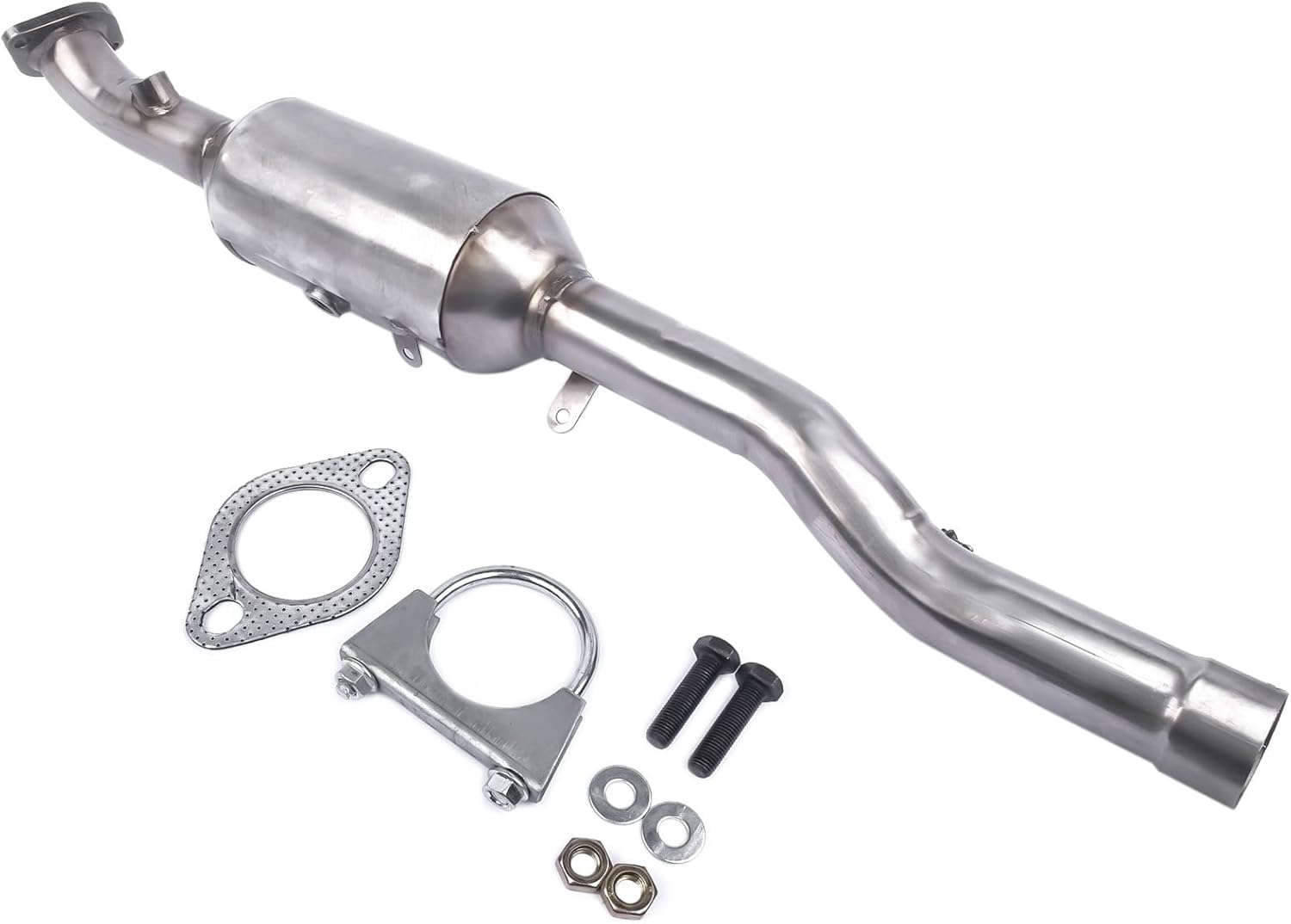
| Brand | Koomaha |
|---|---|
| Manufacturer Part Number | 4698764 |
| Applicable Emissions | EPA compliant but not CARB-legal in some states |
This Koomaha catalytic converter is an aftermarket replacement intended to restore exhaust flow and reduce emissions on compatible Mitsubishi models. In typical use it replaces a rusted or failed factory catalytic section to stop exhaust noise and return the exhaust system to working condition. Notable features in the listing include a vehicle fitment claim for specific Mitsubishi models and a part number for identification; the listing also warns it is not CARB-legal for certain states. Practical benefits are straightforward: it can resolve rattling and exhaust leak noises and is a much lower-cost alternative to dealer parts. Important limitations are variable fitment and alignment on some vehicles which may require modification or clamps during installation, and some buyers report the product does not clear persistent check-engine lights tied to upstream sensors or OEM-specific hardware. This is a budget-focused replacement that can get a vehicle back on the road quickly but may need a shop to adapt it for a precise fit or to address diagnostic codes.
Best for: Reliability-focused buyers who prioritize getting a worn-out emissions component replaced quickly and affordably to restore everyday drivability and quiet operation.
Less Ideal for: Drivers who need a guaranteed direct-fit, CARB-compliant replacement or a solution that will clear emission-related diagnostic codes without additional sensor work should consider factory-quality alternatives or dealer parts.
- Affordable alternative to dealer catalytic assemblies
- Restores exhaust flow and reduces noise from a failed converter
- Includes a clear manufacturer part number for identification
- May require trimming, bending, or clamps for a proper fit on some vehicles
- Not CARB-legal in several states so not suitable where local emissions rules apply
- May not resolve check-engine lights tied to sensors or vehicle diagnostics
Verdict A budget-friendly catalytic converter replacement that restores function and quiets a failing exhaust but may need fitment work and will not meet CARB requirements.
2. Eastern Industries 70316 Catalytic Converter (Non-CARB Compliant)

| Brand | Eastern Catalytic |
|---|---|
| Model | Catalytic Converter |
| Exterior | Machined |
This Eastern Industries 70316 catalytic converter is a basic aftermarket replacement intended to restore exhaust flow and clear check-engine trouble codes on older vehicles. It is typically used as a direct-replacement part when a factory unit has failed; shops can install it with standard flange or adapter connections. Notable features include a machined exterior and a simple, no-frills construction that keeps the unit affordable. In practice it can stop emissions-related warning lights and improve drivability on vehicles without sensitive downstream sensors, and several installers report quick fits and immediate resolution of issues. Important limitations are that it is not CARB-compliant so it cannot be used in California and may not be suitable for newer vehicles with strict emissions controls or oxygen sensor placement. Fitment reports are mixed, so expect potential adapter or minor modification work for exact alignment on some cars. For owners of older, out-of-state Mitsubishi Eclipse models looking for a low-cost replacement, this is a serviceable option if you accept its regulatory and fitment caveats.
Best for: Convenience-driven owners who need a quick, low-cost catalytic converter replacement for an older Mitsubishi Eclipse and prioritize fast restoration of function over emissions compliance.
Less Ideal for: Anyone who must meet California emissions rules or drivers of newer Eclipse models with downstream sensor requirements should choose a certified, vehicle-specific replacement instead.
- Affordable aftermarket replacement compared with dealer units
- Machined exterior suggests consistent flange alignment for easier installation
- Reported to clear check-engine codes and restore drivability on older cars
- Not CARB-compliant so illegal for use in California or states that require CARB parts
- May require adapters or minor modification for a precise fit on some vehicles
Verdict A budget-friendly, serviceable replacement for older Mitsubishi Eclipse models when quick repairs matter, but avoid it if you need CARB compliance or guaranteed OEM-level fitment.
3. MagnaFlow California-Grade Universal Catalytic Converter 408004 (2" Inlet/Outlet)

| Inlet/Outlet Diameter | 2" |
|---|---|
| Material | Stainless Steel |
| Oxygen Sensor Location | None listed |
| Series | California |
| Substrate Material | Ceramic |
This MagnaFlow 408004 is a universal, California-grade catalytic converter built from stainless steel with a clamshell design and welded inlet/outlet meant for professional installation. It is intended to replace a failed converter and keep the check-engine light off by meeting CARB emissions standards, so it is suitable when you need a legal, high-quality replacement for a Mitsubishi Eclipse. The universal fit requires cutting and welding to place it in the correct position on the car but gives flexibility for custom-fit installs. Integrated OEM-style O2 ports and an aluminized-steel heat shield help preserve emissions monitoring and protect surrounding components. Practical benefits include strong corrosion resistance, factory-quality construction, and CARB Executive Order registration that supports passing California-style emissions tests. The main limitations are that it is not a direct bolt-on for a specific Eclipse year or submodel and professional fabrication is recommended to achieve correct fitment and sensor alignment.
Best for: Performance-oriented Mitsubishi Eclipse owners who prioritize a high-quality, emissions-legal replacement and are prepared to invest in professional installation or custom exhaust work.
Less Ideal for: Drivers seeking a simple bolt-on, vehicle-specific converter or those unwilling to pay for welding and fabrication should look for model-specific direct-fit options instead.
- CARB-compliant for legal use in California and CARB states
- Stainless steel clamshell construction for durability and corrosion resistance
- Integrated O2 sensor ports and heat shield to support emissions monitoring and protect components
- Universal design allows placement flexibility when custom-fabricated
- Not a direct bolt-on for a specific Mitsubishi Eclipse model and requires cutting and welding
- Professional installation or fabrication is strongly recommended to ensure correct fit and sensor positioning
Verdict A durable, CARB-legal universal converter that delivers factory-quality emissions performance for an Eclipse when paired with professional fitment and welding.
4. ZonCar 2" Inlet/Outlet Catalytic Converter with O2 Port and Heat Shield

| Inlet/Outlet Diameter | 2 inches |
|---|---|
| O2 Sensor Port | Included |
| Material | Stainless steel |
| Design | High flow, honeycomb ceramic substrate |
This ZonCar catalytic converter is a low-cost replacement intended to restore emissions control and exhaust flow on compatible vehicles. It uses a honeycomb ceramic substrate with catalyst-coated rare metals and a stainless steel shell to handle high temperatures and resist corrosion. Typical installation replaces a failed midpipe or downstream converter and may require cutting, welding, or use of supplied flanges depending on the vehicle. The unit includes an O2 sensor port and heat shield for easier integration into existing exhaust routing. Practical benefits are straightforward: improved conversion of exhaust pollutants, preserved engine output thanks to a high-flow design, and a stainless housing that stands up to road conditions. Limitations to expect are variability in fit and missing mounting hardware on some units, so plan for basic fabrication, sensor plugs, or a professional shop to ensure a correct fit and leak-free joints. Not legal for sale or use in certain states with stricter emissions rules.
Best for: Budget-conscious Mitsubishi Eclipse owners looking for an affordable catalytic converter replacement to restore emissions control and keep the engine running without chasing OEM-priced parts.
Less Ideal for: Drivers who need guaranteed direct-fit, bolt-on factory-quality replacements or who live in states with strict emissions laws should consider dealer or certified OEM-equivalent options instead.
- High-flow honeycomb substrate aimed at maintaining engine performance while converting emissions
- Built-in O2 sensor port and heat shield for simpler integration with factory exhaust routing
- Stainless steel construction offers corrosion and heat resistance for longer service life
- Universal fit can require cutting, welding, or additional hardware for proper installation
- Not compliant for sale or use in California, New York, Maine, or Colorado due to emissions regulations
Verdict A cost-focused, high-flow replacement that restores emissions control for Eclipse owners willing to accept some installation work and state compliance limits.
5. Walker Ultra EPA 16561 Catalytic Converter with Integrated Exhaust Manifold for Mitsubishi Eclipse

| Brand | Walker |
|---|---|
| Model | 16561 |
| EPA compliance | For OBDII vehicles (1996 and newer) |
| Compatibility note | Designed for specified Mitsubishi Eclipse model years |
This Walker Ultra catalytic converter replaces the manifold and converter assembly with a bolt-on direct-fit unit designed for Mitsubishi Eclipse models. It is intended for OBDII vehicles and installs where the factory manifold and converter attach to the cylinder head, matching downstream connections for a straightforward swap. The product highlights EPA-compliant construction, an OEM-style washcoat and precious metal loading to restore emissions control, plus thick flanges and manifolds for durability and heat shields where originally equipped. In practice this means fewer fitment headaches, retained emissions performance, and a near-factory appearance under the vehicle. Limitations are that it is sized and specified for specific Eclipse model years so fitment must be checked carefully, and like all aftermarket converters it is subject to state aftermarket regulations and may require professional installation due to exhaust torque and sealing needs.
Best for: A risk-averse mainstream buyer seeking a factory-style, emissions-compliant replacement that minimizes fitment surprises and restores original emissions performance for their Mitsubishi Eclipse.
Less Ideal for: Drivers who need a universal or performance-oriented converter solution or those looking for a DIY part for multiple vehicle applications should consider other options.
- Direct-fit bolt-on design that replaces manifold and converter for simpler installation
- EPA-compliant construction with factory-style washcoat and precious metal load to restore emissions performance
- Thick flanges and integrated manifolds improve strength and reduce leak points
- Includes aluminized heat shields where originally equipped to protect undercarriage
- Fitment limited to specific Mitsubishi Eclipse model years and engine/trim combinations
- May require professional installation and torque procedures to ensure proper sealing
Verdict A factory-style, EPA-compliant direct-fit manifold converter built to replace the original assembly and restore emissions performance on the Mitsubishi Eclipse.
6. Walker Ultra 93251 Universal Catalytic Converter, 2" Inlet/Outlet

| Material | Stainless Steel |
|---|---|
| Vehicle Service Type | Car |
| Inlet Connection Size | 2 Inches |
The Walker Ultra 93251 is a stainless-steel universal catalytic converter designed to restore emissions control on OBDII-equipped vehicles. For a Mitsubishi Eclipse, this unit is used as a replacement in the exhaust line to reduce tailpipe emissions and help resolve codes like P0420 when matched to the correct location and fitment. Notable features include EPA compliance for 1996-and-newer OBDII systems, an OE-style washcoat and precious metal loading for emissions reduction, and a direct-fit minded design with expandable bushings to simplify alignment. In practice the stainless body and aluminized heat shields improve durability and heat protection under the car, though installers should expect some fabrication or welding since universal converters do not always include flanges specific to Eclipse exhaust flanges. The product is well suited to technicians and hands-on owners who want a durable, emissions-compliant replacement without paying for a brand-specific converter, but installation may require cutting, welding, or adapter work to achieve a proper fit on an Eclipse chassis.
Best for: A practical optimizer who wants a reliable, emissions-compliant catalytic converter for their Mitsubishi Eclipse without paying premium for a vehicle-specific OEM unit and who is comfortable coordinating a professional or DIY fitment.
Less Ideal for: Drivers seeking a bolt-in, vehicle-specific converter with factory-matching flanges and hardware or those unwilling to arrange welding or fabrication should consider purpose-built Eclipse-specific options.
- EPA compliant for OBDII vehicles so it meets emissions standards for 1996-and-newer applications
- Stainless-steel construction and aluminized heat shields for improved corrosion and heat resistance
- OE-style washcoat and precious metal load designed to reduce tailpipe emissions effectively
- Expandable bushings and a direct-fit oriented design to ease alignment during installation
- Universal design may require cutting, welding, or use of adapters to match Mitsubishi Eclipse exhaust flanges
- Does not include vehicle-specific flanges or hardware so professional installation or fabrication is likely needed
Verdict A durable, EPA-compliant universal converter that delivers solid emissions performance for cost-conscious Mitsubishi Eclipse owners who can handle or pay for custom fitment.
7. MagnaFlow 99204HM Universal HM-Grade Catalytic Converter
| Inlet Diameter | 2" |
|---|---|
| Outlet Diameter | 2" |
| Body Type | Clam Shell |
| Heat Shield | Yes |
| HM Grade | Yes |
The MagnaFlow 99204HM is a universal HM-grade catalytic converter intended as a federal-compliant replacement for vehicles that need a 2" inlet and outlet. For a Mitsubishi Eclipse, this unit is typically used where the factory converter is damaged or missing and a shop will cut, position, and weld the converter into the exhaust line. Key features include stainless steel construction, an integrated heat shield, weld-on 2" inlet/outlet, and a clamshell body with continuous seam welds for improved thermal sealing. In practice the converter reduces emissions to federal standards, can help clear a check-engine code tied to a failed converter when installed correctly, and generally offers less restriction than some stock units which can slightly change exhaust tone. Limitations: it is a universal part so professional installation and occasional fabrication are required to get correct fitment and orientation on an Eclipse, and it does not include oxygen sensor ports so sensors may need relocation or extension. This is a practical choice if you want a durable, emissions-compliant replacement and are prepared to have a shop adapt it to your Eclipse.
Best for: Balanced buyers who want a durable, federal-compliant replacement for a Mitsubishi Eclipse and are willing to pay a shop for professional fabrication and welding.
Less Ideal for: Drivers seeking a direct bolt-in factory replacement or those in states with stricter emissions rules should consider a vehicle-specific converter or a state-approved unit instead.
- Meets or exceeds federal EPA OBDII emissions requirements for federally registered vehicles.
- Stainless steel clamshell construction and continuous seam welds for corrosion resistance and thermal durability.
- Universal weld-on design lets a shop position the converter where needed on the exhaust system.
- HM-grade catalyst formulation for improved conversion of heavy contaminants compared with low-grade universal cats.
- Integrated heat shield included to reduce heat transfer to surrounding components.
- Universal design requires cutting, welding, and possible sensor relocation rather than bolt-in fitment.
- No built-in oxygen sensor ports, which can complicate installation on some Eclipse exhaust layouts.
- Not legal for use in some states with stricter local regulations.
Verdict A durable, federal-compliant universal converter that suits Mitsubishi Eclipse owners who want a robust replacement and are prepared to have it professionally fitted.
Choosing the Right Mitsubishi Eclipse Catalytic Converter: Key Factors to Consider
Exact Fitment And Compatibility
Fitment is the most immediate practical concern because the converter must mate cleanly with the Eclipse's exhaust manifold and downstream piping. Verify flange type, bolt pattern, and pipe diameters against the vehicle's specifications to avoid modification. An accurate physical match reduces installation time and lowers the risk of exhaust leaks that can trigger sensors.
Compatibility also covers orientation and mounting brackets. Some units are designed as direct replacements while others need adaptors or welding. Choosing a converter that aligns with the factory layout preserves exhaust geometry and ensures sensor placement remains correct, which is important for emissions control and avoiding false diagnostic trouble codes.
Emissions Efficiency And Catalyst Design
The core function of the catalytic converter is to convert harmful gases into less harmful substances. Look for information on substrate cell density, catalyst coating, and washcoat composition since these factors affect conversion efficiency. Higher cell counts and effective washcoats can improve pollutant reduction, but extreme restriction can increase backpressure.
Emissions efficiency matters not just for tests but for everyday operation. A converter that maintains effective catalytic activity across a wide temperature range will better reduce hydrocarbons, carbon monoxide, and nitrogen oxides during normal driving, start-up, and highway conditions.
Durability And Thermal Resistance
Catalytic converters endure high temperatures and vibrational stresses. Substrate material, housing thickness, and welding quality all influence longevity. A robust housing resists corrosion and physical damage, while a thermally stable substrate reduces the risk of cracking or breakdown under heat cycles.
Durability affects long-term ownership costs and the likelihood of premature failure. Consider units with reinforced joints, quality mounting, and materials specified for high-temperature automotive exhaust service to minimize service interruptions.
Backpressure And Engine Performance
While reducing emissions is the primary goal, the converter also interacts with engine breathing. Excessive backpressure can reduce power and fuel efficiency, while too little flow can compromise conversion at low temperatures. Choose a unit designed to balance flow and catalytic surface area for the Eclipse's engine characteristics.
Manufacturers sometimes provide flow or backpressure information. Where available, prefer converters engineered to minimize restriction while retaining adequate catalytic surface area so engine responsiveness and fuel economy remain acceptable.
Sensor Placement And OBD Compatibility
Modern vehicles monitor converter performance with oxygen sensors and downstream diagnostic systems. Ensure the replacement supports the factory sensor locations or offers provisions for sensor ports. Correct sensor placement helps the onboard diagnostics interpret catalyst efficiency accurately and can prevent check engine light triggers related to emissions monitoring.
OBD compatibility also includes ensuring the converter does not interfere with diagnostic thresholds. A unit that preserves the expected sensor signals will maintain proper emissions monitoring and reduce diagnostic confusion.
Installation Considerations And Serviceability
Think ahead to installation method and future serviceability. Direct-fit units that use factory flanges and bolt patterns simplify replacement and reduce labor. Some converters require welding or custom pipes, increasing installation complexity and the potential for leaks if not done correctly.
Also consider accessibility for future repairs or inspections. Converters that preserve straightforward access to sensors and mounting hardware will make maintenance easier and less costly over time.
FAQ
What are common signs the Mitsubishi Eclipse catalytic converter needs replacement?
Common signs include a noticeable drop in engine performance, unusual exhaust smell, and louder exhaust noise. You may also notice the check engine light catalytic converter–related codes or reduced fuel economy. These symptoms often appear gradually and can indicate the catalyst is clogged or failing.
Can a bad catalytic converter trigger a check engine light on a Mitsubishi Eclipse?
Yes, a failing converter can cause diagnostic trouble codes that illuminate the check engine light. The vehicle's OBD system monitors downstream oxygen sensor readings and catalyst efficiency, so abnormal signals often lead to a fault code. A code reader or diagnostic scan will show if the issue is emissions-related.
Is it necessary to replace the catalytic converter with an identical unit?
It is not always necessary to use an identical part, but you should match critical dimensions and sensor locations for proper fitment. A direct-fit replacement simplifies installation and preserves emissions monitoring. If using a universal or modified unit, ensure correct adaptors and sensor ports are provided.
How long does a catalytic converter typically last on a vehicle like the Mitsubishi Eclipse?
Lifespan depends on driving habits, maintenance, and exposure to contaminants. Many converters last for several years under normal conditions, but repeated short trips, engine misfires, or oil contamination can shorten their life. Regular engine maintenance helps prolong catalyst longevity.
Will replacing the catalytic converter affect engine performance or fuel economy?
A properly chosen converter should restore intended exhaust flow and emissions control, which can improve throttle response and fuel economy if the old unit was clogged or failing. Conversely, an overly restrictive unit could negatively impact performance, so balancing flow characteristics with catalytic surface area is important.
How We Chose the Best Mitsubishi Eclipse Catalytic Converter
We evaluated candidates based on several category-specific criteria that matter for Mitsubishi Eclipse owners. Fitment accuracy was a primary filter, verifying flange type, pipe diameter, and mounting points to match the vehicle's exhaust layout. Emissions performance was assessed by looking at catalyst material and washcoat characteristics that influence conversion efficiency. Durability considerations included substrate construction and thermal resistance to reduce risk of cracking or premature failure. Ease of installation was judged by whether the unit supports direct bolt-on replacement or requires minimal modification. Backpressure and flow characteristics were considered to avoid negatively affecting engine performance. Finally, we screened for manufacturing quality and documented manufacturing standards to reduce the chance of early failure. We excluded units with unclear fitment data, products lacking emissions-related specifications, and converters with inadequate construction details. The remaining selections focused on practical, verifiable dimensions and build features most relevant to fitment and reliable emissions control for the Mitsubishi Eclipse.
Our full evaluation process is outlined in our review methodology.
Conclusion
When choosing a Mitsubishi Eclipse catalytic converter, prioritize correct fitment, emissions efficiency, and durable construction. Those factors most directly affect installation ease, emissions compliance, and long-term reliability. Expect tradeoffs between catalytic surface area and exhaust flow. Focus on converters that match factory sensor placement and flange dimensions, and balance conversion capability with acceptable backpressure for consistent engine performance.
Explore More:
- Check out all Mitsubishi Eclipse parts & accessories
- Explore Exhaust & Emissions
- Browse all Auto Parts
