

Note: This article contains affiliate links. If you click on these links and make a purchase, I may earn a small commission at no extra cost to you. This helps support my research and content. Read my full affiliate disclosure here.
Choosing the right catalytic converter for your Mercedes-Benz GLC matters for both emissions control and engine performance. A correctly matched unit helps reduce harmful exhaust pollutants, supports proper sensor readings, and can prevent drivability issues that arise from poor exhaust flow.This guide shortlists the top options for the Mercedes-Benz GLC and explains the evaluation criteria used to select them. You will find practical considerations about fitment, emissions efficiency, durability, and installation to help you pick a suitable replacement. Read on for the shortlisted picks and why they made our list.
Looking for other parts? See all Mercedes-Benz GLC parts & accessories.
Top Picks at a Glance
| Best Overall The best all-around choice for most situations | MagnaFlow California Grade Universal Catalytic Converter 408035 |  |
| Best Quality Built to a higher standard if you want something more solid | MagnaFlow 51205 Universal Federal/EPA Compliant Catalytic Converter (2.25" In/Out) |  |
| Best Value The sweet spot between price and what you get | Eastern Catalytic 82724 Catalytic Converter |  |
| Best Budget The cheapest option that still gets the job done reliably | ASOPARTS 2.5" Universal Catalytic Converter with Heat Shield and O2 Port |  |
| Highest Rated A top-rated pick with lots of positive feedback | MAYASAF 2.5" Universal Catalytic Converter with O2 Port |  |
| Most popular A crowd favorite that many people choose with confidence | MagnaFlow 94006 Universal Pre‑OBDII Catalytic Converter (2.5" In/Out) |  |
| Best Seller A high-volume bestseller chosen again and again | MAYASAF 2" Universal Catalytic Converter (2-Pack) with O2 Port and Heat Shield |  |
1. MagnaFlow California Grade Universal Catalytic Converter 408035

| Inlet/Outlet Diameter | 2.25" |
|---|---|
| Material | Stainless Steel |
| Oxygen Sensor Location | Post Converter |
| Series | California |
| Type | Universal CARB Compliant |
The MagnaFlow 408035 is a universal, California-grade catalytic converter built from stainless steel with welded 2.25 inch inlet and outlet tubing and an integrated heat shield. It is designed to meet CARB emissions requirements and includes a post-converter oxygen sensor location, so it can be used where California legal replacement is required. Typical use involves cutting and welding the unit into an existing exhaust run by a shop or experienced fabricator; the universal layout gives flexibility for placement and orientation. Practical benefits include corrosion-resistant construction, a continuous clamshell seam for thermal protection, and testing that helps keep check engine light issues like P0420 at bay when installed correctly. Limitations are that it is not a direct bolt-in Mercedes-Benz GLC-specific part and will require custom welding, possible flange work, and professional fitment to match factory routing and sensors on the GLC. Buyers should plan for fabrication time, shop labor, and verification of fit and sensor placement before installation.
Best for: Balanced, all-round buyers who prioritize emissions legality and long-term durability and are willing to arrange professional installation and minor fabrication for a reliable replacement solution.
Less Ideal for: Buyers seeking a plug-and-play, vehicle-specific Mercedes-Benz GLC direct-fit converter or those who want a no-fabrication DIY installation should look for a model-specific unit instead.
- CARB-certified for use in California and CARB-regulated states
- Stainless steel clamshell construction for corrosion resistance
- Built-in O2 sensor port positioned post-converter
- Universal design allows flexible placement in the exhaust system
- Integrated heat shield for added thermal protection
- Universal welded fit requires cutting, welding, and professional fabrication
- Not a vehicle-specific direct-fit part for Mercedes-Benz GLC models
Verdict: A CARB-compliant, stainless-steel universal converter that delivers legal emissions performance and durable construction when professionally installed.
2. MagnaFlow 51205 Universal Federal/EPA Compliant Catalytic Converter (2.25" In/Out)

| Automotive Fit Type | Universal Fit |
|---|---|
| Inlet/Outlet Diameter | 2.25" |
| Body Material | Stainless Steel |
| Manufacturer Warranty Description | 5 Year / 50,000 Mile |
The MagnaFlow 51205 is a universal, federal/EPA compliant catalytic converter built with 409 stainless steel tubing and a 308 stainless steel MIG weld finish. It is intended as a direct-replacement style unit for vehicles that can accept a 2.25 inch inlet and outlet and will typically be used where custom fitting, cutting and welding are possible. Notable features include a clam-shell body with an attached aluminized steel heat shield, a catalyst blend formulated to control emissions for OBDII federal systems, and a compact overall length that helps fit in confined underbody locations. For a performance-oriented buyer this cat offers durable construction and the potential to maintain emissions control without triggering check-engine codes when fitted and welded correctly. Important limitations are that this is a universal part requiring professional fabrication and may need sensor bungs added for oxygen sensors, so fitment on a Mercedes‑Benz GLC will likely require customization rather than a bolt-in replacement.
Best for: Performance-oriented owners seeking a durable, emissions-compliant replacement who are comfortable commissioning professional exhaust fabrication and want a solution that can be adapted to a tuned or modified Mercedes‑Benz GLC.
Less Ideal for: Owners seeking a direct bolt-in, vehicle-specific OEM replacement or anyone who cannot access professional welding and fabrication services should consider a model-specific catalytic converter instead.
- Stainless steel construction for improved corrosion resistance and durability
- Federal/EPA compliant catalytic formulation aimed at keeping OBDII emissions systems functioning
- Attached heat shield included to protect surrounding components
- Universal design allows use in tight or unusual exhaust layouts with fabrication
- Universal fit requires cutting, welding, and likely addition of O2 sensor bungs which adds installation time and cost
- Not legal for sale or use in California and Colorado markets under federal designation
Verdict: A rugged, EPA-compliant universal catalytic converter built for durable emissions control when professionally fabricated into a performance-oriented Mercedes‑Benz GLC exhaust.
3. Eastern Catalytic 82724 Catalytic Converter
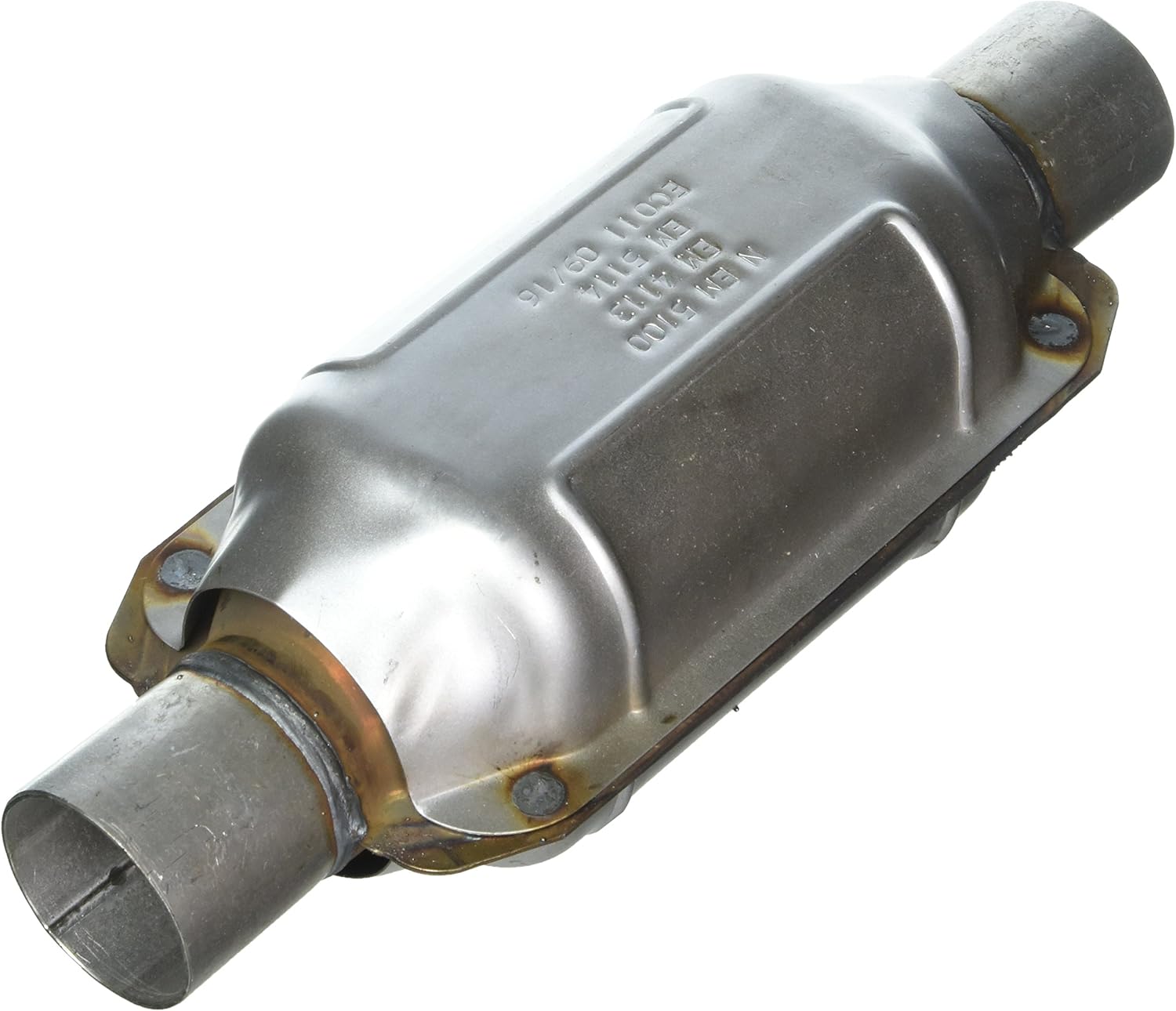
| Brand | Eastern Catalytic |
|---|---|
| Model | Converter |
| Exterior | Machined |
| Item model number | 82724 |
This Eastern Catalytic 82724 is an aftermarket catalytic converter intended as a direct-replacement style unit. It serves the basic function of replacing a failed converter to restore emissions control and allow the vehicle to run without a check-engine code related to the catalyst. Typical use is as a budget repair option welded or bolted into the exhaust where the original converter was located. The listing shows a machined exterior and a compact packaged size, which makes it straightforward for a muffler shop to fit. Practical benefits include a lower cost than dealer replacement and generally acceptable fit and function for older vehicles where a factory-quality OEM part is not required. Important limitations are variability in vehicle compatibility and possible check-engine light or sensor reporting issues on some applications, so expect to verify fitment and oxygen sensor behavior after installation. This is a value-focused part best used when cost and basic emissions restoration are the priority rather than an exact factory match.
Best for: Practical optimizers who want a cost-conscious replacement to restore emissions function on an older Mercedes-Benz GLC without paying for an expensive factory replacement.
Less Ideal for: Owners seeking an exact factory-quality converter for warranty restoration or guaranteed emissions test compliance should consider OEM or certified replacement options instead.
- Lower cost alternative to dealer or branded factory replacements
- Machined exterior suggests consistent finish for easier installation and welding
- Compact form factor that makes it straightforward for a muffler shop to handle
- May trigger check-engine light or sensor reporting differences on some vehicles
- Fitment can vary and may require additional parts or labor to install
Verdict: An affordable, no-frills replacement catalytic converter for buyers prioritizing value over exact factory matching.
4. ASOPARTS 2.5" Universal Catalytic Converter with Heat Shield and O2 Port

| Inlet/Outlet | 2.5" |
|---|---|
| Housing Material | Stainless steel |
| O2 Port | Included |
| Warranty | 1 year unlimited-mileage |
This ASOPARTS 2.5" universal catalytic converter is a budget-focused replacement intended to restore emissions function and silence exhaust noise after a failed or missing factory converter. It uses a ceramic honeycomb substrate inside a stainless steel housing and includes an O2 sensor port and heat shield to match common factory connections. Typical use is as a bolt-in or weld-in replacement where the Scion xD has a compatible 2.5" exhaust outlet; professional installation is recommended to ensure correct fit and clearances. The stainless housing promises corrosion and heat resistance for everyday driving, and the unit is marketed as matching factory form so it can clear a P0420 code in many cases. Expect basic emissions control suitable for street use rather than performance gains, and note this is a universal-fit part so pipe prep, welding or clamps may be required and fitment is not vehicle-specific to the Scion xD's factory converter flange locations.
Best for: Practical optimizers who want an affordable, functional replacement to restore emissions operation and eliminate a failed converter without overspending.
Less Ideal for: Owners seeking an exact factory-fit direct OEM copy or a high-flow performance converter should look at vehicle-specific or performance-focused options instead.
- Includes O2 sensor port for reuse of factory sensor locations
- Stainless steel housing resists heat and corrosion for longer service life
- Standard 2.5" inlet/outlet matches common aftermarket exhaust pipe sizes
- Factory-style ceramic honeycomb substrate restores emissions control function
- Universal design may require cutting, welding, or adapter work for exact fit on Scion xD exhaust routing
Verdict: A cost-conscious universal converter that restores emissions function and fits common 2.5" exhaust systems while keeping upfront cost low.
5. MAYASAF 2.5" Universal Catalytic Converter with O2 Port

| Inlet/Outlet ID | 2.5 inches |
|---|---|
| Overall length | 11 inches |
| Exterior | Machined |
| Material | Stainless steel |
| O2 port | Included |
This MAYASAF catalytic converter is a straightforward universal-style unit intended for simple replacement or upgrade on vehicles with a 2.5-inch exhaust pipe and similar outer diameter. It includes a built-in O2 sensor port and an 11-inch overall length, so it can be cut and welded into an existing exhaust line during installation. Constructed from stainless steel with a machined exterior, the converter claims a designed internal structure to improve oxygen flow and is sold as EPA compliant for states that allow aftermarket units. For a budget buyer it delivers the core function of emissions conversion and restores catalytic hardware without an OEM-level price. Limitations are its universal fit approach, which can require cutting, welding, and possible adapter work to match Scion xD exhaust geometry, and it is restricted from sale in some states with stricter aftermarket converter rules, so local compliance checks and professional installation are recommended.
Best for: Practical, budget-conscious owners looking to replace a failed catalytic converter on a Scion xD who prioritize low upfront cost over a direct factory-fit part.
Less Ideal for: Owners needing a guaranteed direct-fit factory-quality replacement, or those in states with strict aftermarket emissions rules should seek vehicle-specific or compliant factory-quality options.
- Budget-priced universal replacement for basic catalytic function
- Includes an O2 sensor port for maintaining engine monitoring
- Stainless steel construction and machined exterior for basic durability
- Universal design may require cutting, welding, or adapters to fit vehicle-specific exhaust routing
- Not legal for sale in certain states with strict aftermarket converter regulations
Verdict: A very affordable universal catalytic converter that restores emissions hardware and includes an O2 sensor port for basic Scion xD replacement needs.
6. MagnaFlow 94006 Universal Pre‑OBDII Catalytic Converter (2.5" In/Out)

| Inlet/Outlet Diameter | 2.5 Inches |
|---|---|
| Body Material | Stainless Steel |
| Substrate Material | Ceramic |
| EPA Compliance | Federal Pre‑OBDII Compliant |
| Heat Shield | Attached |
The MagnaFlow 94006 is a universal, pre‑OBDII catalytic converter built from stainless steel with a clamshell body and welded heat shield for corrosion resistance and thermal efficiency. It is intended to replace a failed pre‑1996 catalytic unit and restore emissions control and drivability; installation requires cutting and welding to position the unit and add an O2 sensor bung if needed. The converter uses a ceramic substrate and is designed to meet federal EPA requirements for pre‑OBDII vehicles, so it can keep the check engine light off when matched correctly. Practical benefits include durable construction, adaptable placement for custom exhaust routing, and a compact low‑mass profile that helps the catalyst reach operating temperature faster. Limitations are that this is not CARB compliant and is intended for pre‑OBDII applications only, so it will not meet California or other state-specific requirements and will require professional installation and possibly additional exhaust work for proper fitment on a Mercedes‑Benz GLC.
Best for: Convenience-driven buyers who prioritize getting a straightforward federal‑compliant replacement that a shop can fit quickly and reliably to restore emissions function on older vehicles.
Less Ideal for: Drivers who need California or state-specific emissions compliance, or Mercedes‑Benz GLC owners seeking a direct factory‑style, bolt‑in converter without fabrication should look for vehicle‑specific options instead.
- Stainless steel clamshell construction resists corrosion and improves durability.
- Federal EPA pre‑OBDII compliance for restoring emissions control on eligible vehicles.
- Universal design allows placement flexibility when custom fitting is required.
- Integrated heat shield and continuous seam weld improve thermal performance and longevity.
- Not CARB compliant and only suitable for pre‑OBDII (pre‑1996) applications.
- Requires cutting, welding, and likely an added O2 sensor bung for installation.
- May be undersized for some factory exhaust layouts and could need additional piping or fabrication.
Verdict: A durable, federally compliant universal cat that restores emissions control on pre‑OBDII vehicles but requires professional cutting and welding and is not CARB approved.
7. MAYASAF 2" Universal Catalytic Converter (2-Pack) with O2 Port and Heat Shield

| Inlet/Outlet Diameter | 2 inches |
|---|---|
| Overall Length | 13 inches |
| Manufacturer | MAYASAF AutoParts |
| EPA Certification | Federal standard certified |
These MAYASAF catalytic converters are sold as a two-pack of universal 2-inch inlet/outlet units with a built-in oxygen sensor bung and a partial heat shield. They are designed to be cut and welded into an existing exhaust run, so installation is typically done by a shop or a competent DIYer with welding experience. The converters are marketed as stainless-steel units with an internal honeycomb that aims to improve exhaust flow while providing emissions control to federal EPA standards. Practical benefits include the spare-of-mind of having an O2 port for sensor retention, a compact 13-inch length that fits simple mid-pipe replacements, and a low-cost option compared with dealer parts. Limitations are important for a cautious buyer: universal fitment means these are not vehicle-specific and may require modification to match factory mounting and the exact oxygen sensor arrangement on a Mercedes-Benz GLC. The product is not legal for sale in some states with stricter emissions rules, and buyers should confirm local regulations and fitment before purchase.
Best for: Risk-averse mainstream buyers who want an affordable aftermarket catalytic option they can have installed by a trusted shop and who prioritize staying within federal emissions guidelines where allowed.
Less Ideal for: Owners seeking a direct factory-quality, vehicle-specific replacement for a Mercedes-Benz GLC or anyone in a state with stricter emissions regulations should consider OEM or state-compliant options instead.
- Includes an oxygen sensor bung so factory sensor location can be retained
- Pack of two provides a spare or coverage for paired installations
- Marketed as stainless steel construction for corrosion resistance
- Compact universal design is straightforward to cut and weld into a mid-pipe
- Universal, non-vehicle-specific design may require modification to fit Mercedes-Benz GLC exhaust geometry
- Restricted from sale in certain states due to emissions regulations
- May not match factory sensor count or placement on some applications
Verdict: A low-cost, universal catalytic converter pair with an O2 port that works as a serviceable mid-pipe replacement when modified to fit.
Choosing the Right Mercedes-Benz GLC Catalytic Converter: Key Factors to Consider
Fitment and Exhaust Geometry
Correct fitment ensures the converter mates to the Mercedes-Benz GLC exhaust without excessive modification. A direct-replacement unit that matches inlet and outlet diameters, flange patterns, and mounting points reduces installation time and lowers the chance of leaks or exhaust misalignment.
Mismatched geometry can cause stress on adjacent components, introduce exhaust leaks that trigger fault codes, or require custom pipes that affect emissions testing. Always verify physical dimensions and sensor port locations to maintain proper exhaust routing and sensor readings.
Emissions Substrate and Efficiency
The internal substrate composition and cell density influence how effectively the converter reduces hydrocarbons, carbon monoxide, and nitrogen oxides. Higher-quality substrates and optimized cell counts generally provide better conversion efficiency across the operating temperature range.
Consider vehicles that need stronger cold-start conversion as low-temperature performance affects real-world emissions. Matching substrate design to the Mercedes-Benz GLC engine and expected driving conditions helps maintain regulatory compliance and minimize pollutant output.
Sensor Compatibility
Modern vehicles rely on upstream and downstream oxygen sensors to monitor converter performance. A replacement unit should include correctly placed sensor ports and maintain the same sensor orientation as the factory part to avoid inaccurate readings.
Incorrect sensor placement or missing ports can trigger the check engine light, produce false diagnostic data, and lead to persistent fault codes. Ensuring sensor compatibility preserves the vehicle's onboard diagnostics and helps prevent unnecessary troubleshooting.
Durability and Materials
Catalytic converters are exposed to heat, vibration, and corrosive exhaust byproducts, so construction materials matter. Stainless steel housings, robust welds, and protective coatings extend service life in varied climates and driving conditions.
Long-term durability reduces the likelihood of premature failure and minimizes the need for repeated replacements. Evaluate corrosion resistance and housing strength to match the Mercedes-Benz GLC's typical use, whether daily driving or occasional long trips.
Backpressure and Engine Performance
A catalytic converter affects exhaust backpressure, which in turn influences engine breathing and performance. Choosing a unit designed to provide effective emissions control without creating excessive restriction helps preserve power delivery and fuel efficiency.
Excessive backpressure can lead to reduced throttle response, higher intake temperatures, and potential long-term stress on the engine. Look for specifications or design notes that address flow characteristics appropriate for the Mercedes-Benz GLC's engine size and tuning.
Installation and Serviceability
Ease of installation reduces labor time and the chance of installation errors. Features like pre-attached flanges, integrated gaskets, and sensor-ready ports simplify replacement and can allow for straightforward bolt-on swaps when dimensions match.
Consider whether the unit requires cutting, welding, or special tools. Serviceability also includes access to consumable parts and clarity of instructions. Choosing a converter designed for straightforward installation helps maintain correct exhaust routing and sensor function.
How We Chose the Best Mercedes-Benz GLC Catalytic Converter
We focused on products that specifically fit the Mercedes-Benz GLC and prioritized clear, verifiable attributes relevant to emissions and drivability. Primary evaluation criteria included exact fitment to factory exhaust geometry, catalytic substrate composition and cell density for emissions control, EPA or CARB compliance where applicable, and installer-friendly design features such as pre-threaded flanges or integrated sensors.We also assessed build quality indicators like durable housings, corrosion-resistant materials, and warranty terms that reflect manufacturer confidence. Performance-related criteria included expected backpressure characteristics and compatibility with factory oxygen sensors. Exclusions: we did not include universal converters that require custom fabrication, or parts intended for other vehicle models. The result is a curated list of direct-fit or direct-replacement catalytic converters that meet strict fitment and emissions expectations for the Mercedes-Benz GLC.
Our full evaluation process is outlined in our review methodology.
FAQ
How do I know if my Mercedes-Benz GLC catalytic converter is failing?
Common signs often include a noticeable drop in engine performance, a rotten egg or sulfur smell from the exhaust, and reduced fuel economy. The check engine light catalytic converter-related fault codes or persistent misfires can also indicate trouble. Diagnosis usually combines visual inspection, OBD-II codes, and performance checks rather than relying on a single symptom.
Can I replace the catalytic converter myself on a Mercedes-Benz GLC?
Some owners with mechanical experience and the right tools can replace a catalytic converter, especially if it is a direct-fit unit with matching flanges and sensor locations. However, vehicles with tight engine bays or welded components may require professional service. Consider access, required torque specs, and sensor reconnection when deciding whether to DIY.
Will a new catalytic converter trigger the check engine light on my Mercedes-Benz GLC?
A properly fitted converter that retains correct sensor positions should not trigger the check engine light. In some cases, adaptive values or preexisting sensor faults may cause temporary alerts until the vehicle relearns. If a light persists, verify sensor connections, clear codes, and confirm the replacement matches factory specifications.
Does replacing the catalytic converter improve exhaust emissions on the Mercedes-Benz GLC?
Replacing a degraded converter typically restores its ability to reduce hydrocarbons, carbon monoxide, and nitrogen oxides toward factory levels. The degree of improvement depends on the new unit's substrate efficiency and whether the rest of the exhaust and engine systems are functioning properly. Proper fitment and sensor compatibility are important to achieve expected emissions performance.
How long do catalytic converters usually last on a vehicle like the Mercedes-Benz GLC?
Lifespan varies with driving conditions, maintenance, and environmental exposure. Many converters last several years under normal use, but factors like frequent short trips, contamination from oil or coolant, and physical damage can shorten service life. Regular engine maintenance and prompt repair of exhaust or sensor issues help extend converter longevity.
Conclusion
When choosing a catalytic converter for a Mercedes-Benz GLC, prioritize exact fitment, correct sensor port placement, and a substrate designed for effective emissions control. Balance flow characteristics with conversion efficiency to preserve engine performance while meeting emissions expectations.Consider installation complexity and long-term durability as part of your decision. Focusing on these tradeoffs will help you select a replacement that maintains proper diagnostics, reduces pollutant output, and fits the vehicle without extensive modification.
Explore More:
- Check out all Mercedes-Benz GLC parts & accessories
- Explore Catalytic Converters Maintenance & Repair Guides
- Explore Exhaust & Emissions
- Browse all Auto Parts
