
Note: This article contains affiliate links. If you click on these links and make a purchase, I may earn a small commission at no extra cost to you. This helps support my research and content. Read my full affiliate disclosure here.
If your Kia Soul is running roughly, showing reduced power, or failing emissions checks, choosing the right catalytic converter matters for reliability and compliance. You want a unit that fits precisely, restores exhaust performance, and helps reduce harmful emissions while keeping the exhaust system functioning as intended. This guide covers the top shortlisted catalytic converters for the Kia Soul and explains the key factors we considered during evaluation. Read on to understand the fitment, emissions performance, and durability aspects that separate suitable options from less appropriate ones.
Looking for other parts? See all Kia Soul parts & accessories.
Top Picks at a Glance
| Best Reviewed A top-rated pick with lots of positive feedback | QKVBKAU Direct-Fit Catalytic Converter (EPA & CARB Compliant) |  |
| Most Popular A crowd favorite that many people choose with confidence | Walker Universal Catalytic Converter (2.25" Inlet/Outlet) |  |
| Best Budget The cheapest option that still gets the job done reliably | SCITOO Rear Catalytic Converter Fit for Kia Soul 2012–2016 |  |
| Most Sold A high-volume bestseller chosen again and again | ZAIGANMA Catalytic Converter — Direct-Fit for 2012–2016 Kia Soul 1.6L |  |
| Best Value for Money The sweet spot between price and what you get | A-Premium Catalytic Converter Direct-Fit for Kia Soul 2012–2019 1.6L |  |
| Best Overall The best all-around choice for most situations | A-Premium Catalytic Converter with Gasket Kit for Kia Rio/Soul/Hyundai Fitments |  |
1. QKVBKAU Direct-Fit Catalytic Converter (EPA & CARB Compliant)

| Manufacturer Part Number | GZBJ-US-TWC-07 |
|---|---|
| OEM Part Number | 16648, 289602G540, and 289602G710. |
| Compliance | EPA and CARB certified |
| Fitment Type | Direct-fit replacement |
This QKVBKAU catalytic converter is a direct-fit replacement built to meet EPA and CARB emissions rules and to match factory fit and function for the listed applications. It installs between the exhaust manifold and downstream pipe as a complete kit, with sensor ports and flanges positioned to align with stock exhaust components. The unit uses a stainless steel housing and a high-density ceramic substrate with a triple-precious-metal catalyst formulation to reduce emissions while preserving exhaust flow. In practice this means it is intended to get a vehicle back into compliance and keep the engine running without check-engine light issues when installed correctly. Buyers should plan on professional installation to ensure proper sealing and torque and to avoid leaks. The product leans toward a budget-friendly replacement rather than an upscale long-term performance upgrade, so durability compared with higher-end factory-quality units may vary over extended use.
Best for: Reliability-focused buyers seeking a certified, emissions-compliant replacement to restore lawful operation and avoid drivability or inspection failures.
Less Ideal for: Drivers looking for a long-term premium upgrade or motorsport-level performance should consider higher-end factory-quality or performance-specific converters instead.
- Direct-fit design with flanges and sensor ports positioned for straightforward replacement
- EPA and CARB compliance for legal use across states including California
- High-density ceramic substrate and triple-precious-metal catalyst for effective emissions reduction
- Stainless steel housing offers corrosion resistance compared with untreated alternatives
- Appears aimed at the budget replacement market so long-term durability may be lower than premium factory-quality units
- Included hardware quality may be inconsistent, potentially requiring reuse of original fasteners or aftermarket bolts
Verdict A certified, cost-conscious direct-fit converter that restores emissions compliance and reliable operation but is not positioned as a premium longevity upgrade.
2. Walker Universal Catalytic Converter (2.25" Inlet/Outlet)

| Configuration | Centre |
|---|---|
| Inlet Connection Size | 2.25 Inches |
| Manufacturer | Tenneco (Dynomax, Walker, Thrush) |
This Walker universal catalytic converter is a basic replacement designed to restore emissions control on older, pre-OBDII vehicles that use a 2.25 inch inlet and outlet. It is typically used as a direct-insert or welded-in unit at the center section of the exhaust system; shops can cut out the old converter and weld this one in place using the provided expandable bushing to align pipes. The unit features a stainless-steel shell, aluminized piping, and heat shields meant to protect underbody components and match factory-style layouts. In practice the converter will get a vehicle through emissions testing when sized and installed correctly and requires no break-in. Limitations include its universal fit approach which may need fabrication or professional welding for a proper seal and variable long-term durability reported by some users. Fitment checking and careful measurement of pipe diameter and overall mounting are necessary to avoid compatibility or installation issues.
Best for: Convenience-driven buyers who prioritize a straightforward emissions fix and want a ready-to-install replacement their local shop can adapt quickly to get a vehicle back on the road and through inspection.
Less Ideal for: Drivers looking for a direct factory-quality bolt-in converter for modern OBDII Kia Soul models or those who need a lifetime structural performance guarantee should consider vehicle-specific factory replacement options.
- Meets EPA requirements for pre-OBDII emission control when installed correctly
- Stainless-steel body with aluminized pipe and heat shields for corrosion and heat protection
- Expandable bushing and universal design allow shops to adapt the unit to different pipe runs
- No break-in required so the vehicle is ready for emissions testing immediately after installation
- Universal design often requires cutting, welding, or fabrication rather than simple bolt-on replacement
- Specifically sized inlet/outlet means it only fits systems with a 2.25 inch pipe without adapters
- Designed for pre-1995 vehicles so not suitable for OBDII-controlled exhaust systems
Verdict A practical, shop-friendly universal converter for older vehicles with 2.25 inch exhaust pipe where a quick emissions-compliant repair is the priority.
3. SCITOO Rear Catalytic Converter Fit for Kia Soul 2012–2016

| Vehicle fitment | Kia Soul 2012–2016 2.0L |
|---|---|
| Position | Rear |
| Inlet type | 2-bolt welded flange |
| Gasket and bolts | Included |
| Material | Stainless steel |
This SCITOO rear catalytic converter is a direct-fit replacement intended for the 2012–2016 Kia Soul with the 2.0L engine. It installs at the rear position and uses a 2-bolt welded flange inlet and pipe connection outlet, so it matches the factory-style mounting and connects with factory exhaust piping. The unit is stainless steel and arrives with gaskets and bolts, which simplifies installation for a DIY mechanic or a shop performing a like-for-like swap. It is listed as EPA compliant for federal spec vehicles and includes one inlet and one outlet as expected for a rear converter. The practical benefits are straightforward: a low-cost, ready-to-bolt-in option that restores emission control and eliminates exhaust leaks when the original converter fails. Limitations are typical of budget aftermarket converters — you should confirm fitment carefully against part number 16646 and note the product is restricted in a few states listed, so it may not meet local regulations there. Expect basic construction and functionality rather than premium longevity or upgraded cell technology.
Best for: Budget-conscious owners seeking an affordable, straightforward replacement to restore emissions function on a Kia Soul 2012–2016 2.0L without extensive modifications.
Less Ideal for: Drivers in states with stricter emissions rules or owners who want a long-term premium or performance-oriented upgrade should consider higher-spec options or dealer parts.
- Direct-fit rear replacement engineered for 2012–2016 Kia Soul 2.0L for straightforward installation
- Supplied with gasket and bolts so hardware is ready for a like-for-like swap
- Stainless steel construction offers corrosion resistance compared with cheaper plated units
- May not meet state-specific emissions requirements in restricted states listed in the description
- Basic aftermarket construction may not match lifespan of higher-end factory-quality converters
Verdict A cost-focused, direct-fit rear catalytic converter for Kia Soul 2012–2016 that restores emission control affordably but may not satisfy stricter state requirements or buyers seeking premium longevity.
4. ZAIGANMA Catalytic Converter — Direct-Fit for 2012–2016 Kia Soul 1.6L
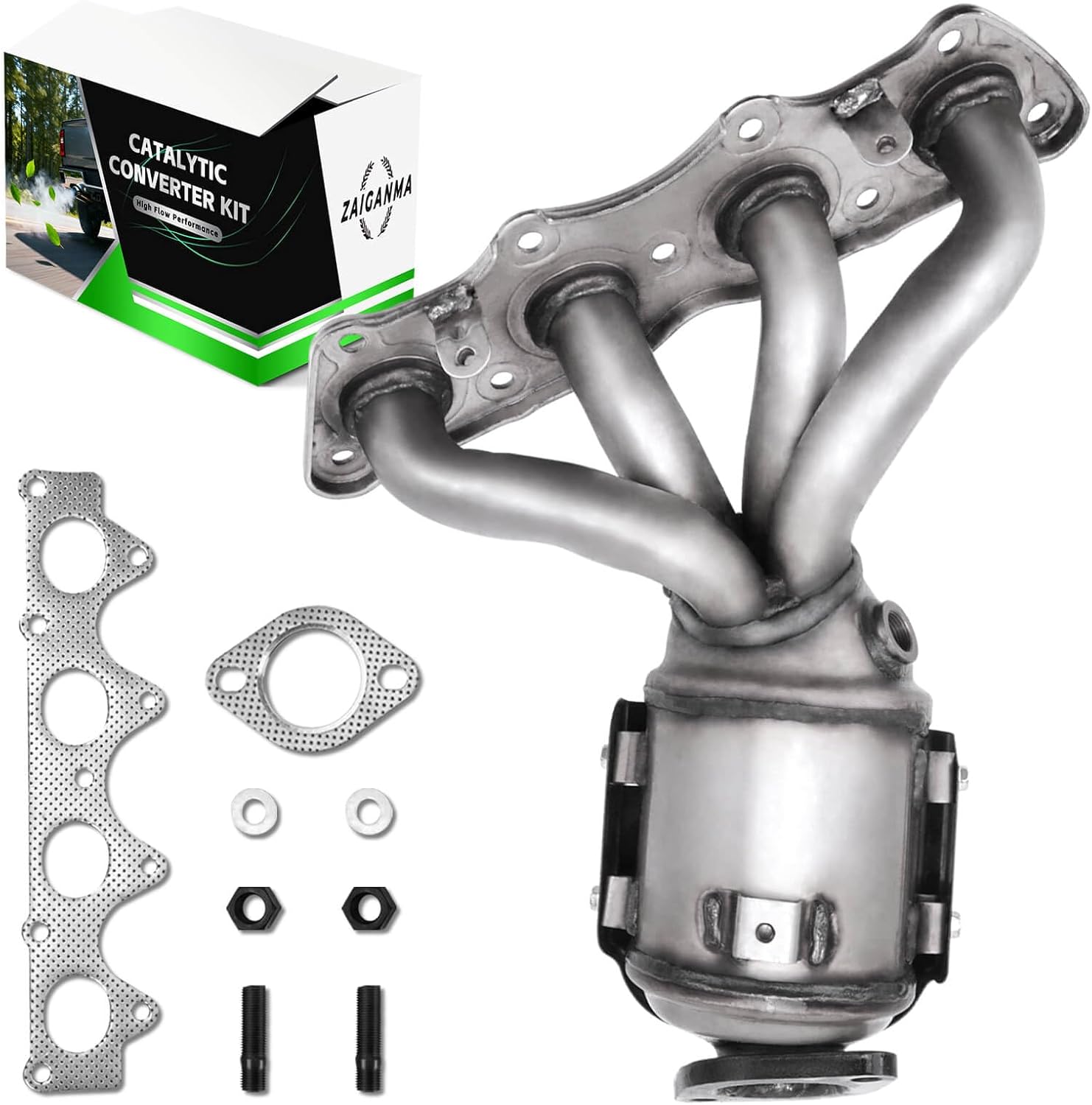
| Compatible vehicles | 2012–2016 Kia Soul L4 1.6L |
|---|---|
| Emissions spec | Federal (EPA compliant) |
This ZAIGANMA catalytic converter is a direct-fit replacement intended for the 2012–2016 Kia Soul with the 1.6L L4 engine. It replaces the factory unit and is fitted to the same mounting points, and the seller says the converter contains platinum, rhodium, and palladium to catalyze exhaust pollutants. Typical use is as a like-for-like repair when the original converter is clogged or has failed emissions testing; installation is carried out by a mechanic and most buyers report straightforward fitment with minor heat-shield alignment work. The body is stainless steel for corrosion resistance and the listing states the unit meets EPA-compliant emissions standards, which makes it suitable where federal-spec replacements are allowed. Important limitations are that it is not legal for sale in some states with stricter rules and a few users reported fitment of the heat shield or bolt alignment needed small adjustments. If you need a factory-style emissions repair for a 2012–2016 Kia Soul 1.6L, this provides a solid, lower-cost alternative to dealer parts but be prepared to have a shop handle final alignment and check legal compliance for your state.
Best for: Risk-averse mainstream owners seeking a dependable, factory-style replacement to restore emissions performance and clear check-engine codes for a 2012–2016 Kia Soul 1.6L.
Less Ideal for: Drivers in states with stricter emissions laws or buyers who want an exact dealer-sourced part with guaranteed state-specific compliance should consider other options.
- Direct-fit design for 2012–2016 Kia Soul 1.6L to simplify replacement
- Contains precious metal catalysts (platinum, rhodium, palladium) for emissions conversion
- Stainless steel construction for improved corrosion and heat resistance
- Meets EPA-compliant federal emissions specifications where permitted
- Not legal for sale in certain states with stricter emissions rules
- Some buyers reported minor heat-shield or bolt alignment adjustments during installation
Verdict A cost-effective, direct-fit replacement for restoring emissions function on 2012–2016 Kia Soul 1.6L models where federal-compliant parts are allowed.
5. A-Premium Catalytic Converter Direct-Fit for Kia Soul 2012–2019 1.6L

| Vehicle fitment | Kia Soul 2012–2019 L4 1.6L |
|---|---|
| EPA compliant | Yes (not for restricted states) |
| Inlet type | 2 Bolt Welded Flange |
| Outlet type | Pipe Connection |
| Body material | Stainless Steel |
This A-Premium catalytic converter is a direct-replacement unit made to fit Kia Soul 2012–2019 with the 1.6L naturally aspirated engine. It installs in place of the factory part using a 2-bolt welded flange inlet and a pipe-connection outlet, so a muffler shop may be needed if the vehicle's exhaust pipe requires expanding or flaring. The converter is stainless steel and sold as EPA-compliant for federal-emissions vehicles, which means it will clear emissions checks in most states but cannot be legally sold for use in certain restricted states. Practical benefits include a ready-made direct-fit design that can cure check-engine light issues tied to a failed converter and restore exhaust flow close to factory behavior. Some buyers report easy installs and improved drivability, while others needed minor shop work for the outlet fit and a few experienced fitment or light-related issues. The product includes a one-year unlimited-mileage warranty from the brand for support after installation.
Best for: Buyers who prioritize practical, cost-conscious repairs and want a near-factory replacement for a Kia Soul 1.6L that avoids dealer labor and parts markups.
Less Ideal for: Drivers in states with stricter aftermarket emissions laws or owners seeking a guaranteed bolt-in plug-and-play part without any exhaust-end adjustments should look elsewhere.
- Direct-fit design made specifically for Kia Soul 2012–2019 1.6L for simpler replacement
- Stainless steel construction for better corrosion resistance than mild steel parts
- EPA-compliant for federal emissions systems so it meets regulatory requirements outside restricted states
- 2-bolt welded flange inlet matches factory mounting style to reduce custom fabrication
- Not legal for sale or use in California, Colorado, New York, and Maine due to state emissions rules
- Outlet is a plain pipe connection rather than a flared slip fit so some vehicles need pipe expansion or a shop to finish the installation
- Fitment and check-engine resolution vary between vehicles so it may not clear all diagnostic codes without additional work
Verdict A practical, lower-cost direct-fit catalytic converter for Kia Soul 1.6L owners who want a factory-style replacement but who may need minor muffler-shop work and must avoid restricted states.
6. A-Premium Catalytic Converter with Gasket Kit for Kia Rio/Soul/Hyundai Fitments

| Vehicle emissions | Federal Emissions |
|---|---|
| EPA compliant | Yes |
| Inlet type | 9 Bolt Welded Flange |
| Outlet type | 2 Bolt Welded Flange |
| Body material | Stainless Steel |
This A-Premium catalytic converter is a direct-fit replacement designed to restore emissions control and clear catalytic-related engine codes on compatible 1.6L L4 Kia vehicles. It installs using the supplied gaskets and bolts and matches factory mating surfaces with a 9-bolt inlet and 2-bolt outlet flange pattern, so installation is typical for a bolt-on exhaust repair at a shop or for an experienced DIYer. The unit is stainless steel and labeled EPA-compliant for federal emissions states, which helps keep the car within legal emissions limits outside restricted states. Buyers report it corrects O2 sensor readings and resolves drivability issues tied to a failing catalyst. Expect practical savings compared with a factory replacement, but note some users found the included hardware to be lower quality and one report of early failure; reusing sound original bolts and checking fit before final torque is prudent. Also it cannot be sold for use in certain states with stricter regulations.
Best for: Balanced buyers who want a cost-effective, ready-to-install replacement that restores emissions performance and drivability without the premium cost of a factory unit.
Less Ideal for: Drivers in states with strict aftermarket emissions restrictions or those who require dealer-level warranty support and longevity assurances should look at alternatives.
- Direct-fit flange pattern and factory-style mating surfaces for straightforward installation
- EPA-compliant for federal-emissions vehicles, restoring emissions control and clearing related fault codes
- Stainless steel construction resists corrosion better than mild steel replacements
- Includes gaskets and bolts so installers have the basic parts needed for a typical replacement
- Often restores correct O2 sensor readings and drivability according to user reports
- Cannot be legally sold or installed in California, Colorado, New York, or Maine due to state emissions rules
- Some buyers reported lower-quality included hardware and at least one premature failure reported under warranty issues
Verdict A practical, wallet-friendly factory-style replacement that typically restores emissions function and drivability on compatible Kia 1.6L cars, but it is not legal for use in several states and the included hardware quality can vary.
Choosing the Right Kia Soul Catalytic Converter: Key Factors to Consider
Vehicle-Specific Fitment
A correct fit matters because exhaust flanges, hanger locations, and oxygen sensor ports vary by model year and engine option. Choosing a converter engineered for the Kia Soul reduces the need for cutting, welding, or adapter pieces, which can introduce leaks and alignment issues.
Proper fitment also ensures the oxygen sensors sit at the intended distance from the catalyst, which affects sensor readings and engine control feedback. Expect easier installation, better sealing, and a reduced chance of exhaust leaks when fitment is confirmed for your specific Kia Soul model.
Emissions Conversion Efficiency
The primary function of a catalytic converter is to convert harmful gases into less harmful ones. Look for information on substrate type, catalyst loading, or certification that indicates conversion efficiency for hydrocarbons, carbon monoxide, and nitrogen oxides.
Higher conversion efficiency helps the vehicle meet emissions standards and can prevent failed inspections. Efficiency also impacts long-term engine management because poorly converting units may trigger diagnostic trouble codes or allow higher tailpipe emissions.
Oxygen Sensor and Port Compatibility
Modern engines rely on upstream and downstream oxygen sensors to monitor catalyst performance and control fuel trim. A replacement converter must place sensor ports in the correct locations and use compatible thread sizes and bung types.
Incorrect sensor placement can cause false readings, trigger the check engine light, and lead to poor fuel economy or driveability issues. Confirming sensor compatibility avoids additional adapters and diagnostic troubleshooting after installation.
Durability and Internal Construction
Construction details such as substrate material, washcoat quality, and housing thickness affect how long a converter will last under heat and vibration. Robust internal construction resists catalyst breakdown, clogging, and thermal shock that can occur with frequent short trips or aggressive driving.
Durable housings and quality catalysts reduce the chance of premature failure and the need for repeat replacements. Consider stated lifespan or warranty terms as an indirect indicator of expected durability.
Installation Requirements
Some replacements install directly with basic hand tools, while others require cutting, welding, or specialized torque procedures. Understand the scope of work before buying so you can plan for a DIY install or arrange professional labor.
Installation complexity affects total cost and downtime. Units designed for bolt-on replacement minimize time in the shop and lower the risk of installation-related leaks or fitment problems.
Warranty and Documentation
A clear warranty and supporting documentation provide assurance about performance and coverage in case of early failure. Warranties that cover structural integrity and emissions performance show manufacturer confidence in the component.
Documentation should include fitment notes, part numbers, and installation guidance. These materials help verify compatibility with your Kia Soul and support any warranty claims if problems arise.
FAQ
What are common symptoms that indicate a failing catalytic converter on a Kia Soul?
Common signs often include reduced engine power, a noticeable drop in fuel economy, and persistent check engine light codes related to catalyst efficiency. You may also notice a rotten egg odor from the exhaust or increased exhaust noise if internal damage has occurred. These symptoms usually prompt further diagnosis with OBD-II data and visual inspection.
Will a faulty catalytic converter trigger the check engine light on a Kia Soul?
Yes, issues with the catalytic converter frequently set diagnostic trouble codes related to catalyst efficiency or oxygen sensor readings, which usually illuminate the check engine light. The exact code depends on how the engine control module detects reduced conversion efficiency or abnormal sensor behavior.
Can I install a replacement catalytic converter on a Kia Soul myself?
That depends on your mechanical skill and the specific unit s installation requirements. Many direct-fit converters are designed for bolt-on replacement using common tools, but some require cutting, welding, or precise torque procedures. If you are unsure, professional installation ensures correct fitment and sealing.
How does a new catalytic converter affect exhaust emissions on a Kia Soul?
A properly functioning converter reduces hydrocarbons, carbon monoxide, and nitrogen oxides by converting them to less harmful substances. Installing a unit that matches the vehicle s specifications helps ensure emissions return to expected levels and improves chances of passing emissions inspections.
What should I check before buying a catalytic converter for my Kia Soul?
Confirm the part s explicit fitment for your Kia Soul model year and engine, verify oxygen sensor port locations and thread sizes, and review warranty and construction details. Also check whether the unit has documentation regarding emissions performance or certifications relevant to your area.
How We Chose the Best Kia Soul Catalytic Converter
We focused on components explicitly designed to fit the Kia Soul and prioritized factors that affect real-world performance and regulatory compliance. Key evaluation criteria included direct fitment to the vehicle s exhaust geometry and mounting points, certified emissions performance or manufacturer testing data, internal catalyst construction and materials that influence conversion efficiency, and durability under typical driving conditions. We also assessed flange and oxygen sensor port placement, warranty coverage and stated lifespan, and compatibility with common engine and exhaust variations specific to the Kia Soul.We excluded universal or highly generic units that require extensive modification, items lacking clear fitment information for the Kia Soul, and parts without documented emissions or catalyst composition details. The final list reflects products that met fitment, emissions, and durability thresholds relevant to owners seeking a reliable replacement.
Our full evaluation process is outlined in our review methodology.
Conclusion
When replacing a catalytic converter on a Kia Soul, prioritize exact fitment, appropriate oxygen sensor placement, and proven emissions conversion efficiency. Those factors have the biggest impact on drivability, emissions compliance, and long-term reliability.Balance installation complexity and warranty coverage against durability expectations. Choosing a unit that meets the vehicle s mechanical and emissions requirements reduces the likelihood of follow-up repairs and helps keep your Kia Soul running cleanly.
Explore More:
- Check out all Kia Soul parts & accessories
- Explore Catalytic Converters Maintenance & Repair Guides
- Explore Exhaust & Emissions
- Browse all Auto Parts
