

Note: This article contains affiliate links. If you click on these links and make a purchase, I may earn a small commission at no extra cost to you. This helps support my research and content. Read my full affiliate disclosure here.
If you drive a Honda Pilot, the catalytic converter plays a major role in lowering emissions and keeping the engine running smoothly. Choosing the right Honda Pilot catalytic converter matters for fitment, reliable emissions control, and avoiding drivability issues.This guide highlights seven shortlisted catalytic converters for the Honda Pilot. We focused on options that meet common fitment needs and deliver consistent emissions performance while noting installation considerations and longevity factors. Read on to see the key evaluation criteria and what to expect when replacing this emissions component.
Looking for other parts? See all Honda Pilot parts & accessories.
Top Picks at a Glance
| Best Overall The best all-around choice for most situations | CIRconvert Catalytic Converter Compatible with Honda Pilot 2009–2015 3.5L (EPA Compliant) |  |
| Best Quality Built to a higher standard if you want something more solid | Walker CalCat 84176 Direct-Fit Catalytic Converter for Honda Pilot |  |
| Best Value The sweet spot between price and what you get | FOMIUZY Catalytic Converter Kit for Honda 3.0–3.7L (direct-fit) |  |
| Best Budget The cheapest option that still gets the job done reliably | EVERESTWAY Front Catalytic Converter Assembly (pair) |  |
| Highest Rated A top-rated pick with lots of positive feedback | maXpeedingrods Catalytic Converter Set (Front Left & Right) for Honda 3.5L |  |
| Most Popular A crowd favorite that many people choose with confidence | PHILTOP Catalytic Converter for Honda Pilot 3.5L (Federal Emissions) |  |
| Best Seller A high-volume bestseller chosen again and again | NutsCata 3‑Piece Catalytic Converter Kit for 3.5L V6 Honda |  |
CIRconvert Catalytic Converter Compatible with Honda Pilot 2009–2015 3.5L (EPA Compliant)

| Vehicle fitment | Honda Pilot 2009–2015 3.5L |
|---|---|
| Position | Left, Right |
| Certification | EPA compliant |
| Manufacturer | CIRconvert |
This CIRconvert catalytic converter is a direct-fit replacement designed specifically for the 2009–2015 Honda Pilot with the 3.5L V6. It installs in place of the factory unit and is intended to restore proper emissions function, clear check-engine codes tied to a failed converter, and keep the vehicle EPA-compliant in states where non-California EPA parts are allowed. The unit is built from stainless-steel housings and uses laser welding for strength and heat resistance, which helps with long-term durability under typical driving conditions. Buyers report straightforward installs when reusing some heat-shield hardware and that the part resolved emissions-related faults. Limitations include the manufacturer restriction on use or shipment to California, Colorado, New York, and Maine, and a few user reports of early failures, so expect to verify fit and monitor initial performance. The seller provides a one-year unlimited mileage warranty for added reassurance.
Best for: Balanced owners who want a factory-style replacement to restore emissions performance and clear codes without upgrading to a performance aftermarket unit.
Less Ideal for: Drivers in states that require California-specific parts or anyone seeking a high-performance or long-life OEM-level warranty solution should look elsewhere.
- Direct-fit design for 2009–2015 Honda Pilot 3.5L, simplifying installation
- Constructed with stainless-steel housing and laser welding for heat resistance and durability
- EPA compliant for use in most U.S. states outside of restricted states
- Many buyers report the part clears emissions codes and restores normal operation
- Not legal for use or shipment to California, Colorado, New York, or Maine
- Some customers reported premature failures, so reliability may vary
Verdict: A cost-effective, direct-fit EPA-compliant replacement for Honda Pilot 2009–2015 3.5L owners who need to restore emissions function, but not suitable for states requiring California-compliant parts.
Walker CalCat 84176 Direct-Fit Catalytic Converter for Honda Pilot

| CARB EO number | D-182-72 |
|---|---|
| Application | Direct-fit replacement for Honda Pilot (confirm year/engine fitment) |
| Material | Stainless-steel body with aluminized pipe and heat shields |
| Fitment type | OBDII (1996+) and non-OBD (1995 and older) compatible |
The Walker CalCat 84176 is a direct-fit catalytic converter designed to replace the factory unit on compatible Honda Pilot models and meet CARB emissions requirements. It installs using the original hangers, flanges and brackets so no welding or custom fabrication is needed, which makes it suitable for a straightforward bolt-on replacement during exhaust repair. Walker emphasizes a high-technology washcoat and precise catalyst application to deliver consistent conversion efficiency and help clear emissions-related trouble codes such as P0420. The stainless steel body, aluminized pipe and heat shields improve durability against road corrosion and heat. As a CARB-compliant unit it is intended for use in states with strict aftermarket converter rules. The main limitations are that fitment must be confirmed for your specific Pilot year and engine, and professional installation is recommended to ensure correct alignment and sealing; this is a replacement part rather than an upgraded high-flow performance converter.
Best for: Performance-oriented Honda Pilot owners who prioritize factory-equivalent emissions performance and regulatory compliance when replacing a failed catalytic converter.
Less Ideal for: Drivers looking for an aftermarket converter aimed at increased exhaust flow or horsepower gains should consider performance-oriented alternatives instead.
- CARB-compliant design for emissions-regulated areas
- Direct-fit with OE-style hangers and flanges for bolt-on installation
- High-technology washcoat and precise catalyst application for consistent emissions control
- Stainless-steel body with aluminized pipe and heat shields for improved durability
- Requires verification of exact year/engine fitment for Honda Pilot before purchase
- Not designed as a high-flow performance converter for power gains
Verdict: A factory-style, CARB-compliant direct-fit replacement for Honda Pilot owners who need reliable emissions performance and a bolt-on installation.
FOMIUZY Catalytic Converter Kit for Honda 3.0–3.7L (direct-fit)
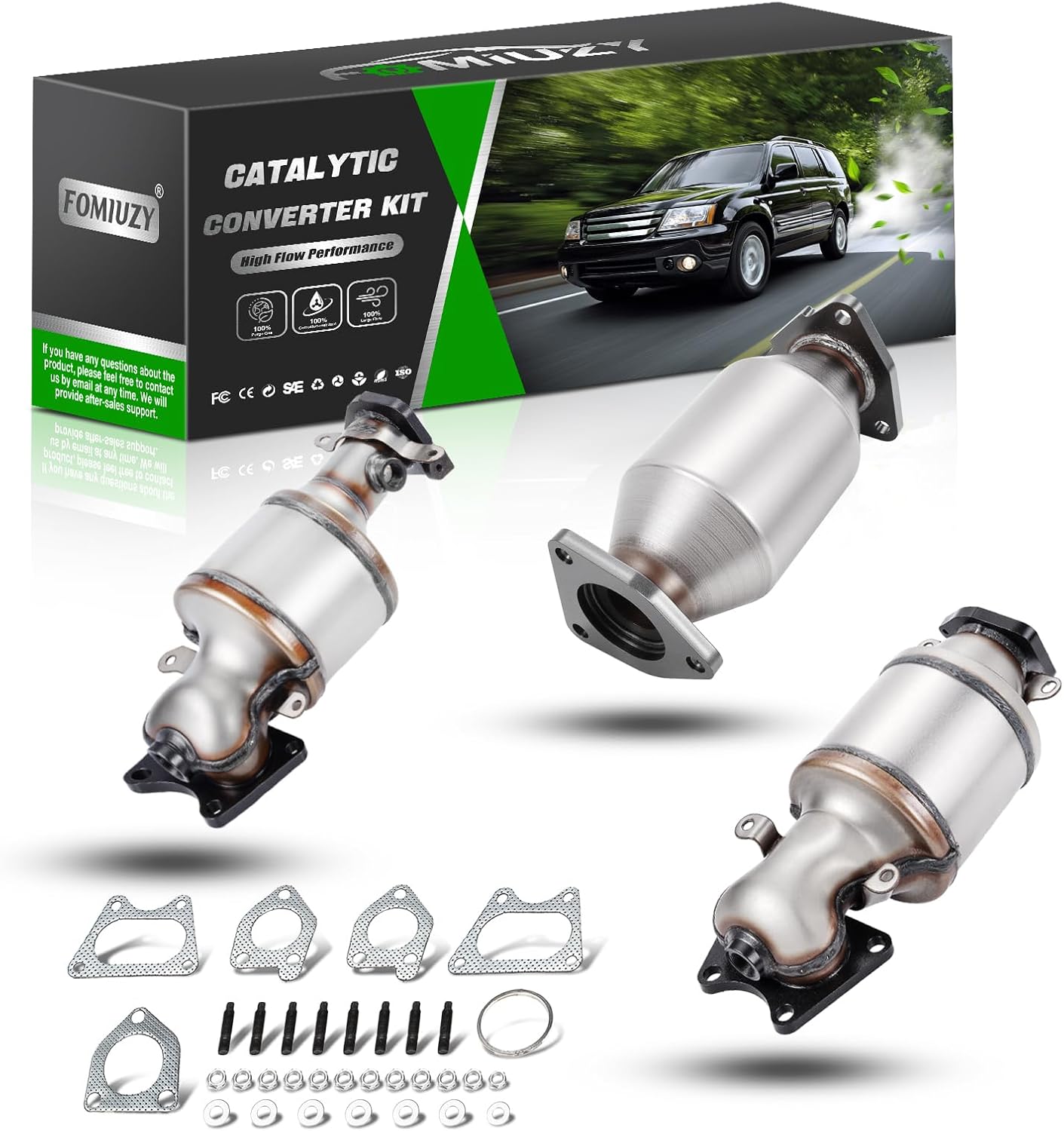
| Compatible engines | 3.0L–3.7L Honda/Acura listed models |
|---|---|
| Body material | Stainless steel |
| Catalyst metals | Platinum, Palladium, Rhodium |
| Package includes | 1 catalytic converter kit |
This FOMIUZY catalytic converter kit is a direct-fit replacement for select Honda and Acura 3.0–3.7L models and is intended to restore exhaust emission control and engine performance after a failed factory catalytic converter. It uses a stainless steel outer body and a high-deformation ceramic substrate loaded with platinum, palladium, and rhodium to increase catalyst contact area and improve conversion efficiency. Installation is intended to match the original mounting points so the unit can be bolted in and then welded for a tighter seal. For a practical optimizer this kit offers a near-OEM fit and a straightforward swap that avoids dealer-level costs. Limitations to expect are potential fitment variance on some flanges requiring modification or reorientation, and it is not legal for sale in California or New York due to emissions regulations, so it is unsuitable for those states. The manufacturer also states a lifetime warranty and recommends checking part numbers before purchase to confirm compatibility.
Best for: Buyers who prioritize sensible repairs and cost savings over dealer pricing and want a practical, budget-conscious replacement that closely follows factory fitment.
Less Ideal for: Drivers in states with strict emission laws or owners unwilling to modify exhaust flanges should seek a certified emissions-compliant or dealer-sourced unit instead.
- Direct-fit design intended to match factory mounting for faster installation
- Stainless steel body for improved durability against high temperatures
- High-load catalyst substrate using Pt, Pd, and Rh for stronger conversion efficiency
- Manufacturer lifetime warranty offered for part failures
- Not legal for sale in California or New York due to emissions standards
- Some buyers reported flange orientation or fitment issues that required cutting and rewelding
Verdict: A cost-effective, near-factory replacement for Honda 3.0–3.7L models that saves money over dealer parts but may require minor exhaust shop adjustments and is not legal in CA or NY.
EVERESTWAY Front Catalytic Converter Assembly (pair)

| Manufacturer | EVERESTWAY |
|---|---|
| Position | Front |
| Material | Stainless Steel |
| Package includes | 2X Catalytic Converter (includes accessories shown) |
This EVERESTWAY front catalytic converter set is a direct-replacement assembly intended to restore exhaust emissions control and flow on compatible mid-2000s Honda and Acura V6 vehicles. Sold as a two-piece kit for left and right front positions, the units are stainless steel, preassembled with the necessary accessories and sized to match the listed factory part numbers for bolt-in installation without modification. In practical use the converters simplify swapping out corroded or damaged factory units and can bring a vehicle back into proper running condition and check-engine readiness when the original converters fail. The product is not CARB compliant and therefore not for sale in several states, and buyers should confirm compatibility with their exact engine and part numbers since fitment is limited to specified model years and engine sizes. Expect typical benefits of a direct replacement: straightforward installation and corrosion-resistant construction, but bear in mind emissions legality restrictions and that these are aftermarket replacements rather than factory-made units.
Best for: Budget-conscious owners seeking an affordable, direct-fit way to replace failed front catalytic converters and get a mid-2000s Honda Pilot back to normal operation without professional fabrication.
Less Ideal for: Owners who need CARB-compliant parts for registration in restricted states or buyers who prioritize factory-original emissions certification and long-term OEM-level durability.
- Sold as a matched left and right front pair for one-step replacement
- Stainless steel construction resists rust and corrosion compared with untreated parts
- Designed to match common factory part numbers for bolt-on installation without modifications
- Not CARB compliant and restricted from sale/use in several states
- Aftermarket unit may not match longevity or internal substrate formulation of factory-quality converters
Verdict: A cost-focused, bolt-in front converter pair that restores emissions function for compatible mid-2000s Pilots but is not CARB compliant.
maXpeedingrods Catalytic Converter Set (Front Left & Right) for Honda 3.5L

| Manufacturer | maXpeedingrods |
|---|---|
| Manufacturer Part Number | DU10HI |
| Fits Engines | 3.5L |
| EPA Compliance | Meets EPA standards (not for use in certain states) |
This maXpeedingrods set replaces the front left and right catalytic converters on Honda 3.5L models and is built to fit into the factory exhaust mounting points with included gaskets and hardware. It is typically used when original converters are damaged, stolen, or failing emissions tests; installation is intended to be bolt-in with no major modifications, though some installers report minor alignment adjustments may be necessary. The converters use a stainless steel shell and ceramic substrate with platinum, rhodium, and palladium catalysts to reduce emissions and help clear a P0420 code. Practical benefits include EPA compliance for most states, a full two-piece replacement for both sides, and a lower-cost alternative to factory parts. Limitations are that it is not legal for use in certain states with stricter rules and long-term durability versus factory parts is not proven in the listing, so buyers should plan for professional installation and inspection after fitment.
Best for: Reliability-focused buyers who prioritize restoring emissions compliance with a direct-fit, lower-cost replacement and prefer a complete front-pair solution for Honda 3.5L models.
Less Ideal for: Drivers in states with stricter emissions regulations or buyers who need a certified state-compliant converter for those local registrations should seek alternatives.
- Designed to match factory mounting points with supplied gaskets and hardware for bolt-in installation
- Meets EPA emissions standards for eligible states and aims to resolve P0420 check-engine codes
- Stainless steel construction and ceramic substrate with Pt, Rh, and Pd catalysts for effective emissions reduction
- Includes both front left and right converters so both sides can be replaced at once
- Not legal for use in California, Maine, Colorado, or New York registered vehicles
- Long-term durability compared with factory units is not documented in the product information
Verdict: A reliable, budget-minded front-pair replacement for Honda 3.5L models that restores emissions performance for most states but is not allowed in stricter-regulation states.
PHILTOP Catalytic Converter for Honda Pilot 3.5L (Federal Emissions)
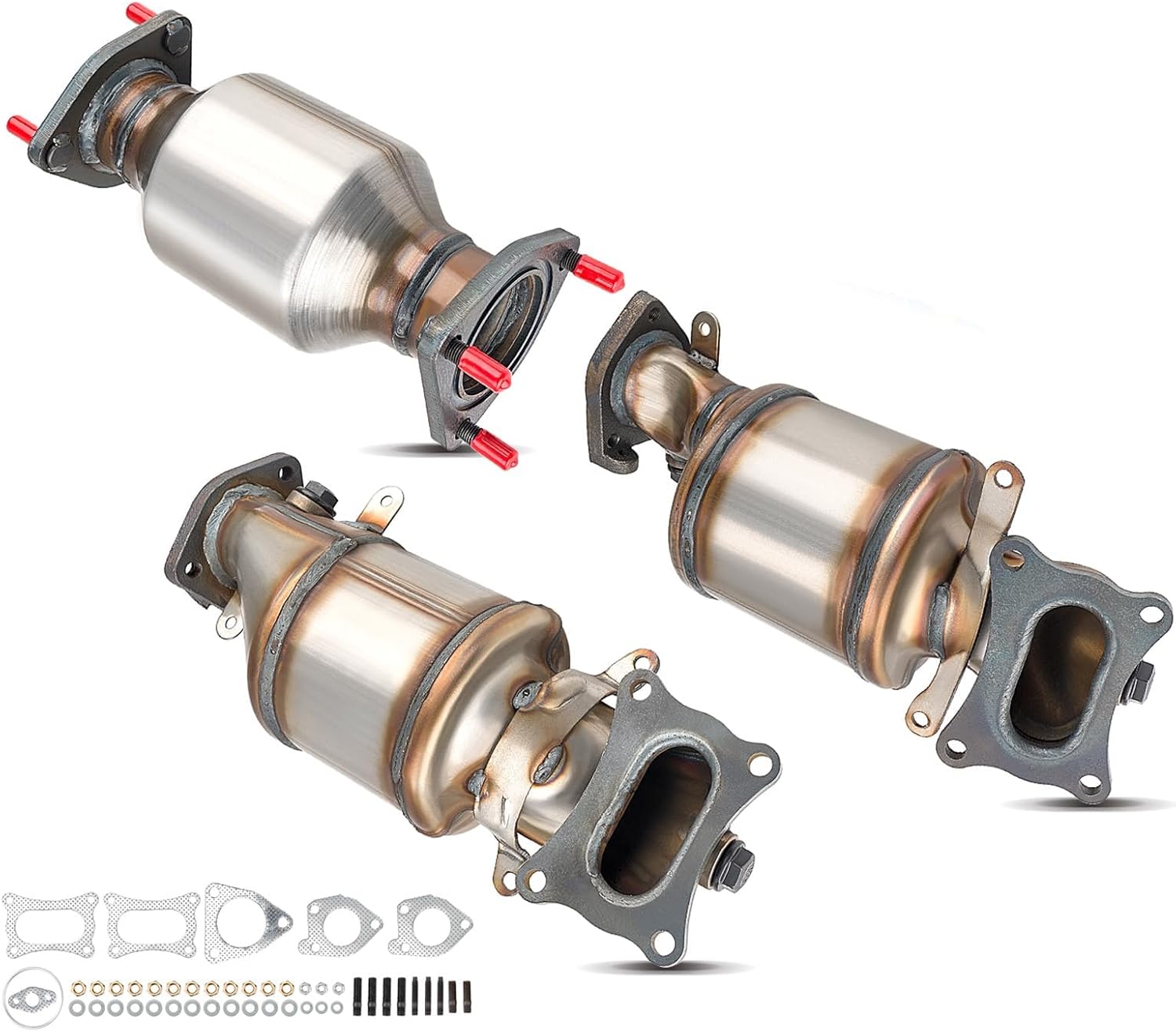
| Fitment | Honda Pilot 3.5L (federal emissions) |
|---|---|
| Emissions compliance | EPA approved (not for CA/NY/ME) |
| Internal substrate | Honeycomb ceramic, high-flow |
This PHILTOP catalytic converter is presented as a direct-fit replacement for the Honda Pilot 3.5L (federal emissions) and is intended to restore the vehicle's emissions performance and quiet exhaust operation. It installs in the factory exhaust path and uses a high-flow ceramic honeycomb substrate to increase flow area while maintaining catalytic activity, which can help clear cat-related check-engine codes and improve drivability. Typical use is as a front or rear factory-replacement unit during exhaust repairs or emissions failures; many owners report simpler installation when existing flanges and hardware match. Practical benefits include EPA compliance for non-California federal models, included mounting hardware in some shipments, and a high-flow design that can improve throttle response and fuel economy in clogg-related cases. Limitations to note are reported fitment variation across model years and occasional need for fabrication or professional installation when flange bends or heat-shield mounts do not align exactly with the Pilot's exhaust layout. This product is best treated as a cost-effective replacement that may require a shop visit for a perfect factory-quality installation.
Best for: Convenience-driven buyers who want a straightforward, cost-conscious replacement to get a Honda Pilot back to emissions compliance without hunting multiple suppliers or lengthy lead times.
Less Ideal for: Buyers in states with strict emissions laws or owners seeking a guaranteed bolt-on factory-quality unit without any possibility of fitment adjustment should consider dealer or vehicle-specific alternatives.
- Direct-fit replacement designed for Honda Pilot 3.5L federal-emissions models
- High-flow ceramic honeycomb substrate intended to improve catalytic efficiency and exhaust flow
- EPA compliant for federal emissions applications, suitable for emissions repairs outside California states
- Includes mounting hardware in many kits which can simplify installation for shops
- Not legal for sale or use in California, New York, or Maine
- Some buyers report flange or heat-shield misalignment that requires modification or professional fitting
- Installation may be difficult for DIYers when exact alignment or welding is required
Verdict: A budget-friendly, high-flow replacement catalytic converter for Honda Pilot 3.5L federal models that can restore emissions function but may need professional fitment for perfect alignment.
NutsCata 3‑Piece Catalytic Converter Kit for 3.5L V6 Honda

| Vehicle fitment | Honda 3.5L V6 models (various years) |
|---|---|
| Construction | 409L stainless steel |
| Substrate | Honeycomb ceramic with platinum, rhodium, palladium |
| Compliance | EPA compliant (federal only) |
This NutsCata three-piece catalytic converter kit is built as a direct-fit replacement for 3.5L V6 Honda models and is intended to restore emissions control while improving exhaust flow. It uses ceramic honeycomb substrates loaded with platinum, rhodium, and palladium and a 409L stainless steel construction for elevated heat and corrosion resistance. Typical use is a bolt-on replacement during an exhaust repair or when replacing failed factory converters; the kit includes O2 sensor ports for straightforward installation without welding in many cases. In practice the high-flow design can smooth exhaust tone and reduce backpressure, which some drivers report as a modest improvement in highway passing and fuel efficiency. Important limitations are regulatory: the kit is EPA compliant for federal use but is not legal for sale or installation in certain states, and the universal aspects noted in some listings mean fitment must be confirmed for the specific Pilot year and exhaust layout before purchasing.
Best for: Risk-averse mainstream buyers who prioritize restoring factory-level emissions control and prefer a bolt-on, factory-replacement style solution for routine repairs on their Honda Pilot.
Less Ideal for: Buyers in states with stricter emissions rules or those seeking a performance-focused, noncompliant high-flow aftermarket upgrade should look elsewhere.
- Direct bolt-on design intended for straightforward installation without machining or welding
- High-concentration precious metal-loaded ceramic substrate for effective catalytic conversion
- 409L stainless steel construction offers resistance to high temperatures and wear
- Includes O2 port(s) to accommodate factory sensor locations and reduce fitment work
- Not legal for sale or use in several states due to emissions regulations
- Fitment varies by model year and exhaust layout so verification is required before purchase
Verdict: A bolt-on, factory-replacement style catalytic converter kit that restores emissions control and improves exhaust flow for 3.5L V6 Honda models, but check state legality and exact fitment first.
Choosing the Right Honda Pilot Catalytic Converter: Key Factors to Consider
Vehicle Fitment and Compatibility
Correct fitment is the first practical concern when choosing a catalytic converter for a Honda Pilot. The converter must match the vehicle's exhaust layout, flange pattern, and oxygen sensor locations to avoid cutting or adapting the exhaust, which can add time and expense.
Fitment also affects installation complexity and sealing. A unit that aligns correctly with factory hangers and sensor bosses reduces the risk of exhaust leaks and ensures sensors read accurately. When fitment is unclear, plan for potential fabrication or professional installation and verify the product's documented vehicle applications before buying.
Emissions Performance and Certification
Emissions performance determines whether the converter will restore proper catalytic function and help the vehicle meet inspection standards. Look for units that reference emissions standards or substrate formulations designed to promote efficient chemical conversion of exhaust gases.
Certification or claims of equivalence to original emissions output are meaningful because they indicate the unit was engineered with conversion efficiency in mind. Units lacking clear emissions information may not adequately reduce pollutants and could leave the vehicle failing inspections or running less cleanly.
Construction Materials and Internal Substrate
The substrate and outer construction influence durability and effectiveness. Substrates vary in cell density and washcoat formulation, which affect conversion efficiency and backpressure. A robust stainless steel shell and quality welds help resist corrosion and road damage, extending service life.
Consider the expected balance between flow and conversion efficiency. Higher flow designs can be beneficial for performance but must still provide sufficient surface area for the catalytic reaction. Durable materials also reduce the chance of premature failure from road debris or thermal cycling.
Oxygen Sensor Placement and Compatibility
Modern engines rely on oxygen sensors located before and after the converter to monitor efficiency. A replacement catalytic converter must have sensor bungs in the correct positions for the Pilot's sensors, or you may face incorrect readings and trigger diagnostic trouble codes.
Sensor compatibility also affects installation simplicity. Pre-drilled and threaded bungs that match OEM sensor sizes reduce the need for adaptors. Confirm sensor boss locations and thread types to ensure the vehicle's sensors interface properly with the new unit.
Mounting Hardware and Installation Requirements
Installation details can vary widely between direct-fit and universal-style converters. Direct-fit units are typically supplied with the necessary flanges, gaskets, and mounting points to replace the original component with minimal modification. Universal units often require cutting, welding, or additional hardware, which increases labor and introduces potential leak points.
Assess what mounting components are included and whether additional parts or professional installation will be necessary. Ease of installation affects total cost and the risk of leaks or misalignment that could impact performance.
Durability, Warranty, and Aftermarket Support
Long-term durability is an important consideration because catalytic converters face heat cycles, corrosive exhaust gases, and road hazards. A unit built from quality materials with solid internal support is less likely to crack, break loose, or degrade prematurely.
Warranty terms and available aftermarket support provide insight into manufacturer confidence and help protect your purchase. Longer warranties and clear support channels can offset concerns about early failure and reduce the cost and hassle of replacement.
Why the Honda Pilot Catalytic Converter Matters
The catalytic converter on a Honda Pilot does more than sit behind the muffler. It is a core emissions control component that converts harmful exhaust gases into less harmful compounds before they leave the tailpipe. A healthy catalytic converter helps the vehicle meet emissions rules and supports proper engine management by maintaining expected backpressure and sensor readings.
Awareness of how this component behaves is useful for any owner deciding on a replacement. Problems with the catalytic converter can affect drivability, fuel economy, and the life of downstream parts. Understanding typical failure modes and what to expect when a converter goes bad helps you make a practical buying or repair decision.
- Converts hydrocarbons, carbon monoxide, and nitrogen oxides into less harmful gases
- Works with oxygen sensors to allow the engine control unit to tune fuel delivery
- Can impact engine performance and the check engine light behavior when degraded
Common Symptoms and Diagnosing Issues
Symptoms of catalytic converter problems on a Honda Pilot can be subtle at first and then progress. Typical signs include a persistent check engine light, loss of power under acceleration, reduced fuel economy, and an unusual rotten egg or sulfur smell from the exhaust. In many cases a plugged or internally damaged converter will cause exhaust restriction that the driver feels as sluggishness or hesitation.
Diagnosis should combine visual inspection, simple tests, and scan tool data. A mechanic will check for error codes related to catalyst efficiency and oxygen sensor readings. A backpressure test or thermal imaging can reveal a restricted converter. Smoke or rattling noises when the engine is revved can point to a physically broken internal substrate. When the check engine light catalytic converter codes appear, confirm those codes with live sensor data before replacing the unit.
- Watch for check engine light codes referring to catalyst efficiency or oxygen sensor correlation
- Look for acceleration loss and lower highway fuel economy as performance indicators
- Listen for rattles and note any sulfur like exhaust odor that suggests converter distress
Preparing for Replacement or Repair
Before replacing a Honda Pilot catalytic converter, gather the right information and parts. Verify the exact model year and any factory exhaust configuration so you order a compatible replacement. Have basic tools ready, and consider whether you will reuse mounting hardware or need new gaskets and bolts. Plan for adequate time and a safe workspace because access to the converter often requires lifting the vehicle.
Decide whether the job will be DIY or professional. Replacing the converter can be straightforward on some trims but more involved on others due to heat shields, sensors, or factory hangers. If rust or seized fasteners are present, extra time and penetrating oil will be needed. If you intend to have the oxygen sensors swapped or repositioned, follow the vehicle service manual for torque and sequencing to avoid sensor damage.
- Confirm year and exhaust configuration to ensure CAT converter fitment
- Have replacement gaskets, new bolts, and anti seize on hand
- Allow time for rusted hardware and use proper safety stands when working under the vehicle
Practical Installation Tips and What to Expect
When removing the old converter, work carefully to protect oxygen sensors and wiring. Mark sensor locations before disassembly so you can reinstall them in the correct positions. If the converter includes integrated sensors, note wire routing and connector orientation to prevent electrical faults.
During installation check flange faces for warping and ensure mating surfaces are clean. Use new gaskets and tighten fasteners in a cross pattern to the specified torque. After installation, clear any stored codes and perform a short drive cycle to allow the engine control unit to re-learn fuel trims and catalyst efficiency. Expect that it may take a few drive cycles for sensor voltages to stabilize and for readiness monitors to set.
- Protect oxygen sensors and note their locations prior to removal
- Replace gaskets and tighten to manufacturer torque specs
- Clear codes and complete drive cycles to allow the ECU to recalibrate
Lifecycle, Maintenance, and Avoiding Premature Failure
A catalytic converter can fail prematurely if the engine runs rich, if oil or coolant contaminates the substrate, or after physical damage. Regular engine maintenance helps protect the converter. Fix ignition and fuel system faults promptly to avoid prolonged fuel enrichment that can overheat or coat the catalyst. Address oil leaks and cooling system issues to prevent contaminants from entering the exhaust stream.
Driving habits also matter. Short trips that never allow the converter to reach normal operating temperature can allow deposits to build up. Occasional longer drives at cruising speed help burn off deposits and maintain converter efficiency. If theft or impact damage is a risk in your area, consider protective measures to reduce exposure to damage or theft of the underbody components.
- Repair misfires and fuel system faults quickly to prevent catalyst contamination
- Avoid extended cold start idling and mix in longer drives to reach operating temperatures
- Inspect for physical damage after off road use or underbody impacts
Cost Expectations, Paperwork, and Next Steps
Budgeting for a Honda Pilot catalytic converter replacement involves more than the part. Expect to factor in new gaskets, replacement oxygen sensors if required, and labor if you hire a shop. Labor can vary depending on access and whether any cutting or welding is required. Be aware that some jurisdictions require emissions paperwork or a proof of proper certification after replacement.
When planning the repair, collect vehicle identification information and any emissions test failure records you have. If you are organizing an emissions inspection, check local rules on acceptable replacement parts and documentation needed to demonstrate compliance. Keep receipts and part numbers from the repair for future reference and for any warranty claims.
- Include gaskets and possible oxygen sensor replacement in the budget
- Check local emissions rules and have repair receipts available for inspections
- Retain part numbers and warranty information after installation
How We Chose the Best Honda Pilot Catalytic Converter
We selected products for this list by applying vehicle-specific fitment requirements, emissions performance standards, build quality, mounting and flange compatibility, and material and warranty coverage. First, we confirmed that candidate units were specified for Honda Pilot model years and exhaust layouts to reduce installation complications. Next, we prioritized converters manufactured to meet emissions performance targets that help restore catalytic efficiency and pass inspections. We also weighed construction materials and internal substrate design for expected durability. Mounting hardware, flange styles, and oxygen sensor boss placement were evaluated to minimize modification needs during installation. Finally, we considered warranty coverage and aftermarket support as indicators of manufacturer confidence. Excluded from consideration were universal-fit units that require extensive modification, parts lacking clear fitment information, and products without documented emissions or material specifications.
Our full evaluation process is outlined in our review methodology.
FAQ
What are common catalytic converter symptoms in a Honda Pilot?
Common signs often include a noticeable drop in engine performance, rough idling, or reduced acceleration. You may also experience increased exhaust odor or a change in fuel economy. These symptoms usually develop gradually but can vary depending on the extent of converter degradation.
Will a failing catalytic converter trigger the check engine light?
Yes, a failing converter frequently causes diagnostic trouble codes that illuminate the check engine light. The vehicle's oxygen sensors may detect inefficient conversion and set codes indicating catalyst system performance or oxygen sensor circuit issues. A scan tool can help identify whether the converter is implicated.
Can a catalytic converter affect exhaust emissions testing?
Catalytic converters play the primary role in reducing harmful exhaust emissions, so a degraded unit can cause a vehicle to fail emissions testing. Reduced conversion efficiency typically raises levels of hydrocarbons, carbon monoxide, or other regulated pollutants measured during inspections.
How difficult is catalytic converter replacement on a Honda Pilot?
Difficulty depends on whether you choose a direct-fit unit or a universal replacement. Direct-fit converters that match sensor locations and flange patterns are usually straightforward for a competent technician. Universal units often require cutting, welding, or additional brackets, increasing the complexity and required tools.
What should I check before buying a replacement catalytic converter?
Verify exact vehicle fitment, oxygen sensor boss locations, and flange types to avoid installation problems. Also confirm emissions performance or certification, the construction materials, and warranty coverage. If fitment information is unclear, consult technical documentation or a professional to prevent compatibility issues.
Final Verdict
When choosing a catalytic converter for a Honda Pilot, prioritize correct vehicle fitment, proper oxygen sensor placement, and demonstrated emissions performance. These factors have the biggest impact on installation ease, diagnostic stability, and whether the vehicle will meet inspection standards.Balance construction quality and warranty support against installation complexity. Selecting a unit that aligns with the Pilot's exhaust layout and emissions needs reduces the risk of extra fabrication and helps ensure reliable operation over time.
Explore More:
- Check out all Honda Pilot parts & accessories
- Explore Catalytic Converters Maintenance & Repair Guides
- Explore Exhaust & Emissions
- Browse all Auto Parts
