

Note: This article contains affiliate links. If you click on these links and make a purchase, I may earn a small commission at no extra cost to you. This helps support my research and content. Read my full affiliate disclosure here.
If your Honda Odyssey is showing reduced performance or higher emissions, choosing the right catalytic converter matters for drivability and compliance. A correctly selected converter helps the engine run efficiently, lowers harmful exhaust output, and avoids recurring diagnostic trouble codes. This guide presents a shortlist of the top picks for Honda Odyssey catalytic converter replacements, chosen for accurate fitment and reliable emissions control. Below we outline the evaluation criteria and what to expect when swapping a converter, then present the recommended options.
Looking for other parts? See all Honda Odyssey parts & accessories.
Top Picks at a Glance
| Best Reviewed A top-rated pick with lots of positive feedback | maXpeedingrods Catalytic Converter Front Left & Right for Honda 3.5L |  |
| Most Popular A crowd favorite that many people choose with confidence | PHILTOP Front Right Catalytic Converter (Front Right) Compatible with Honda Odyssey 3.5L/3.7L |  |
| Best Quality Built to a higher standard if you want something more solid | Walker Ultra Direct-Fit Catalytic Converter for Honda Odyssey |  |
| Best Budget The cheapest option that still gets the job done reliably | NutsCata Direct-Fit Catalytic Converter for Honda Odyssey 1999–2004 3.5L V6 |  |
| Most Sold A high-volume bestseller chosen again and again | JT Exhaust Catalytic Converter (EPA Compliant) for Honda Odyssey and Select Honda/Acura Models |  |
| Best Value for Money The sweet spot between price and what you get | CIRconvert Catalytic Converter Compatible with 2005–2010 Honda Odyssey EX/LX |  |
| Best Overall The best all-around choice for most situations | Walker CalCat Universal Catalytic Converter (Model 82608) |  |
1. maXpeedingrods Catalytic Converter Front Left & Right for Honda 3.5L

| Compatibility | Honda Odyssey EX-L/EXL/Touring 3.5L 2008–2010 |
|---|---|
| Material | Stainless steel housing with ceramic substrate |
| Catalyst composition | Platinum, Rhodium, Palladium |
| Includes | Gaskets and installation hardware |
| Emissions | EPA compliant (not for certain states) |
These two front catalytic converters replace the factory units on Honda 3.5L models and are intended to restore emissions control and exhaust flow for vehicles like the 2008–2010 Odyssey EX-L/EXL/Touring. They mount into the existing exhaust system using the supplied gaskets and hardware, so installation is typically straightforward for a professional or experienced DIY technician. The converters use stainless steel housings and a ceramic substrate with platinum, rhodium, and palladium catalysts, which the seller says meets EPA standards and can clear P0420 codes outside of restricted states. Reported benefits include accurate fitment, solid build quality, and noticeably reduced emissions with a price advantage over factory replacements. Expect occasional fitment fiddling such as adjusting nearby pipes or ensuring proper sealing at flanges. California and several state registrations are excluded, so confirm local emissions rules before buying. Long-term durability appears reasonable from early user reports but is not guaranteed to match factory lifespan.
Best for: A reliability-focused buyer who wants a cost-effective, factory-style catalytic converter replacement for a 2008–2010 Honda Odyssey EX-L/EXL/Touring and prioritizes restoring emissions function without seeking performance tuning.
Less Ideal for: Drivers in states with stricter emissions registration or anyone who requires a certified state-specific emissions part should look for a region-compliant factory replacement.
- Sold as a matched front left and right set for complete replacement
- Built from stainless steel with high-heat ceramic substrate and precious metal catalysts
- Includes gaskets and hardware for direct-fit installation to the existing exhaust
- Advertised EPA compliance to address emissions and common P0420 code issues
- Not legal for use in certain states with stricter emissions rules
- May require minor adjustments to adjacent pipes or EGR fittings for a perfect seal
- Long-term durability compared with factory parts is uncertain
Verdict A budget-friendly, EPA-compliant front converter pair that restores emissions control on 2008–2010 Honda Odyssey 3.5L models but is not approved for all states.
2. PHILTOP Front Right Catalytic Converter (Front Right) Compatible with Honda Odyssey 3.5L/3.7L

| Compatible engines | 3.5L, 3.7L |
|---|---|
| Position | Front Right |
| OEM part numbers | 16643, 641413, 40924, 18290R70A00, EC40924 |
| Shell material | Stainless steel |
| Compliance | EPA compliant (not for CA/Maine/Colorado/New York) |
This PHILTOP front-right catalytic converter is a direct-fit replacement intended for Honda Odyssey 3.5L/3.7L applications that call for part number 16643. It installs flange-to-flange with bolt-on connections and ships with gaskets and mounting hardware, which makes it a convenience-focused option for someone replacing a failed unit. The stainless steel outer shell and welded connections aim to resist heat and corrosion, while the seller states the internal flow design is tuned to meet factory-spec performance and emissions requirements for most states (not California). In practice the part is used to restore emissions control, stop check-engine codes, and in some reports improve exhaust smoothness and fuel economy. Fit and instructions vary by vehicle and a few buyers found alignment or manual clarity issues, so a shop install or basic mechanical experience may be needed for a trouble-free swap. It is offered with a lifetime warranty from the seller, but legal use is limited in certain states that require stricter standards.
Best for: Drivers who prioritize a convenient, bolt-on replacement to get an Odyssey back on the road quickly and avoid dealer repair complexity.
Less Ideal for: Anyone who needs a California-compliant catalytic converter or expects a perfect DIY experience without mechanical skills or a shop to finalize fitment.
- Direct-fit flange-to-flange design and included gaskets/hardware simplify replacement.
- Stainless steel shell with welded connections for improved durability under heat.
- High-flow internal design aimed to meet factory-spec emissions while maintaining exhaust flow.
- Seller-provided lifetime warranty offers post-purchase protection.
- Not legal for sale in some states that require California standards.
- Fitment and installation instructions are sometimes unclear and may require a mechanic to achieve proper alignment.
Verdict A convenient, factory-style front-right replacement for Honda Odyssey owners who want a bolt-on catalytic converter to clear codes and restore emissions performance, but not suitable where California-level compliance is required.
3. Walker Ultra Direct-Fit Catalytic Converter for Honda Odyssey

| Vehicle fit | 2005-2010 Honda Odyssey |
|---|---|
| OBD | OBDII (1996 and newer) |
| Exterior | Machined |
| Manufacturer | Tenneco (Walker) |
This Walker Ultra direct-fit catalytic converter is built as a bolt-on replacement for specific Honda Odyssey model years and aims to restore emissions control and engine diagnostics without fabrication. It installs using factory-style hangers, flanges, brackets and heat shields so a typical repair shop can swap it in without welding. Walker specifies an EPA-compliant washcoat and precious metal loading intended to match the converter function required by OBDII vehicles, which helps clear converter-related check-engine codes and return the vehicle to compliant tailpipe emissions. The unit’s machined exterior, thick flanges and OEM-style heat shields improve durability and protect the undercarriage from heat. Some buyers report minor fitment or fastener issues at the EGR connection that required re-tapping threads or replacing supplied studs during installation, so double-check fasteners before final assembly. For a performance-minded owner seeking a high-quality, direct replacement that restores emissions performance, this provides a strong factory-style option at a fraction of dealer costs.
Best for: Performance-oriented buyers who prioritize restoring factory-level emissions control and drivability on a Honda Odyssey and want a high-quality, vehicle-specific replacement rather than a generic universal part.
Less Ideal for: Buyers seeking a universal or multi-vehicle converter solution or those unwilling to check and possibly rework supplied fasteners during installation should consider alternatives.
- Direct-fit bolt-on design with factory-style hangers and heat shields simplifies installation
- EPA-compliant washcoat and precious metal loading aimed at restoring emissions performance
- Thick flanges, hangers and brackets for improved strength and durability
- Some units have shallowly cut threads or loose supplied studs at the EGR pipe connection requiring re-tapping or hardware replacement
- Not a universal fit; only for the specified Honda Odyssey model years
Verdict A factory-style, EPA-compliant direct-fit converter for 2005–2010 Honda Odyssey owners who want OEM-like performance without dealer pricing.
4. NutsCata Direct-Fit Catalytic Converter for Honda Odyssey 1999–2004 3.5L V6

| Vehicle fitment | Honda Odyssey 1999–2004 3.5L V6 |
|---|---|
| EPA status | EPA-compliant (not for sale/use in some states) |
| Shell material | 409L stainless steel |
| O2 provision | Includes O2 sensor port |
This NutsCata catalytic converter is a direct-fit replacement intended for the Honda Odyssey 1999–2004 with the 3.5L V6, offering an EPA-compliant option that installs without welding or extensive modification. It uses a high-flow ceramic substrate loaded with precious metals and a 409L stainless steel shell to resist heat and corrosion, which helps restore emissions control while aiming to preserve engine performance and exhaust flow. The unit includes an O2 sensor port for seamless integration with the factory wiring and is sized for bolt-on installation, so most DIYers or independent shops can swap it in a few hours. Practical benefits include restored emission compliance for federal standards and a potential smoothing of throttle response compared with clogged or damaged OEM cats. Limitations to consider are regulatory restrictions in certain states where this unit is prohibited and user reports that the internal substrate is compact, which could affect long-term durability versus larger factory-style converters. Expect a cost-efficient replacement that balances performance and price for the Odyssey application.
Best for: Budget-conscious Honda Odyssey owners focused on a low-cost, straightforward replacement that restores emissions control and keeps the vehicle roadworthy for daily driving.
Less Ideal for: Owners in states with stricter emission rules or people seeking a long-term, heavy-duty OEM-equivalent converter should consider higher-end or factory replacement options.
- Direct bolt-on design with O2 sensor port simplifies installation and avoids welding in most cases
- EPA-compliant for federal emissions standards so it restores legal emissions control outside restricted states
- High-flow ceramic substrate and precious metal loading aim to improve exhaust flow and maintain catalytic efficiency
- 409L stainless steel construction offers improved heat and corrosion resistance compared with basic steels
- Not legal for sale or use in certain states with stricter regulations
- Compact internal substrate size may offer shorter service life than larger factory-style converters
- Limited long-term durability data compared with established factory replacements
Verdict A cost-focused direct-fit catalytic converter that restores emissions control for the 1999–2004 Odyssey 3.5L while trading some long-term robustness for affordability.
5. JT Exhaust Catalytic Converter (EPA Compliant) for Honda Odyssey and Select Honda/Acura Models

| Fitment | 2005-2010 Honda Odyssey EX/LX 3.5L (also fits select Accord, Pilot, Ridgeline, Acura models listed) |
|---|---|
| Compliance | EPA OBDII emission requirements |
| Shell | Polished stainless steel |
| Manufacturer | JT |
| Manufacturer Part Number | HDPT-010-11-AC020 |
This JT Exhaust catalytic converter is a direct-fit replacement intended to restore emissions performance on compatible Honda and Acura V6 models. It uses a factory-style ceramic honeycomb substrate with additional precious metal loading to improve conversion efficiency and meet EPA OBDII requirements. Typical use is a one-for-one swap where the old, clogged, or damaged converter is removed and the JT unit is bolted in place; the listing and user reports indicate straightforward installation for mechanically minded owners or shops. Notable features include EPA compliance, a polished stainless shell, and a design claimed to be matched to factory fit using 3D scanning. Practical benefits are reduced tailpipe emissions, the potential to clear emissions-related faults, and a return to near-original exhaust flow and drivability. Limitations are that some buyers reported minor fitment differences such as missing heat shield mounts, so careful fit verification is needed before installation, and any needed welding or hardware adjustments add labor. This is a sensible replacement if you want a compliant, OEM-style unit but expect occasional minor trimming or bracket work on older vehicles.
Best for: Risk-averse mainstream buyers seeking a compliant, factory-quality replacement to restore emissions performance and keep their vehicle street-legal with minimal fuss.
Less Ideal for: Not a good choice for buyers wanting a performance-oriented or custom exhaust upgrade where non-standard fitment or enhanced flow is the goal.
- EPA OBDII compliant to address emissions standards
- Direct-fit design based on 3D scans for easier installation
- Higher precious metal loading for improved catalytic efficiency
- Stainless steel shell that resists corrosion and extends service life
- Some units may lack specific heat shield or bolt mounts requiring minor modification or extra hardware
- Replacement may still require shop labor or welding if factory hangers differ
Verdict A factory-style, EPA-compliant replacement catalytic converter that restores emissions control for compatible Honda/Acura V6 models, though minor fitment tweaks may be necessary.
6. CIRconvert Catalytic Converter Compatible with 2005–2010 Honda Odyssey EX/LX
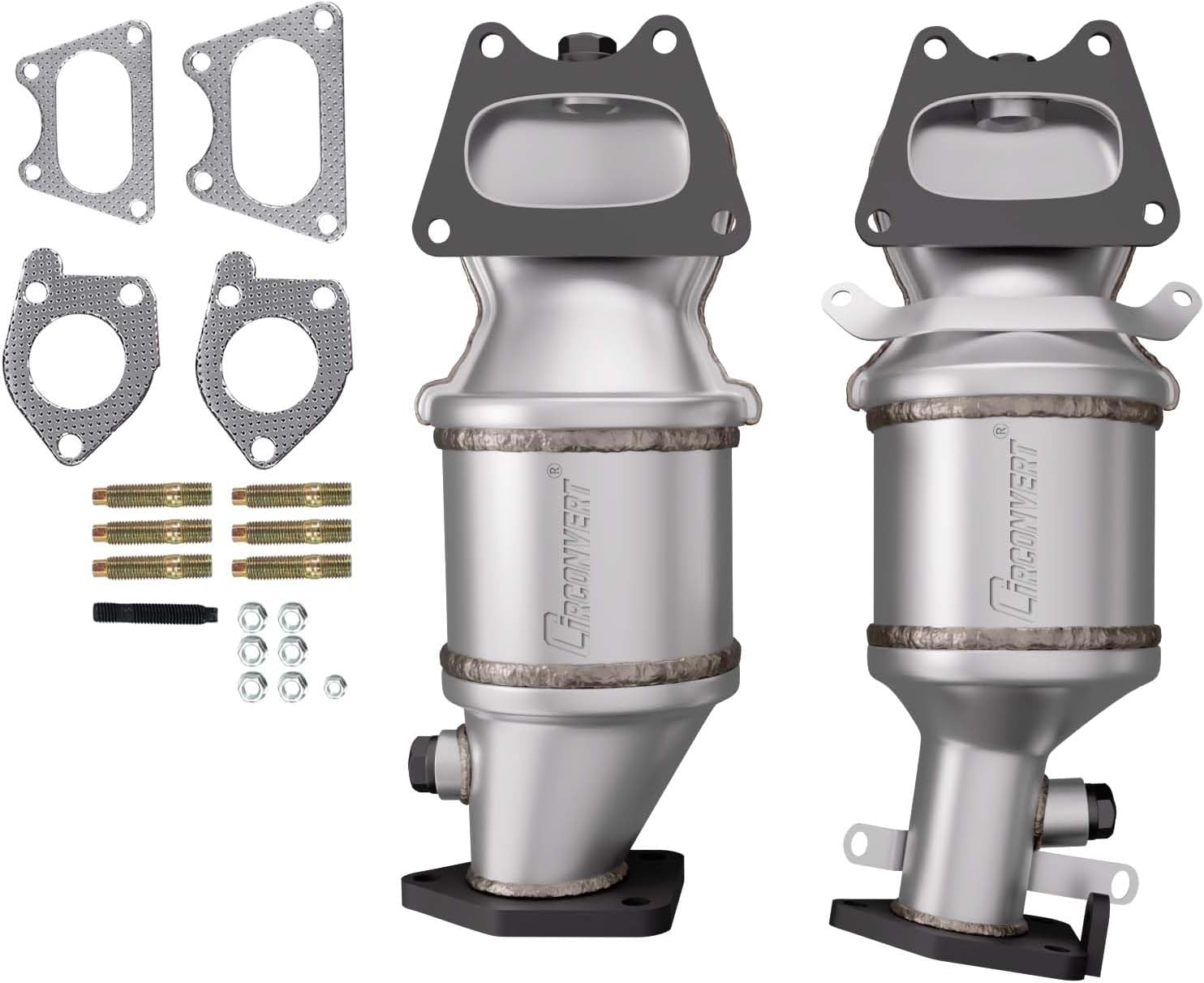
| Vehicle fitment | 2005–2010 Honda Odyssey EX/LX |
|---|---|
| Material | High-strength stainless steel |
| Certification | EPA certified |
| Position | Left, Right |
This CIRconvert catalytic converter is a direct-fit replacement intended for 2005–2010 Honda Odyssey EX/LX models. It installs in the factory location and is built from stainless steel with laser-cut and welded joints to resist heat and corrosion. Typical use is as a replacement for a failed or clogged converter to clear emissions codes and restore catalytic function; several buyers report the part cleared check engine codes after installation. The unit is EPA certified for use outside restricted states and includes internal catalyst media to reduce exhaust emissions. Practical benefits include a lower cost compared with dealer replacements and a design meant to match factory mounting points for a straightforward swap. Important limitations are state restrictions that prevent use in California, Colorado, New York, and Maine and mixed long-term reliability in some reviews, so expect to monitor performance after installation. Professional installation is recommended to ensure proper sensor alignment and heat-shield fitment.
Best for: Practical optimizers looking to fix emissions issues and clear codes on a 2005–2010 Honda Odyssey EX or LX without paying dealer prices, while accepting a value-focused aftermarket option.
Less Ideal for: Owners who require a California-compliant or state-inspected emissions solution or those who prioritize guaranteed long-term factory-level durability should consider alternatives.
- Direct-fit design for 2005–2010 Honda Odyssey EX/LX to simplify installation
- Constructed from high-strength stainless steel with laser welding for heat resistance
- EPA certified so it restores emissions control where permitted
- Lower cost than dealer or remanufactured replacements
- Not legal for sale or use in California, Colorado, New York, or Maine
- Some reviewers reported premature failures, indicating variable long-term durability
Verdict A budget-friendly, EPA-certified direct-fit catalytic converter for 2005–2010 Honda Odyssey EX/LX buyers who want a lower-cost replacement but should weigh state legality and mixed longevity reports.
7. Walker CalCat Universal Catalytic Converter (Model 82608)

| Model | 82608 |
|---|---|
| Manufacturer | Walker Exhaust |
| CARB EO Number | D-182-57 |
| Vehicle coverage note | Fits various 1998–2003 Honda/Acura applications (confirm fit) |
The Walker CalCat 82608 is a universal catalytic converter built to meet CARB standards for eligible 1995 and newer vehicles. It is intended to replace a failed or stolen converter and is typically welded into the exhaust system by a shop; expandable bushings and a customizable design help installers adapt it to specific exhaust layouts. Walker uses a high-technology washcoat and an OE-style catalyst application to deliver consistent emissions control and reliable smog test performance when correctly matched to the engine group. The converter’s stainless-steel body, aluminized pipe and heat shields improve durability against road corrosion and heat. Expect to pay for professional installation and possible fabrication to achieve a proper fit, and confirm the exact catalyst identifier needed for California smog because some buyers report mismatches that prevented certification. When matched correctly, it offers a cost-effective, factory-quality emissions repair for vehicles that require CARB-compliant parts.
Best for: Buyers seeking a balanced, dependable replacement that prioritizes emissions compliance and long-term reliability over convenience; ideal for owners who will have the unit professionally fitted and want a factory-quality repair.
Less Ideal for: Owners looking for a direct bolt-on, no-weld OEM-style swap or drivers unwilling to verify CARB catalyst identifiers before purchase should consider other options.
- CARB certified for use where emissions compliance is required
- Universal design with expandable bushings simplifies installer fitment
- OE-style catalyst coating aimed at consistent emissions performance
- Stainless-steel body and aluminized piping increase durability
- Proven in-smog success on older Honda models when matched correctly
- Requires professional welding or fabrication for installation
- Universal unit can need exact catalyst number match for California smog approval
Verdict A CARB-compliant, durable universal converter that delivers factory-quality emissions performance when properly matched and professionally installed.
Choosing the Right Honda Odyssey Catalytic Converter: Key Factors to Consider
Exact Fitment and Mounting
Fitment and mounting geometry determine whether the converter installs cleanly into the Odyssey exhaust system. A converter with correct flange type, inlet and outlet diameter, and mounting bracket locations reduces the need for welding or pipe modification. Proper fitment also preserves exhaust backpressure characteristics that affect engine performance and fuel trim. When fitment is precise, sensor ports align properly and gasket mating surfaces seal reliably. Choosing an option with vehicle-specific fit notes can save time in the garage and lower the risk of leaks. Consider the ease of access for removal and reinstallation, since tight engine bays can complicate swaps. Ask whether the unit includes gaskets, hardware, or preinstalled sensors if that matters for a bolt‑in job. Finally, confirm compatibility with any factory heat shields or crossmember clearances to avoid interference.
Emissions Certification and Substrate Type
Emissions certification indicates the converter meets regulatory performance standards for reducing hydrocarbons, carbon monoxide, and nitrogen oxides. Certified units are designed to achieve target conversion efficiencies under typical operating conditions. The internal substrate material and coating influence how quickly the converter reaches operating temperature and how well it withstands thermal cycling. A higher-cell-density substrate can improve conversion surface area but may affect flow characteristics. Durable washcoat and catalyst loading affect long-term activity and resistance to contamination from oil or fuel additives. Verify that the emissions claims are supported by documentation or regulatory listing for the intended vehicle application. Certification matters most if you need to meet inspection or local emissions requirements.
Oxygen Sensor and Port Placement
Proper oxygen sensor placement relative to the catalyst is essential for accurate engine management and emissions control. If sensor bungs or ports are mispositioned, the engine control unit may see incorrect readings, leading to poor fuel trim and potential check engine light illumination. Converters designed for the Odyssey will replicate OEM sensor spacing so the vehicle’s diagnostics behave as expected. Consider whether prethreaded ports are included and if they match thread size and type used by factory sensors. Some units allow swapping sensors between the old and new converter, while others require separate sensor purchases. Ensuring correct sensor function helps prevent false fault codes and supports smooth engine operation.
Durability and Thermal Resistance
Catalytic converters operate under high temperatures and frequent thermal cycling, so materials and construction quality determine longevity. Look for robust shell steel, quality internal mounting, and coatings that resist oxidation and corrosion from road conditions. Thermal resistance of the substrate and washcoat affects how long the catalyst remains active before heat-related degradation occurs. Converters that use resilient substrates and secure internal supports are less likely to suffer substrate breakage or catalyst shedding. Durability also reduces the chance of premature failure from impacts or road debris. A long service life reduces the need for repeat replacement and can maintain emissions performance over time.
Warranty and Manufacturer Support
Warranty length and the scope of coverage provide insight into the manufacturer’s confidence and the likely service life of the converter. Warranties that cover structural integrity and emissions performance offer additional protection against early failure. Manufacturer support in the form of clear installation instructions, technical documentation, and responsive customer service simplifies troubleshooting. Check whether warranty claims require installation by a certified technician or if they are transferable with the vehicle. Transparent terms and accessible support channels can be valuable if you encounter fitment questions or post‑installation diagnostics. Consider how easy it is to obtain replacement parts or documentation when evaluating options.
Installation Requirements and Hardware
Installation complexity affects whether you can perform the swap yourself or need professional help. Factors include whether the converter is a direct bolt-on replacement, if gaskets and bolts are included, and whether additional exhaust work is needed. Some units are direct-fit assemblies that match factory connections and include necessary mounting hardware. Others may require cutting, welding, or additional adapters. Ease of installation influences labor time and the risk of leaks or misalignment. Evaluate the clarity of installation instructions and whether any specialty tools are required. Knowing the expected installation steps helps plan for downtime and potential labor costs.
FAQ
What are common catalytic converter symptoms on a Honda Odyssey?
Common symptoms often include a persistent check engine light, reduced engine power, and noticeable increases in exhaust odor or emissions. You may also experience poor fuel economy or rough idling. These signs usually prompt diagnostic trouble codes that point toward emissions control components.
Will a failing catalytic converter trigger a check engine light?
Yes, a catalytic converter issue often triggers the check engine light because oxygen sensor readings and emissions performance fall outside expected ranges. The vehicle computer may store codes related to catalyst efficiency or oxygen sensor bank readings. Further diagnostic testing is typically needed to confirm the converter as the root cause.
How important is exact CAT converter fitment for the Honda Odyssey?
Exact fitment is important because proper geometry ensures leak‑free connections, correct backpressure, and proper sensor alignment. A converter that matches the vehicle’s mounting points and sensor port locations reduces installation complications and helps the engine control system function normally.
Can I replace the catalytic converter myself on a Honda Odyssey?
Some owners with mechanical experience can perform a bolt‑on replacement if the unit is a direct fit and the right tools are available. However, rusted fasteners, tight clearance, or the need for welding can make the job challenging. Assess the installation requirements and your comfort level with exhaust work before attempting a DIY swap.
How long do catalytic converters typically last in an Odyssey?
Converter lifespan varies widely depending on driving conditions, maintenance, and exposure to contaminants. Many last for many years under normal use, but damage from engine misfires, oil or coolant contamination, and road debris can shorten service life. Regular engine maintenance helps prolong converter function.
What should I check before replacing the catalytic converter?
Before replacing the converter, verify diagnostic trouble codes, inspect oxygen sensor function, and rule out exhaust leaks or upstream engine issues like misfires or oil burning. Addressing root causes can prevent premature failure of a new converter. Also confirm correct fitment and necessary hardware for the replacement unit.
How We Chose the Best Honda Odyssey Catalytic Converter
We selected candidates by focusing on the features that most directly affect functionality and longevity in Honda Odyssey applications. Key criteria included exact vehicle fitment and mounting geometry to ensure straightforward installation, certified emissions performance to meet regulatory standards, build materials and internal substrate type for durability and thermal resilience, and sensor port placement to maintain proper oxygen sensor operation. We also considered warranty terms and manufacturer support, along with documented installation guidance and compatibility with standard diagnostic procedures.We excluded items lacking clear fitment data or missing emissions certification documentation. Products that required vehicle-specific modification beyond bolt-on installation were not considered. The result is a set of converters that prioritize correct fit, emissions compliance, and long-term reliability for Honda Odyssey owners.
Our full evaluation process is outlined in our review methodology.
Conclusion
When choosing a catalytic converter for a Honda Odyssey, prioritize correct fitment, emissions certification, and proper oxygen sensor placement to preserve engine management and compliance. Balance durability and installation complexity against warranty coverage and manufacturer support to find an option that lasts and installs cleanly.Address any underlying engine or sensor issues before replacing the converter to avoid repeating the repair. Focusing on the factors above will help you select a converter that restores emissions control and reliable performance.
Explore More:
- Check out all Honda Odyssey parts & accessories
- Explore Catalytic Converters Maintenance & Repair Guides
- Explore Exhaust & Emissions
- Browse all Auto Parts
