

Note: This article contains affiliate links. If you click on these links and make a purchase, I may earn a small commission at no extra cost to you. This helps support my research and content. Read my full affiliate disclosure here.
Choosing the right catalytic converter for your Dodge Charger matters for emissions compliance, drivability, and avoiding lingering diagnostic trouble codes. The wrong unit can trigger check engine lights, reduce performance, or complicate inspections. This guide presents the top shortlisted catalytic converters selected specifically for Dodge Charger fitment and real-world exhaust emissions performance. We evaluated each option for fit compatibility, emissions reduction capability, and durability under typical driving conditions. Read on to find direct-fit choices and what to watch for during installation.
Looking for other parts? See all Dodge Charger parts & accessories.
Top Picks at a Glance


1. PHILTOP Left & Right Catalytic Converter Kit for Dodge Charger/Challenger/300/Magnum 5.7L
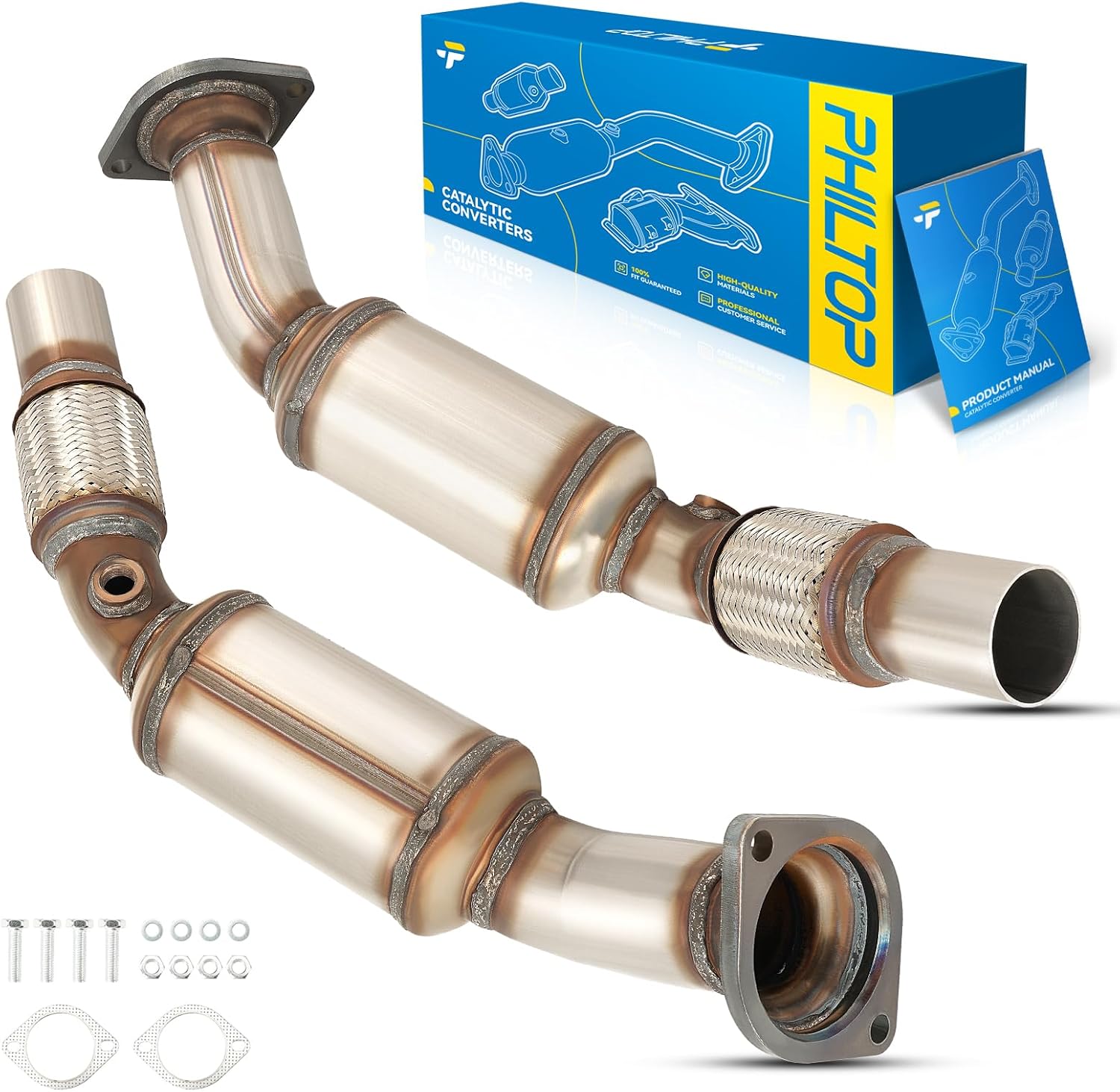
| Compatible engines/vehicles | 2006-2022 Charger 5.7L, 2009-2021 Challenger 5.7L, 2005-2022 300 5.7L, 2005-2007 Magnum 5.7L RWD |
|---|---|
| EPA compliance | Compliant for most states (not legal for use in CA, ME, CO, NY) |
| Position | Left and Right |
| Includes | Gaskets and hardware |
This PHILTOP kit supplies left and right high-flow catalytic converters intended as direct-fit replacements for 5.7L RWD Dodge Charger, Challenger, Chrysler 300 and Magnum applications in the listed years. The units use a flange-to-flange, bolt-on design and ship with gaskets and hardware to simplify installation for a professional or experienced DIYer. Constructed with stainless steel shells and firm welds, the converters aim to balance durability with improved flow compared with some factory units, which can help preserve power while restoring emissions control. They are sold as EPA-compliant for most states but are explicitly not legal for California and a few other states that require stricter standards. Some buyers noted weak clamps and occasional fitment or emissions-code issues on non-matching vehicles, so careful verification of vehicle and part numbers is important before fitting. The kit offers a lower-cost alternative to dealer replacement while keeping a factory-style installation method when used on the compatible Charger models named in the listing.
Best for: Balanced buyers who want a factory-style, lower-cost replacement to restore emissions control and maintain performance on supported 5.7L Dodge Charger and related RWD models.
Less Ideal for: Drivers in states that require California-level emission compliance or owners who need a guaranteed factory-specific part for complex emissions systems should consider alternatives or dealer-sourced units.
- Direct bolt-on flange-to-flange design with included gaskets and hardware for easier installation
- High-flow design intended to maintain exhaust flow and engine performance
- Stainless steel outer shell and welded joints for improved corrosion and heat resistance
- EPA-compliant for most states, allowing use without additional modifications where legal
- Not legal for use in California, Maine, Colorado, and New York where stricter emission standards apply
- Some customers reported weak clamps and occasional fitment or emissions-code problems on non-matching vehicles
Verdict: A practical, factory-style replacement kit that restores emissions control and preserves performance on supported 5.7L Dodge Charger and related RWD models.
2. CIRconvert Left & Right Catalytic Converter Pair for 2016–2020 Dodge Charger 3.6L V6 (EPA Compliant)

| Vehicle fitment | 2016–2020 Dodge Charger 3.6L V6 |
|---|---|
| Position | Left and Right |
| Material | Stainless steel |
| EPA status | EPA compliant |
This CIRconvert pair replaces the left and right catalytic converters on the Dodge Charger 3.6L V6 and is built as a direct-fit replacement for performance-focused repairs. It installs like a factory-style unit and includes mounting hardware that many buyers report lets shops bolt it in without modification. Construction uses stainless steel with laser-cut and welded seams for heat resistance and expected longevity, and the internals contain precious metals to meet EPA emissions requirements. For a Charger owner chasing reliable exhaust flow and restored emissions performance, this set can clear converter-related codes and return smooth throttle response without complex tuning. Limits to consider: it is not legal for use in California, Colorado, New York, or Maine and therefore is restricted for street-legal operation in those states, and consumers should verify alignment and clamp quality during installation since only one clamp is included in some packages. The product comes with a 50,000-mile limited warranty backed by the manufacturer.
Best for: Performance-oriented Charger owners who want a durable, factory-quality replacement to restore exhaust flow and emissions function without custom fabrication.
Less Ideal for: Owners in states where this unit is restricted or buyers seeking an emissions solution specifically certified for California-style regulations should look for compliant local alternatives.
- Direct-fit design for 2016–2020 Dodge Charger 3.6L V6, allowing bolt-on replacement with no major modifications
- Stainless steel construction and laser welding for improved heat resistance and corrosion performance
- EPA-compliant cores that restore emissions control and can clear related fault codes
- Includes mounting hardware and a manufacturer 50,000-mile limited warranty
- Not legal for sale or use in California, Colorado, New York, or Maine
- Some kits include only one exhaust clamp and may require purchasing additional clamps separately
Verdict: A durable, direct-fit EPA-compliant converter pair for 2016–2020 Dodge Charger 3.6L V6 owners seeking a performance-minded, factory-style replacement, provided you are outside states where it is restricted.
3. RZOCARULE Left & Right Catalytic Converters for 2011–2017 Dodge Charger 3.6L (EPA Compliant)

| Fitment | 2011–2017 Dodge Charger 3.6L |
|---|---|
| Housing material | Stainless steel outer shell |
| Design | Flange-to-flange, bolt-on |
| Emission compliance | EPA compliant (not for CA/NY/ME) |
This kit supplies left and right catalytic converters built for the 3.6L Dodge Charger with a flange-to-flange, bolt-on design that simplifies installation. The stainless steel outer shell resists corrosion and high heat, while the internal honeycomb ceramic matrix increases catalytic surface area for efficient conversion of exhaust pollutants. The parts arrive with gaskets and hardware so a typical replacement requires only basic mechanical skills and common tools. They are EPA compliant for federal emissions applications, but not approved for certain states with stricter rules. In practice these converters can restore emissions function and clear check-engine codes when they match the vehicle harness and oxygen sensor expectations, though some buyers reported ECU adaptation time or compatibility issues on nonmatching applications. Expect a practical, lower-cost replacement that targets fit and performance for Chargers within the listed years rather than a premium factory-direct unit.
Best for: Practical optimizers who want a cost-conscious, vehicle-specific replacement that restores emissions function without expensive dealer parts and are comfortable doing or supervising a bolt-on exhaust repair.
Less Ideal for: Buyers in states with stricter emissions certification requirements or those who need a guaranteed factory-direct match and full state-specific compliance should consider other, state-approved options.
- Vehicle-specific flange-to-flange design for bolt-on installation with included gaskets and hardware
- Stainless steel outer shell improves resistance to rust and heat for longer service life
- Honeycomb ceramic substrate provides high flow and increased catalyst surface area
- EPA compliant for federal emissions models, addressing legal emissions requirements outside restricted states
- Not legal for sale or use in California, New York, or Maine emissions-controlled models
- Some buyers report initial check-engine light or ECU adaptation period after installation
Verdict: A budget-minded, vehicle-specific pair of catalytic converters that restore emissions function with a bolt-on fit for 2011–2017 Dodge Charger 3.6L models.
4. MagnaFlow 91005 Standard Grade Universal Catalytic Converter
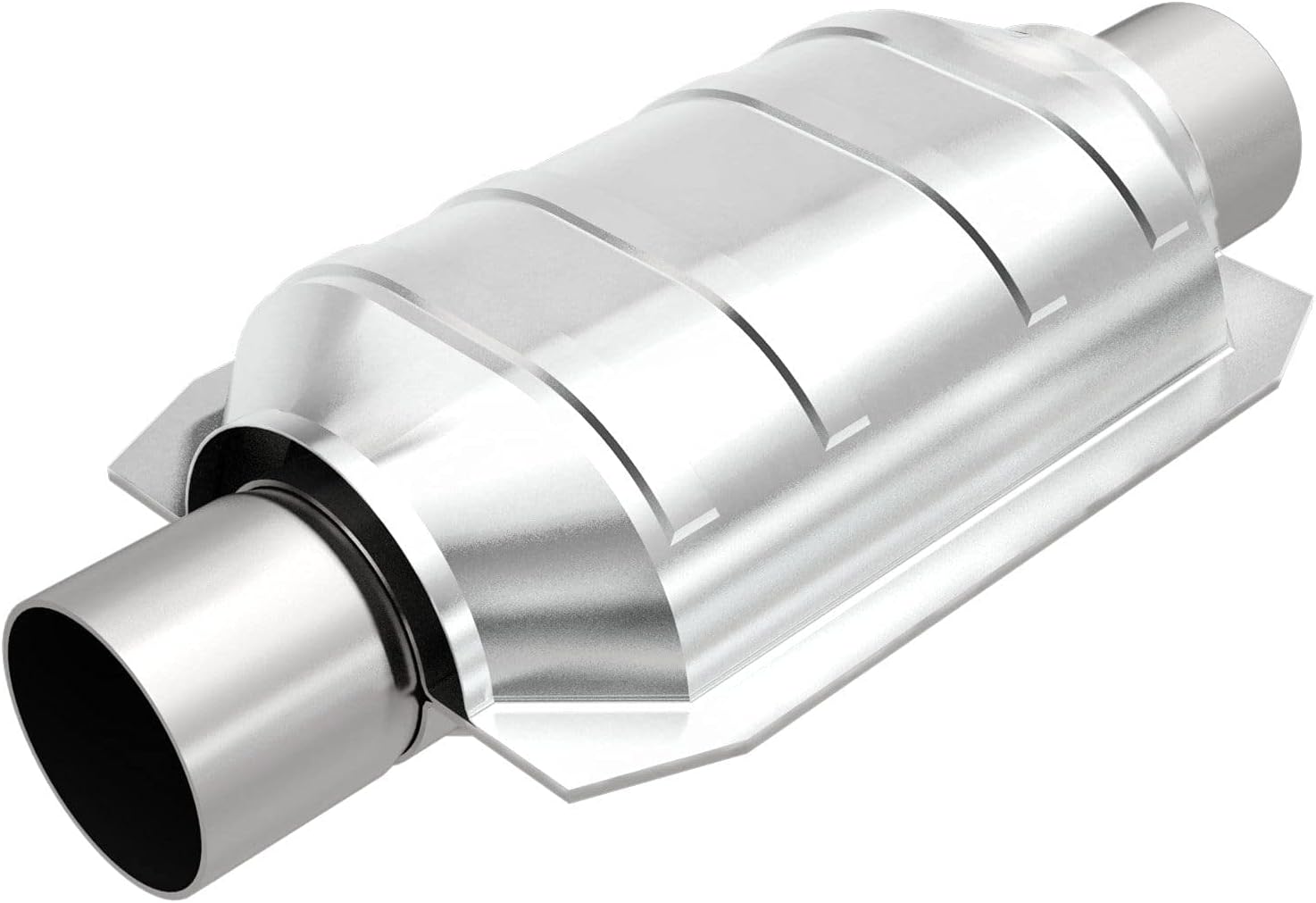
| Inlet/Outlet Diameter | 2.25" |
|---|---|
| Body Material | Stainless Steel |
| Series | Standard Grade |
| Overall Length | 13" |
| Type | Universal Federal/EPA Compliant |
The MagnaFlow 91005 is a universal, standard-grade catalytic converter aimed at older, pre-OBDII applications. It replaces a failed unit by welding or cutting into the existing exhaust and includes a 2.25-inch inlet/outlet and an integrated heat shield. Its stainless-steel clamshell construction and continuous seam weld improve corrosion resistance and thermal efficiency compared with cheap knockoffs, and the unit is federal EPA compliant for use outside states with stricter rules. In practice it is typically used where an original-style converter has clogged or failed and you need an affordable, serviceable replacement. Expect to have a mechanic trim and weld the piece into the Charger exhaust; no oxygen sensor bung is provided so sensor placement must match your existing layout. The main limitations are its universal fit approach which requires fabrication to fit a Dodge Charger exhaust and mixed long-term reliability reports from some users, so professional installation and careful fitment are important.
Best for: Budget-conscious owners who prioritize a low-cost, legally compliant replacement for an older Dodge Charger and are prepared to arrange professional exhaust fabrication.
Less Ideal for: Buyers seeking a direct bolt-in, vehicle-specific catalytic converter or those in states with stricter emissions rules should consider a model specifically listed for the Charger or state-compliant options.
- Federal EPA compliant for pre-OBDII applications so it satisfies federal emissions rules where allowed
- Stainless-steel clamshell body and continuous seam weld for improved corrosion and thermal resistance
- Universal design allows placement flexibility when custom-fitting into an exhaust system
- Integrated heat shield reduces heat transfer to nearby components
- Universal unit requires cutting, welding, or fabrication to fit a Dodge Charger exhaust
- No oxygen sensor location included on the unit so sensor installation depends on your vehicle setup
- Mixed user reports on long-term internal durability on some installations
Verdict: A budget-friendly, stainless-steel universal converter that works for older Dodge Charger exhausts if you accept fabrication and verify state compliance.
5. CIRconvert Left & Right Catalytic Converter for 3.6L V6 Chrysler 300 / Dodge Charger

| Position | Left, Right |
|---|---|
| Vehicle fit | 2013–2015 Chrysler 300; 2013–2017 Dodge Charger 3.6L V6 |
| Certification | EPA compliant |
| Exterior | Polished |
This CIRconvert catalytic converter pair is a direct-fit replacement intended to restore emissions performance and clear catalytic-related check engine codes on 3.6L V6 Dodge Chargers and Chrysler 300s. Manufactured from stainless steel with laser-cut and welded joints, the converters are built to withstand heat and road conditions while providing the rare-metal substrate needed for catalytic reactions. Installation is intended to be bolt-on with included mounting hardware and gaskets, which several buyers report makes swap-outs straightforward and quick for shops or experienced DIYers. The units are EPA compliant for use outside restricted states and come with a 50,000-mile limited warranty, offering reassurance to reliability-focused buyers. Expect the practical benefit of restored emissions control and improved drivability after a failed unit, but be aware fitment tolerance can vary and some buyers reported alignment or mounting-tab angle issues that may require minor adjustments or a shop to finish. Only compatible with the specified 3.6L Charger/300 applications and not for use in certain states with different emissions rules.
Best for: Reliability-focused owners who prioritize restoring factory emissions performance and steady long-term operation on 2013–2017 Dodge Charger 3.6L V6 models and prefer a factory-style replacement over performance modifications.
Less Ideal for: Drivers in states with stricter local emissions regulations or those seeking high-flow performance upgrades rather than a factory-style replacement should look elsewhere.
- Direct-fit design for 3.6L V6 Charger and Chrysler 300 to simplify installation
- Constructed from stainless steel with laser welding for heat resistance and durability
- EPA-compliant catalytic substrate restores emissions control and engine performance
- Includes mounting gaskets and bolts to reduce parts sourcing during replacement
- 50,000-mile limited warranty provides ownership confidence
- Not legal for use in California, Colorado, New York, or Maine due to state-specific emissions rules
- Some units may require minor alignment or mounting-tab adjustments for a perfect fit
Verdict: A durable, EPA-compliant direct-fit catalytic converter pair that restores emissions control and reliability for 3.6L V6 Dodge Charger owners.
6. FOMIUZY 2.5" High Flow Universal Front Catalytic Converter with O2 Port (EPA Compliant)

| Manufacturer | FOMIUZY |
|---|---|
| Item model number | 2.5 wqpf |
| Inlet/Outlet | 2.5" |
| Overall Length | 11" |
This FOMIUZY catalytic converter is a universal high-flow front unit intended to replace a failed or missing converter and clear P0420 codes. It installs in-line using welding or flange work and includes an O2 sensor port so you can reuse the factory sensor location. The stainless aluminized body and double-layer ceramic carrier are marketed to resist corrosion and improve flow, which in practice helps restore quieter exhaust and reasonable emissions performance on compatible setups. It is sized as a 2.5" inlet/outlet with about an 11" overall length, so some trimming or welding may be needed for a good fit on vehicles that do not match those dimensions. The seller states EPA and OBD3 compliance but restricts sales in certain states with stricter rules. For convenience-focused buyers this unit is a straightforward replacement that gets a vehicle back to running without the dealer lead time, though professional welding and fitment verification are advised to avoid fit issues and check local emissions rules.
Best for: Convenience-driven buyers who want a quick, affordable replacement to stop emissions codes and restore normal exhaust operation without sourcing an exact OEM part.
Less Ideal for: Drivers in states with stricter emissions regulations or anyone who prefers a guaranteed direct-fit factory replacement without modification should consider other options.
- Includes O2 sensor port so the factory sensor can be reused
- Stainless aluminized body resists rust and is intended for longer service life
- Double-layer ceramic carrier aimed at higher flow and improved conversion efficiency
- Universal 2.5" sizing may require cutting, adapters, or welding for proper fit
- Not available for sale in states with stricter emission rules
Verdict: A budget-friendly universal high-flow catalytic converter that restores emissions function and exhaust quieting for convenient, fast replacement.
7. Nilight 2.25" Inlet/Outlet Catalytic Converter with O2 Port and Heat Shield

| Automotive Fit Type | Vehicle Specific Fit |
|---|---|
| Manufacturer | Nilight |
| Manufacturer Part Number | CON102 |
| Included Components | Catalytic converter with O2 port and heat shield |
This Nilight catalytic converter is a vehicle-specific replacement designed for OBDII applications and features a 2.25-inch inlet/outlet, a welded O2 sensor port, and an integrated heat shield. Typical use is direct replacement of a failed or removed converter where you need to restore emissions control and turn off a check engine light caused by catalytic inefficiency. The stainless and aluminized construction with OE-style flanges and hangers aims to provide a durable fit that resists high exhaust temperatures. The filled honeycomb washcoat and higher precious-metal loading are intended to help conversion efficiency and keep emissions codes like P0420/P0430 from returning. Installation may require welding or minor fabrication depending on exhaust layout but the included O2 port and flange-ready ends simplify sensor alignment. Limitations are that this is intended as a federal EPA-compliant unit and is not legal for sale or use in California or Colorado, and fitment still needs to be confirmed specifically for a Dodge Charger model year and exhaust configuration before purchase.
Best for: Risk-averse mainstream buyers who want a factory-style replacement to restore emissions control and stop a check engine light while minimizing complexity and uncertainty.
Less Ideal for: Buyers in states with stricter emissions rules like California or Colorado or those who need a guaranteed bolt-on direct-fit without any trimming or welding should look for a certified custom-fit unit instead.
- Built-in O2 sensor port for direct sensor installation and ECU feedback
- Integrated heat shield reduces heat transfer to nearby components
- Stainless and aluminized body with OE-style flanges and hangers for durability
- Engineered washcoat and higher precious-metal fill to help keep check engine light off
- May require welding or minor fabrication for proper installation
- Not legal for sale or use in California and Colorado under state rules
Verdict: A budget-friendly, EPA-compliant vehicle-specific catalytic converter that restores emissions control with an O2 port and heat shielding for reliable, long-term replacement.
Choosing the Right Dodge Charger Catalytic Converter: Key Factors to Consider
Fitment and Bolt Pattern
Correct physical fit is essential because improper flange style or incorrect pipe diameter can lead to exhaust leaks and failed installations. Verify that the converter matches the Dodge Charger's exhaust flange, hanger locations, and inlet/outlet diameters to avoid welding or adapter fabrication.
A direct-fit unit saves time and typically preserves factory sensor locations. If the part requires modifications, consider whether you have access to a shop that can perform reliable welding and ensure a leak-free connection.
Catalyst Substrate and Cell Density
The substrate material and cell density influence how effectively the converter reduces hydrocarbons, carbon monoxide, and nitrogen oxides. A quality substrate balances adequate surface area for catalytic coating with minimal restriction to exhaust flow.
Higher cell density can improve conversion efficiency but may increase backpressure. Choose a substrate that matches your driving habits and engine tuning to maintain performance while meeting emissions goals.
Oxygen Sensor Compatibility
Many Dodge Charger models rely on upstream and downstream oxygen sensors for fuel trim and catalyst monitoring. Ensure the converter provides correct sensor bungs in the factory locations so the vehicle's engine control system can accurately monitor catalyst efficiency.
Incorrect sensor placement can trigger a check engine light or lead to improper fuel delivery. Confirm thread type and position to avoid diagnostics issues after installation.
Material Quality and Corrosion Resistance
Exhaust components face heat cycles and road salt, so construction materials matter for longevity. Stainless steel housings and high-quality coatings resist rust and cracking better than lower-grade metals.
Long-term durability reduces the likelihood of exhaust leaks and the need for premature replacement. Consider the expected operating environment when evaluating materials and protective finishes.
Backpressure and Flow Characteristics
A catalytic converter must balance emissions reduction with acceptable exhaust flow. Excessive backpressure can reduce engine responsiveness and efficiency, while too little catalyst surface can underperform in emission control.
Select a converter designed to match the Charger's exhaust flow rates to maintain drivability. If you run modifications such as performance headers or intake changes, account for those when assessing flow requirements.
Installation Complexity and Serviceability
Some converters are true direct-fit replacements while others may need welding, cutting, or additional hardware. Consider the time and tools required for installation and whether a professional installer will be needed.
Serviceable features like replaceable cores or clearly marked sensor ports can simplify future maintenance. Factor in local emissions inspection procedures when planning installation to ensure compliance.
How We Chose the Best Dodge Charger Catalytic Converter
To assemble this list we focused on items that offer reliable fitment and consistent emissions control for Dodge Charger applications. Primary criteria included physical compatibility with factory exhaust mounting points and flange patterns, effectiveness at reducing regulated tailpipe emissions, and catalyst substrate quality as reported in manufacturer specifications. We also considered thermal durability, materials used in housings and welds, and the presence of oxygen sensor ports where applicable. Ease of installation and availability of vehicle-specific fitment information were factored in to reduce buyer uncertainty. Units that required extensive exhaust modification, nonstandard fabrication, or lacked clear fitment documentation were excluded. The goal was to highlight converters that minimize installation complexity while addressing emissions, longevity, and diagnostic stability.
Our full evaluation process is outlined in our review methodology.
FAQ
What are common catalytic converter symptoms on a Dodge Charger?
Common symptoms often include a persistent check engine light, reduced engine performance, decreased fuel economy, and a rotten egg exhaust odor. These signs usually indicate decreased catalytic efficiency or a sensor-triggered diagnostic code. It is best to diagnose codes and inspect the exhaust system before assuming the converter is the sole issue.
Will replacing the catalytic converter turn off the check engine light?
Replacing a failing converter can resolve check engine codes related to catalyst efficiency, but it depends on the underlying cause. If oxygen sensors or wiring are damaged, or if there are unrelated engine problems, the light may remain. After replacement, allow the vehicle to complete its drive cycle so the control module can run rechecks.
Can I install a catalytic converter myself on a Dodge Charger?
Installation feasibility depends on whether the unit is a direct-fit replacement. Direct-fit converters typically bolt in with minimal tools, while universal units may require cutting and welding. If you are not comfortable with exhaust work or lack proper tools, a professional install reduces the risk of leaks or improper sensor placement.
How long does a catalytic converter typically last?
Lifespan often varies based on driving conditions, fuel quality, and exposure to contaminants. Many converters last for many years under normal use, but repeated engine misfires, coolant or oil contamination, or prolonged short trips can shorten their life. Regular maintenance and addressing engine issues promptly help extend service life.
Will a new catalytic converter affect engine performance?
A properly matched converter should restore designed exhaust flow and emissions control without harming performance. In some cases, reducing backpressure or correcting sensor placement can improve throttle response. Avoid units that create excessive restriction relative to the Charger's engine and existing exhaust components.
Conclusion
When selecting a catalytic converter for a Dodge Charger, prioritize correct fitment, proper oxygen sensor locations, and a substrate designed for effective emissions reduction. Balance catalyst cell density and flow characteristics to maintain engine performance while meeting emissions targets.Factor in material quality and installation complexity to reduce the risk of leaks and premature failure. Address any underlying engine issues before replacing the converter to protect the new unit and ensure long-term reliability.
Explore More:
- Check out all Dodge Charger parts & accessories
- Explore Catalytic Converters Maintenance & Repair Guides
- Explore Exhaust & Emissions
- Browse all Auto Parts
