

Note: This article contains affiliate links. If you click on these links and make a purchase, I may earn a small commission at no extra cost to you. This helps support my research and content. Read my full affiliate disclosure here.
If you own a Chevrolet Tahoe with the 5.3 engine, a failing catalytic converter affects emissions, drivability, and may trigger persistent check engine lights. Picking the right catalytic converter matters because fitment, substrate design, and emissions performance determine whether the repair restores proper exhaust flow and keeps the vehicle within legal standards.This guide shortlists the top catalytic converters suited for the Tahoe 5.3. We evaluated options that balance correct fitment, emissions cleanup, and durability so you can get the system working right again. Below you will find the top picks followed by the practical factors that should guide your decision.
Looking for other parts? See all Chevrolet Tahoe parts & accessories.
Top Picks at a Glance


1. Walker Ultra 50497 Direct-Fit Catalytic Converter

| Manufacturer | Walker Exhaust |
|---|---|
| Item model number | 50497 |
| EPA compliance | For OBDII vehicles, 1996 and newer |
The Walker Ultra 50497 is a direct-fit catalytic converter designed for modern Chevy/GMC full-size trucks and SUVs that balances emissions compliance, durability, and straightforward installation. It replaces the factory unit without welding by using OE-style flanges, hangers, brackets, and heat shields so a professional or experienced DIY mechanic can bolt it in using existing exhaust hardware. The converter uses a high-technology washcoat and a calibrated precious-metal load to deliver the emissions reduction expected for OBDII vehicles while maintaining exhaust flow appropriate for street-driven 5.3L V8 applications. Stainless-steel construction and machined exterior components increase resistance to corrosion and handling on-road stresses. This model focuses on regulatory compliance and long service life rather than performance gains, so users seeking horsepower improvements or race use should look elsewhere. In short, it offers a practical, durable replacement that preserves factory routing and emissions performance for everyday driving.
Best for: Buyers who want a reliable, factory-style replacement that maintains emissions compliance and fits without major modification for everyday driving on a 5.3L Chevy/Tahoe setup.
Less Ideal for: Drivers focused on extracting extra horsepower, track use, or custom exhaust builds should consider performance-oriented converters or custom-fabricated options instead.
- Direct-fit design with OE-style hangers and flanges for bolt-on installation
- EPA-compliant washcoat and precious-metal load tuned for OBDII emissions control
- Stainless-steel construction and machined exterior for improved durability
- Includes aluminized heat shields where originally equipped to protect undercarriage
- Built for emissions compliance and durability rather than increasing engine performance
Verdict: A durable, bolt-on catalytic converter that preserves factory emissions performance and fitment for everyday use on 5.3L Chevy/Tahoe applications.
2. SAROTIN Catalytic Converter Compatible with Chevrolet Silverado/Sierra/Tahoe/Yukon 4.3L/5.3L

| Position | Front |
|---|---|
| Body Material | 409 stainless steel |
| Substrate Material | Cordierite ceramic carrier |
| O2 Sensor Ports | 4 O2 Sensor Ports |
| Fitment Type | Direct Replacement |
This SAROTIN catalytic converter is a bolt-on direct replacement for front exhaust fitment on many 2014–2019 Chevrolet and GMC 4.3L and 5.3L models, including Tahoe/Suburban and Silverado/Sierra. It uses a cordierite ceramic substrate and a 409 stainless steel body, with four O2 sensor ports and either a 3-bolt welded or loose flange inlet for straightforward installation on properly matched vehicles. The unit is marketed with increased precious metal catalyst loading to improve emission reduction and extend service life, and it is EPA and OBD2 compliant so it can clear P0420 codes on federal-compliant vehicles. Practical benefits include factory-style fitment, multiple sensor ports for proper engine management, and a polished finish for corrosion resistance. Important limitations are that it is not CARB compliant so it cannot be used in California or other CARB-required states, and some vehicles may need minor bracket or heat shield adjustments during install; professional installation is recommended if you are unsure. The converter carries a specified emission service life and a structural warranty from the manufacturer.
Best for: Buyers who prioritize restoring engine performance and clearing emission-related trouble codes on federal-compliant 5.3L Tahoe/Silverado platforms and want a factory-style direct replacement with improved catalyst loading.
Less Ideal for: Do not choose this if you need a California-compliant converter or if you plan extensive custom exhaust modifications that change flange fitment or sensor locations.
- Direct bolt-on replacement designed for 2014–2019 4.3L/5.3L Chevy and GMC front exhaust locations
- Four O2 sensor ports preserve factory sensor placement and engine control functions
- 409 stainless steel body and polished exterior for corrosion resistance
- Higher precious metal catalyst loading intended to improve emissions reduction and catalyst life
- Not CARB compliant so not legal for use in California and other CARB states
Verdict: A factory-style, EPA-compliant front catalytic converter that restores emissions function and clears P0420 faults on federal 5.3L Tahoe/Silverado platforms while prioritizing longer catalyst life.
3. Uni-Links Catalytic Converter Direct Fit with Gasket Kit for Silverado/Tahoe/Yukon 5.3L

| Vehicle fitment | 2014–2018 Silverado/Sierra 1500; 2015–2019 Tahoe/Suburban/Yukon (5.3L) |
|---|---|
| Shell material | 409L stainless steel |
| Includes | Gasket kit |
| Manufacturer part number | ULK-0122 |
This Uni-Links catalytic converter is a direct-fit replacement for 5.3L GM trucks and SUVs and is intended to restore proper emissions control and resolve check-engine lights tied to a failed catalyst. It installs in place of the factory unit and ships with a gasket kit to simplify the swap. The converter uses a heavy-duty 409L stainless steel shell and OE-style aluminized heat shields to handle high underhood temperatures and resist corrosion compared with thinner aftermarket housings. Being EPA compliant makes it suitable for most states outside restricted ones, and the fitment list targets 2014–2018 Silverado/Sierra 1500 and 2015–2019 Tahoe/Suburban/Yukon series with the 5.3L engine. Expect a straightforward installation for a competent DIYer or a shop, improved emissions performance, and the potential to clear emissions-related trouble codes. Limitations are state restrictions on sale/installation in certain emissions-controlled states and the usual variance in fitment that can require minor adjustments during installation.
Best for: Buyers who want a practical, factory-style replacement to restore emissions function on 5.3L Chevrolet and GMC trucks and SUVs and prefer a product that minimizes installation hassle and returns the vehicle to compliant operation where allowed.
Less Ideal for: Customers located in states with stricter emissions rules or those who need a universal or performance-oriented converter should look elsewhere.
- Direct-fit design with included gasket kit simplifies replacement and reduces installation time
- 409L stainless steel shell offers better high-temperature endurance and corrosion resistance
- OE-style aluminized heat shields help manage thermal output and protect surrounding components
- Built to be EPA compliant for use in non-restricted states
- Not legal for sale or installation in certain emissions-controlled states
- Fitment limited to specific model years and 5.3L engine configurations which may exclude some vehicles
Verdict: A straightforward, factory-style replacement that brings 5.3L Tahoe and sibling trucks back to compliant emissions performance with minimal fuss.
4. BALOCEO Catalytic Converter Replacement RI-401 for 5.3L Chevrolet/GMC Trucks and SUVs
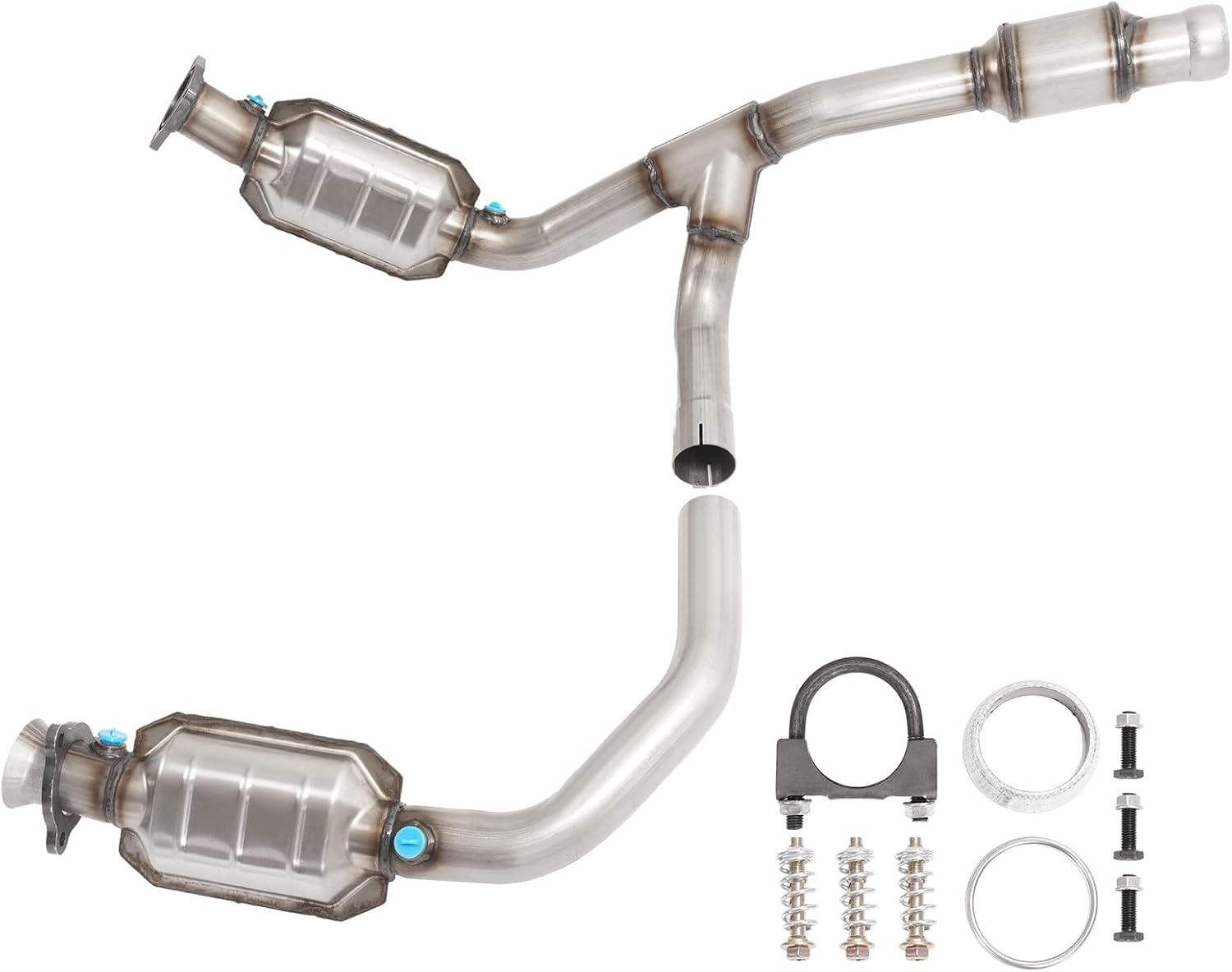
| Brand | BALOCEO |
|---|---|
| Model | RI-401 |
| Material | 409 stainless steel |
| Fitment | Compatible with 2014-2018 Silverado/Sierra and 2015-2019 Suburban/Tahoe/Yukon 5.3L |
This BALOCEO RI-401 is a direct-replacement catalytic converter intended for 5.3L Chevrolet and GMC trucks and SUVs from the mid-2010s. It replaces the factory unit to restore emissions control and exhaust flow, and is built from 409 stainless steel for corrosion resistance in typical road conditions. The listing notes direct-fit installation with included accessories, so a professional or experienced DIYer can swap it in without major modification. In use it should reduce backpressure and help the engine run more smoothly after a failed or clogged original converter, though instructions are not included so expect to reference online guides or professional help. The construction and materials aim for durability, but this is an aftermarket unit so fitment and exact performance can vary compared with a factory-quality part. This model is a practical budget-focused option when you need to get a nonfunctional converter replaced and restore normal drivability and emissions function quickly.
Best for: Buyers who need an affordable, functional replacement to restore emissions control and drivability on a mid-2010s Chevrolet or GMC 5.3L vehicle and who prioritize cost over OEM exactness.
Less Ideal for: Owners seeking a factory-identical or long-warranty emissions part for high-mileage or show-quality restorations should consider dealer or premium-brand alternatives.
- Built from 409 stainless steel for improved corrosion resistance over cheaper metals
- Sold as a direct-replacement unit with installation accessories included
- Designed to restore exhaust flow and reduce engine backpressure for smoother running
- Compatible with specified 5.3L Chevrolet and GMC models so no major modification expected
- Instructions are not included so installation guidance must be sourced separately
- Aftermarket fit and long-term performance may vary compared with factory-quality converters
Verdict: A budget-friendly, direct-fit 409 stainless steel replacement to get 5.3L Chevrolet and GMC trucks and SUVs back on the road and running smoother.
5. CIRconvert Catalytic Converter for 2014–2018 Chevy 5.3L Silverado/Tahoe/Suburban (EPA Compliant)
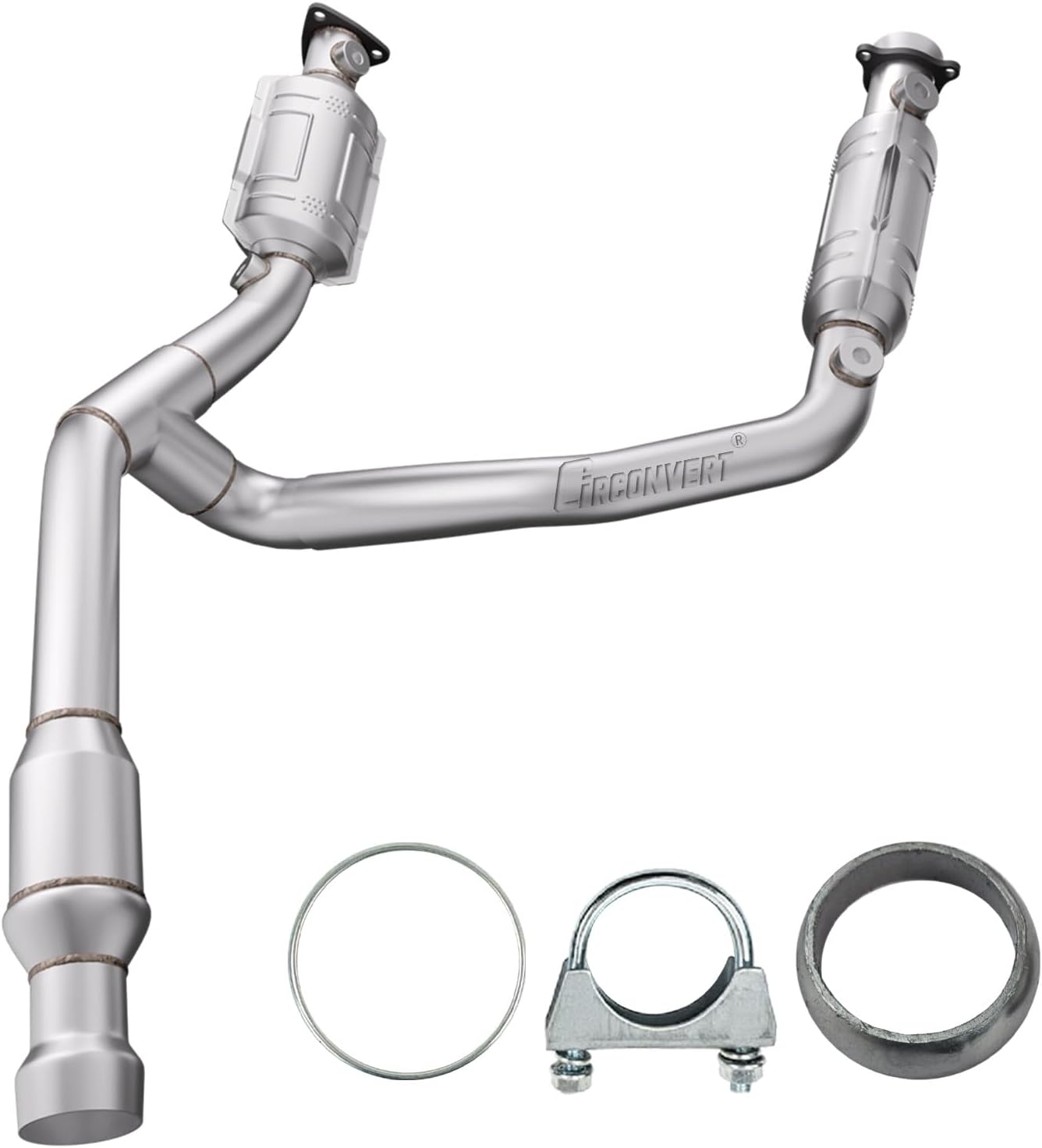
| Vehicle fitment | Chevrolet 2014–2018 5.3L models |
|---|---|
| Compliance | EPA certified |
| Material | T409 stainless steel |
| Substrate | Ceramic with precious metals |
| Manufacturer | CIRconvert |
This CIRconvert catalytic converter replaces the factory unit on 2014–2018 Chevrolet 5.3L models and is offered as a direct-fit replacement for Silverado, Tahoe, Suburban, Sierra, Yukon and Yukon XL applications. It uses a ceramic substrate and T409 stainless steel construction with laser-cut and welded joints to resist heat and corrosion, and the internal substrate contains precious metals to convert exhaust gases and meet EPA emission standards. Installation is typical for a bolt-in replacement and should require standard exhaust tools or a shop; the direct-fit design reduces modification time compared with universal converters. The product is not legal for sale in several states with stricter rules, so it is only appropriate where federal EPA parts are allowed. CIRconvert backs the unit with a one-year unlimited-mileage warranty, and the polished exterior provides corrosion resistance and a factory-replacement appearance. Expect a durable, emissions-compliant repair that restores catalytic function without tuning or modifications, while observing local emissions regulations prior to purchase.
Best for: Buyers who prioritize a dependable, factory-style replacement to restore emissions control on a 5.3L Chevrolet and want a durable unit that fits without modification.
Less Ideal for: Drivers subject to California, Colorado, New York, or Maine emissions rules or those needing a parts-certified converter for those states should look for state-compliant options.
- Direct-fit design for 2014–2018 5.3L Chevy models simplifies installation
- T409 stainless steel construction and laser welding for improved heat and corrosion resistance
- EPA-compliant ceramic substrate with precious metals to reduce emissions
- One-year unlimited-mileage warranty provides short-term coverage
- Not legal for sale or use in certain states with stricter emission rules
Verdict: Choose this CIRconvert unit when you need a reliable, direct-fit, EPA-compliant replacement to restore emissions performance on a 2014–2018 Chevy 5.3L vehicle.
6. SPEEDFusion Catalytic Converter Compatible with Chevrolet Silverado/Sierra/Tahoe 4.3L/5.3L (EPA Compliant)
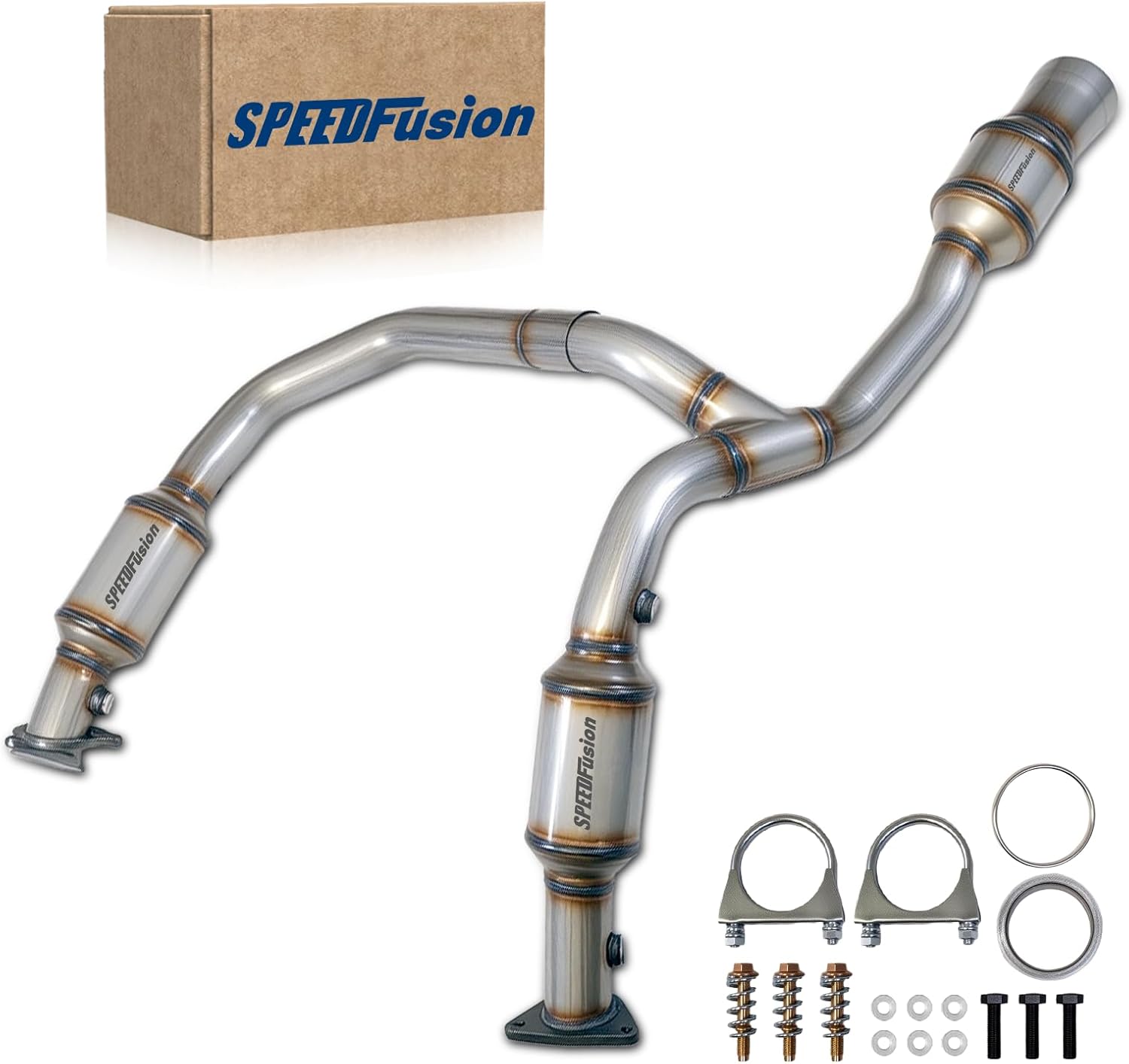
| Compatible engines | 4.3L V6, 5.3L V8 |
|---|---|
| EPA status | EPA compliant (federal) |
This SPEEDFusion catalytic converter is a factory-style replacement for 4.3L and 5.3L V6/V8 Chevy and GMC trucks and SUVs including Tahoe models using the OEM reference 50497. It is used as a direct-fit exhaust component to restore emissions control after a failed or removed converter. The unit has a stainless steel housing and a ceramic substrate treated with platinum, palladium, and rhodium to promote efficient catalytic conversion and help pass emissions checks on federal-compliant vehicles. Fitment is vehicle-specific so buyers should confirm pipe diameters before ordering and have a professional perform installation for proper torque and sealing. The converter is EPA certified for federal-use vehicles but is not legal for sale or installation in some states with their own rules. Practical benefits include restoring emission performance and avoiding engine fault codes with a near-stock replacement, while limitations are that it is restricted by state emissions laws and requires correct fitment and professional installation to avoid leaks or poor performance.
Best for: Buyers who prioritize restoring proper emissions performance with a direct-fit, EPA-compliant replacement and who value evidence of real-world acceptance before committing.
Less Ideal for: Do not choose this if your vehicle is registered in a state that requires state-specific certified parts or if you plan to perform a DIY install without access to proper tools and exhaust expertise.
- Built to match OEM-style fit and function for the listed 4.3L/5.3L applications
- Stainless steel body for corrosion resistance in typical road conditions
- Ceramic substrate with platinum, palladium and rhodium for effective catalytic conversion
- EPA federal certification for use on vehicles subject to federal emissions standards
- Not legal for sale or installation in states with their own emissions rules such as California
- Requires confirmation of pipe size and professional installation to ensure a leak-free fit
Verdict: Choose this SPEEDFusion converter when you need a federal-compliant, near-factory replacement to restore emissions control on 4.3L/5.3L Chevrolet/GMC full-size SUVs and trucks.
7. JT High Flow Catalytic Converter for 1999–2007 Chevy/GMC 4.3L–5.3L (EPA Compliant)

| Applicable engines | 4.3L, 4.8L, 5.3L |
|---|---|
| Fitment years | 1999–2007 Chevrolet/GMC (specified models) |
| EPA compliance | OBDII emission requirements |
| Substrate | OEM-grade honeycomb ceramic |
This JT high-flow catalytic converter is a direct-replacement unit built to meet EPA OBDII emission requirements for 1999–2007 Chevy and GMC trucks and SUVs with 4.3L, 4.8L, and 5.3L engines. It uses an OEM-grade ceramic substrate and extra precious metal loading to improve conversion efficiency and help the vehicle pass emissions tests. The converter is offered as a bolt-in style part with a stainless steel shell and a 3D-scanned direct-fit design intended to match factory mounting and reduce installation hassles for a professional or experienced DIY mechanic. Practical benefits include improved emissions control, factory-style fitment to minimize fabrication, and a corrosion-resistant shell for longer service life. Limitations are that this is a vehicle-specific replacement so fit must match the listed model years and engines, and successful long-term operation still depends on upstream engine health and correct installation. Expect a replacement-level performance similar to original equipment rather than performance tuning gains.
Best for: A buyer who wants a factory-style, emissions-compliant replacement that minimizes installation risk and helps ensure the vehicle will pass inspections; suited to owners prioritizing reliability and regulatory compliance over performance upgrades.
Less Ideal for: Not a good choice for someone seeking a performance-oriented or universal converter for multiple vehicle types or for owners with significant engine issues that cause catalyst failure.
- EPA OBDII compliant design intended to meet emissions standards
- Direct-fit geometry using 3D scan data to simplify installation
- OEM-grade ceramic substrate with increased precious metal loading for better conversion
- Stainless steel shell for improved corrosion resistance and longer service life
- Fitment limited to the specific Chevy/GMC model years and engine sizes listed
Verdict: Choose this JT converter if you need a direct-fit, EPA-compliant replacement that prioritizes reliable emissions performance and straightforward installation for the specified Chevy/GMC 4.3L–5.3L models.
Choosing the Right Chevrolet Tahoe 5.3 Catalytic Converter: Key Factors to Consider
Fitment And Mounting
Proper fitment is the most important factor for the Chevrolet Tahoe 5.3. Catalytic converters must match the exhaust pipe diameter, flange pattern, and sensor boss locations used on the 5.3 exhaust. Incorrect fitment can require cutting, welding, or adapter pieces that add labor and potential leak points.
Consider whether the converter is a direct-fit unit or a direct-replacement assembly that includes flanges and gaskets. Direct-fit pieces reduce installation time and risk of misalignment. Verify that hanger locations and overall body length allow the converter to sit without stressing adjacent components.
Emissions Performance And Certification
Emissions performance matters because the converter's substrate and washcoat determine how effectively it converts hydrocarbons, carbon monoxide, and nitrogen oxides. For owners in regulated areas, confirm any required certifications or claims about meeting federal or state emissions standards.
A converter with documented conversion efficiency at typical operating temperatures helps ensure the Tahoe will pass emissions inspections and reduces the chance of recurring tailpipe failures. Ask whether the unit is designed for OE-equivalent emissions control or is intended for replacement in diagnostic or off-highway situations.
Substrate Type And Cell Density
The substrate is the core material coated with catalytic metals. Choices include metallic or ceramic substrates with varying cell densities. Higher cell density usually improves conversion surface area but can increase backpressure. For the 5.3 engine, balance is key: too much restriction can reduce performance and fuel efficiency, while too little surface area can hurt emissions cleanup.
Understand the substrate material because metallic cores tolerate thermal shock better and may withstand frequent temperature cycles common in larger SUVs. Ceramic cores may offer good conversion but can be more brittle under impact or rapid cooling.
Sensor Compatibility
The Tahoe 5.3 uses upstream and downstream oxygen sensors to monitor combustion and converter performance. A replacement converter must have correctly located sensor ports sized for the factory sensors and positioned at proper distances from the manifold and tailpipe.
Incorrect sensor placement can lead to false fault codes, a persistent check engine light, or poor closed-loop fueling. Some converters include welded sensor bungs; others rely on factory sensor relocation. Verify thread size and bung orientation before buying to avoid rework.
Durability And Construction Quality
Durability affects how long the converter will last under typical Tahoe use, which may include highway towing or urban driving. Look for robust housings, corrosion-resistant materials, and quality welds. Protective coatings and heat shields help resist road salt and thermal degradation.
Long-term reliability reduces the chance of future exhaust leaks or substrate damage that could trigger catalytic converter failure signs. Strong construction also simplifies installation because parts maintain alignment and sealing over time.
Backpressure And Engine Performance
Catalytic converters affect exhaust flow and therefore engine breathing. Excessive backpressure can reduce power and fuel economy on the 5.3 V8. When evaluating options, consider if the converter is designed to minimize restriction while still providing required conversion efficiency.
Manufacturers may rate flow or indicate intended use cases. For towing or heavy-load use, choose a converter that balances low restriction with sufficient catalytic surface area so performance remains consistent under load.
Common Catalytic Converter Symptoms On A Tahoe 5.3
Recognizing failure signs early can prevent more costly downstream damage. Typical symptoms on a Tahoe 5.3 include a persistent check engine light tied to oxygen sensor or catalyst efficiency codes, reduced acceleration, rough idle, or a noticeable rotten-egg or sulfur smell from the exhaust. In some cases you may hear rattling inside the converter housing indicating a broken substrate.
Symptoms can appear gradually or suddenly depending on cause. Clogging tends to reduce power and fuel economy, while internal break-up or contamination can trigger diagnostic trouble codes even if flow is only mildly affected.
- Persistent check engine light catalytic converter or O2 sensor fault codes
- Loss of power or hesitation under acceleration
- Strong sulfur or unusual exhaust odors
- Rattling noises under the vehicle indicating internal damage
- Failed emissions inspection or elevated tailpipe readings
Assessing Whether Replacement Is Necessary
Before ordering a replacement, run targeted diagnostics. Verify trouble codes with a scanner, check upstream and downstream sensor voltages, and measure backpressure if possible. Some issues resolve with sensor replacement or an exhaust leak repair rather than a full converter swap.
If the converter is physically damaged, contaminated by coolant or engine oil, or shows significantly reduced conversion efficiency on diagnostics, replacement is usually the most reliable fix. Consider whether any upstream causes such as misfires or oil burning have been addressed to avoid repeat failure.
- Scan for OBD codes and compare upstream vs downstream O2 readings
- Visually inspect for dents, holes, or rust-through
- Check for oil or coolant contamination from engine problems
- Measure backpressure or exhaust flow if available
Installation Considerations For The Tahoe 5.3
Installation options vary between direct-fit assemblies and converters that require welding. Direct-fit units with the correct flanges and sensor bungs typically install using factory hangers and gaskets. Prepare for common shop tasks such as removing seized bolts and ensuring sensor threads are clean.
If welding is needed, make sure the unit aligns with hanger points and does not contact the fuel tank or body panels. Use new gaskets and torque fasteners to factory specifications to prevent leaks. In any installation scenario, confirm downstream sensor operation to clear codes after replacement.
- Prefer direct-fit units to minimize cutting and welding
- Replace gaskets and hardware during installation
- Use penetrating lubricant on rusted fasteners and consider heat to release bolts
- Confirm sensor functionality and clear codes after installation
Maintenance Tips To Prolong Converter Life
Routine maintenance that protects the catalytic converter starts with keeping the engine in good tune. Address misfires, rich running conditions, or oil consumption promptly because contamination from unburned fuel or oil can poison the catalyst.
Avoid frequent short-trip driving that keeps the exhaust system cool; converters need operating temperature to burn off deposits. Also avoid using off-spec fuels or additives that can leave residues on the substrate.
- Fix misfires and fueling issues quickly to avoid contamination
- Use recommended fuel grades and avoid excessive additives
- Inspect exhaust system for leaks and maintain sensor function
- Limit prolonged idling or consistently short trips when possible
How Sensor Readings Help Diagnose Cat Problems
Upstream and downstream oxygen sensor voltage patterns reveal whether the converter is effectively smoothing out exhaust fluctuations. On a healthy system the downstream sensor should present a more stable voltage pattern compared with the rapidly switching upstream sensor. If both sensors show similar behavior, the catalyst may no longer be converting gases effectively.
Technicians also use scanner data to check fuel trims and monitor for codes that point to catalyst efficiency loss. These readings guide whether to replace sensors first, repair leaks, or replace the converter itself.
- Compare upstream vs downstream O2 sensor readings for conversion evidence
- Monitor fuel trims to detect long-term enrichment caused by a bad converter
- Use freeze-frame and live data to correlate symptoms with operating conditions
Still looking for the perfect fit?
Select your Chevrolet Tahoe configuration to see the most relevant Catalytic Converters recommendations
How We Chose the Best Chevrolet Tahoe 5.3 Catalytic Converter
We screened available catalytic converters for the Chevrolet Tahoe 5.3 using a narrow set of vehicle-specific filters to ensure each candidate is appropriate for that engine and model configuration. Key evaluation criteria included fitment accuracy to the Tahoe 5.3 exhaust routing and mounting points, EPA or CARB-related emissions compatibility where applicable, and substrate type and cell density because these influence conversion efficiency and throttle response. We also considered construction quality such as welded flanges, heat-resistant housings, and catalyst washcoat to assess longevity in typical driving conditions.Performance-related checks included backpressure characteristics and flow design to avoid excessive restriction on the 5.3 engine, plus sensor port placement to match the Tahoe's O2 and downstream sensor locations. We prioritized options that make installation straightforward and minimize modification needs. Items we excluded were universal or generic converters that require major fabrication, products lacking clear fitment data for the 5.3 configuration, and units that did not document emissions performance or substrate details. The resulting shortlist focuses on correctly fitting, durable catalytic converters that address emissions and drivability for the Chevrolet Tahoe 5.3.
Our full evaluation process is outlined in our review methodology.
FAQ
How long does a catalytic converter last on a Tahoe 5.3?
Catalytic converter life varies with driving habits and maintenance. Many last well over 100,000 miles with proper care, but exposure to contamination, physical damage, or persistent engine issues can shorten lifespan considerably.
Will a bad catalytic converter cause a check engine light on my Tahoe?
Yes. A failing converter often triggers catalyst efficiency or O2 sensor codes that illuminate the check engine light. However, similar codes can be caused by sensor failures or exhaust leaks, so diagnostics are important before replacement.
Can I replace just the sensor instead of the catalytic converter?
Sometimes a faulty oxygen sensor is the root cause of a code and replacing the sensor is sufficient. If diagnostics show the converter is operating within expected parameters, sensor replacement may clear the issue without swapping the converter.
Is a direct-fit catalytic converter necessary for the Tahoe 5.3?
Direct-fit converters simplify installation and reduce chances of leaks because they match factory flanges and sensor locations. They are usually preferable for the Tahoe 5.3 unless a custom repair or performance modification requires a different approach.
What are common causes of catalytic converter failure on the Tahoe 5.3?
Common causes include engine misfires that overheat the substrate, oil or coolant contamination from engine issues, physical impacts from road debris, and long-term exposure to corrosive road chemicals. Addressing underlying engine problems helps prevent repeat failures.
How can I check fitment before purchasing a replacement converter?
Compare pipe diameters, flange bolt patterns, overall length, and sensor bung locations to the existing component. Many suppliers list vehicle-specific fitment details; confirm measurements and hanger positions to avoid modifications during installation.
Final Verdict
When replacing a catalytic converter on a Chevrolet Tahoe 5.3, prioritize correct fitment, emissions performance, and durable construction. Balance substrate design and cell density against backpressure needs to maintain engine performance while restoring conversion efficiency.Address any upstream issues like misfires or contamination before installing a new converter to avoid repeat failures. With careful attention to sensor compatibility and installation quality, you can restore emissions control and keep the Tahoe running reliably.
Explore More:
- Check out all Chevrolet Tahoe parts & accessories
- Explore Catalytic Converters Maintenance & Repair Guides
- Explore Exhaust & Emissions
- Browse all Auto Parts
