

Note: This article contains affiliate links. If you click on these links and make a purchase, I may earn a small commission at no extra cost to you. This helps support my research and content. Read my full affiliate disclosure here.
If your 2017-2022 Honda CR-V is running rough, throwing a check engine light, or failing an emissions test, the catalytic converter is a common culprit. Choosing the right catalytic converter matters because fitment, cell density, and substrate material all affect emissions, drivability, and long-term durability on this generation of CR-V.This guide shortlists the seven best catalytic converters that match the 2017-2022 Honda CR-V fitment and performance expectations. We evaluated each option for fit accuracy, emissions performance, and build quality to help you pick the right replacement. Read on to see which converters meet the needs of everyday driving and inspection requirements, and to understand the criteria we used to choose them.
Looking for other parts? See all Honda CR-V parts & accessories.
Top Picks at a Glance


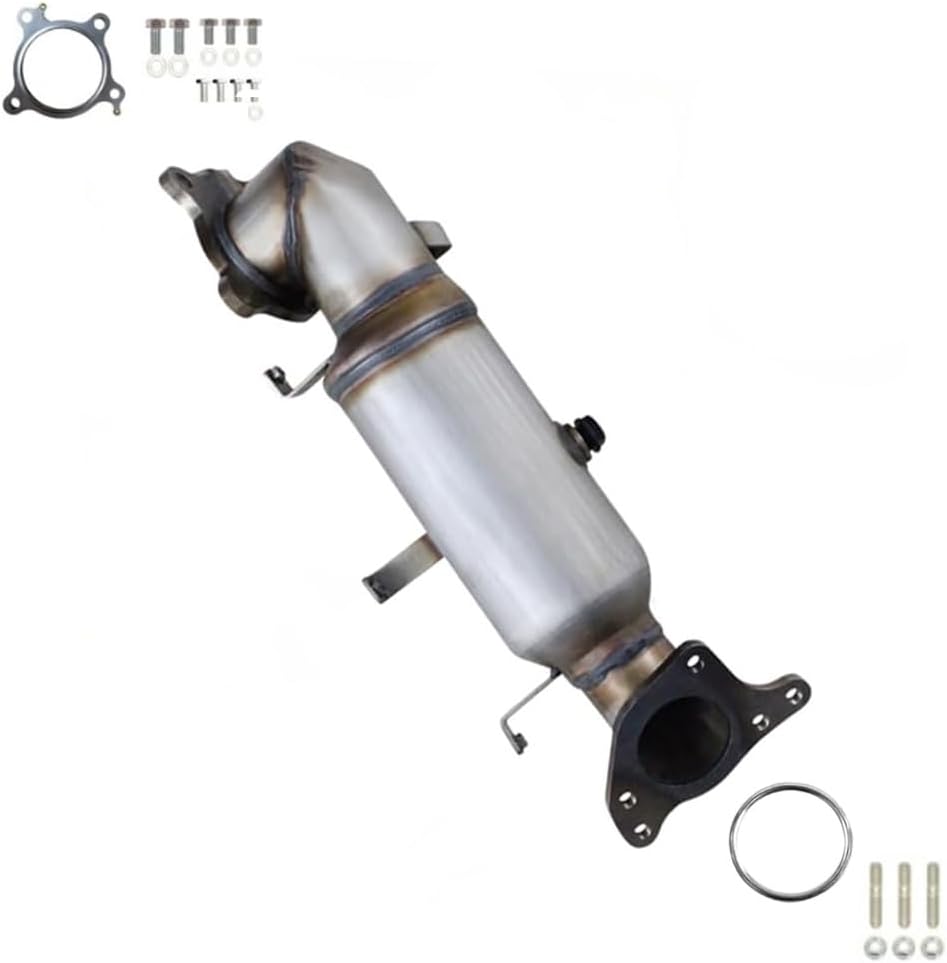
1. Northeastern Exhaust Stainless Steel Catalytic Converter Manifold (Direct Fit)
| Compatibility | Honda CR-V 2017-2022 1.5L; Civic 2016-2021 1.5L |
|---|---|
| Material Type | 409 Grade Stainless Steel |
| Installation Type | Bolt-On |
| Included Components | Bolt Kit, Gaskets |
| EPA Approval | EPA-approved |
This Northeastern Exhaust catalytic manifold replaces the factory unit with a bolt-on, vehicle-specific design that integrates the catalytic substrate into the exhaust manifold for the 1.5L Honda CR-V (2017–2022). Built from 409-grade stainless steel with a polished finish, it is intended to resist corrosion and withstand high temperatures and vibration while improving exhaust flow compared with older, clogged units. The product ships with the bolt kit and gaskets needed for installation, which helps simplify a professional swap without welding. It is EPA-approved for federal emissions compliance but is not CARB-approved and therefore cannot be used in California or Colorado. Buyers should expect factory-style fitment and emissions performance rather than aftermarket performance gains; because it is a direct-fit catalytic manifold, installation typically requires a mechanic and may involve removal of the old manifold and sensors. The one-time replacement warranty covers defects but excludes installation and shipping costs.
Best for: Buyers who want a reliable, factory-style replacement that restores emissions performance and exhaust flow on 1.5L Honda CR-Vs from 2017–2022 while prioritizing durability and direct fitment.
Less Ideal for: Anyone who needs a CARB-compliant converter for use in strict-state markets or shoppers seeking performance-oriented, freer-flowing aftermarket catalytic solutions.
- Direct-fit bolt-on design tailored for 1.5L Honda Civic and CR-V models for straightforward replacement
- Constructed from 409-grade stainless steel for improved corrosion resistance and heat tolerance
- EPA-approved catalytic function ensures federal emissions compliance where allowed
- Includes bolt kit and gaskets to simplify professional installation
- Not CARB-compliant so it cannot be sold or used in California or Colorado
Verdict: A durable, direct-fit catalytic manifold that restores emissions compliance and exhaust flow for 1.5L CR-Vs (2017–2022) when CARB rules do not apply.
2. Garage-Pro Front Direct-Fit Catalytic Converter Kit for Honda Civic/CR-V 1.5L (Front, 46-State)

| Type | Manifold Converter |
|---|---|
| Compatibility | 2016–2021 Civic, 2017–2021 CR-V 1.5L |
| Replaces Part | 181505PAA00 |
| Quantity Sold | Sold individually |
| Emissions | 46-State Legal |
This Garage-Pro front direct-fit catalytic converter kit replaces the factory front manifold converter (part number 181505PAA00) on compatible 1.5L Honda Civic and CR-V models. It is sold as an individual manifold-style unit and installs in the factory locations and ports, so a mechanic can reuse the existing mounting points and flanges for a straightforward replacement. Typical use is restoring emissions control after damage or failure and returning the vehicle to legal operation in 46 states. The unit’s direct-fit design reduces modification time compared with universal converters and helps preserve exhaust routing and sensor placement. Because it is an aftermarket replacement, buyers should expect variations from factory parts in materials and internal substrate formulation, which can affect longevity and exact emissions performance. Installation still requires proper torque on manifold bolts and may be easier with a lift and basic exhaust tools. This kit is practical for restoring function and compliance while avoiding the complexity of custom fabrication.
Best for: Buyers who need a straightforward front catalytic converter replacement to restore emissions compliance on a 1.5L Honda CR-V or Civic and prioritize direct-fit installation and original routing.
Less Ideal for: Those seeking a high-performance or race-oriented catalytic solution or a custom fabricated exhaust upgrade should consider performance-focused alternatives instead.
- Direct-fit manifold design for factory-location installation
- Replaces specific factory part number 181505PAA00 for straightforward compatibility
- Sold individually so you can replace only the failed front converter
- Designed for 46-state emissions compliance on listed model years
- Aftermarket construction may differ from factory materials and long-term durability
Verdict: Choose this direct-fit front catalytic converter when you need a factory-location replacement to restore emissions compliance on 1.5L Honda Civic or CR-V models.
3. SPEEDFusion Catalytic Converter for 2017–2021 Honda CR‑V 1.5L Turbo (EPA Compliant)

| Vehicle fitment | 2016–2021 Civic Turbo 1.5L; 2017–2021 CR‑V Turbo 1.5L |
|---|---|
| Certification | U.S. EPA compliant (not CARB) |
| Substrate | 400-hole ceramic with Pt/Rh/Pd coating |
| Shell material | 409L stainless steel |
| Warranty | 5-year structural; 2.5-year/25,000-mile emissions performance |
This SPEEDFusion catalytic converter is a direct-fit replacement built for Honda 1.5L turbo applications and sold as an EPA-compliant unit for vehicles that meet federal emission standards. It uses a stainless steel shell and an OEM-style 400-hole ceramic substrate plated with platinum, rhodium, and palladium to increase conversion efficiency. Typical use is as a replacement for a failed or underperforming factory converter to stop P0420/P0430 codes, restore emissions performance, and keep the check-engine light off. The unit is described as easy to install with factory-style flanges and fittings, though a few buyers reported needing minor heat-shield modifications. Key practical benefits are higher flow and factory-like fitment plus a multi-year structural and emissions warranty backed by the brand. Important limitations: it is EPA certified but not CARB-compliant, so it cannot be used in states with stricter emissions rules, and some installations may require adjustment to surrounding brackets or sensor positions to match every vehicle variant.
Best for: Buyers who want a cost-effective, factory-style replacement to restore emissions performance on a CR‑V 1.5L turbo and prefer a part that focuses on fit and long-term durability.
Less Ideal for: Drivers located in California, New York, Colorado, or Maine or anyone required to use CARB-compliant parts should choose an emissions-certified alternative for those states.
- Direct-fit design aimed at 2017–2021 CR‑V 1.5L turbo for straightforward replacement
- EPA certification for use on federally compliant vehicles
- OEM-style 400-hole ceramic substrate with precious metal coating for improved catalytic efficiency
- 409L stainless steel shell and reinforced welding for corrosion resistance and durability
- Not CARB-compliant so illegal to sell or install in states with California-equivalent rules
- Some installations may need minor modifications to heat shields or sensor mounting locations
Verdict: A practical, factory-style EPA catalytic converter that restores emissions control on 1.5L turbo CR‑V models without the premium cost of CARB-compliant units.
4. Sechune Catalytic Converter Compatible with 2016–2021 Honda Civic & 2017–2021 Honda CR-V 1.5L

| Vehicle fitment | Honda Civic 2016–2021 1.5L; Honda CR‑V 2017–2021 1.5L |
|---|---|
| Exterior | Stainless Steel |
| Manufacturer part number | 17547 |
| EPA compliance | EPA-compliant (not CARB) |
This Sechune catalytic converter is a direct-fit replacement intended for Honda Civic 2016–2021 1.5L and Honda CR‑V 2017–2021 1.5L engines. It installs in place of the factory unit and is built from stainless steel with an extended catalyst chamber intended to improve conversion efficiency and durability. Typical use is as a budget replacement when the original converter has failed or triggered emission codes. The EPA-compliant label means it meets federal emissions requirements but is not CARB-approved, so it is not legal for sale or installation in some states. The unit’s direct-fit design simplifies installation and helps keep exhaust routing and sensors in their factory positions. Expect a practical, cost-focused option that restores emissions function and gets a vehicle back on the road, though professional installation and post-installation checks are recommended to ensure sensor and clearance alignment.
Best for: Buyers looking for an affordable, ready-to-install replacement to restore emissions control on a 2017–2021 CR‑V with the 1.5L engine and who prioritize getting the vehicle back into compliance with federal standards.
Less Ideal for: Drivers in states that require CARB-compliant parts or buyers seeking a high-performance or upgraded emissions solution should look at CARB-certified or performance-oriented options instead.
- Direct-fit design for the specified 1.5L Civic and CR‑V models simplifies installation
- Made from stainless steel for corrosion resistance and longer service life
- Extended catalyst chamber to support conversion efficiency
- EPA-compliant for federal emissions standards outside CARB states
- Not CARB-compliant so not legal for sale or installation in several states
Verdict: A cost-conscious, direct-fit EPA-compliant converter that restores emissions function on 1.5L 2017–2021 CR‑Vs without upgrading to CARB-certified units.
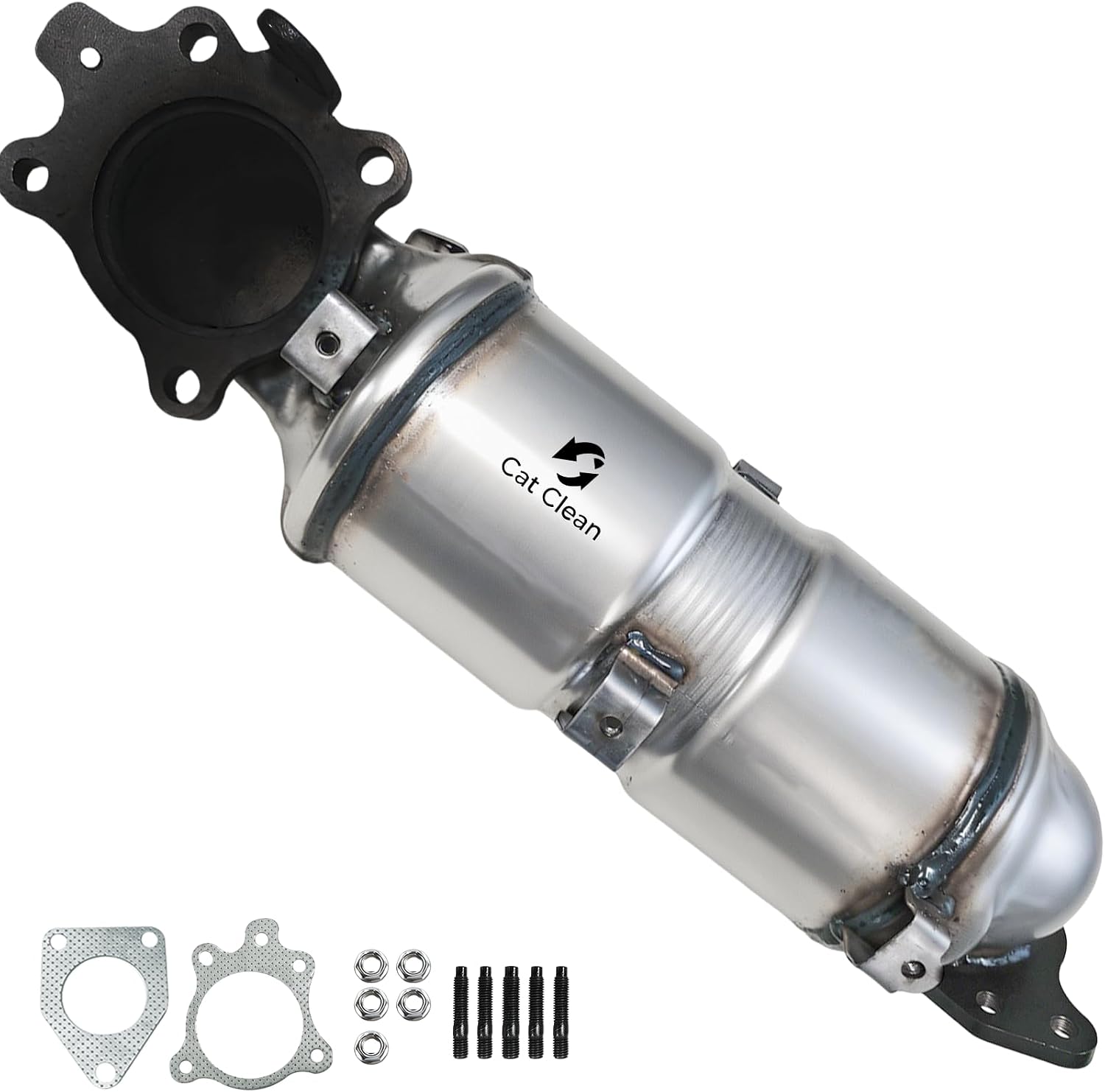
5. CAT CLEAN Catalytic Converter for Honda Civic/CR-V 1.5L Turbo (EPA Compliant)
| Compatible vehicles | Honda Civic 2016-2021 1.5L; Honda CR-V 2017-2021 1.5L |
|---|---|
| EPA compliance | Meets EPA compliant standards (not for certain states) |
| Manufacturer | CAT CLEAN |
| Manufacturer part number | CAT-HoCi-16-21-1.5L-CC |
This CAT CLEAN catalytic converter is a direct-bolt replacement made for the 1.5L turbo Honda Civic and CR-V. It uses a high-density honeycomb ceramic substrate loaded with precious metals to drive catalytic reactions and meet EPA compliance, so it is intended to restore converter efficiency and clear P0420/P0430 codes. The body is stainless steel with internal high-temperature padding to protect the ceramic carrier, which should help resist corrosion and extend service life. Installation is straightforward since the unit bolts up to factory connection points without welding or major modification. For daily drivers and commuters this unit promises quieter exhaust and improved emissions compared with a degraded converter. It cannot be used where state rules prohibit non-certified parts, and buyers should confirm the listed OEM reference numbers match their vehicle before ordering. Professional installation is recommended to ensure proper sensor alignment and sealing.
Best for: Buyers who prioritize restoring reliable emissions performance and need a direct-fit replacement that reduces fault codes and returns the exhaust system to factory-like operation.
Less Ideal for: Drivers in states that require stricter in-state certified converters or those who need a universal or modified performance exhaust solution.
- Direct bolt-on design for straightforward installation without welding
- EPA-compliant catalyst with Pt, Rh, and Pd loading for efficient emissions conversion
- 409L stainless steel body and internal high-temp padding for corrosion and heat resistance
- Not legal for sale or use in certain states with stricter emissions rules
Verdict: Choose this CAT CLEAN direct-fit catalytic converter to reliably restore emissions efficiency and clear related engine codes on 1.5L Honda Civic and CR-V models.
6. ECHO AUTOMILES Catalytic Converter Compatible with Honda Civic 2016–2021 1.5L / CR‑V 2017–2021 1.5L

| Vehicle fitment | Honda Civic 2016-2021 1.5L; CR‑V 2017-2021 1.5L |
|---|---|
| Catalyst substrate | 400-cell honeycomb |
| Regulatory status | EPA compliant (not for sale/installation in CA and CO) |
This ECHO AUTOMILES catalytic converter is a direct-replacement unit designed for the 1.5L turbocharged Honda Civic (2016–2021) and CR-V (2017–2021) engines. It uses a 400-cell honeycomb substrate and a high precious-metal loading intended to meet federal EPA standards, so it performs the core job of converting exhaust pollutants while minimizing added backpressure. The design claims a high-flow structure that helps preserve engine response and fuel economy compared with more restrictive converters. The kit includes gaskets and hardware to simplify installation, and the seller lists a 2.5-year or 25,000-mile warranty. Important limits to note are legal restrictions on sale or installation in certain states including California and Colorado, so confirm local emissions rules before buying. For owners who need a like-for-like replacement that aims to balance emissions compliance with minimal performance loss, this unit is a practical option; buyers in regulated states or those seeking manufacturer-certified parts should look elsewhere.
Best for: Buyers seeking a factory-replacement style catalytic converter that balances emissions performance with minimal impact on engine power and who value peer validation and documented fitment for these Honda 1.5L vehicles.
Less Ideal for: Drivers in states with strict emissions regulations or anyone who requires manufacturer-certified or state-specific certified converters should consider alternative, compliant units.
- Direct-fit for 1.5L Honda Civic (2016–2021) and CR‑V (2017–2021) to allow bolt-in replacement
- 400-cell honeycomb substrate with high precious-metal loading for effective pollutant conversion
- High-flow design intended to reduce exhaust backpressure and preserve engine performance
- Includes gaskets and hardware to simplify installation and replacement
- Not eligible for sale or installation in several states with stricter emissions rules such as California and Colorado
Verdict: A direct-fit, high-flow catalytic converter for Honda 1.5L Civic and CR‑V that aims to restore emissions control with minimal effect on performance and straightforward installation.
7. NutsCata Direct-Fit Catalytic Converter for 2017–2022 Honda CR-V 1.5L

| Fitment | 2017-2022 Honda CRV 1.5L L4 |
|---|---|
| EPA compliance | Federal emission standards only |
| Catalyst | Ceramic honeycomb with high-content precious metals |
| Warranty/assurance | 6 years or 60,000 miles |
| Manufacturer | NutsCata |
This NutsCata catalytic converter is a bolt-on replacement designed for 2017–2022 Honda CR-V models with the 1.5L turbocharged 4-cylinder engine. It uses a honeycomb ceramic substrate coated with high-content precious metals to restore emissions control and clear P0420-style codes. The unit ships ready to install with flanges and hardware intended to match factory connections so most experienced DIYers or a shop can swap it in without welding. Benefits reported by owners include reliable check-engine light resolution and passing emissions tests on federal-standard vehicles. However, build-quality variability shows up in some user reports: a few buyers needed to bend or correct flanges, adjust heat shields, or replace supplied fasteners to get a clean seal. The part is not for sale in states requiring stricter emissions rules. NutsCata offers a 6-year or 60,000-mile performance assurance which gives added confidence, but if you prioritize the tightest factory tolerances you may prefer an established OEM-style brand or a higher-end aftermarket unit.
Best for: Buyers who want a cost-conscious, direct-replacement catalytic converter for a 2017–2022 CR-V 1.5L and value restoring emissions function without custom fabrication; ideal for owners who prefer a straightforward install or will use a reputable shop.
Less Ideal for: Drivers in states with stricter emissions regulations or anyone who needs guaranteed factory-level fitment and finish without any post-purchase adjustments.
- Direct-fit bolt-on design intended to match factory flanges for straightforward installation
- Catalyst uses high-content precious metals to restore emissions performance and help clear P0420-style codes
- EPA-compliant for federal emissions markets and reported to pass inspections when installed correctly
- Seller-provided performance assurance of 6 years or 60,000 miles
- Not legal for sale or use in California, Colorado, New York, or Maine due to state emissions rules
- Some units show inconsistent manufacturing tolerances requiring flange reshaping, heat shield adjustment, or replacement fasteners
Verdict: A budget-friendly, bolt-on replacement that restores emissions function on federal-spec 2017–2022 CR-V 1.5L models when you accept occasional need for minor installation adjustments.
Choosing the Right 2017-2022 Honda CR-V Catalytic Converter: Key Factors to Consider
Fitment and Mounting
Correct fitment is the single most important factor when selecting a catalytic converter for a 2017-2022 Honda CR-V. The converter must match factory flange types, pipe diameters, hanger locations, and exhaust routing to avoid additional fabrication. Poor fitment often leads to exhaust leaks, accelerated gasket failure, or stress on adjacent components.
Verify OEM-style mounting points and pipe dimensions before buying. If the converter requires adapters or custom hangers, be prepared for added labor and potential vibration issues. Choosing a unit designed specifically for the CR-V generation reduces the chance of installation headaches and improves long-term sealing and durability.
Emission Conversion Efficiency
Catalytic converters differ in substrate composition and cell density, which directly affect how well harmful gases are converted. Higher cell density and appropriate substrate formulations tend to provide better conversion of hydrocarbons, carbon monoxide, and NOx, which is critical for passing emissions inspections on the CR-V.
Consider converters that specify substrate material and washcoat performance rather than vague marketing claims. Efficient conversion reduces the likelihood of persistent check engine lights tied to oxygen sensor readings and helps maintain proper fuel trim.
Backpressure and Engine Performance
Internal sizing of the converter influences exhaust flow and backpressure. Too restrictive a core can hurt throttle response and fuel economy, while an overly free-flowing unit may not effectively reduce emissions. For the 2017-2022 CR-V, balance is important: a converter should provide adequate conversion without creating excessive backpressure that affects the turbocharging or naturally aspirated performance depending on engine variant.
Look for converters designed to match the exhaust flow characteristics of the CR-V engine. Manufacturers that publish internal dimensions or flow test data give a clearer picture of expected drivability impacts.
Build Quality and Durability
Durability matters because catalytic converters on the CR-V endure high temperatures, road debris, and vibration. Shell thickness, quality of welds, and secure internal packing affect how long a converter will resist cracking or substrate collapse. Rust-resistant materials and proper high-temperature coatings extend service life, especially in regions with road salt or frequent temperature cycling.
Inspect construction details such as flange reinforcement, backing material around the substrate, and whether the unit uses vibration-reducing mounting features. A robust assembly reduces the chance of premature failure and the costly repairs that follow.
Oxygen Sensor Compatibility
The CR-V's oxygen sensors monitor exhaust composition and help the engine control module adjust fuel trim. Replacement catalytic converters should allow correct placement and orientation of upstream and downstream sensors. If sensor bungs are missing or poorly positioned, it can trigger diagnostic trouble codes or mask converter problems.
Ensure the converter supports the factory sensor locations and probe angles. Units that retain OEM-style sensor bungs and sealing practices make diagnostics straightforward and maintain expected closed-loop fuel control behavior.
Local Emissions Certification and Legal Compliance
Different regions have distinct requirements for emissions components. For a 2017-2022 Honda CR-V, confirm that the replacement converter meets the legal standards applicable where the vehicle is registered. Compliance affects whether the vehicle will pass state or regional inspections and avoids potential fines for noncompliant parts.
Look for documented certification or clear statements about where the converter is intended to be used. Avoid parts that expressly state they are for competition or off-road use only if you need a street-legal replacement.
Common Symptoms of Catalytic Converter Problems
Recognizing early signs of converter issues helps you address problems before they cause secondary damage. Common symptoms on the 2017-2022 CR-V include persistent check engine light codes related to oxygen sensors, reduced power or acceleration, and a noticeable drop in fuel economy.
You may also notice an unpleasant sulfur or rotten-egg odor from the exhaust, excessive heat under the vehicle, or rattling noises from the converter body which indicate internal substrate damage. Documenting symptoms and code numbers can guide parts selection and determine whether a converter replacement is necessary.
- Persistent check engine light with O2 sensor or catalyst-related codes
- Loss of power or sluggish acceleration
- Reduced fuel economy and rough idle
- Rattling sounds from the converter indicating a broken substrate
- Sulfur or rotten-egg exhaust odor after startup
How Fitment Differences Affect Installation Time
Not all replacement converters install the same way. Units that match factory flanges and hanger locations typically take less time and need only basic gaskets and hardware. Converters that require cutting, welding, or adapter pieces add labor and shop costs.
If you plan to install the converter yourself, check whether hardware and gaskets are included and review any required torque specs. Preparing for potential welding or additional hangers can avoid surprises during the job.
- Direct-fit converters: usually bolt-on with minimal extra parts
- Universal or universal-style units: often need cutting and welding
- Adapter kits: useful if pipe diameters differ but add complexity
Interpreting Check Engine Light and Diagnostic Codes
A check engine light related to the catalytic converter often appears as P0420 or P0430 family codes indicating catalyst efficiency below threshold. On the 2017-2022 CR-V, these codes typically result from inefficient conversion, sensor contamination, or leaks in the exhaust upstream of sensors.
Before replacing the converter, diagnose oxygen sensor function, exhaust leaks, and engine tuning issues that can cause false catalyst codes. Replacing sensors or addressing air/fuel problems first can prevent unnecessary converter swaps.
- P0420-style codes suggest catalyst efficiency problems
- Inspect for exhaust leaks and upstream issues before replacing the converter
- Check oxygen sensor voltages and response times as part of troubleshooting
Installation Tips to Minimize Future Problems
Use proper gaskets and torque fasteners to ensure leak-free joints. Avoid over-tightening which can warp flanges and create stress points. If welding is required, opt for quality welds and correct alignment to prevent misaligned hangers or pipes.
Replace seized bolts, hangers, or exhaust hardware when doing the job, as compromised mounting components transmit vibration that shortens converter life. After installation, monitor for codes and perform a brief road test to confirm there are no leaks or unusual exhaust noises.
- Always use new gaskets and anti-seize on studs when recommended
- Confirm sensor bung locations and harness clearances before final tightening
- Road test and re-scan for codes after installation
When to Repair Vs Replace
Minor exhaust leaks at flange faces or damaged gaskets can sometimes be corrected without replacing the catalytic converter. Likewise, if an oxygen sensor is faulty or upstream engine issues are causing a code, fix those first. However, once the internal substrate is damaged, cracked, or collapsed, repair is not feasible and replacement is required.
Consider the converter condition, age, and whether the vehicle must meet emissions testing. If the converter shows physical damage, severe rattling, or consistently fails efficiency checks, replacement is the practical choice to restore emissions compliance and drivability.
- Repair gaskets and flange leaks when internal substrate is intact
- Replace converter if substrate is damaged or efficiency tests fail
- Address engine tuning or sensor issues before deciding on replacement
Still looking for the perfect fit?
Select your Honda CR-V configuration to see the most relevant Catalytic Converters recommendations
How We Chose the Best 2017-2022 Honda CR-V Catalytic Converter
We prioritized converters that provide correct fit and reliable emissions control for 2017-2022 Honda CR-V applications. Key evaluation criteria included fitment accuracy to factory mounting points and flange types, catalyst substrate type and cell density because these determine conversion efficiency, and thermal durability of the shell and welds for long-term service life. We also assessed backpressure characteristics and internal sizing to avoid drivability problems, and compliance with emissions performance expectations relevant to this vehicle.We excluded units without clear fitment specifications for the 2017-2022 CR-V, parts intended only for off-road use, or components that omitted substrate material detail. The shortlist favors converters with documented construction specs and reliable manufacturing tolerances. Final selections balanced ease of installation, expected service life, and how well the unit supports emissions checks while minimizing negative impacts on throttle response and fuel trim.
Our full evaluation process is outlined in our review methodology.
FAQ
What codes indicate a catalytic converter issue on a 2017-2022 CR-V?
Codes in the P0420 family often point to catalyst efficiency problems. However, similar codes can result from oxygen sensor faults, exhaust leaks, or engine misfires, so diagnostic checks are needed to confirm the converter is the root cause.
Can a bad catalytic converter cause a check engine light to stay on?
Yes. A failing converter can trigger persistent check engine lights due to poor catalytic efficiency or downstream oxygen sensor readings. But sensors, exhaust leaks, or fueling issues can also cause the light, so check those first.
Is it possible to replace just the substrate in the converter on my CR-V?
In most cases the internal substrate is not serviceable and the entire converter is replaced. Attempts to repair a damaged substrate are usually temporary and do not reliably restore emissions performance.
How do I confirm the new converter fits my 2017-2022 CR-V?
Verify the replacement lists explicit compatibility with the 2017-2022 Honda CR-V and matches flange type, pipe diameter, and sensor bung locations. Check manufacturer fitment notes and compare measurements to the original unit.
Will replacing the catalytic converter fix a loss of power?
Replacing a restrictive or damaged converter can restore lost power if the converter was causing excessive backpressure or clogged flow. However, other issues such as intake, fueling, or ignition problems can also cause power loss and should be ruled out.
How long do catalytic converters typically last on a CR-V?
Lifespan varies depending on driving conditions, maintenance, and exposure to contaminants. Converters often last many years under normal use, but repeated engine issues, overheating, or physical damage can shorten service life.
Final Verdict
For the 2017-2022 Honda CR-V, prioritize a replacement catalytic converter that matches factory fitment, supports correct oxygen sensor placement, and offers a substrate suited to emissions requirements. Balance conversion efficiency with acceptable backpressure to preserve drivability.Address underlying engine faults and sensor issues before replacing the converter to avoid repeat failures. When you select a properly specified unit and follow good installation practices, you will restore emissions performance and reduce the risk of recurring check engine lights.
Explore More:
- Check out all Honda CR-V parts & accessories
- Explore Catalytic Converters Maintenance & Repair Guides
- Explore Exhaust & Emissions
- Browse all Auto Parts
