

Note: This article contains affiliate links. If you click on these links and make a purchase, I may earn a small commission at no extra cost to you. This helps support my research and content. Read my full affiliate disclosure here.
If your 2016-2024 Nissan Titan is showing emissions faults or a persistent check engine light, replacing the catalytic converter can often restore proper exhaust function and overall drivability. The right converter improves exhaust emissions and helps sensors read correctly, which matters for regular inspections and day-to-day engine behavior.This guide shortlists the top catalytic converters built for the 2016-2024 Titan and explains the fitment, emissions performance, and installation considerations that matter most. Below you will find the top picks and the evaluation criteria we used to narrow the field, followed by practical guidance on fitment, symptom diagnosis, and installation planning.
Looking for other parts? See all Nissan Titan parts & accessories.
Top Picks at a Glance
| Best Quality Built to a higher standard if you want something more solid | A-Premium Front Right Catalytic Converter, EPA Compliant, Stainless Steel |  |
| Best Value The sweet spot between price and what you get | CIRconvert Right Catalytic Converter for 2017–2020 Nissan Titan (EPA Compliant) |  |
| Best Budget The cheapest option that still gets the job done reliably | CIRconvert Left Catalytic Converter — EPA Compliant for 2017–2020 Nissan Titan 5.6L |  |
| Highest Rated A top-rated pick with lots of positive feedback | MAYASAF 2.5" Universal Catalytic Converter with O2 Port |  |
| Most Popular A crowd favorite that many people choose with confidence | Dylannet 2.5" Weld-On Universal High-Flow Catalytic Converter (2 pcs) |  |
| Best Seller A high-volume bestseller chosen again and again | pulcherflow Catalytic Converter for 2017–2020 Nissan Titan 5.6L (Left) |  |
1. A-Premium Front Right Catalytic Converter, EPA Compliant, Stainless Steel

| Position | Front Right |
|---|---|
| Body Material | Stainless Steel |
| Oxygen Sensor Ports | 1 |
| E.P.A. Compliant | Yes |
| Vehicle Emissions Specifications | Federal Emissions |
This A-Premium front-right catalytic converter is a direct-fit replacement for 5.6L V8 Nissan TITAN, TITAN XD, Armada, NV2500/3500 and Infiniti QX80 models in the specified years. It installs where the factory front-right converter sits and includes a single oxygen sensor port, so it integrates with the vehicle’s existing sensor plumbing. Constructed from stainless steel, the converter body and plumbing are sized for typical V8 exhaust flow and the design is listed as EPA-compliant for federal emissions, which makes it suitable for most states that accept federal-style aftermarket converters. Practical benefits include a one-year unlimited-mileage guarantee and a direct-fit mounting pattern that minimizes fabrication. Limitations: it is not for restricted-state installation in places that require CARB-approved units, and buyers needing higher-flow performance or multi-sensor configurations should check fitment and sensor requirements before buying.
Best for: Buyers focused on restoring factory-style emissions performance on 5.6L V8 Nissan/Infiniti trucks who want a direct-fit, durable replacement without custom fabrication.
Less Ideal for: Drivers in states that require CARB-compliant catalytic converters or enthusiasts seeking a high-flow performance converter beyond stock emissions configuration.
- Direct-fit front-right replacement for specified 5.6L V8 Nissan and Infiniti models
- Stainless steel construction for corrosion resistance and durability
- EPA-compliant for federal emissions where allowed
- Includes one oxygen sensor port matching factory sensor placement
- One-year unlimited-mileage guarantee from the maker
- Not CARB approved so it cannot be legally used in California and other restricted states for installations requiring CARB units
Verdict: Choose this direct-fit, stainless-steel front-right converter when you need a durable, factory-style EPA-compliant replacement for 5.6L Nissan/Infiniti V8 models.
2. CIRconvert Right Catalytic Converter for 2017–2020 Nissan Titan (EPA Compliant)

| Position | Right passenger side |
|---|---|
| Vehicle fitment | 2017–2020 Nissan Titan 5.6L V8 (also fits listed 5.6L models) |
| Material | T409 stainless steel shell |
| Compliance | EPA compliant (not for CA, CO, ME, NY) |
| Manufacturer | CIRconvert |
This CIRconvert right-side catalytic converter replaces the passenger-side unit on 2017–2020 Nissan Titan 5.6L V8 trucks and similar 5.6L V8 models. It is a direct-fit replacement built from high-strength stainless steel with a large substrate and increased precious-metal loading to support efficient conversion of CO, HC, and NOx. Typical use is a factory-replacement install to restore emissions control and clear a check-engine light caused by a failing converter; the unit includes the oxygen sensor bung and is patterned to match factory flanges for bolt-on installation. Practical benefits include EPA compliance for most states, a rugged welded shell that resists heat and vibration, and a 50,000-mile limited coverage from the maker. Limitations are legal restrictions preventing sale or use in California, Colorado, Maine, and New York and the fact that aftermarket converters can vary in long-term precious-metal distribution compared with higher-end factory units, which may affect longevity and sensor readings over many years.
Best for: Buyers who want a cost-conscious, factory-style replacement to restore emissions function on a 2017–2020 Nissan Titan 5.6L V8 and prefer a bolt-on unit that minimizes installation hassle.
Less Ideal for: Those seeking a lifetime performance or high-end racing-grade converter, or owners in states where stricter emissions parts are required should look at alternatives or dealer parts.
- Direct-fit design for 2017–2020 Nissan Titan 5.6L V8 passenger side simplifying installation
- Constructed from high-strength stainless steel with reinforced welding for heat and vibration resistance
- Large substrate and increased precious metal loading for improved catalytic conversion
- EPA-compliant for sale and use in most U.S. states
- Includes oxygen sensor bung and factory-style flanges for bolt-on replacement
- Not legal for sale or use in California, Colorado, Maine, or New York
Verdict: A practical, direct-fit EPA-compliant replacement that restores emissions control on 2017–2020 Nissan Titan 5.6L V8 trucks with minimal fuss.
3. CIRconvert Left Catalytic Converter — EPA Compliant for 2017–2020 Nissan Titan 5.6L

| Vehicle fitment | 2017–2020 Nissan Titan 5.6L V8 driver side |
|---|---|
| Position | Left (driver) side |
| EPA compliance | Yes (not for CA, CO, ME, NY) |
| Manufacturer | CIRconvert |
| Manufacturer part number | NT2017-2020L48 |
This CIRconvert left catalytic converter replaces the driver-side unit on 5.6L V8 Titans and several related Nissan/Infiniti vans and SUVs. It is a direct-fit, stainless-steel assembly with a honeycomb substrate coated in precious metals to reduce CO, HC, and NOx emissions and reportably improve oxygen sensor signal accuracy. Typical installation is a bolt-on swap where the converter connects to existing exhaust flanges and the oxygen sensor plug is used in place. The unit is described as EPA compliant for 46 states and built with T409 stainless and reinforced internal matting to resist vibration and high heat. For budget-focused buyers it offers a low-cost replacement option with factory-style fitment and a claimed 50,000-mile limited warranty. Limitations to consider are the restricted legality in California, Colorado, Maine, and New York and that aftermarket precious-metal loading and long-term durability can vary versus higher-end factory replacements, so professional inspection after install is advisable.
Best for: Buyers who need an affordable, factory-style left-side replacement for a 5.6L V8 Titan and prioritize straightforward fitment and emissions compliance outside restricted states.
Less Ideal for: Owners in states where this unit is restricted or buyers who want a top-tier OEM-level catalytic with proven long-term precious-metal durability and extended warranty coverage.
- Direct-fit left-side design for 2017–2020 Nissan Titan 5.6L V8 driver side
- EPA-compliant for sale/use in most U.S. states outside restricted states
- Stainless steel construction and reinforced internal matting aimed at heat and vibration resistance
- Honeycomb substrate with palladium/platinum/rhodium coatings for catalytic conversion
- Not legal for sale or use in California, Colorado, Maine, or New York
Verdict: A cost-conscious, direct-fit left-side replacement that restores emissions control on 5.6L Titan trucks while keeping installation simple.
4. MAYASAF 2.5" Universal Catalytic Converter with O2 Port

| Inlet/Outlet ID | 2.5 inches |
|---|---|
| Overall Length | 11 inches |
| Exterior | Machined stainless |
| O2 Port | Included |
The MAYASAF 2.5" universal catalytic converter is a compact aftermarket unit meant to replace a damaged or worn converter on vehicles with matching 2.5-inch exhaust tubing. It provides a straightforward direct-fit concept for installers who can cut and weld the existing exhaust to mate to the 11" overall length body and uses a machined stainless exterior for corrosion resistance. The built-in O2 sensor port preserves the ability to mount the vehicle’s oxygen sensor without modification. Typical use is as a service replacement where a factory-style converter is either unavailable or too costly; professional installation is recommended because trimming and welding are usually required. The internal design claims to improve oxygen flow to the engine, which can help maintain drivability after replacement, and the stainless construction should hold up under normal road conditions. Important limitations are that this is a universal unit rather than a vehicle-specific direct-fit for 2016–2024 Nissan Titan models, and it may not meet emissions rules in certain states, so confirm local compliance before installing.
Best for: A buyer who prioritizes dependable, serviceable replacements and wants a durable universal converter they can have professionally installed to restore emissions hardware and drivability.
Less Ideal for: Not a good choice for shoppers who need a guaranteed vehicle-specific direct-fit or who must meet strict state emissions certification requirements without modification.
- Standard 2.5" inlet/outlet fits common exhaust piping sizes for easier integration into existing systems.
- Built-in O2 sensor port allows reuse of the vehicle’s oxygen sensor without extra adapters.
- Machined stainless exterior offers corrosion resistance for longer service life.
- Compact 11" length simplifies installation in tight underbody spaces.
- Universal design may require cutting, welding, and custom fitting rather than bolt-on installation.
- Not approved for use in some states with strict aftermarket emissions rules.
Verdict: Choose this universal 2.5" converter if you need a durable, serviceable replacement that preserves the O2 sensor port and can be professionally fitted into a compatible exhaust system.
5. Dylannet 2.5" Weld-On Universal High-Flow Catalytic Converter (2 pcs)
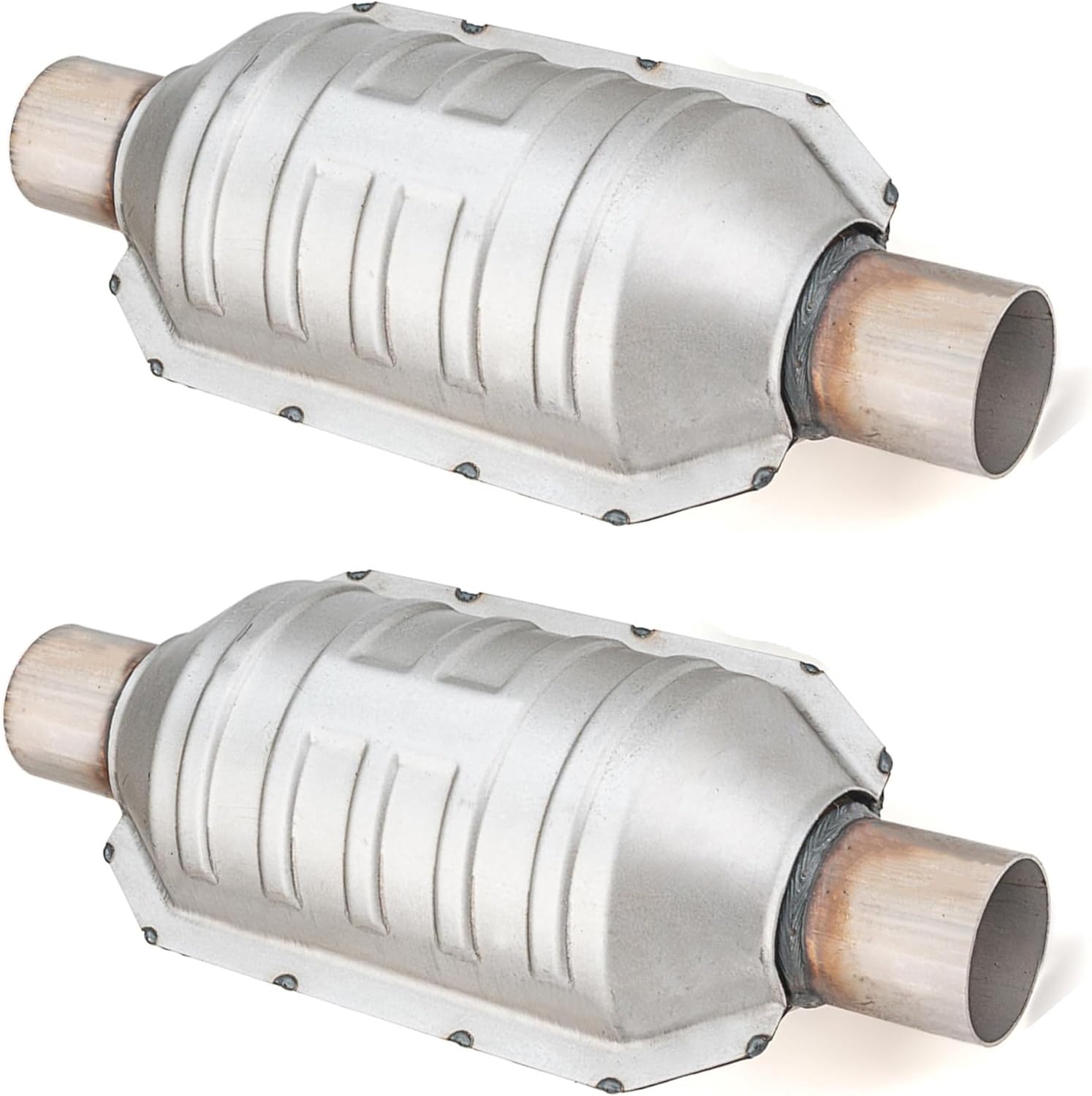
| Inlet/Outlet | 2.5" / 2.5" |
|---|---|
| Total length | 13" |
| Material | Stainless steel |
| O2 port | Included |
This Dylannet unit is a universal weld-on catalytic converter with 2.5" inlet and outlet, a built-in O2 sensor port, and an insulation heat shield, sold as two pieces. In real-world use it replaces a damaged front section or is welded into a custom exhaust where a 2.5" flow path is required. The stainless steel shell and internal catalyst coated with precious metals aim to reduce emissions while maintaining higher flow than many stock front cats. The included O2 port makes reusing factory sensor locations straightforward for tuning and diagnostics. Because it is universal and requires welding, expect fabrication time and possible adapter piping to match factory flanges on a 2016-2024 Nissan Titan; this is not a direct bolt-in factory replacement. The product notes California, Colorado, New York, and Maine sales restrictions which affects legal fitment in those states. For buyers prioritizing proven fitment for a Titan, plan professional installation and confirm emissions compliance before purchase.
Best for: Buyers who want a higher-flow, weld-in front catalytic converter for repair or custom exhaust work on a Titan and who value visible user feedback and experience when choosing parts.
Less Ideal for: If you need a guaranteed bolt-on factory replacement or live in states with stricter emissions rules, this universal weld-in cat is not the best choice.
- High-flow 2.5" inlet/outlet for better exhaust throughput compared with many restrictive replacements
- Stainless steel construction for corrosion resistance and longer service life
- Built-in O2 sensor port simplifies sensor placement and avoids drilling after install
- Sold as a two-piece unit suitable for custom weld-in repairs or fabricated exhaust sections
- Universal weld-on design requires cutting and welding and may need adapters to match vehicle flanges
Verdict: A practical, higher-flow stainless steel weld-in front catalytic converter option when you need a repair or custom fitment and are prepared to have it professionally welded and checked for compliance.
6. pulcherflow Catalytic Converter for 2017–2020 Nissan Titan 5.6L (Left)
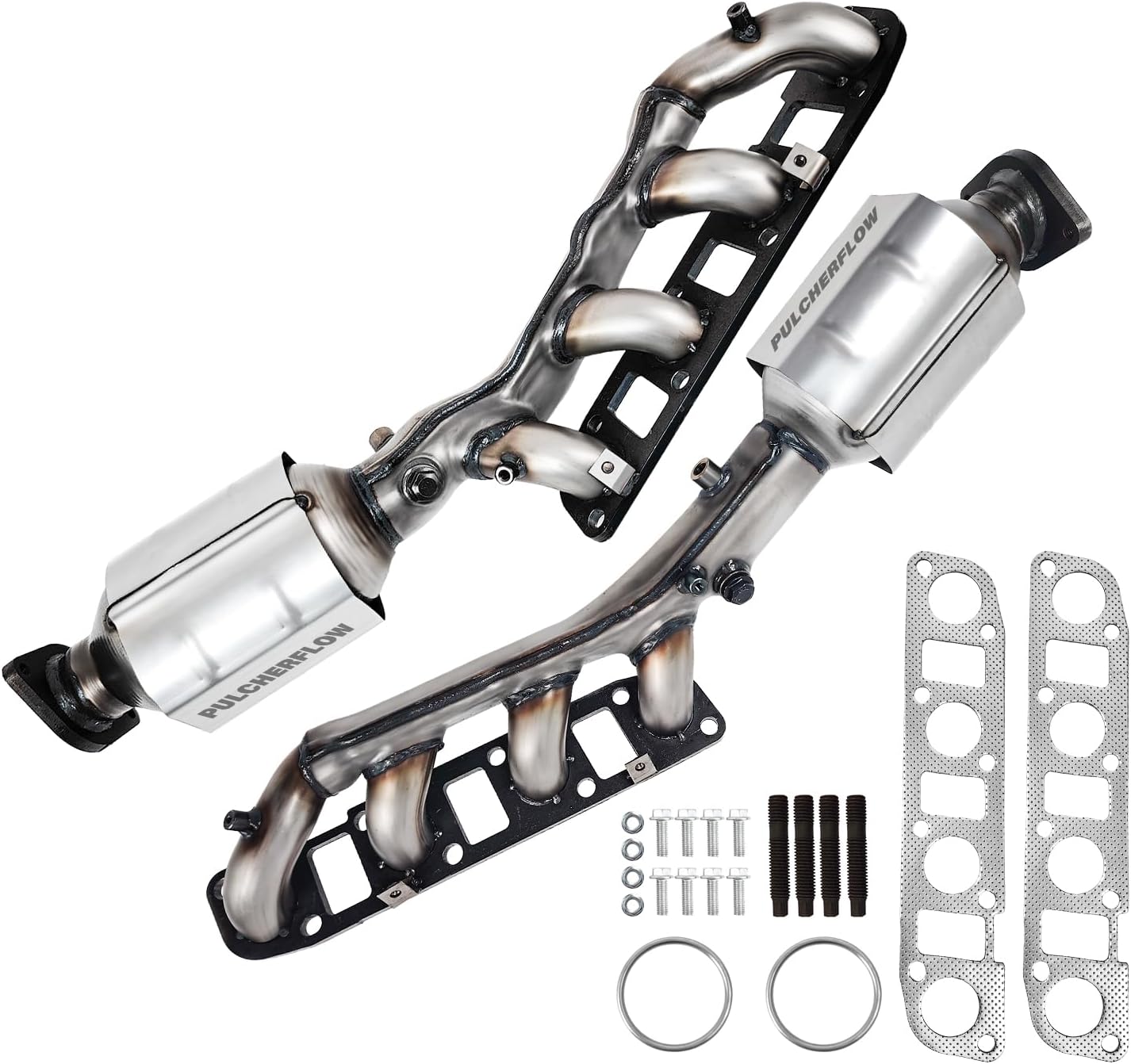
| Vehicle Fitment | 2017–2020 Nissan Titan 5.6L and listed related 5.6L V8 models |
|---|---|
| Position | Left |
| EPA Compliance | Federal emissions models (46-state legal) |
| Shell Material | Stainless steel |
This pulcherflow catalytic converter is a direct-fit replacement for the left side of 5.6L V8 Nissan Titan models from 2017–2020 and compatible Armada, NV, and QX80 models within the listed years. It uses an enlarged honeycomb ceramic substrate with increased precious metal loading to improve conversion efficiency and meet EPA emissions requirements for federal models. The housing is stainless steel with mandrel bends to resist heat and corrosion, and the unit includes gaskets and hardware intended to simplify installation. For a risk-averse buyer this offers a factory-style replacement path without modifying the exhaust or requiring custom welding. Limitations include 46-state legality only, so it cannot be used for vehicles registered in California, New York, or Maine emissions programs, and long-term durability depends on installation and local driving conditions like road salt exposure. Expect it to perform as a straightforward emissions repair or replacement when you need a compliant left-side converter for the specified model years.
Best for: Buyers who want a straightforward, factory-style replacement to restore emissions compliance on a 2017–2020 Titan left-side converter without custom fabrication and who prioritize a plug-and-play install.
Less Ideal for: Owners seeking a California-compliant or CARB-certified converter or those requiring multi-vehicle compatibility beyond the listed Nissan and related models.
- Direct-fit design with mounting holes aligned for bolt-on installation and included gaskets and hardware
- EPA-compliant for federal emissions models with enlarged substrate and higher precious metal loading for improved conversion
- Stainless steel shell and mandrel bends resist corrosion and high temperatures
- Designed specifically for 5.6L V8 left-side fitment on listed Nissan and related models
- Not legal for sale or use on vehicles registered in California, New York, or Maine emissions programs
Verdict: A direct-fit, EPA-compliant left-side replacement that restores emissions function for 2017–2020 Titan owners who want a factory-style, bolt-on install.
Choosing the Right 2016-2024 Nissan Titan Catalytic Converter: Key Factors to Consider
Fitment and Exhaust Configuration
Correct fitment is the single most important factor when selecting a catalytic converter for a 2016-2024 Nissan Titan. These trucks may have variations in exhaust tubing diameter, hanger locations, and oxygen sensor port placement across model years and engine configurations. Selecting a converter specifically designed to match the Titan's factory exhaust routing reduces the need for cutting or adapter sections and minimizes exhaust leaks.
A converter that aligns with factory sensor locations ensures accurate downstream and upstream oxygen sensor readings, which affects fuel trim and check-engine behaviors. Pay attention to flange type, inlet and outlet diameter, and whether the assembly includes ports for both upstream and downstream sensors. Choosing the right-fit unit reduces installation time and helps maintain correct emissions diagnostics.
Emissions Substrate Type and Cell Density
The internal substrate and its cell density dictate how effectively the converter reduces hydrocarbons, carbon monoxide, and NOx. Higher cell density substrates offer more surface area for catalyst coating, improving conversion efficiency, but they can also increase backpressure if excessively restrictive for the engine.
For the Titan, pick a substrate balance that yields strong emissions reduction without causing performance loss. Durable ceramic substrates or high-grade metallic substrates resist thermal shock and road vibration better than lower-quality cores. Reliable catalyst washcoats and appropriate precious metal loading further influence how long the unit maintains emissions performance under normal driving conditions.
Oxygen Sensor Compatibility
Oxygen sensors monitor exhaust composition before and after the converter. A replacement that does not locate sensor ports accurately or that changes the distance to sensors can trigger check engine lights or alter fuel trims. Ensure the converter provides the correct number of sensor ports in the same positions as the factory unit for the Titan years covered.
Some converters include welded-in bungs while others rely on factory sensor reuse. Verify the thread type and position match factory sensors. Proper sensor compatibility helps the engine control module correctly interpret exhaust readings and prevents long-term drivability or emissions faults.
Durability and Corrosion Resistance
Catalytic converters sit close to road spray and heat cycles, so materials and construction matter for longevity on a Titan. Stainless steel housings and high-quality welds resist rust and cracking that otherwise lead to exhaust leaks. Heat-resistant coatings and thicker gauge housings better withstand salt, moisture, and debris exposure.
A durable mounting design with reinforced flanges and hangers reduces the risk of fatigue failures. Consider units with proven corrosion-resistant finishes and robust structural features to minimize the need for premature replacement and avoid underbody repairs on trucks that see heavy use.
Backpressure and Engine Performance
Replacing a catalytic converter impacts exhaust flow and therefore engine backpressure. Excessive backpressure can reduce power, hurt throttle response, and negatively affect fuel economy. Conversely, a converter designed with appropriate flow characteristics preserves torque and top-end power for the Titan's engine.
Choose a converter that balances conversion efficiency with sufficient flow for the Titan's displacement and tune. Manufacturers sometimes rate flow characteristics or provide design notes; prioritize assemblies engineered to match the engine's exhaust volume to avoid unintended performance tradeoffs.
Installation Complexity and Serviceability
Installation considerations determine labor time and whether you can perform the swap with typical garage tools. Units that match factory flanges, include welded sensor bungs in correct locations, and reuse factory hangers simplify installation. Some converters require cutting or clamping; assess whether the job fits your skill level.
Also consider serviceability over time. Converters that allow sensor reuse and straightforward access to bolts reduce future labor for diagnostics or replacement. If you plan to reuse existing oxygen sensors, confirm thread types and positions to avoid unexpected purchases or adapter needs.
Recognizing Catalytic Converter Symptoms on the Titan
Owners frequently notice a few telltale symptoms when a catalytic converter begins to fail on a 2016-2024 Nissan Titan. Common signs include a persistent check engine light with related emissions trouble codes, rough idle, reduced throttle response, and a rotten-egg or unusual exhaust odor. Increased exhaust noise from cracks or internal damage is also possible.
Symptoms do not always indicate the converter alone, so correlate codes and behavior. A clogged or failing converter can cause high backpressure that reduces engine performance, while partial substrate breakage can rattle and allow unfiltered exhaust through the system.
- Check engine light with emissions-related codes
- Noticeable loss of power or reduced acceleration
- Rattling sounds from the exhaust area under the truck
- Strong sulfur or rotten-egg exhaust smell
- Failed emissions test or elevated tailpipe readings
Fitment Tips for 2016-2024 Titan Exhaust Layouts
Before buying, confirm the converter matches your Titan's model year and engine configuration. Inspect the factory converter to note sensor port count and placement along with inlet/outlet diameters. Where possible, use the vehicle's VIN or the existing converter part references to cross-check fitment details.
If your replacement lists multiple fitment options, choose the entry that explicitly covers the 2016-2024 Titan range. For professional installations, have a technician verify hanger alignment and flange mating surfaces to prevent leaks and misalignment.
- Measure inlet and outlet diameters on the factory unit
- Note the number and location of oxygen sensor ports
- Confirm flange type matches factory connections
- Check for required adapters or clamps before starting work
Preparing for Installation: Tools and Safety
Installing a catalytic converter on the Titan usually requires basic garage tools plus some exhaust-specific supplies. Expect to use jack stands or a lift, penetrating lubricant for rusted hardware, a torque wrench for proper flange bolts, and possibly exhaust clamps or gaskets if the unit does not include them. Safety gear like gloves and eye protection is essential.
If you plan to reuse the factory oxygen sensors, remove them carefully and inspect threads and wiring. For welded-in sensors or units that change port positions, be ready with replacement sensors or proper thread-compatible components. If you are unsure about cutting or welding exhaust tubing, consult a professional to avoid leaks or safety hazards.
- Floor jack and jack stands or vehicle lift
- Penetrating oil for rusted fasteners
- Torque wrench and socket set
- Replacement gaskets, clamps, or sealant as needed
Maintaining Converter Life on a Titan
Proper maintenance helps extend catalytic converter life. Address engine misfires, rich-running conditions, and oil or coolant leaks promptly because these issues can contaminate the catalyst and reduce effectiveness. Keep up with scheduled tune-ups and ignition component checks to prevent unburned fuel from damaging the converter.
Avoid prolonged idling with a loaded engine and try to limit exposure to deep water or corrosive road treatments when practical. Regular inspections during oil changes or service visits allow early identification of exhaust leaks, damaged hangers, or sensor issues before they lead to converter damage.
- Repair misfires and fuel system issues quickly
- Inspect for exhaust leaks during routine service
- Replace damaged hangers and clamps to prevent stress
- Avoid driving through deep water that can cause thermal shock
When to Consult a Technician
Some situations are best handled by a qualified technician. If diagnostics show a clogged converter, if you lack the tools to safely lift the truck, or if the installation requires welding to the factory exhaust, seek professional help. A tech can also perform a backpressure test and use live-data readings to confirm whether the converter is the root cause of drivability or emissions faults.
Technicians can ensure oxygen sensors are correctly positioned and verify welds and flange seals for leak-free operation. If the vehicle fails an emissions test, a certified shop can help trace whether the converter or another emissions component is at fault.
- Persistent check engine light after replacement attempts
- Failed emissions test with converter-related codes
- Need for custom welding or exhaust modification
- Uncertain diagnosis after basic sensor checks
Still looking for the perfect fit?
Select your Nissan Titan configuration to see the most relevant Catalytic Converters recommendations
How We Chose the Best 2016-2024 Nissan Titan Catalytic Converter
We focused on attributes that directly affect emissions control, sensor behavior, and long-term reliability on 2016-2024 Nissan Titan trucks. Our evaluation prioritized correct fitment for the model years in scope, substrate and cell count quality, emissions reduction performance, and compatibility with oxygen sensor locations. We also considered corrosion-resistant construction and weld quality because underbody exposure affects service life.We assessed flow characteristics and backpressure implications to avoid creating drivability issues, and we looked for designs that maintain or restore proper downstream oxygen sensor readings. Ease of installation and whether the unit allows reuse of factory hangers or sensors were also part of the criteria since they impact labor and complexity.Excluded items include universal or generic converters that require extensive modification, products lacking clear fitment information for the 2016-2024 Titan, and units that do not meet expected emissions substrate standards. The final selections reflect a balance of fitment, emissions performance, durability, and installability for the Titan.
Our full evaluation process is outlined in our review methodology.
FAQ
How do I know if the catalytic converter is causing my Titan's check engine light?
Often the check engine light will accompany emissions-related trouble codes that point to upstream or downstream oxygen sensor readings or catalytic efficiency. Use a code reader to check for codes referencing catalyst efficiency or oxygen sensors. If codes persist after addressing sensors and ignition, the converter may be the cause.
Can I replace the catalytic converter myself on a 2016-2024 Titan?
You can replace it yourself if you have basic tools, a safe way to lift the truck, and some exhaust experience. Confirm fitment, sensor port compatibility, and whether the job requires cutting or welding. If the installation looks complex or involves welding, consult a professional.
Will a new catalytic converter fix poor fuel economy on my Titan?
A failing converter that causes excessive backpressure or poor sensor readings can negatively impact fuel economy. Replacing a damaged unit can restore normal exhaust flow and sensor operation, which may improve economy. However, fuel issues also often stem from ignition, fuel delivery, or sensor faults.
How long should a catalytic converter last on a Nissan Titan?
Lifespan varies with driving conditions and maintenance. Under normal conditions a converter often lasts many years, but exposure to contaminants, frequent short trips, or engine problems can shorten its service life. Regular maintenance and prompt repair of engine faults help extend longevity.
Do I need new oxygen sensors when replacing the converter?
Not always. You can often reuse functioning factory oxygen sensors if the sensor ports and threads match. However, damaged or aged sensors may give inaccurate readings that mask converter performance, so inspect sensor condition and replace them if they show wear or poor response.
What should I check before buying a replacement catalytic converter for my Titan?
Confirm the unit lists fitment for 2016-2024 Nissan Titan, check inlet and outlet diameters, number and placement of oxygen sensor ports, flange type, and whether the assembly requires welding or uses factory hangers. Also verify construction materials and corrosion protection for longer service life.
Final Verdict
Prioritize fitment and emissions performance when choosing a catalytic converter for your 2016-2024 Nissan Titan. Make sure the unit matches sensor locations and exhaust diameters, and that the substrate and construction balance conversion efficiency with adequate flow for the engine. Consider durability features and installation complexity as part of the total cost of ownership.Ultimately, choose a converter that restores proper oxygen sensor readings and reduces tailpipe emissions without introducing excessive backpressure. That balance will deliver reliable emissions compliance and preserve engine performance for daily driving and inspection requirements.
Explore More:
- Check out all Nissan Titan parts & accessories
- Explore Catalytic Converters Maintenance & Repair Guides
- Explore Exhaust & Emissions
- Browse all Auto Parts
