

Looking for the perfect fit?
Select your Ford Ranger configuration to see the most relevant Cat-back Exhaust Systems recommendations
Note: This article contains affiliate links. If you click on these links and make a purchase, I may earn a small commission at no extra cost to you. This helps support my research and content. Read my full affiliate disclosure here.
If you drive a Ford Ranger, the right cat-back exhaust system can change how the truck sounds and breathes on the road. You want an option that balances tonal character, airflow gains, and long-term durability without creating drone or fitment issues.This guide shortlists the top picks for Ford Ranger cat-back exhaust systems and explains the criteria we used to evaluate them, including sound profile and build quality. Read on to understand the tradeoffs and what to expect during installation and daily driving.
Looking for other parts? See all Ford Ranger parts & accessories.
Top Picks at a Glance
| Best Overall The best all-around choice for most situations | Flowmaster Force II Cat-back Exhaust System (817486) |  |
| Best Quality Built to a higher standard if you want something more solid | Ford Racing M-5200-FST Cat-Back Exhaust System |  |
| Best Value The sweet spot between price and what you get | MagnaFlow Street Series Cat-Back Performance Exhaust System 15679 |  |
| Best Budget The cheapest option that still gets the job done reliably | Flowmaster Force II Cat-Back Exhaust System (817491) |  |
| Highest Rated A top-rated pick with lots of positive feedback | Gibson Black Elite Cat-Back Dual Split Exhaust System |  |
| Best Seller A high-volume bestseller chosen again and again | Borla Cat-Back Performance Exhaust System for 2019–2023 Ford Ranger |  |
Flowmaster Force II Cat-back Exhaust System (817486)

| Model | 817486 |
|---|---|
| Exit style | Dual rear/side exit |
| Material | Stainless steel tubing |
| Sound level | Moderate/American Thunder |
This Flowmaster Force II cat-back replaces the factory rear section on a Ford Ranger to add a fuller, moderate exhaust note while aiming to preserve daily drivability. It uses mandrel-bent stainless steel tubing and a muffler tuned for American Thunder sound, and can be routed to either a rear or side exit depending on preference. Install is straightforward for a competent DIYer and fits using factory hanger locations so no cutting is required, though several owners note the supplied clamps need heavy torque or replacement for a secure connection. In real-world use the system adds a noticeable but not aggressive rumble under acceleration and stays relatively quiet at highway cruise, which helps avoid cabin drone. Expect an easy bolt-on upgrade that improves throttle response and character, but plan to bring stronger clamps or an impact gun during installation and be prepared to swap tips for a closer visual match to factory styling.
Best for: Buyers seeking a balanced, all-round performance upgrade for a Ford Ranger who want improved sound and throttle response without sacrificing daily comfort or drivability.
Less Ideal for: Drivers after an aggressive, race-style roar or those who want a completely silent upgrade should look at other muffler designs or tunable systems that target those extremes.
- Mandrel-bent stainless steel tubing for smoother flow and durability
- Designed to use factory hanger locations for bolt-on installation without cutting
- Moderate, throaty tone that increases character without excessive cabin drone
- Rear or side exit options to match visual or sound preference
- Supplied clamps are often regarded as inadequate and may require replacement or heavy torqueing
- Exhaust tips included may not match factory sizing and could need aftermarket tips or modification
Verdict: A practical bolt-on upgrade for a Ford Ranger that adds a rich, moderate exhaust tone and improved response but expect to upgrade the clamps and possibly the tips for the best fit and finish.
Ford Racing M-5200-FST Cat-Back Exhaust System

| Brand | Ford Racing |
|---|---|
| Model | M-5200-FST |
| Exterior | Painted |
| Manufacturer Part Number | M-5200-FST |
The Ford Racing M-5200-FST cat-back exhaust replaces the rear section of the exhaust to give a fuller, more aggressive sound and improved exhaust flow for a performance-oriented driving experience. Installed in place of the factory rear pipe and muffler, it is typically used to sharpen throttle response feel and add a sporty character under acceleration while keeping highway noise subdued. Notable features include painted exterior finish and Ford Racing engineering that matches factory-quality fitment and hangers for straightforward installation. Reviewers report a refined rumble at low RPMs and a louder, throaty tone at higher RPMs without intrusive drone on cruise, making it suitable for spirited driving and occasional track use. The system is described as competition-ready in design and appears to include necessary hardware for installation. Limitations are that it is primarily a sound and flow upgrade rather than a power-producing modification, and professional installation may be required if you lack lifts or garage space to access underbody mounting points.
Best for: A performance-oriented buyer who prioritizes authentic factory-quality upgrades and a more aggressive exhaust character for spirited driving and occasional track use on their Ford Ranger.
Less Ideal for: Drivers seeking measurable horsepower gains from a single bolt-on or those who need a lightweight, race-only system optimized solely for weight savings should consider alternatives.
- Factory-engineered fitment and mounting for straightforward replacement installation
- Tuned exhaust tone that adds a deep rumble at low RPM and a aggressive growl at high RPM without noticeable highway drone
- Painted exterior for a clean, finished look that resists basic corrosion and matches vehicle appearance
- Includes necessary parts for a complete cat-back replacement as reported by users
- Does not produce significant horsepower gains on its own since it is focused on sound and flow
- May require professional installation or vehicle lifts for safe underbody access
Verdict: A factory-quality Ford Racing cat-back that delivers a refined, aggressive sound and reliable fitment for performance-minded Ford Ranger owners.
MagnaFlow Street Series Cat-Back Performance Exhaust System 15679
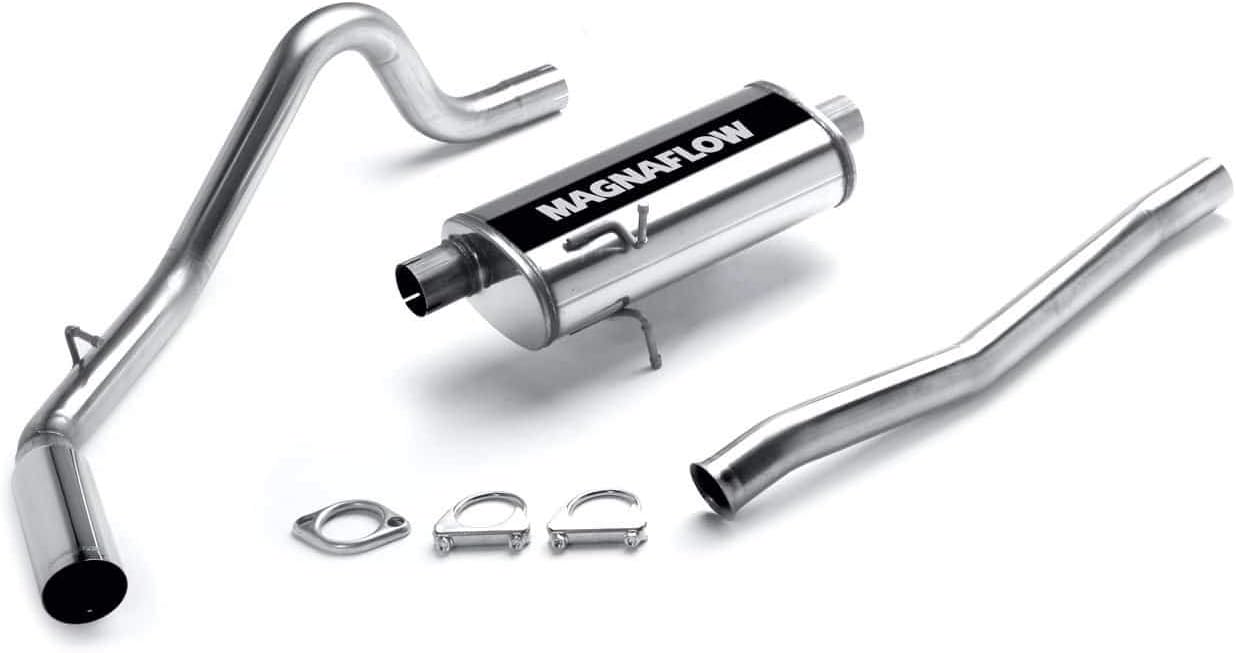
| Fitment | 1998–2011 Ford Ranger; 1998–2009 Mazda B3000/B4000 |
|---|---|
| Main Piping Diameter | 2.5" |
| Tip Diameter | 3.5" |
| Muffler Type | Straight-Through |
The MagnaFlow Street Series 15679 is a direct-fit cat-back exhaust designed to replace the factory system on 1998–2011 Ford Ranger models. It routes exhaust from the catalytic converter back with 2.5 inch piping, a straight-through stainless steel muffler and a polished 3.5 inch tip to deliver a deeper, throaty sound without excessive cabin drone. Typical use is a bolt-on upgrade for owners who want better midrange throttle response and a more authoritative exterior note while retaining comfortable cruising manners. Notable features include stainless steel construction for corrosion resistance, CNC-precision manufacturing for consistent fit, and included mounting hardware for DIY installation. Practical benefits are improved flow dynamics that can translate to modest power gains and a more engaging driving feel, plus parts intended to outlast factory replacements. Limitations are that gains are modest rather than dramatic and installation may require cutting or reuse of hangers on older trucks; the finish on individual tips can occasionally arrive imperfectly dented.
Best for: Buyers who want the best value from a practical upgrade that improves sound and throttle response without chasing maximum power, and who prefer a durable, long-lasting replacement they can install themselves.
Less Ideal for: Drivers seeking large horsepower gains or a very loud, race-style exhaust should consider more aggressive performance systems instead.
- Stainless steel piping and muffler for long-term corrosion resistance
- Street-tuned straight-through muffler for deep sound with low highway drone
- Direct-fit design with included hardware aimed at straightforward installation
- Polished 3.5 inch tip adds a finished appearance
- Dyno-tested flow improvements that help midrange throttle response
- Power gains are modest and not a replacement for larger performance upgrades
- May require cutting or adjustment of existing components on older vehicles during fitment
- Tip or finish may arrive with cosmetic imperfections on rare occasions
Verdict: A durable, factory-quality cat-back that delivers a richer sound and modest performance gains at a practical price for Ford Ranger owners.
Flowmaster Force II Cat-Back Exhaust System (817491)

| Tip diameter | 3.00-inch |
|---|---|
| Tubing | Mandrel-bent 16-gauge stainless steel |
This Flowmaster Force II cat-back is a simple, budget-focused exhaust system designed to add a mild, sportier tone and modest performance gains to a Ford Ranger. It uses mandrel-bent 16-gauge stainless steel tubing and comes with hangers and hardware to simplify installation on compatible Rangers. The Force II muffler is tuned for a restrained exterior sound that is louder and clearer than stock without being aggressive, and the 3.00-inch brushed stainless tip gives a cleaner look at the rear. Because it is dyno-tuned, you can expect small horsepower and torque improvements rather than dramatic gains. Practical benefits include relatively easy bolt-on installation and corrosion-resistant tubing for longer life compared with painted mild-steel systems. Limitations are that the sound level is mild if you want a very aggressive tone, and fitment must match your specific Ranger model and year so additional adjustments or clocking of the muffler may be needed for clearance in some chassis layouts.
Best for: Budget-conscious Ford Ranger owners who want a reliable, factory-quality replacement that improves sound and offers modest performance without a high price or extreme noise.
Less Ideal for: Drivers seeking maximum horsepower gains or a loud, aggressive exhaust tone should consider higher-performance systems or different muffler designs.
- Mandrel-bent 16-gauge stainless steel tubing resists corrosion and preserves flow
- Includes hangers and hardware for a mostly bolt-on installation
- Dyno-tuned muffler provides modest power gains and a refined, mild exhaust tone
- Large 3.00-inch brushed stainless tip improves rear appearance
- Mild sound profile may disappoint buyers seeking an aggressive exhaust note
- May require muffler clocking or minor adjustments to clear suspension components on some Ranger chassis layouts
Verdict: A cost-effective, corrosion-resistant cat-back that gives Ford Rangers a cleaner look and modest performance with a mild, street-friendly sound.
Gibson Black Elite Cat-Back Dual Split Exhaust System

| Material | Stainless Steel |
|---|---|
| Tip Size | 4 in rolled slash-cut |
| Fitment | Cat-back dual split for Ford Ranger |
| Muffler Type | Louvered and chambered |
This Gibson Black Elite cat-back system replaces the factory back section on a Ford Ranger with a bolt-on dual split layout that aims to add sound and performance without welding. It is built from stainless steel tubing with milled black ceramic 4-inch rolled slash-cut tips and a louvered, chambered muffler design that avoids internal packing. Typical use is direct replacement for drivers who want a deeper, more authoritative exhaust note and modest power improvements; Gibson advertises average gains of 10 to 15 hp and 15 to 20 lb-ft of torque. Installation is described as hassle-free and clamps on for a professional look, though multiple pieces can make alignment fiddly. Reviewers report a pleasing deep tone with little cabin drone and a restrained volume level that is louder than stock but not aggressive. Note that some surface corrosion has been observed over time in harsh climates and this system targets a refined sporty sound rather than maximum loudness.
Best for: Practical, reliability-focused buyers who want a factory-quality upgrade that improves exhaust tone and modestly frees up power while keeping long-term durability and a subdued, non-intrusive character as priorities.
Less Ideal for: Drivers seeking an extremely loud or attention-grabbing exhaust or those unwilling to spend time fitting a multi-piece system should consider other options.
- Stainless steel construction with ceramic-coated slash-cut tips resists high heat and improves appearance
- Bolt-on, clamp-on design allows installation without welding
- Louvered and chambered muffler yields a deep tone with minimal cabin drone
- Dyno-tested for measurable horsepower and torque gains
- Multiple-piece kit can require patience to align perfectly during installation
- Stainless components may show surface corrosion in harsh climates without extra protection
Verdict: A durable, factory-quality cat-back for Ford Ranger owners who want a deeper, refined sound and modest power gains without loudness or welding.
Borla Cat-Back Performance Exhaust System for 2019–2023 Ford Ranger

| Fitment | 2019–2023 Ford Ranger 4‑cyl |
|---|---|
| Material | T-304 stainless steel |
| Exit | Dual right side exit |
| Tip finish | Black chrome |
| Construction | All welded |
This Borla cat-back system replaces the factory exhaust from the catalytic converter back to the rear tips and is engineered to increase exhaust velocity for improved power and a more aggressive sound. It uses T-304 stainless steel construction with an all-welded build and a black chrome dual right-side exit tip finish. Typical installation is bolt-on for straightforward fitment to the 2019–2023 Ford Ranger and the system is advertised to reduce drone while preserving drivability. For daily driving it delivers a noticeably firmer exhaust note and the potential for modest fuel economy benefits from better flow. The black chrome tips need gentle cleaning rather than polish to maintain their finish. Limitations include the single fitment target of the Ranger model years and the higher cost compared with simple muffler swaps, and owners seeking a subtle, stock-like sound may find this system louder than desired.
Best for: Practical, risk-averse buyers who prioritize a reliable, factory-quality performance upgrade and want a durable, bolt-on exhaust that enhances sound and drivability without experimental modifications.
Less Ideal for: Buyers who prefer a near-stock quiet exhaust, those on a tight budget, or drivers who need a universal or multi-vehicle fitment solution.
- T-304 stainless steel and all-welded construction for long-term corrosion resistance
- Bolt-on design for direct fit to 2019–2023 Ford Ranger for simpler installation
- Patented straight-through and multi-core technology aimed at improving exhaust flow and power
- Black chrome tips provide a distinctive finished look without extensive polishing
- Designed to minimize in-cabin drone while producing a performance sound
- Higher cost than basic muffler replacements or generic systems
- Finish on black chrome tips requires specific cleaning methods and cannot be polished
Verdict: A durable, direct-fit performance cat-back for Ford Ranger owners who want a louder, more powerful sound with factory-quality construction.
Choosing the Right Ford Ranger Cat-back Exhaust System: Key Factors to Consider
Material and Corrosion Resistance
Exhaust materials determine longevity and how well the system resists rust in wet or salted conditions. Stainless steel variants generally offer better corrosion resistance than mild steel and can maintain appearance and structural integrity longer.
Material grade, wall thickness, and weld quality all affect lifespan. Thicker tubing and TIG welds typically stand up better to vibration and thermal cycling. If you plan to keep the truck long term or drive in harsh climates, favor systems with higher-grade stainless or protective coatings to reduce the risk of leaks and failures.
Sound Profile and Cabin Drone
The exhaust tone is often the primary reason for upgrading, but aggressive tuning can create unwanted drone at highway speeds. Muffler design, resonator placement, and pipe diameter all influence how the system sounds under acceleration and at steady cruise.
Look for descriptions of the intended character, whether deep and mellow or loud and aggressive, and consider designs that include resonators or sound-tuning chambers if you want louder performance without intrusive cabin vibration. Remember that perceived loudness varies with backpressure, vehicle load, and driving speed.
Fitment and Installation Ease
A true bolt-on system that uses factory mounting points reduces installation time and the need for specialty tools. Systems that include all necessary clamps, gaskets, and hardware typically save time and prevent fitment headaches.
Consider whether the design requires cutting, welding, or hanger modification. If you plan to install the system yourself, choose a layout that aligns with the Ranger's underbody routing and offers clear instructions. Professional installation can address alignment and sealing if you are unsure.
Pipe Diameter and Flow Characteristics
Pipe diameter affects exhaust flow, backpressure, and ultimately engine response. Oversized piping can reduce low-end torque, while too-small piping can restrict flow at higher rpm. The ideal diameter balances improved scavenging with maintained drivability for the Ranger's torque curve.
Manufacturers often select diameters to match the engine and intended use, such as daily driving or towing. Consider how you use the truck and look for systems designed to preserve low-speed response if you frequently haul or tow.
Muffler and Resonator Design
Different muffler constructions produce distinct tonal qualities and influence how much sound is suppressed. Chambered, straight-through, and turbo-style mufflers each have tradeoffs in volume, tone, and backpressure.
Resonators can smooth harsh frequencies and reduce drone without greatly lowering peak sound levels. When choosing, weigh whether you prefer a refined, lower-frequency note or a more aggressive rasp, and pick a muffler design that targets that character while maintaining acceptable in-cabin comfort.
Build Quality and Hardware
Quality of clamps, hangers, flange connections, and welds has a direct impact on long-term fit and leak prevention. Subpar hardware can lead to rattles, misalignment, or premature failure even if the pipes are well made.
Inspect whether systems use robust flange mating surfaces, corrosion-resistant fasteners, and well-shaped hangers that match the vehicle's mounting points. Strong build quality reduces the need for follow-up adjustments and helps maintain performance over time.
Why Upgrade Your Ford Ranger Cat-back Exhaust System?
A cat-back exhaust swap on a Ford Ranger is about more than louder sound. Owners typically see a clearer throttle response, a slight improvement in midrange torque, and a change to the truck character that can make driving more engaging without altering engine internals. Upgrading also lets you choose a system that fits your priorities, whether that is a subtle refinement for daily driving or a more aggressive note for weekend outings.
Upgrades can also simplify future changes. A well chosen system preserves factory hanger locations and mounting points so later additions such as an intercooler or suspension tweaks are easier to integrate.
- Improved exhaust flow can reduce backpressure felt at midrange RPMs.
- A tailored system affects how the Ranger feels during acceleration and towing.
- Selecting compatible components now reduces friction for later upgrades.
Match the Exhaust to How You Use Your Ranger
Different driving demands call for different exhaust priorities. A daily commuter typically values low cabin drone and a refined tone at highway cruise. Someone who regularly tows needs an exhaust that supports strong midrange torque and resists heat soak. Off-road and trail riders often prioritize ground clearance and a robust routing that avoids hangers in vulnerable positions.
Think about typical loads and routes when narrowing choices. If your Ranger spends long days towing a trailer, favor systems that emphasize torque and durability. If it sees a lot of city driving, lean toward systems tuned for quiet cruise and minimal interior drone. For weekend performance driving, pick a system that offers a livelier top end while maintaining acceptable noise on the street.
- Commuting: low drone, refined tone, corrosion resistance for longevity.
- Towing: midrange flow and materials that handle heat and load.
- Off-road: routing and hangers designed for clearance and impact resistance.
- Performance driving: freer flow and a more aggressive exhaust character.
Chassis, Accessories, and Fit Considerations Unique to the Ranger
The Ford Ranger is often modified with lift kits, aftermarket bumpers, and skid plates. Those accessories can change required pipe routing and hanger locations. Before selecting a cat-back system, confirm that the design provides adequate frame and axle clearance for your specific truck configuration and any permanent accessories you plan to keep.
Pay attention to tailpipe exit position relative to aftermarket bumpers and side steps. Some systems offer multiple exit orientations or tips to accommodate different rear bumpers and bed hardware without interference.
- Lifted trucks may need additional downpipe or tailpipe clearance.
- Skid plates and rear bumpers can force different exit tip orientations.
- Check hanger placement against cab and frame-mounted accessories to avoid rubbing.
Planning the Swap: Timeline, Parts, and Installation Logistics
Planning ahead reduces surprises. Gather all required gaskets, hardware, and any extension hangers before starting. Factor in a full day for a professional shop to install and tune exhaust alignment. If you plan to do the work yourself, set aside a weekend and ensure you have proper jack stands, penetrating oil for fasteners, and a torque wrench.
Decide in advance whether you want additional work done at the same time, such as replacing the catalytic converter heat shields, checking oxygen sensor connectors, or addressing corrosion on existing hangers. Bundling related tasks saves time and can reduce total labor.
- Typical shop turnaround: half day to one day depending on complexity.
- DIY timeline: plan for a full weekend if rusted bolts or alignment adjustments are needed.
- Common extras to prep for: new gaskets, anti-seize, replacement hangers, and clamps.
- Use the vehicle identification and build options to confirm part fitment before purchase.
Noise, Neighbors, and Regulatory Realities
A key decision with any cat-back system is how loud is acceptable. The sound you get from a Ford Ranger cat-back exhaust system depends on piping diameter, muffler choice, and resonator placement. Consider how the truck will be used around neighborhoods, work sites, and campground areas to avoid complaints or violations.
Local sound ordinances and vehicle noise laws vary. When choosing an exhaust, look for designs that control midrange drone while still delivering the character you want. Some systems provide removable baffles or insert options that let you tune the sound to the setting.
- Expect different perceived loudness inside the cab versus outside.
- Removable inserts or dual-mode systems let you adapt sound for road or track use.
- Check local vehicle noise and emissions rules before finalizing the purchase.
After the Swap: Maintenance, Longevity, and Resale Impact
After an aftermarket cat back is installed, plan routine inspections. Fasteners can loosen and hangers can shift, especially after off-road use. A visual check every few thousand miles helps catch leaks or contact points before they cause damage. Systems made from higher grade materials usually require less frequent attention and hold value better in the long term.
Upgrading the exhaust can influence resale appeal for buyers who value performance or a more refined sound. Keep receipts and installation records and be prepared to revert to stock if local regulations or a buyer preference require it.
- Regular checks: look for leaks, corrosion at joints, and hanger wear.
- Higher quality materials typically reduce long term maintenance needs.
- Keep documentation of the installation and parts for future owners.
How We Chose the Best Ford Ranger Cat-back Exhaust System
To assemble this list we focused on attributes that matter most to Ford Ranger owners looking to upgrade the exhaust downstream of the catalytic converter. We prioritized robust construction using corrosion-resistant materials, consistent and tunable sound profiles, and designs that maintain or improve exhaust flow. Fitment and bolt-on installation ease were important, as were compatibility with factory mounting points and necessary hardware. We also considered overall reliability of components such as hangers and clamps, and whether the design minimized cabin drone at cruising speeds.We excluded systems that required extensive fabrication, major chassis modification, or custom tuning to function. We did not include partial systems that do not replace the muffler and tailpipe or that were solely axle-back without addressing the mid-pipe where flow improvements are often realized. The final selections reflect systems that balance sound, durability, and practical fitment for the Ford Ranger.
Our full evaluation process is outlined in our review methodology.
FAQ
Will a cat-back exhaust system improve my Ranger's performance?
A cat-back system can improve exhaust flow, which may yield modest gains in throttle response and peak power depending on the engine and accompanying modifications. Most real-world benefits are modest unless combined with other intake or tuning changes. Expect the largest perceived change to be in sound rather than dramatic horsepower gains.
How difficult is catback exhaust installation on a Ford Ranger?
Installation difficulty varies by design but many cat-back systems bolt into existing hangers and flanges and can be fitted with common hand tools. Systems that require cutting or welding are more involved. If you lack a lift or rusted fasteners are present, professional installation may be faster and more reliable.
Will a new cat-back system cause cabin drone at highway speeds?
Some systems introduce more low-frequency drone than factory equipment, especially those with straight-through mufflers without resonators. Choosing a system with tuned resonators or chambered mufflers reduces the chance of intrusive cabin drone. Vehicle load and driving speed also influence whether drone is noticeable.
Is stainless steel necessary for a cat-back system?
Stainless steel offers better corrosion resistance and often a longer service life than coated mild steel, which can be important in humid or salted-road environments. If you prioritize longevity and minimal maintenance, stainless options are usually worth considering. However, material choice should be balanced with intended use and budget.
Do I need to retune my engine after installing a cat-back exhaust?
Most cat-back installations do not require engine retuning to operate safely. Significant changes to flow or adding other modifications may benefit from tuning to optimize air-fuel ratios and maximize performance gains. Professional tuning is advisable if you combine the exhaust with intake or forced-induction changes.
Final Verdict
Choosing a cat-back exhaust system for a Ford Ranger means weighing sound, durability, and how the system affects everyday drivability. Prioritize materials that resist corrosion, a muffler design that matches your preferred tone without causing excessive drone, and a fitment style that keeps installation straightforward.Consider the tradeoffs between louder, more aggressive systems and those tuned for refined character. Focus on construction quality, proper hardware, and a pipe diameter suited to your use to get the most reliable performance and satisfaction from the upgrade.
Explore More:
- Check out all Ford Ranger parts & accessories
- Explore Cat-back Exhaust Systems Maintenance & Repair Guides
- Explore Exhaust & Emissions
- Browse all Auto Parts
