

Note: This article contains affiliate links. If you click on these links and make a purchase, I may earn a small commission at no extra cost to you. This helps support my research and content. Read my full affiliate disclosure here.
If you own a 2018-2022 Honda Accord, the right car battery matters for dependable starts, electronics reliability, and avoiding roadside trouble. A battery that meets the Accord's electrical demands will reduce no-starts in cold weather, support accessory loads, and last longer between replacements. This guide presents seven shortlisted car batteries chosen for fitment and performance for the 2018-2022 Accord chassis.Below you will find concise reasoning about what we evaluated, including cold-cranking ability, reserve capacity, terminal layout, and expected service life, to help you pick the best fit for your Accord. Read on for installation notes and maintenance tips before the product list.
Looking for other parts? See all Honda Accord parts & accessories.
Top Picks at a Glance
| Best Quality Built to a higher standard if you want something more solid | OPTIMA YellowTop DH6 High-Performance Dual-Purpose AGM Battery, Group 48 |  |
| Best Value The sweet spot between price and what you get | MARXON Group 47 H5 L2 12V 60Ah 660CCA AGM Start-Stop Car Battery |  |
| Best Budget The cheapest option that still gets the job done reliably | Relistart 12V 60Ah Group 47 AGM Start‑Stop Car Battery (680 CCA, 105 RC) | 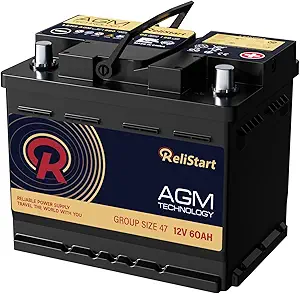 |
| Highest Rated A top-rated pick with lots of positive feedback | UPLUS Group 48 AGM Start-Stop Car Battery, 12V 70Ah (AGM-L70-M) |  |
| Most Popular A crowd favorite that many people choose with confidence | WEIZE Platinum AGM Automotive Battery Group 47 (12V, 60Ah, 680 CCA) |  |
| Best Seller A high-volume bestseller chosen again and again | ACDelco Gold 48AGM Group 48 AGM Automotive Battery |  |
1. OPTIMA YellowTop DH6 High-Performance Dual-Purpose AGM Battery, Group 48

| Voltage | 12-Volt |
|---|---|
| Cold Cranking Amps | 800 CCA |
| Group Size | BCI Group 48 |
| Reserve Capacity | 140 minutes |
| Terminal | SAE Terminal |
The OPTIMA YellowTop DH6 is a sealed AGM battery designed to deliver both high cranking amps and deep‑cycle performance for accessory‑loaded cars. It supplies 800 CCA and a large reserve capacity, so it handles cold starts and sustained electrical loads from audio systems, inverters, or aftermarket electronics. SpiralCell construction and high vibration resistance make it durable in rough driving, and the spillproof design lets it be mounted in several orientations during installation. Expect faster recharge and good cycling life compared with standard flooded batteries, which is useful if you run accessories with the engine off. The main compromises are cost and mixed longevity reports; some owners see many years of reliable service while others report premature failure, so long‑term durability appears variable. Also this is a heavier, more specialized AGM compared with factory lead‑acid replacements, which can affect fit and mounting in tight battery trays. For Hondas that need stronger starting and better cycling for added electronics, it offers a clear performance upgrade.
Best for: Drivers who prioritize reliable starting power and frequent deep‑cycle ability for heavy audio, inverters, or aftermarket electronics and want a maintenance‑free sealed battery with better vibration resistance.
Less Ideal for: If you just need a basic replacement for everyday driving with no extra electrical load or you want the lowest upfront cost, a standard factory‑style battery is a simpler choice.
- True dual‑purpose design combines 800 CCA starting power with deep‑cycle capability
- SpiralCell AGM construction increases vibration resistance and faster recharge
- Sealed, spillproof design allows flexible mounting positions
- High reserve capacity suitable for long accessory draws
- Higher purchase cost than standard flooded batteries
- Some owner reports of premature failure leading to inconsistent long‑term reliability
Verdict: Choose the YellowTop when you need strong starting power plus true deep‑cycle capability for accessory‑heavy Hondas.
2. MARXON Group 47 H5 L2 12V 60Ah 660CCA AGM Start-Stop Car Battery

| Voltage | 12V |
|---|---|
| Capacity | 60Ah |
| Cold Cranking Amps | 660 CCA |
| Battery Type | AGM (sealed, maintenance free) |
This MARXON Group 47 battery is a sealed AGM replacement built for vehicles that require a BCI Group 47 (H5/L2) battery with start-stop capability. It delivers 660 CCA for reliable cold cranking and 60 Ah reserve capacity for modern electronics, and the AGM construction reduces leak risk and allows the battery to tolerate deeper discharges than conventional flooded batteries. Typical use is direct swap replacement in compatible cars, especially where start-stop systems are present and faster charge acceptance is helpful. Notable features include maintenance-free design, faster-than-standard charging acceptance, and corrosion-resistant alloy terminals. In practice that means easier installation, fewer corrosion issues over time, and better recovery after occasional deep discharges. Important limitations are that the listed CCA is lower than some factory high-amp batteries for larger engines and that correct physical size and terminal orientation must be confirmed for fitment. Also long-term life will depend on the vehicle charging system and driving patterns, so periodic voltage checks after installation are recommended.
Best for: A practical buyer who wants an affordable, maintenance-free AGM replacement that supports start-stop function and recovers quickly after short drives; suited for owners prioritizing reliability and easier installation over matching the highest CCA available.
Less Ideal for: Drivers who require the absolute highest cold-cranking amps for large engines or who need a battery sized differently than BCI Group 47 should choose a different group or a higher-CCA option.
- AGM construction reduces leakage risk and tolerates deeper discharge cycles
- 660 CCA provides dependable cold cranking for most mid-size gasoline engines
- Maintenance-free design eliminates need to add water or acid
- Faster charge acceptance helps the battery recover more quickly during short trips
- 660 CCA is lower than some factory high-amp batteries used on higher-displacement engines
Verdict: A cost-conscious AGM Group 47 replacement that delivers reliable starts and faster charge acceptance for vehicles needing a 12V 60Ah, 660 CCA start-stop battery.
3. Relistart 12V 60Ah Group 47 AGM Start‑Stop Car Battery (680 CCA, 105 RC)
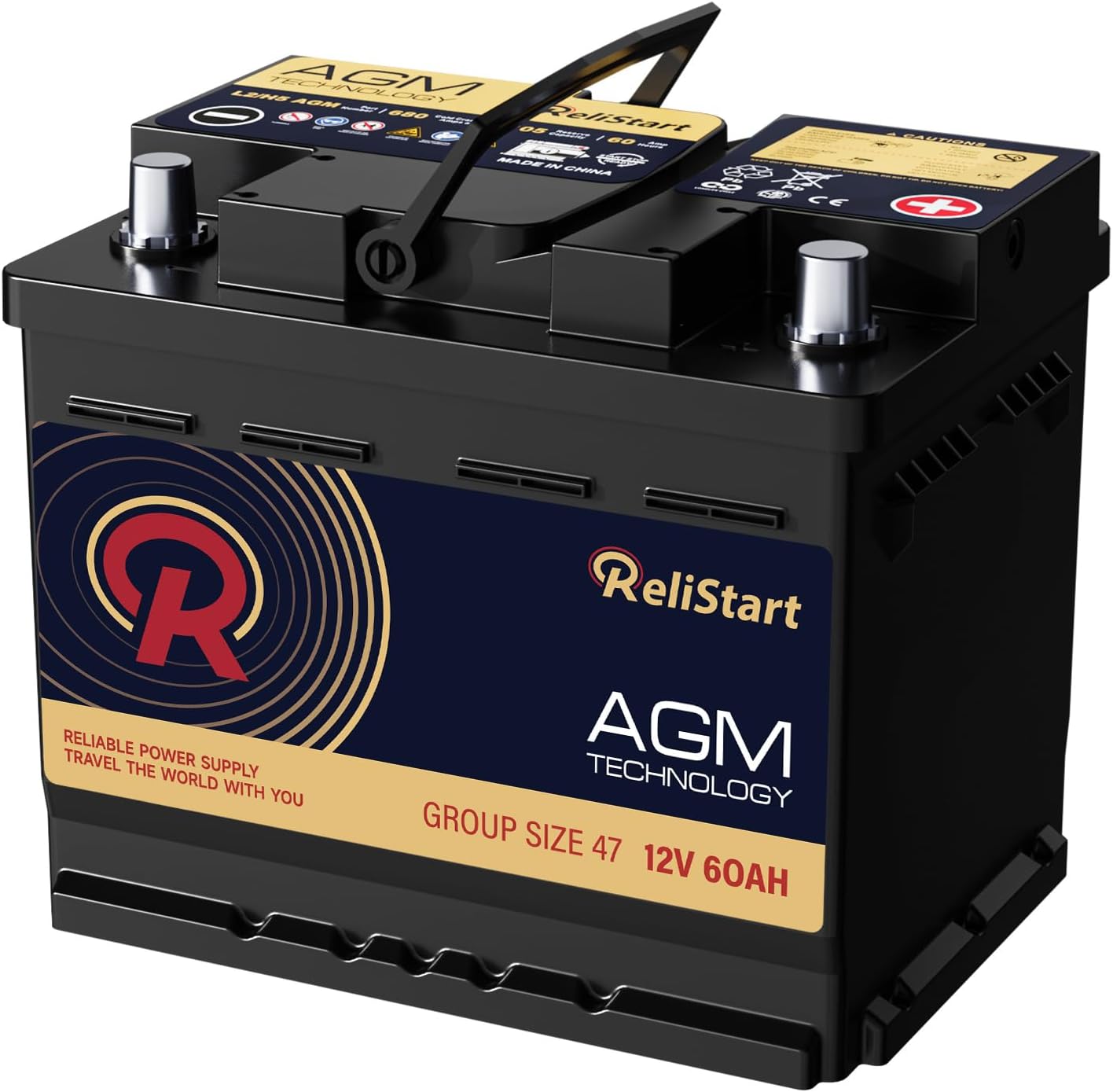
| Nominal voltage | 12V |
|---|---|
| Capacity | 60Ah |
| Cold cranking amps | 680 CCA |
| Reserve capacity | 105 RC |
This Relistart Group 47 AGM battery is a maintenance-free 12V replacement designed for vehicles from 2018–2022 Honda Accord owners who need a reliable, budget-friendly option. It delivers 60 Ah of capacity, 680 cold cranking amps and a 105 minute reserve, which helps with repeated starts and accessories when the engine is off. The sealed, non-spill AGM construction improves vibration resistance and allows installation without watering, while the rated operating range and low self-discharge make it suitable for seasonal use. Typical use is direct replacement where Group 47 dimensions and terminal layout match the Accord battery tray and polarity. Practical benefits include higher cycle life than conventional flooded batteries and better cold-start performance. Limitations are that physical dimensions and tapered terminal placement must be verified against the Accord application before purchase, and charging specs recommend a controlled charger within 14.5–15.0V; aggressive charging can reduce service life. Overall it is a solid, cost-conscious replacement for owners who want start-stop capable AGM performance without premium branding.
Best for: Honda Accord owners looking for an affordable, maintenance-free AGM replacement that improves cold-starting and supports start-stop systems while saving money versus premium brands.
Less Ideal for: Drivers who need a lifetime warranty, dealer-installed OEM battery service, or who cannot confirm Group 47 terminal layout and dimensions in their specific Accord configuration.
- AGM sealed design provides maintenance-free, non-spill operation
- 680 CCA and 105 RC deliver reliable cold starts and reserve power
- Lower self-discharge rate makes it suitable for seasonal or infrequent use
- Engineered for start-stop systems and higher accessory loads
- Requires verification of physical dimensions and tapered terminal placement to ensure fit
- Charging current and voltage limits mean it benefits from a controlled charger rather than high-output chargers
Verdict: A cost-conscious Group 47 AGM that gives 2018–2022 Honda Accord owners dependable cold-start power and start-stop capability without premium pricing.
4. UPLUS Group 48 AGM Start-Stop Car Battery, 12V 70Ah (AGM-L70-M)

| Voltage | 12 Volts |
|---|---|
| Capacity (20HR) | 70 Ah |
| Cold Cranking Amperage | 760 CCA |
| Reserve Capacity | 120 min |
| BCI Group Size | 48 (H6/L3) |
This UPLUS Group 48 AGM battery is built as a maintenance-free start-stop replacement for cars that need stronger cycling and stable electrical support. It uses AGM technology and a calcium lead positive grid to deliver both deep-cycle capability and high starting power, with 760 CCA and a 120 minute reserve capacity for reliable cold starts and extended accessory run time. The battery is sized to BCI Group 48 (H6/L3) so installation is straightforward in vehicles that accept that group, and the SAE terminal layout has negative on the left and positive on the right. Notable features include claimed extra cycle life compared with conventional flooded batteries, enhanced vibration resistance, and a three-year after-sales backing. Trade-offs are the heavier mass typical of AGM units and the need to confirm physical fit and terminal orientation before purchase since the size and layout must match the Accord's battery tray and cable reach. For drivers who prioritize dependable starts and stable electrical performance in stop-and-go driving, this is a practical factory-replacement style option.
Best for: Drivers who put reliability first and need a robust start battery for frequent short trips, heavy accessory loads, or stop-start driving in a 2018–2022 Honda Accord that accepts Group 48 fitment.
Less Ideal for: Owners who cannot accommodate Group 48 dimensions or terminal layout in their vehicle without modification should look for a size that matches the factory-specified battery.
- AGM construction provides better deep-cycle and start-stop durability than conventional flooded batteries
- High cold cranking ability (760 CCA) for reliable starts in cold weather
- 120 minute reserve capacity supports extended accessory use and protects electronics
- Standard BCI Group 48 sizing and SAE terminals make installation straightforward when the vehicle accepts this group
- Manufacturer offers a three-year after-sales support network in the U.S.
- Heavier than conventional batteries which can make handling and installation more difficult
Verdict: Choose this AGM Group 48 battery if you want a reliable, higher‑cycle, high‑CCA replacement that supports heavy electrical loads and frequent stop‑start driving in a compatible Accord.
5. WEIZE Platinum AGM Automotive Battery Group 47 (12V, 60Ah, 680 CCA)

| Voltage | 12V |
|---|---|
| Capacity | 60 Ah |
| Cold Cranking Amps | 680 CCA |
| Reserve Capacity | 100 RC |
| Battery Type | AGM, sealed |
This WEIZE Platinum AGM is a sealed, maintenance-free starter battery designed for modern cars that need reliable cold cranking and better cyclic performance than a conventional flooded battery. It supplies 60Ah and 680 CCA, so it handles frequent starts and moderate electrical loads from accessories and start-stop systems found on many late-model sedans. The AGM construction improves vibration resistance and reduces self-discharge, while the 100RC reserve rating gives extra reserve power for short accessory use with the engine off. Installation is straightforward if the Group 47 footprint and tapered terminal orientation match your vehicle. Practical strengths include strong cold-weather starts, low maintenance, and a claimed operating temperature range that fits typical driving conditions. Limitations to consider are that this is a starter battery not intended for deep-cycle use like large auxiliary setups, and you must confirm terminal position and dimensions before buying to avoid fitment issues in the Accord's battery tray. Some buyers report excellent durability while a minority experienced premature failure though warranty replacements appear responsive.
Best for: Buyers who prioritize a proven, maintenance-free starter battery with strong starting power and several positive user reports for reliability when replacing the factory unit on a late-model Accord.
Less Ideal for: Drivers who need a dedicated deep-cycle or high-capacity leisure battery for long off-grid runs, marine use, or heavy auxiliary loads should look at dedicated deep-cycle or lithium options instead.
- AGM design improves vibration resistance and lowers self-discharge compared with flooded batteries
- 680 CCA provides reliable cold starts for demanding starter systems
- Sealed, maintenance-free construction reduces the need for periodic checks
- 100RC reserve capacity offers extra runtime for accessories or brief engine-off use
- Not designed for deep-cycle applications such as heavy camping or house-battery use
Verdict: If you need a drop-in maintenance-free starter battery with strong cold-start performance for a 2018–2022 Accord, this AGM offers reliable starting power and solid user-backed value.
6. ACDelco Gold 48AGM Group 48 AGM Automotive Battery

| Number Of Cells | 6 |
|---|---|
| Resistance | 0.02 Ohms |
| Amperage | 70 Amps |
| Item model number | 48AGM |
The ACDelco Gold 48AGM is an absorbent glass mat battery built for vehicles that need stronger, more reliable electrical support than a standard flooded battery. It is typically used as a direct replacement in applications that require spill-proof, vibration-resistant performance and better charge acceptance, such as cars with stop/start systems or heavier accessory loads. Notable features include AGM construction, a 70 amp rating, low internal resistance, and a three-year free replacement period that gives added confidence. In real-world use this battery delivers strong cold-cranking performance, holds charge well during long accessory use, and resists the corrosion and maintenance issues of conventional batteries. Trade-offs are its heavier weight and higher upfront cost compared with conventional flooded batteries, and some vehicles may require verification that charging systems are compatible with AGM chemistry. For a buyer focused on reliability and reduced maintenance, this battery is a practical upgrade that reduces the chance of unexpected failures and slow cranking in demanding conditions.
Best for: A cautious buyer who prioritizes dependable starting performance and low maintenance for a daily-driven 2018–2022 Honda Accord and wants a durable replacement that reduces risk of electrical issues.
Less Ideal for: Buyers looking to minimize initial purchase cost or those who prefer a lightweight budget flooded battery for infrequent use should consider other options.
- AGM design is spill-proof and maintenance-free, reducing corrosion and upkeep.
- Higher charge acceptance and lower internal resistance for consistent starting power.
- Designed for vehicles with increased electrical demands, including stop/start systems.
- 36 month free replacement period provides added assurance.
- Heavier and more expensive than conventional flooded batteries.
Verdict: Choose this Group 48 AGM battery when you want a maintenance-free, high-reliability replacement that reduces the chance of electrical and starting problems in a 2018–2022 Honda Accord.
Choosing the Right 2018-2022 Honda Accord Car Battery: Key Factors to Consider
Cold-Cranking Amps (CCA)
Cold-cranking amps measure a battery's ability to deliver current at low temperatures and directly affects whether your Accord will start reliably on cold mornings. For the 2018-2022 Accord, adequate CCA matters because modern engines and fuel systems demand a strong initial surge to crank the engine quickly. If you live in colder climates, prioritize higher CCA ratings to avoid slow cranking and repeated starter engagement.
Lower CCA batteries may work in mild climates but will struggle in cold weather and place extra strain on the starter and charging system. When comparing options, choose a battery with a CCA rating at or above the vehicle manufacturer's recommendations and consider modest increases for improved cold-weather resilience.
Reserve Capacity and Accessory Load
Reserve capacity indicates how long a battery can supply a minimum electrical load if the alternator fails. For Accords with many accessories or for drivers who use electronics while the engine is off, a higher reserve capacity gives you more time to safely restart the vehicle or reach assistance.
Batteries with higher reserve capacity also tend to have more robust internal plates and electrolyte capacity, which can translate to longer service life under deep-cycle events like frequent short trips or accessory use. Factor reserve capacity into your decision if you run lights, infotainment, or other accessories heavily.
Group Size, Dimensions, and Terminal Orientation
Correct battery group size and terminal layout are essential for a secure fit and proper cable routing in the 2018-2022 Accord's battery tray. Using the wrong size can lead to poor hold-down engagement, excessive vibration, or stretched cables if terminal locations do not match stock routing.
Always verify physical dimensions and terminal positions against the Accord's specifications before purchase. A battery that fits correctly reduces the risk of terminal strain, corrosion from poor contact, and mechanical damage during driving.
Battery Type and Construction
Batteries come in different constructions such as traditional flooded lead-acid and absorbed glass mat (AGM). AGM batteries offer better vibration resistance, lower internal resistance, and improved charge acceptance, which can be beneficial for the 2018-2022 Accord's charging system and any vehicles with higher electrical demands.
Flooded batteries are cost-effective and suitable for typical use but may require more frequent maintenance and are less tolerant of deep discharge. Consider AGM if you use many accessories, frequently take short trips, or want a longer service life in demanding conditions.
Warranty, Expected Service Life, and Maintenance
Warranty length and coverage speak to the manufacturer's confidence in the battery. A longer warranty can reduce the total cost of ownership and provide peace of mind, especially if you plan to keep the vehicle long term. Evaluate pro-rated versus free-replacement warranty terms to understand potential costs after the initial coverage period.
Expected service life depends on climate, driving habits, and maintenance. Regular visual checks, cleaning terminals, and ensuring secure mounting will extend life. Factor in whether the battery is maintenance-free or requires periodic checks of electrolyte levels when deciding what matches your ownership preferences.
Cold-Weather Performance and Heat Tolerance
Extreme temperatures affect battery chemical reactions and lifespan. Cold reduces available cranking power while heat accelerates internal corrosion and water loss in flooded cells. For owners of a 2018-2022 Accord, think about seasonal extremes in your area when choosing a battery.
If you experience both very cold winters and hot summers, select a battery rated for strong cold-cranking while also offering construction that resists heat-related degradation. Proper installation with a secure hold-down and minimal vibration helps mitigate temperature-related wear.
Matching the Right Group Size and Terminal Layout
Confirming the proper group size and terminal orientation is the first practical step before buying a battery for a 2018-2022 Accord. Measure the battery tray and check the terminal positions to ensure the replacement will seat correctly without stretching or rerouting cables.
A correct fit reduces the risk of loose connections and physical damage from vibration. If you are unsure of the exact group size for your specific model year and trim, consult the vehicle documentation or inspect the existing battery for printed specifications.
- Measure length, width, and height to match the tray.
- Check positive and negative terminal positions to match cable routing.
- Verify hold-down clamp compatibility to prevent movement.
Installation Tips for a Safe Swap
When replacing the battery, follow safety precautions like wearing gloves and eye protection and disconnecting the negative terminal first to minimize risk of shorting. Keep replacement steps orderly: disconnect negative, disconnect positive, remove hold-downs, lift the old battery straight up, and install the new unit in reverse order with positive connected last.
Ensure terminals are clean and corrosion-free before connecting. Apply a thin coat of dielectric grease or anti-corrosion spray on terminals after tightening to improve long-term contact and reduce maintenance needs.
- Always disconnect negative terminal first and reconnect it last.
- Avoid touching metal tools across both battery terminals.
- Torque terminal clamps to manufacturer specs to prevent loose connections.
Testing and Diagnosing Battery Health
Knowing how to test a car battery helps you diagnose issues before a no-start event. Basic checks include measuring resting voltage with a multimeter, performing a load test, and observing the alternator charging voltage when the engine is running. A resting voltage below about 12.4 volts can indicate a weakened battery, while charging voltage at the alternator should typically be in the 13.7 to 14.7-volt range.
For owners without specialized equipment, many service centers and independent shops can perform a proper battery test that measures cold-cranking ability and internal resistance. Regular testing helps avoid unexpected failures and informs whether replacement or a deeper electrical system check is needed.
- Resting voltage below 12.4 V suggests reduced charge.
- Alternator voltage should sit roughly between 13.7 and 14.7 V while running.
- Professional load tests reveal CCA and internal resistance performance.
Maintenance Best Practices to Extend Battery Life
Simple maintenance can significantly extend a battery's usable life. Keep terminals clean and tight, inspect the hold-down for secure mounting, and remove corrosion with an appropriate cleaner. If your battery has removable caps, check electrolyte levels periodically and top with distilled water only when necessary.
Avoid repeated deep discharges by minimizing long accessory use with the engine off and by addressing parasitic drains promptly. Storing the vehicle for extended periods benefits from a maintenance charger or occasional driving to keep the battery properly charged.
- Clean terminals and apply anti-corrosion treatment.
- Secure the battery to reduce vibration-related wear.
- Use a maintenance charger if the vehicle sits for weeks at a time.
Understanding Warranty Terms and Long-Term Costs
Warranty terms vary between manufacturers and can include free-replacement and pro-rated periods. Free-replacement covers defects for a set period, while pro-rated warranties reduce the value of a claim over time. Assess the warranty carefully as it factors into long-term ownership costs and replacement timing.
Also consider expected life based on climate and driving habits. A longer warranty does not guarantee longer life but does provide financial protection if the battery fails prematurely under normal use conditions.
- Compare free-replacement and pro-rated warranty lengths.
- Keep proof of purchase and warranty details for future claims.
- Understand what conditions void warranty coverage, such as improper installation or misuse.
Still looking for the perfect fit?
Select your Honda Accord configuration to see the most relevant Car Batteries recommendations
How We Chose the Best 2018-2022 Honda Accord Car Battery
We focused on criteria that directly affect ownership of a 2018-2022 Honda Accord. Primary evaluation points included cold-cranking amps, reserve capacity, battery group size and terminal configuration, and expected cycle life under typical driving patterns. We prioritized batteries that match the Accord's factory group size to ensure proper fit in the battery tray and correct terminal orientation for the stock cable routing. Reserve capacity and CCA ratings were weighted heavily because they influence cold starts and the ability to run accessories when the engine is off. Durability factors like warranty length, construction type (flooded versus absorbed glass mat), and vibration resistance were considered for long-term reliability. Compatibility checks included dimensions, hold-down requirements, and whether the battery supports start-stop systems if applicable. Exclusions: we excluded any batteries that do not physically fit the 2018-2022 Accord battery tray or that lack sufficient cold-cranking performance for typical climates. The shortlisted options represent durable, appropriately sized batteries chosen for real-world use on the specified Accord model years.
Our full evaluation process is outlined in our review methodology.
FAQ
How often should I replace the battery in my 2018-2022 Honda Accord?
Battery lifespan depends on climate and driving habits but typically ranges from three to five years. Regular testing and visual inspections help determine if replacement is needed sooner.
What group size battery fits the 2018-2022 Accord?
Fitment can vary by trim and options, so check the existing battery or the vehicle documentation for the correct group size and terminal orientation before purchasing a replacement.
Can I install a higher CCA battery than the factory spec?
Yes, installing a battery with higher cold-cranking amps is usually safe and can improve cold-start reliability, provided the physical size and terminal layout match the vehicle's requirements.
Will an AGM battery work in my Accord and is it worth it?
AGM batteries offer better charge acceptance and vibration resistance and are useful if you run many accessories or experience frequent short trips. They can be worth the extra cost if those benefits align with your usage patterns.
How do I test my Accord's battery at home?
Use a digital multimeter to check resting voltage; a healthy battery typically reads above about 12.4 volts. For a more complete assessment, have a load test performed by a shop to measure cold-cranking ability and internal resistance.
Does extreme heat shorten battery life for my Accord?
Yes, high temperatures accelerate internal corrosion and fluid loss in batteries, which shortens overall service life. Proper mounting, ventilation, and periodic inspections help mitigate heat-related degradation.
Final Verdict
When replacing the battery in a 2018-2022 Honda Accord, prioritize correct group size and terminal layout first, then balance cold-cranking amps and reserve capacity against your climate and usage. Choose battery construction and warranty terms that match how you drive and how long you plan to keep the car.Focusing on fitment, adequate CCA, and solid reserve capacity will deliver reliable starts and longer service life. Use the guide above to weigh tradeoffs and pick the battery that best matches your Accord's needs and driving patterns.
Explore More:
- Check out all Honda Accord parts & accessories
- Explore Car Batteries Maintenance & Repair Guides
- Explore Electrical System
- Browse all Auto Parts
