

Note: This article contains affiliate links. If you click on these links and make a purchase, I may earn a small commission at no extra cost to you. This helps support my research and content. Read my full affiliate disclosure here.
If you own a 2002-2005 Ford Explorer, the right car battery matters for reliable starting, accessories, and avoiding unexpected roadside failures. Older SUVs often face higher accessory loads and corrosion-prone terminals, so choosing a battery that fits correctly and delivers sufficient cold-cranking amps can make a real difference in daily use and cold weather.This guide shortlists the top options for the 2002-2005 Explorer and explains the evaluation criteria you should care about, including fitment, CCA, reserve capacity, and long-term durability. Read on for the top picks and practical guidance to help you pick the right battery for your Explorer and driving conditions.
Looking for other parts? See all Ford Explorer parts & accessories.
Top Picks at a Glance
| Best Overall The best all-around choice for most situations | OPTIMA RedTop 34/78 Sealed AGM Starting Battery |  |
| Best Quality Built to a higher standard if you want something more solid | OPTIMA REDTOP 25 High Performance 12V Sealed AGM Starting Battery (720 CCA) | 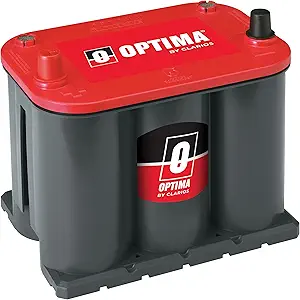 |
| Best Value The sweet spot between price and what you get | MARXON Group 34 12V 55Ah 650CCA AGM Start-Stop Car Battery |  |
| Best Budget The cheapest option that still gets the job done reliably | Interstate Batteries M-65 Group 65 12V Car Battery (650 CCA) |  |
| Highest Rated A top-rated pick with lots of positive feedback | Autocessking Group 65 AGM Car Battery, 12V 70Ah, 750 CCA |  |
| Most Popular A crowd favorite that many people choose with confidence | Odyssey ODX-AGM65 Extreme Series AGM Car Battery |  |
1. OPTIMA RedTop 34/78 Sealed AGM Starting Battery

| Voltage | 12-Volt |
|---|---|
| Cold Cranking Amps | 800 CCA |
| Reserve Capacity | 100 minutes |
| C20 Capacity | 50 AH |
| Terminal | Dual SAE and GM |
The OPTIMA RedTop 34/78 is a sealed AGM starting battery built for reliable engine starts in harsh conditions. It uses a SpiralCell design to provide high cranking amps and fast recharge, making it well suited for frequent starting and colder weather. Installation is straightforward thanks to dual SAE and GM terminal options and the battery can be mounted in multiple positions without leaking. Notable real-world benefits include high vibration resistance for rough roads, a 100-minute reserve capacity for short accessory loads, and a maintenance-free, non-spillable construction that reduces upkeep. Trade-offs are its heavier weight and higher upfront cost compared with standard flooded batteries, and its C20 capacity is focused on starting rather than long-term deep-cycle work. For a 2002–2005 Ford Explorer that needs dependable starting performance and durability off-road or in variable climates, this battery is a practical choice.
Best for: Drivers who want reliable, high-cranking starting performance and low-maintenance durability for everyday driving and occasional off-road use.
Less Ideal for: Drivers who need a lightweight battery or who require long-duration deep-cycle capacity for heavy accessory loads.
- High 800 CCA starting power for reliable cold starts
- Sealed AGM SpiralCell design offers fast recharge and non-spillable mounting flexibility
- Very high vibration resistance for durability on rough roads
- Maintenance-free construction reduces regular upkeep
- Heavier and bulkier than standard flooded batteries
- Designed for starting rather than extended deep-cycle use
Verdict: Choose this battery if you want a rugged, maintenance-free starter battery that delivers strong cold-cranking power and vibration resistance for a 2002–2005 Ford Explorer.
2. OPTIMA REDTOP 25 High Performance 12V Sealed AGM Starting Battery (720 CCA)

| Voltage | 12 Volts |
|---|---|
| Terminal | SAE Terminal |
| Battery Type | Lead Acid |
| Cold Cranking Amps | 720 CCA |
| Reserve Capacity | 90 minutes |
The OPTIMA REDTOP 25 is a sealed AGM starting battery built to provide reliable starting power in demanding conditions. It uses spiral cell technology to deliver 720 CCA and a 90-minute reserve capacity, so it cranks hard in cold weather and recovers faster after repeated starts. The battery is maintenance free and completely non-spillable, which allows more flexible mounting orientations and makes installation straightforward for a variety of engine bays. Notable features include high vibration resistance and longer service life compared with standard flooded batteries, which is useful for drivers who push their vehicle in tougher driving or light off-road conditions. Practical limitations are that it is a starting battery rather than a deep-cycle unit, so it is not intended to support heavy accessory loads for long periods without the engine running, and its weight and size require checking fitment in some trays. Overall this is a strong choice when dependable cold-start performance and durability are the priority.
Best for: Drivers who prioritize dependable cold-start performance and long-term durability for daily driving or occasional off-road use and who need a robust, maintenance-free replacement.
Less Ideal for: Users who need a battery primarily for long-duration accessory use, camping power, or deep-cycle applications should choose a true deep-cycle or dual-purpose battery instead.
- High starting power with 720 cold cranking amps for reliable cold-weather starts
- Sealed AGM construction is maintenance free and non-spillable for flexible mounting
- Spiral cell design and high vibration resistance for improved durability in demanding use
- 90-minute reserve capacity and faster recharge help after repeated starts
- Designed for starting duty only and not suitable as a deep-cycle power source
Verdict: Choose the OPTIMA REDTOP 25 if you want a durable, maintenance-free starting battery that delivers strong cold-cranking performance for a 2002–2005 Ford Explorer.
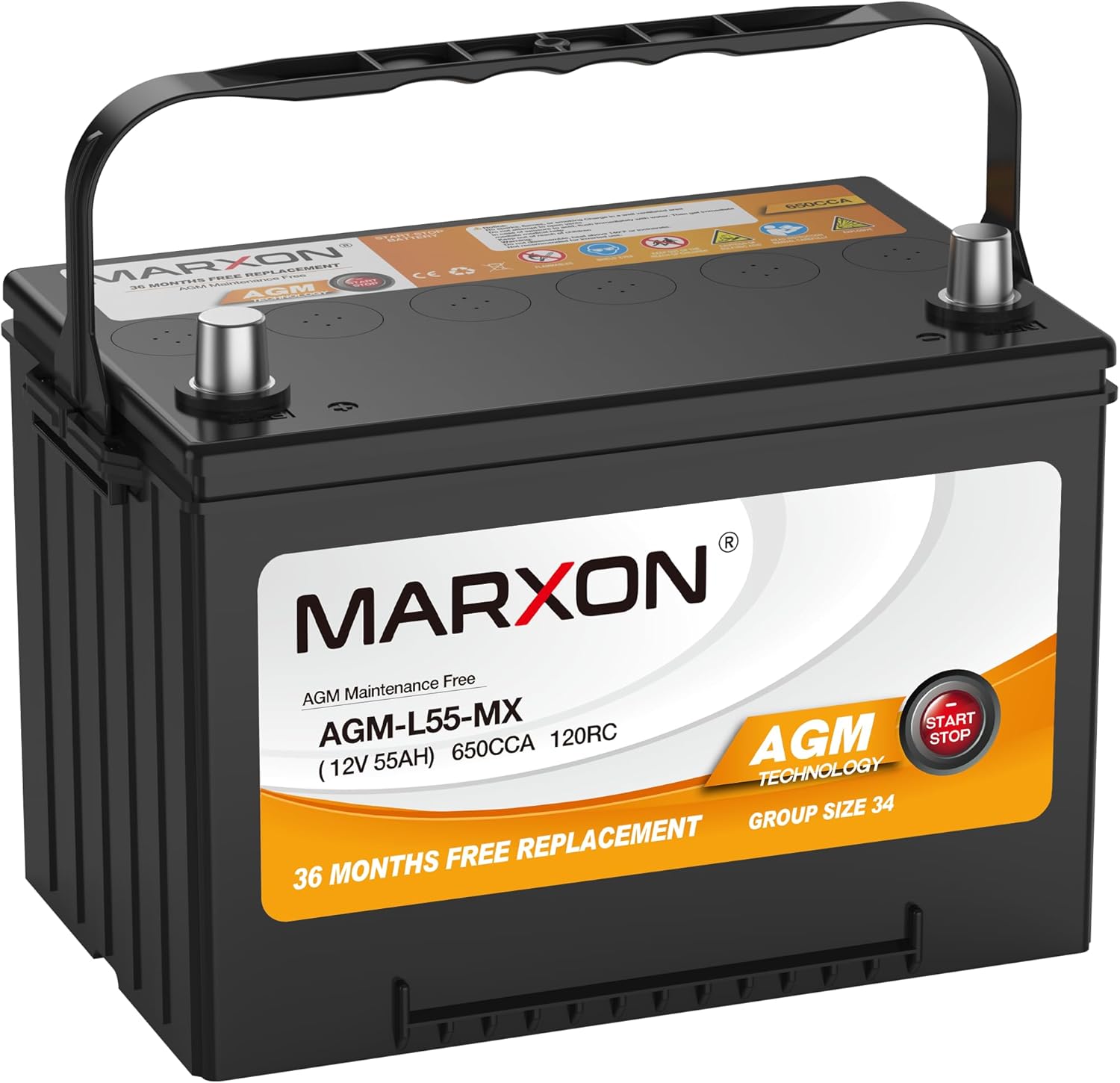
3. MARXON Group 34 12V 55Ah 650CCA AGM Start-Stop Car Battery
| Voltage | 12V |
|---|---|
| Capacity | 55Ah |
| Cold Cranking Amps | 650 CCA |
| Battery Type | AGM |
This MARXON Group 34 AGM battery is a maintenance-free replacement designed for cars equipped with start-stop systems. It provides 12 volts with 55 amp-hours and a 650 CCA rating, so it is intended to deliver reliable cold starts and steady accessory power for daily-driven vehicles. The AGM construction means the electrolyte is immobilized, which reduces leakage risk and allows safer installation in tighter engine bays. The listing highlights faster charging acceptance compared with standard sealed lead-acid batteries and improved corrosion resistance from a proprietary alloy, which helps with longevity under frequent charge cycles. Practical benefits include quick recovery after engine-off events typical of start-stop use and minimal upkeep thanks to the sealed design. Limitations are that performance claims about charging speed are manufacturer-stated and real-world gains depend on your vehicle charging system, and physical fit must be confirmed against the Explorer battery tray and terminal orientation before purchase.
Best for: Drivers seeking a maintenance-free, start-stop compatible Group 34 replacement for everyday use who prioritize reliable starting and low upkeep rather than specialty performance parts.
Less Ideal for: Those restoring a classic vehicle or needing a high-capacity deep-cycle battery for heavy auxiliary loads should consider other battery types tailored to those needs.
- AGM design reduces leakage risk and allows installation in confined battery compartments
- Designed for start-stop function to improve fuel economy and reduce emissions in stop-start driving
- Maintenance-free sealed construction eliminates the need to add water or acid
- Higher corrosion resistance from a proprietary alloy for potentially longer service life
- Charging speed and longevity claims are manufacturer-provided and may vary with the vehicle charging system
Verdict: A practical, maintenance-free Group 34 AGM battery built for start-stop use that fits buyers who want reliable starting and low upkeep for a 2002–2005 Explorer replacement.
4. Interstate Batteries M-65 Group 65 12V Car Battery (650 CCA)

| Voltage | 12 Volts |
|---|---|
| Terminal | M 65 |
| Battery Type | Lead Acid |
| Cold Cranking Amps | 650 CCA |
This Interstate M-65 is a straightforward, value-oriented Group 65 replacement battery that supplies 650 cold cranking amps and conventional flooded lead acid chemistry. Installers will use it as a direct swap for vehicles that accept Group 65 terminals and fitment; it delivers reliable starting power in typical daily driving and seasonal cold starts. Notable features include a 130-minute reserve capacity figure, a refundable core deposit, and an 18-month performance warranty that gives extra reassurance after installation. The battery is aimed at drivers who need dependable, no-frills starting power without paying for premium AGM or enhanced-cycle designs. Expect standard maintenance characteristics of flooded batteries and a rated lifespan that reflects budget-class performance. If your Explorer sees normal commuting and occasional towing this battery covers starting needs well, but it does not provide the deeper cycle life or vibration resistance of higher-end batteries designed for heavy accessory loads.
Best for: Drivers replacing a dead battery on a tight budget who want reliable starting power for everyday use and prefer a straightforward, factory-style replacement.
Less Ideal for: People who need deep-cycle performance, heavy accessory support, or enhanced vibration resistance should consider premium AGM or specialist batteries instead.
- 650 cold cranking amps suitable for reliable cold starts
- Group 65 fitment covers many common vehicle applications
- 130 minutes reserve capacity for short accessory loads when the engine is off
- Includes an 18-month performance warranty for buyer protection
- Refundable core deposit encourages recycling and lowers long-term cost
- Conventional flooded lead acid design requires more maintenance and has shorter cycle life than AGM alternatives
Verdict: A practical, budget-focused Group 65 replacement that delivers solid starting power for routine use in 2002–2005 Ford Explorer models.
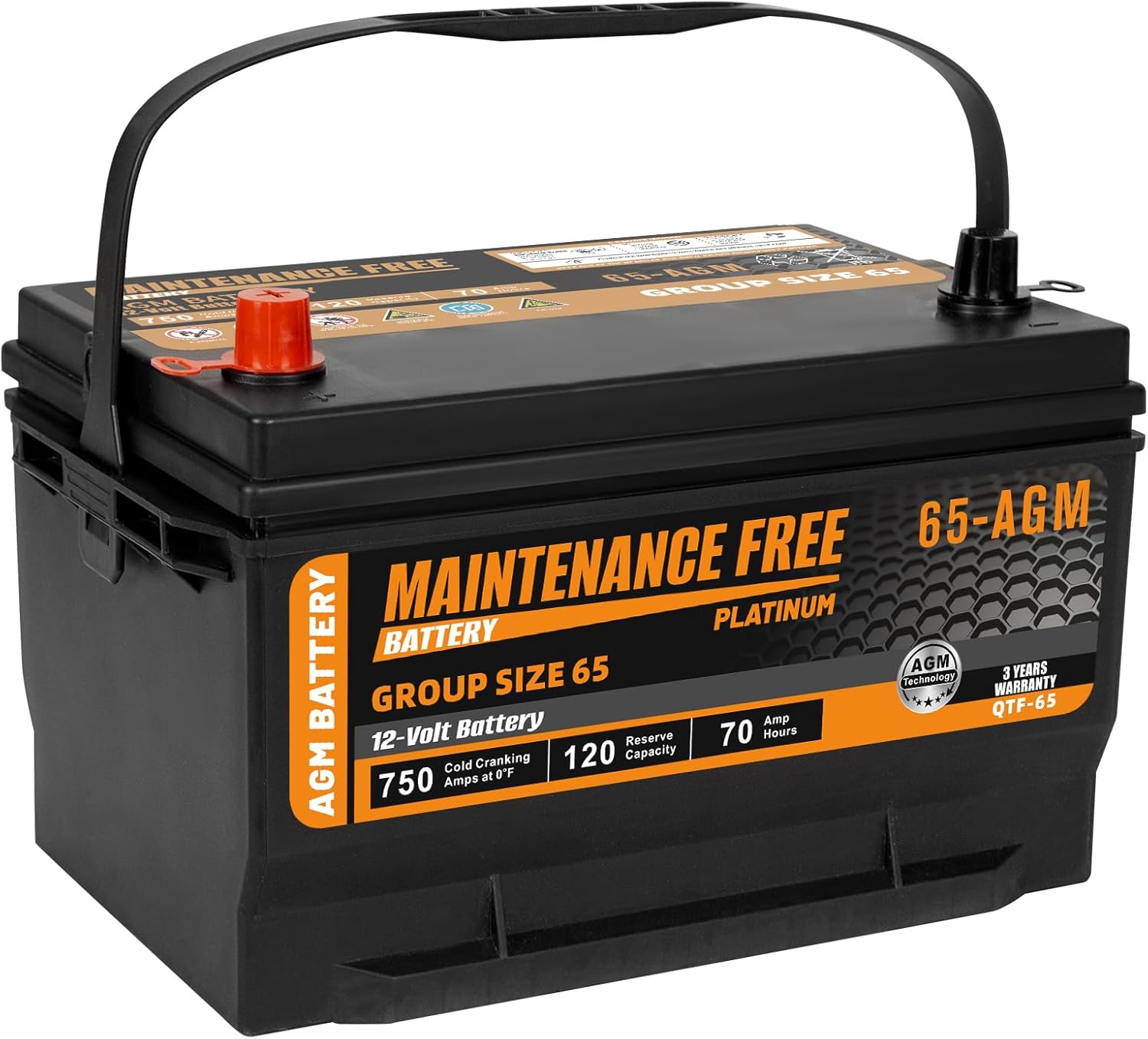
5. Autocessking Group 65 AGM Car Battery, 12V 70Ah, 750 CCA
| BCI Group Size | 65 |
|---|---|
| Rated capacity | 70 Ah |
| CCA | 750 A |
| Reserve Capacity (RC) | 120 min |
| Battery Technology | Absorbed Glass Mat (AGM) |
This Autocessking Group 65 AGM battery is a maintenance-free starting battery built for dependable cold starts and repeated use in vehicles that require a Group 65 fitment. It supplies 750 cold cranking amps and a 70 Ah rated capacity, so it handles cold-weather starts and moderate accessory loads without struggling. The AGM construction makes the battery non-spillable, more vibration resistant, and less prone to internal corrosion than traditional flooded batteries, which helps longevity and reduces the chance of acid-related damage. Reserve capacity of 120 minutes gives extra runtime for accessories if the alternator fails. Installation is straightforward for any 2002–2005 Ford Explorer that uses Group 65 batteries, though you should confirm terminal orientation and physical fit before ordering. Limitations: this is a starting battery, not a deep-cycle unit, and AGM batteries can cost more upfront than standard flooded replacements. If your Explorer has heavy aftermarket electronics or requires a specific OEM battery spec, double-check compatibility first.
Best for: Drivers who prioritize a durable, low-maintenance replacement that delivers consistent starting performance and long service life for an early 2000s Explorer.
Less Ideal for: Do not choose this if you need a true deep-cycle battery for prolonged off-grid use or if you require an exact factory-original battery with a different chemistry or spec.
- High cold-cranking power at 750 CCA for reliable starts in cold weather
- AGM design is non-spillable and more vibration resistant than flooded batteries
- 70 Ah capacity and 120-minute reserve capacity provide stable accessory support and emergency runtime
- Maintenance-free construction reduces upkeep and corrosion risk
- Not suitable for deep-cycle applications like solar or marine use
Verdict: Choose this AGM Group 65 battery when you want dependable cold-start power and a longer-lasting, maintenance-free replacement for a 2002–2005 Ford Explorer.
6. Odyssey ODX-AGM65 Extreme Series AGM Car Battery

| Voltage | 12 Volts |
|---|---|
| Cold Cranking Amps (CCA) | 930 |
| Battery Type | Lead Acid (AGM) |
| Terminal | SAE Terminal |
The Odyssey ODX-AGM65 is a sealed AGM replacement battery built to deliver high cold-cranking amps and deep-cycle performance for electronics-heavy cars. It is typically used as a direct-fit Group 65 battery for vehicles that require a right-side negative SAE terminal and a compact, high-capacity battery. Notable features include a high CCA rating (930 CCA), elevated hot cranking amps, a 12 V design, and tin-plated brass SAE posts for reliable connections. In real-world use this battery provides strong starting power in cold conditions, faster recovery between starts, and longer cycle life than standard lead-acid units, which helps if you run accessories while the engine is off. The 4-year manufacturer warranty adds reassurance for buyers who want documented longevity. Trade-offs are its heavier weight and premium price compared with basic flooded batteries, and its lead-acid construction means it is not the absolute lightest option available for performance-focused builds.
Best for: Buyers who prioritize proven performance and long service life and who want a battery that reliably starts in cold weather while supporting modern vehicle electronics and accessories.
Less Ideal for: Shoppers seeking the lowest-cost replacement or the lightest possible battery for weight-sensitive modifications should consider simpler flooded or lightweight alternatives.
- High starting power with 930 CCA suitable for reliable cold starts
- AGM construction offers deep-cycle capability and faster recovery between starts
- Tin-plated brass SAE terminals provide durable, corrosion-resistant connections
- Designed as a vehicle-specific Group 65 fit for straightforward installation
- Manufacturer-backed 4 year warranty for long-term reliability
- Significantly heavier than standard flooded batteries, which may complicate handling
- Higher upfront cost compared with basic lead-acid replacement batteries
Verdict: Choose this battery if you want a durable, high-CCA AGM replacement that delivers strong cold starts and long cycle life for a Group 65 fitment.
Choosing the Right 2002-2005 Ford Explorer Car Battery: Key Factors to Consider
Group Size and Tray Fit
Correct group size determines whether a battery will sit securely in the Explorer's tray and align with hold-downs. A battery that is too large can warp connections or prevent the hood from closing properly, while one that is too small can move under load and suffer terminal damage.
Tray fit also affects cable reach and terminal orientation. Look for the factory-recommended group size and confirm terminal location matches the Explorer's cables; changing to a different layout can require new cables or adapters, which may introduce contact resistance or added failure points.
Cold-Cranking Amps (CCA)
CCA measures a battery's ability to start the engine in cold temperatures and is a key spec for winter reliability. For a 2002-2005 Explorer, choose a battery with CCA high enough to handle the vehicle's displacement and ambient climate where you drive.
Underpowered batteries struggle in cold starts, which increases strain on the starter and can accelerate wear. CCA is especially important if you frequently start the vehicle in freezing conditions or run a lot of electrical accessories at startup.
Reserve Capacity and Electrical Load
Reserve capacity indicates how long a battery can support the vehicle's electrical systems if the charging system fails. The Explorer may have multiple accessories that draw current while parked or during short trips, so a higher reserve capacity gives you a bigger buffer and reduces the chance of a dead battery between drives.
A battery with low reserve capacity can leave you stranded if the alternator falters or you use accessories with the engine off. Consider your typical use pattern, including accessory draw and average trip length, when weighing reserve capacity.
Durability and Vibration Resistance
Road vibration and engine movement can shorten battery life by loosening plates or internal connections. For a 2002-2005 Explorer that may see rough or unpaved roads, choose batteries with reinforced cases or internal mounts that resist vibration.
Durability also includes resistance to corrosion at terminals and robust case materials to avoid cracks. Longer-lasting batteries reduce the frequency of replacement and the inconvenience of roadside failures.
Maintenance Needs and Construction Type
Batteries come sealed or serviceable; sealed designs are maintenance-free but may limit the ability to top up cells in exceptional circumstances. Serviceable batteries allow electrolyte checks and topped maintenance but require more user attention and carry corrosion risk if not maintained.
Consider your willingness to perform periodic checks and how accessible the Explorer's battery location is for maintenance tasks. Sealed batteries typically suit owners who prefer low upkeep, while serviceable units may offer longer life if properly maintained.
Terminal Type and Installation Ease
Terminal post type, location, and polarity determine how straightforward installation will be in the Explorer's engine bay. Mismatched terminals can require adapters or new cables and can complicate replacement during roadside swaps.
Also evaluate whether the battery has clearly marked polarity, corrosion-resistant terminals, and accessible hold-down points. Easier installation reduces labor time and the risk of installation errors that can cause electrical faults.
Understanding Group Size for the 2002-2005 Explorer
The Explorer from 2002 through 2005 uses specific battery group sizes to fit the tray and cable reach. Confirming the correct group size prevents fitment problems and ensures the hold-down and venting line up properly. A correctly sized battery simplifies installation and reduces the chance of harness strain or terminal interference.
If you need to confirm fitment, measure the battery tray and check terminal orientation before buying. Physical compatibility is as important as electrical specs because incorrect fitment can lead to early terminal wear or difficulty securing the battery.
- Measure tray dimensions and cable reach before choosing a battery.
- Check terminal orientation to match positive and negative cable locations.
- Confirm vent tube placement if your vehicle setup requires it.
How Cold-Cranking Amps Affect Starting in Different Climates
Cold-cranking amps determine how reliably your Explorer will start in low temperatures. If you park outdoors in winter or live in a colder region, prioritize higher CCA ratings to overcome thicker oil and lower battery capacity at low temperatures.
In milder climates, slightly lower CCA may still be adequate, but avoid cutting CCA below the manufacturer recommendation. Cold starts are one of the most common triggers for roadside assistance calls, so matching CCA to your climate is a practical step.
- Higher CCA reduces starter strain in cold weather.
- Ensure CCA aligns with factory guidance and local climate demands.
Signs a Battery Needs Replacement in Your Explorer
Common symptoms of a failing battery include slow cranking, dashboard warning lights, dim headlights at idle, and a voltage reading below the recommended threshold when the engine is off. These signs often precede complete failure and give you time to replace the battery proactively.
Regular checks that include a load or voltage test and visual inspection for corrosion or swelling help identify problems early. Addressing these signs promptly reduces the risk of being stranded and minimizes secondary stress on the starter and alternator.
- Slow engine crank or no-crank conditions.
- Dim lights or electrical accessories underperforming.
- Acid leaks, swelling, or heavy corrosion at terminals.
Practical Tips for Safe Installation and Disposal
When installing a replacement battery in the 2002-2005 Explorer, disconnect the negative terminal first and reconnect it last to reduce shorting risk. Use the correct torque on battery terminals to avoid damage, and ensure the clamp or hold-down secures the battery without excessive force.
Old batteries should be recycled in accordance with local regulations. Many service centers and recycling facilities accept used automotive batteries and will handle them safely. Proper disposal prevents environmental harm and follows legal requirements.
- Disconnect negative terminal first, reconnect it last.
- Secure battery with correct hold-down hardware and torque.
- Recycle old batteries at approved facilities.
Maintaining Battery Health to Extend Service Life
Routine care helps maximize battery life. Keep terminals clean and tight, check for corrosion, and ensure the Explorer's charging system is functioning to avoid chronic undercharging. If your vehicle has long periods of inactivity, consider a smart maintainer to prevent deep discharge.
Avoid frequent short trips that do not allow the alternator to fully recharge the battery. Periodic load testing and voltage checks during service intervals can reveal issues before they become critical.
- Clean terminals and apply corrosion inhibitor as needed.
- Check alternator output during routine maintenance.
- Use a trickle charger if the vehicle sits for extended periods.
Still looking for the perfect fit?
Select your Ford Explorer configuration to see the most relevant Car Batteries recommendations
How We Chose the Best 2002-2005 Ford Explorer Car Battery
We narrowed candidates using criteria that matter specifically for the 2002-2005 Ford Explorer. Primary filters included correct group size and terminal layout to ensure straightforward installation and secure fitment in the Explorer battery tray. Performance metrics focused on cold-cranking amps for reliable starting in varied temperatures and reserve capacity for accessory load tolerance when the engine is off.Durability factors included expected cycle life and warranty support, plus resistance to vibration since the Explorer is often used in mixed road conditions. We also considered maintenance needs such as sealed versus serviceable designs and ease of terminal access for routine care. Practical fit and installation factors were included, such as top versus side terminals and post type to match the factory setup. Exclusions: we excluded batteries that do not match the correct physical group size or terminal configuration for the 2002-2005 Explorer, and entries with insufficient published performance specs for CCA or reserve capacity. The final list balances starting power, longevity, and real-world fitment for this vehicle.
Our full evaluation process is outlined in our review methodology.
FAQ
What battery group size fits a 2002-2005 Ford Explorer?
The Explorer from 2002 to 2005 requires a specific battery group size to fit the tray and hold-downs. Confirm the factory-recommended group size and verify terminal orientation before purchasing to ensure correct fit and cable reach.
How do I test my Explorer's car battery at home?
You can perform a basic test by measuring battery voltage with a multimeter; a fully charged battery typically reads about 12.6 volts at rest. For more reliable results, conduct a load test or take the vehicle to a service provider for a charging and starter system check.
How often should I replace the battery in a 2002-2005 Explorer?
Battery life varies by usage, climate, and maintenance, but many car batteries last three to five years. Watch for reduced cranking performance, test results showing low capacity, or frequent electrical issues as signs that replacement is due.
Can I install a battery myself in the Explorer?
Yes, many owners can install a battery themselves if they follow safety steps: disconnect the negative terminal first, secure the battery properly, and tighten terminals to the correct torque. If you are unsure, professional installation is recommended.
What CCA rating should I choose for cold climates?
In colder climates, choose a battery with higher cold-cranking amps than the minimum recommended to ensure reliable starts. Higher CCA compensates for reduced battery performance in low temperatures and reduces starter strain.
Will a maintenance-free sealed battery perform well in the Explorer?
Sealed batteries often provide reliable, low-maintenance service and reduce the need for periodic electrolyte checks. They are a good option for owners who prefer minimal upkeep, provided the battery meets the Explorer's fitment and performance needs.
Final Verdict
When replacing the battery in a 2002-2005 Ford Explorer, prioritize correct group size, adequate cold-cranking amps, and sufficient reserve capacity for your driving patterns and climate. Durability and terminal layout matter just as much as raw specs because fitment and vibration resistance affect real-world lifespan.Balance maintenance preferences with performance needs: sealed batteries reduce upkeep while serviceable units can be maintained for longer service life if you are proactive. Focus on fitment, CCA, and reserve capacity to choose a battery that delivers dependable starts and fewer surprises on the road.
Explore More:
- Check out all Ford Explorer parts & accessories
- Explore Car Batteries Maintenance & Repair Guides
- Explore Electrical System
- Browse all Auto Parts
