

Note: This article contains affiliate links. If you click on these links and make a purchase, I may earn a small commission at no extra cost to you. This helps support my research and content. Read my full affiliate disclosure here.
Keeping the Toyota 4Runner cabin air filter in good condition matters for in-cabin air quality, HVAC performance, and passenger comfort. A clogged or low-quality filter can allow pollen, dust, and particulates into the cabin and make the ventilation system work harder.This guide presents seven shortlisted options that fit the Toyota 4Runner and focuses on the features that matter most. We evaluated filtration efficiency, fit and seal, material durability, and ease of replacement to surface the most practical choices for owners. Read on to see which attributes to prioritize when choosing a replacement filter.
Looking for other parts? See all Toyota 4Runner parts & accessories.
Top Picks at a Glance
| Best Reviewed A top-rated pick with lots of positive feedback | EPAuto CP846 Replacement Cabin Air Filter with Activated Carbon |  |
| Most Popular A crowd favorite that many people choose with confidence | FRAM Fresh Breeze Cabin Air Filter with Arm & Hammer Baking Soda (CF10285) |  |
| Best Quality Built to a higher standard if you want something more solid | K&N VF2000 Washable Cabin Air Filter |  |
| Best Budget The cheapest option that still gets the job done reliably | Kurimup CF9846A Cabin Air Filter with Activated Carbon |  |
| Most Sold A high-volume bestseller chosen again and again | BOSCH 6055C HEPA Cabin Air Filter |  |
| Best Value for Money The sweet spot between price and what you get | A-Premium Cabin Air Filter (2-Pack) with Activated Carbon |  |
| Best Overall The best all-around choice for most situations | Puroma Cabin Air Filter with Activated Carbon (Replacement for CP285, CF10285) — 3 pack |  |
1. EPAuto CP846 Replacement Cabin Air Filter with Activated Carbon
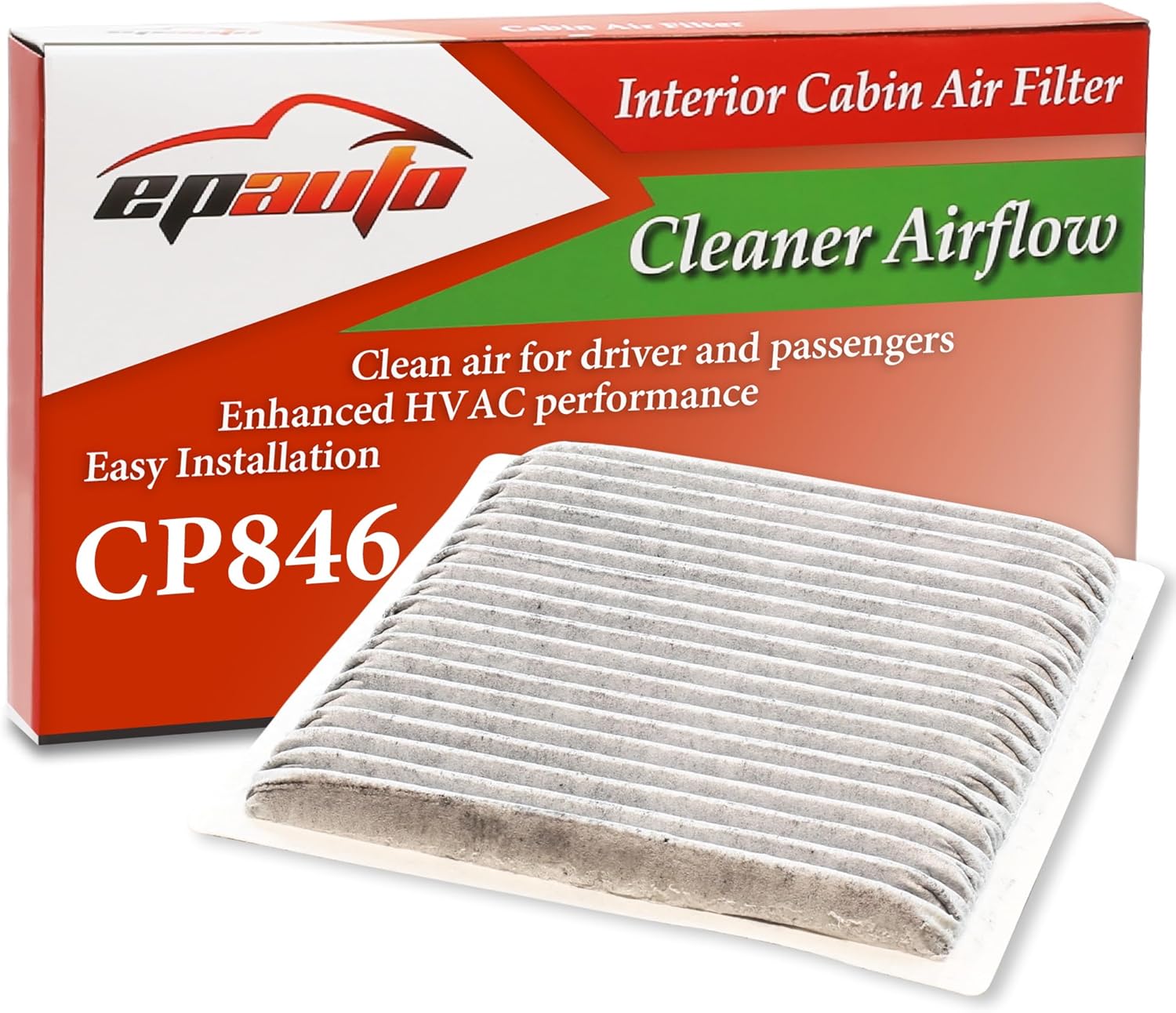
| Compatible vehicles | Select Subaru and Toyota models including Toyota 4Runner (2000-2009) |
|---|---|
| Filter type | Activated carbon cabin air filter |
| Replacement for | FRAM CF9846A / Multiple Toyota part numbers |
| Recommended replacement | Every 12 months or 12,000 miles |
The EPAuto CP846 is a factory-replacement style cabin air filter that installs in the 4Runner's HVAC intake to trap dust, pollen, and light odors with its activated carbon layer. It is used the same way as a factory cabin filter — remove the glovebox access panel, swap the old filter for this unit, and reassemble. Notable features include charcoal/activated carbon for odor reduction and a pleated media pack that increases surface area compared with thin paper filters. In practice it improves in-cabin air quality and helps the ventilation system deliver cleaner air to occupants. Buyers report straightforward fitment and easy DIY installation. Limitations to be aware of are slightly higher airflow resistance compared with some OEM filters and the typical maintenance interval of about 12 months or 12,000 miles, so you will need regular replacement to retain performance. This filter is a practical, value-oriented replacement if you prioritize reliable filtration and simple upkeep for your 4Runner.
Best for: Reliability-focused buyers who want a straightforward, proven cabin filter that keeps in-cabin air cleaner with minimal fuss and predictable maintenance.
Less Ideal for: Drivers seeking premium high-efficiency particulate filtration for severe allergy or pollution conditions should consider higher-grade HEPA-style aftermarket options instead.
- Activated carbon layer reduces common odors and helps with smoke and exhaust smells.
- Pleated media provides increased filtration surface area versus very thin OEM-style inserts.
- Direct replacement fit for compatible Toyota 4Runner models, enabling quick DIY installation.
- Good value with consistent user reports of proper fit and function.
- Denser charcoal media can produce slightly more airflow resistance than some factory filters.
- Requires annual or 12,000-mile replacement to maintain performance.
Verdict A budget-friendly, reliable activated-carbon cabin filter that fits Toyota 4Runner models and improves in-cabin air quality with easy DIY installation.
2. FRAM Fresh Breeze Cabin Air Filter with Arm & Hammer Baking Soda (CF10285)

| Model | CF10285 |
|---|---|
| Manufacturer | FRAM |
| Vehicle applications | Multiple Toyota models including 4Runner, Camry, Corolla, Highlander, Sequoia, Sienna, Tundra |
| Installation location | Behind the glove box |
| Claimed filtration efficiency | Filters 98% of listed pollutants |
The FRAM Fresh Breeze CF10285 is a replacement cabin air filter that fits multiple Toyota models including 4Runner, Camry, Corolla, Highlander, Sequoia, Sienna, Tundra and others listed by the manufacturer. It installs behind the glove box and is intended for easy DIY replacement in about 15 minutes. The filter combines carbon with Arm & Hammer baking soda embedded in the media to neutralize odors while trapping pollen, dust and many airborne particulates; FRAM states it filters about 98 percent of those pollutants. For Toyota owners this means fresher-smelling cabin air and less dust buildup in the HVAC system without a shop visit. The product is a direct-fit factory-quality replacement and customers report straightforward installation and reliable fitment. One limitation is that the packaging and instructions do not always show a clear airflow arrow, which can slow orientation for first-time installers, and the odor-control layer may not match the performance of specialized HEPA-rated cabin filters for very fine particles or intense smoke conditions.
Best for: Convenience-driven Toyota owners who prioritize an easy, do-it-yourself cabin filter replacement to reduce odors and basic pollutants without visiting a shop.
Less Ideal for: Drivers who need hospital-grade or HEPA-level filtration for severe allergies, wildfire smoke, or medically sensitive occupants should consider higher-grade filters designed for ultra-fine particle capture.
- Direct-fit replacement for many Toyota models including 4Runner and Highlander for hassle-free DIY swaps
- Embedded Arm & Hammer baking soda plus carbon for active odor reduction
- Simple installation behind the glove box typically takes about 15 minutes
- Filters common pollutants like pollen, road dust and smoke particles to improve cabin air quality
- Not HEPA-rated so it may not capture the smallest particles as effectively as premium HEPA cabin filters
- Some units lack a clear airflow arrow or orientation marking in the packaging
Verdict A convenient, direct-fit Toyota cabin filter that adds odor control and solid particulate filtration for most everyday driving needs, but not a HEPA replacement.
3. K&N VF2000 Washable Cabin Air Filter

| Brand | K&N |
|---|---|
| Part Number | VF2000 |
| Material | Polyurethane |
| Automotive Fit Type | Universal Fit |
| Warranty Description | 1,000,000 Miles/10 Year |
The K&N VF2000 is a washable cabin air filter intended as a long-term replacement for the factory cabin filter in compatible vehicles, including Toyota 4Runner models listed in the fitment notes. It installs like a factory filter and is typically swapped into the cabin air box without tools. The filter uses durable, polyurethane media treated to help control odors and maintain airflow for heating and cooling systems. The washable design means you clean it with low-pressure water and a cleaning solution instead of buying disposable filters repeatedly, which reduces ongoing cost and waste. In practice the VF2000 delivers similar or improved airflow compared with paper filters and users report fresher-smelling cabin air after installation. Important limitations are fitment: confirm the 4Runner model year and part number before purchasing, and plan routine cleanings—performance depends on proper maintenance and occasional refresher treatments to control any residual smells.
Best for: Performance-oriented owners who prioritize long-term airflow consistency and lower operating cost and are willing to maintain the filter with periodic cleaning.
Less Ideal for: Buyers who prefer a low-maintenance disposable filter or who do not want to verify part compatibility for their exact 4Runner model and year.
- Washable and reusable design reduces long-term replacement cost and landfill waste
- Pre-treated media helps control odors for a fresher cabin environment
- Designed for simple drop-in installation in the factory cabin air box with no tools
- Durable polyurethane construction intended to last for the life of the vehicle
- Requires periodic cleaning and occasional re-treatment to maintain filtration and odor control
- Not a universal fit for every vehicle; verify compatibility with your 4Runner model and year
Verdict If you want a durable, high-quality washable cabin filter for a Toyota 4Runner that preserves airflow and cuts recurring costs, the K&N VF2000 is a strong choice provided you confirm fitment and commit to periodic cleaning.
4. Kurimup CF9846A Cabin Air Filter with Activated Carbon

| Compatible vehicle | Toyota 4Runner (2003–2009) |
|---|---|
| Filtration layers | 3-layer with activated carbon |
| Installation | No tools required; plug-and-play replacement |
The Kurimup CF9846A is a direct-replacement cabin air filter that uses a three-layer filtration design plus an activated carbon layer to reduce dust, pollen, and interior odors. It installs without tools and is sized to match the factory cabin filter for the Toyota 4Runner (2003–2009), so replacement is straightforward and can be completed in minutes following the included instructions. The layered media claims high dust-holding capacity while preserving airflow to help HVAC performance and reduce musty smells. Practical benefits include noticeably fresher cabin air and lower particulate load on the HVAC system at a low cost compared with dealer parts. Limitations are that this is an aftermarket economy option rather than a premium OE-branded part and long-term filtration performance depends on driving conditions and replacement intervals, so heavier-pollution environments may require more frequent changes. If you want a low-cost, easy swap that improves cabin odor control and basic particle filtration, this filter delivers consistent value.
Best for: Budget-conscious owners prioritizing low-cost routine maintenance who want an easy, no-tools cabin filter replacement to keep the 4Runner interior fresher and reduce odors.
Less Ideal for: Drivers who need certified high-efficiency particulate filtration for allergy or health-critical needs should consider higher-spec filters with published performance ratings.
- Three-layer filtration plus activated carbon for basic particulate and odor removal
- Compatible fit for Toyota 4Runner (2003–2009) for a tool-free, quick swap
- Design aims to preserve airflow and support HVAC heating and cooling efficiency
- Low-cost alternative to factory replacement parts
- Aftermarket economy product so long-term durability and absolute filtration efficiency may be lower than premium branded filters
- No detailed certified filtration ratings provided (for example MERV or HEPA-equivalent)
Verdict If you want an affordable, easy-to-install cabin filter for a 2003–2009 Toyota 4Runner that improves basic particle and odor control, this is a practical budget pick.
5. BOSCH 6055C HEPA Cabin Air Filter

| Brand | Bosch |
|---|---|
| Model | 6055C |
| Filtration efficiency | 99.97% at 0.3 microns |
| Compatibility note | Compatible with select Toyota 4Runner models |
The Bosch 6055C is a HEPA-style cabin air filter built to capture very small particles that enter the HVAC system in Toyota 4Runner models. It installs like a standard cabin filter behind the glovebox and is intended for routine replacement to maintain cabin air quality. The filter uses a melt-blown electrostatic layer plus an extra static cotton layer to increase particle capture and capacity, and structural ribs help the filter keep its shape and airflow characteristics over time. Bosch states HEPA-level efficiency of 99.97% at 0.3 microns, so it will remove pollen, road dust, and many fine particulates more effectively than basic paper filters. The design does not rely on chemical odor neutralizers, so it focuses on particulate removal rather than gas or odor adsorption. Practical benefits include OEM-compatible fit for 4Runner examples listed and an easy user-install process that most owners can do themselves. Limitations are that it does not filter gases or volatile organic compounds and the static media can lose effectiveness over months, so regular replacement is still required.
Best for: A risk-averse mainstream buyer who prioritizes respiratory health and wants a reliable, factory-quality cabin filter for routine maintenance on a Toyota 4Runner.
Less Ideal for: Drivers who need active odor or gas removal should choose a filter with activated carbon or a specialized air purification solution instead.
- HEPA-grade media rated to trap 99.97% of 0.3 micron particles for strong particulate filtration
- Electrostatic melt-blown layer plus static cotton layer increases trapping capacity
- Structural ribs maintain filter shape and consistent airflow during service life
- Designed for factory-quality fit and straightforward glovebox-area replacement
- Does not include activated carbon so it will not significantly reduce odors or vehicle exhaust gases
- Static filtration performance can decrease over time and requires periodic replacement
Verdict If you want factory-quality particulate protection for a Toyota 4Runner, this Bosch HEPA cabin filter delivers strong fine-particle filtration but does not address odors or gases.
6. A-Premium Cabin Air Filter (2-Pack) with Activated Carbon
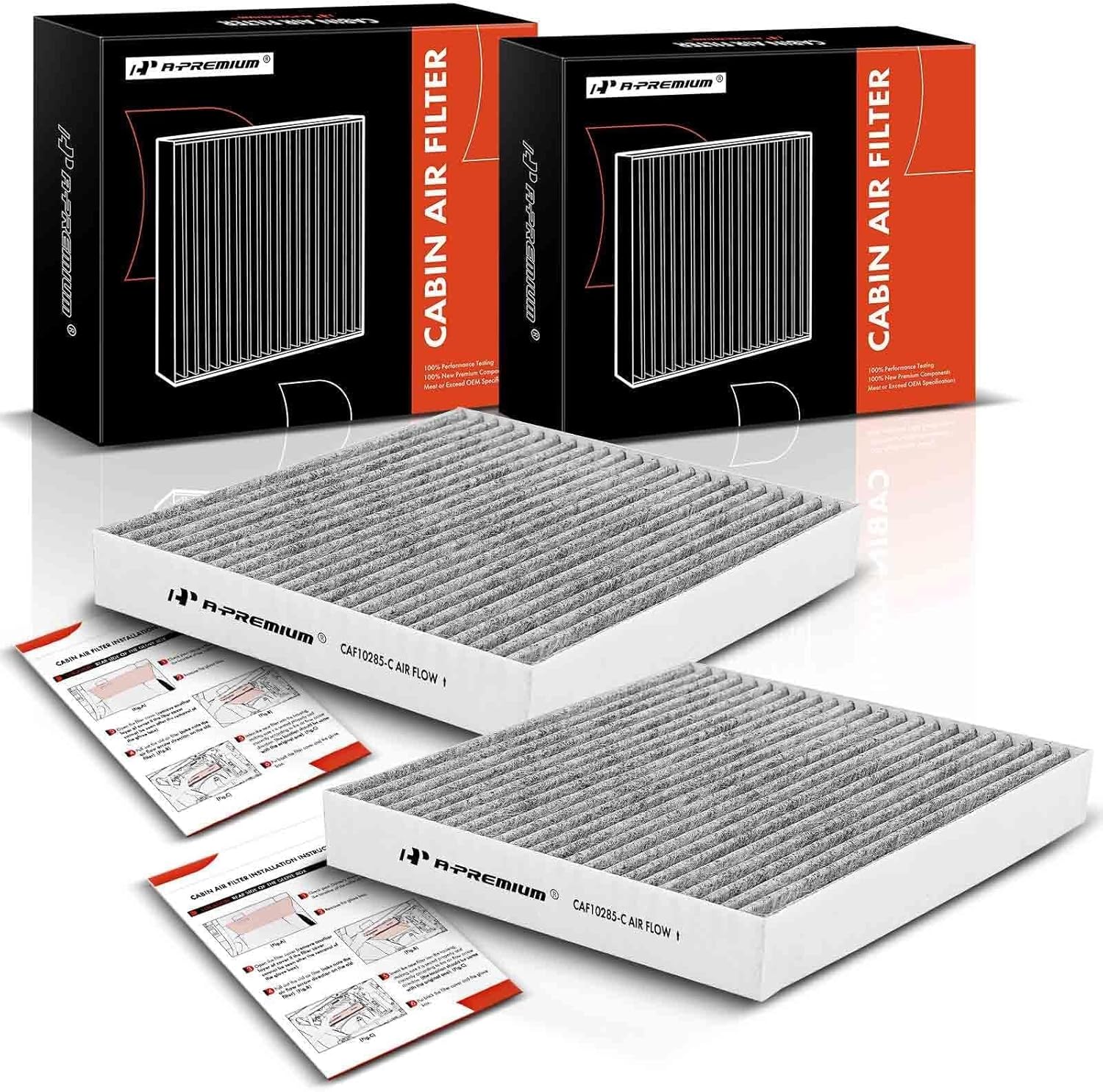
| Location | Front |
|---|---|
| Activated Carbon Included | Yes |
| Washable | No |
| Package Quantity | 2 |
This A-Premium 2-pack cabin air filter replaces the factory front cabin filter and adds an activated carbon layer to reduce odors while trapping pollen and larger particulates. It is sold in a boxed two-pack with each filter individually wrapped, which makes storage and future replacement convenient. Installation is straightforward and reviewers report consistent fit in compatible vehicles. The activated carbon helps minimize road and HVAC smells for a few weeks to months depending on usage, and the pleated media provides decent airflow while capturing common contaminants. The filter is not washable or reusable, so replacements are required at regular intervals. Also, the product is a basic aftermarket option rather than a high-efficiency HEPA-level filter, so it will not remove very fine dust or ultrafine particles. For routine maintenance on a Toyota 4Runner the A-Premium filter offers a low-cost, easy-to-install upgrade that addresses odor and pollen more effectively than a plain paper pollen filter.
Best for: Practical optimizers who want an affordable, ready-to-install cabin filter that improves odor control and basic particle filtration without paying for premium specialty filters.
Less Ideal for: Drivers seeking HEPA-level filtration, medical-grade air cleaning, or a reusable washable solution should consider higher-end or specialty filters instead.
- Includes activated carbon layer to reduce odors from road and HVAC
- Sold as a two-pack with individual wrapping for convenient storage
- Designed to fit factory filter location for direct replacement
- Pleated media balances filtration with airflow for everyday driving
- Not washable or reusable, requires periodic replacement
- Not a high-efficiency HEPA-type filter and will not capture ultrafine particles
Verdict A budget-friendly, easy-to-install two-pack that improves odor control and basic cabin filtration for Toyota 4Runner owners who want practical value.
7. Puroma Cabin Air Filter with Activated Carbon (Replacement for CP285, CF10285) — 3 pack
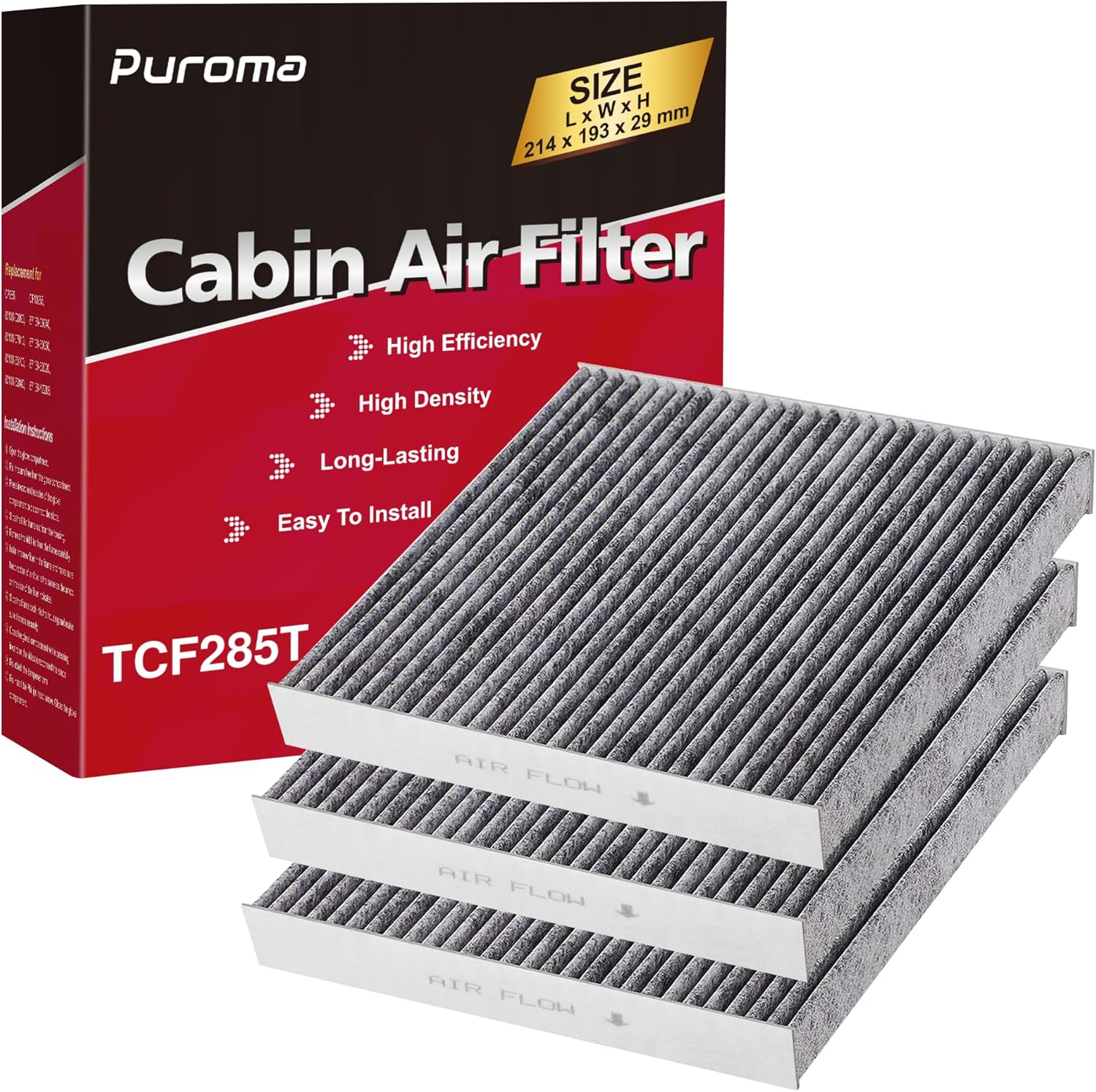
| Replacement for | CP285, CF10285 |
|---|---|
| Pack quantity | 3 pcs |
| Fitment focus | Toyota 4Runner (listed compatibility) |
This Puroma cabin air filter is a direct-fit replacement designed for Toyota 4Runner models and similar vehicles, combining a non-woven particulate layer with an activated carbon layer to trap dust, pollen and common odors. Typical use is annual or seasonal replacement in the 4Runner's cabin air filter housing to keep HVAC airflow cleaner and reduce smells. The filter's close-meshed media aims to maintain good airflow while capturing contaminants, and the printed airflow arrow simplifies installation. Buyers report easy, quick installs and solid build quality comparable to factory replacements. Limitations to note: activated carbon filters can slightly reduce HVAC airflow compared with minimal-efficiency panels, and some owners find pleat count and long-term durability vary versus vehicle-brand filters. Also confirm the CP285/CF10285 cross-reference for your 4Runner year before installing. For balanced owners who want improved in-cabin air quality without complicated upgrades, this is a practical option.
Best for: Balanced all-round buyers who want a straightforward, cost-effective way to improve in-cabin air quality on their Toyota 4Runner without sacrificing ease of installation or routine maintenance habits.
Less Ideal for: Owners prioritizing maximum HVAC airflow or stretch service intervals should consider high-flow or long-life specialty filters instead.
- Activated carbon layer reduces common odors in the cabin
- Close-meshed non-woven media captures dust and pollen effectively
- Easy, quick installation with airflow arrow marking
- Sold as a multi-pack for convenient scheduled replacements
- Activated carbon can modestly restrict HVAC airflow compared with low-resistance filters
- Pleat count and long-term lifespan may differ from Toyota factory filters
Verdict A practical, easy-to-install activated-carbon cabin filter pack that balances odor control and filtration for Toyota 4Runner owners seeking a reliable replacement.
Choosing the Right Toyota 4Runner Cabin Air Filter: Key Factors to Consider
Filtration Efficiency
Filtration efficiency defines how well the cabin air filter captures particles such as pollen, dust, and fine particulates. Higher efficiency media trap more contaminants, which improves air quality inside the vehicle and reduces allergy triggers.
However, filtration must balance with airflow. Extremely dense media can restrict ventilation and place extra load on the HVAC blower. Look for filters that specify particle-size capture ratings or reference MERV-equivalent performance so you can weigh pollutant removal against airflow needs.
Fit and Seal
A properly sized filter that forms a good seal in the housing prevents unfiltered air from bypassing the media. Even a high-efficiency material offers little benefit if air can flow around the edges through gaps.
Check that the filter geometry matches the Toyota 4Runner housing and that gasket or frame materials are flexible enough to seat evenly. A secure fit reduces dust accumulation in the HVAC housing and helps maintain consistent climate control performance.
Material Durability
Durable filter media and a robust frame resist collapse, sagging, and moisture damage over time. Filters exposed to humid or wet conditions can lose shape or grow odors if materials are not resilient.
Choose pleated media with reinforcing elements and a rigid frame. Durability affects not only longevity but also how often you will need to replace the filter during regular maintenance intervals.
Odor and Gas Control
Some filters include activated carbon or additives to reduce odors and adsorb gaseous pollutants from traffic and environmental sources. If you frequently drive in urban or polluted areas, odor control can make the cabin noticeably more pleasant.
Carbon layers add resistance to airflow, so consider the tradeoff between improved odor removal and potential slight reductions in ventilation efficiency. For many owners, a moderate carbon layer offers a useful balance.
Ease of Installation
How straightforward a filter is to replace matters for maintenance frequency. Filters designed for simple alignment and without complex clips or fasteners make DIY replacement quicker and reduce the chance of improper installation.
Look for thin profiles that slide easily into the housing and clear orientation markings. Simple installation encourages on-time replacement, which preserves air quality and HVAC performance.
Service Life and Maintenance Interval
Expected service life influences total ownership effort. Filters rated for longer mileage or time intervals can lower maintenance frequency, but that should not compromise filtration performance.
Consider driving conditions when assessing service life. Dusty or high-pollen environments will necessitate more frequent changes. Choose a filter whose rated life matches your typical use and be prepared to inspect the filter sooner under harsher conditions.
FAQ
How often should I replace the Toyota 4Runner cabin air filter?
Replacement depends on conditions but the filter often needs checking every 12 months or according to mileage. If you drive frequently in dusty, high-pollen, or urban environments, inspect and possibly replace it more often. Visual inspection for heavy dirt, reduced airflow, or persistent odors is a practical trigger for replacement.
What are common symptoms of a clogged cabin air filter?
Common signs include reduced HVAC airflow, weaker heating or cooling performance, unpleasant odors when the system runs, and increased dust inside the cabin. Drivers may also notice a musty smell or elevated cabin allergies. These symptoms usually indicate it is time to replace the filter.
Can I install a replacement cabin pollen filter myself?
Yes, many Toyota 4Runner cabin air filters are accessible and designed for owner replacement without specialized tools. The process typically involves opening the glove box or an access panel, removing the old filter, and inserting the new one with correct orientation. Keep orientation markings and ensure a tight seal.
Does a higher-efficiency cabin air filter reduce airflow?
Higher-efficiency filters can increase resistance to airflow because denser media trap smaller particles. The effect is usually modest for filters designed for vehicle HVAC systems, but very dense or heavily layered filters may slightly reduce blower efficiency. Choose a filter that balances particle capture with acceptable airflow for comfort.
Are OEM cabin filters necessary compared with aftermarket options?
OEM filters are made to meet the vehicle maker’s fit and sealing standards, which can simplify compatibility. Aftermarket filters often match fitment and may offer enhanced filtration or odor control. The best choice depends on whether you prioritize guaranteed fit or additional filtration features. Ensure any aftermarket option provides clear fitment information for the Toyota 4Runner.
How We Chose the Best Toyota 4Runner Cabin Air Filter
Our selection process focused on characteristics that directly affect in-cabin air quality and long-term performance for Toyota 4Runner owners. We prioritized filters with verified filtration efficiency against pollen and fine particulates, durable pleated media that resists moisture and collapse, and a design that ensures a secure fit and consistent seal in the 4Runner filter housing. Ease of installation and clear fitment alignment were included so a typical owner can replace the part without specialty tools. We also considered longevity and material resistance to odors and microbial growth under highway and urban driving conditions.We excluded filters without clear fitment data for the Toyota 4Runner, items lacking basic material or filtration specifications, and products aimed only at aesthetic or novelty claims. The final list highlights products that balance contaminant capture, airflow preservation, and practical durability for real-world driving.
Our full evaluation process is outlined in our review methodology.
Conclusion
When choosing a cabin air filter for the Toyota 4Runner, prioritize a balance of filtration efficiency and proper fit to protect cabin air quality without unduly restricting airflow. Durable materials, a reliable seal, and clear installation orientation will reduce maintenance hassle and improve HVAC performance.Consider driving conditions and odor control needs when deciding on media type and service intervals. Regular inspection and timely replacement are the most effective ways to maintain comfort and minimize allergens inside the vehicle.
Explore More:
- Check out all Toyota 4Runner parts & accessories
- Explore Cabin Air Filters Maintenance & Repair Guides
- Explore HVAC
- Browse all Auto Parts
