

Note: This article contains affiliate links. If you click on these links and make a purchase, I may earn a small commission at no extra cost to you. This helps support my research and content. Read my full affiliate disclosure here.
If you drive a 2016-2023 Toyota Tacoma, swapping in the right cabin air filter makes a noticeable difference in in-cabin air quality, HVAC performance, and allergy relief. Tacoma owners often face dust, pollen, and odors depending on where they drive, and a poorly chosen filter can reduce airflow or require more frequent service.This guide shortlists the top cabin air filters compatible with the 2016-2023 Tacoma and explains the key traits that affect fit, filtration, and ease of replacement. Use the evaluation criteria below to pick the best option for your driving conditions and maintenance habits, then follow the quick how-to pointers to complete the swap confidently.
Looking for other parts? See all Toyota Tacoma parts & accessories.
Top Picks at a Glance
| Best Overall The best all-around choice for most situations | Forccord Cabin and Engine Air Filter Kit for Toyota Tacoma V6 (2016–2023) |  |
| Best Quality Built to a higher standard if you want something more solid | K&N Lifetime Washable Cabin Air Filter (VF2005) |  |
| Best Value The sweet spot between price and what you get | LOIOLFIL CF10374 Cabin Air Filter with Activated Carbon (1-Pack) |  |
| Best Budget The cheapest option that still gets the job done reliably | Carory Cabin Air Filter with Activated Carbon (CF374) |  |
| Highest Rated A top-rated pick with lots of positive feedback | ryvclim Engine and HEPA Cabin Air Filter Combo for Toyota Tacoma 3.5L V6 (2016–2023) |  |
| Most Popular A crowd favorite that many people choose with confidence | Spearhead Breathe Easy Cabin Air Filter (Activated Carbon) BE-374 |  |
| Best Seller A high-volume bestseller chosen again and again | Bosch HEPA Cabin Air Filter 6033C |  |
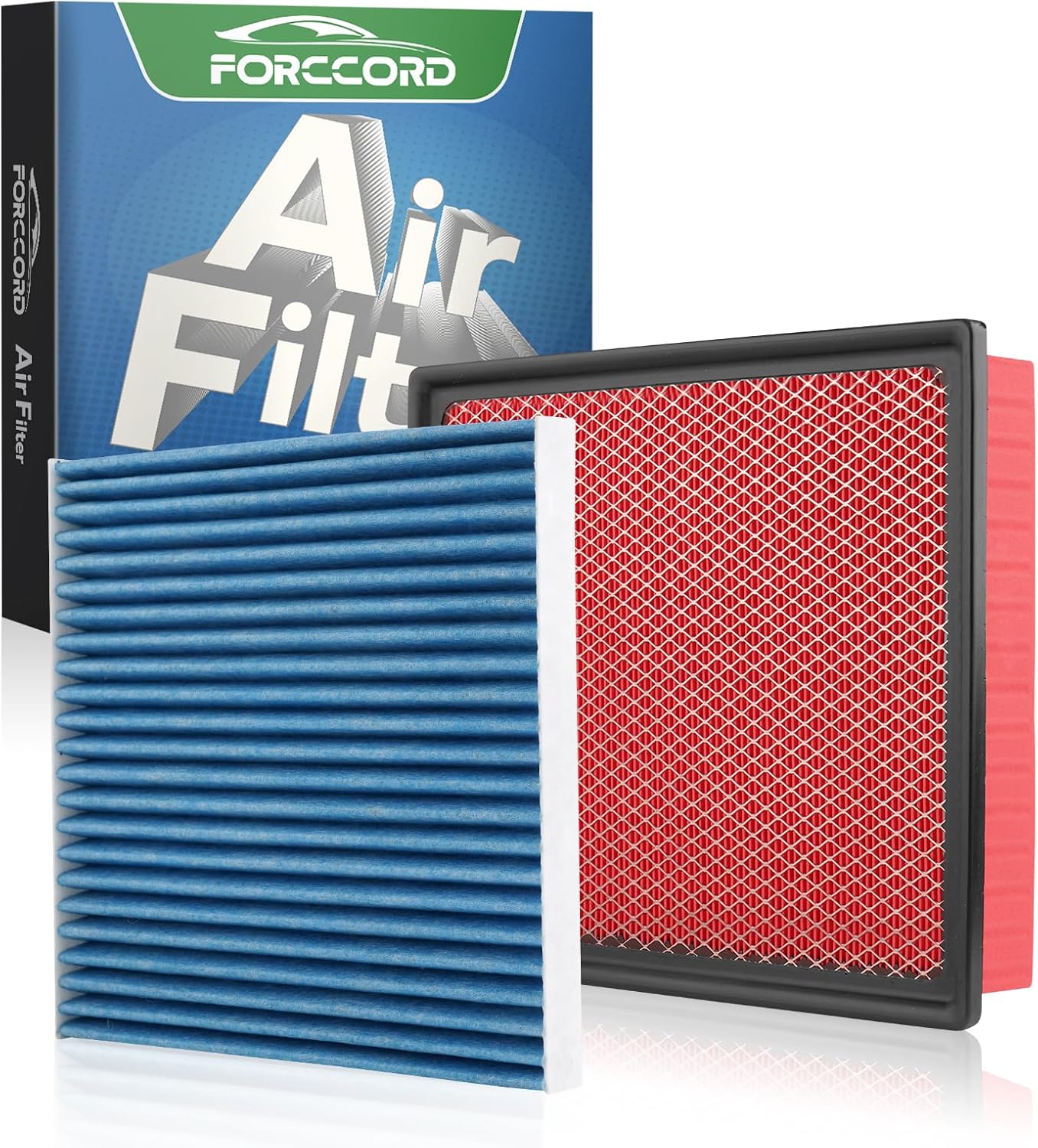
Forccord Cabin and Engine Air Filter Kit for Toyota Tacoma V6 (2016–2023)
| Compatible vehicles | 2016-2023 Toyota Tacoma V6 |
|---|---|
| Included components | 1 cabin air filter and 1 engine air filter |
| Filter media (cabin) | Multi-layer melt-blown with activated carbon |
| Service life (engine) | Up to 20,000 miles (manufacturer claim) |
This Forccord kit supplies both a cabin air filter with activated carbon and an engine air filter sized to fit 2016–2023 Toyota Tacoma V6 models. Installation is straightforward for a DIYer: the cabin filter design and included instructions make swapping the filter in the HVAC housing simple, and the engine filter drops into the airbox without special tools. Notable features include a multilayer cabin filter that uses melt-blown and HEPA-like media plus carbon to help reduce odors and pollen, and an engine filter built from high-velocity filter paper that the maker says captures fine dust and debris. Buyers can expect cleaner cabin air and basic engine intake protection comparable to many aftermarket replacements, plus claimed service lives longer than standard filters. Limitations are typical of budget aftermarket parts: some users report the engine filter feels less rigid than factory pieces and pleat count may be lower, which could affect long-term performance under heavy dust conditions. Overall this kit is a convenient, value-oriented option for routine maintenance when you want a matched pair in one purchase.
Best for: Buyers who want an affordable, easy-to-install replacement pair that keeps cabin air fresher and provides routine engine intake protection for a Tacoma V6 without visiting a dealer.
Less Ideal for: Drivers who frequently operate in extreme dust, off-road, or heavy-duty conditions and need heavy-duty or premium pleated filters designed for extended service intervals.
- Fits Toyota Tacoma V6 2016–2023 with vehicle-specific sizing
- Activated carbon and multilayer cabin media for odor, pollen, and particulate removal
- Includes both cabin and engine filters for one maintenance task
- Designed for easy DIY installation with basic tools or none
- Engine filter feels less rigid than some factory-style filters which may reduce durability in very dusty use
- Manufacturer life claims may vary in real-world conditions depending on environment
Verdict: A convenient two-piece replacement kit that delivers improved cabin filtration and a longer-life engine filter for Tacoma V6 owners wanting an affordable DIY maintenance solution.
K&N Lifetime Washable Cabin Air Filter (VF2005)

| Part Number | VF2005 |
|---|---|
| Material | Polyurethane |
| Included Components | CABIN AIR FILTER |
| Item Package Quantity | 1 |
The K&N VF2005 is a washable replacement cabin air filter built to provide higher airflow than typical disposable paper filters while trapping odors and particulates for the passenger compartment. It drops into the factory filter housing and installs in minutes with no tools. The filter is pretreated, ready to use, and designed to be cleaned with low-pressure water and mild detergent rather than replaced periodically. In practice this can improve heating and cooling responsiveness and reduce musty odors that occur with clogged paper filters. Build quality is robust with reinforced screening and a solid gasket, though a few users report the filter measures slightly smaller than some factory parts and may require careful seating or minor sealing adjustments. The reusable design reduces landfill waste and lowers lifetime ownership cost, but it does require occasional cleaning and inspection to maintain peak performance.
Best for: Buyers focused on maximizing cabin airflow and lowering long-term maintenance cost who are willing to clean and maintain a reusable filter for sustained performance.
Less Ideal for: Drivers who prefer strictly maintenance-free, disposable filters or those unwilling to periodically remove and wash the element.
- Washable and reusable design reduces recurring replacement costs
- Higher airflow improves HVAC responsiveness for stronger cabin ventilation
- Pretreated and ready to install with a solid gasket for an easy swap
- Treated to help control odors that develop from dirty disposable filters
- Some units measure slightly smaller than factory filters and may need minor sealing adjustments
Verdict: Choose the K&N VF2005 if you want a washable cabin filter that boosts airflow and cuts lifetime filter costs while still protecting the cabin from odors and particles.
LOIOLFIL CF10374 Cabin Air Filter with Activated Carbon (1-Pack)

| Compatible Devices | Toyota Tacoma 2005-2021; Pontiac Vibe 2003-2008; Dodge Dart 2013-2016 |
|---|---|
| Material Type | Cotton |
| Air Filter Construction | Pleated |
| Unit Count | 1.0 Count |
The LOIOLFIL CF10374 is a direct-fit replacement cabin air filter built with multiple layers including non-woven PP, static cotton, activated carbon, and a fine filter cloth to trap dust, pollen, odors, and other particulates. It installs in the factory cabin filter slot and is intended for routine maintenance to restore cabin air quality and keep HVAC airflow stable. The activated carbon layer helps reduce exhaust and seasonal odors while the pleated construction increases surface area for particle capture. Buyers can expect an OEM-style fit and simple DIY swap that saves a trip to the dealer. Limitations include the single-pack quantity and that long-term performance depends on replacement frequency; it is not a reusable or washable element. Also, fitment should be double-checked against the vehicle parts list before purchase to ensure the correct part number match.
Best for: Buyers who prioritize keeping in-cabin air fresh and want a cost-effective, factory-style replacement they can install themselves to maintain HVAC performance.
Less Ideal for: People looking for reusable filters or those who prefer to buy multi-pack or OEM-branded filters from a dealership should consider other options.
- Multi-layer construction with activated carbon for odor control and improved filtration.
- Pleated design increases filter surface area for better particle capture.
- Produced to match factory fit for straightforward DIY installation.
- Constructed from cotton and non-woven materials for effective particulate and microparticle filtration.
- Sold as a single filter pack rather than a multi-pack.
- Not reusable or washable, requiring periodic replacement based on driving conditions.
Verdict: A budget-friendly, factory-fit cabin filter with activated carbon that restores air quality and is easy to install for routine maintenance.
Carory Cabin Air Filter with Activated Carbon (CF374)

| Compatible Vehicles | Toyota Tacoma (2005-2023) listed fitment |
|---|---|
| Material Type | Paper with activated carbon |
| Unit Count | 1 |
| Model Number | CF374 |
The Carory CF374 is a paper pleated cabin air filter with an activated carbon layer intended as a direct replacement for the cabin filter in supported Toyota Tacoma years. It installs the same way as a factory filter and is used behind the glove box to trap dust, pollen, and some vehicle exhaust and odor molecules before they enter the cabin. Notable features include the activated carbon media for odor and VOC reduction and pleated construction to present a large filtration area while maintaining airflow. In practice the filter fits correctly for the listed Tacoma years, is easy to swap during routine maintenance, and typically restores fresher-smelling air and normal HVAC performance. Limitations are typical of paper-based aftermarket filters: long-term life and how much VOC removal you see will depend on driving conditions, and a few units have needed exchange when a manufacturing orientation error occurred. For buyers replacing a worn filter on a budget, this provides solid performance and easy, fast installation compared with dealer parts.
Best for: A Tacoma owner who wants an affordable, easy-to-install replacement that improves cabin smell and basic particulate filtration without paying dealer prices.
Less Ideal for: Drivers seeking maximum allergy-grade or long-life filtration or who need certified high-efficiency VOC removal should consider higher-end multi-stage filters instead.
- Activated carbon layer helps reduce odors and some VOCs compared with plain paper filters
- Pleated paper media offers wide filtration area while preserving airflow
- Direct fit for the listed Toyota Tacoma years so installation is quick and tool-light
- Low cost compared with dealer replacement filters
- Paper construction means lifespan and high-efficiency particle capture are limited compared with premium multi-layer or HEPA-style cabin filters
Verdict: An inexpensive, factory-replacement style cabin filter that restores fresh-smelling air and simple particulate protection for Tacoma owners on a budget.
ryvclim Engine and HEPA Cabin Air Filter Combo for Toyota Tacoma 3.5L V6 (2016–2023)

| Vehicle compatibility | Tacoma 3.5L V6 2016–2023 |
|---|---|
| Included components | Engine air filter and cabin air filter |
| Equivalent part numbers | CF10374, CA11895 |
| Filter media | HEPA-style cabin filter with activated carbon |
This combo packs both an engine air filter and a HEPA-style cabin air filter intended to replace factory items for the Tacoma 3.5L V6 from 2016 through 2023. The cabin unit uses multi-layer filtration with an activated carbon layer to reduce dust, fine particles, and odors, while the engine filter includes a pre-filter and reinforced mesh to protect the intake and maintain airflow. Installation is straightforward for a DIYer and the kit even includes a small removal tool to ease access in tight spaces. Multiple customer reports note an exact fit and construction that feels comparable to factory replacements, so you can expect a straightforward swap and normal fitment. Limitations are that this set is vehicle-specific to the 3.5L V6 and will not fit the 2.7L Tacoma, and long-term performance beyond initial miles is based on user experience rather than extended lab data. If you prioritize reliable cabin air cleaning and maintaining proper engine filtration with a ready-to-install kit, this combo covers both needs efficiently.
Best for: Buyers who prioritize dependable, factory-quality replacements and want both cabin and engine filtration refreshed in one, easy-to-install kit for routine maintenance.
Less Ideal for: Drivers looking for filters that fit multiple engine types or those who need specialized high-performance filtration beyond standard replacement specifications should look elsewhere.
- Includes both engine and HEPA-grade cabin filters for simultaneous replacement
- Vehicle-specific fit for Tacoma 3.5L V6 ensures accurate installation and sealing
- Cabin filter has activated carbon and multi-layer media to trap fine particles and reduce odors
- Engine filter features a pre-filter and reinforced mesh to support airflow and durability
- Kit includes a removal tool to simplify filter access and replacement
- Compatible only with Tacoma 3.5L V6 (2016–2023); not for 2.7L models
Verdict: A practical, vehicle-specific combo that refreshes both engine and cabin filtration with HEPA-style cleaning and an easy DIY fit for Tacoma 3.5L V6 owners seeking reliability.
Spearhead Breathe Easy Cabin Air Filter (Activated Carbon) BE-374

| Compatible Devices | Automobile Cabin |
|---|---|
| Product Grade | High |
| Material Type | Electrostatic Media |
| Air Filter Construction | Pleated |
The Spearhead Breathe Easy BE-374 is an activated carbon cabin air filter made to replace the factory unit in compatible Tacomas and similar vehicles. It uses thick pleated electrostatic media combined with coconut-shell activated carbon to trap dust, pollen and road debris while adsorbing odors and fumes before they reach the cabin. Installation is a simple DIY—most users report a plug-and-play fit and no tools required—so it is convenient for routine maintenance at home. Compared with basic particulate filters this model advertises up to 25 percent longer life and heavier media that should maintain airflow while capturing smaller particles. A few buyers noted minor fit variation on uncommon vehicles that required light trimming, so verify fitment for your exact year and trim. For drivers who regularly encounter traffic, diesel exhaust, or city odors, the added carbon layer makes a noticeable difference in in-cabin smell control, but the carbon does add thickness that may be unnecessary if you only need basic pollen removal.
Best for: Buyers who prioritize cleaner-smelling cabin air and reliable, OEM-like performance and who prefer doing simple maintenance themselves to avoid shop labor.
Less Ideal for: Drivers who only need minimal pollen and dust capture or those who prefer HEPA-level filtration for severe allergy sensitivity should consider other specialized filters.
- Activated carbon layer reduces odors, fumes, and smoke entering the cabin.
- Thicker electrostatic pleated media captures fine dust and pollen while preserving airflow.
- Designed for DIY replacement with an easy, tool-free install for most vehicles.
- Advertised longer service life—up to 15,000 miles—compared with standard cabin filters.
- Consistent factory-style fit and construction comparable to dealer filters in reported user experience.
- Some vehicle-specific fitments have required light trimming for a perfect seal.
- Contains activated carbon which may be unnecessary for drivers who only need basic particulate filtration.
Verdict: Choose this Spearhead activated carbon cabin filter if you want a DIY-friendly, factory-fit replacement that noticeably reduces odors and improves in-cabin air quality for Tacoma daily driving.
Bosch HEPA Cabin Air Filter 6033C

| Model | 6033C |
|---|---|
| Filtration efficiency | 99.97% at 0.3 microns |
| Construction | Melt-blown electrostatic + cotton layer |
| Compatible vehicles | Select Toyota Tacoma (check fitment) |
The Bosch HEPA Cabin Air Filter is a high-efficiency cabin filter intended to remove very small particles from the intake air that feeds your truck’s ventilation system. It installs in place of the factory cabin filter and is typically swapped during routine maintenance or before allergy season. The filter uses a melt-blown electrostatic layer plus an extra cotton layer to increase particle capture and capacity, and built-in ribs help the media keep its shape under airflow. Bosch states HEPA-level performance with 99.97% efficiency at 0.3 microns, which makes it effective against smoke, pollen, and fine dust without relying on chemical odor neutralizers. Several Tacoma owners report straightforward installation through the glovebox access and noticeably cleaner air afterward. Because the media is very dense, some users notice a modest reduction in airflow compared with lighter filters, which can slightly affect blower output at low fan settings. For buyers focused on cleaner air and fewer airborne irritants the stronger filtration is a clear benefit; if maximum HVAC airflow or activated charcoal odor control is the top priority, consider those alternatives instead.
Best for: Buyers who prioritize the cleanest possible in-cabin air—especially those with allergies or exposure to smoke and fine dust—and who prefer a reliable, name-brand replacement that installs like a factory filter.
Less Ideal for: Drivers who need maximum HVAC airflow or who prioritize activated-carbon odor removal over particle filtration should consider different filter types that emphasize airflow or odor adsorption.
- True HEPA-level filtration rated to capture 99.97% of 0.3 micron particles
- Dense multi-layer media with melt-blown electrostatic and cotton layers for higher capacity
- Structural ribs to maintain shape and airflow characteristics over the filter’s life
- Widely reported to fit and install easily in compatible Toyota Tacoma glovebox access
- Denser media can reduce cabin airflow slightly, requiring higher fan settings to match prior output
Verdict: Choose this Bosch HEPA cabin filter if you want the highest particle-filtration performance for a Tacoma and are willing to accept a small decrease in airflow for much cleaner cabin air.
Choosing the Right 2016-2023 Toyota Tacoma Cabin Air Filter: Key Factors to Consider
Filtration Efficiency and Media Type
The media type determines what the filter actually captures. For a Tacoma, look for multi-layer media that combine a fine particulate layer with a coarse prefilter. High-efficiency media trap pollen, dust, and small particulates but often increase airflow resistance.
Consider whether you need additional odor-absorbing layers such as activated carbon. Those layers help reduce light exhaust and cabin odors but can slightly reduce airflow compared with plain particulate filters. Understanding the media helps you balance allergy protection, odor control, and HVAC performance.
Fitment and Sealing
Accurate dimensions and a good seal are crucial for the Tacoma's HVAC system. A filter that is slightly undersized or lacks a proper gasket can allow unfiltered air to bypass the media and defeat its purpose.
Check that the filter matches the factory size and edge profile for 2016-2023 Tacoma installations. Filters designed to sit properly in the glovebox or housing are less likely to shift during vehicle vibration. Proper sealing ensures the HVAC blower pulls air through the media rather than around it.
Airflow Resistance and Blower Load
Higher-efficiency filters typically increase airflow resistance, which can reduce vent output and increase blower motor demand. For Tacomas used in stop-and-go driving or in hot climates where A/C runtime is long, excessive resistance can affect cabin comfort.
Choose a filter that balances particle capture with acceptable pressure drop. Manufacturers that publish flow or pressure-drop data make it easier to assess how a given filter will impact HVAC performance. If you frequently use max blower, prioritize lower-resistance designs with adequate filtration.
Service Interval and Durability
How often you need to replace the cabin filter depends on driving conditions. Driving on dusty roads or in heavy pollen seasons shortens service intervals. Durable media and construction hold up longer between changes and reduce waste.
Plan on more frequent replacement if you park outdoors near trees or drive rural roads. Filters with reinforced frames and pleat stabilization resist collapse and maintain consistent filtration through their rated life.
Contaminant Type and Extra Features
Identify what you want the filter to remove. If pollen and large dust are the main issues, a high-efficiency particulate filter may suffice. For odor, smoke, or chemical vapors, look for activated carbon or odor-adsorbing additives.
Some filters emphasize anti-microbial treatments or electrostatic charge to capture finer particles. These features can help in high-allergen environments but may not be necessary for every Tacoma owner. Match features to the contaminants you actually encounter.
Installation Ease and Replacement Access
The Tacoma's cabin filter is typically accessed behind the glovebox or a dedicated housing. Filters that are designed for straightforward alignment and that include clear orientation markings reduce installation time and the chance of incorrect placement.
If you plan to perform regular cabin air filter replacement yourself, favor filters with simple removal and insertion without trimming or modification. Clear instructions or visible arrows on the filter media make DIY changes faster and less error-prone.
Understanding Cabin Air Filter Location on the Tacoma
For 2016-2023 Tacoma models the cabin filter sits in a housing accessible from the passenger-side interior, usually behind the glovebox panel. Knowing the location helps you plan the replacement and carry the correct filter size before starting.
Accessing the filter typically requires opening the glovebox or removing a small access panel. The housing design means you can often change the filter without specialized tools, so routine maintenance can be completed during a short garage visit or at home.
- Locate the housing behind the glovebox or under the dash on the passenger side.
- Some model years may have a retaining clip or screws—keep a small screwdriver handy.
- Note the filter orientation arrow to ensure correct airflow direction on installation.
When to Replace Your Tacoma's Cabin Filter
Replacement intervals depend on conditions. For typical city driving you may change the filter every 12,000 to 15,000 miles, but dusty or pollen-heavy environments often require more frequent service. Inspect the filter visually during routine maintenance and swap if it looks dark or clogged.
Watch for symptoms that indicate reduced performance such as weaker airflow, lingering odors, or increased dust inside the cabin. Proactive replacement preserves HVAC efficiency and helps maintain a comfortable environment for occupants.
- Inspect the filter yearly or at major service intervals.
- Replace sooner after heavy exposure to dust, construction zones, or wildfire smoke.
- Keep a record of installation dates to track service intervals.
DIY Replacement Tips and Common Pitfalls
Changing the cabin filter on the Tacoma is a straightforward task but pay attention to orientation and sealing. Before removing the old filter, note which way the airflow arrow points and how the filter seats in the housing. Clean out loose debris from the housing before inserting the new filter to avoid premature clogging.
Avoid forcing oversized filters into the housing; a tight fit should come from correct dimensions and a proper gasket rather than compressing the media. If the housing has clips or a cover, ensure they are securely reinstalled to prevent noise or movement while driving.
- Use gloves to avoid transferring oils to the new media.
- Brush or vacuum light debris from the filter cavity before installing the new unit.
- Double-check the arrow direction so air flows through the media properly.
Activated Carbon and Odor Control Options
If you routinely encounter exhaust smells, smoke, or strong roadside odors, filters with activated carbon layers offer additional adsorption of gaseous contaminants. Carbon reduces many common odors but adds slight airflow resistance compared with plain particulate filters.
Consider carbon options when odor control is a priority, especially for frequent urban driving or routes with heavy truck traffic. For allergy-only concerns, particulate-focused media may provide high capture rates with lower resistance.
- Carbon layers help with odors but can increase pressure drop.
- Look for clear documentation on the type and amount of carbon used.
- For mild odor issues, lighter carbon treatments can offer balance between smell reduction and airflow.
Sizing and Ensuring Correct Fit for Replacement Filters
Correct sizing is non-negotiable. Confirm the replacement lists 2016-2023 Tacoma compatibility or that the dimensions match the factory filter. Filters that match exact length, width, and depth make installation easier and ensure no gaps form around the edges.
If you are buying by physical dimensions, measure the existing filter and compare pleat depth and frame thickness. Some filters include trim-to-fit designs but for the Tacoma it is better to use a direct-fit option to avoid cutting and potential sealing errors.
- Measure length, width, and pleat depth if compatibility is unclear.
- Prefer direct-fit filters labeled for the 2016-2023 Tacoma range.
- Avoid filters that require modification to fit the housing.
Still looking for the perfect fit?
Select your Toyota Tacoma configuration to see the most relevant Cabin Air Filters recommendations
How We Chose the Best 2016-2023 Toyota Tacoma Cabin Air Filter
We prioritized filters that balance real-world filtration with reliable fitment for the 2016-2023 Toyota Tacoma. Key evaluation criteria included filtration efficiency for common particulates, media construction and layering, and whether the filter addresses pollen and odor control. Fit and installation reliability were essential, with emphasis on filters that align with the Tacoma's factory dimensions and seal interface to prevent bypass. Flow resistance and how the filter affects HVAC airflow were considered to avoid undue strain on the blower motor. Durability and expected service interval were evaluated to reflect maintenance frequency for typical Tacoma use.We excluded products that did not clearly document dimensions or those with inconsistent fit reports for the Tacoma's model years. Filters that relied on unverified or vague claims about filtration without third-party ratings were deprioritized. The final list favors options that offer clear material descriptions, consistent fitment notes for 2016-2023 Tacomas, and practical tradeoffs between filtration and airflow.
Our full evaluation process is outlined in our review methodology.
FAQ
How often should I change the cabin air filter in my 2016-2023 Tacoma?
It depends on driving conditions. For normal city driving, every 12,000 to 15,000 miles is common. If you drive on dusty roads or through heavy pollen seasons, inspect and replace more frequently.
What are common signs my Tacoma's cabin filter needs replacement?
Common symptoms include reduced airflow from vents, persistent odors, increased dust settling inside the cabin, or unusual HVAC noise. These often indicate a clogged or saturated filter.
Can I use a higher-efficiency filter if I have a 2016-2023 Tacoma?
Often you can, but higher-efficiency filters may increase airflow resistance. Balance filtration needs against potential effects on vent output and blower load, especially in hot climates where A/C runtime is significant.
Is an activated carbon cabin filter worth it for the Tacoma?
Activated carbon helps reduce odors, smoke, and some gaseous contaminants. It is worthwhile if you frequently encounter strong roadside odors or live in urban areas with exhaust exposure. Expect a modest increase in airflow resistance compared with plain particulate filters.
Will swapping the cabin filter improve HVAC performance immediately?
If the old filter was clogged, replacing it will typically restore airflow and reduce dust and odors. However, it will not fix unrelated HVAC issues such as blower motor problems or refrigerant faults.
Can I replace the cabin filter myself on the Tacoma?
Yes. The Tacoma's cabin filter is accessible behind the passenger-side glovebox or access panel and can usually be changed with basic tools. Follow the correct orientation and ensure the filter seats properly to avoid bypass.
Final Verdict
Prioritize a cabin air filter that matches the 2016-2023 Tacoma's factory dimensions and delivers the filtration level you need for your driving environment. If allergies or fine particulates are your main concern, choose higher-efficiency media; if odor control is important, seek filters with activated carbon while watching for added airflow resistance.Balance filtration, airflow, and service interval to find the most practical choice for your Tacoma. Regular inspection and timely replacement will maintain HVAC performance and occupant comfort, allowing you to choose confidently based on the tradeoffs outlined above.
Explore More:
- Check out all Toyota Tacoma parts & accessories
- Explore Cabin Air Filters Maintenance & Repair Guides
- Explore HVAC
- Browse all Auto Parts
