

Note: This article contains affiliate links. If you click on these links and make a purchase, I may earn a small commission at no extra cost to you. This helps support my research and content. Read my full affiliate disclosure here.
If you drive a Nissan Sentra, choosing the right brake rotors affects stopping distance, pedal feel, and long-term maintenance. Rotors that manage heat well and resist warping give you steadier braking and fewer service visits. This guide lists the top shortlisted options for the Nissan Sentra, selected for their material quality, heat dissipation, and durability in typical driving conditions. Read on to understand the evaluation criteria and which rotor features matter most for consistent braking performance.
Looking for other parts? See all Nissan Sentra parts & accessories.
Top Picks at a Glance


1. Detroit Axle Front Brake Rotor and Ceramic Pad Kit for 2000–2006 Nissan Sentra (1.8L, rear drums)
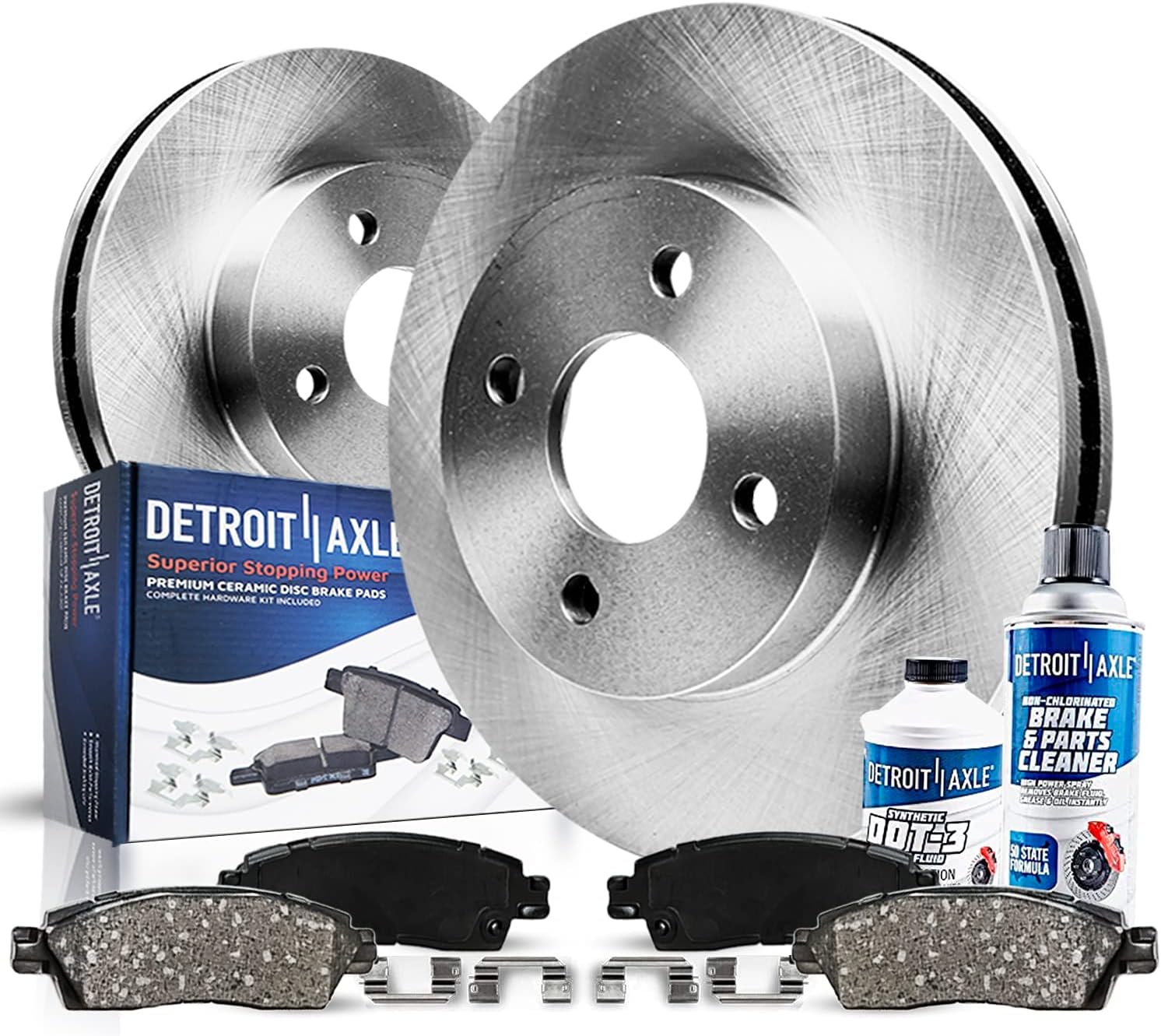
| Fitment | 2000–2006 Nissan Sentra 1.8L w/Rear Drums |
|---|---|
| Kit contents | 2 front rotors, 2 front ceramic pads with hardware, brake cleaner, brake fluid |
| Rotor type | Vented, zinc plated |
| Pad material | 100% ceramic |
This Detroit Axle kit supplies everything needed for a front brake service on a 2000–2006 Nissan Sentra 1.8L with rear drums: two vented rotors, a set of ceramic pads with hardware, a can of brake cleaner and a bottle of brake fluid. The rotors are zinc plated and vented to help with corrosion resistance and heat dissipation while the pads are ceramic, which typically reduces noise and brake dust compared with semi-metallic pads. The kit is designed to match factory locating holes for direct fitment, so installation is straightforward for a home mechanic or an independent shop. Included consumables make it convenient to complete the job without extra trips. Limitations to note are that ceramic pads prioritize low noise and cleanliness over extreme stopping performance, and some buyers prefer to replace supplied brake fluid with a fresh bottle from a trusted brand. For reliability-focused owners wanting an affordable, complete front brake replacement that fits without modification, this kit covers the essentials with few surprises.
Best for: Buyers who prioritize dependable, no-fuss maintenance and want a single, affordable kit that restores front braking on a Sentra with minimal effort and reliable fitment.
Less Ideal for: Drivers who demand high-performance stopping under extreme conditions or professional track use should choose performance-oriented rotors and pads instead.
- Complete kit includes rotors, ceramic pads, installation hardware, brake cleaner and brake fluid for a single front axle service.
- Vented, zinc-plated rotors resist corrosion and aid cooling for consistent performance in everyday driving.
- Ceramic pads are quiet and produce less brake dust compared with many semi-metallic alternatives.
- Machined locating holes and included hardware simplify installation and reduce fitment errors.
- Brake fluid included may not meet some users' quality expectations so many will replace it before use.
- Ceramic pads are not optimized for heavy performance driving or frequent high-heat conditions.
Verdict A practical, reliability-minded complete front brake kit for 2000–2006 Nissan Sentra owners who want an easy, factory-fit replacement at an affordable value.
2. Max Advanced Brakes Rear Brake Kit for Nissan Sentra (11.5" Rear Rotors)

| Vehicle Fit | Nissan Sentra (11.50" rear rotor) – compatible years listed |
|---|---|
| Rotor Material | Cast iron (G3000/G11H18) |
| Pad Type | Carbon-infused ceramic |
| Position | Rear |
| Set Includes | 2 rotors, 4 pads, installation hardware |
This Max Advanced Brakes rear kit replaces the rear rotors and pads on Nissan Sentra models that use 11.50" diameter rear rotors. It includes two precision-machined cast-iron rotors, four carbon-infused ceramic pads and installation hardware for a direct bolt-on swap. In everyday use the non-directional machined finish and double-disc grinding help bedding-in and reduce pedal vibration, while the ceramic pads are tuned to cut brake dust and low-speed noise—useful for commuters and city driving where clean wheels and quiet stops matter. The kit is marketed as vehicle-specific fitment for Sentra models listed, so installation is typically straightforward with no modification. Limitations to consider are that this is a value-oriented replacement rather than an aggressive performance upgrade, so it will not improve high-heat fade resistance for spirited driving, and correct fitment depends on selecting the Sentra application that matches the 11.50" rotor size.
Best for: Buyers who value convenience and a straightforward replacement solution for routine Nissan Sentra braking maintenance and want quieter, cleaner brakes with minimal fuss.
Less Ideal for: Drivers seeking track-capable braking, heavy towing capability, or upgraded high-temperature performance should consider performance-oriented rotor and pad options instead.
- Complete kit with rotors, ceramic pads, and necessary installation hardware for a direct replacement.
- Machined, double-disc ground rotors provide smoother pad bedding and reduced vibration during normal driving.
- Carbon-infused ceramic pads produce noticeably less brake dust and lower low-speed noise compared with standard metallic pads.
- Designed for everyday driving performance rather than high-temperature or track use.
- Fitment requires confirming the Sentra uses 11.50" rear rotors to avoid ordering the wrong variant.
Verdict A convenient, vehicle-specific rear brake kit for Nissan Sentra owners who want quiet, low-dust everyday braking without upgrading to track-level hardware.
3. Max Advanced Brakes Carbon Ceramic Brake and Rotor Kit for 2013–2019 Nissan Sentra (1.8L)

| Vehicle compatibility | 2013–2019 Nissan Sentra (1.8 L4 Engine) |
|---|---|
| Pad type | Carbon-infused ceramic |
| Rotor material | Cast iron, precision-machined |
| Set contents | 2 front rotors, 2 rear rotors, 8 pads, hardware |
| Fit type | Vehicle specific fit |
This Max Advanced Brakes kit supplies everything needed to refresh the front and rear braking system on 2013–2019 Nissan Sentra models with the 1.8 L4 engine. The set includes two front and two rear precision-machined cast iron rotors plus eight carbon-infused ceramic pads and installation hardware for direct bolt-on replacement. In practice the double-disc ground, non-directional rotor finish and machined surface help quicker pad bedding and reduce pedal vibration, while the carbon-ceramic pads are formulated to cut brake dust and low-speed noise for cleaner wheels and quieter city driving. The kit is aimed at commuters and Sentra owners who want upgraded stopping feel without changing brake hardware or sacrificing everyday comfort. It is not a track-focused performance upgrade, so drivers seeking aggressive fade resistance under repeated high-load stops should consider a dedicated sport rotor and pad package instead. Fitment is vehicle-specific and the included hardware makes installation straightforward for a competent DIYer or a busy shop technician.
Best for: Performance-oriented Sentra owners who prioritize improved daily braking feel, lower dust, and quieter stops while keeping factory-style fitment and easy installation.
Less Ideal for: Drivers who regularly perform high-speed or track braking and need heavy-duty fade resistance should choose a dedicated performance rotor and pad package instead.
- Complete kit includes front and rear rotors, pads, and installation hardware for a single purchase and install.
- Precision-machined, double-disc ground rotors reduce vibration and aid smoother pad bedding.
- Carbon-infused ceramic pads cut brake dust by the advertised amount and reduce low-speed noise.
- Direct vehicle-specific fit for 2013–2019 Nissan Sentra 1.8L avoids modifications and simplifies installation.
- Designed for everyday commuting rather than aggressive or track use, so heat fade resistance will be limited under extreme conditions.
- Some reports in broader listings note occasional fitment hiccups on non-listed vehicles, so verify exact Sentra submodel and year before ordering.
Verdict A convenient, vehicle-specific upgrade for Sentra drivers who want quieter, lower-dust everyday braking with an OEM-style fit, but not a track-grade solution.
4. A-Premium 11.48" Rear Solid Disc Brake Rotors, 2‑Piece Set

| Material | Cast Iron |
|---|---|
| Exterior Finish | Smooth |
| Automotive Fit Type | Vehicle Specific Fit |
| Mounting Bolt Hole Quantity | 5 |
These rear solid disc rotors are a budget-friendly, vehicle-specific replacement intended for passenger cars including many Nissan Sentra model years. Made from cast iron with a smooth exterior finish and a corrosion-resistant metallic coating, the rotors are supplied as a left and right 2-piece set and claim industry low runout and DTV for smoother operation. In practice that means they will restore braking surface condition, reduce vibration and excessive pad wear compared with worn originals, and help cut rust-related noise over time. Installation is standard for rear rotors but buyers should confirm fitment for their exact Sentra trim because diameter and parking-brake engagement can vary between variants. The manufacturer offers a one-year unlimited-mileage guarantee, which provides extra reassurance for a budget option. Expect a no-frills, functional replacement rather than a performance upgrade, and have a technician check parking-brake operation after installation if your Sentra uses internal rear shoes.
Best for: Budget-conscious owners who prioritize a low-cost, functional factory-quality rear rotor replacement for routine maintenance on a Nissan Sentra.
Less Ideal for: Drivers looking for upgraded cooling or high-performance braking, or those unwilling to verify exact trim fitment before purchase should consider other options.
- Vehicle-specific fit for many Nissan applications including Sentra models
- Cast iron construction with metallic coating to resist rust
- Sold as a matched left and right 2-piece set for rear axle replacement
- Manufacturer states low runout and DTV tolerance for smoother, quieter braking
- Not a performance rotor—no cross‑drilling or slotting for aggressive cooling
- Fitment nuances reported for some years and trims which can affect parking-brake engagement
Verdict A practical, low-cost rear rotor pair that restores braking performance for many Nissan Sentra models but is a basic replacement rather than a performance upgrade.
5. R1 Concepts eLine Front Brake Kit for 2013–2019 Nissan Sentra

| Vehicle fit | 2013–2019 Nissan Sentra |
|---|---|
| Kit contents | Front blank rotors and semi-metallic brake pads |
| Rotor material | G3000 iron grade |
| Fitment type | Vehicle Specific Fit |
This R1 Concepts eLine front brake kit replaces the Sentra's front rotors and pads with mill-balanced blank rotors and semi-metallic pads meant for daily driving. It is a vehicle-specific fit for 2013–2019 Sentra sedans and installs without modification, so a standard brake job or professional shop can swap it in quickly. The rotors are made from a G3000 iron grade and are balanced at the factory to reduce vibration, while the semi-metallic pads aim to cut dust and noise compared with cheaper formulations. For risk-averse buyers the kit delivers a predictable, OEM-style feel and clear stopping power for city and highway use. Limitations are that these are blank rotors rather than slotted or drilled performance rotors, so they do not offer extra cooling for heavy track use, and semi-metallic pads will wear faster than premium ceramic options. There is a manufacturer coverage period for defects but long-term longevity depends on driving style and maintenance.
Best for: A risk-averse mainstream buyer who prioritizes a reliable, factory-quality replacement and straightforward installation for routine city and highway driving.
Less Ideal for: Drivers who routinely tow, track, or demand enhanced cooling and fade resistance should choose a performance-oriented rotor and pad package instead.
- Vehicle-specific fit for 2013–2019 Nissan Sentra makes installation straightforward
- Mill-balanced blank rotors reduce vibration for smoother stopping
- Semi-metallic pads formulated to produce less dust and lower noise
- Includes both rotors and pads for a complete front brake service
- Blank rotors lack the extra cooling or water dispersion of drilled or slotted rotors
- Semi-metallic pads may wear faster and produce more brake dust than higher-end pad compounds
Verdict A practical, factory-style front brake kit for Nissan Sentra owners who want a reliable, low-noise replacement without performance rotor features.
6. PowerStop Rear Brake Kit (Autospecialty) — Rotors & Z17 Ceramic Pads, Rear

| Vehicle Service Type | Car |
|---|---|
| Automotive Fit Type | Vehicle Specific Fit |
| Position | Rear |
| Exterior | Milled |
This PowerStop Autospecialty rear brake kit is a bolt-on replacement that combines two stock-style rear rotors with Z17 ceramic brake pads and stainless steel hardware for a straightforward install. It is intended for everyday driving and restores factory-like stopping feel while reducing dust and noise thanks to the low-dust ceramic compound and chamfered, slotted pad design. The rotors are precision milled to help ensure smooth braking and reduce vibration, and the included hardware and lubricant simplify a DIY swap without the need for extra parts. Practical drivers will appreciate the focus on durability and quiet operation rather than track performance. Limitations: this kit is aimed at OEM-style replacement so it will not improve fade resistance under aggressive driving or towing, and some users reported minor missing wear indicators which requires checking during installation. For routine Sentra brake service the kit offers a balanced, cost-conscious replacement that mimics factory performance.
Best for: A practical optimizer seeking a cost-effective, factory-style rear brake refresh for routine ownership and DIY replacement on their Nissan Sentra.
Less Ideal for: Drivers who want upgraded performance brakes for track days, heavy towing, or sustained high-temperature braking should choose a performance-oriented kit instead.
- Complete kit with rotors, Z17 ceramic pads, stainless steel hardware and lubricant for one-stop installation.
- Z17 ceramic formula is low-dust and designed for quiet, everyday braking.
- Precision-milled rotors help reduce vibration and restore smooth stopping feel.
- Vehicle-specific fit means straightforward bolt-on replacement for compatible models.
- Designed as an OEM-style replacement so it does not offer enhanced fade resistance for heavy performance use.
- One or two customer reports note missing wear indicator tabs which may require manual monitoring.
Verdict A budget-conscious, complete rear brake replacement that restores factory-style braking and simplifies DIY installation for the Nissan Sentra.
7. Detroit Axle Brake Kit — Front & Rear Rotors with Ceramic Pads for 2011–2017 Nissan Juke / 2017 Sentra (SR Turbo, Nismo)
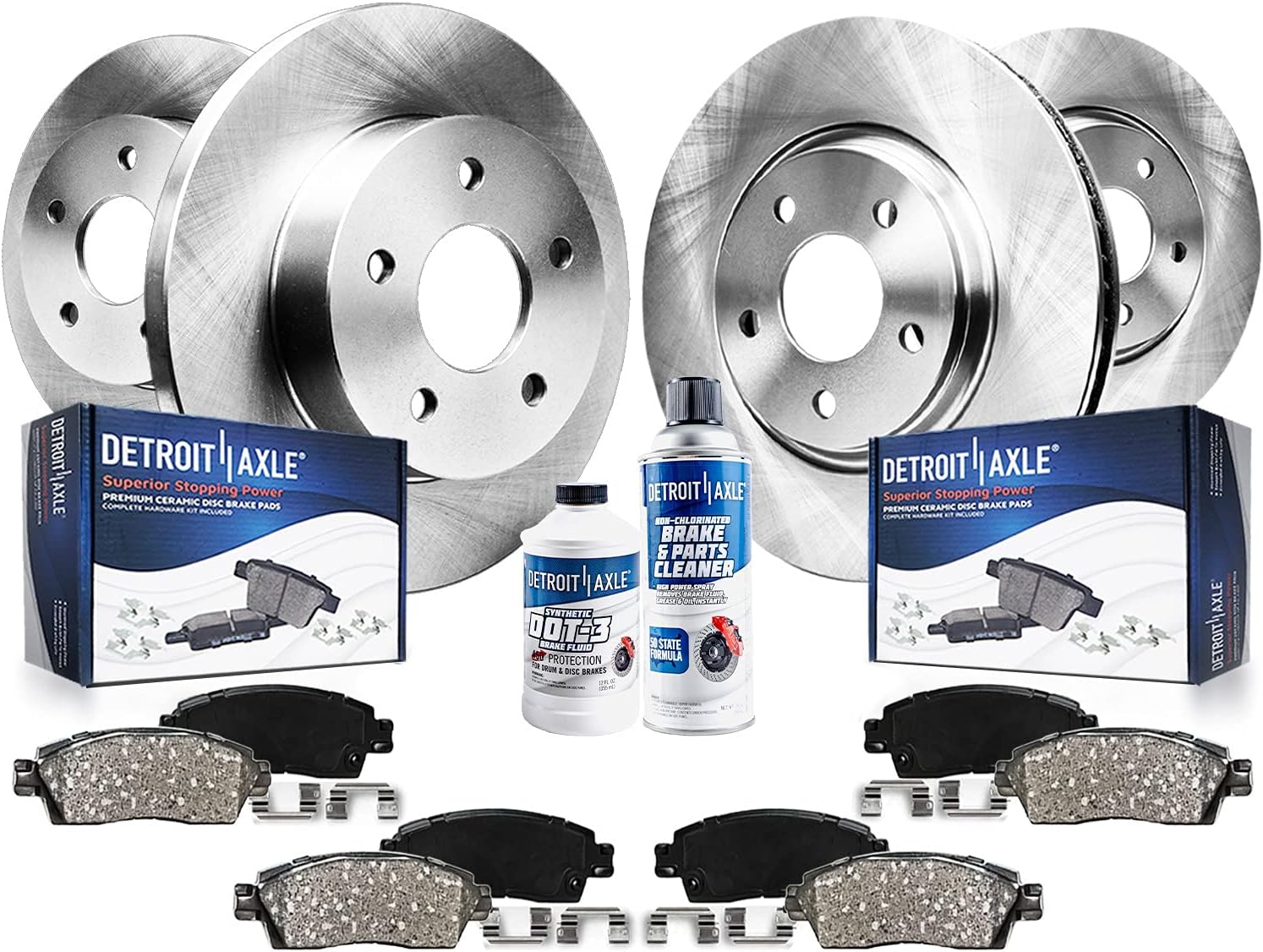
| Fitment | 2011–2017 Nissan Juke; 2017 Nissan Sentra SR Turbo and Nismo |
|---|---|
| Includes | 2 front rotors, 2 rear rotors, front and rear ceramic pads with hardware, brake fluid, brake cleaner |
| Pad type | 100% ceramic |
| Rotor finish | Zinc plated |
| Rotor design | Vented with ventilation slots |
This Detroit Axle kit supplies everything needed to refresh both front and rear braking surfaces on compatible Nissan Juke and the 2017 Sentra SR Turbo and Nismo models. The package includes two front and two rear rotors (vented/slotted), front and rear ceramic pads with hardware, a bottle of brake fluid and brake cleaner so you can finish a full axle-to-axle job without buying many small extras. The rotors are zinc plated to resist corrosion and are machined with locating holes to match factory fitment, which helps straightforward installation and consistent rotor alignment. Ceramic pads mean quieter operation and low dust compared with semi-metallic compounds, and the included cleaner and fluid make bleeding and prep easier. Limits to consider are that the kit does not include rotor mounting screws if your hub uses them and the small packets of anti-seize are minimal, so bring your own fasteners and consumables for a complete install. This is a practical, value-focused kit for someone doing a full brake replacement at home or in a shop.
Best for: Balanced buyers who want a single, practical kit to replace all rotors and pads themselves or to simplify a shop job, prioritizing convenience and reliable, everyday braking performance.
Less Ideal for: Drivers seeking high-performance or track-focused braking upgrades should look for performance rotors and high-friction pad compounds instead, and those wanting a premium accessory bundle may prefer kits that include more installation consumables.
- Complete set covers both front and rear rotors and pads so you can replace all four corners in one purchase
- Zinc-plated rotors and machined locating holes for factory-style fit and corrosion resistance
- Includes ceramic pads for lower noise and reduced brake dust compared with metallic pads
- Supplies brake cleaner and brake fluid so you can prepare surfaces and top off/bleed the system during installation
- Does not include rotor mounting screws for vehicles that use them, so you may need to source hardware separately
- Anti-seize is supplied in very small packets that may not be sufficient for a full job
Verdict A practical, all-in-one factory-style brake kit that delivers quiet, low-dust stopping and clean fitment—good for routine replacement but not aimed at track performance.
Choosing the Right Nissan Sentra Brake Rotors: Key Factors to Consider
Material and Casting Quality
The rotor material and how it is cast determine strength, heat capacity, and susceptibility to cracking. Higher-grade cast iron with uniform grain structure resists cracking and chipping under repeated thermal stress. Some rotors use proprietary alloys or heat treatments to improve wear resistance and thermal conductivity.
Poor casting can lead to internal stresses and uneven cooling that cause warping or premature failure. Look for rotors with documented material specs and manufacturing tolerances because those details usually translate to more consistent performance and longevity.
Heat Dissipation and Venting
How a rotor manages heat directly affects braking consistency and the risk of thermal warping. Vented rotors move air through the center to cool the braking surface faster during repeated stops, which helps maintain pedal feel and reduce fade on long descents.
Designs that improve airflow between the two friction faces reduce peak temperatures and help the rotor retain flatness. Consider your typical driving: frequent hard stops or towing increases the importance of effective heat dissipation.
Surface Treatment and Corrosion Resistance
Surface coatings and treatments protect rotors from rust, especially in wet or salted-road environments. Corrosion can lead to pitting and uneven wear that degrades pad contact and braking smoothness. Protective finishes include zinc plating, phosphate treatments, or proprietary coatings that slow surface oxidation.
While coatings do not change the rotor's friction characteristics, they can extend the time before rust affects braking performance or complicates pad bedding. If you live where salt or moisture is common, corrosion resistance becomes a higher priority.
Rotor Thickness and Minimum Specification
Rotor thickness affects heat capacity and structural rigidity. Thicker rotors generally absorb and disperse more heat and resist bending under load, while thinner rotors can overheat sooner and reach minimum thickness faster. Manufacturers specify a minimum usable thickness; installing rotors below that limit reduces safety and increases the chance of damage.
When choosing a rotor, confirm the nominal thickness and the minimum spec, and plan maintenance intervals around measurable wear so rotors are replaced before they drop below safe limits.
Design Features: Slotted, Drilled, and Plain Faces
Face design affects pad contact, gas and dust evacuation, and heat dispersion. Slotted rotors help clear gas and debris from the pad interface for more consistent bite, while drilled rotors offer additional venting and faster initial heat release. Plain, smooth rotors provide even contact and are often quieter under normal driving.
Each design has tradeoffs: slots and holes can aid performance under stress but may concentrate stresses that can accelerate cracking in extreme use. Match the face design to your driving demands rather than choosing based on appearance alone.
Fitment and Installation Tolerances
Accurate fitment and low runout are essential for smooth operation and to avoid vibration or uneven pad wear. Rotors should match the Sentra's hub diameter, bolt pattern, and any hub-centric features to ensure proper alignment. Tolerances for thickness variation and lateral runout influence how smoothly the rotor spins under load.
Installation factors such as whether the rotor is hub-centric or requires shimming, and the ease of seating the rotor without special tools, can reduce labor time and the chance of installation-related noise or vibration.
FAQ
How do I know when Nissan Sentra brake rotors need replacement?
Rotors often show symptoms like a pulsating brake pedal, visible scoring or grooves, and braking noise that changes with pressure. You can also measure rotor thickness and compare it to the vehicle's minimum specification. If thickness is at or below the minimum, or if warping or deep damage is present, replacement is usually recommended.
Can I resurface rotors instead of replacing them?
Resurfacing can be an option if the rotor remains above the minimum thickness and the damage is limited to surface irregularities. However, repeated resurfacing removes material and reduces heat capacity, so it is not always the best long-term solution. The decision often depends on remaining thickness and the extent of surface or structural damage.
Are slotted or drilled rotors better for a daily-driven Sentra?
For most daily driving, plain or lightly slotted rotors provide smooth, quiet braking and long wear life. Slotted rotors can improve pad scrapage and wet-weather response, while drilled rotors offer extra venting but may be more prone to stress in heavy-duty use. Choose based on driving style and typical operating conditions rather than aesthetics.
How do I measure rotor thickness correctly?
Use a caliper to measure the rotor at multiple points near the braking surface, avoiding the hat and vent areas. Record the smallest measurement and compare it to the vehicle's minimum thickness specification. Take several readings around the rotor to detect uneven wear or taper.
Will changing rotors affect brake pedal feel?
Yes. New or higher-mass rotors typically improve pedal firmness and reduce fade by increasing heat capacity and reducing distortion. Changes in surface finish and design can also affect initial bite and modulation. Expect a short bedding-in period between new rotors and pads before pedal feel stabilizes.
Do I need to replace pads when I install new rotors?
It is often advisable to install new pads with new rotors to ensure even contact and proper bedding. Used pads can have uneven wear patterns that prevent full contact with a fresh surface, potentially causing noise or premature wear. Matching pad condition to rotor condition helps achieve consistent braking performance.
How We Chose the Best Nissan Sentra Brake Rotors
We focused on factors that matter for Nissan Sentra owners who need reliable stopping power and long service life. Our selection criteria emphasized rotor material and casting quality, heat-management features such as venting or slot/drill patterns, thickness and minimum-spec durability, and compatibility with common Sentra brake hardware. We also considered ease of installation, rotor runout and balance tolerances, and resistance to corrosion for vehicles driven in varied climates. Items were excluded if fitment could not be confirmed for the Nissan Sentra or if technical specifications did not include rotor thickness, minimum spec, or material grade. The final shortlist prioritizes rotors that provide predictable performance, reasonable longevity, and clear technical documentation for proper installation and maintenance.
Our full evaluation process is outlined in our review methodology.
Conclusion
When selecting Nissan Sentra brake rotors, prioritize material quality, heat-management features, and thickness specs that match your driving demands. Factor in corrosion protection and the rotor face design that best suits your driving style.Balance the tradeoffs between performance-oriented features and long-term durability. Confirm fitment and minimum thickness before installation, and plan maintenance around measurable wear to keep braking predictable and safe.
Explore More:
- Check out all Nissan Sentra parts & accessories
- Explore Brake Rotors Maintenance & Repair Guides
- Explore Brake System
- Browse all Auto Parts
