

Note: This article contains affiliate links. If you click on these links and make a purchase, I may earn a small commission at no extra cost to you. This helps support my research and content. Read my full affiliate disclosure here.
Choosing the right brake pads for your Volkswagen Passat affects safety, pedal feel, and long-term maintenance costs. You want pads that deliver consistent stopping power, predictable wear, and acceptable noise levels across city and highway driving.This guide looks at seven shortlisted options that represent balanced choices for common Passat use cases. We evaluated each option on braking performance and pad longevity, plus secondary factors like noise, dust, and fitment. Read on to find pads that fit your driving needs and installation preferences.
Looking for other parts? See all Volkswagen Passat parts & accessories.
Top Picks at a Glance
| Best Overall The best all-around choice for most situations | Bosch QuietCast BC1107 Premium Ceramic Front Brake Pad Set |  |
| Best Quality Built to a higher standard if you want something more solid | TRQ Rear Ceramic Brake Pad and Rotor Kit (Rear) |  |
| Best Value The sweet spot between price and what you get | Bendix Priority1 CFM1375 Semi-Metallic Front Brake Pads |  |
| Best Budget The cheapest option that still gets the job done reliably | SCITOO Ceramic Front Brake Pads (4-pack) |  |
| Highest Rated A top-rated pick with lots of positive feedback | Detroit Axle Rear Ceramic Brake Pads with Hardware Kit |  |
| Most Popular A crowd favorite that many people choose with confidence | Max Advanced Brakes SelectMAX Front Carbon Ceramic Brake Pads (Front) |  |
| Best Seller A high-volume bestseller chosen again and again | Bendix Priority1 CFM1017 Rear Semi‑Metallic Brake Pads with Hardware |  |
Bosch QuietCast BC1107 Premium Ceramic Front Brake Pad Set

| Material Type | Ceramic |
|---|---|
| Auto Part Position | Front |
| Specification Met | OEM |
| Brand Name | Bosch |
The Bosch QuietCast BC1107 is a front axle ceramic brake pad set engineered to replace factory-style pads on compatible Volkswagen models. It is typically used as a direct-fit replacement during routine front brake maintenance and includes pads for one axle plus a small hardware kit and lubricant packet. Notable features include Bosch Molded Shim Technology with pre-attached multilayer rubber-core shims to reduce noise and improve corrosion resistance, powder-coated backing plates to limit rust, and engineered ceramic friction material aimed at quiet operation with reduced dust. In real-world driving this combination delivers confident stopping performance with less squeal and cleaner wheels compared with many semi-metallic pads. The pads come ready to install but warranty terms restrict coverage for misuse, racing, or commercial applications. Expect a familiar, OEM-like pedal feel and straightforward installation for routine DIY or shop replacement, though longevity will depend on driving style and rotor condition, and heavier-duty drivers may prefer performance-oriented compounds instead.
Best for: Balanced owners seeking a reliable, factory-quality front pad replacement for normal daily driving who prioritize quiet operation, lower dust, and an OEM-like feel.
Less Ideal for: Drivers who demand aggressive high-temperature stopping, motorsport use, or heavy towing should choose a performance or track-focused brake compound instead.
- Ceramic friction material formulated for quiet braking and low dust
- Pre-attached multilayer rubber-core shims reduce noise and improve corrosion resistance
- Powder-coated backing plates help resist rust for longer service life
- Direct-fit front axle replacement that includes hardware and lubricant for installation
- Not optimized for racing or heavy commercial use where high-temperature performance is required
- Included lubricant and small hardware pack may be minimal compared with full aftermarket kits
Verdict: A quiet, low-dust, factory-quality ceramic front pad set that suits everyday Volkswagen driving but is not intended for heavy-duty or track use.
TRQ Rear Ceramic Brake Pad and Rotor Kit (Rear)

| Friction Material Composition | Ceramic |
|---|---|
| Orientation | Rear |
| Automotive Fit Type | Vehicle Specific Fit |
| Wheel Lug Count | 5 Lug |
This TRQ kit pairs ceramic rear brake pads with two matching rear rotors to provide a complete replacement for the Volkswagen rear braking system. It is typically used when rear pads and rotors are due for service or when upgrading to a quieter, lower-dust friction material. Notable features include ceramic friction material, solid (non-vented) rear rotors sized to the factory 272mm specification, and a vehicle-specific fitment intended to drop into the factory mounting points without modification. In practice the ceramic pads reduce brake dust and tend to run quieter than semi-metallic compounds while the matched rotors simplify installation for a single-service job. Limitations are typical of ceramic setups: they can feel less aggressive under hard, repeated braking compared with performance-oriented metallic pads and solid rotors dissipate heat less effectively than vented designs during heavy use. The kit is a practical choice when you want a clean, quiet, direct-fit rear brake refresh for the Volkswagen rear axle rather than a track-focused upgrade.
Best for: Performance-oriented buyers who prioritize cleaner, quieter street performance and a direct-fit factory-quality replacement for their Volkswagen rear brakes.
Less Ideal for: Drivers who regularly subject their Passat to track use or repeated heavy braking sessions should consider vented rotors and more aggressive pad compounds instead.
- Complete rear kit including pads and two rotors for a single replacement job
- Ceramic friction material reduces dust and typically lowers in-cabin and rotor noise
- Vehicle-specific fit designed to install without modifications
- Includes components matched to the rotor diameter used by the vehicle for simplified purchase decision
- Rotors are solid rather than vented which can limit heat dissipation under heavy, repeated braking
- Ceramic pads can deliver less initial bite and fade resistance compared with aggressive metallic compounds
Verdict: A ready-to-install, vehicle-specific rear pad and rotor kit that favors quiet, low-dust street performance over track-focused stopping power.
Bendix Priority1 CFM1375 Semi-Metallic Front Brake Pads

| Auto Part Position | Front |
|---|---|
| Compatible with Vehicle Type | CAR, SUV, Truck |
| Material Type | Semi-Metallic |
| Included Components | Brake pad set with installation hardware |
These Bendix Priority1 CFM1375 semi-metallic front pads are built as a direct, vehicle-specific replacement for compatible Volkswagen Passat models and include installation hardware. Designed to meet factory fit, form, and function, the pads use shims, slots, and chamfers to reduce noise and ensure a precise fit in the caliper. Semi-metallic material delivers strong initial bite and high temperature resistance, which helps during frequent highway driving or when carrying heavier loads. Buyers will notice straightforward DIY installation and lower brake dust compared with many older semi-metallic designs, plus the included hardware removes the need to source extra clips. Limitations are typical of semi-metallic compounds: they can be slightly firmer at very low temperatures and may produce more dust than ceramic options. For a practical optimizer focused on cost versus long-term performance, these pads strike a balance between reliable stopping power and value for the Volkswagen Passat application.
Best for: A practical optimizer who prioritizes dependable braking performance and long-term value over premium ceramic quietness, and wants a straightforward, no-fuss replacement for a Volkswagen Passat.
Less Ideal for: Drivers who prioritize the lowest possible brake dust and the quietest, softest pedal feel should consider ceramic options instead.
- Factory-quality vehicle-specific fit for compatible Passat models
- Semi-metallic compound gives strong stopping power and heat resistance
- Comes with installation hardware and shims for quieter operation
- Designed with slots and chamfers to reduce noise and improve bedding-in
- Semi-metallic pads typically produce more brake dust than ceramic alternatives
- May feel firmer than ceramic at very low temperatures
Verdict: Strong, vehicle-specific semi-metallic pads that deliver reliable stopping power and good value for Volkswagen Passat owners seeking a practical upgrade.
SCITOO Ceramic Front Brake Pads (4-pack)

| Auto Part Position | Front |
|---|---|
| Material Type | Ceramic |
| Number of Items | 1 |
| Unit Count | 4.0 Count |
These SCITOO ceramic front brake pads are a budget-oriented, vehicle-specific replacement intended to restore stopping performance on compatible Volkswagen Passat front brakes. They install like a direct factory-quality replacement and include the four pads needed for one axle. The pads use a ceramic friction material and SCITOO says they undergo a scorch friction process to reduce break-in time and help stabilize wear. In practical use the pads deliver predictable, quiet stopping for everyday driving and many customers report low dust and minimal noise. They are best for routine street use rather than heavy track or towing duties. Limitations include fewer performance features compared with premium brands such as carbon-ceramic blends or high-temperature formulations, and longevity will vary with driving style. Fitment is vehicle-specific so confirm your Passat rotor size before buying. For budget-conscious owners who need a safe, quiet replacement set for daily driving, these pads are a sensible option.
Best for: Budget-conscious Passat owners who prioritize a quiet, low-dust factory-style replacement for everyday commuting and routine driving.
Less Ideal for: Drivers who do frequent high-performance driving, heavy towing, or demand race-grade stopping power should choose a performance-oriented pad instead.
- Vehicle-specific replacement set for the front axle, simplifying installation
- Ceramic compound formulated for low dust and quiet operation
- Scorch friction treatment to reduce break-in time and promote consistent wear
- Includes four pads so one purchase covers a single axle replacement
- Not engineered for high-temperature track use or heavy towing compared with premium performance pads
- Limited manufacturer information about exact friction coefficient or longevity
Verdict: A cost-effective, quiet ceramic front pad set for Passat owners seeking an affordable, factory-style replacement for everyday driving.
Detroit Axle Rear Ceramic Brake Pads with Hardware Kit

| Brand Name | Detroit Axle |
|---|---|
| Auto Part Position | Rear |
| Compatible with Vehicle Type | Car |
| Material Type | Ceramic |
These Detroit Axle rear ceramic pads are a vehicle-specific replacement set intended to match factory fitment and deliver quieter, low-dust braking compared with semi-metallic pads. The kit includes two rear ceramic pads plus hardware, and the manufacturer states the pads meet OEM-level specifications and undergo impact, wear, and fatigue testing. In real-world use you can expect reduced brake dust and a smoother, quieter stop in everyday driving; multiple user reports mention good fit and immediate noise reduction after installation. Because they are 100% ceramic, they perform well for daily commuting and light-duty driving but may show faster wear or reduced performance under heavy towing or aggressive spirited driving compared with high-performance semi-metallic compounds. A few buyers noted occasional fitment issues with the supplied hardware, so check the clips during installation and keep replacements handy if needed. The pads are a practical, reliability-focused option for routine brake service on compatible vehicles when quiet operation and cleanliness are priorities.
Best for: Reliability-focused buyers who prioritize quiet, low-dust braking for everyday driving and want a factory-quality replacement that restores dependable stopping performance.
Less Ideal for: Drivers who frequently tow, carry heavy loads, or demand track-capable stopping power should choose a heavy-duty or performance-oriented pad instead.
- 100% ceramic compound reduces brake dust and favors quieter operation
- Vehicle-specific fit designed to match factory-style installation for rear brakes
- Includes installation hardware so you get pads and clips in one kit
- Manufacturer testing for impact, wear, and fatigue aims to support durability
- Ceramic formulation can underperform compared with semi-metallic pads during heavy loads or spirited driving
- Some customers reported mismatched or incorrectly sized hardware in the kit
Verdict: A practical, quiet ceramic rear pad kit that restores reliable, low-dust braking for routine Passat use but is not aimed at heavy-duty or performance braking.
Max Advanced Brakes SelectMAX Front Carbon Ceramic Brake Pads (Front)

| Brand Name | Max Advanced Brakes |
|---|---|
| Auto Part Position | Front |
| Material Type | Carbon Ceramic |
| Compatible with Vehicle Type | Car, Truck |
These SelectMAX front brake pads from Max Advanced Brakes are a vehicle-specific replacement intended for everyday street and commuter use on compatible Volkswagen Passat models. The carbon ceramic friction formula is marketed to cut down wheel dust and lower low-speed squeal, so your wheels stay cleaner and cabin noise is reduced during stop-and-go driving. The kit includes stainless-steel hardware and break-in instructions so you can perform a straightforward front pad swap without hunting for extra parts. In practice you can expect smooth, consistent pedal feel under normal driving and modestly improved pad life with reduced rotor wear compared with some semi-metallic street pads. Limitations to note are that these are tuned for daily driving rather than high-performance or towing use, and fitment must match the exact vehicle application to avoid sizing issues. Also buyers should follow the break-in procedure to reach peak performance and may still see some dust under heavy use.
Best for: Buyers who prioritize convenience and low-maintenance driving—those who want quieter, cleaner brakes and a ready-to-install kit to simplify a DIY front pad replacement.
Less Ideal for: Drivers who need high-performance, track-capable, or towing-focused brake compounds should choose a pad designed for sustained high-temperature stopping.
- Carbon ceramic compound reduces visible brake dust compared with typical semi-metallic pads
- Designed to minimize low-speed squeal for quieter daily driving
- Includes stainless-steel hardware and break-in instructions for a more complete install
- Promotes even pad wear to help reduce rotor wear and extend service interval
- Engineered for everyday driving so it is not suited for heavy-duty, high-temperature braking situations
- Must be matched to the correct vehicle fitment or pads will not install correctly
Verdict: A convenience-focused, low-dust front pad kit that simplifies a Passat front brake replacement while delivering quieter, everyday stopping performance.
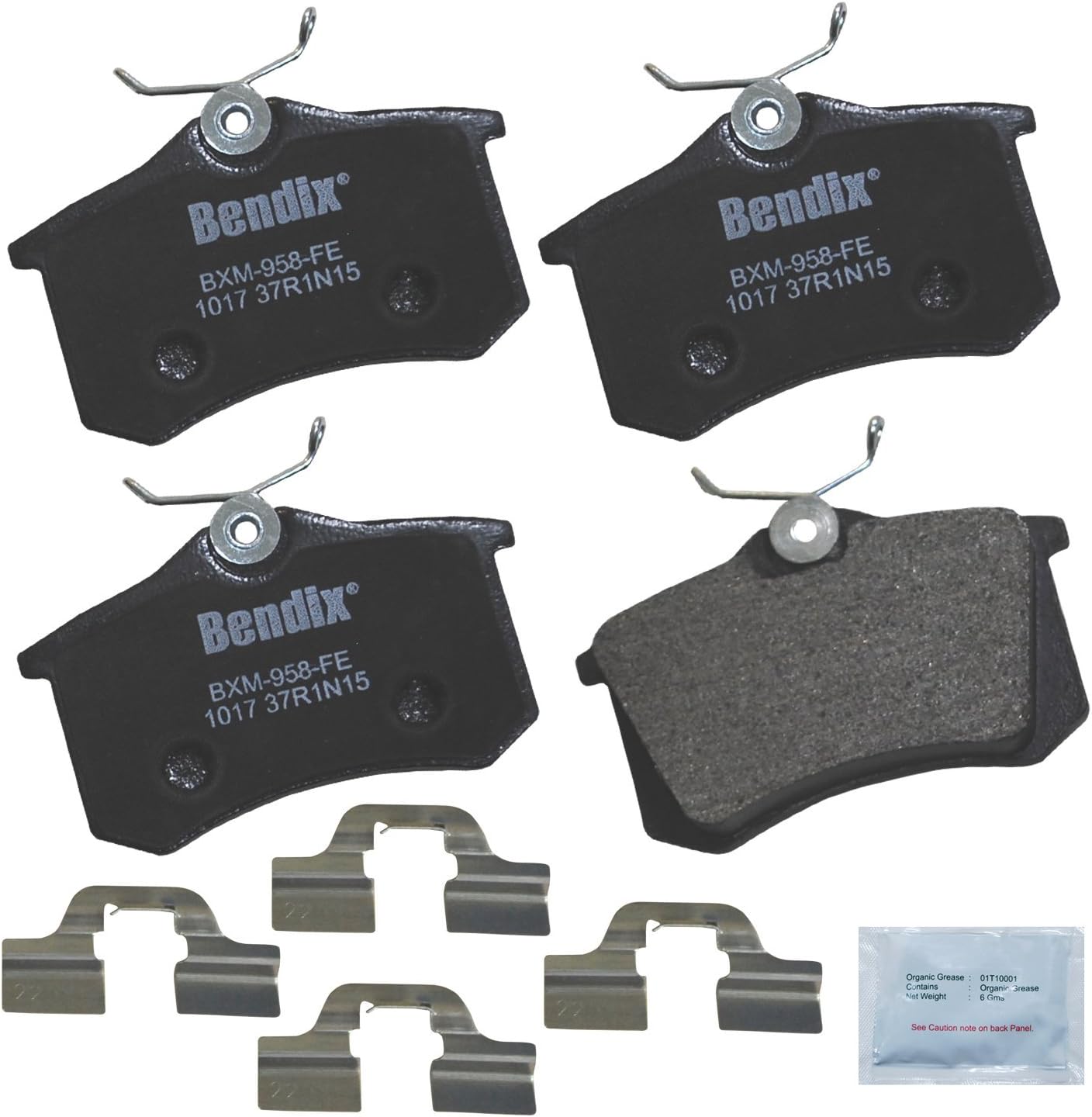
Bendix Priority1 CFM1017 Rear Semi‑Metallic Brake Pads with Hardware
| Auto Part Position | Rear |
|---|---|
| Material Type | Copper |
| Compatible with Vehicle Type | CAR, SUV, Truck |
| Number of Items | 1 |
These Bendix Priority1 CFM1017 rear brake pads are a vehicle‑specific replacement that include installation hardware for a DIY fitment. They use a semi‑metallic compound intended to deliver strong stopping power and good high‑temperature resistance, which helps maintain braking performance under heavier use. The kit ships with shims, slots, and chamfers to reduce noise and promote a quiet, smooth pedal feel in everyday driving. Buyers report straightforward installation and solid fit where the part matches the vehicle application, and the included hardware and small packet of lubricant simplify the job. Practical benefits are reliable, predictable braking and resistance to fade on longer drives. Limitations to be aware of are occasional fitment variance between regional model revisions that may require minor adjustment, and semi‑metallic pads can produce more brake dust than ceramic alternatives. For a risk‑averse buyer focused on dependable, factory‑style replacement, this kit balances performance and familiarity but may not be the lowest‑dust option available.
Best for: A cautious, risk‑averse buyer who prioritizes a reliable, factory‑style replacement and predictable braking performance for routine ownership and maintenance.
Less Ideal for: Buyers who want the lowest possible brake dust and quietest operation available should consider ceramic pad options instead.
- Includes installation hardware and shims for a complete rear pad replacement
- Semi‑metallic compound offers strong initial bite and good high‑temperature resistance
- Designed to match factory fit, reducing the chance of installation surprises
- Shims, slots, and chamfers help minimize noise during normal driving
- Fitment can vary by regional/model revision and occasionally needs minor modification
- Produces more brake dust than ceramic pad options
Verdict: A dependable, vehicle‑specific semi‑metallic rear pad kit that mirrors factory performance and includes hardware, but it can produce more dust than ceramic alternatives.
Choosing the Right Volkswagen Passat Brake Pads: Key Factors to Consider
Material Composition
The pad compound determines braking feel, longevity, and noise. Organic, semi-metallic, and ceramic formulations each trade off bite, wear rate, and dust production. For example, ceramic-like compounds often produce less dust and lower noise, while semi-metallic blends can offer stronger initial bite and better heat handling.
Knowing the material helps set expectations for how the pads will behave under everyday stops and more demanding use. Material also affects rotor wear and whether additional bedding-in procedures are recommended. Choose a compound that matches your driving style and the Passat's engine and weight characteristics.
Stopping Power and Heat Management
Consistent stopping power under varied conditions is essential for safety. Look for pads designed to resist fade during repeated stops and maintain stable friction across a range of temperatures. Heat management influences both performance and pad life, so materials and backing-plate design matter.
If you do frequent highway driving or carry heavier loads, prioritize pads with strong thermal properties. For mostly urban driving, a compound tuned for quick initial bite and smooth modulation may be preferable.
Noise and Vibration Control
Brake squeal and vibration affect perceived quality and comfort. Some pads include shims, chamfers, or specific backing-plate designs to dampen noise. Noise performance can vary by compound and how well the pad seats against the rotor.
Choose pads with proven NVH features if quiet operation is important. Also consider that proper installation, high-quality shims, and occasional re-torquing of caliper hardware help maintain low noise levels over time.
Wear Rates and Rotor Compatibility
Pad wear rate determines how often you will replace them and can influence long-term costs. Some compounds are gentler on rotors, while others accelerate rotor wear, which may lead to more frequent resurfacing or replacement.
Check manufacturer guidance on expected pad life and whether the compound is rotor-friendly. Matching pad durability to your driving habits helps avoid premature rotor damage and reduces total maintenance time.
Fitment and Installation
Correct fit to Volkswagen Passat calipers is non-negotiable for safety and performance. Ensure pads come with clear fitment information, necessary hardware, and instructions. Differences in pad shape, mounting tabs, or backing-plate thickness can affect ease of installation and braking behavior.
Also consider whether the pads require any extra hardware like anti-rattle clips or new shims. If you plan to install them yourself, look for pads that include installation guidance and have a reputation for straightforward fitment.
Brake Dust and Maintenance
Different pad compounds generate varying amounts of brake dust, which affects wheel cleanliness and maintenance frequency. Low-dust formulations keep wheels cleaner but may come with tradeoffs in initial bite or cost.
Consider how often you are willing to clean wheels and whether you prefer a low-maintenance option. Also check whether the pads are compatible with common wheel finishes and if they require special cleaning products to avoid damage.
Brake Pad Materials and What They Mean for a Volkswagen Passat
Brake pad construction determines how the system performs in everyday driving, highway stops, and occasional spirited use. For a Volkswagen Passat, common pad families include ceramic, semi-metallic, and low-metallic organic compounds. Each offers a different balance of noise, dust, longevity, and initial bite.
Ceramic brake pads deliver quiet operation and low dust, which suits drivers who prioritize a clean wheel appearance and minimal cabin noise. Semi-metallic pads typically provide stronger initial stopping power and better heat tolerance for repeated hard braking, but they can produce more dust and slightly more noise. Low-metallic organics are a middle ground with decent modulation and modest noise.
- Ceramic brake pads: quiet, low dust, predictable cold bite, good for daily driving.
- Semi-metallic: higher friction under heavy loads, better heat dispersion, may wear rotors faster.
- Low-metallic organic: softer feel, often less aggressive on rotors, moderate longevity.
Front Vs Rear Brake Pad Roles on the Passat
The Volkswagen Passat's braking system is front-biased, meaning the front pads do most of the work. That makes front pads more prone to wear and more critical to overall stopping performance. Rear pads contribute to stability and parking brake function, and they often have different compounds or thicknesses from the fronts.
When selecting replacement sets it is common to replace pairs (both front pads or both rear pads) to maintain balanced braking feel. If only the front set is worn, replacing only the fronts can be acceptable, but mismatched wear or differing pad materials front-to-rear can change pedal feel.
- Expect front pads to wear faster than rear pads on most Passat trims.
- Maintain matching pad materials on an axle to preserve consistent modulation.
- If replacing one axle, inspect the opposite axle for uneven wear before deciding to replace only one set.
Recognizing Brake Pad Wear on Your Passat and Service Intervals
Regular inspections let you catch brake pad wear early. Typical visual signs include a thin friction surface, visible wear indicators, or deep scoring. Mechanical symptoms can be longer pedal travel, reduced stopping performance, or vibrations during braking. These are common brake pad wear symptoms for many vehicles and should prompt a detailed check.
How often to replace brake pads depends on driving style, conditions, and compound. A Passat used mainly for commuting may see pads last longer than one used aggressively or in hilly terrain. Instead of relying solely on a calendar interval, measure pad thickness and use that to guide replacement timing.
- Check pad thickness regularly; most manufacturers recommend replacement before pads reach about 3 mm of friction material.
- Listen for wear indicators or scrape sounds that signal pads are nearly spent.
- Aggressive driving, towing, or frequent stop-and-go city traffic shortens pad life.
Common Noise and Vibration Causes and How to Address Them
Noise complaints are a frequent reason owners search for Volkswagen Passat brake pads. Squeal, chirp, or grinding noises can have different causes. High-pitched squeal often comes from wear indicators or glazed friction surfaces. Grinding usually indicates pads are worn to the backing plate or contaminated with debris. Vibration during braking can point to rotor runout or uneven pad transfer.
Addressing noise starts with a careful inspection and targeted correction. Cleaning contact surfaces, checking hardware, and ensuring proper bedding can eliminate many issues. If pads are contaminated, glazed, or below safe thickness, replacement is the correct remedy.
- Squeal: often due to glazing or missing shims; try cleaning and proper bedding.
- Grinding: inspect pad thickness immediately and replace if backing is contacting the rotor.
- Vibration: measure rotor thickness and runout; resurfacing or replacement may be required.
Rotor Care, Bedding, and Minimizing Premature Wear
Brake pad longevity and rotor life are linked. Proper bedding transfers an even layer of friction material onto the rotor, improving initial performance and reducing noise. For a Passat, a cautious bedding procedure—progressively increasing braking intensity without hard stops—helps stabilize the pad-rotor interface.
Rotors should be inspected for scoring, thickness variation, and runout when new pads are installed. Resurfacing may be acceptable if within thickness specifications, but deeply scored or warped rotors should be replaced to avoid accelerated pad wear and compromised braking.
- Perform a controlled bedding sequence after installing new pads to build consistent transfer layer.
- Check rotor thickness against factory specifications before deciding to resurface.
- Keep caliper hardware and sliding pins clean and lubricated with appropriate high-temperature grease.
Aftermarket Pad Options and Practical Upgrade Considerations
Aftermarket brake pads offer a range of performance and comfort trade-offs. For Passat owners considering an upgrade, think about the driving priorities—less dust, quieter operation, stronger initial bite, or extended lifespan. Upgrading to a higher performance compound can improve repeatable stopping power but may increase dust or noise.
When choosing aftermarket pads, verify they are specifically supplied for the Volkswagen Passat to ensure correct backing plate profile and any required hardware. Quality aftermarket options generally include full pad sets with appropriate shims and wear indicators and will list material type so you can match expected behavior to your driving needs.
- Match the pad compound to your driving use rather than chasing brand reputation alone.
- Look for complete axle kits that include necessary shims and hardware for easier installation.
- Consider professional bedding if changing to a significantly different compound to avoid early noise or uneven wear.
How We Chose the Best Volkswagen Passat Brake Pads
Our selection process targeted brake pads that suit the Volkswagen Passat's typical driving conditions, from daily commuting to occasional spirited driving. We prioritized stopping performance under repeated braking, measured by fade resistance and initial bite, and pad longevity, assessed by material composition and wear rates. Other important criteria included noise and vibration characteristics, dust generation, and physical fitment to Passat calipers.Fitment accuracy and ease of installation were required filters; we excluded any pads without clear specifications for Volkswagen Passat models. We also rejected options that lacked sufficient manufacturer guidance on material composition or did not meet basic safety standards. The final list balances performance, durability, and NVH behavior so you can choose pads aligned with your driving priorities.
Our full evaluation process is outlined in our review methodology.
FAQ
How often should I replace Volkswagen Passat brake pads?
Replacement intervals depend on driving habits, pad material, and conditions. Typically, drivers can expect pads to last anywhere from 25,000 to 70,000 miles. Heavier city braking and aggressive driving shorten lifespan, while steady highway use tends to extend it. Check pad thickness regularly and follow manufacturer guidance for replacement.
What are common brake pad wear symptoms to watch for?
Look for reduced braking responsiveness, a longer pedal travel, or a grinding or squealing noise when braking. Visual inspection can reveal thin pad material or uneven wear. Mild squeal may indicate wear indicators contacting the rotor, while grinding often signals that pads are worn to the backing plate and need immediate attention.
Should I choose different pads for the front vs rear brake pads on a Passat?
Front and rear pads often serve different roles because the front brakes handle more braking force. Front pads typically require stronger initial bite and greater heat resistance, while rear pads focus on balance and stability. Use pads specified for each axle to preserve handling and braking balance.
Are ceramic brake pads a good choice for a Volkswagen Passat?
Ceramic-style compounds usually offer quieter operation and lower dust compared with more metallic blends. They can be a good choice for daily driving where comfort and wheel cleanliness matter. However, they may have different bite characteristics and could wear differently under heavy-duty use, so consider your driving style.
What causes brake pad noise like grinding or squeal?
Noise can come from worn material, glazing, loose hardware, or mismatched pad compound and rotor surface. Squeal is often related to vibration of the pad backing or shim, while grinding indicates severely worn pads exposing the backing plate. Proper installation, quality shims, and timely replacement reduce noise risk.
How can I check brake pad thickness and fitment?
Visual inspection through the wheel or during wheel removal lets you measure remaining pad material. Many manufacturers provide a thickness spec and a recommended minimum pad depth. Ensure the replacement pads are explicitly listed for the Volkswagen Passat to avoid fitment issues and verify included hardware matches your calipers.
Final Verdict
Prioritize stopping performance and fitment when choosing Volkswagen Passat brake pads. Material composition and heat management determine how the pads feel and how long they last, while noise, dust, and rotor compatibility affect day-to-day ownership.Balance your driving habits against tradeoffs like noise versus bite and pad life versus rotor wear. Use pads specified for the Passat's axles and verify fitment details to ensure safe, predictable braking.
Explore More:
- Check out all Volkswagen Passat parts & accessories
- Explore Brake Pads Maintenance & Repair Guides
- Explore Brake System
- Browse all Auto Parts
