

Note: This article contains affiliate links. If you click on these links and make a purchase, I may earn a small commission at no extra cost to you. This helps support my research and content. Read my full affiliate disclosure here.
Picking the right brake pads for your Mitsubishi Lancer affects safety, pedal feel, and long-term rotor life. You want pads that deliver predictable stopping power, acceptable noise levels, and wear characteristics that match how you drive.This guide shortlists the top options in the category and explains the evaluation criteria we used, so you can match a pad material and profile to your driving style and maintenance priorities. Read on to see the top picks and the factors to weigh when choosing replacements.
Looking for other parts? See all Mitsubishi Lancer parts & accessories.
Top Picks at a Glance
| Best Reviewed A top-rated pick with lots of positive feedback | Bosch Blue Ceramic Front Disc Brake Pad Set (BE866H) |  |
| Most Popular A crowd favorite that many people choose with confidence | SCITOO Ceramic Front Brake Pad Kit for Mitsubishi Lancer |  |
| Best Quality Built to a higher standard if you want something more solid | Detroit Axle Front Drilled & Slotted Brake Kit with Ceramic Pads for Mitsubishi Lancer |  |
| Best Budget The cheapest option that still gets the job done reliably | KAX Front Ceramic Brake Pads (D866) |  |
| Most Sold A high-volume bestseller chosen again and again | Bendix Premium SBC866 Ceramic Front Brake Pads |  |
| Best Value for Money The sweet spot between price and what you get | Detroit Axle Front Ceramic Brake Pads for 2002–2007 Mitsubishi Lancer (with Hardware) |  |
| Best Overall The best all-around choice for most situations | Raybestos Element3 EHT Replacement Front Brake Pad Set |  |
1. Bosch Blue Ceramic Front Disc Brake Pad Set (BE866H)
| Material | Ceramic |
|---|---|
| Auto Part Position | Front |
| Specification Met | OEM |
| Automotive Fit Type | Vehicle Specific Fit |
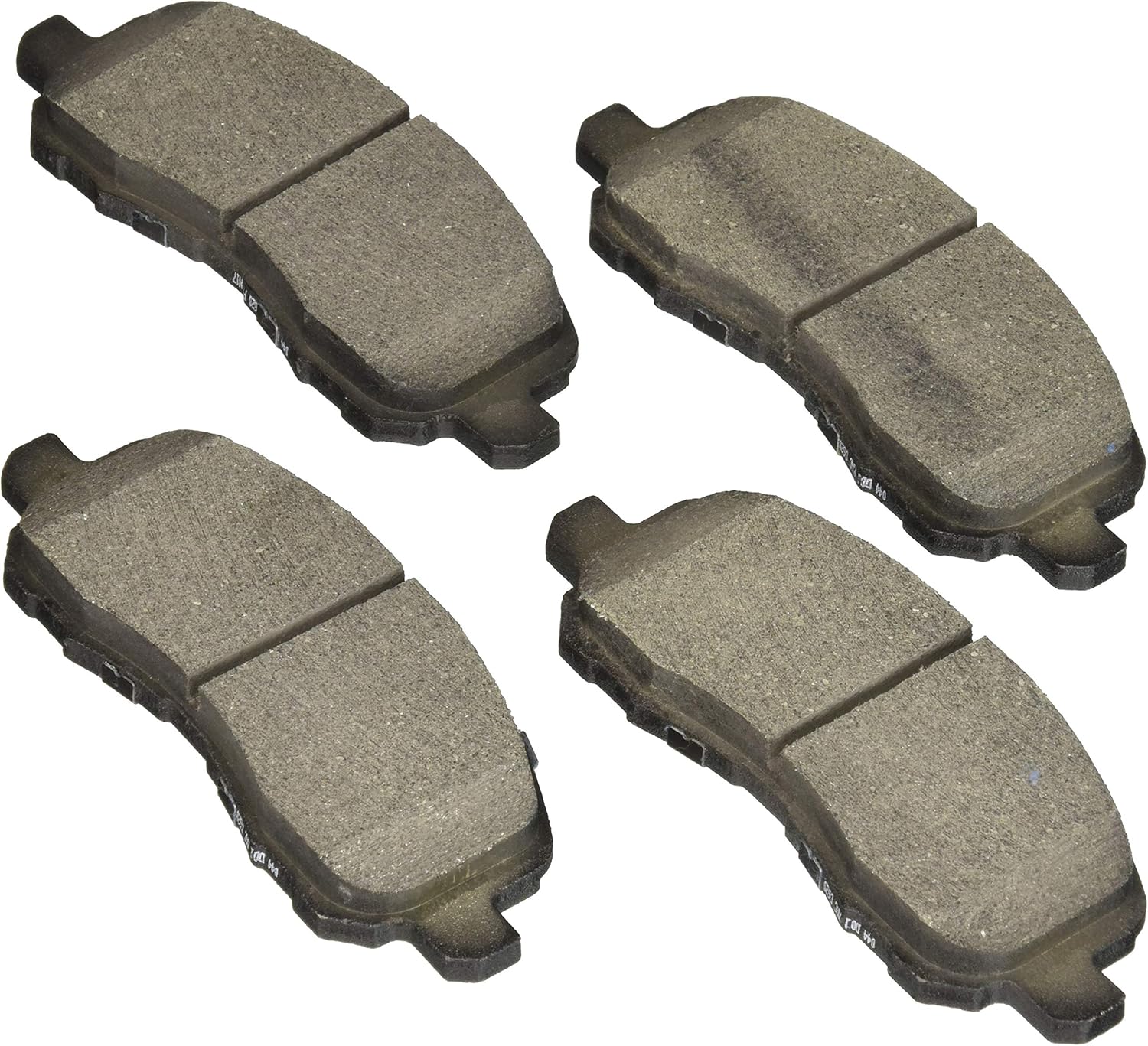
These Bosch Blue ceramic front pads are engineered for everyday driving on compatible Mitsubishi Lancer models and come as a complete axle kit with hardware and lubricant. They use platform-specific ceramic friction designed to deliver consistent stopping power with reduced brake fade and low dust. OE-style multi-layer shims, slots, and chamfers help dampen noise and replicate factory stopping characteristics so installs are quiet and predictable. Bosch applies a rust-inhibitive coating to the backing plates to slow corrosion that can shorten pad life or cause squeaks, and the pads are precision-manufactured to fit without heavy modification. The package includes replacement hardware and a small tube of synthetic lubricant to ease slider movement during installation. Limitations to consider: these are tuned for street use rather than aggressive track duty, and owners who need ultimate high-temperature performance may prefer a sport or metallic compound instead of ceramic.
Best for: A reliability-focused buyer who values quiet, factory-like braking performance and low maintenance for a daily-driven Mitsubishi Lancer.
Less Ideal for: Drivers who regularly subject their Lancer to track sessions or sustained heavy braking should consider a performance-oriented metallic pad instead.
- Platform-specific ceramic friction for consistent street stopping and reduced brake fade
- Multi-layer shims, slots, and chamfers for quiet operation and predictable bite
- Rust-inhibitive coating on backing plates to resist corrosion and extend service life
- Includes hardware and synthetic lubricant for a straightforward installation
- Ceramic compound is optimized for everyday driving and not intended for high-temperature track use
Verdict Bosch Blue ceramic front pads are a dependable, quiet factory-style replacement for Mitsubishi Lancer owners who prioritize reliable everyday braking.
2. SCITOO Ceramic Front Brake Pad Kit for Mitsubishi Lancer

| Material | Ceramic |
|---|---|
| Auto Part Position | Front |
| Specification Met | OEM |
| Automotive Fit Type | Vehicle Specific Fit |
These SCITOO ceramic front brake pads are a direct replacement kit intended for compatible Mitsubishi Lancer years listed by the manufacturer. The pads are ceramic-material units supplied as an 8-piece set with included hardware and a scorch friction treatment intended to shorten break-in and stabilize wear. Installation is straightforward since the parts are made to match factory fitment, so this is typically used during routine front brake service. In practice the ceramic formulation aims for quiet operation and low dust, and customer reports indicate good fit, minimal noise, and reliable stopping power after bedding in. The kit’s advantages are convenience and a ready-to-install package with mounting clips and grease included. Limitations are inherent to aftermarket ceramic pads: they may not match the higher initial bite of certain performance or semi-metallic pads and extreme towing or track use could reveal faster wear or heat fade compared with heavy-duty options. Expect a good everyday replacement for street-driven Lancers but consider different compounds for heavy-duty driving.
Best for: Buyers who prioritize convenience and a ready-to-install, low-noise replacement for everyday driving on a Mitsubishi Lancer.
Less Ideal for: Drivers who need track-capable or heavy-duty towing brakes should choose a performance or heavy-duty compound instead.
- Vehicle-specific fit intended for direct factory-style installation
- Ceramic compound formulated for quiet operation and reduced dust
- Includes hardware and lubricant for a complete front pad service
- Scorch friction treatment to reduce break-in time and stabilize performance
- Ceramic pads generally have less initial bite than some semi-metallic performance pads
- May not perform as well under repeated high-heat conditions like track use or heavy towing
Verdict A convenient, quiet ceramic front pad kit that fits Mitsubishi Lancer models and works well for everyday street use, but pick a different compound for high-heat or heavy-duty needs.
3. Detroit Axle Front Drilled & Slotted Brake Kit with Ceramic Pads for Mitsubishi Lancer
| Fitment rotor diameter | 10.87 inch (276 mm) |
|---|---|
| Includes | 2 front drilled disc rotors + 2 front ceramic brake pads |
| Material – pads | Ceramic |
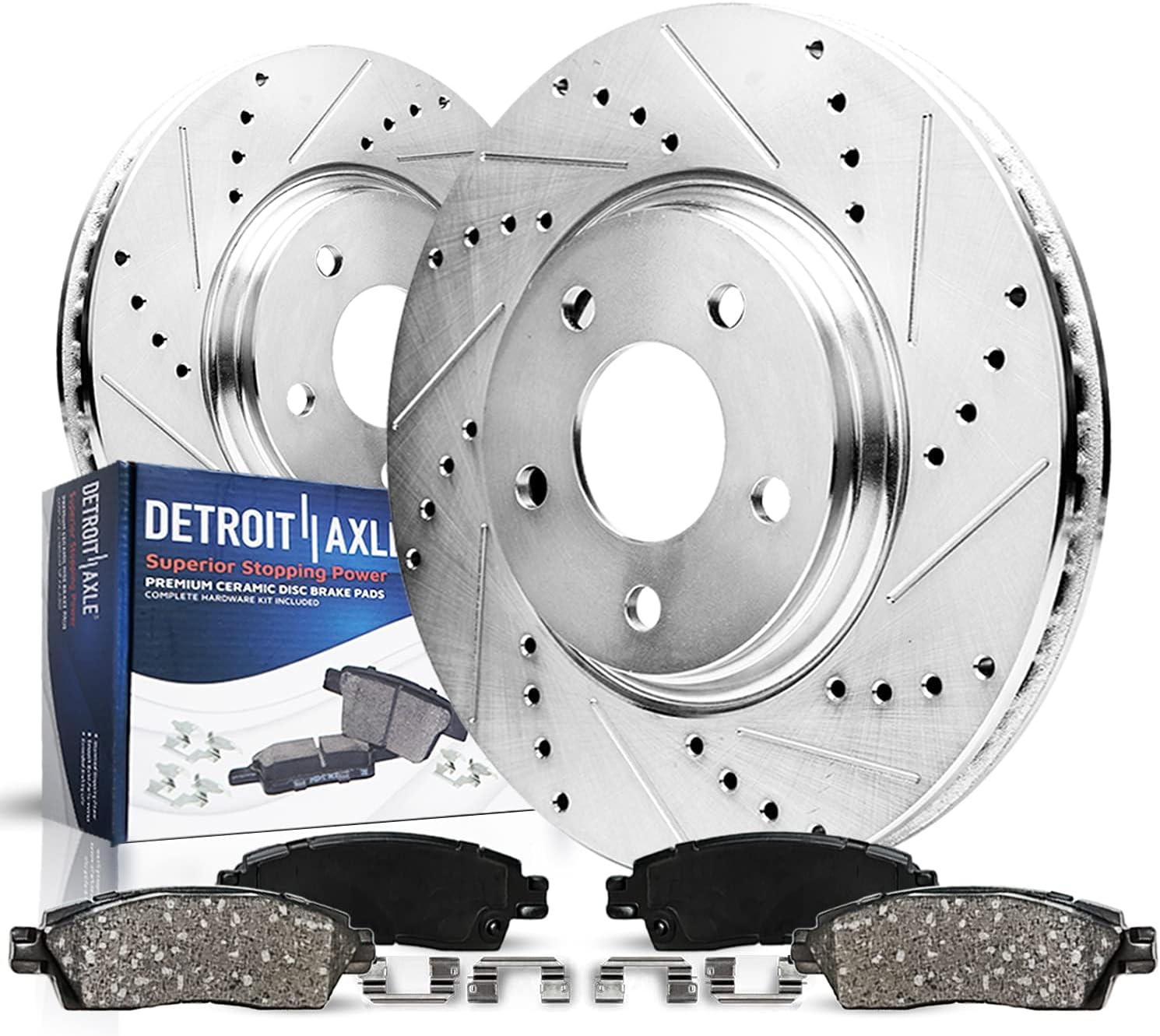
This Detroit Axle front brake kit supplies two drilled and slotted front rotors plus two ceramic front brake pads intended for Mitsubishi Lancer applications with 10.87 inch (276 mm) front rotors. It is used as a direct replacement when worn rotors or pads reduce stopping performance or introduce vibration. The drilled and slotted rotor surfaces help gas and debris escape under heavy braking, which can improve fade resistance during spirited driving, while the coated finish helps resist corrosion. The included ceramic pads are formulated for quieter operation and lower dust compared with many metallic pads, and they are positioned as longer-lasting, smooth-stopping replacements. Installation is a straightforward rotor-and-pad swap for the front wheels and fits the Lancer fitment list in the product description. Limitations to note are that ceramic pads may not offer the same ultimate bite as high-friction racing compounds and drilled rotors can be less durable than plain rotors under extreme repeated heat cycles, so this kit is best for street and performance-street driving rather than track-only use.
Best for: Performance-oriented Mitsubishi Lancer drivers who prioritize consistent, quieter street braking with reduced fade during spirited driving and want a direct front-replacement kit.
Less Ideal for: Drivers who need maximum track-grade braking performance or who prefer high-friction metallic compounds for frequent circuit use should consider competition-oriented options instead.
- Drilled and slotted rotors shed heat and gases to reduce fade during aggressive street driving.
- Coated rotor finish helps resist surface rust for longer life between replacements.
- Ceramic brake pads produce less dust and run quieter than many metallic alternatives.
- Sold as a front kit with matching pads and rotors for a coordinated replacement.
- Ceramic pads provide less initial bite than high-friction track pads under extreme conditions.
- Drilled rotors can be more susceptible to cracking than solid rotors under extreme repeated track heat.
- Fitment must match the specific Lancer model year and rotor diameter to avoid compatibility issues.
Verdict A quality street-performance front brake kit for Mitsubishi Lancer owners seeking quieter, lower-dust braking with improved fade resistance over stock parts.
4. KAX Front Ceramic Brake Pads (D866)
| Material | Ceramic |
|---|---|
| Auto Part Position | Front |
| Number of Items | 4 |
| Automotive Fit Type | Vehicle Specific Fit |
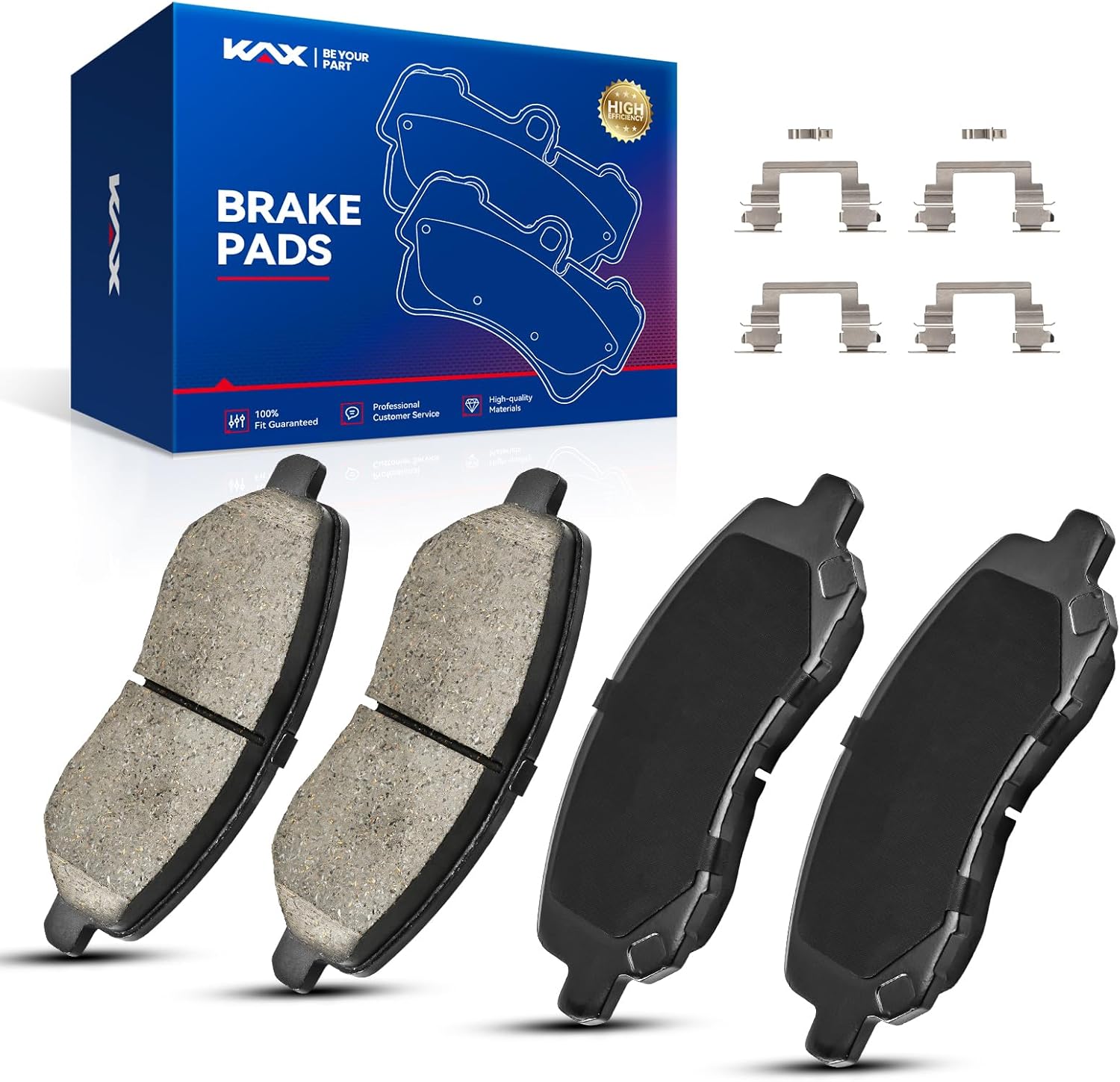
These KAX front brake pads are a budget-focused ceramic replacement set intended for direct-fit installation on compatible vehicles. They replicate factory slot and chamfer geometry to reduce noise and maintain consistent pad-to-rotor contact, and the listing highlights ceramic friction material aimed at lower dust and quiet braking. In everyday use they suit street and highway driving where moderate stopping power and low dust are priorities rather than track-level performance. The pads include noise-reduction features and are described as resistant to thermal fade, which helps maintain consistent pedal feel during repeated stops. Limitations are typical of economy ceramic pads: they prioritize comfort and cleanliness over maximum bite under heavy duty or motorsport conditions, and long-term wear rates will depend on driving style and rotor condition. Installation is straightforward for anyone comfortable with basic brake work, but for heavy towing or performance upgrades a more aggressive material would be a better match.
Best for: Budget-conscious owners looking for an affordable, quiet ceramic replacement for routine street and highway driving on their Mitsubishi Lancer.
Less Ideal for: Drivers who push their Lancer hard, carry heavy loads, or need track-capable braking should consider higher-performance pad compounds instead.
- Vehicle-specific fit for front applications simplifies installation
- Ceramic formulation reduces brake dust compared with semi-metallic pads
- Slots and chamfers mirror factory geometry to limit noise and vibration
- Marketed thermal fade resistance for consistent braking in daily driving
- Not aimed at heavy-duty, high-temperature use or track driving
- Long-term wear life may be shorter than higher-end materials under aggressive driving
Verdict A cost-conscious ceramic front pad set that delivers quieter, lower-dust daily braking for Mitsubishi Lancer owners but is not intended for heavy-duty or track use.
5. Bendix Premium SBC866 Ceramic Front Brake Pads

| Material | Ceramic |
|---|---|
| Auto Part Position | Front |
| Specification Met | OEM |
| Automotive Fit Type | Vehicle Specific Fit |
The Bendix Premium SBC866 are ceramic front brake pads designed to replace the factory pads on compatible Mitsubishi Lancer fitments. They install like a factory-quality replacement and are typically used by owners doing a routine brake service or rotor-and-pad refresh. Notable features include a ceramic friction compound that aims to reduce noise and dust, painted backing plates for corrosion resistance, and a vehicle-specific design for correct fit and function. In practice these pads deliver smooth, progressive stopping power for daily driving and are less prone to squeal and rotor staining than some semi-metallic options. They are positioned for durability and comfortable pedal modulation rather than aggressive performance braking. Important limitations are that ceramic pads can offer slightly less initial bite under hard repeated stops compared with performance-oriented semi-metallic pads, so they are not the best choice for track use or heavy towing, and the kit may not include lubricant for hardware so plan to add anti-seize or brake grease during installation.
Best for: A risk-averse mainstream buyer seeking a quiet, low-dust, factory-style replacement for a Mitsubishi Lancer used for daily driving and commuting.
Less Ideal for: Drivers who frequently tow, perform spirited driving, or need track-capable stopping power should choose a performance-oriented semi-metallic pad instead.
- Vehicle-specific fit for direct replacement on listed Lancer model years
- Ceramic compound reduces brake dust and typically runs quieter than semi-metallic pads
- Painted backing plates resist corrosion and improve long-term appearance
- Designed to match factory fit, form, and function for straightforward DIY installation
- Ceramic formulation can deliver less aggressive initial bite under repeated heavy braking compared with semi-metallic performance pads
- Does not appear to include grease or lubrication for hardware in the box
Verdict A quiet, low-dust, factory-fit ceramic pad that’s a sensible, reliable replacement for Lancer owners who prioritize everyday comfort over track performance.
6. Detroit Axle Front Ceramic Brake Pads for 2002–2007 Mitsubishi Lancer (with Hardware)

| Fitment | 2002–2007 Mitsubishi Lancer (front) |
|---|---|
| Material | Ceramic |
| Number of Items | 2 |
| Specification Met | OEM |
These Detroit Axle front ceramic brake pads are a direct-fit replacement for 2002–2007 Mitsubishi Lancer front brakes and arrive as a two-piece kit with the necessary installation hardware. They are marketed as 100 percent ceramic with no metallic composition and are built to meet factory-spec performance, undergoing impact, wear, and fatigue testing. In everyday use they provide quiet stopping and an easy, slide-in installation for a practical DIY job or a quick shop replacement. The ceramic compound helps reduce rotor wear and usually produces less noise than many semi-metallic pads, though some owners report modest brake dust under heavy stop-and-go conditions. The kit is vehicle-specific so fitment is straightforward for the Lancer, but buyers seeking high-performance track braking or very aggressive initial bite may prefer a performance-oriented compound. For routine street driving and value-focused owners this pad set balances comfort, compatibility, and durability.
Best for: Practical optimizers who prioritize a reliable, low-noise, and budget-conscious factory-quality replacement for routine street driving on a Mitsubishi Lancer.
Less Ideal for: Drivers who frequently push their Lancer on track days or need aggressive race-level braking should consider a performance friction compound instead.
- Vehicle-specific direct-fit for 2002–2007 Mitsubishi Lancer, simplifying installation
- 100% ceramic construction for quieter operation and reduced rotor wear
- Includes installation hardware so you get everything needed for a front pad change
- Undergoes impact, wear, and fatigue testing indicating attention to durability
- Ceramic formulation can produce noticeable brake dust during heavy urban stop-and-go driving
- Not designed for high-performance or track use where higher friction compounds are preferred
Verdict A budget-friendly, vehicle-specific ceramic pad kit that offers quiet, factory-quality braking for everyday Mitsubishi Lancer driving but is not aimed at track performance.
7. Raybestos Element3 EHT Replacement Front Brake Pad Set

| Material | Ceramic hybrid |
|---|---|
| Auto Part Position | Front |
| Specification Met | OEM |
| Automotive Fit Type | Vehicle Specific Fit |
The Raybestos Element3 EHT front brake pads are a vehicle-specific replacement designed for select Mitsubishi Lancer models from the early 2000s. They use an enhanced hybrid ceramic/semi-metallic formulation to deliver higher initial bite and consistent stopping power under heavier braking than many pure-ceramic pads. Typical use is direct replacement of the front pads during a routine brake service; the set includes shims and hardware to simplify installation. In everyday driving the pads produce less dust than older organic pads and many users report quieter operation thanks to five-layer shims and fitment accuracy. Several reviewers also note improved pedal feel during ABS events and good performance when towing or driving in hilly terrain. Potential downsides are occasional reports of squeal on some vehicles and mixed long-term wear results compared with top-tier factory-style pads, so bedding-in and proper rotor condition are important. These deliver a practical balance of stopping power, noise control, and cleanliness for a Lancer needing a capable front pad upgrade.
Best for: A balanced all-round buyer who wants a reliable, upgrade-style front pad for a Mitsubishi Lancer that improves stopping power and reduces dust without sacrificing everyday comfort.
Less Ideal for: Drivers seeking the absolute lowest noise and maximum OEM-style pad life under heavy daily towing or motorsport use should consider a dedicated OEM-equivalent or heavy-duty performance pad instead.
- Hybrid EHT compound blends ceramic smoothness with semi‑metallic bite for stronger stopping power
- Includes shims and retaining clips for straightforward installation
- Lower brake dust than conventional organic pads, keeping wheels cleaner
- Vehicle-specific fit designed for proper alignment and quiet operation in most installs
- Some users report intermittent squeal or noise on certain vehicles
- Longevity varies by driving style and rotor condition compared with some premium factory-style pads
Verdict A well-rounded front pad for Mitsubishi Lancer owners who want stronger, cleaner braking than stock without committing to a track-focused or heavy-duty compound.
Choosing the Right Mitsubishi Lancer Brake Pads: Key Factors to Consider
Pad Material and Compound
Pad material determines friction characteristics, noise propensity, and rotor wear. Organic and ceramic compounds tend to be quieter and gentler on rotors, while semi-metallic formulations can offer higher initial bite and thermal capacity. Consider how often you perform spirited stops or tow light loads, since higher-energy use benefits from compounds with greater heat resistance.
Compound variation also affects cold performance and bedding behavior. Some materials require a break-in procedure to reach steady friction levels; failure to bed pads correctly can produce inconsistent pedal feel or noise. Match the compound to your priorities, whether that is low dust, quiet operation, or consistent deceleration under heavier loads.
Friction Performance and Consistency
Consistent friction coefficient across temperature ranges yields predictable stopping power. Pads with stable friction produce linear pedal feel and reduce the likelihood of brake fade during repeated stops. Look for documented friction ratings or testing data that describe performance at both low and elevated temperatures.
In practice, consistent performance means you get similar stopping distances and pedal characteristics whether braking lightly in town or harder on an incline. Variability in friction can make the car feel grabby or spongy, so prioritize compounds and designs known for steady behavior.
Thickness, Wear Rate, and Rotor Impact
Initial pad thickness and expected wear rate determine service intervals and how often you will replace pads. Thicker starting material can extend time between replacements, while softer compounds may wear faster but reduce rotor wear. Consider the documented pad thickness spec and typical wear patterns for the compound you choose.
Rotor preservation is also important. Aggressive compounds can shorten rotor life through increased abrasion, while gentler compounds protect the rotor but may require more frequent pad changes. Balance replacement frequency against long-term rotor maintenance when selecting pads.
Noise, Vibration, and Harshness (NVH)
Brake noise and vibration affect comfort and perceived build quality. Some compounds and backing plate designs are prone to squeal or grinding sounds as they age. Look for pads with noise-reduction features such as chamfered edges, shims, or bonded insulators to minimize vibration-induced squeal.
Installation quality and correct hardware also influence NVH. Even a well-designed pad can produce noise if hardware is missing or mounting isn’t secure. Factor expected noise levels into your decision, especially if you do a lot of city driving or want a quiet cabin at low speeds.
Fitment and Hardware Compatibility
Correct fitment to the Mitsubishi Lancer is essential for safe operation and even wear. Pads should mate precisely with calipers and include the necessary clips or shims where required. Incorrect fitment can lead to uneven contact, accelerated wear, and potential caliper issues.
Verify that the pad backing plates and contours match the vehicle’s caliper design. Also confirm whether additional hardware or anti-rattle clips are included or need to be sourced separately to ensure proper installation and long-term reliability.
Heat Resistance and Fade Characteristics
Brake fade occurs when pads lose friction under sustained high temperatures. If you frequently drive in hilly areas or do repeated hard braking, choose pads with good thermal stability and a higher fade threshold. Materials with better heat dissipation maintain braking effectiveness under stress.
Consider how the pad handles gradual temperature rise and repeated stops. Some compounds may offer strong initial bite but degrade quickly with heat, while others maintain steadier performance during prolonged use. Match heat resistance to your driving conditions to avoid compromised stopping power.
FAQ
How often should I replace Mitsubishi Lancer brake pads?
Replacement intervals vary with driving style and pad compound. Typical service life can range from several tens of thousands of miles for conservative driving to much less for aggressive use. Check pad thickness regularly and follow the vehicle manufacturer’s guidance; when pads approach the minimum thickness specified, plan replacement to avoid rotor damage.
What are common brake pad wear symptoms to watch for?
Common signs include reduced braking responsiveness, a grinding or squealing noise, vibration through the pedal, and visible thinning of the pad material. Squeal can indicate wear indicators contacting the rotor or vibration, while grinding often means pads are worn to the backing plate and need immediate attention.
Should I change front and rear brake pads at the same time?
Front and rear pads wear at different rates due to braking dynamics, so simultaneous replacement is not always necessary. However, if one axle’s pads are significantly worn or if you notice imbalanced braking feel, replacing both axles can restore consistent pedal behavior. Inspect rotors and hardware during service to make an informed choice.
Are ceramic pads a good option for daily driving?
Ceramic compounds are often a strong choice for daily driving because they tend to be quieter and produce less dust, while offering stable pedal feel in typical conditions. They may be less suited to very heavy-duty or performance braking where higher thermal capacity is needed. Consider your driving patterns when deciding on ceramic pads.
What causes brake pad noise and how can I reduce it?
Noise often stems from vibration between the pad and caliper, contamination, uneven wear, or degraded hardware. Using pads with chamfers, shims, or bonded insulators helps reduce squeal. Ensuring clean mating surfaces and proper hardware installation during replacement also minimizes noise issues.
How important is checking the pad thickness spec before replacement?
Pad thickness is crucial for determining remaining life and whether pads meet safe service limits. Knowing the initial thickness and the vehicle’s minimum specified thickness lets you plan replacements and avoid rotor contact. Always confirm thickness specs to ensure safe and effective braking.
How We Chose the Best Mitsubishi Lancer Brake Pads
We focused on brake pads designed specifically for the Mitsubishi Lancer and evaluated candidates across multiple vehicle-focused criteria. Key filters included pad material and compound consistency, which influence stopping power and noise; measured and reported friction performance under typical driving loads; and heat resistance to reduce fade in repeated braking. We also prioritized pads with consistent wear patterns and clear thickness specifications to help preserve rotors and extend service intervals. Additional considerations were backing plate design and hardware compatibility to ensure secure fitment, along with available testing data or manufacturer technical specifications.We excluded generalist or universal pads without clear Lancer fitment information and any options lacking material data or thickness specs. The remaining shortlist represents designs that balance braking performance, longevity, and drivability for this vehicle.
Our full evaluation process is outlined in our review methodology.
Conclusion
Choosing the right brake pads for a Mitsubishi Lancer means balancing material, wear life, and noise with your typical driving demands. Prioritize compounds and designs that match how you drive, whether that means quieter ceramic-style pads for daily commuting or higher-temperature formulations if you do heavy braking.Pay attention to fitment, pad thickness specs, and hardware compatibility to ensure reliable performance and minimal rotor wear. By weighing these tradeoffs you can select pads that deliver the right mix of stopping power, longevity, and comfort for your Lancer.
Explore More:
- Check out all Mitsubishi Lancer parts & accessories
- Explore Brake Pads Maintenance & Repair Guides
- Explore Brake System
- Browse all Auto Parts
