

Note: This article contains affiliate links. If you click on these links and make a purchase, I may earn a small commission at no extra cost to you. This helps support my research and content. Read my full affiliate disclosure here.
Replacing brake pads on a 1995-2000 Chevrolet Tahoe matters because the right pads restore predictable stopping, control under load, and longer service intervals for an older full-size SUV. You want pads that suit the Tahoe's weight, typical towing or hauling use, and the original braking system's characteristics.This guide highlights seven top options shortlisted for the Tahoe, explaining how each selection addresses stopping performance, longevity, rotor friendliness, and noise. Read on to understand the criteria we used and what to prioritize for safe, reliable braking on this model.
Looking for other parts? See all Chevrolet Tahoe parts & accessories.
Top Picks at a Glance
| Best Overall The best all-around choice for most situations | PowerStop Z36 Truck & Tow Front Brake Kit (Carbon-Fiber Ceramic Pads + Drilled/Slotted Rotors) |  |
| Best Quality Built to a higher standard if you want something more solid | Brembo P10021N Premium Ceramic Front Disc Brake Pad Set |  |
| Best Value The sweet spot between price and what you get | BOSCH QuietCast Premium Ceramic Disc Brake Pad Set, Front (BC369) |  |
| Best Budget The cheapest option that still gets the job done reliably | Geekstop Front Ceramic Brake Pads D369 (front set) |  |
| Highest Rated A top-rated pick with lots of positive feedback | Bendix Priority1 CFM370 Semi‑Metallic Front Brake Pads |  |
| Most Popular A crowd favorite that many people choose with confidence | Detroit Axle Front Brake Kit with Ceramic Pads and Rotors |  |
| Best Seller A high-volume bestseller chosen again and again | ACDelco Silver 14D369MX Semi-Metallic Front Brake Pad Set |  |
1. PowerStop Z36 Truck & Tow Front Brake Kit (Carbon-Fiber Ceramic Pads + Drilled/Slotted Rotors)

| Included components | Z36 pads, drilled & slotted rotors, installation hardware |
|---|---|
| Fitment orientation | Front |
| Pad compound | Carbon-fiber infused ceramic |
| Rotor finish | Silver zinc dichromate plating |
| Warranty | 36 Month / 36,000 Mile Limited Warranty |
This PowerStop Z36 Truck & Tow front kit replaces the factory front pads and rotors with carbon-fiber infused ceramic pads and drilled-and-slotted rotors designed for heavier duty use. It is typically used on trucks and SUVs that tow, haul, or run larger wheels where additional braking performance and heat control matter. The Z36 pads are low-dust and include stainless-steel shims plus chamfered edges to reduce noise while still delivering stronger stopping power than many stock replacements. The rotors are precision drilled and slotted to improve cooling and gas/debris evacuation during repeated hard stops, and the silver zinc plating helps resist surface corrosion. Installation hardware is included for a bolt-on fit to compatible front applications, so the kit supports straightforward DIY swaps. Limitations to expect are that aggressive driving will still wear any aftermarket pad faster than gentle driving and that drilled rotors can be more prone to cracking under extreme track use compared with plain solid rotors, so this kit is tuned for heavy-duty street, towing, and off-road use rather than racing.
Best for: Buyers who want a balanced, all-around brake upgrade for a Tahoe used for towing, hauling, or occasional off-road work and who prioritize quieter, low-dust pads with improved stopping and cooling.
Less Ideal for: Drivers whose primary need is maximum track performance or competition braking should consider race-oriented rotors and pads instead.
- Includes complete front kit with pads, rotors, and stainless-steel installation hardware for a single purchase and easier install
- Carbon-fiber reinforced ceramic pads offer stronger stopping power with low dust and reduced noise
- Drilled and slotted rotors improve heat dissipation and help maintain consistent braking under heavy loads
- Silver zinc plating on rotors provides corrosion resistance for longer visual life
- Drilled rotors can be less suitable than plain rotors for extreme track use where cracking risk increases
Verdict: A practical, bolt-on front brake upgrade that delivers stronger, low-dust stopping and better heat control for 1995–2000 Tahoe owners who tow or haul.
2. Brembo P10021N Premium Ceramic Front Disc Brake Pad Set

| Position | Front |
|---|---|
| Model Number | P10021N |
| Material Type | Alloy Steel, Ceramic |
| Manufacturer Warranty Description | 2 year manufacturer |
| Automotive Fit Type | Universal Fit |
These Brembo P10021N ceramic front pads are built to give a quieter, cleaner, and longer-lasting replacement for factory-style braking on a 1995–2000 Chevrolet Tahoe. They use a proprietary ceramic compound and multilayered shims that damp vibration and lower squeal, while chamfers and slots help maintain consistent bite and reduce pad glazing during normal driving. The ceramic formulation produces noticeably less brake dust, which keeps wheels cleaner between washes, and Brembo rates these pads to meet factory material specifications for reliable stopping and predictable pedal feel. Installation is straightforward since required hardware is included, and the pads are engineered for everyday street and towing use rather than track abuse. The main limitation is that ceramic pads prioritize comfort and low dust over extreme high-temperature fade resistance, so they are not the best choice for aggressive track or heavy continuous downhill braking. For routine driving, towing, and spirited street use on a Tahoe, these deliver a solid balance of comfort, cleanliness, and service life.
Best for: Buyers who prioritize a quiet, low-dust, and comfortable street driving experience on a 1995–2000 Tahoe and want a durable, factory-quality replacement pad.
Less Ideal for: Drivers who frequently do track days, heavy-performance braking, or long downhill runs where extreme heat resistance and ultimate fade control are required.
- Ceramic compound reduces brake dust, keeping wheels cleaner.
- Multilayered shims and chamfers minimize vibration and noise for a quieter ride.
- Slots and chamfers help consistent pad contact and reduce glazing.
- Meets factory material specifications for predictable pedal feel.
- Includes installation hardware for easier replacement.
- Less suited for sustained high-temperature or track-style braking compared with high-metal or performance compounds.
Verdict: Choose these Brembo ceramic front pads for a quieter, low-dust, factory-quality upgrade that improves everyday comfort and longevity on a 1995–2000 Tahoe.
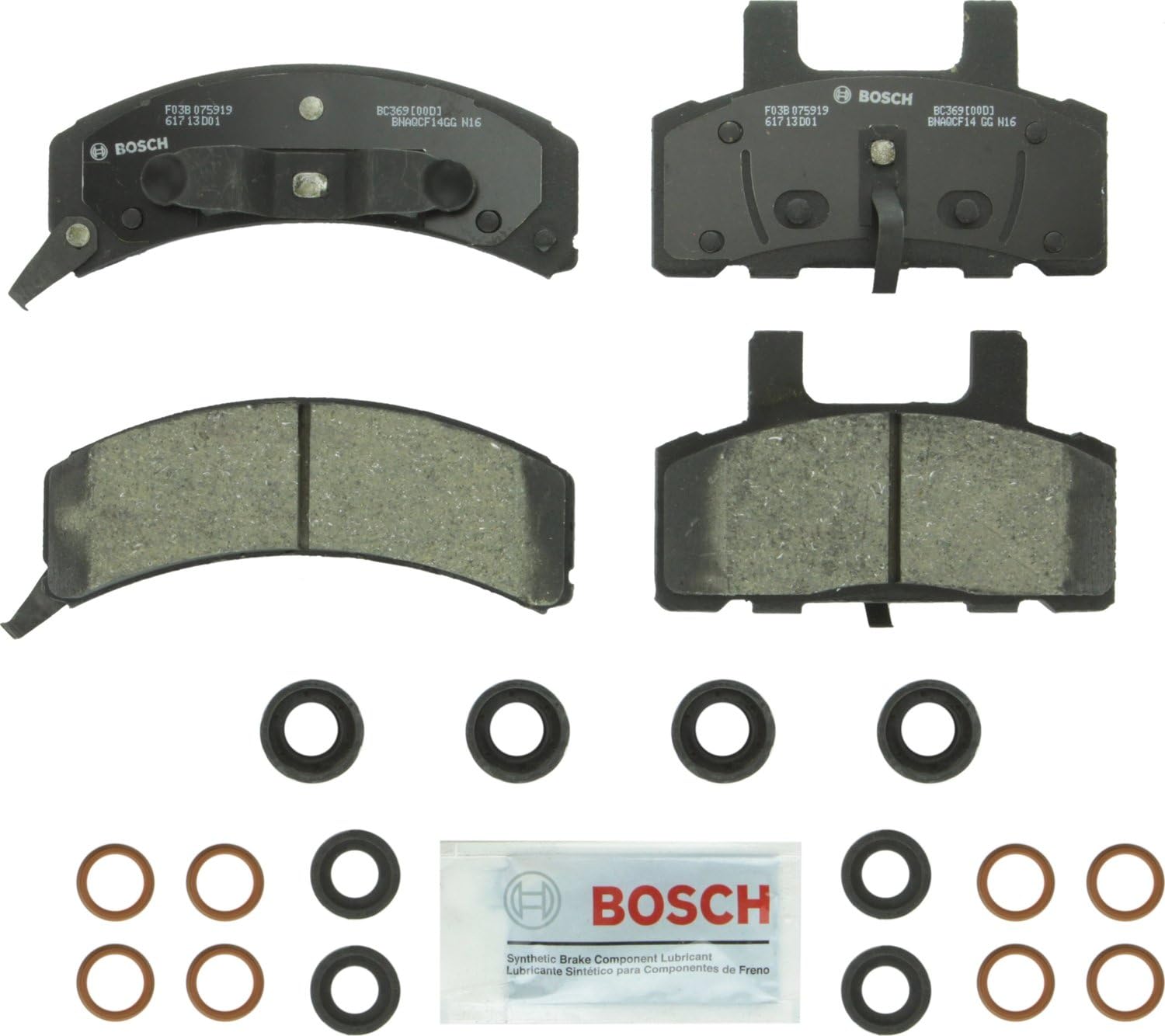
3. BOSCH QuietCast Premium Ceramic Disc Brake Pad Set, Front (BC369)
| Auto Part Position | Front |
|---|---|
| Material Type | Ceramic |
| Manufacturer | Bosch Automotive |
| Included Components | Brake Pads |
The Bosch QuietCast BC369 is a front axle ceramic brake pad kit built to replace factory pads on compatible full-size GM trucks and SUVs from the 1990s and early 2000s. It uses Bosch’s molded OE-style rubber core shims and a ceramic friction formula aimed at reducing noise and dust while preserving strong stopping power. The set ships with pads for one axle plus hardware and synthetic lubricant where applicable, which simplifies installation and helps the caliper slide smoothly. In real-world driving you can expect quieter stops and lower rotor wear compared with many semi-metallic aftermarket pads, and the powder-coated backing plates resist corrosion for longer service life. Limitations to consider are that fitment is vehicle-specific so confirm it matches your Tahoe year and trim, and ceramic pads can run slightly softer under severe towing or heavy-load use compared with heavy-duty semi-metallic options.
Best for: Buyers who prioritize a quiet, low-dust factory-quality replacement and straightforward installation for routine daily driving and light-duty use on a 1995–2000 Tahoe.
Less Ideal for: Drivers who frequently tow heavy loads, use the vehicle for commercial duty, or want pads tuned for aggressive performance braking should consider heavy-duty semi-metallic alternatives.
- OEM-style rubber core multilayer shims reduce noise and improve shim-to-steel bond
- Ceramic friction material provides quiet braking with low dust
- Includes hardware kit and synthetic lubricant for easier installation
- Powder-coated backing plates resist corrosion and extend pad life
- Designed for passenger/light-duty use so not optimized for heavy towing or sustained high-heat duty
Verdict: Choose the Bosch QuietCast BC369 if you want a quiet, low-dust, factory-quality front pad replacement that simplifies installation on a 1995–2000 Chevrolet Tahoe.
4. Geekstop Front Ceramic Brake Pads D369 (front set)

| Placement on Vehicle | Front |
|---|---|
| Pad Material | Ceramic |
| Number of Items | 4 |
| Manufacturer Warranty Description | 3 Year Warranty |
These Geekstop D369 front brake pads are a direct-replacement ceramic set built for late-1990s Chevy and GMC full-size trucks and SUVs. They provide the higher friction and lower dust characteristics typical of ceramic compounds, and the listing includes shims, chamfers, and noise-damping layers to reduce vibration and squeal during use. The pads are sold as a four-piece front set with mounting hardware, so installation is straightforward for a DIYer or tech replacing both front wheels at once. Practical benefits include quieter stops, less rotor wear compared with many semi-metallic pads, and an emphasis on low heat transmission to resist fade during heavier driving. Limitations are that ceramic pads may not offer the same initial bite or high-temperature stopping power as aggressive semi-metallic or performance compounds, so drivers who tow heavily or demand track-level braking may prefer a different material. Fitment is vehicle-specific, so confirm the pad number matches your Tahoe's brakes before buying.
Best for: Buyers looking for a budget-friendly, quieter front pad replacement for a late-1990s Chevy Tahoe who prioritize low dust and comfortable everyday braking over track-level performance.
Less Ideal for: Drivers who frequently tow heavy loads, perform heavy-duty hauling, or require high-temperature track braking should consider more aggressive brake compounds tailored for those demands.
- Ceramic formulation for quieter stops and reduced brake dust
- Includes shims, chamfers, and noise damping for smoother bedding and less vibration
- Sold as a complete four-piece front set with mounting hardware for easy installation
- Designed to limit heat transfer to help reduce brake fade under sustained use
- Ceramic material can have less initial bite and lower high-temperature stopping power than aggressive semi-metallic pads
Verdict: A cost-conscious front ceramic replacement set that delivers quieter, low-dust everyday braking for late-1990s Tahoe-series trucks and SUVs.
5. Bendix Priority1 CFM370 Semi‑Metallic Front Brake Pads

| Auto Part Position | Front |
|---|---|
| Compatible with Vehicle Type | CAR, SUV, Truck |
| Model Number | CFM370 |
| Material Type | Copper |
| Included Components | Brake pad set with installation hardware |
These Bendix Priority1 CFM370 semi‑metallic front pads are built to replace factory pads on select 1995–2000 Chevy and GMC trucks and SUVs and include basic installation hardware. In everyday use they deliver strong initial bite and good high‑temperature resistance, which helps reduce fade during towing or repeated braking. The pads include slots, chamfers, and specific shims to minimize noise and improve fit in the caliper. Installation is straightforward for a competent DIYer and the vehicle‑specific fit means you should not need modification. Because they are semi‑metallic, they sacrifice a bit more rotor friendliness compared with ceramic pads, so expect slightly higher rotor wear and more brake dust over time. For drivers who prioritize dependable stopping power and a quiet fitment that matches factory performance, these pads offer a practical balance between durability and braking consistency.
Best for: Buyers who want a dependable, factory‑matching front pad that prioritizes consistent stopping performance and quiet operation for late 1990s Chevy/GMC trucks and SUVs.
Less Ideal for: Drivers seeking the lowest rotor wear and least brake dust should consider ceramic pad options instead.
- Vehicle‑specific fit for direct replacement on listed Chevy/GMC models
- Semi‑metallic formulation gives strong stopping power and heat resistance
- Includes installation hardware and shims for easier installation and reduced noise
- Designed with slots and chamfers to help reduce squeal
- Semi‑metallic compound produces more brake dust and can be harder on rotors than ceramic pads
Verdict: A reliable, vehicle‑specific semi‑metallic pad that restores factory‑level stopping power for late 1990s Chevy and GMC trucks and SUVs.
6. Detroit Axle Front Brake Kit with Ceramic Pads and Rotors

| Fitment years and models | Select 1994–2002 Chevrolet/GMC front applications listed |
|---|---|
| Pad type | Ceramic |
| Rotor type | Vented, zinc plated |
| Kit contents | 2 rotors, 2 pads, brake fluid, brake cleaner |
This Detroit Axle front brake kit supplies everything needed to refresh the front braking system on compatible late 1990s Chevrolet and GMC trucks and SUVs. The kit includes two vented rotors and two ceramic pads plus a small bottle of brake fluid and brake cleaner so you can complete a basic front brake job without sourcing extra consumables. The rotors are zinc plated to resist corrosion and are machined with accurate locating holes for direct fitment, while the ceramic pads are stated to run quieter than some semi-metallic alternatives. Vented rotors help dissipate heat during repeated stops, which is useful for towing or suburban driving, but the kit does not include wheel bearings so additional parts may be required for some installations. This is a practical, value-oriented replacement kit that simplifies a standard front brake service when you need rotors and pads matched for the vehicle fitment listed.
Best for: Buyers who want a cost-effective, ready-to-install front brake replacement with matched rotors and ceramic pads and who rely on peer feedback and proven fitment when choosing parts.
Less Ideal for: Drivers seeking high-performance or heavy-duty brake compounds for frequent track use or maximum fade resistance should consider performance-oriented pads and rotors instead.
- Complete front kit includes two rotors, two ceramic pads, brake fluid, and cleaner for a one-stop service.
- Vented, zinc-plated rotors improve cooling and resist corrosion for longer visual life.
- Machined locating holes for direct fitment reduce the need for adjustments during installation.
- Ceramic pads are designed for lower noise compared with many metallic options.
- Does not include wheel bearings, so additional parts may be needed for certain hub assemblies.
Verdict: A convenient, value-focused front brake kit that supplies matched ceramic pads and vented rotors for the specified 1990s Chevrolet and GMC models.
7. ACDelco Silver 14D369MX Semi-Metallic Front Brake Pad Set

| Material | Ceramic |
|---|---|
| Auto Part Position | Front |
| Specification Met | OEM |
| Manufacturer Part Number | 19286027 |
These ACDelco Silver front brake pads provide a straightforward, factory-oriented replacement for older GM trucks and SUVs, including late-90s models in the Tahoe era when the correct fit is confirmed. The semi-metallic formulation is engineered for consistent stopping power with lower dust than older metallic compounds and the pads include chamfers, slots, and shims to reduce noise and vibration in everyday driving. The set ships with the needed hardware for an out-of-the-box install and requires no special break-in or machining, which simplifies a DIY swap or routine shop replacement. Expect reliable, predictable performance and good corrosion resistance from the machined backing plates. Limitations are that these are a value-oriented Silver-tier pad rather than a high-end performance or heavy-duty fleet pad, so drivers seeking track use or maximum fade resistance should consider specialty compounds instead.
Best for: A cautious buyer who wants a dependable, factory-compatible front pad replacement for a 1995–2000 Chevy Tahoe and values quiet, low-dust daily braking without needing performance-grade parts.
Less Ideal for: Drivers who frequently tow heavy loads, perform spirited or track driving, or need an upgraded fade-resistant compound should look at heavy-duty or performance-specific pads instead.
- Factory-validated fit and design for late-90s GM front brake systems
- Semi-metallic formula balances stopping power with reduced dust
- Includes hardware for straightforward installation
- Noise-reduction features like chamfers, slots, and shims
- Not formulated for high-performance or heavy towing use
Verdict: A solid, factory-oriented front pad option that delivers quiet, durable everyday braking for late-90s Chevy Tahoe owners seeking a reliable replacement.
Choosing the Right 1995-2000 Chevrolet Tahoe Brake Pads: Key Factors to Consider
Pad Compound and Performance
Pad compound determines how the pads bite, how they perform under heat, and how quickly they wear. Organic compounds are often quiet and gentle on rotors but may fade under heavier loads and wear faster. Semi-metallic compounds provide strong bite and heat resistance, which helps when towing or driving with a full passenger load, but they can be louder and accelerate rotor wear. Ceramic compounds strike a middle ground, offering quiet operation and stable friction, though they can be less effective than semi-metallic pads in extreme heat.
For the 1995-2000 Chevrolet Tahoe, choose a compound that matches your typical use. If you tow occasionally or drive with heavy loads, prioritize heat tolerance and consistent friction. For mainly city and highway driving with a focus on low noise and long rotor life, favor ceramic or higher-quality organic blends.
Stopping Power and Brake Feel
Stopping power is the most visible outcome of pad selection and affects pedal feel and confidence in everyday driving. Different compounds and pad profiles change initial bite, modulation, and the distance required to stop from a given speed. Some pads offer aggressive initial bite but a grabby feel that can reduce smoothness at low speeds. Others provide progressive, predictable engagement that improves control during parking maneuvers or in wet conditions.
On the Tahoe, which is heavier than many passenger cars, you should prioritize pads that give stable pedal feel and reliable deceleration under loaded conditions. Look for pads with documented friction characteristics and consistent performance across a range of temperatures to avoid sudden changes in stopping distance.
Rotor Compatibility and Wear
How a pad interacts with the rotor affects long-term maintenance. Abrasive compounds can score or thin rotors faster, increasing the need for machining or replacement. Conversely, pads formulated to be rotor-friendly help preserve rotor life and reduce total cost of ownership. Some pads also shed glazing less readily, maintaining performance and reducing vibration.
For the Tahoe, where rotors can be larger and exposed to heavier loads, prioritize pads that balance bite with rotor preservation. If your existing rotors have significant wear or corrosion, choosing a non-abrasive pad can extend rotor life while you plan for a rotor service.
Noise, Vibration, and Harshness (NVH)
Noise and vibration are common concerns with replacement pads. Rattles, squeal, and grinding sounds can come from pad compound, backing-plate fit, or missing hardware. Some compounds are inherently noisier, especially semi-metallic designs, which can produce higher-frequency squeals under light braking. Quality pads include features such as chamfered edges, shims, and insulators to control NVH.
Because the Tahoe is used in daily driving and family transport, many owners prefer quieter pads. If noise sensitivity is high, seek pads marketed for NVH control and verify that new hardware and shims are part of the installation package to minimize post-install noise.
Durability and Maintenance Intervals
Pad longevity varies with compound, driving style, and vehicle load. Durability matters for owners who want fewer service visits and predictable maintenance intervals. Heavier vehicles and those used for towing or off-road work will accelerate pad wear. Service life also depends on rotor condition and braking habits.
For a 1995-2000 Tahoe, estimate replacement intervals based on your use case: light suburban driving may allow longer intervals, while frequent towing calls for pads with higher wear resistance. Consider whether the pads come with clear wear indicators or sensor compatibility to simplify future checks.
Fitment and Installation
Correct fitment ensures proper function and reduces installation time. Backing-plate shape, clip locations, and pad thickness must match the Tahoe's caliper design for these model years. Incorrect fitment can cause uneven wear, noise, or even safety issues. Some aftermarket pads include extra hardware or specific backing treatments to improve retention and alignment.
When selecting pads for the 1995-2000 Tahoe, confirm exact year and axle fitment before purchase. If you are replacing only front or rear pads, check whether the pads require additional hardware or caliper service to restore factory clearance and avoid dragging or premature wear.
Front Vs Rear Brake Pad Roles on the Tahoe
Front and rear pads play different roles because braking force distribution favors the front axle on the Tahoe. Front pads generally do more work and therefore wear faster; they also require higher heat tolerance and stronger friction to manage deceleration. Rear pads contribute to balance and stability during braking and can have different compound requirements.
When planning a replacement, consider replacing both axles if front pads are heavily worn, because mismatched pad life or friction can affect pedal feel and ABS behavior. If you only replace one axle, choose pads that match the friction characteristics of the existing pads to maintain consistent braking.
- Front pads handle the majority of stopping force and heat.
- Rear pads support balance and stability, helping with controlled descents.
- Replacing both axles at once reduces mismatched wear and odd pedal feel.
How Brake Pad Thickness and Specs Matter
Pad thickness spec determines how much material you have before pads reach minimum serviceable limits. Thicker pads can provide longer life but must still fit the caliper and maintain proper clearance. Manufacturers publish thickness specs and minimum safe thickness numbers; follow those guidelines to avoid metal-on-metal contact.
Measuring current pad thickness gives a baseline for future wear checks. Record thickness after installation and during routine inspections so you can track predicted replacement intervals instead of guessing.
- Measure pad thickness with the wheel off for accurate readings.
- Compare new pad thickness to the vehicle's caliper clearance to ensure fitment.
- Maintain a record of thickness to predict when replacement is due.
Noise Remedies and Installation Tips
Addressing brake noise usually starts at installation. Properly clean mounting surfaces, apply high-temperature grease to contact points where appropriate, and install the correct hardware and shims. Chamfered pad edges and high-quality shims reduce the chance of squeal. Torque caliper bolts to factory specs and ensure hardware is in good condition.
If you experience grinding noise, inspect for excessive rotor wear or retained hardware fragments. Squeal on light braking is often vibration-based and resolves with correct shims and bedding-in procedures.
- Always replace or reuse hardware that meets condition standards.
- Use high-temp grease sparingly on contact points, not on friction surfaces.
- Follow a bedding-in procedure to seat pads and reduce initial noise.
Bed-In Procedures for Reliable Performance
Bedding-in pads and rotors after installation helps transfer a uniform friction layer to the rotor surface, improving stopping consistency and reducing noise. A standard bed-in involves a series of moderate decelerations from highway speeds with cooling intervals. Avoid repeated hard stops when pads and rotors are new because extreme heat can glaze the compound.
For the Tahoe, perform bed-in runs on a safe, low-traffic road and allow brake temperatures to drop between cycles. Proper bed-in can shorten break-in wear and improve long-term performance.
- Perform 8 to 12 moderate stops from 40-50 mph without coming to a full stop.
- Allow cooling periods between cycles to avoid overheating.
- Avoid heavy towing immediately after a new installation.
When to Consider Rotor Service
Rotors should be inspected when pads are replaced. Look for scoring, thickness variation, or warping. If rotor runout or thickness is out of spec, machining or replacement will be necessary to restore smooth braking. Thin or heavily scored rotors can reduce pad life and increase vibration.
For older Tahoes, rotors may show age-related corrosion. If rotors are within thickness specifications and surface condition is acceptable, resurfacing can be cost-effective. When in doubt, measure rotor thickness and compare against factory minimums before deciding.
- Measure rotor thickness and runout with proper tools.
- Resurface only if within safe thickness limits and not excessively scored.
- Replace rotors if they are below the manufacturer minimum thickness.
Still looking for the perfect fit?
Select your Chevrolet Tahoe configuration to see the most relevant Brake Pads recommendations
How We Chose the Best 1995-2000 Chevrolet Tahoe Brake Pads
We selected the seven brake pad options using criteria that matter specifically for the 1995-2000 Chevrolet Tahoe and similar full-size SUVs. Evaluation focused on stopping performance across normal and moderately heavy loads, pad compound and heat tolerance, and longevity under typical suburban and highway driving. We also considered pad wear characteristics and how the compound interacts with common rotor materials to limit scoring and warping. Fitment accuracy and available backing-plate designs were checked to reduce installation issues and rattles. Ease of installation and compatibility with common hardware and sensors used on these model years were part of the assessment. Exclusions: we excluded pads that require caliper or hardware modifications, pads intended strictly for race or track use, and options that lack clear fitment data for the 1995-2000 Tahoe. The final list prioritizes balanced performance, predictable wear, and low noise for owners who want dependable daily driving braking without extra vehicle changes.
Our full evaluation process is outlined in our review methodology.
FAQ
How often should I replace brake pads on a 1995-2000 Chevrolet Tahoe?
Replacement intervals depend on driving habits and load. Many owners see 30,000 to 60,000 miles under normal driving, but towing or frequent heavy braking reduces life. Inspect pads every 6 months or during tire rotations to monitor thickness.
Can I mix different pad compounds on the Tahoe axles?
Mixing compounds between front and rear is generally not recommended because it changes pedal feel and ABS behavior. If you must mix, match friction characteristics closely and monitor performance; ideally replace pads on both axles together.
What causes a grinding noise after installing new brake pads?
Grinding often indicates contact between metal and the rotor, possibly from worn hardware, backing-plate contact, or excessively thin rotors. Reinspect installation, hardware, and rotor condition if grinding occurs immediately after replacement.
Are ceramic pads a good choice for the Tahoe?
Ceramic pads are a good option for drivers prioritizing low noise, stable cold friction, and rotor friendliness. They may not offer the same extreme-heat performance as some semi-metallic pads, so consider your towing and load habits.
Do I need new hardware or shims when replacing pads?
Replacing or at least inspecting hardware and shims is recommended. Worn clips or missing shims increase noise and uneven wear. Many installations benefit from fresh hardware to ensure proper pad alignment and movement.
How do I check pad thickness without removing the caliper?
You can often estimate pad thickness by viewing the pad through the wheel spokes or using a flashlight. For accurate measurement, remove the wheel to measure directly. Regular visual checks help catch wear before it reaches a critical level.
Final Verdict
When choosing brake pads for a 1995-2000 Chevrolet Tahoe, prioritize a compound and construction that match how you use the vehicle. If you tow or carry heavy loads, focus on heat-resistant compounds and stable friction. If quiet operation and rotor longevity matter most, favor ceramic or rotor-friendly formulations.Balance stopping power, NVH control, and expected service life when deciding. Matching pad characteristics between front and rear and confirming correct fitment will deliver the most dependable braking performance for the Tahoe.
Explore More:
- Check out all Chevrolet Tahoe parts & accessories
- Explore Brake Pads Maintenance & Repair Guides
- Explore Brake System
- Browse all Auto Parts
