

Note: This article contains affiliate links. If you click on these links and make a purchase, I may earn a small commission at no extra cost to you. This helps support my research and content. Read my full affiliate disclosure here.
If you own a 1997-2001 Toyota Camry, worn pads and warped rotors are common causes of vibration, longer stopping distances, and brake noise. Choosing the right brake pad & rotor kit matters because the wrong fit or material can leave you with squeal, dust, or reduced braking performance. This guide covers six shortlisted kits that fit the full 1997–2001 Camry range and explains the key tradeoffs between pad compound, rotor finish, and installation fitment.You will find options intended for routine commuting, heavier suburban driving, and owners who prefer a firmer pedal feel. The picks were evaluated for proper fit, material durability, rotor flatness, and ease of installation to help you make a confident choice. Read on for the buying factors, installation notes, and FAQs specific to the 1997–2001 Camry.
Looking for other parts? See all Toyota Camry parts & accessories.
Top Picks at a Glance
| Best Overall The best all-around choice for most situations | Detroit Axle Front Brake Kit with Ceramic Pads and 10.83" Rotors |  |
| Best Quality Built to a higher standard if you want something more solid | Callahan Brake Parts Front Brake Kit with Rotors, Ceramic Pads and Calipers |  |
| Best Value The sweet spot between price and what you get | Detroit Axle Front Brake Kit with 10.04" Rotors and Ceramic Pads |  |
| Best Budget The cheapest option that still gets the job done reliably | Detroit Axle Front Brake Kit with 10.04" Rotors and Ceramic Pads for 1992–2001 Toyota Camry 2.2L | |
| Highest Rated A top-rated pick with lots of positive feedback | Detroit Axle Front Brake Kit for 2.2L Toyota Camry (Front Rotors + Ceramic Pads) | |
| Most Popular A crowd favorite that many people choose with confidence | Detroit Axle Brake Kit for 2000–2001 Toyota Camry and 1999–2003 Toyota Solara (Front and Rear Rotors with Ceramic Pads) |  |
Detroit Axle Front Brake Kit with Ceramic Pads and 10.83" Rotors

| Rotor size | 10.83 inch |
|---|---|
| Orientation | Front |
| Pad type | 100% Ceramic |
| Part interchange | R-31050 P-476 |
| Compatible vehicle type | Car |
This Detroit Axle front brake kit supplies a complete replacement for vehicles that use 10.83 inch front rotors, bundling two vented rotors, a set of ceramic front pads and installation hardware. It is intended for direct swap-in on the 1995–1997 Toyota Avalon and the Camry/Sienna/ES300 model years listed that use the specified rotor size. The rotors are vented for faster cooling and zinc plated to slow visible corrosion, while the 100% ceramic pads aim to reduce noise and deliver consistent stopping under everyday driving. Installation is straightforward for anyone comfortable with basic brake work, but compressing the caliper piston may require a brake tool. The kit is positioned as a value-oriented, factory-replacement style option that improves braking feel over worn parts without moving into performance-level components. Expect good fitment and quiet operation in normal driving, with occasional user reports of shipping damage or surface rust on arrival for some units due to handling; rotors are cast iron so surface oxidation is normal over time.
Best for: A Camry owner who wants a reliable, budget-friendly full front brake replacement that restores stopping feel and reduces noise without upgrading to high-performance parts.
Less Ideal for: Drivers who need heavy-duty or track-capable braking performance should look at performance-oriented rotors and pad compounds instead.
- Complete kit includes both front rotors, ceramic pads and installation hardware for a single purchase
- Vented rotors promote faster cooling to help reduce brake fade in regular driving
- Zinc plating on rotors helps resist visible corrosion during storage and initial use
- Ceramic pads are quiet and provide consistent, low-dust braking feel
- Rotors are cast iron and can develop surface rust over time, which is typical for the material
Verdict: A practical, cost-conscious front brake kit that gives direct-fit rotor and ceramic pad replacement to restore quiet, dependable braking on the specified Camry/Avalon/Sienna/ES300 applications.
Callahan Brake Parts Front Brake Kit with Rotors, Ceramic Pads and Calipers

| Included Components | Brake Calipers, Rotors, Pads |
|---|---|
| Orientation | Front |
| Compatible with Vehicle Type | Car |
| Manufacturer Warranty Description | 1 year manufacturer warranty |
This Callahan front brake kit supplies everything needed to refresh the front braking system: two machined rotors, a set of ceramic pads with hardware, and a pair of rebuilt front calipers. It is intended as a direct, factory-style replacement for 1997–2001 Toyota Camry front brakes and installs like an OEM swap. The rotors are precision machined and balanced to reduce vibration and the included calipers arrive preloaded with hardware to speed installation. Ceramic pads deliver quieter initial operation and lower dust than some semi-metallic options, making this kit a good balance of performance and daily drivability. Because the calipers are rebuilt, buyers should inspect components for cleanliness and proper plating before installation, and some users reported occasional fitment or minor hardware issues like undersized crush washers. For drivers wanting improved braking feel over worn components without swapping to aftermarket performance rotors or race pads, this kit offers a convenient, all-in-one solution.
Best for: Drivers who want a straightforward front brake refresh that improves everyday stopping performance without converting to track-focused hardware.
Less Ideal for: People seeking track-level braking upgrades or more aggressive pad/rotor combinations should choose dedicated performance rotors and pads instead.
- Complete kit includes rotors, ceramic pads, and rebuilt calipers for one-stop front braking service
- Rotors are precision machined and balanced to reduce vibration and improve pedal feel
- Ceramic pads produce lower dust and quieter operation compared with many semi-metallic pads
- Preloaded calipers and included hardware simplify installation and reduce parts hunting
- Rebuilt calipers have occasional quality-control issues such as surface rust or thin plating reported by buyers
- Some supplied small parts like crush washers may not fit and could require replacement
Verdict: A convenient, factory-style front brake kit that refreshes rotors, pads, and calipers for improved everyday braking on 1997–2001 Camry models.
Detroit Axle Front Brake Kit with 10.04" Rotors and Ceramic Pads
| Brand | Detroit Axle |
|---|---|
| Fitment | 10.04 inch (255mm) front rotor diameter |
| Includes | Front rotors, ceramic pads, hardware, brake cleaner, brake fluid |
| Model | Brake Kits |
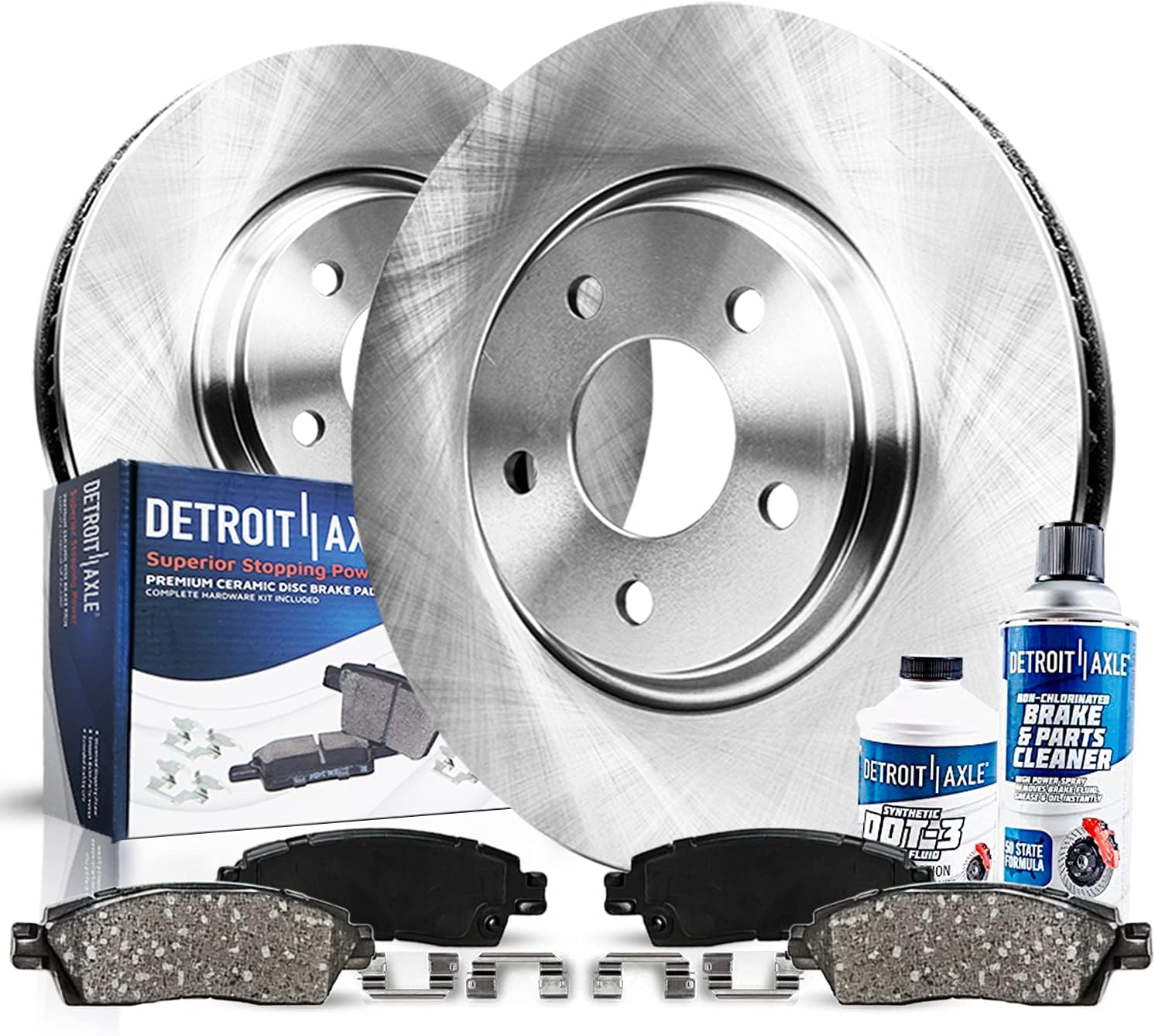
This Detroit Axle front brake kit packages two 10.04-inch front rotors, ceramic brake pads, installation hardware, a brake cleaner spray and a small bottle of brake fluid to cover most front brake jobs on 2.2L Camry models from the late 1990s. It is designed as a one-stop replacement bundle for owners doing a DIY brake job or a quick shop service. The rotors undergo impact and wear testing and the included hardware and cleaner simplify prep and installation. Ceramic pads help keep dust and noise low for everyday driving, while the bundled fluid and cleaner reduce trips to the parts store. Limitations to note are that ceramic pads can feel less aggressive under heavy loads and repeated hard stops compared with performance compounds, and a few user reports show mixed long-term durability, so careful bedding and inspection after installation are recommended. The kit is a practical option when you want a complete, factory-style front brake service without sourcing individual components.
Best for: Buyers who want a budget-conscious, ready-to-install front brake service kit that minimizes parts sourcing and simplifies a DIY or quick-shop replacement.
Less Ideal for: Drivers who frequently tow, haul heavy loads, or demand maximum fade resistance should consider performance-oriented pads and rotors instead.
- Complete kit includes rotors, ceramic pads, hardware, brake cleaner and brake fluid for a single front-axle service
- Ceramic pads reduce dust and cabin noise for everyday commuting
- Rotors are tested for impact, wear, and fatigue to support durability expectations
- Bundled hardware and fluids reduce the need to buy separate parts for a DIY installation
- Ceramic pads can deliver less initial bite under heavy or repeated braking compared with semi-metallic or performance pads
- Some customers report mixed long-term durability on certain vehicles
Verdict: A convenient, all-in-one front brake replacement kit that streamlines a DIY or shop install for late 1990s 2.2L Camry owners.
Detroit Axle Front Brake Kit with 10.04" Rotors and Ceramic Pads for 1992–2001 Toyota Camry 2.2L
| Fitment | 1992–1999 and 2000–2001 Toyota Camry 2.2L (10.04" front rotors for specified models) |
|---|---|
| Rotor diameter | 10.04 inch (255 mm) |
| Pad type | Ceramic |
| Kit contents | 2 front rotors, 2 front ceramic pads, hardware |
This Detroit Axle front brake kit supplies two ventilated 10.04-inch front rotors plus a pair of ceramic brake pads and the necessary hardware for installation on 2.2L Camry models covered by the fitment. The rotors are zinc plated for corrosion resistance and feature ventilation slots to help dissipate heat and reduce moisture buildup during normal driving. Machined locating holes aim to match factory alignment for a bolt-on fit, and the pads are ceramic for quieter operation and lower dust compared with some semi-metallic options. For a budget-focused replacement, the kit bundles rotors and pads so you replace both wearing surfaces at once, which simplifies service and helps restore braking performance. Limitations to consider are typical of economy aftermarket kits: ceramic pads trade some high-load fade resistance for comfort and low dust, and a few users reported loud noise or fitment mistakes when the wrong variation was ordered. Confirm the rotor diameter and wheel size before buying to ensure the correct 10.04-inch rotor variant for your Camry.
Best for: A cost-focused owner who wants an all-in-one front brake replacement that restores everyday stopping performance without spending on premium performance rotors or pads.
Less Ideal for: Drivers who frequently tow, carry heavy loads, or regularly drive aggressively and need higher fade resistance should consider performance-oriented brake components instead.
- Complete front kit includes two rotors, two ceramic pads, and installation hardware for a one-stop replacement
- Zinc plating and ventilated rotors improve corrosion resistance and cooling compared with plain rotors
- Machined locating holes sized to match factory placement for straightforward installation
- Ceramic pads produce lower dust and are generally quieter during everyday driving
- Ceramic pad compound may not perform as well under repeated heavy, high-temperature braking compared with performance-oriented materials
- Some buyers reported loud noise or incorrect fitment when ordering the wrong rotor variation
Verdict: A budget-friendly, complete front brake kit that replaces worn rotors and pads and restores reliable everyday stopping for 2.2L Camry models with 10.04-inch front rotors.
Detroit Axle Front Brake Kit for 2.2L Toyota Camry (Front Rotors + Ceramic Pads)
| Fitment | 2.2L Toyota Camry front (10.00 in rotor OD; 14 in wheels) |
|---|---|
| Kit includes | 2x front rotors, 2x ceramic brake pads, hardware |
| Rotor type | Drilled and slotted, vented |
| Orientation | Front |
| Warranty | 10 Year Warranty |
This Detroit Axle front brake kit bundles two drilled and slotted front rotors with a pair of ceramic brake pads and the necessary hardware for a direct replacement on 2.2L Camry front assemblies that use the 10.00 inch rotor diameter. It is intended for DIY installers and shops replacing worn front components; the rotors are vented and zinc plated to help with cooling and corrosion resistance while the ceramic pads aim for quieter operation and lower dust. The kit is machined to factory locating holes for straightforward fitment and includes basic hardware and a small tube of grease. Practical benefits include improved stopping feel compared with heavily worn parts, reduced pad dust, and a long manufacturer warranty backing. Pay attention to the strict fitment note — this kit only fits 2.2L Camry front setups with the specified rotor diameter and is limited to vehicles with 14-inch wheel configurations, so verify rotor measurements before purchase.
Best for: Buyers who prioritize dependable, factory-style replacements and want a complete front brake service kit they can install themselves or have installed once and then expect long service life.
Less Ideal for: Shoppers who need brake components for other engine or wheel configurations, or who want performance-oriented pads for track use, should choose a different kit tailored to those needs.
- Complete kit with both rotors and ceramic pads for a one-stop front brake replacement
- Drilled and slotted, vented rotors promote faster cooling during repeated stops
- Machined locating holes and included hardware simplify installation and alignment
- Ceramic pads generally run quieter and produce less wheel dust than semi-metallic pads
- 10-year warranty offers long-term coverage against manufacturing defects
- Fitment is narrowly specific to 2.2L Camry front setups with 10.00 inch rotors and 14-inch wheels, requiring measurement to confirm compatibility
- Included grease tube may be minimal for a full job and some installers prefer to use their own higher-volume brake lubricant
Verdict: A complete, reliability-focused front brake kit that matches factory fit and gives quieter, lower-dust braking for 2.2L Camry front assemblies with 10-inch rotors.
Detroit Axle Brake Kit for 2000–2001 Toyota Camry and 1999–2003 Toyota Solara (Front and Rear Rotors with Ceramic Pads)
| Compatible Vehicle Type | Car |
|---|---|
| Automotive Fit Type | Vehicle Specific Fit |
| Orientation | Dual |
| Includes | Front and rear rotors, front and rear ceramic pads, hardware, brake cleaner, brake fluid |
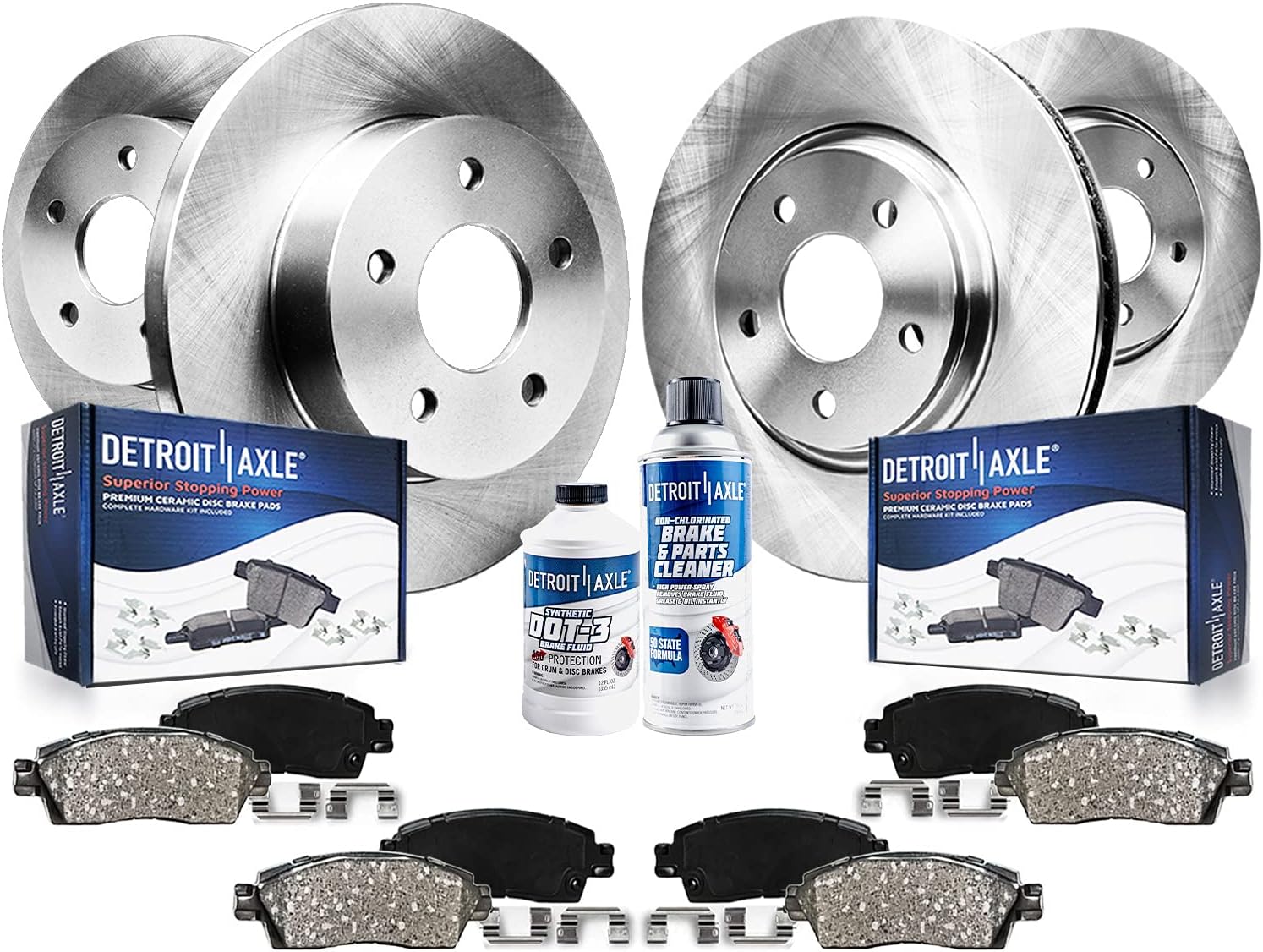
This Detroit Axle kit supplies everything needed to replace both front and rear braking components on the covered Toyota Camry and Solara years: two front and two rear vented rotors plus front and rear ceramic pads, basic hardware, a can of brake cleaner and a bottle of brake fluid. The rotors are ventilated for better heat dissipation and come zinc plated to reduce corrosion and visible wheel dust, while the ceramic pads are metal-free for quieter operation and lower dust. Fit is vehicle-specific so installation should be straightforward for a home mechanic and customers report solid fit and immediate braking improvement after a short break-in. The kit includes only basic hardware and small packets of anti-seize, so you may want to supply gloves, a more generous lubricant, or rotor screws if yours are seized or require replacement. A few buyers noted occasional clip fitment issues or early low-speed squeal on some installs, so check the hardware during assembly and bed the pads per standard procedures for best results.
Best for: Buyers who prioritize reassurance from many customer experiences and want a single complete kit that makes a DIY brake job straightforward for the specified Camry/Solara years.
Less Ideal for: Shoppers looking for premium performance rotors or a full accessory bundle including gloves, larger lubricant packets, or replacement rotor mounting screws should consider a different package.
- Complete front-and-rear kit includes rotors, ceramic pads, basic hardware, brake cleaner and brake fluid
- Vented rotors with zinc plating help with heat dissipation and resist surface corrosion
- Vehicle-specific fit reduces the need for modifications and simplifies DIY installation
- Ceramic pads are low-dust and designed for quieter braking than semi-metallic compounds
- Hardware kit is minimal and some customers reported clip size or fitment problems requiring adjustments or replacements
- Rotor mounting screws are not included for cases where old screws are seized and need replacement
Verdict: A comprehensive, vehicle-specific brake kit that delivers ready-to-install rotors and ceramic pads to restore braking for the covered Camry and Solara model years.
Choosing the Right 1997-2001 Toyota Camry Brake Pad & Rotor Kit: Key Factors to Consider
Correct Fitment and Mounting Specs
Matching bolt patterns, rotor hat diameter, and caliper mounting dimensions is the first priority for any 1997–2001 Toyota Camry brake pad and rotor kit. Even small differences in hat size or pilot diameter can cause vibration or prevent the rotor from seating properly. Confirming that rotors are made to the Camrys hub thickness and finish diameter reduces install hassles and avoids emergency rework.
Fitment also affects whether you can reuse existing hardware or need replacement clips, pins, and shims. Choosing a kit designed for this Camry generation minimizes the chance of incorrect caliper alignment, uneven pad contact, and premature wear.
Pad Compound and Driving Use
Pad material determines initial bite, fade resistance, dust production, and noise. For everyday city and highway driving, ceramic-style compounds often provide quieter operation and lower dust at the cost of slightly lower high-heat fade resistance. Metallic or semi-metallic compounds offer stronger initial bite and better thermal management for heavier loads or spirited driving but can be noisier and produce more rotor wear.
Consider your driving pattern on the 19971-2001 Camry. Commuters who value low dust and quietness should favor compounds that prioritize those traits. Drivers who tow, carry heavy loads, or perform more aggressive stops may prefer harder compounds for consistent performance under heat.
Rotor Quality: Thickness, Runout, and Finish
Rotor thickness and surface flatness are critical for a consistent pedal and to avoid vibration through the steering wheel. Rotors made within manufacturer thickness tolerances reduce the need for resurfacing. Excessive runout can cause pulsation and accelerated pad wear. A quality kit will specify final thickness, maximum allowable runout, and whether the rotor is pre-machined or requires turning.
Surface finish and any anti-corrosion coating matter for long-term appearance and initial bedding. Slotted or drilled designs change bedding behavior and may affect noise. For a 19971-2001 Camry, choose rotors balanced for the vehicles typical operating conditions to minimize vibration and maintenance.
Included Hardware and Installation Ease
A complete kit that includes properly matched clips, shims, guide pins, and anti-rattle hardware saves time and ensures correct pad seating. Missing or poor-quality hardware can cause rattles, uneven wear, and installation delays. Check whether the kit supplies greased guide pins or requires transfer of OE components.
Ease of installation for Camry owners also depends on whether the rotor is true and ready to mount without lathe work and whether the pad backing plates match the caliper housing. Kits that provide clear installation instructions and necessary small parts reduce garage time and help achieve the intended braking characteristics.
Noise and Dust Characteristics
Noise mitigation and dust control are frequent buyer concerns with brake pad and rotor kits. Softer compounds and chamfered pad edges reduce squeal, while higher-density compounds can increase audible feedback. Rotor surface texture and finish can also influence the amount and pattern of dust transferred to wheels.
For owners of the 19971-2001 Camry who park in driveways or maintain alloy wheels, lower-dust kits reduce cleaning frequency. If you have previous experience with post-install brake noise, look for kits that include shims and anti-vibration features to address that specific issue.
Longevity and Maintenance Tradeoffs
Long-lasting pads and rotors often use harder materials or thicker rotors, which can extend service intervals but may accelerate wear on mating components. Balancing longevity against noise, dust, and initial bite is a practical decision for Camry owners.
Consider typical mileage, whether you plan to resurface rotors during replacement, and how often you perform brake inspections. Selecting parts with clear wear specifications and accessible replacement hardware reduces long-term ownership costs.
Front Vs Rear Brake Kit Considerations
The 19971-2001 Toyota Camry uses distinct front and rear systems that often require different pad compounds and rotor treatments. Front brakes handle a larger portion of stopping force and heat, so front rotors and pads should be chosen for thermal stability and resistance to warping. Rear components typically see less heat and can prioritize quieter operation and lower dust.
When selecting a front brake kit replacement, confirm rotor thickness and any directional features. For rear brake rotor and pads, fitment and parking-brake compatibility are key. If you only replace one axle at a time, match the pad feel reasonably to the other axle to avoid unbalanced pedal response.
- Front kits should prioritize heat tolerance and rotor flatness.
- Rear kits should ensure parking-brake compatibility and quiet operation.
- Avoid mixing drastically different pad compounds between front and rear.
Understanding Fitment Notes and Hub Prep
Fitment notes for Camry kits commonly call out pilot diameter, hat height, and required hub cleaning. Before fitting new rotors, remove rust and debris from the hub face to ensure a uniform seating surface. Even minimal corrosion can introduce runout or vibration.
Some replacement rotors arrive with a protective coating that must be removed during bedding. Verify fitment for any aftermarket ABS tone ring or related features specific to the 19971-2001 Camry generation.
- Clean hub mating surface to remove rust before installing rotors.
- Check rotor hat and pilot dimensions against the vehicle hub.
- Confirm whether the kit requires transfer of original hardware.
Bed-In Procedures and Break-In Tips
Bedding new pads and rotors correctly helps establish an even transfer layer and reduces the chance of pulsation or noise. A typical bed-in sequence involves repeated moderate stops from progressively higher speeds while avoiding full-effort stops for the first few hundred miles. This helps the pad and rotor surface mate without glazing or uneven transfer.
After installation on a 19971-2001 Camry, avoid heavy towing or downhill driving for the first 200 miles. Monitor pedal feel and inspect for any unusual vibration during the initial break-in period. If you detect persistent noise, check that shims and hardware are properly seated.
- Perform moderate repeated stops to build a transfer layer.
- Avoid heavy braking during the first 200 miles.
- Re-torque wheel fasteners after initial bedding period.
When to Resurface Rotors Vs Replace
The decision to resurface or replace rotors hinges on remaining thickness, runout, and the rotors ability to meet manufacturer minimums. For the Camry, rotors that are close to minimum thickness or show significant heat cracking should be replaced. Rotors that are only slightly uneven and still above the minimum can be resurfaced, but resurfacing removes metal and shortens future life.
Many replacement kits include rotors already machined to specification, avoiding lathe work and ensuring a fresh surface. If you are unsure of your rotor condition, measure thickness at multiple points and compare to the vehicles service limits before opting to resurface.
- Replace rotors if thickness is below manufacturer minimum or if cracking is present.
- Resurface only when runout can be corrected and sufficient thickness remains.
- Consider new rotors to eliminate hidden warpage and reduce installation time.
Addressing Brake Noise After Replacement
Brake noise after replacement can come from poor bedding, incompatible pad compound, missing shims, or caliper hardware issues. To minimize noise, ensure all anti-rattle clips are installed, use recommended shims or damping grease where specified, and follow bedding procedures. Cleaning mating surfaces and torquing fasteners to spec also reduces vibration that leads to squeal.
If noise persists after proper installation and bed-in, inspect for uneven pad transfer or glazed pads. Replacing hardware or switching to pads with added noise mitigation features is often the remedy on this Camry generation.
- Install all supplied shims and anti-rattle hardware.
- Use high-temperature brake grease on guide pins when recommended.
- Follow bedding procedure precisely to minimize early noise.
Ceramic Vs Metallic Pad Choices for the Camry
Ceramic-style pads typically offer quieter operation, less dust, and a more refined pedal feel for daily driving in a Camry. They are well suited to commuting and light-duty use. Metallic or semi-metallic pads increase initial bite and handle heat better during repeated hard stops, but can be louder and create more rotor wear.
Choose ceramic pads if low dust and noise are top priorities. Opt for metallic or higher-performance compounds only if you regularly subject the Camry to heavier loads or aggressive braking where fade resistance becomes important.
- Ceramic: quieter, cleaner, good for commuting.
- Metallic: better heat tolerance, more durable under hard use.
- Match compound choice to real-world driving rather than theoretical performance.
Still looking for the perfect fit?
Select your Toyota Camry configuration to see the most relevant Brake Pad & Rotor Kits recommendations
How We Chose the Best 1997-2001 Toyota Camry Brake Pad & Rotor Kit
We prioritized kits that match the precise mounting and hub specifications used across 1997–2001 Toyota Camry front and rear assemblies. Our selection criteria focused on real-world fitment, pad compound suitability, rotor machining tolerances, and long-term durability under typical owner use.Concrete evaluation criteria included: correct bolt pattern and hat dimensions for this Camry generation; pad compound documentation covering friction coefficient, wear rate, and dust; rotor runout and thickness specifications plus any factory machining or anti-corrosion coating; backing plate and hardware quality including anti-rattle clips and shims; and ease of installation measured by how often OE-fastener reuse is possible and whether extra machining is required. We also reviewed stated brake torque and bedding instructions where available.Excluded from consideration were kits lacking clear Camry 1997–2001 fitment data, parts with nonstandard hub offsets that require machining, and pads without published material specs. The final list emphasizes reliable fit, predictable pedal feel, manageable dust levels, and rotor tolerance that minimizes the need for additional resurfacing.
Our full evaluation process is outlined in our review methodology.
FAQ
How do I know if I need a full brake pad and rotor kit for my 1997-2001 Camry?
If you feel vibration, pulsing in the pedal, audible scoring, or see deep grooves on the rotor surface, a full pad and rotor replacement is recommended. Excessive pad wear, diminished stopping performance, or rusted rotors that prevent proper seating are also signs that both components should be replaced.
Can I resurface my Camry rotors instead of replacing them?
You can resurface rotors if they are above the minimum thickness and runout can be corrected. However, resurfacing reduces future life and may not fix hidden warpage. For older rotors near service limits, replacement is usually the more reliable option.
Are ceramic pads a good choice for the 1997-2001 Camry?
Ceramic pads are often a good choice for this Camry generation because they tend to produce less dust and are quieter for daily driving. They may offer slightly less initial bite under extreme repeated braking compared with metallic compounds, so consider driving style when choosing.
What causes brake noise after replacement and how can I prevent it?
Noise often stems from improper bedding, missing shims or clips, contaminated pad surfaces, or mismatched pad compounds. Prevent noise by installing all hardware correctly, cleaning mating surfaces, applying recommended lubricant to guide pins, and following a proper bed-in procedure.
Do I need new hardware when installing a brake kit on my Camry?
New hardware is recommended when existing clips, pins, or shims are corroded or worn. High-quality kits include matched hardware, which ensures proper pad seating and reduces the chance of rattle or uneven wear. Inspect the calipers and mounting hardware and replace as necessary.
How long after installation should I recheck wheel torque and brake performance?
Re-torque wheel fasteners after the first 50 to 100 miles following installation and bedding. Check pedal feel and for any unusual vibration during the first few hundred miles, and re-inspect hardware and rotor seating if any concerns arise.
Final Verdict
Prioritize correct fitment, pad compound, and rotor tolerance when choosing a brake pad & rotor kit for a 19971-2001 Toyota Camry. Match front components to heat and load demands while favoring quieter, low-dust choices for the rear if daily comfort and wheel cleanliness are important. Consider whether rotors should be replaced or resurfaced based on measured thickness and runout rather than assumptions.Ultimately, pick the kit that balances pad material, rotor quality, and included hardware for your driving pattern. That approach minimizes noise, extends service intervals, and restores consistent stopping performance for your Camry.
Explore More:
- Check out all Toyota Camry parts & accessories
- Explore Brake Pad & Rotor Kits Maintenance & Repair Guides
- Explore Brake System
- Browse all Auto Parts
