

Note: This article contains affiliate links. If you click on these links and make a purchase, I may earn a small commission at no extra cost to you. This helps support my research and content. Read my full affiliate disclosure here.
If your Ford F-450 is showing a soft brake pedal, fluid loss, or uneven braking, the master cylinder is often the root cause. Picking the right Ford F-450 brake master cylinder matters because it affects pedal feel, stopping stability, and long-term leak resistance on a heavy-duty truck.This guide walks through the top shortlisted master cylinders for the F-450, explaining why each made the list and what performance outcomes you can expect. We focus on fitment, seal quality, and hydraulic performance so you can pick a unit that restores firm pedal feel and reliable braking. Read on for the evaluation criteria and practical installation considerations before you inspect specific options.
Top Picks at a Glance
| Best Quality Built to a higher standard if you want something more solid | PRO+ Brake Master Cylinder PN4277 |  |
| Best Budget The cheapest option that still gets the job done reliably | AngyMeck Brake Master Cylinder with Reservoir and Sensor |  |
| Highest Rated A top-rated pick with lots of positive feedback | Raybestos Element3 Replacement Brake Master Cylinder (MC390531) |  |
| Most Popular A crowd favorite that many people choose with confidence | A-Premium Brake Master Cylinder with Reservoir and Cap (fits select Ford Super Duty trucks) |  |
| Best Seller A high-volume bestseller chosen again and again | Dorman M97934 Brake Master Cylinder |  |
1. PRO+ Brake Master Cylinder PN4277

| Manufacturer | PRO+ |
|---|---|
| Model | New Brake Master Cylinder |
| Exterior | Anti-Corrision Finish |
| Manufacturer Part Number | PN4277 |
The PRO+ PN4277 is a direct-fit replacement master cylinder made for 2011–2012 Ford F-250/F-350/F-450/F-550 Super Duty trucks and is intended to restore proper brake fluid pressure and pedal feel. It is built with new EPDM seals and O-rings and an anti-corrosion exterior to cut down on leaks and resist wear in hot or cold conditions. Installation is straightforward for a competent DIYer or a shop since the unit is made to match factory mounting and hydraulic connections. In use the cylinder is designed to deliver consistent hydraulic pressure to reduce spongy pedal feel and help maintain stopping power under repeated braking. The manufacturer states each unit is tested against factory specs, which suggests dependable out-of-the-box performance. Limitations include the need to confirm exact year and submodel fitment before purchase and that it replaces only the master cylinder rather than addressing calipers, pads, or ABS module issues that can also affect braking performance.
Best for: Buyers focused on restoring or maintaining firm, predictable brake feel on a 2011–2012 Ford Super Duty who prioritize a tested, direct replacement part that matches factory fit and function.
Less Ideal for: People looking for a comprehensive braking upgrade package or those with braking issues caused by components other than the master cylinder should consider alternative or additional parts.
- Made with 100% new EPDM seals and O-rings to reduce leaks and resist temperature-related degradation
- Anti-corrosion exterior finish for improved durability in corrosive environments
- Designed for direct fitment to compatible 2011–2012 Ford Super Duty models for easier installation
- Manufacturing tests reported to verify performance against factory specifications
- Fitment limited to select 2011–2012 Super Duty models so vehicle verification is required
Verdict: Choose the PRO+ PN4277 when you need a tested, factory-fit replacement to restore consistent brake pressure on compatible 2011–2012 Ford Super Duty trucks.
2. AngyMeck Brake Master Cylinder with Reservoir and Sensor
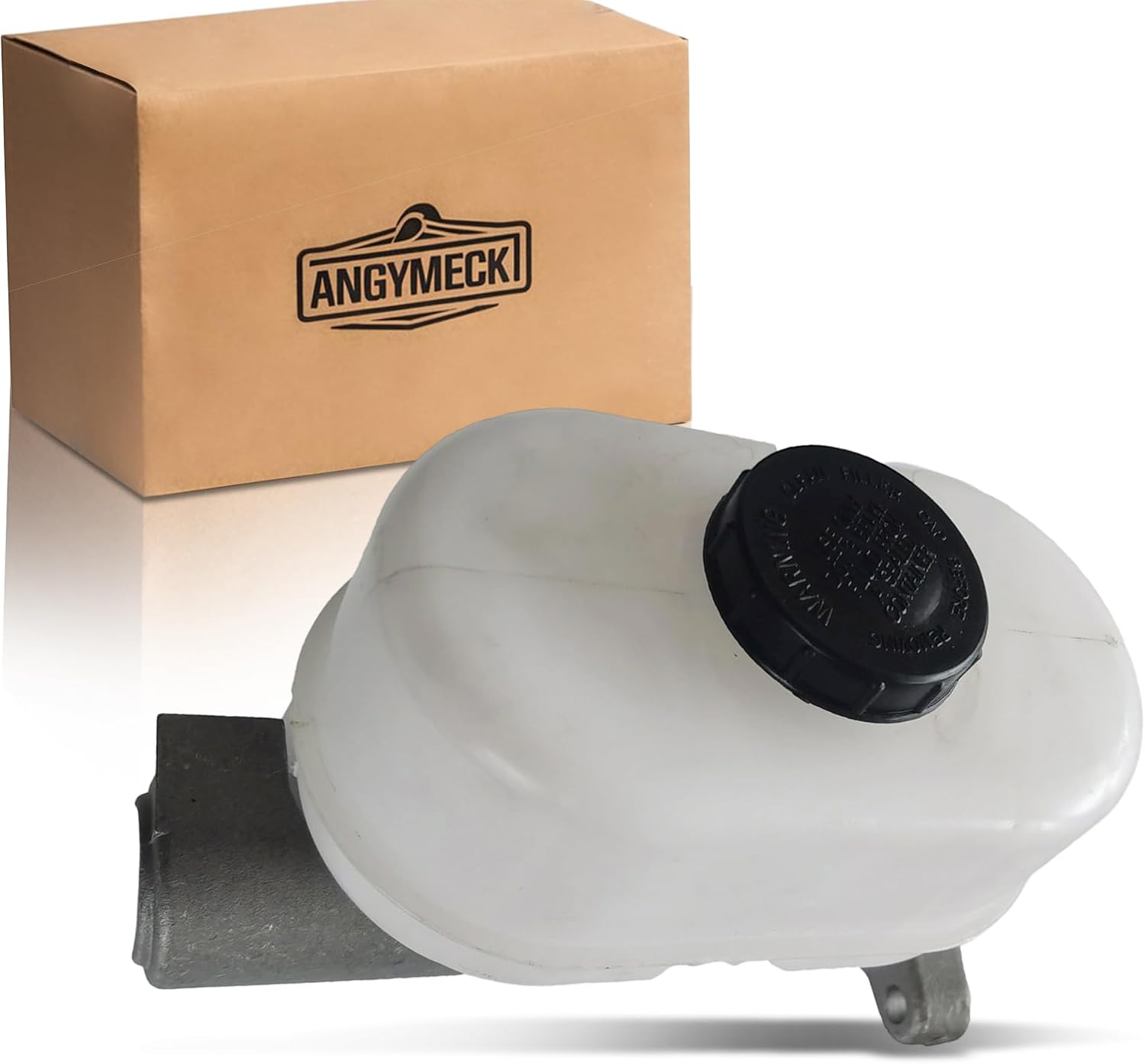
| Bore Diameter | 1.375 In. |
|---|---|
| Number of Outlets | 3 |
| Forward Outlet Size | 7/16-24 |
| Rearward Outlet Size | 9/16-18 & 3/8-24 |
| Reservoir Included | Yes |
This AngyMeck master cylinder replaces the factory unit on specified Ford Super Duty and bus/chassis applications and comes with an integrated reservoir and brake fluid level sensor. It is typically used to restore pedal firmness and brake fluid containment after a worn or leaking original master cylinder. Notable features include a 1.375 inch bore, three outlet ports with common forward and rearward thread sizes, and a supplied sensor so you do not need to reuse the old unit. In practice the part is a straightforward swap for the listed years and restores normal braking feel when installed correctly; buyers should plan to bench-bleed and properly bleed the vehicle afterward. Installation hardware is not included so expect to reuse or source mounting fasteners and line fittings. This unit is presented as a new aftermarket replacement made to match factory function at a lower cost than dealer parts, but confirm the listed fitment and outlet thread sizes against your vehicle before purchase to ensure correct brake line mating.
Best for: Buyers wanting a lower-cost, direct-replacement master cylinder to restore braking performance on listed Ford Super Duty and chassis models, prioritizing value over dealer sourcing.
Less Ideal for: Those who prefer parts with included installation hardware or who need guaranteed exact line-fitting matches without cross-checking thread sizes should consider alternatives or confirm fitment first.
- Integrated reservoir and brake fluid level sensor included for plug-and-play replacement.
- Bore size and three-outlet configuration match common factory designs on listed Ford models.
- Quoted as new, factory-quality replacement intended to restore original brake performance.
- Appears to cover a range of Super Duty and chassis applications, reducing part-search complexity.
- Installation hardware is not included so additional fasteners or fittings may be required.
Verdict: A budget-friendly, factory-style replacement that brings back proper pedal feel for the specified Ford Super Duty and chassis models without the dealer markup.
3. Raybestos Element3 Replacement Brake Master Cylinder (MC390531)

| Model | Element3 MC390531 |
|---|---|
| Manufacturer | Raybestos |
| Position | Unknown |
| Compatibility | 1999–2004 Ford F-250/F-350/F-450/F-550 and select 2002–2003 E-550 |
The Raybestos Element3 master cylinder is a factory-style replacement built for 1999–2004 Ford Super Duty trucks and early E-550 vans. It provides the core function of converting pedal force into hydraulic pressure for the brake system and arrives ready to bench bleed and install with no assembly required. Raybestos emphasizes matching OEM fit, form, and function and performs 100% end-of-line pressure testing to reduce the risk of leaks and failures. In practical use this means a straightforward swap for technicians or experienced DIYers and confidence that the component meets basic durability and sealing standards. The machined exterior and inclusion in the Element3 hydraulic line suggest robust construction suited to heavy-duty braking demands. Limitations are typical for single-component replacements: this only replaces the master cylinder and does not address aging lines, ABS modules, or brake booster issues, so a full-system inspection is still advisable when replacing the unit.
Best for: Buyers who prioritize dependable, factory-quality replacement parts for Super Duty brakes and want a component they can install quickly with confidence in pressure integrity.
Less Ideal for: If you are looking to overhaul the entire brake system, upgrade performance braking, or fix booster or ABS faults, this single replacement cylinder is not a complete solution.
- Factory-style fit and function for direct replacement on specified Ford Super Duty models
- 100% end-of-line pressure tested to help ensure a leak-free unit
- Ships ready to bench bleed and install with no assembly required
- Machined exterior construction that supports durability in heavy-duty use
- Only the master cylinder is replaced so related brake system components may still need service
Verdict: Choose this Raybestos Element3 master cylinder when you need a pressure-tested, factory-quality direct replacement for 1999–2004 Ford Super Duty braking reliability.
4. A-Premium Brake Master Cylinder with Reservoir and Cap (fits select Ford Super Duty trucks)

| Vehicle Fitment | Ford Excursion 2000-2005; F-250/F-350/F-450/F-550 1999-2004; F53 1999-2000/2014 |
|---|---|
| Material | Aluminum |
| Reservoir Included | Yes |
| Sensor Included | Yes |
| Master Cylinder Bore Diameter | 1.375 inch |
This A-Premium master cylinder replaces the factory unit on compatible Ford Super Duty trucks and includes the reservoir, cap, and brake fluid sensor for a mostly plug-and-play swap. It is pressure tested at the factory and built from aluminum, which helps resist corrosion and keeps the assembly lightweight compared with cast iron units. Typical use is direct replacement during a brake hydraulic overhaul or when the original cylinder leaks or develops a soft pedal. The included sensor and correct outlet thread sizes make reinstallation straightforward for technicians familiar with Super Duty brake plumbing. Expect reliable pedal firmness once bled properly, but plan on a full brake system bleed and a brief period of pedal feel settling as seals bed in. This part targets older F-250/F-350/F-450/F-550 and Excursion fitments listed by the manufacturer, so confirm compatibility with your exact year and configuration before ordering.
Best for: Buyers who prioritize documented fitment and peer-reviewed reliability when replacing a worn or leaking master cylinder on a compatible Ford Super Duty and want a mostly complete, install-ready unit.
Less Ideal for: Drivers looking for a universal or multi-vehicle master cylinder or those who need a part for non-listed model years should consider other options or verify another fitment.
- Complete assembly with reservoir and cap reduces parts sourcing and simplifies installation
- Includes brake fluid sensor for direct replacement of the factory connection
- Aluminum construction resists corrosion and is lighter than cast alternatives
- Pressure tested at the factory to help ensure leak-free operation on installation
- Fitment limited to specific Ford Super Duty model years so verification is required before purchase
Verdict: A complete, pressure-tested aluminum master cylinder built for specific Ford Super Duty years, making it a convenient, reliable replacement for owners who verify fitment.
5. Dorman M97934 Brake Master Cylinder

| Manufacturer | Dorman Products |
|---|---|
| Model | M97934 |
| Item model number | M97934 |
| Exterior | Painted |
This Dorman M97934 master cylinder is a direct-style replacement designed to restore brake hydraulic function on compatible Ford vehicles from the late 1970s through mid 1980s. It is built from all-new materials rather than being remanufactured, with a housing cast to mirror the original and EPDM rubber components rated for resistance to glycol-based brake fluid. In practice this part replaces the factory unit during a brake system overhaul or when internal leaks or loss of pedal pressure indicate cylinder failure. Notable features include precision engineering to meet SAE standards and painted exterior finish for corrosion protection. For a risk-averse buyer this gives confidence that fit and function track the original, and the use of new internal parts reduces the chance of near-term failure compared with rebuilt units. The main limitation is that fitment is restricted to specific older Ford models and years, so confirm vehicle compatibility before purchase and expect professional installation if you are not familiar with brake bleeding and bench-bleeding procedures.
Best for: Buyers who prioritize a factory-quality, low-risk replacement for a failing master cylinder on a vintage Ford and want new internal parts rather than a rebuilt unit.
Less Ideal for: People looking for a universal or modern aftermarket upgrade for newer Ford trucks or those who prefer an OEM-branded part from a dealer.
- All-new construction avoids uncertainties from remanufactured cores
- EPDM rubber components resist glycol-based brake fluid for durability
- Housing cast to match original design for reliable fit and function
- Made to meet SAE standards for replacement brake components
- Fitment limited to older Ford models and specific years so compatibility must be confirmed
- Painted exterior offers basic corrosion protection but is not a long-term rustproofing solution
Verdict: Choose this all-new Dorman master cylinder when you want a dependable, factory-style replacement for an older Ford to restore reliable brake function with minimal risk.
Choosing the Right Ford F-450 Brake Master Cylinder: Key Factors to Consider
Fitment And Port Alignment
Correct fitment is crucial because the master cylinder must match the F-450 booster mounting pattern, pushrod length, and reservoir connections. A mismatched bore or port location can cause installation complications, require adapter fittings, or lead to improper fluid routing that affects brake balance.
Port alignment also influences how brake lines connect and whether you can reuse existing hard lines without bending or replacing them. Ensuring exact fitment reduces installation time and the chance of leaks that commonly occur after improper hose or line routing. For fleet or work trucks, minimizing downtime through a direct-fit unit is often a priority.
Seal Material And Leak Resistance
Seal compounds determine how well the master cylinder resists brake fluid seal leaks over time, especially in vehicles that may see temperature swings or exposure to contaminants. Ethylene propylene and fluorocarbon compounds resist common brake fluid effects better than lower-grade materials, which helps prevent master cylinder seal leak issues.
Robust sealing also affects long-term pedal feel. A leaking or degrading seal can let internal bypass occur, resulting in a soft or spongy pedal and reduced braking efficiency. For an F-450, which may tow heavy loads, durable seals that maintain hydraulic pressure under repeated heavy braking are essential.
Bore Size, Piston Travel, And Pedal Feel
The master cylinder bore and piston travel determine hydraulic leverage and thus brake pedal firmness. A bore that is too large or too small relative to the vehicle's brake system will change pedal travel and effort, possibly producing a brake pedal soft master cylinder symptom.
Choosing a unit with the correct bore dimensions for the F-450 ensures predictable pedal modulation and proper pressure distribution to front and rear circuits. For heavy-duty applications, maintaining firm, consistent pedal feel under load improves stopping control and driver confidence.
Reservoir Capacity And Venting
Reservoir size affects how much reserve fluid is available during bleeding, repair, or when compensating for worn pads and shoes. Proper venting and a correctly sized reservoir help prevent air ingress during heavy use or when servicing the system, reducing the chance of master cylinder-related spongy pedal complaints.
A slightly larger reservoir can be helpful for trucks that see frequent brake service or towing, but excessive size may complicate under-hood packaging. Verify that the reservoir cap, level sensors, and venting match the F-450's wiring and mounting constraints to avoid fitment surprises.
Material Quality And Corrosion Protection
Master cylinders exposed to road salt, moisture, and road debris need corrosion-resistant surfaces to maintain sealing surfaces and threaded connections. Cast iron or aluminum bodies with appropriate coatings extend service life by preventing pitting and leaks that start at corroded joints.
Material selection also affects thermal behavior and long-term dimensional stability. Components that resist corrosion reduce the risk of brake fluid leak master cylinder problems and make future servicing, including master cylinder rebuild kit work, more reliable. For a truck that sees heavy use, prioritize units with proven finishes and protective treatments.
Serviceability And Rebuild Support
Having access to rebuild kits and clear service instructions matters if you plan to maintain the master cylinder rather than replace it entirely. A rebuildable design with readily available seals, pistons, and springs can be cost-effective and keeps vehicle downtime low when a single component fails.
Serviceability includes the clarity of port labeling, ease of disassembly, and availability of replacement seals designed for the F-450. Consider whether you have the tools and skills to perform a rebuild or whether a complete direct-fit replacement is a better choice for your situation.
Common Symptoms Of Master Cylinder Problems On The F-450
Master cylinder issues on the Ford F-450 often present as a soft or sinking brake pedal, visible brake fluid loss near the firewall, or uneven braking under load. Drivers may notice the pedal gradually goes to the floor when holding pressure, or the truck requires more travel than normal to achieve braking.
- Soft or spongy brake pedal feel
- Brake fluid visible on or below the master cylinder body
- Brake pedal that slowly sinks while depressed
- Uneven braking or pulling during heavy braking maneuvers
Inspection Steps Before Replacing The Master Cylinder
Before deciding on a replacement, complete a targeted inspection to confirm the master cylinder is the source of failure. Start by checking the visible condition of seals and the area around the master cylinder for wetness or residue. Inspect the brake booster pushrod and clevis for proper engagement and wear.
- Check reservoir fluid level and condition; contaminated fluid can accelerate seal failure
- Look for fluid tracking from the master cylinder to firewall or down the booster
- Pressurize the system by pumping the pedal with the engine off and watching for pedal sink to identify internal bypass
- Bleed a single wheel circuit to confirm line integrity and to rule out caliper or wheel cylinder leaks
Basic Steps For Master Cylinder Replacement On The F-450
Replacing the master cylinder on an F-450 requires attention to fitment and safe bleed procedures. After disconnecting the battery and protecting painted surfaces, drain or clamp the lines and unbolt the unit from the booster, taking care to note line routing and clip positions. The pushrod length and clevis position must be set to match the original geometry to preserve pedal feel.
- Cap or plug brake lines to prevent contamination and fluid loss
- Transfer reservoir fluid to a clean container if reusing the reservoir, or swap reservoirs if the new unit includes one
- Bench-bleed the new master cylinder before installation to remove trapped air
- After installation, perform a full system bleed following a passenger and heavy-load sequence to ensure consistent pedal feel
When To Consider A Rebuild Instead Of Replacement
A rebuild can be a practical option if the master cylinder body and mounting surfaces are undamaged and only internal seals or pistons are worn. Rebuilds conserve resources and keep the original booster and reservoir matched to the truck. However, if corrosion has compromised bores or there is external leakage through multiple joints, full replacement is often the safer choice.
- Use a master cylinder rebuild kit that matches the F-450 seal materials and piston dimensions
- Inspect internal bores for scoring or pitting before committing to a rebuild
- Ensure replacement seals are compatible with the brake fluid your truck uses
- Plan time for careful bench bleeding and testing after rebuild completion
Post-Installation Checks And Brake System Bleeding Tips
After installing a replacement or rebuilt master cylinder, perform systematic checks before driving. Confirm pedal firmness with the engine on and off, inspect for external leaks, and verify reservoir levels. Bleed procedures should follow a sequence that ensures both front and rear circuits are purged of air, paying attention to load conditions the F-450 will face.
For heavy-duty trucks, repeat bleeding after a short test drive under controlled conditions to ensure the pedal does not soften under load. Monitor for master cylinder seal leak signs during the first few hundred miles.
- Use a sequence that targets the furthest wheel first and proceed toward the master cylinder
- Check pedal feel with the vehicle on level ground and with light load applied if possible
- Reinspect hose and line connections after a short test drive to catch any slow leaks
How We Chose the Best Ford F-450 Brake Master Cylinder
We prioritized units that meet the specific hydraulic and mechanical demands of the Ford F-450. Selection criteria included exact vehicle fitment to the F-450 brake booster and reservoir interface, bore size and stroke compatibility, and port orientation to ensure direct replacement without modification. We also evaluated seal materials and manufacturing tolerances that affect resistance to brake fluid leak master cylinder issues and long-term wear.Durability factors such as corrosion-resistant bodies and quality finishes were considered because F-450 trucks often operate in heavy-duty environments. We assessed units based on expected pedal firmness under load and compatibility with common brake fluid types. Ease of installation and availability of comprehensive master cylinder rebuild kit support were also part of the review process.Excluded items included universal or highly modified master cylinders that require custom fabrication, and units with incomplete fitment documentation. Final picks represent direct-fit or clearly documented replacements that balance reliability, serviceability, and hydraulic performance for the Ford F-450.
Our full evaluation process is outlined in our review methodology.
FAQ
What are the most common master cylinder symptoms on a Ford F-450?
Common symptoms include a soft or sinking pedal, visible brake fluid at the firewall, and inconsistent braking. A pedal that slowly sinks while held is often a sign of internal bypass in the master cylinder.
Can I replace only the seals with a master cylinder rebuild kit?
Often you can if the cylinder bores are in good condition and there is no external corrosion. A rebuild kit is a viable option when wear is limited to internal seals and pistons, but inspect bores carefully before rebuilding.
How should I bench-bleed a replacement master cylinder?
Secure the unit upright, attach short bleed hoses from the outlet ports back into the reservoir, and slowly depress the piston while topping the reservoir to expel air until only fluid comes out. Bench bleeding reduces trapped air before installation, making system bleeding faster and more reliable.
Will a leaking master cylinder always show fluid under the vehicle?
Not always. Some seal leaks track along the booster or under-hood surfaces before dripping visibly under the truck. Check around the master cylinder body and booster firewall area for wetness or residue when investigating a suspected leak.
Does changing the master cylinder affect brake pedal travel?
Yes. Master cylinder bore size and pushrod geometry directly affect pedal travel and firmness. Installing a unit with the correct dimensions for the F-450 helps restore original pedal feel, while incorrect sizing can produce a soft or overly firm pedal.
Should I replace the master cylinder when replacing the brake booster?
It depends. If the master cylinder shows no signs of internal wear or leakage and has correct bore condition, you may be able to reuse it. However, many technicians replace the master cylinder with the booster to ensure optimal sealing and to avoid bleeding issues after disassembly.
Final Verdict
For the Ford F-450, prioritize direct-fit master cylinders with correct bore dimensions, durable seal materials, and proven corrosion resistance. Those characteristics most directly affect pedal feel, leak prevention, and long-term serviceability on a heavy-duty truck.Balance the choice between a rebuild and full replacement based on bore condition and corrosion. Focus on proper bench bleeding, correct pushrod setup, and post-installation checks to ensure reliable braking performance under load. Following these priorities will help you restore firm pedal feel and dependable stopping on your F-450.
