

Note: This article contains affiliate links. If you click on these links and make a purchase, I may earn a small commission at no extra cost to you. This helps support my research and content. Read my full affiliate disclosure here.
If you own a 2009-2013 Subaru Forester, choosing the right brake fluid matters for safety, pedal feel, and long-term brake system health. Brake fluid affects how the brakes respond under repeated stops, how resistant the system is to moisture absorption, and whether seals and ABS components remain protected.This guide covers our six shortlisted brake fluids suited to the 2009-2013 Forester, with focused evaluation on boiling performance, compatibility with Subaru materials, and maintenance needs. Read on to understand the tradeoffs between DOT ratings, service intervals, and performance for everyday driving and occasional heavy use.
Looking for other parts? See all Subaru Forester parts & accessories.
Top Picks at a Glance
| Best Overall Brake Fluid A reliable, all-around DOT brake fluid that suits most DIY jobs | Bosch ESI6 Low Viscosity Extended Life Brake Fluid, 1 Quart |  |
| Best Budget Brake Fluid A low-cost DOT fluid that covers basic brake maintenance needs affordably | Valvoline DOT 3 & 4 Synthetic Brake Fluid, 12 oz |  |
| Best OEM Subaru Brake Fluid Factory-formulated fluid sold to meet the manufacturer's original specifications and fitment | Subaru Genuine Brake Fluid DOT3, 12 fl. oz. |  |
| Best High‑Temp Racing Brake Fluid A specialty fluid with very high dry/wet boiling points for heavy-duty braking | Motul RBF 700 Factory Line Racing Brake Fluid DOT 4, 500 ml |  |
| Best Large‑Volume Brake Fluid Quart- and gallon-size containers for fleet work or multiple flushes and jobs | Valvoline DOT 3 & 4 Synthetic Brake Fluid, 32 oz |  |
| Best DOT 3 & 4 Synthetic Brake Fluid A versatile synthetic formula compatible with DOT 3 and DOT 4 systems for broad use | TRIAX DOT 3 & 4 Full Synthetic Brake Fluid (1 Quart) |  |
1. Bosch ESI6 Low Viscosity Extended Life Brake Fluid, 1 Quart
Best Overall Brake Fluid

| Fluid type | Compatible with DOT 3, DOT 4, DOT 5.1 |
|---|---|
| Container type | Can |
| Liquid volume | 32 Fluid Ounces |
| Viscosity | 5w |
Bosch ESI6 is designed as an all-purpose brake fluid that pairs a high wet boiling point with lower viscosity to improve performance in modern ABS and stability systems. In practice it is used like any conventional glycol-based fluid: flush the system, then refill and bleed with multiple quarts for a complete change. Notable features include a wet boiling point around 360–365°F for reduced vapor lock risk, and lubricity additives intended to lower component wear and noise. The lower viscosity helps faster ESP/ABS response at cold temperatures while still delivering extended service intervals compared with legacy DOT 3 and DOT 4 fluids. ESI6 is compatible with systems specifying DOT 3, DOT 4, or DOT 5.1 but must not be used in vehicles that require silicone-based DOT 5 fluid. For a 2009–2013 Subaru Forester this product provides improved thermal resistance and corrosion protection for routine maintenance, though a full fluid change requires enough volume to flush the entire system and achieve the best results.
Best for: Drivers doing routine maintenance and scheduled brake fluid flushes on a 2009–2013 Subaru Forester who want balanced thermal performance and corrosion protection without changing system components.
Less Ideal for: Do not choose this fluid if your vehicle specifically requires silicone-based DOT 5 fluid or if you need a specialty racing fluid with extreme dry-boiling characteristics.
- High wet boiling point (~360–365°F) reduces risk of vapor formation under heavy braking
- Low viscosity improves response of ABS and stability control systems in cold conditions
- Extended service life compared with standard DOT 3 and DOT 4 fluids reduces change frequency
- Lubricity additives help reduce component wear and brake system noise
- Not compatible with silicone-based DOT 5 systems and must not be used where DOT 5 is specified
Verdict: Choose this slot for a well-balanced brake fluid that combines boiling-point performance and corrosion protection for everyday maintenance and routine flushes.
2. Valvoline DOT 3 & 4 Synthetic Brake Fluid, 12 oz
Best Budget Brake Fluid

| Unit Count | 12.0 Fluid Ounces |
|---|---|
| Recommended Uses For Product | Brake oil |
| Specific Uses For Product | Hydraulic Brake Systems, Disc Brake Systems |
| Container Type | Bottle |
Valvoline DOT 3 & 4 is a synthetic brake fluid intended for routine bleeding and topping off hydraulic brake systems, including disc and drum setups. It blends with conventional DOT 3 and DOT 4 fluids, so you can use it to top off or refill a system without flushing when immediate compatibility matters. The low-moisture formula improves resistance to vapor lock compared with older brake fluids, which helps maintain consistent pedal feel under normal daily driving. Packaged in a 12 oz bottle it is convenient for small jobs and spot maintenance. It is not formulated as a high-performance racing fluid, so drivers seeking very high wet/dry boiling points for track use should look elsewhere. For a 2009–2013 Subaru Forester running standard road use, this product provides an affordable, reliable option for routine service and emergency top-ups when you do not need specialty performance specs.
Best for: Drivers of a 2009–2013 Subaru Forester who want an inexpensive, dependable fluid for regular bleeding, topping off brakes, and routine maintenance without premium racing specifications.
Less Ideal for: Enthusiasts who frequently track their Forester or demand very high wet/dry boiling performance should choose a dedicated high-spec brake fluid instead.
- Compatible with DOT 3 and DOT 4 systems for easy topping off or mixing during service
- Low-moisture formula increases resistance to vapor lock compared with older fluids
- Synthetic formulation offers consistent pedal feel for everyday driving
- 12 oz bottle is convenient for small maintenance tasks and emergency top-ups
- Not intended for high-performance or track use where higher boiling points are required
Verdict: Pick this when you want a cheap, dependable brake fluid for regular bleeding or topping off without paying for racing-grade specs.
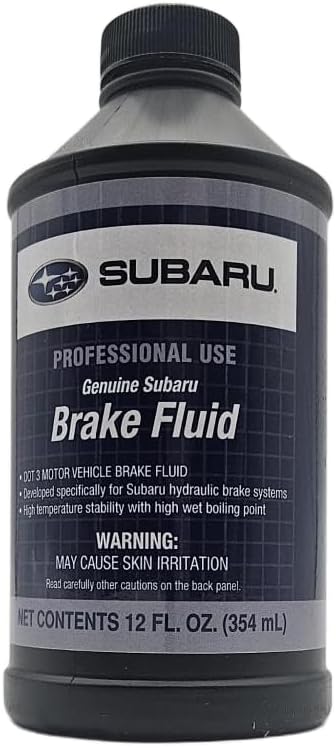
3. Subaru Genuine Brake Fluid DOT3, 12 fl. oz.
Best OEM Subaru Brake Fluid
| Unit Count | 12 Fluid Ounces |
|---|---|
| Upper Temperature Rating | 500 °F |
| SAE J300 Viscosity Grade | 8 |
| Item Form | Liquid |
This genuine Subaru DOT3 brake fluid is intended as a factory-compatible replacement for Subaru brake and hydraulic clutch systems. It is packaged in a 12 fl. oz. bottle and is formulated to maintain a high boiling point even under severe conditions, helping reduce the risk of vapor lock during heavy braking. The formula is designed to provide strong metal corrosion protection and high temperature stability without forming harmful sediment, and it is compatible with rubber and synthetic components used in Subaru systems. Typical use is topping off or flushing and refilling the brake system during routine maintenance or repair. Because it is a Subaru-branded product, it removes uncertainty about chemistry compatibility and is a safe choice when preserving factory component life and warranty expectations is a priority. The small bottle size is convenient for one-time servicing or clutch bleeding but means you may need multiple bottles for full system flushes on larger jobs.
Best for: Buyers who want a factory-matching brake fluid for routine maintenance or clutch service and prefer to preserve Subaru component compatibility and manufacturer expectations.
Less Ideal for: Those planning large volume brake system overhauls who prefer DOT4 or higher-spec fluids for performance braking applications.
- Factory-formulated DOT3 blend matched to Subaru hydraulic systems
- High wet and dry boiling stability to reduce vapor lock risk under heavy use
- Designed to protect metal components from corrosion and resist sediment formation
- Compatible with rubber and synthetic components used in Subaru systems
- 12 fl. oz. bottle may be small for complete system flushes, requiring multiple bottles for full replacements
Verdict: Use this slot if you prefer genuine OEM fluid designed to match factory chemistry and preserve rubber components and warranty expectations.
4. Motul RBF 700 Factory Line Racing Brake Fluid DOT 4, 500 ml
Best High‑Temp Racing Brake Fluid

| Dry boiling point | 336°C |
|---|---|
| Viscosity at 100°C | 2.1 mm2/s |
| Fluid type | 100% Synthetic DOT 4 |
| Container volume | 500 Milliliters |
Motul RBF 700 is a purpose-built synthetic DOT 4 brake fluid designed to resist fade when temperatures soar during track sessions, towing, or hard driving. In use it replaces factory brake fluid and is bled into hydraulic brake and clutch systems; its very high dry boiling point helps maintain consistent pedal feel and braking power under repeated heavy use. Notable features include a reported dry boiling point of 336°C and a low measured viscosity at 100°C, which support quick hydraulic response at high temperatures. Because it is formulated for racing environments, it should be handled carefully to avoid contamination and never mixed with silicone or mineral-based fluids. For a 2009-2013 Subaru Forester, this fluid provides a margin of high-temperature protection beyond standard DOT 4, improving resistance to vapor lock during demanding driving, but it requires proper flushing and system compatibility checks with your vehicle's seals and components.
Best for: Drivers of 2009–2013 Subaru Forester who push their brakes hard—track days, spirited driving, or heavy towing—and prioritize fade resistance and consistent pedal feel under extreme heat.
Less Ideal for: Owners who only do light, everyday commuting or who prefer to avoid the extra maintenance of a full fluid flush and dedicated high-temp fluid; standard DOT 4 replacements are more appropriate for casual use.
- Very high dry boiling point (336°C) reduces brake fade during repeated high-temperature use
- 100% synthetic formulation for consistent performance under extreme conditions
- Low viscosity at 100°C supports responsive hydraulic operation at high temperatures
- Not compatible with silicone or mineral-based fluids and should not be mixed with other fluid types
Verdict: Select this when you need a high‑temperature synthetic brake fluid built to resist fade under track, towing, or high‑stress driving conditions.
5. Valvoline DOT 3 & 4 Synthetic Brake Fluid, 32 oz
Best Large‑Volume Brake Fluid

| Liquid Volume | 0.92 Liters |
|---|---|
| Unit Count | 32.0 Fluid Ounces |
| Recommended Uses For Product | Automotive |
| Specific Uses For Product | Vehicle Brake Systems |
This 32 oz Valvoline brake fluid is a ready-to-use synthetic DOT 3/4 fluid aimed at routine brake servicing and full system flushes. It mixes with conventional fluids and is designed to resist vapor lock through a higher boiling point and reduced moisture absorption, which helps maintain pedal feel under repeated braking. The bottle format and 32-ounce volume make it convenient for servicing multiple vehicles or completing a full flush on a single car without opening additional containers. It is suitable for hydraulic, disc, and drum systems and is compatible with ABS components. Practical limitations are that DOT 3/4 classification means it is not a DOT 5 silicone fluid and may not meet certain manufacturer DOT 4+ or racing specifications; users should confirm Subaru Forester brake spec before use. For typical DIY maintenance and shop use the product balances performance and convenience in a large consumer-sized container.
Best for: Buyers who perform frequent brake maintenance on multiple vehicles or want a single bottle large enough to complete a full system flush without buying multiple containers.
Less Ideal for: Drivers seeking a silicone-based brake fluid or those who require a specific high-performance DOT 4+ racing-grade fluid should consider alternatives.
- Large 32 oz bottle is enough for multiple services or a full-system flush
- Synthetic formula mixes with conventional fluids for easy topping or flushing
- Formulated for high boiling point to reduce vapor lock under heavy braking
- Compatible with ABS, disc, and drum brake systems
- DOT 3/4 fluid is not the same as silicone-based DOT 5 and may not meet specialized DOT 4+ performance levels
Verdict: Choose a large-volume container if you perform frequent brake services or need enough fluid for multiple vehicles and complete system flushes.
6. TRIAX DOT 3 & 4 Full Synthetic Brake Fluid (1 Quart)
Best DOT 3 & 4 Synthetic Brake Fluid

| Recommended Uses For Product | Car and Truck ABS DOT 3 and DOT 4 Braking Systems |
|---|---|
| Item Form | Liquid |
| Liquid Volume | 1 Quarts |
| Viscosity | High performance, full synthetic formula |
The TRIAX DOT 3 & 4 full synthetic brake fluid is a high-performance, race-ready fluid designed to work in systems that call for DOT 3 or DOT 4. For a 2009–2013 Subaru Forester this makes it a convenient choice because it covers the common DOT specs Subaru lists, so you can top off or bleed the system without juggling two different fluids. The formula emphasizes high boiling point and resistance to vapor lock and brake fade, which helps preserve pedal feel under heavy use and during prolonged stopping. It is compatible with ABS and other electronic brake systems and is intended to protect internal components from corrosion. The product comes in a quart bottle and is marketed for both everyday driving and higher thermal loads, though like all synthetic brake fluids it still requires regular changes to manage moisture accumulation. Users should follow Subaru service intervals and fluid-flush procedures rather than relying solely on the fluid's performance claims.
Best for: DIY owners of 2009–2013 Subaru Forester who want one synthetic fluid that safely services systems calling for DOT 3 or DOT 4 and simplifies maintenance inventory.
Less Ideal for: Those who prefer fluids with manufacturer-published wet and dry boiling point figures for benchmarking or who need a fluid specified by Subaru service documentation other than DOT 3/4 compatibility.
- Covers both DOT 3 and DOT 4 specs so one fluid can service systems specifying either rating
- High boiling point and formula designed to resist vapor lock and brake fade under heavy use
- Compatible with ABS and electronic brake sensors for modern braking systems
- Synthetic formulation offers corrosion protection for internal brake components
- Manufacturer lists lower temperature rating but does not publish full wet/dry boiling point numbers on the product page
Verdict: Pick this slot for a synthetic fluid that safely covers vehicles specifying DOT 3 or DOT 4 and simplifies inventory for DIY mechanics.
Choosing the Right 2009-2013 Subaru Forester Brake Fluid: Key Factors to Consider
DOT Specification and Manufacturer Requirements
DOT ratings indicate the basic chemical class and minimum dry boiling performance for brake fluids. For the 2009-2013 Subaru Forester, matching the recommended DOT spec is essential because the vehicle's master cylinder, calipers, and ABS components were designed for fluids meeting those standards.
Using a fluid with the correct DOT classification helps ensure proper seal compatibility and predictable hydraulic behavior. While some higher-spec fluids offer better boil resistance, they must still be chemically compatible with Subaru seals and ABS sensors. If you drive in environments that stress the brakes, choose a DOT-compliant option with a higher boiling point, but verify it fits Subaru's recommendations to avoid long-term component issues.
Dry and Wet Boiling Points
Boiling point performance is a direct measure of how the fluid handles heat. Dry boiling point is measured for new, uncontaminated fluid and indicates maximum thermal tolerance. Wet boiling point reflects performance after the fluid has absorbed moisture, which is realistic for in-service fluids.
For the Forester, repeated hard stops, towing, or steep descents can raise fluid temperatures. A larger gap between dry and wet boil points usually means the fluid retains more of its performance as it ages. Prioritizing a fluid with a high wet boil point reduces the risk of vapor formation and a spongy pedal during extended braking events.
Moisture Absorption and Service Interval
Brake fluid is hygroscopic and absorbs water over time, which lowers boiling point and increases corrosion risk. Fluids with formulations that slow moisture uptake or maintain performance longer can extend safe service intervals for the Forester.
Longer service intervals reduce maintenance frequency but require trusting the fluid's aging characteristics. If you drive in humid climates or expose the vehicle to frequent brake system cycling, plan for more frequent fluid checks and consider a higher-performance fluid with better wet boiling performance to maintain safety margins.
Corrosion Protection and Seal Compatibility
Brake fluid must protect metal components and be chemically neutral to seal materials. Poorly matched fluid chemistry can accelerate corrosion of steel lines, caliper pistons, or master cylinders and damage rubber seals and hoses.
For the 2009-2013 Forester, choose fluids that explicitly note corrosion inhibitors and compatibility with the typical elastomers used in Subaru braking systems. Good corrosion protection reduces the risk of leaks and maintains system integrity, which matters for both safety and long-term ownership costs.
Cold-Weather Performance
In colder climates, viscosity and cold-flow properties affect brake response at startup. While the primary safety concern is boil point, a fluid that becomes too thick in low temperatures can delay pressure transfer and alter pedal feel until the system warms up.
Forester owners in regions with cold winters should consider fluids with proven low-temperature flow characteristics and freeze points well below expected ambient temperatures. This helps ensure consistent pedal modulation and ABS responsiveness during winter driving.
Compatibility With ABS and Electronic Systems
Modern Foresters use ABS and traction control systems that rely on precise hydraulic operation. Some fluid additives can interfere with sensors or accelerate wear in ABS valves if not compatible.
Select a fluid designed for use with ABS-equipped systems and one that maintains stable viscosity and compressibility under varying temperatures. This reduces the risk of inconsistent ABS modulation and preserves the performance of electronic braking aids over time.
Understanding DOT Ratings and What They Mean for Your Forester
DOT classifications identify basic fluid chemistry and minimum boiling thresholds. DOT 3 and DOT 4 are common classes for passenger vehicles and differ mainly in boiling point and glycol composition.
For Forester owners, the DOT rating determines compatibility with seals and components. Higher DOT numbers do not automatically mean better for all situations; you should match Subaru's guidance where possible and consider higher-performance DOT 4 options if you need extra heat resistance.
- DOT 3: typically lower dry boiling points, suitable for general driving in mild conditions
- DOT 4: higher dry boiling points and often better wet boil performance
- DOT 5.1: glycol-based like DOT 4 but with higher boiling points; not the same as silicone DOT 5
When To Schedule a Brake Fluid Flush on a Forester
Most manufacturers recommend regular brake fluid inspection and periodic replacement. For the 2009-2013 Forester, inspect fluid condition annually and plan a full flush on a schedule informed by driving conditions and fluid type.
Aggressive driving, frequent mountain descents, or humid climates typically require more frequent flushing. If the fluid looks dark, the pedal feels spongy, or the ABS light indicates a fault, have the system checked and consider a full flush.
- Inspect fluid color and clarity every 12 months
- Consider a flush every 2 years in high-moisture or heavy-use scenarios
- Follow Subaru maintenance guidance for scheduled intervals
DIY Vs Professional Brake Fluid Service
Changing brake fluid can be a DIY task if you have the right tools and familiarity with bleeding procedures. For the Forester, proper bleeding sequence, correct reservoir level, and avoiding air ingress are critical to restoring firm pedal feel.
Professional service is recommended if you lack tools, encounter ABS-related bleeding requirements, or prefer a pressure or vacuum flush for better removal of contaminated fluid. Professionals can also test wet boiling performance and inspect the hydraulic system for corrosion.
- DIY pros need a pressure or vacuum bleeder, correct DOT-rated fluid, and a clean workspace
- Professional flushes can remove more moisture and old fluid from ABS modules
- Record service dates and fluid type used for future maintenance
Cold Climate Considerations for Forester Owners
Foresters are often driven in colder regions where low-temperature fluid behavior matters. Choose brake fluids with good low-temperature flow to maintain predictable pedal feel at startup.
Also consider the freeze point and how quickly the vehicle will warm during typical trips. If short trips are common, a fluid with better cold-flow properties helps preserve braking responsiveness from the first stop.
- Check freeze point specs if you routinely see subzero temperatures
- Allow extra warm-up time in extreme cold if using higher-viscosity formulations
- Monitor pedal feel during winter and plan a service if modulation changes
Environmental and Safety Handling
Brake fluids are hygroscopic and can be harmful to painted surfaces and some plastics. When handling fluid for a Forester, avoid spills on bodywork and dispose of used fluid responsibly at a hazardous-waste facility.
Store unopened fluid in its original container, sealed and away from moisture. When topping off or bleeding, work in a clean area and keep fluid containers capped to prevent contamination that can reduce boiling performance.
- Prevent spills on paint and immediately rinse with clean water if contact occurs
- Label containers with the DOT classification and date opened
- Collect and recycle used fluid according to local regulations
Still looking for the perfect fit?
Select your Subaru Forester configuration to see the most relevant Brake Fluids recommendations
How We Chose the Best 2009-2013 Subaru Forester Brake Fluid
We evaluated candidate brake fluids against criteria that reflect real-world needs for the 2009-2013 Subaru Forester. First, we prioritized boiling point performance, comparing both dry and wet boil figures because the Forester's braking performance can be sensitive to fluid degradation under heat. Second, material compatibility and seal safety for Subaru hydraulic components were assessed to avoid softening or swelling of caliper seals and ABS modules.Third, moisture tolerance and aging characteristics were considered to determine reasonable service intervals and the likelihood of vapor lock or spongy pedal feel. Fourth, we looked at recommended DOT specifications and whether fluids met or exceeded Subaru factory guidelines for the model years in scope. Fifth, we considered freeze point and cold-weather flow since many Forester owners drive in varied climates.We excluded fluids formulated only for racing applications that require daily replacement or non-standard system modifications, and we did not include aerosols or mixed-chemistry products that conflict with DOT standards. Our selections favor fluids that balance everyday durability, safety margins under heat, and compatibility with Subaru braking components.
Our full evaluation process is outlined in our review methodology.
FAQ
What DOT rating should I use in my 2009-2013 Subaru Forester?
The factory recommendation for the Forester should be your starting point. DOT 3 or DOT 4 are common; choose the DOT rating specified for your vehicle and consider a higher boiling DOT 4 option if you need more heat resistance.
How often does a Forester need a brake fluid flush?
Flush intervals vary by use and climate. Many owners schedule inspections annually and consider a full flush every two years under heavy use or in humid regions. Check fluid color and pedal feel between services.
Can I mix DOT 3 and DOT 4 fluids in my Forester?
DOT 3 and DOT 4 are both glycol-based and can be mixed, but doing so changes boiling performance and aging characteristics. It is better to fully flush and replace with a single, appropriate DOT-rated fluid to maintain predictable performance.
Will switching to a higher-spec brake fluid improve ABS performance?
A higher-spec fluid can increase boil resistance and reduce the risk of vapor-related ABS issues under heavy braking. However, it must remain compatible with the vehicle's seals and ABS hardware to avoid unintended side effects.
How can I tell if my brake fluid has absorbed too much moisture?
Signs include darkened fluid, a softer or spongy pedal, or reduced braking performance under repeated stops. Basic test strips or professional wet-boil testing can quantify moisture content and indicate if a flush is needed.
Is synthetic brake fluid better for my Forester?
Many modern brake fluids use synthetic glycol formulations. Whether a synthetic-branded product is better depends on boil point, compatibility, and maintenance needs. Choose on the basis of specifications rather than marketing labels.
Final Verdict
Prioritize DOT compatibility, boiling performance, and corrosion protection when selecting brake fluid for a 2009-2013 Subaru Forester. Consider your driving patterns and climate to decide whether a higher wet boil rating and slower moisture absorption are worth more frequent checks or a specific fluid choice.Ultimately, match the DOT spec recommended for your Forester, favor fluids with strong wet boil numbers if you do heavy use, and keep a regular inspection and flushing schedule to preserve pedal feel and braking safety.
Explore More:
- Check out all Subaru Forester parts & accessories
- Explore Fluids & Chemicals
- Browse all Accessories
