

Note: This article contains affiliate links. If you click on these links and make a purchase, I may earn a small commission at no extra cost to you. This helps support my research and content. Read my full affiliate disclosure here.
If your 1999–2006 Chevrolet Silverado 1500 is showing a heavy brake pedal or inconsistent stopping, a properly matched brake booster can make a big difference in everyday drivability and safety. This guide covers the top shortlisted brake boosters chosen specifically for the Silverado 1500 built between 1999 and 2006 and explains the key reasons one unit may be a better fit for your truck.We evaluated candidates for correct fitment, vacuum integrity, and long-term durability to focus on real-world reliability and pedal feel. Below you will find our top picks followed by clear buying guidance, installation considerations, and troubleshooting tips to help you decide which brake booster solution suits your needs. Read on to pinpoint the right replacement for your Silverado 1500 and get back to confident braking.
Looking for other parts? See all Chevrolet Silverado 1500 parts & accessories.
Top Picks at a Glance
| Best Overall The best all-around choice for most situations | BRTEC Vacuum Power Brake Booster (54-74826) |  |
| Best Quality Built to a higher standard if you want something more solid | Bosch Hydro-Boost Hydraulic Power Brake Booster Assembly |  |
| Best Value The sweet spot between price and what you get | Haruma Vacuum Power Brake Booster (fits 1999–2006 Chevrolet Silverado 1500 compatible years listed) |  |
| Best Budget The cheapest option that still gets the job done reliably | PartsFlow Vacuum Power Brake Booster 54-74818 |  |
| Highest Rated A top-rated pick with lots of positive feedback | Cardone Remanufactured Hydro-Boost Power Brake Booster 52-7371 |  |
| Most Popular A crowd favorite that many people choose with confidence | PartsFlow Hydro-Boost Power Brake Booster 52-7371 Compatible with Chevy/GMC 2003–2007 |  |
| Best Seller A high-volume bestseller chosen again and again | FILTERUP Hydraulic Power Brake Booster 52-7371 (Hydro-Boost) |  |
1. BRTEC Vacuum Power Brake Booster (54-74826)

| Fitment years | 2003-2006 |
|---|---|
| Reference numbers | 14PB4105, 225993, 54-74826, 5474826, 89040683, AA15474826 |
| Brand | BRTEC |
| Manufacturer part number | BCPBV8023 |
This BRTEC vacuum power brake booster is built as a direct replacement for 2003–2006 Chevrolet Silverado/Sierra 1500 and related full-size GM trucks and SUVs to restore proper brake pedal assist. Installed between the brake pedal assembly and master cylinder, it returns lost vacuum assist so braking effort feels like factory. The unit is advertised with anti-rust coating and reinforced seals to improve longevity and resist corrosion under-hood. Fitment notes and multiple user reports indicate it can be a straight bolt-in for many applications, though a few buyers reported incorrect fitment so careful cross-check of reference numbers is recommended before ordering. The booster is intended for repair or restoration rather than performance upgrades; it does not change pedal feel beyond restoring factory power assist. Packaging and part labeling include several reference numbers to match to your vehicle. If it matches your truck, the component provides a simple way to renew braking feel without replacing the master cylinder or other brake hardware.
Best for: Buyers looking for a reliable, factory-style replacement to restore brake pedal assist on a 1999–2006 Silverado 1500-era vehicle who prioritize a straightforward swap and long-term corrosion protection.
Less Ideal for: If you want a performance-oriented booster or are modifying the brake system for racing or heavy towing upgrades, this factory-style replacement is not the right choice.
- Designed to replace factory power booster on specified 2003–2006 GM trucks and SUVs
- Anti-rust coating and upgraded seals aimed at longer service life
- Many buyers report direct fit and restored pedal assist without extra modification
- Some customers received incorrect fitment so verifying reference numbers is necessary before purchase
- Not intended to improve braking performance beyond restoring factory assist
Verdict: A practical factory-style replacement to restore original brake assist on compatible 2003–2006 Silverado/Sierra-era trucks and SUVs.
2. Bosch Hydro-Boost Hydraulic Power Brake Booster Assembly

| Manufacturer Part Number | 204777571 |
|---|---|
| Item model number | 0204777571 |
| Made in | United States of America |
| Compatibility notes | Select GM trucks and SUVs 1999–2007 (verify fitment) |
This Bosch Hydro-Boost is a complete, all-new hydraulic power brake booster built to match factory performance for heavy-duty GM trucks from the turn of the century. It replaces the booster and accumulator as a single unit, arriving precharged and factory-tested so installers can swap it in without rebuilding components. In practice it restores firm pedal feel and reliable power assist for vehicles used for towing or hauling, and Bosch rates the design for long life and high durability. The unit is designed and tested in the U.S. to meet original equipment specifications and is suitable for direct replacement on the listed Chevrolet, GMC, Cadillac, and Hummer applications. Expect a heavier, more robust assembly than vacuum boosters and a need for correct hydraulic connections and bleeding during installation, so professional installation or solid DIY experience is recommended. The product is focused on restoring factory-quality braking under load, not changing pedal characteristics or improving track braking beyond stock behavior.
Best for: Buyers needing a performance-oriented, factory-quality replacement that restores firm pedal feel and reliable braking when towing or hauling, and who prioritize durable, long-lasting components over a simple plug-and-play swap.
Less Ideal for: Drivers who only use their truck for light commuting or who prefer to modify pedal feel or upgrade braking performance beyond stock; those without experience or access to shop tools should seek professional installation.
- 100% new hydraulic booster assembly with factory-style precharged accumulator
- Designed and tested to match factory specifications for heavy-duty braking under load
- Hydraulically tested before shipping to ensure consistent performance
- Built for long service life with Bosch durability standards
- Direct-fit replacement for specified GM truck and SUV models
- Requires correct hydraulic hookups and bleeding so installation is more involved than a vacuum booster swap
- Heavier and bulkier than vacuum boosters which may complicate handling during installation
Verdict: Choose this Bosch Hydro-Boost when you want a factory-quality, long-life hydraulic booster that restores strong, reliable braking for heavy-duty Silverado-era trucks.
3. Haruma Vacuum Power Brake Booster (fits 1999–2006 Chevrolet Silverado 1500 compatible years listed)

| Brand | Haruma |
|---|---|
| Manufacturer Part Number | HPBV8023 |
| Fitment years | 2003-2006 (select models listed) |
| Replacement part numbers | 5474826, 89040683, 14PB4105, 18047186 |
This Haruma vacuum power brake booster is a direct-replacement unit intended to restore factory-style power assist on compatible Chevy and GMC full-size trucks and SUVs from the 2003–2007 era. It replaces the original booster and installs at the firewall between the brake pedal and master cylinder, supplying vacuum assist so the pedal effort returns to a firm, predictable feel. The unit is advertised as coated against rust and supplied with mounting hardware, which helps for a straightforward swap when fitment is correct. Owners report good build quality and effective braking once installed, but fitment can be strict: some buyers needed to compare pushrod length and mounting studs to their original unit and one reported the part did not fit an older vehicle. Installation can be tight and may require a deep socket and careful rod adjustment to match pedal travel. This is a practical, budget-friendly replacement if you confirm exact fit and measure the old booster before you install it.
Best for: Buyers who want a cost-effective, factory-style replacement to restore normal pedal feel on an early-2000s Silverado and who will verify fit and adjust the pushrod during installation.
Less Ideal for: If you prefer a plug-and-play dealer part with guaranteed guaranteed fit or lack tools to adjust or verify pushrod length, consider an OEM replacement or professional installation instead.
- Made to replace factory booster for listed Chevy/GMC models and includes mounting hardware
- Anti-rust coating and reportedly solid build quality for longer service life
- Relatively affordable option compared with dealer units
- Some buyers reported fitment mismatch with certain vehicles so verification is required
- Installation can be difficult in tight engine bays and may require measuring and adjusting the pushrod
Verdict: A budget-friendly factory-style booster that works well for early-2000s Silverado owners who check fitment and adjust the pushrod during installation.
4. PartsFlow Vacuum Power Brake Booster 54-74818
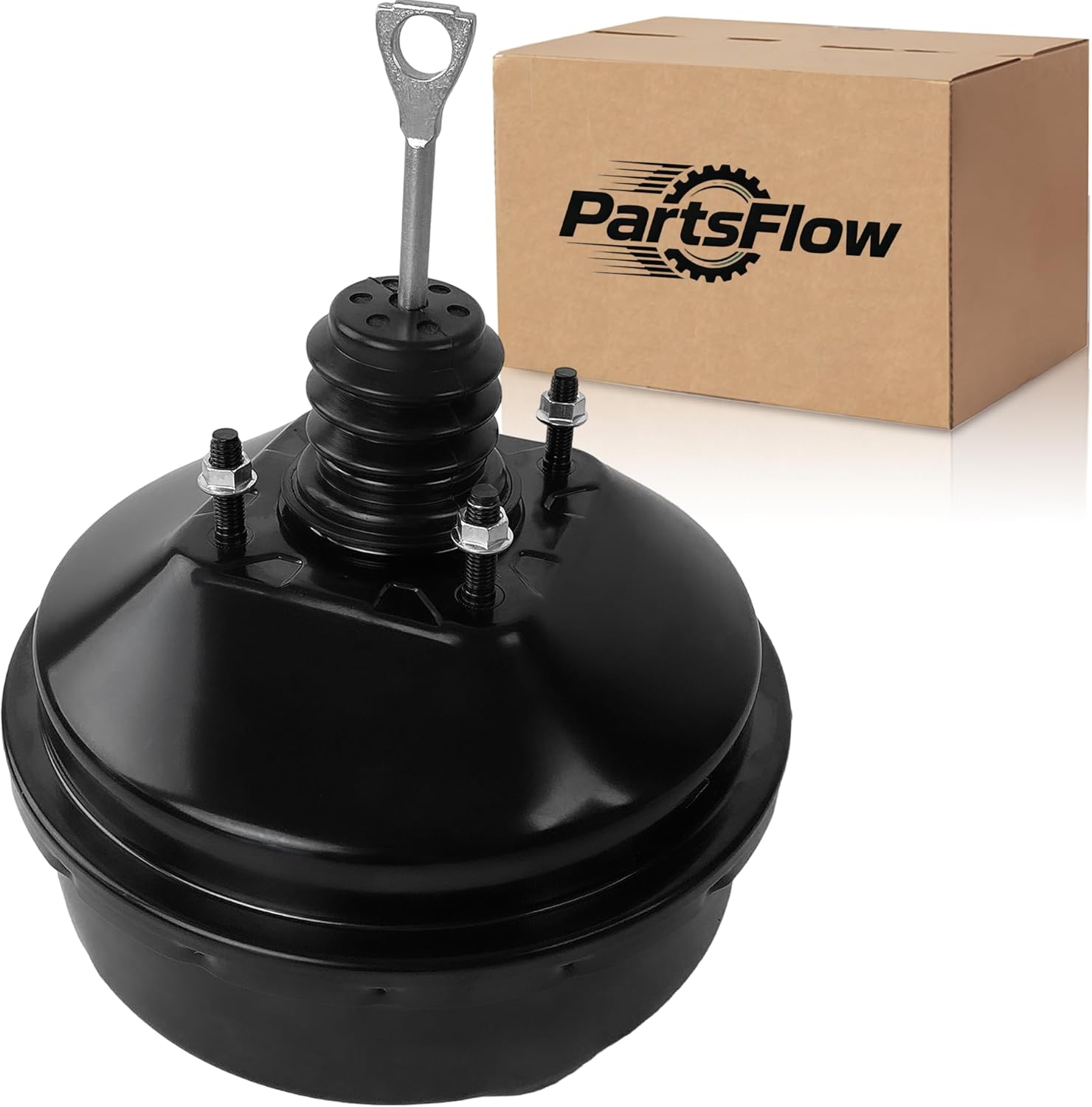
| Manufacturer | PartsFlow |
|---|---|
| Material | Steel |
| Brake Booster Diaphragm Style | Dual |
| OEM Part Number | 5474818, 178642, 18040258, 18042073, 18060777 |
This PartsFlow vacuum power brake booster replaces a failed round black booster on compatible 1999–2002 Chevrolet Silverado 1500 and related GM trucks and SUVs. It is a straightforward factory-style replacement that restores power-assist braking by reintroducing vacuum boost to the master cylinder; installation is typically a 1–2 hour job for someone comfortable with basic brake plumbing and a few hand tools. The unit ships without a master cylinder or new gaskets, so plan to reuse the original ring gasket or buy a replacement to ensure a seal. Customers report the booster fits well and returns firm pedal feel when installed correctly, but some buyers have received damaged units in transit so inspect the vacuum nipple and casing before fitting. This booster is a budget-minded option that targets drivers who need a functional, direct-fit replacement rather than an upgraded performance or hydraulic hydro-boost system.
Best for: Drivers working on a tight budget who need a functional, factory-style replacement for the round vacuum booster on late 1990s to early 2000s GM pickups and SUVs and who are comfortable handling a basic DIY install.
Less Ideal for: Those seeking an upgraded hydro-boost conversion, a complete master cylinder kit, or a premium rebuilt booster with extra hardware or warranty support should look elsewhere.
- Direct-fit design for specified 1999–2002 GM trucks and SUVs, simplifying installation
- Restores factory-style vacuum assist to recover firm pedal feel
- Reportedly simple 1–2 hour install for experienced DIYers without brake line removal
- Lower-cost replacement compared with dealer or premium aftermarket boosters
- Ships without gaskets or master cylinder requiring reuse or additional purchases
- Some buyers reported arrival damage to the vacuum nipple or casing
Verdict: A budget-friendly, direct-fit vacuum booster that restores factory power assist on compatible 1999–2002 Silverado 1500 and similar GM trucks and SUVs.
5. Cardone Remanufactured Hydro-Boost Power Brake Booster 52-7371

| Manufacturer | Cardone |
|---|---|
| Model | Cardone 52-7371 Power Brake Booster |
| Position | Center |
This Cardone remanufactured hydro-boost replaces the factory booster on compatible 1999–2006 Chevrolet Silverado 1500 and similar GM trucks and provides power-assisted braking using the vehicle's power steering system. It arrives pre-tested with factory-quality seals and check valves installed, and Cardone applies a rust-resistant finish and pre-adjusts the master cylinder output rod when included to simplify installation. In real-world use it bolts into place and restores firm pedal feel and braking power for trucks that have a failing or leaking booster. Installation can be moderately difficult for a DIYer because some original small parts such as the retainer, spring, and pushrod are often meant to be reused and removal can extend labor time. As a remanufactured unit there are mixed long-term reports: many users report trouble-free service and a like-new fit while a minority experienced early leaks, so expect generally good value but be prepared to inspect seals and reuse original hardware during installation.
Best for: Truck owners prioritizing a cost-effective repair that restores factory-like braking performance and who prefer a tested remanufactured replacement over sourcing a new OEM unit.
Less Ideal for: Buyers who want a brand-new factory-authorized booster with full new hardware included or those who want a plug-and-play swap without reusing any original parts.
- Remanufactured to factory-quality with seals and check valves installed
- Pre-adjusted master cylinder output rod (when included) for quicker installation
- Rust-prohibitive finish extends unit life compared with untreated cores
- Tested 100% before shipping to ensure working performance
- Some installers must reuse small original parts like the retainer and pushrod which can complicate installation
- As a remanufactured unit a minority of users report premature leaking
Verdict: A practical, tested remanufactured hydro-boost that restores factory-style braking for early 2000s Silverados while saving money versus a new unit.
6. PartsFlow Hydro-Boost Power Brake Booster 52-7371 Compatible with Chevy/GMC 2003–2007

| Vehicle fitment | Select Chevrolet and GMC 2003–2007 full-size trucks and SUVs (see listing) |
|---|---|
| Material | Cast Iron |
| Master cylinder stud thread | 10×1.5 |
| Manufacturer part number | PF912552 |
| OEM part numbers replaced | 52-7371, 527371, 15167550, 15183760, 15212480, 15814411 |
This PartsFlow hydro-boost power brake booster is a direct-replacement style unit intended for hydraulic boost brake systems on compatible Chevrolet and GMC trucks and SUVs from the 2003–2007 model years. It swaps into the original mounting locations and uses the same master cylinder stud thread size so installation follows the factory procedure and reuses mounting hardware. In use the booster restores firm, boosted braking for vehicles that lost hydraulic assist, and several buyers report good fit and no leaks after installation. The cast-iron construction and factory-style connections aim for durability, and the part numbers listed match common replacements for Silverado and Sierra applications. Expect a mix of feedback: many customers praise fit and value, while a small number reported early failures, so careful inspection at install and confirmation of hydraulic system health is advisable. The unit ships painted and packaged; it carries a 12-month guarantee from the seller.
Best for: Buyers who prioritize proven fit and social proof when replacing a failed hydro-boost on a 2003–2007 Chevy or GMC full-size truck and want a cost-effective aftermarket replacement with documented installs.
Less Ideal for: Anyone who wants an OEM-sourced part or needs the absolute highest factory-validated longevity should consider dealer-supplied or factory parts instead.
- Made to match factory mounting and master cylinder stud thread for straightforward swap-in.
- Cast iron construction suited to heavy-duty truck braking demands.
- Multiple listed OEM part numbers make it easy to verify fitment for covered vehicles.
- Many user reports of leak-free installs and reliable operation.
- Comes with a 12-month seller guarantee for added confidence.
- Some customers reported early failures, indicating variable quality control across units.
Verdict: A budget-friendly, factory-style hydro-boost replacement that fits common 2003–2007 Chevy and GMC trucks and has broad user approval when inspected and installed correctly.
7. FILTERUP Hydraulic Power Brake Booster 52-7371 (Hydro-Boost)

| Manufacturer Part Number | 52-7371 |
|---|---|
| OEM Part Number | 15167550, 15183760, 15212480, 15814411 |
| Master Cylinder Stud Thread | M10x1.5 |
| Material | Aluminum reinforced housing |
This FILTERUP 52-7371 hydro-boost is a bolt-in style replacement for trucks that use a hydraulic brake assist instead of vacuum. It connects to the power steering pump to amplify pedal force, restoring firm, consistent braking on heavy-duty Silverado and Sierra models. Installation requires reusing the original master cylinder pushrod, spring, and retainer and matching the M10x1.5 master cylinder stud thread, so plan to transfer those small parts during fitment. The unit is aluminum with a reinforced housing for corrosion resistance and long life, and several buyers report a precise fit and trouble-free operation after installation. It is not supplied with the pushrod or spring, so a rebuild is not necessary but attention to proper bleeding and pump condition is important for performance. This replacement suits routine repairs where you want a factory-style fix without rebuilding the original booster, though it only fits specified model years and configurations and requires basic hydraulic system knowledge to install correctly.
Best for: Buyers seeking a low-risk, factory-style replacement to restore hydraulic brake assist on eligible Silverado/Sierra trucks and who prefer replacing the booster rather than rebuilding it.
Less Ideal for: Do not choose this if you need a universal or multi-vehicle booster, if you cannot transfer the original pushrod and spring, or if you prefer a vacuum-style unit.
- Designed to match factory mounting and replacement numbers for direct fit on listed trucks
- Hydraulic boost uses power steering pressure so braking remains strong under heavy loads and when vacuum is unavailable
- Aluminum construction with reinforced housing improves durability and corrosion resistance
- Multiple buyers report good fitment and straightforward installation when original pushrod and spring are reused
- Does not include master cylinder pushrod, spring, or spring retainer so those must be transferred from the original unit
Verdict: A factory-style hydraulic replacement that restores reliable brake assist on compatible Silverado/Sierra trucks with minimal risk when original pushrod parts are reused.
Choosing the Right 1999-2006 Chevrolet Silverado 1500 Brake Booster: Key Factors to Consider
Fitment and Mounting Compatibility
Correct fitment is the first priority when replacing a brake booster on a 1999–2006 Chevrolet Silverado 1500. The booster must align with the factory firewall mounting holes and match the master cylinder pushrod geometry so the pedal travel and hydraulics behave as intended. A booster that requires an adapter or welding may introduce misalignment that affects pedal feel and can accelerate wear on the master cylinder pushrod.
When evaluating fitment, pay attention to the booster body diameter, pushrod length, and vacuum port location relative to the firewall and existing brake lines. Confirming these dimensions prevents late surprises during installation and reduces labor time. Proper mounting also preserves brake bias and ensures factory safety features function correctly.
Vacuum Integrity and Diaphragm Condition
The core function of a vacuum brake booster is to reduce the effort needed at the brake pedal by using engine vacuum to assist braking. Any loss of vacuum from a cracked diaphragm, worn seals, or defective check valve will produce a hard pedal and reduced assist. Symptoms can include longer stopping distances, the need for greater foot force, or a hissing sound behind the dash.
Assessing vacuum integrity means checking for a tight seal, a responsive one-way check valve, and a durable diaphragm material. For owners, verifying vacuum hold with a handheld gauge after installation is a useful step. For technicians, inspecting diaphragms and seals during rebuilds or replacement prevents recurrent failures that lead to additional labor.
Corrosion Resistance and Build Quality
Silverado 1500 trucks are often exposed to road salt, moisture, and heavy-duty use, so corrosion resistance in a brake booster is important for longevity. Housings or mounting flanges that corrode can bind, leak, or fail to seal properly, creating safety and reliability problems. Look for units with protective coatings, stainless or plated hardware, and robust welding or assembly methods.
High build quality also affects internal components such as the diaphragm clamping, spring quality, and check valve materials. Better materials and assembly tolerances reduce the chance of early failure and maintain consistent brake feel over time. Choosing a unit with proven resistance to corrosion reduces the likelihood of future service and related labor costs.
Pushrod Adjustment and Travel
Proper pushrod length and the ability to fine-tune pushrod pre-load are critical to restoring correct pedal travel and brake engagement. If the pushrod is too short, the pedal may free-play before the booster engages; if too long, the brakes can bind or apply partial pressure at rest. Adjustable pushrods or clearly specified nominal lengths allow technicians to set the pedal height and engagement point accurately.
Consider how the replacement booster allows for pushrod setup, whether through an adjustable clevis, a locknut, or specified trimming. Clear specifications and access to the adjustment points speed up the installation process and help ensure consistent brake performance after fitting.
Installation Complexity and Hardware Completeness
Installation complexity directly affects the time and expertise needed to complete a brake booster replacement. Some boosters come as a complete assembly with the required mounting studs, check valve, and pushrod hardware, while others require you to transfer parts from the original unit. A complete assembly reduces bench work and potential mistakes during the swap.
Also consider whether the booster requires any special tools, torque specifications, or bleed procedures for the hydraulic system after installation. Clear instructions and included hardware reduce installation errors. For owners planning a DIY replacement on a Silverado 1500, a unit with comprehensive hardware and clear guidance is preferable to minimize garage time and ensure correct setup.
Compatibility With Vacuum Source and Check Valve
The booster must interface correctly with the engine vacuum source and include a reliable one-way check valve sized appropriately for the Silverado 1500 engine vacuum characteristics. A mismatched vacuum port size or an undersized check valve can reduce assist, especially under load or at low idle. A properly matched valve ensures the booster holds vacuum when the engine is off and provides consistent assistance during braking.
Inspect the vacuum port orientation and diameter relative to your truck's vacuum hose routing to avoid kinks or long runs that could introduce leaks. A booster that includes a quality check valve or uses a standard-sized fitting makes it easier to maintain vacuum integrity over time.
Common Symptoms Of A Failing Booster On Silverado 1500S
Recognizing the typical signs of a failing brake booster helps prioritize diagnosis and repair. Common symptoms include a hard pedal that requires much greater foot force, a hissing noise behind the dash indicating a vacuum leak, and increased stopping distances under normal braking conditions.
Other indicators are a pedal that slowly sinks when held at pressure, inconsistent pedal feel between stops, or the need to pump the brakes to achieve normal braking. These symptoms often correlate with a leaking diaphragm, a faulty check valve, or degraded seals within the booster assembly.
- Heavy or hard brake pedal requiring increased force
- Hissing sound near the booster or under dash
- Longer stopping distances and inconsistent pedal modulation
- Slow pedal return or pedal sinking under constant pressure
Diagnosing Vacuum Leaks And Booster Function
A methodical diagnosis separates booster problems from hydraulic or master cylinder issues. Start by checking vacuum supply hoses and the one-way check valve for obvious cracks, splits, or disconnections. Next, with the engine running, listen for hissing and use a vacuum gauge to confirm steady vacuum levels at the booster port.
A simple functional test is to pump the brake pedal several times with the engine off, hold the pedal down, then start the engine. If the booster is working, the pedal should move downward slightly as the engine starts and vacuum is applied. Failure to see this movement suggests a loss of vacuum assist or internal diaphragm failure.
- Inspect vacuum hoses and check valve for physical damage
- Use a vacuum gauge to verify steady vacuum at idle
- Perform the engine-start pedal test to confirm assist function
DIY Replacement Tips For Silverado 1500 Owners
Replacing a brake booster on a 1999–2006 Silverado 1500 is achievable for mechanically skilled owners but requires planning and the right tools. Before starting, disconnect the battery, relieve any residual brake pressure, and support the truck safely. Note the master cylinder mounting and consider whether the replacement is a full assembly or requires transferring the master cylinder and fittings.
During the swap, label and protect brake lines, use proper torque on mounting studs, and verify pushrod adjustment before reconnecting the master cylinder. After installation, bleed the brake system to remove air and test pedal feel carefully at low speed. If you are following a replace brake booster DIY approach, allow extra time for setup and vacuum checks.
- Disconnect battery and support vehicle before starting
- Label brake lines and protect fittings during removal
- Check pushrod length and adjust before final torque
- Bleed brakes thoroughly after installation and verify vacuum hold
When To Inspect The Master Cylinder
Brake pedal issues can originate in the master cylinder as well as the booster, so inspect both when diagnosing problems. If you encounter a spongy pedal after installing a new booster or notice fluid leakage at the master cylinder, internal seals or bore wear may be present. Rebuilding or replacing the master cylinder is often recommended whenever booster servicing disturbs the hydraulic connections.
Additionally, ensure the master cylinder pushrod seats correctly into the booster and that residual pressure does not pre-load the brake system. Confirm that the master cylinder reservoir is full, cap seals are intact, and there are no external leaks before considering further hydraulic repairs.
- Check for fluid leaks and master cylinder seal integrity
- Verify pushrod seating and absence of pre-load pressure
- Consider master cylinder overhaul if internal leakage or sponginess persists
Service Life And Preventive Maintenance
Brake boosters are durable components but are exposed to conditions that can shorten service life, such as moisture, corrosion, and heat cycles. Inspect the booster during regular brake service intervals for signs of external corrosion, damaged vacuum hoses, or a sticky check valve. Addressing small vacuum hose issues early can prevent diaphragm damage and preserve assist performance.
If you plan long-term ownership of a Silverado 1500, keep a maintenance log of booster inspections and vacuum checks. Replacing worn vacuum components and ensuring clean, secure connections will extend the service life of the booster assembly and maintain consistent pedal feel.
- Inspect vacuum hoses and check valve at routine service intervals
- Look for corrosion at mounting flanges and housing seams
- Replace degraded vacuum components promptly to avoid diaphragm damage
How We Chose the Best 1999-2006 Chevrolet Silverado 1500 Brake Booster
We prioritized factors that matter most for restoring safe, consistent braking in 1999–2006 Chevrolet Silverado 1500 trucks. Primary evaluation criteria included correct vehicle fitment and mounting compatibility with the Silverado 1500 master cylinder and firewall provisions for those model years; a booster that fits without modification reduces installation time and preserves brake geometry. Vacuum integrity and diaphragm condition were assessed as proxies for long-term pedal feel and responsiveness, since a leaking diaphragm or poor vacuum seal directly causes hard pedals and longer stopping distances. Build quality and corrosion resistance were considered next, focusing on boosters with durable housings and corrosion-resistant components to withstand road salt and heavy use. We also weighed installation complexity and the availability of a complete assembly or necessary hardware so owners and technicians can plan the job accurately. Finally, we looked at manufacturer support and documented fitment guidance to ensure replacement parts include clear application information.We excluded units that required extensive firewall modification or nonstandard master cylinder adapters. We also excluded parts lacking clear specification data on pushrod length or vacuum port location because those omissions make proper setup uncertain. The resulting shortlist reflects boosters that meet fitment and vacuum standards, show robust construction, and offer straightforward installation guidance for Silverado 1500 owners and technicians.
Our full evaluation process is outlined in our review methodology.
FAQ
What are the most common brake booster symptoms on a 1999–2006 Silverado 1500?
Common symptoms include a hard or heavy brake pedal, hissing noises indicating a vacuum leak, longer stopping distances, and inconsistent pedal feel. These signs often point to a leaking diaphragm, faulty check valve, or vacuum hose issues.
How can I test the brake booster on my Silverado 1500?
A basic test is to pump the pedal several times with the engine off, hold it down, and then start the engine. If the booster is working, the pedal should move down slightly as the engine starts and vacuum builds. Using a vacuum gauge at the booster port provides a more precise check of vacuum integrity.
Should I replace the master cylinder when replacing the brake booster?
It often depends but is commonly recommended to inspect the master cylinder and consider replacement or rebuild if there is evidence of internal leakage, bore wear, or fluid contamination. Disturbing the hydraulic connections during booster replacement is a good opportunity to address master cylinder issues.
Can I perform a brake booster replacement DIY on a Silverado 1500?
A skilled DIYer can replace the booster, but the job requires correct tools, attention to pushrod adjustment, and careful brake bleeding afterward. If you are uncertain about vacuum testing or master cylinder handling, professional assistance is advisable.
How do vacuum leaks affect brake booster performance?
Vacuum leaks reduce the booster s ability to provide assistance, resulting in a harder pedal and diminished braking power. Leaks can come from cracked hoses, a failed check valve, or a damaged diaphragm, and they often produce audible hissing near the booster.
What should I check if the pedal feels heavy after installing a new booster?
Verify vacuum hose routing and check valve orientation, confirm correct pushrod length and adjustment, and ensure the master cylinder was not air-bound during installation. If those items check out, re-test vacuum hold and inspect the booster for internal defects.
Final Verdict
When replacing the brake booster on a 1999–2006 Chevrolet Silverado 1500, prioritize correct fitment, vacuum integrity, and durable construction. Those factors determine pedal feel, stopping consistency, and long-term reliability more than cosmetic features. Be realistic about installation complexity: choose a complete assembly or a unit with clear pushrod adjustment to avoid misalignment and excess labor.Balance the tradeoffs between ease of installation and long-term corrosion resistance. Focus on diagnosing vacuum leaks and verifying master cylinder condition during the service. With careful attention to these criteria, you can restore confident pedal feel and dependable braking on your Silverado 1500.
Explore More:
- Check out all Chevrolet Silverado 1500 parts & accessories
- Explore Brake Boosters Maintenance & Repair Guides
- Explore Brake System
- Browse all Auto Parts
