

Note: This article contains affiliate links. If you click on these links and make a purchase, I may earn a small commission at no extra cost to you. This helps support my research and content. Read my full affiliate disclosure here.
When you need to carry bicycles on a Mitsubishi Outlander, choosing the right bike rack makes trips simpler, safer, and less stressful. The correct rack affects handling, bike security, and how quickly you can load and unload before a ride. This guide presents seven shortlisted options that represent the strongest choices across common mounting styles and capacity needs.We evaluated each option for mounting stability, bike protection, ease of installation, and day-to-day usability. Read on to find a rack that fits your Outlander and the way you ride.
Looking for other parts? See all Mitsubishi Outlander parts & accessories.
Top Picks at a Glance
| Best Overall The best all-around choice for most situations | Young Electric 2-Bike Hitch-Mount E‑Bike Rack with Ramp (200 lb capacity) |  |
| Best Quality Built to a higher standard if you want something more solid | Yakima HoldUp Tray Hitch-Mount Bike Rack (1-1/4" hitch, 2-bike) |  |
| Best Value The sweet spot between price and what you get | Allen Sports Deluxe 4-Bike Hitch Mount Rack (2-Inch Receiver) |  |
| Best Budget The cheapest option that still gets the job done reliably | Allen Sports Deluxe 2-Bike Spare Tire Rack |  |
| Highest Rated A top-rated pick with lots of positive feedback | Hollywood Racks Destination 2 Hitch Bike Rack (2-bike, platform) |  |
| Most Popular A crowd favorite that many people choose with confidence | Swagman XC2 2-Bike Hitch Mount Rack |  |
| Best Seller A high-volume bestseller chosen again and again | Young Electric 2-Bike Hitch Mount Platform Rack, 200 lb Capacity |  |
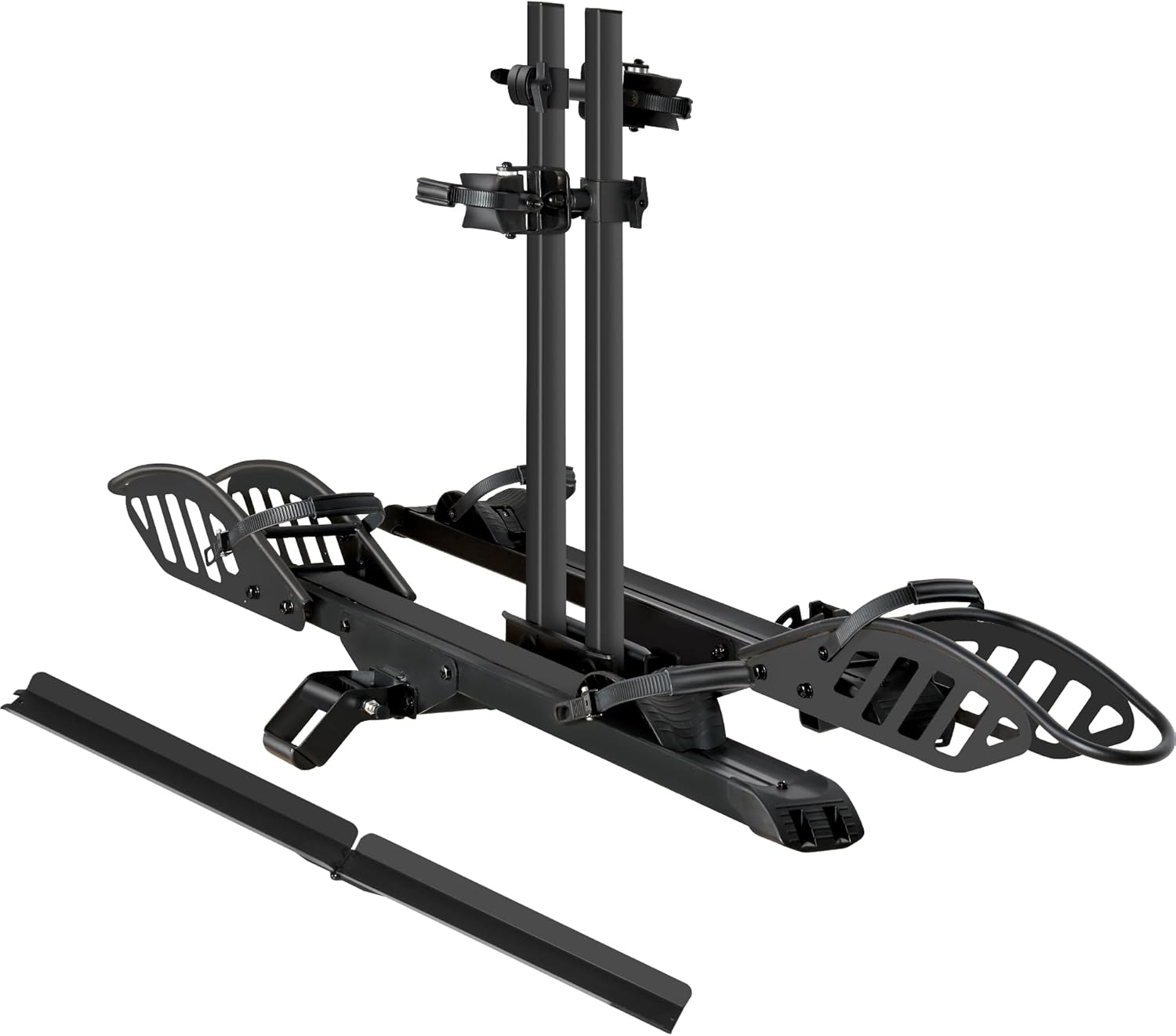
Young Electric 2-Bike Hitch-Mount E‑Bike Rack with Ramp (200 lb capacity)
| Load Capacity | 200 Pounds |
|---|---|
| Mounting Type | Hitch Mount |
| Fits Tire Width | Up to 5 inches |
| Receiver Size | 2 inch receiver |
This Young Electric platform rack mounts to a 2-inch receiver and is built to haul two heavier bikes or e-bikes, using V-groove wheel cradles, dual support bars per bike, and ratchet-style straps instead of metal hooks to reduce scratching. It includes a foldable ramp that makes rolling an e-bike into the tray much easier than lifting, and a patented anti-wobble bolt and shock-absorbing hitch threads to keep the load stable on highway drives. The rack arrives mostly preassembled and installs quickly on a compatible receiver, and the salt-spray resistant coating helps against rust for year-round use. Practical limitations are its mass and bulk which make on/off handling awkward for one person and may require extra lighting or a license plate bracket on some vehicles because the carrier can obscure rear lights and plate when loaded or folded. The ramp’s quick-release pin can rattle on rough roads unless secured.
Best for: A balanced all-round buyer who wants a durable, user-friendly solution for carrying two e-bikes on weekend trips and values easy loading and solid on-road stability.
Less Ideal for: Drivers who need a lightweight, easily removable rack for frequent one-person on/off use or those unwilling to add external lighting or a plate bracket to maintain legal visibility.
- 200 lb total capacity suitable for two midweight e-bikes when paired correctly
- Integrated V-groove ramp simplifies loading heavy bikes without lifting
- Patented anti-wobble bolt and shock-absorbing hitch threads improve on-road stability
- Ratchet strap system and padded contact points reduce frame scratches compared with metal hooks
- Foldable design stores compactly and resists corrosion with a high salt-spray rating
- Heavy and bulky to handle solo during installation or removal
- May block vehicle taillights and license plate when in use and could need added lighting or a bracket
- Ramp attachment held by a single quick-release pin can vibrate on rough roads without an added strap
Verdict: A practical, beefy platform rack that makes loading e-bikes simple and rides securely on a Mitsubishi Outlander with a 2-inch hitch, but it is heavy and may require lighting or plate relocation.
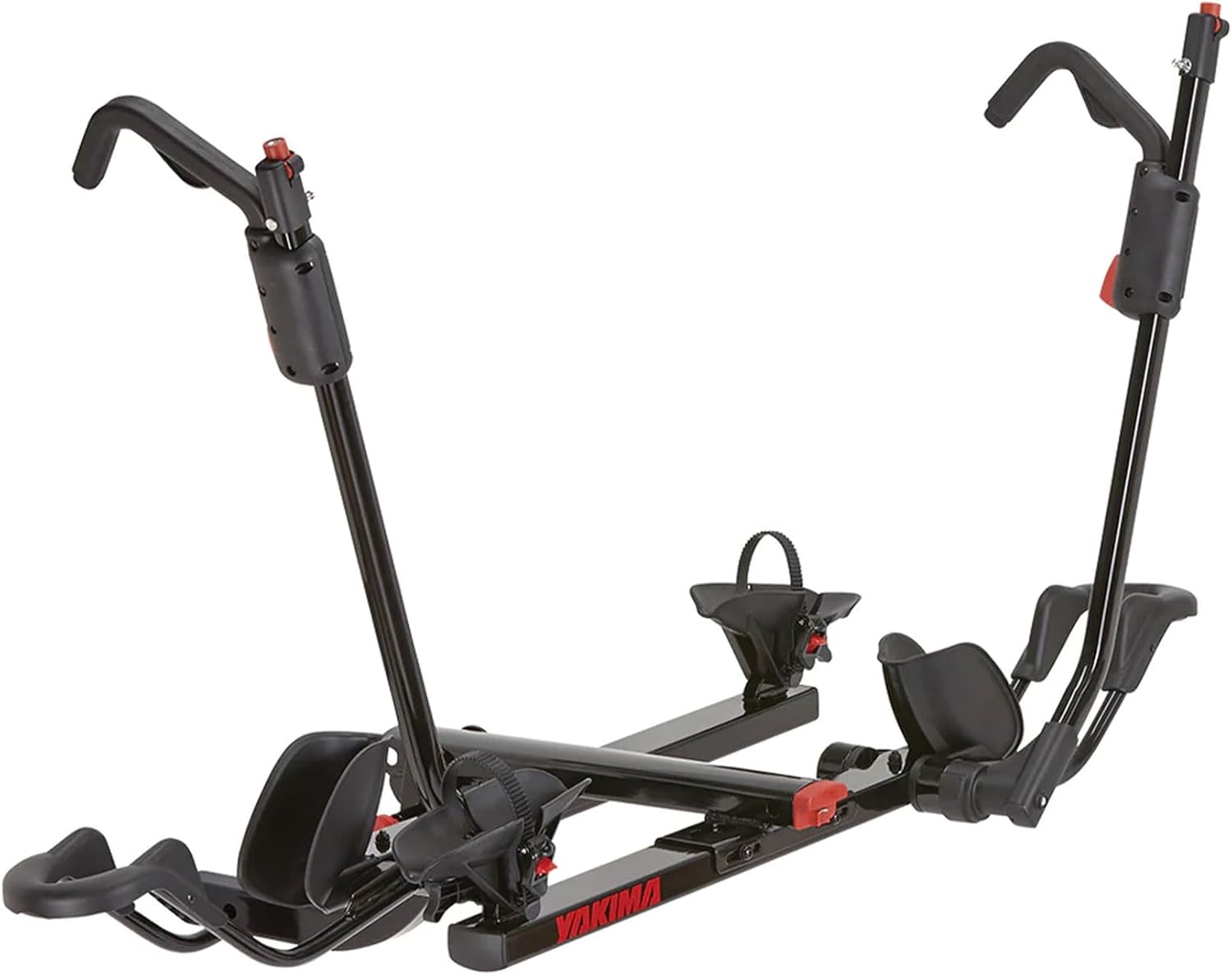
Yakima HoldUp Tray Hitch-Mount Bike Rack (1-1/4" hitch, 2-bike)
| Hitch size | 1 1/4-Inch |
|---|---|
| Bike capacity | 2 bikes |
| Per-bike weight limit | 60 pounds |
| Wheel size fit | 20" to 29" (varies by tire width) |
| Tilting | Tilts down with bikes loaded |
The Yakima HoldUp is a tray-style hitch bike rack designed to carry two bikes securely while minimizing frame contact. It mounts into a 1-1/4-inch hitch and holds bikes by the wheels using Yakima’s StrongArm restraints and wheel trays, which accommodate disc brakes, through-axles, and full-suspension frames. Typical use is loading both bikes into the trays, tightening the wheel straps, then locking the included SKS locks to secure bikes and rack. The tilting mechanism lets you open the Outlander’s rear hatch with bikes installed, though tilting the loaded rack up requires effort because the unit is substantial and built from heavy-gauge metal. Side-to-side adjustability helps fit different wheelbases and tire widths, and the tray design reduces bike sway and frame contact compared with hanging racks. The main compromises are weight and bulk: the unit is heavy to lift and takes room when stored, and installing or removing it solo is easier with a ratcheting wrench or two people.
Best for: Performance-oriented buyers who prioritize secure, stable transport and minimal bike frame contact when taking high-value or full-suspension bikes on drives with a Mitsubishi Outlander.
Less Ideal for: Buyers who need a lightweight, frequently removed rack or store the rack inside a garage compactly should consider lighter or folding alternatives rather than this heavy tray-style unit.
- Tray design holds bikes by the wheels to avoid frame contact and protect carbon or painted frames
- Tilts with bikes loaded to permit rear hatch access on the Mitsubishi Outlander
- Accommodates disc brakes, through-axles, and full-suspension bikes for broad compatibility
- Adjustable side-to-side spacing and wheel restraints reduce bike sway and rubbing
- Includes SKS locks to secure rack and bikes at the hitch
- Heavy construction makes carrying, lifting, and tilting the loaded rack physically demanding
- Fits a 1-1/4-inch hitch size so requires the Outlander to have that receiver or an adapter
Verdict: Choose the Yakima HoldUp for rock-solid, frame-safe transport of performance bikes on your Mitsubishi Outlander if you can handle the extra weight and bulk.
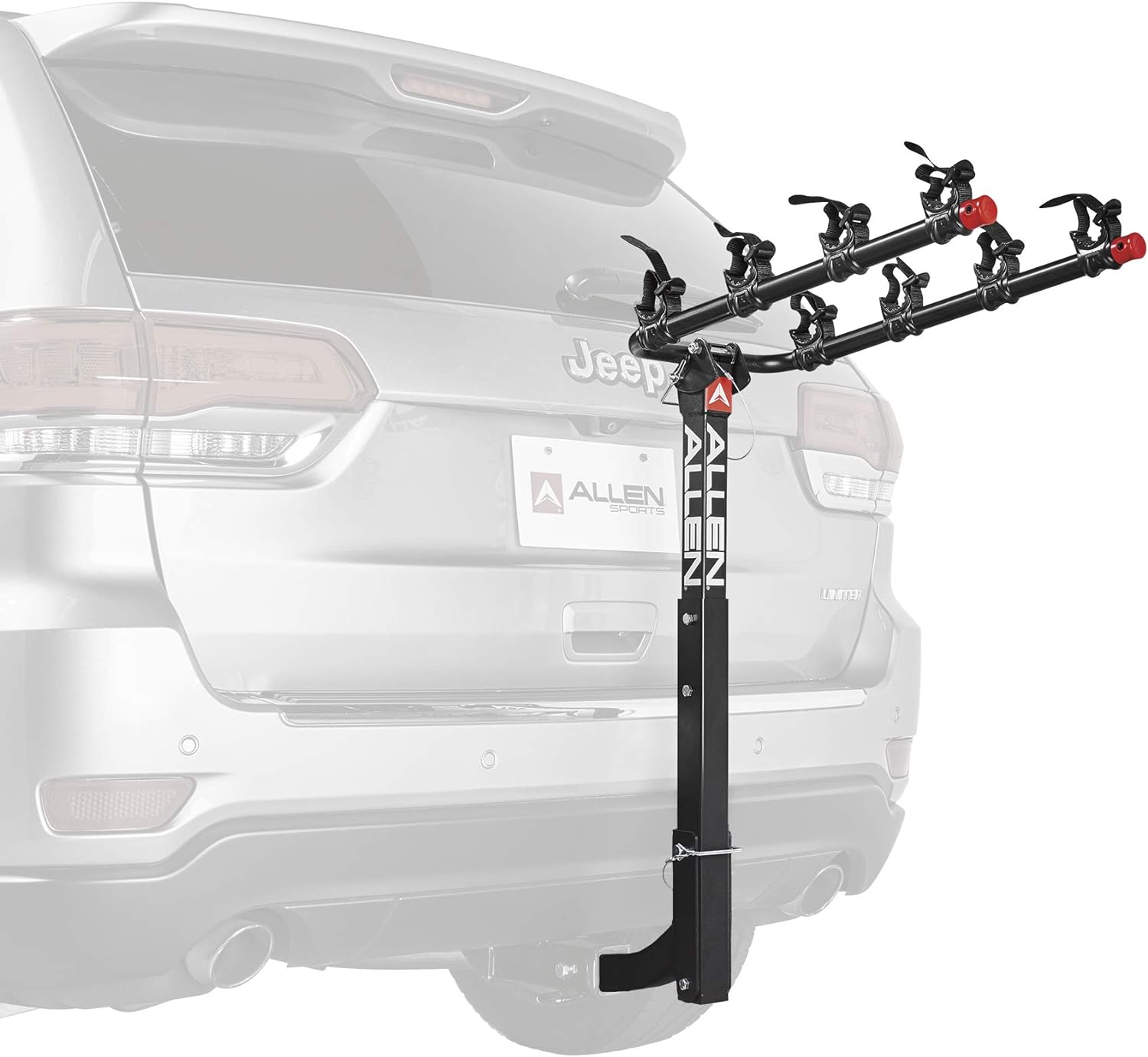
Allen Sports Deluxe 4-Bike Hitch Mount Rack (2-Inch Receiver)
| Mounting Type | Hitch |
|---|---|
| Receiver Size | 2-Inch |
| Load Capacity | 48.5 Pounds |
| Special Features | Foldable |
| Automotive Fit Type | Universal Fit |
This Allen Sports Deluxe hitch rack is a straightforward, value-oriented way to transport up to four bicycles on a vehicle with a 2-inch hitch receiver. It installs into the hitch and uses a patented cradle system with rotating mounts and retainer clips to hold frames in place while the carry arms fold away when not in use. The rack tilts to allow access to the liftgate and includes a no-wobble bolt to reduce movement in the receiver. In everyday use it behaves like a heavy-duty budget rack: solid and durable on highway runs, but noticeably heavy to lift when loaded and sometimes requires two people to tilt with four bikes installed. The design keeps bikes spaced from the tailgate and the keyed hitch lock adds basic security. There is minor assembly and the pin-style hardware is more rudimentary than pricier alternatives, but that simplicity helps keep the price down while remaining reliable for regular family trips or weekend rides.
Best for: Practical optimizers seeking a budget-friendly, durable hitch rack that delivers dependable everyday performance and straightforward features without extra frills.
Less Ideal for: Drivers who prioritize ultra-lightweight handling, tool-free quick-release hardware, or carrying very heavy e-bikes should consider higher-capacity or premium options instead.
- Fits standard 2-inch hitch receivers common on many SUVs and crossovers
- Patented tie-down cradles and rotating mounts accommodate different frame shapes for easier loading
- Tilting design allows rear liftgate access without removing bikes
- No-wobble bolt reduces rack movement inside the hitch for quieter travel
- Foldable arms and attached retainer clips minimize lost parts and ease storage
- Heavy when loaded; tilting the rack with four bikes usually needs two people
- Pin-style fasteners are simple but less convenient than quick-release systems
- Load capacity is limited compared with some higher-end racks
Verdict: A sturdy, no-nonsense 4-bike hitch rack that gives Mitsubishi Outlander owners strong value for routine family and weekend bike transport.
Allen Sports Deluxe 2-Bike Spare Tire Rack

| Load Capacity | 70 Pounds |
|---|---|
| Mounting Type | Spare tire |
| Special Features | Foldable |
| Carry Capacity | 2 Bikes/70 LB |
The Allen Sports Deluxe 2-Bike Spare Tire Rack is a spare-tire-mounted carrier that carries up to two bicycles using 15-inch carry arms and individual tie-down cradles. It installs over an externally mounted spare tire and secures with lower strap anchors, so you can set it up quickly for short trips or weekend rides. Notable features include a wide bottom foot that bears weight on the spare tire rather than the rim, padded lower frame to protect the vehicle, and a powder-coated tubular frame that resists corrosion. For practical use on an Outlander with a rear-mounted spare, the rack keeps bikes away from the exhaust and rear bodywork and can be removed when not needed. Limitations to expect are the manual strap tightening and the need to double-check fit and fasteners before highway travel since users sometimes add extra straps or ratchet ties for peace of mind. This is a value-oriented solution: it is lightweight and affordable but requires careful installation and occasional reinforcement for longer high-speed trips.
Best for: Practical, budget-conscious buyers who want a low-cost, easy-to-install bike carrier for occasional use and short road trips.
Less Ideal for: Buyers who need a permanent, high-security solution or who frequently transport expensive road bikes over long highway drives should consider a more robust hitch or roof mount instead.
- Mounts quickly to a rear-mounted spare tire for fast setup on trips.
- Individual tie-down cradles secure each bike and protect frames.
- Wide bottom foot transfers load to the spare tire instead of the rim.
- Padded lower frame and powder-coated finish reduce contact damage and corrosion risk.
- Requires manual strap tightening and occasional supplemental straps for high-speed security.
- Not suitable if your Outlander does not have an externally mounted spare tire or compatible clearance.
Verdict: A low-cost, easy-to-install spare-tire bike rack that fits rear-mounted spare setups but benefits from careful installation and extra straps for long trips.
Hollywood Racks Destination 2 Hitch Bike Rack (2-bike, platform)

| Load Capacity | 35 Pounds per bike |
|---|---|
| Fits Hitch Sizes | 1-1/4" and 2" (adapter included) |
| Bikes Carried | 2 Bikes |
| Item Weight | 20 pounds |
The Destination 2 is a lightweight, foldable platform-style hitch rack designed to carry two bikes using individual wheel trays and padded frame/post straps. It mounts to a 1-1/4" or 2" receiver and includes a 2" adapter plus a threaded locking hitch bolt for secure attachment. Typical use is simple: install the rack on the receiver, fold it upright, set bikes into the trays, and fasten the three contact straps plus the mast strap to keep frames stable during travel. Notable features are the wheel trays that make loading faster, the rack folding flat against the vehicle for storage or trunk clearance when unloaded, and the included threaded hitch pin for reduced wobble. Practical benefits are quiet, stable transport on highways and straightforward on/off loading that speeds up day trips. Limitations include reliance on the supplied bolt-style hitch lock that some users find fiddly or less robust than heavier aftermarket locks and the need to check and tighten fasteners periodically; the rack is not intended for towing a trailer or use on a towed vehicle.
Best for: Reliability-focused buyers who prioritize a stable, low-maintenance hitch rack for regular weekend rides and family outings with the Mitsubishi Outlander. They value quiet highway performance and straightforward loading that reduces pre-trip fuss.
Less Ideal for: Buyers who need to carry heavy electric bikes or plan to tow a trailer should look for a purpose-built heavy-duty e-bike rack or a model rated for towing applications.
- Platform-style wheel trays speed loading and reduce frame contact.
- Folds flat against the vehicle for easier storage and trunk access when unloaded.
- Fits both 1-1/4" and 2" hitch receivers and includes a 2" adapter.
- Threaded hitch bolt tightens the rack to the receiver for reduced wobble on the road.
- Lightweight design makes it manageable to install and remove by one person.
- Included hitch lock is basic and can feel less secure or become difficult to operate for some users.
- Not designed for towing or use on a towed vehicle.
- Requires periodic bolt and fastener checks to maintain stability over long trips.
Verdict: A practical, dependable two-bike platform rack for Mitsubishi Outlander owners who want quiet, stable transport and easy loading without opting for a heavy-duty e-bike solution.
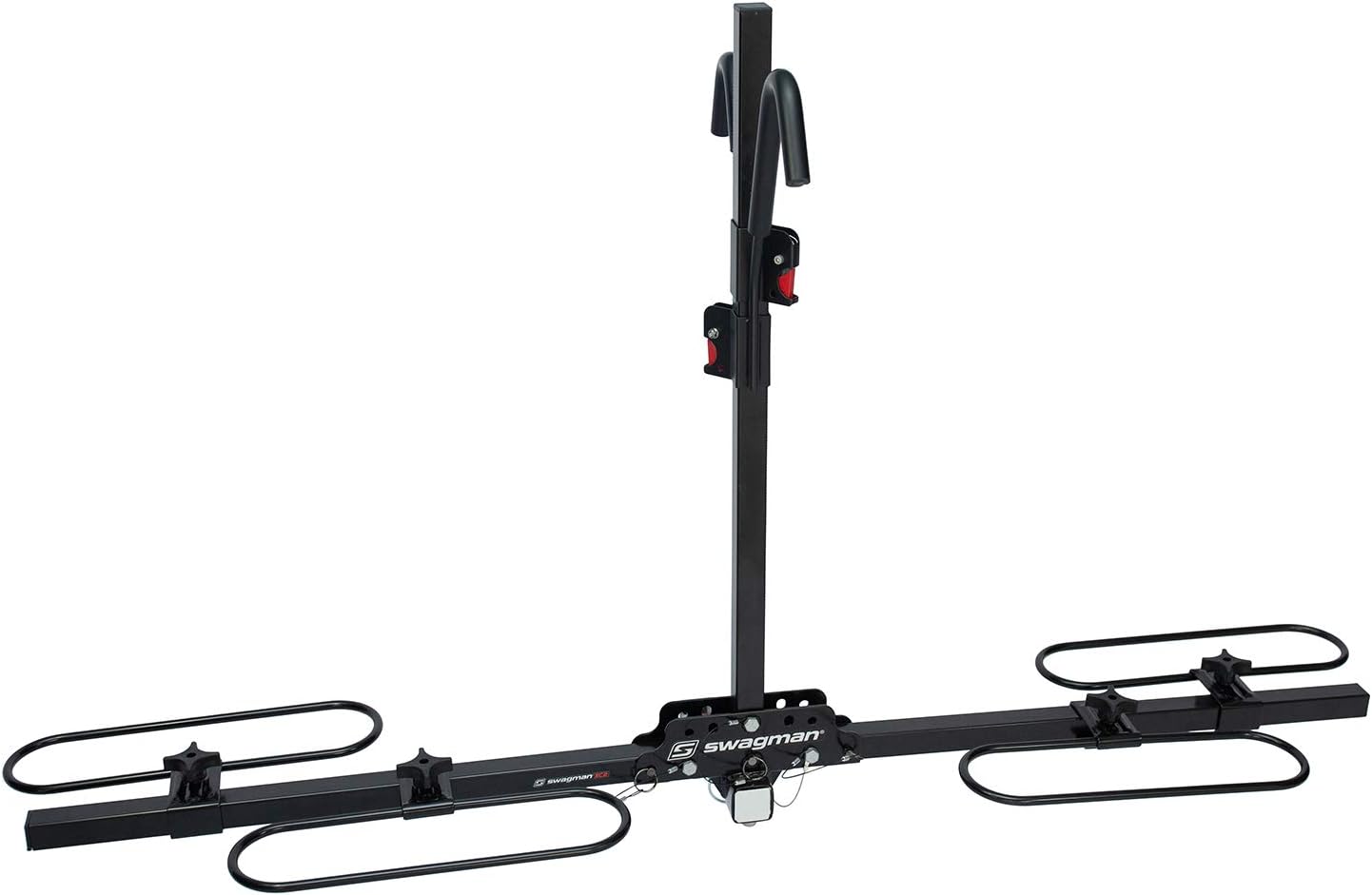
Swagman XC2 2-Bike Hitch Mount Rack
| Load Capacity | 35lbs per bike Pounds |
|---|---|
| Mounting Type | 1 1/4" or 2" receiver |
| Fits Wheel Size | 20-29" diameter |
| Tire Width | Fits up to 2.5" wide tires |
| Bike Capacity | 2 bikes |
The Swagman XC2 is a basic, user-friendly hitch bike rack designed to carry up to two bikes for short trips and weekend rides. It mounts into a 1-1/4" or 2" hitch receiver and secures bikes with adjustable wheel hoops and push-button ratchet arms that clamp the frame for fast loading and unloading. The rack folds the arms up for compact storage and includes an anti-wobble hitch device to reduce movement while driving. It fits most bike frame styles and 20" to 29" wheel diameters and accommodates tires up to 2.5" wide, with fat-bike trays available separately. Practical benefits are easy assembly, low lift loading at hitch height, and a lightweight, space-saving design that suits casual cyclists. Limitations are a 35 lb per-bike capacity that rules out heavier e-bikes and the non-tilting design which can block rear hatch access unless bikes are removed or the rack is folded down.
Best for: Convenience-driven owners who prioritize quick, no-fuss loading and compact storage for occasional rides and weekend trips in their Mitsubishi Outlander.
Less Ideal for: Owners who need to transport heavy e-bikes, large cargo, or require frequent rear-hatch access without removing bikes should consider a higher-capacity or tilting rack.
- Fits both 1-1/4" and 2" hitch receivers for broad compatibility with the Outlander’s receiver options
- Push-button ratchet arms and adjustable wheel hoops make loading quick and tool-free
- Folds up to save storage space when not in use
- Built-in anti-wobble hitch device reduces movement while driving
- 35 lb per-bike limit is too low for most e-bikes or heavy full-suspension mountain bikes
- Does not tilt for rear hatch access with bikes installed
Verdict: A convenient, affordable two-bike hitch rack for the Outlander that excels at easy loading and compact storage but is not suitable for heavy e-bikes or users who need hatch access with bikes mounted.
Young Electric 2-Bike Hitch Mount Platform Rack, 200 lb Capacity

| Load Capacity | 200 Pounds |
|---|---|
| Mounting Type | 2 inch hitch receiver |
| Fits wheel sizes | 20 to 29 inches and up to 5-inch fat tires |
| Special Features | Foldable, Tilting |
The Young Electric 2-bike platform rack mounts to a 2-inch hitch receiver and is built to carry heavier bicycles, including many e-bikes, up to a 200 pound combined load. It uses padded frame hooks, universal tire holders and straps to secure bikes and includes a hitch tightener to reduce wobble. The tray-style platform and optional extendable bars make loading different wheelbases easier and the quick-release tilt makes rear cargo access possible without removing bikes. Most parts arrive partially assembled so installation on a vehicle with a 2-inch receiver is straightforward, though the unit is steel and fairly heavy to lift into the hitch. The rack’s provided ratcheting straps and frame hooks work for most bikes but several owners replace or supplement the straps and add tie-downs for long highway drives. The mounting bolt is threaded and nonstandard which can limit use of common hitch pins and makes frequent removal slightly fiddly. For an Outlander owner seeking a sturdy, lower-cost platform rack that handles heavier bikes, this is a solid functional choice with the usual need for aftermarket straps or stabilizers for extra security on long trips.
Best for: Risk-averse mainstream buyers who prioritize a sturdy, budget-friendly platform rack for everyday trips and occasional e-bike transport on a Mitsubishi Outlander.
Less Ideal for: Buyers who need a lightweight, frequently removable rack or want a plug-and-play hitch pin solution should consider lighter alloy models or racks with standard pin compatibility.
- 200 lb total carrying capacity suitable for many e-bikes and heavy commuter bikes
- Platform tray with adjustable bars simplifies loading different wheelbases and fat tires
- Quick-release tilt and foldable design for trunk access and compact storage
- Hitch tightener and padded hooks reduce wobble and protect frames
- Steel construction makes the rack heavy to lift and install alone
- Included ratcheting straps are reported as low quality by some users and may need replacement
- Uses a proprietary threaded hitch bolt which limits compatibility with standard locking pins
Verdict: A robust, affordable platform-style 2-bike hitch rack for an Outlander that handles heavy bikes well but is heavy itself and often benefits from upgraded straps and a hitch stabilizer.
Choosing the Right Mitsubishi Outlander Bike Rack: Key Factors to Consider
Mounting Type And Vehicle Fit
The rack's mounting method determines compatibility and everyday convenience. Hitch-mounted racks attach to the vehicle's receiver and generally offer strong stability and simple loading height. Roof racks require lifting bikes overhead and need proper crossbars and roof load allowance from the vehicle. Trunk-mounted racks use straps and hooks that must match the Outlander's rear contours. Each mounting type interacts differently with rear access, ground clearance, and driving dynamics, so choose the style that aligns with your routine.
Confirming specific fit for the Mitsubishi Outlander matters because attachment points, bumper shape, and available hitch receivers vary. A good fit reduces rattling, improves safety, and minimizes the chance of contact with the bodywork.
Load Capacity And Bike Types
Capacity determines how many bikes you can carry and whether heavier models like e-bikes or fat-tire bikes are supported. Check both per-bike and total weight limits and compare those numbers to the actual weights of the bikes you plan to transport. Exceeding capacity can strain the rack and vehicle attachment and increase sway or instability.
Think about the bike types you ride now and any future additions. A rack with higher capacity provides flexibility, while a lower-capacity unit can be lighter and easier to handle if you only use lightweight road or hybrid bikes.
Bike Protection And Securing Methods
How the rack holds and secures the bike affects both protection and theft deterrence. Look for padded contact points, frame cradles, and secure straps that prevent movement and abrasion during transit. Cradles that support the wheels rather than the frame can preserve delicate finishes and reduce the need for frame adapters.
Integrated locks or straightforward tie-down points make it easier to secure bikes when you step away from the vehicle. Consider how accessible and robust those locking features are in daily use.
Ease Of Installation And Repeated Use
Installation complexity affects how often you will realistically use the rack. Some racks mount with a single pin or knob and can stay attached full-time, while others require tools and time-consuming assembly. For roof and hitch racks, see how much adjustment is needed to align and secure bikes. Trunk racks may need frequent repositioning and careful strap routing.
If you plan to remove and reinstall the rack often, favor designs with quick-release elements and simple alignment. For long-term installs, look for corrosion-resistant hardware and straightforward maintenance steps.
Vehicle Access And Clearance
Consider how a mounted rack affects access to the Outlander's rear cargo area and spare tire access if applicable. Some hitch racks tilt or swing away to allow rear hatch opening, while roof and trunk racks may block access or require removing bikes first. Ground clearance for rear-mounted racks can change departure angles and may affect low driveway ramps.
Think about parking, garage clearance, and loading docks you commonly encounter. A rack that preserves functional access will be more convenient and safer in everyday use.
Durability And Weather Resistance
Exposure to road salt, rain, and sun can degrade finishes and moving parts. Materials, coatings, and hardware quality determine how well a rack holds up over seasons. Steel components should have robust corrosion protection and fasteners that resist seizing. Plastic and rubber contact parts should withstand UV exposure without becoming brittle.
Durability also relates to warranty and available replacement parts. A well-built rack will require less frequent maintenance and provide consistent performance over time.
Before You Install: Prep Steps for Your Mitsubishi Outlander
Do a quick inspection of the mounting area on your Outlander before you attach any bike rack. Check the receiver, roof rails, or trunk trim for damage, loose bolts, or rust. Confirm that any hitch or roof hardware is properly torqued to the vehicle specifications and that roof rails or crossbars are rated for accessory loads.
Measure available clearance around the rear and roof so you know how much extra length and height you will have with bikes installed. This helps avoid surprises at drive-throughs, parking garages, or low branches on your route. Keep the vehicle manual handy to verify maximum allowable loads and any manufacturer notes on accessory use.
- Verify receiver size and hitch class if you plan to use a hitch-mounted carrier; this ensures compatibility and safe towing.
- Inspect roof rails and crossbars for secure mounting and rated load limits when considering a roof option.
- Clean contact points on the vehicle to prevent scratches and to improve grip for straps and pads.
Transporting E-bikes and Heavier Bikes in Your Outlander
E-bikes and other heavy bikes require extra attention because of their weight and center of gravity. Even if the Outlander's mounting points are rated for the total loaded weight, distribute weight carefully and avoid exceeding the rack or vehicle limits.
Use the vehicle's lower mounting positions when possible and keep the heaviest bike closest to the vehicle to reduce leverage and sway. For roof-mounted setups plan for the added effort of lifting heavier bikes onto crossbars; a two-person lift or a loading ramp can make this safer.
- Confirm the combined weight of bikes does not exceed the Outlander's roof or hitch load limits and the bike rack weight capacity.
- Consider frame adapters or wheel trays rated for heavier bikes to prevent damage to the bike or vehicle.
- If you regularly carry heavy bikes, choose a rack design that supports wheels and frame directly rather than relying solely on straps.
Loading Order and Securing Multiple Bikes
When carrying more than one bike, plan the loading order to minimize contact and maximize stability. Alternate handlebars and pedal positions so bikes nest without rubbing paint or components together. Use soft pads at contact points between frames and the car.
Secure each bike individually with both a primary attachment to the rack and a secondary tether for added redundancy. Tighten fasteners progressively and recheck after the first few miles.
- Place the heaviest bike closest to the vehicle and lighter bikes outward to reduce sway.
- Use frame padding or protective sleeves where bikes touch each other or the vehicle.
- Bring spare straps and basic tools so you can tighten or reconfigure mounts on the road.
Folding, Storing, and Carrying Your Rack When Not in Use
If you choose a folding bike rack, the convenience can make it much easier to store the rack in a garage or the Outlander's cargo area when not in use. Folded racks reduce the chance of damage and free up storage space.
Store racks indoors when possible to extend their service life and protect moving parts from corrosion. If you must leave a rack attached to the vehicle between trips, consider lightweight covers or corrosion inhibitors on exposed hardware.
- Practice folding and unfolding the rack at home so you can do it quickly in tight spaces.
- Label small parts and keep bolts or keys in a dedicated pouch to avoid losing them.
- A compact folding rack can double as a temporary indoor bike stand for maintenance.
Care and Maintenance to Protect the Rack and Your Outlander's Finish
Routine maintenance keeps both the rack and your Outlander looking and performing their best. Rinse salt and road grime off metal components after winter trips, lubricate pivot points sparingly, and inspect straps and fasteners for wear.
Protect the vehicle paint by using dedicated contact pads, non-marring straps, and alignment checks whenever you mount bikes. Replace any worn rubber or foam pieces promptly to prevent chafing.
- Perform a visual check before each trip and a more thorough inspection monthly during frequent use.
- Use corrosion-resistant spray on bolts and exposed metal, avoiding spray on rubber pads or straps.
- Keep a log of torque settings and replacement intervals for quick reference at service time.
How We Chose the Best Mitsubishi Outlander Bike Rack
We focused on practical, vehicle-specific fitment and everyday usability when narrowing the field to seven options. Our selection criteria included mounting compatibility with the Mitsubishi Outlander, overall load capacity relative to typical bike weights, and the rack's ability to protect frames from contact and abrasion. We also weighed installation complexity and required tools, as well as the rack's stability during normal driving conditions. Durability and long-term corrosion resistance were considered to ensure a dependable product in varied weather.We excluded any racks without clearly documented fit guidance for the Outlander or those with insufficient load ratings for common adult bikes. We also left out models with excessive installation time or complicated recurring maintenance needs. The result is a focused list based on fit, protection, load capacity, installation, stability, and durability.
Our full evaluation process is outlined in our review methodology.
FAQ
What kinds of bike racks fit a Mitsubishi Outlander?
Several mounting styles can fit the Outlander, including hitch-mounted, roof-mounted, and rear trunk-mounted systems. The right style depends on whether you prioritize ease of loading, access to the rear hatch, or the ability to carry heavier bikes. Always confirm fit instructions for the Outlander to ensure proper attachment and safe operation.
Can I carry an e-bike or heavier bike on a standard rack?
It depends on the rack's stated weight capacity and the Outlander's hitch or roof load limits. Some racks are rated for heavier bikes, while others are intended for lighter road or hybrid bikes. Check the per-bike and total capacity and compare it to your bike's weight before deciding.
How difficult is installation for the different rack types?
Installation effort varies. Hitch racks often mount quickly with a pin or bolt and minimal tools. Roof racks require crossbars and can be more laborious because of lifting. Trunk racks use straps and hooks and may need careful adjustment for a secure fit. Consider how often you will install and remove the rack when choosing.
Will a rack damage my vehicle's finish?
A properly fitted rack with padded contact points and correct installation usually avoids damage. Poorly adjusted straps or missing protective padding can create pressure points or abrasion. Inspect contact areas during initial installs and use additional protection if necessary to prevent scuffs.
Are locks and straps necessary, and what should I look for?
Secure straps keep bikes stable while driving, and locks help deter theft when you leave bikes unattended. Look for durable, adjustable straps with secure buckles and integrated or compatible locks that are rated for outdoor use. Ease of use and robustness are more important than complex locking mechanisms in many cases.
How do I choose between hitch, roof, or trunk options?
Weigh your priorities: hitch racks tend to be easiest for loading and better for heavier bikes; roof racks preserve rear access but require lifting; trunk racks are often lighter and portable but may obstruct the rear hatch and require careful strap routing. Match the mounting style to the way you ride and how you access the Outlander's cargo area.
Final Verdict
Choosing the right Mitsubishi Outlander bike rack comes down to matching mounting style, load capacity, and protection to your typical rides. Prioritize a rack that fits the vehicle securely, supports the weight of your bikes, and preserves the access and clearance you need.Accept tradeoffs between ease of loading, permanence of installation, and weight capacity. Use the criteria above to narrow options and pick the rack that aligns with how often you transport bikes and the types of bikes you ride.
Explore More:
- Check out all Mitsubishi Outlander parts & accessories
- Explore Exterior Accessories
- Browse all Accessories
