

Note: This article contains affiliate links. If you click on these links and make a purchase, I may earn a small commission at no extra cost to you. This helps support my research and content. Read my full affiliate disclosure here.
If you drive a Ford Mustang, worn ball joints can undermine steering precision and tire life. Choosing the right ball joint matters because fitment, load capacity, and long-term durability affect handling and safety.This guide looks at seven shortlisted options across the category. We evaluated each choice for fit accuracy, durability, and installation practicality to help you identify the right replacement. Read on to see which features matter most and what to expect during installation.
Looking for other parts? See all Ford Mustang parts & accessories.
Top Picks at a Glance
| Best overall The best all-around choice for most situations | TRQ Front Upper Control Arm with Ball Joint — 2‑Piece Set |  |
| Best quality Built to a higher standard if you want something more solid | TUCAREST Front Lower Control Arm and Ball Joint Assembly (Pair) for 2010–2014 Ford Mustang |  |
| Best Value The sweet spot between price and what you get | TRQ Front Lower Control Arm and Ball Joint Set (2-piece) |  |
| Best budget The cheapest option that still gets the job done reliably | Suspension Dudes Front Lower Ball Joint Kit for Mustang (1994–2004) |  |
| Highest Rated A top-rated pick with lots of positive feedback | Detroit Axle Front Lower Control Arms with Ball Joints, 2‑Piece Set for 2005–2010 Ford Mustang |  |
| Most popular A crowd favorite that many people choose with confidence | Metrix Premium Chassis Parts Front Lower Ball Joint (Fits 2010-2014 Ford Mustang) |  |
| Best Seller A high-volume bestseller chosen again and again | TRQ Front Lower Ball Joint Set for 1994–2004 Ford Mustang |  |
1. TRQ Front Upper Control Arm with Ball Joint — 2‑Piece Set

| Fitment | Ford Mustang 1964–1966 |
|---|---|
| Quantity | 2 Piece Set |
| Position | Front Upper |
| Manufacturer | TRQ |
| Model | PSA62205 |
This TRQ kit supplies both left and right front upper control arms with preinstalled ball joints for classic 1964–1966 Ford Mustangs. It is intended as a direct replacement to restore steering precision and front-end stability after worn arms or noisy ball joints. The arms arrive machined and ready to install, which reduces time in the garage compared with rebuilding or pressing in new joints. TRQ highlights fitment and offers DIY installation videos, so a mechanically inclined owner with basic tools can complete the swap without fabrication. In use the assembly should tighten steering feel, reduce play, and promote more even tire wear. Some users report long-term durability, but there are a few complaints about premature squeaks or joint wear on other vehicle applications, so results may vary with driving conditions and installation torque. Expect to check alignment after installation and replace hardware as needed if original fasteners are seized or corroded.
Best for: A balanced all-round buyer who wants a straightforward, factory-replacement style repair for a classic Mustang and values ease of installation and reliable handling restoration.
Less Ideal for: Not suited for someone building a performance-modified suspension or needing parts for Mustang years outside 1964–1966.
- Direct-fit pair for front upper mounting on 1964–1966 Ford Mustang, saving modification time
- Ball joints preinstalled to speed installation and avoid press-fit labor
- Machined exterior and factory-style construction aimed at restoring steering geometry
- Includes both driver and passenger side arms in one kit for a complete front-end refresh
- Some long-term reviews note possible premature noise or ball joint wear under heavy use
- Not a universal part; fitment limited to the specified 1964–1966 Mustang years
Verdict: A convenient, preassembled pair of front upper control arms with ball joints that restores steering feel on 1964–1966 Mustangs without fabrication.
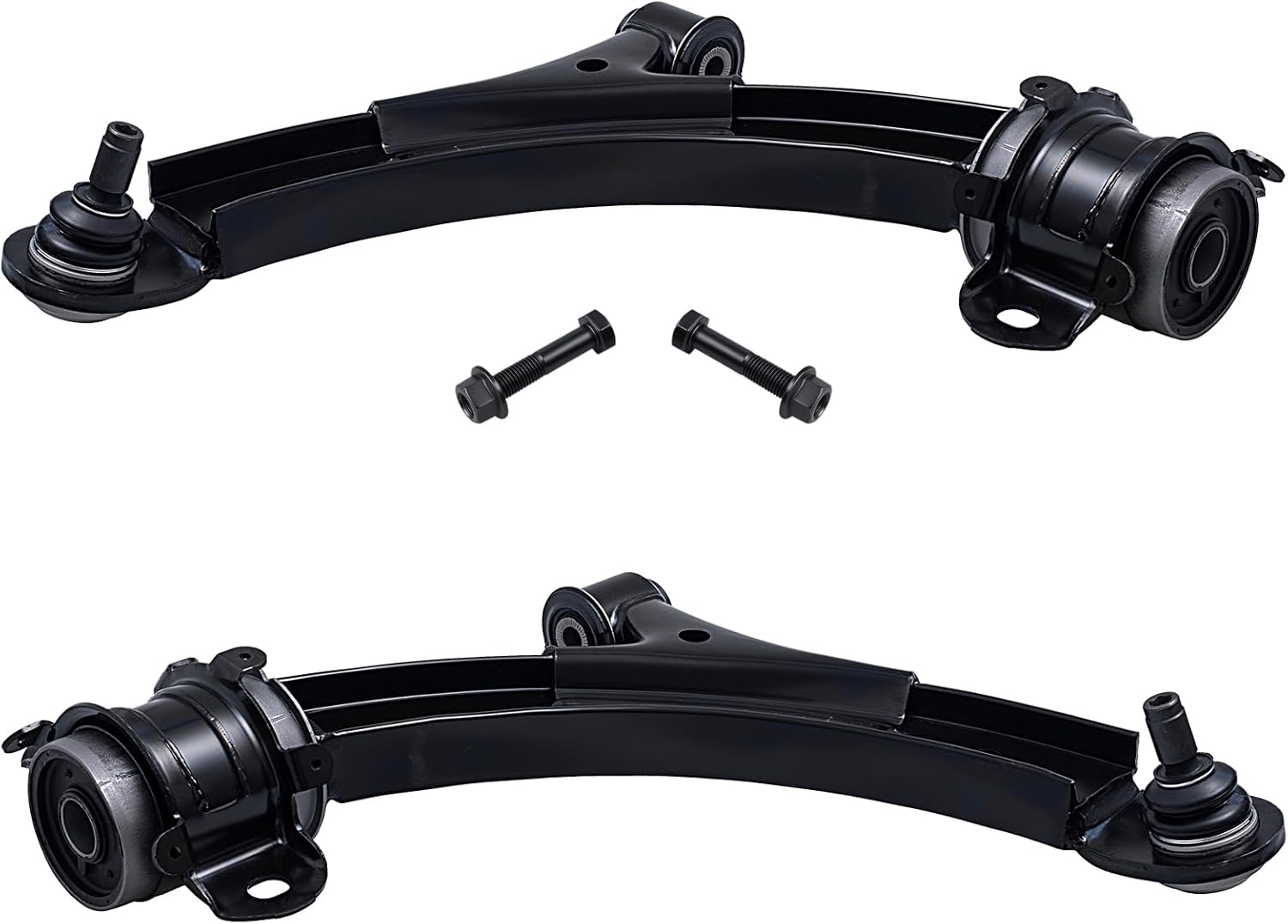
2. TUCAREST Front Lower Control Arm and Ball Joint Assembly (Pair) for 2010–2014 Ford Mustang
| Fit Type | Vehicle Specific Fit |
|---|---|
| Auto Part Position | Front Lower |
| Material | Alloy Steel |
| Unit Count | 2.0 Count |
This TUCAREST control arm and ball joint assembly replaces the front lower control arms on 2010–2014 Ford Mustang models and is built to replicate factory fit and performance. It is used as a direct replacement to restore steering geometry and suspension control after wear or damage. Notable features include machined alloy steel construction, integrated ball joints, and vehicle-specific engineering intended to meet OEM-equivalent fit and finish. In practice the parts provide solid-feeling steering response and ride control when installed, and the finished surface helps resist corrosion. Some customers reported issues with the supplied hardware and the need to reuse original bolts in certain cases, so expect to verify fasteners during installation. These arms are a quality-focused option for owners who want a close-to-factory replacement that supports responsive handling, but installers should confirm exact fit for specific Mustang sub-models and have basic suspension tools on hand.
Best for: Performance-oriented Mustang owners who prioritize factory-quality replacement parts to restore steering feel and handling after worn control arms.
Less Ideal for: Budget DIYers seeking the cheapest option or those who cannot verify exact fit for their Mustang variant should consider alternatives or consult a shop.
- Engineered to match factory fit and function for specified Mustang years
- Machined alloy steel construction for durability and corrosion resistance
- Integrated ball joints restore steering precision and suspension control
- Sold as a pair for complete front-lower replacement
- Some buyers reported supplied bolts did not fit and original hardware was required
- Fit can vary across early 2010 sub-variants so compatibility must be confirmed before installation
Verdict: A factory-focused pair of front lower control arms with integrated ball joints that restores handling for 2010–2014 Mustangs, but verify fit and hardware before installation.
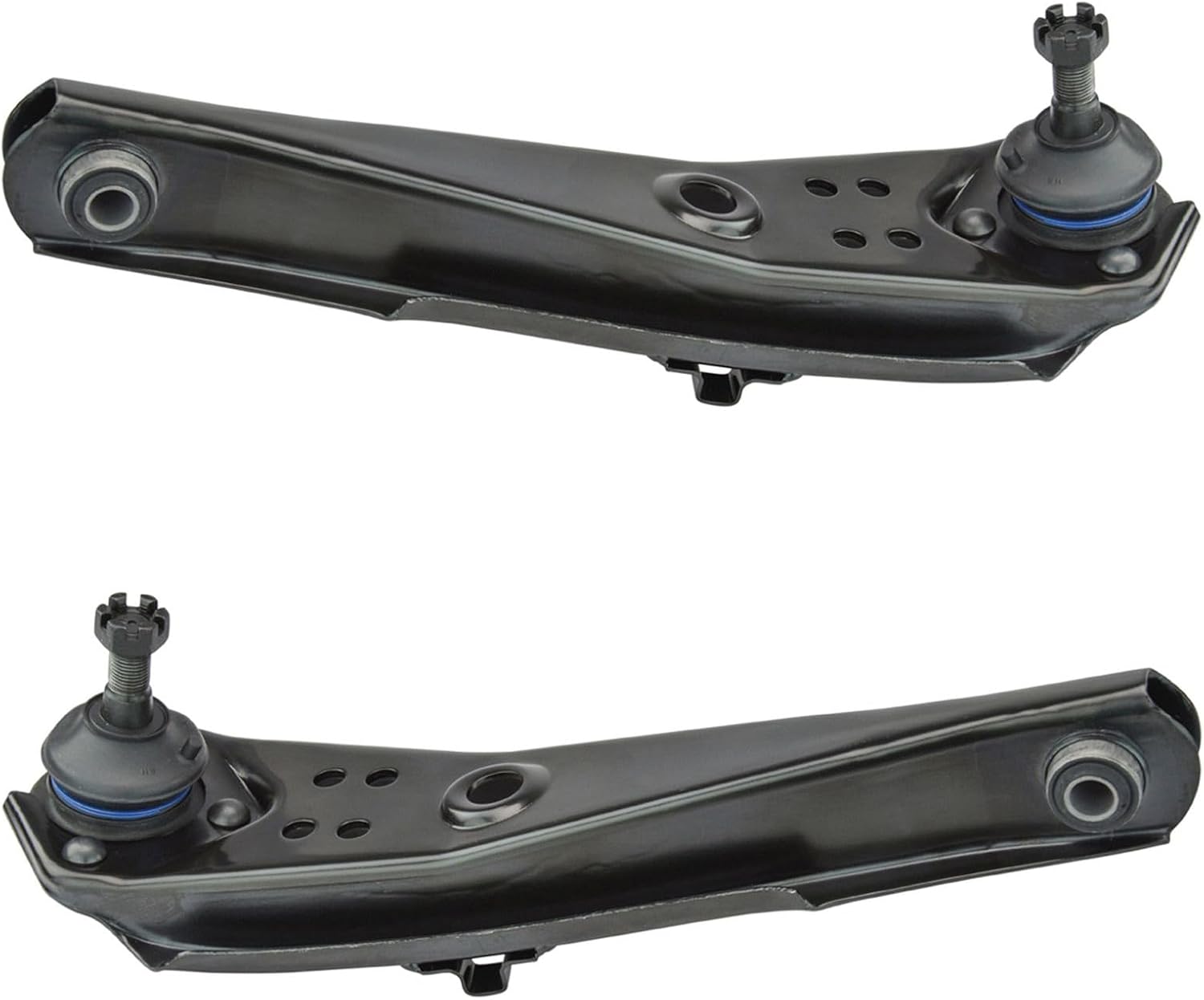
3. TRQ Front Lower Control Arm and Ball Joint Set (2-piece)
| Fitment | 1965-1966 Ford Mustang front lower |
|---|---|
| Quantity | 2 Piece |
| Position | Front Lower |
| Manufacturer | TRQ |
This TRQ kit supplies both left and right front lower control arms with pre-pressed ball joints intended as direct replacements for 1965–1966 Ford Mustang front lower assemblies. Installation is typically a bolt-on swap that saves time compared with rebuilding individual components, and TRQ provides step-by-step install videos to help DIY mechanics. In use the parts restore steering feel and front-end stability when worn factory components cause play or wandering. The machined exterior and pre-assembled ball joints simplify alignment and cutting down shop time. Limitations worth noting are mixed long-term durability reports from owners and the ball joints are non-greaseable, so longevity may lag behind premium OE-style units that accept service fittings. Some buyers report variable quality between batches, so expect to inspect parts at installation and plan for periodic checks during the first few months. For routine restoration of a classic Mustang that sees street use, this set offers a practical, cost-conscious repair with easy installation.
Best for: Buyers who prioritize practical, cost-effective repairs and want a mostly plug-and-play replacement to restore front-end feel on a Ford Mustang without paying premium prices.
Less Ideal for: Drivers seeking a lifetime, serviceable solution or those who do frequent hard driving or track use should consider higher-end, greasable control arms instead.
- Includes both driver and passenger front lower control arms with pre-installed ball joints for a single, complete front-end repair.
- Vehicle-specific direct-fit design reduces the need for modification during installation.
- Comes with installation resources such as step-by-step videos to aid DIY mechanics.
- Machined exterior and pre-assembled components speed up replacement and alignment procedures.
- Ball joints are not serviceable with grease fittings, which can limit long-term life compared with greasable alternatives.
- Customer reports show inconsistent longevity between batches, so durability may vary.
Verdict: A budget-friendly, direct-fit front lower control arm and ball joint set that gets a classic Mustang back on the road quickly but may not match the long-term serviceability of premium greasable units.
4. Suspension Dudes Front Lower Ball Joint Kit for Mustang (1994–2004)

| Fits Models | Mustang 1994–2004 |
|---|---|
| Manufacturer | Suspension Dudes |
| Manufacturer Part Number | SDK8749 |
| OEM Part Number | F4ZZ3050A, F8AZ3050AA |
This Suspension Dudes front lower ball joint kit provides a direct-fit replacement for 1994–2004 Ford Mustang front lower control arms. Intended for routine suspension repair, the kit includes both left and right ball joints made from materials the brand describes as premium and tested for durability. Typical use is a one-time replacement during a control arm service or when you hear clunking or notice loose steering; installers reported OEM-like fit and straightforward installation. Practical benefits include restoring steering feel and reducing play without needing uprated components, and the pair format means both sides can be serviced at once to keep alignment even. Limitations are that this is a budget aftermarket option rather than a performance upgrade, so it may not match heavy-duty or track-focused parts in longevity under extreme use. Also there is no detailed spec sheet on bearing design or grease serviceability, so you should plan basic inspection intervals after installation.
Best for: Budget-conscious Mustang owners who need an affordable, straightforward replacement to restore normal steering and suspension function during routine maintenance or repair.
Less Ideal for: Drivers building high-performance or heavy-duty suspension setups should choose purpose-built or heavy-duty ball joints tailored for track or off-road use.
- Direct-fit for 1994–2004 Ford Mustang front lower control arms, simplifying installation
- Sold as a pair so both sides can be replaced together for balanced steering
- Reported OEM-like fit and acceptable quality for routine street driving
- Compact packaging and light weight make handling and storage easy
- Positioned as a budget aftermarket part and not engineered for heavy track or performance use
- Manufacturer provides limited technical detail on internal design or greaseability
Verdict: A cost-conscious, direct-fit replacement pair that restores steering feel for 1994–2004 Mustangs but is not intended for performance or heavy-duty use.
5. Detroit Axle Front Lower Control Arms with Ball Joints, 2‑Piece Set for 2005–2010 Ford Mustang

| Fitment | 2005–2010 Ford Mustang (specified models) |
|---|---|
| Position | Front lower |
| Quantity | 2 pieces (pair) |
These Detroit Axle front lower control arms arrive as a two-piece set with ball joints already installed, intended to replace worn front lower components on 2005–2010 Ford Mustang models. They are used to restore proper front-end geometry, eliminate play, and improve steering response after original arms wear out. The units are built and tested to industry standards and come ready to bolt in, which simplifies installation for a DIY mechanic or a shop. Users report reliable fitment and a noticeable tightening of the front end with reduced clunks and better road feel. Practical benefits include a complete assembled unit so you do not need to press in new ball joints, and the package is aimed at matching factory fit and function. Limitations to consider are that aftermarket parts can vary from factory parts in finish and longevity, and some installations may require firm persuasion to seat components during assembly; grease fittings are not present on every unit. Expect a straightforward swap that restores handling without the premium of a factory part.
Best for: A reliability-focused buyer who wants a ready-to-install, factory-quality replacement to restore front suspension stability and steering feel on a 2005–2010 Ford Mustang.
Less Ideal for: Drivers seeking an OEM-branded part or those who prefer suspension components with serviceable grease fittings should consider other options.
- Complete assembled pair with ball joints preinstalled for faster install
- Vehicle-specific fit for 2005–2010 Ford Mustang to minimize fitment issues
- Tested to standard manufacturing quality for consistent replacement performance
- Restores steering precision and reduces front-end noise compared with worn arms
- No grease fittings on the joints for field servicing
- Finish and small manufacturing variances may differ from factory parts
- Occasional need for heavy persuasion to seat a stubborn joint during installation
Verdict: A practical, ready-to-install replacement set that restores front-end tightness on 2005–2010 Mustangs without the cost of factory parts.
6. Metrix Premium Chassis Parts Front Lower Ball Joint (Fits 2010-2014 Ford Mustang)

| Fitment | 2010, 2011-2014 Ford Mustang |
|---|---|
| Position | Front Lower |
| Manufacturer | METRIX PREMIUM CHASSIS PARTS |
| Model | 50983MT |
This Metrix front lower ball joint is a direct replacement designed for 2010 and 2011–2014 Ford Mustang models and installs where the factory unit sits in the lower control arm. It ships pre-greased and includes a machined finish with supplied mounting hardware so you can complete a single-joint service without shopping for extra bolts or fittings. The maker states the part is manufactured to IATF 16949 and ISO 9001 quality standards and backs it with a limited 3 year/36,000 mile warranty, which helps for peace of mind on a convenience-focused repair. In practice the joint provides smooth steering movement and feels like a factory-spec replacement, but installation can be labor intensive on some Mustangs and may require a press or specialty tools. Also this is a single-unit replacement rather than a control-arm assembly, so comparing fitment and whether you need left or right side hardware before ordering is important. If you want a straightforward, professionally finished ball joint to swap into a Mustang front suspension, this is a practical choice with solid quality for the price.
Best for: Buyers who prioritize convenience and a hassle-minimized repair process for their Ford Mustang and prefer a ready-to-install, factory-quality replacement part.
Less Ideal for: Drivers looking for a full control-arm replacement, a lower-cost bulk option, or those who want to avoid any workshop tools during installation should consider alternatives.
- Pre-greased for immediate installation and reduced initial wear.
- Machined exterior and supplied hardware simplify replacement and ensure proper fit.
- Manufactured to IATF 16949 and ISO 9001 standards for consistent quality.
- Backed by a 3 year/36,000 mile limited warranty for added ownership confidence.
- May require a press or special tools for removal and installation on some vehicles.
- Sold as a single ball joint rather than a complete control arm assembly, so additional parts may be needed.
Verdict: A professionally finished, convenience-minded front lower ball joint for 2010–2014 Ford Mustangs that matches factory-level quality but may need press tools to install.
7. TRQ Front Lower Ball Joint Set for 1994–2004 Ford Mustang

| Model | TRQ PSA63187 2 Piece Ball Joint Set |
|---|---|
| Fitment | 1994-2004 Ford Mustang Front Driver & Passenger Side |
| Exterior | Machined |
| Quantity | 2 Piece |
| Manufacturer | TRQ |
This TRQ kit supplies the two front lower ball joints needed for a 1994–2004 Ford Mustang and is intended as a direct-fit replacement to restore steering and suspension function. Installation is typical for pressed-in lower joints: remove the knuckle, press the old joints out and press the new units in; TRQ provides step-by-step videos to help DIYers. The parts arrive pre-assembled with included hardware such as nuts and cotter pins, and their machined exterior suggests a factory-quality finish that can tighten steering feel and reduce noise compared with worn originals. Customer feedback shows the press fit is tight, which prevents loosening but can require a press or proper tools. Some users report fitment differences on non-Mustang applications, so confirm compatibility before fitting. If installed correctly the kit is a practical, lower-cost alternative to dealer parts that brings back responsiveness and quiet operation for older Mustangs.
Best for: Risk-averse mainstream buyers who prioritize a reliable, factory-style replacement that restores steering feel and quiet operation without experimenting with performance aftermarket options.
Less Ideal for: Drivers seeking premium performance upgrades or those unwilling to use a press and basic suspension tools should look at performance-grade replacements or have a shop handle installation.
- Direct-fit two-piece kit covering both front lower joints for one repair job
- Pre-assembled components and included hardware make installation quicker for experienced DIYers
- Machined exterior and tight press-fit improve steering response and reduce play
- Manufacturer provides installation videos to guide less-experienced installers
- Tight press-fit requires a hydraulic press or proper tools for safe removal and installation
- A few reported fitment variances on some vehicles indicate buyers should confirm fitment for their exact application
Verdict: A practical, direct-fit two-piece lower ball joint kit that restores steering response and quiets suspension for 1994–2004 Ford Mustangs.
Choosing the Right Ford Mustang Ball Joint: Key Factors to Consider
Fitment and Vehicle Specificity
Correct fitment is critical because ball joints must match the Mustang's control arm geometry and steering knuckle interface. A part that lists the exact model year and suspension type reduces the risk of modification during installation and ensures proper alignment settings.
Mismatched parts can cause extra play, uneven tire wear, or require additional components to adapt. Always verify mounting bolt patterns, stud sizes, and whether the unit is intended for the front lower or upper position to avoid fitment surprises.
Construction Materials and Load Capacity
The materials used for the ball, stud, and housing determine wear resistance and strength. Hardened steel studs and high-grade bearing surfaces resist deformation under cornering loads, while durable housings protect internal components from impact.
Consider the rated load capacity and whether the design includes features such as press-fit tolerances that maintain alignment under repeated stress. Material choices also influence longevity when the vehicle is driven aggressively or on rough roads.
Sealing and Corrosion Protection
Effective seals and corrosion-resistant coatings extend service life by keeping contaminants out of the bearing surfaces. Rubber or synthetic boots that are snug and durable prevent grit and moisture from accelerating wear.
Additionally, plated or coated housings reduce rust in areas exposed to road salt and moisture. Poor sealing can lead to premature failure and the need for earlier replacement.
Serviceability and Installation
Some ball joints are designed for straightforward press-in installation, while others require removal of control arms or specialized tools. Knowing the installation method affects labor time and whether you can complete the job at home.
Check whether the part includes new nuts, cotter pins, or mounting hardware. If a press tool or other specialty equipment is typically required, factor that into your decision and preparation.
Bushing and Bearing Design
The internal bearing or bushing design influences steering feel and noise. Tighter tolerances in the bearing assembly typically yield a firmer, more predictable steering response, while looser designs may allow more play to develop over time.
Also consider whether the unit uses grease fittings or a sealed bearing. Greaseable designs allow periodic maintenance, which can extend life, while sealed designs trade off serviceability for lower maintenance needs.
Compatibility With Alignment and Suspension Geometry
Replacing a ball joint can affect wheel alignment and suspension geometry. Units that preserve the original ride height and mounting points help avoid costly alignment corrections.
When selecting a replacement, confirm that the joint maintains the correct offset and does not alter caster or camber beyond factory tolerances. Some replacements are labeled to retain original geometry, which simplifies post-installation alignment.
How We Chose the Best Ford Mustang Ball Joint
We focused on components that match the Ford Mustang's suspension geometry and braking loads. Key evaluation criteria included exact vehicle fitment, material and bushing construction, load and wear ratings, corrosion protection, and ease of installation. We also considered whether parts supported common mounting methods for this model and whether replacement components included necessary hardware for a complete install.Excluded from consideration were generic, non-vehicle-specific bushings and parts with unclear fitment claims. We did not consider items lacking clear material specifications or long-term corrosion protection. Our filters prioritized parts that explicitly address the Mustang's front suspension demands and that meet common service procedures for this vehicle.
Our full evaluation process is outlined in our review methodology.
FAQ
What are common symptoms of a failing ball joint on a Ford Mustang?
Common signs include uneven tire wear, a clunking or knocking sound over bumps, and looseness in steering. You may also notice increased vibration or a wandering steering feel at higher speeds. Symptoms often worsen gradually and can vary depending on whether the front lower or upper joint is affected.
How often should I inspect or replace ball joints?
Inspection frequency depends on driving conditions, but a visual and physical check during regular service intervals is advisable. Look for torn boots, excessive play, or corrosion. Replacement is usually based on measured play or visible damage rather than a fixed time interval.
Can I replace a ball joint myself, or do I need a mechanic?
It depends on your tools and experience. Some jobs are straightforward with a ball joint press and basic tools, while others require control arm removal and alignment afterward. If the installation requires specialty tools or removal of major suspension components, professional service may be more efficient.
Should I choose a greaseable or sealed ball joint?
Greaseable joints allow periodic lubrication, which can extend life if you plan to maintain them. Sealed joints require no regular greasing and reduce maintenance tasks. The best choice depends on your maintenance habits and whether you prefer lower upkeep or potential for longer service with periodic greasing.
Will replacing a ball joint affect my wheel alignment?
Replacing a ball joint can change suspension geometry enough to require an alignment, especially if the control arm was removed or a different-style part was used. It is common to have a wheel alignment checked after suspension work to ensure camber and toe are within specification.
Conclusion
When choosing Ford Mustang ball joints, prioritize correct fitment and durable construction to preserve steering precision and tire life. Consider sealing, bearing design, and whether the part maintains original suspension geometry to reduce the chance of additional adjustments.Balance serviceability with long-term performance by deciding between greaseable and sealed units and plan for installation needs such as tools and post-replacement alignment. Focusing on these factors will help you pick a reliable replacement that suits your driving style and maintenance preferences.
Explore More:
- Check out all Ford Mustang parts & accessories
- Explore Ball Joints Maintenance & Repair Guides
- Explore Suspension & Steering
- Browse all Auto Parts
