

Note: This article contains affiliate links. If you click on these links and make a purchase, I may earn a small commission at no extra cost to you. This helps support my research and content. Read my full affiliate disclosure here.
If your 2012-2017 Toyota Camry is showing loose steering, uneven tire wear, or wheel vibration, worn ball joints are a likely cause. Picking the right ball joints matters because incorrect fitment or insufficient durability can affect handling, tire life, and safety on the road. This guide presents six top-rated ball joint options that fit the 2012–2017 Camry and explains the practical differences that matter when you replace this suspension component. We evaluated fit, expected lifespan, construction quality, and ease of installation to help you choose a solution that restores steering precision and confidence behind the wheel.Read on for clear buying factors, installation considerations, and answers to common Camry-specific questions before you decide which option to install.
Looking for other parts? See all Toyota Camry parts & accessories.
Top Picks at a Glance
| Best Overall The best all-around choice for most situations | TRQ Front Lower Ball Joint Set, 2-Piece (Front Driver & Passenger) |  |
| Best Quality Built to a higher standard if you want something more solid | Metrix Premium Chassis Parts Front Lower Ball Joint Kit (Left & Right) |  |
| Best Value The sweet spot between price and what you get | RUIJU Front Lower Ball Joint Kit (K500043/K500044) — 2‑pc |  |
| Best Budget The cheapest option that still gets the job done reliably | ApplianPar Front Left & Right Lower Suspension Ball Joints (pair) |  |
| Highest Rated A top-rated pick with lots of positive feedback | Detroit Axle Front Lower Ball Joints (2-pack) for 2012-2017 Toyota Camry |  |
| Best Seller A high-volume bestseller chosen again and again | HHCM Front Lower Ball Joint Kit (K500043/K500044) |  |
TRQ Front Lower Ball Joint Set, 2-Piece (Front Driver & Passenger)
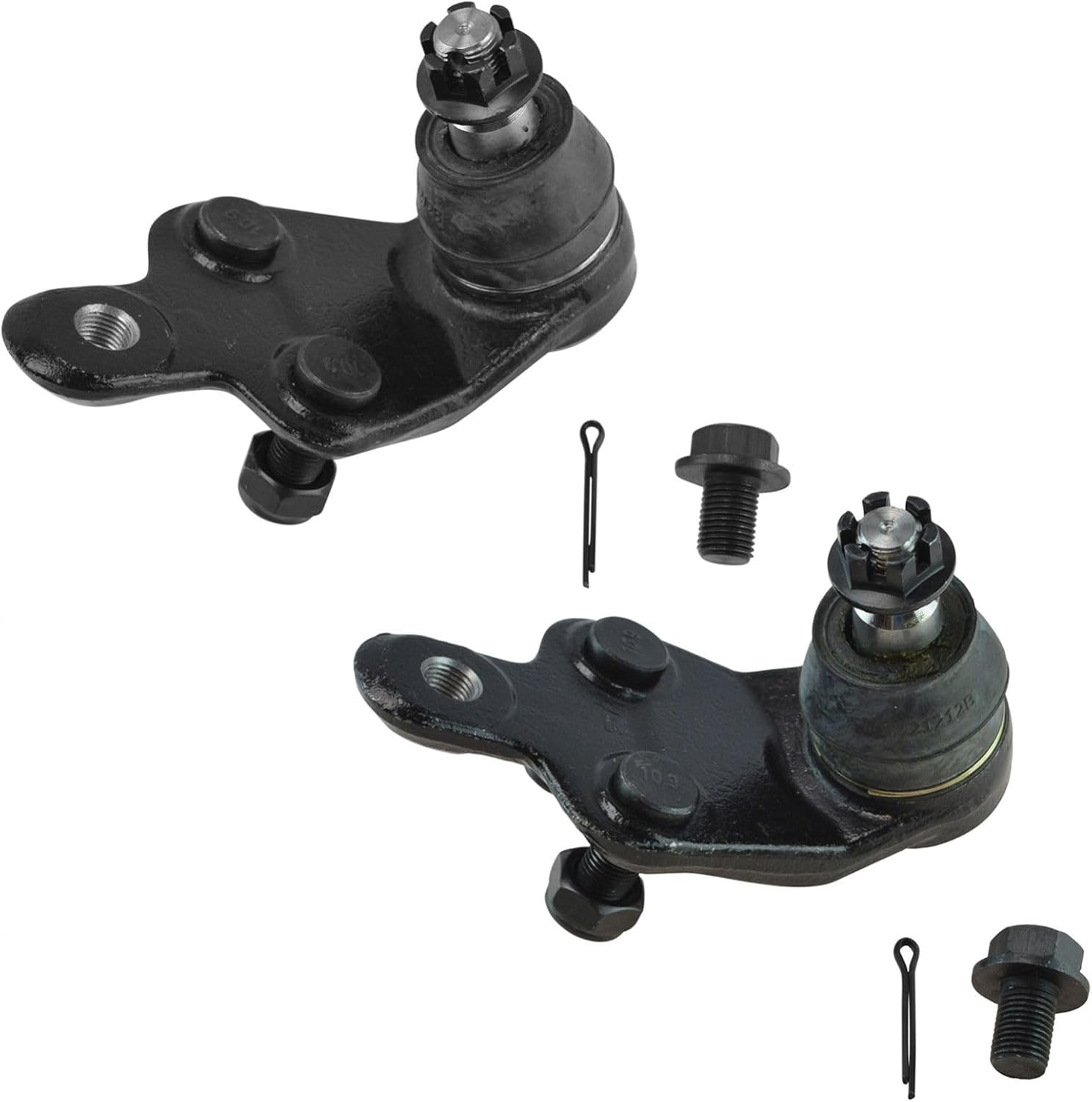
| Brand | TRQ |
|---|---|
| Model | TRQ PSA63330 2 Piece Ball Joint Set |
| Position | Front Lower |
| Exterior | Machined |
This TRQ two-piece front lower ball joint set replaces both driver and passenger side lower joints and is intended as a direct-fit replacement for compatible Camry years in the specified range. Installation is straightforward for a DIYer with basic suspension tools or a shop press; TRQ provides pre-assembled components and online installation videos to simplify the job. In use the joints are built with machined exterior finishes and include required hardware like nuts and cotter pins, which helps restore steering response and reduce suspension noise. Many owners report a tighter, quieter front end after replacement, although a minority have reported fitment variation that required workarounds during installation. For a buyer seeking an affordable, OEM-style replacement that improves steering feel and eliminates squeaks, this set offers good value; buyers who need guaranteed factory-identical dimensions or who prefer premium-brand remanufactured parts should confirm fit carefully before installing.
Best for: A practical Camry owner who wants an affordable, factory-style front lower ball joint replacement to restore steering feel and eliminate squeaks while handling the job themselves or working with a local shop.
Less Ideal for: If you require guaranteed exact factory-match dimensions or prefer OE-brand remanufactured parts with extended assurances, this aftermarket kit may not be the best choice.
- Sold as a two-piece kit covering both front lower ball joints for a full axle replacement
- Pre-assembled direct-replacement design and included hardware speed up installation
- Machined exterior finish intended to improve steering response and reduce noise
- Manufacturer provides step-by-step installation videos to assist DIY installers
- Some users reported dimensional fitment variation that required additional washers or adjustments during installation
Verdict: A cost-conscious, direct-fit two-piece lower ball joint kit that restores steering response and quiets a worn front end on compatible Camry models.
Metrix Premium Chassis Parts Front Lower Ball Joint Kit (Left & Right)
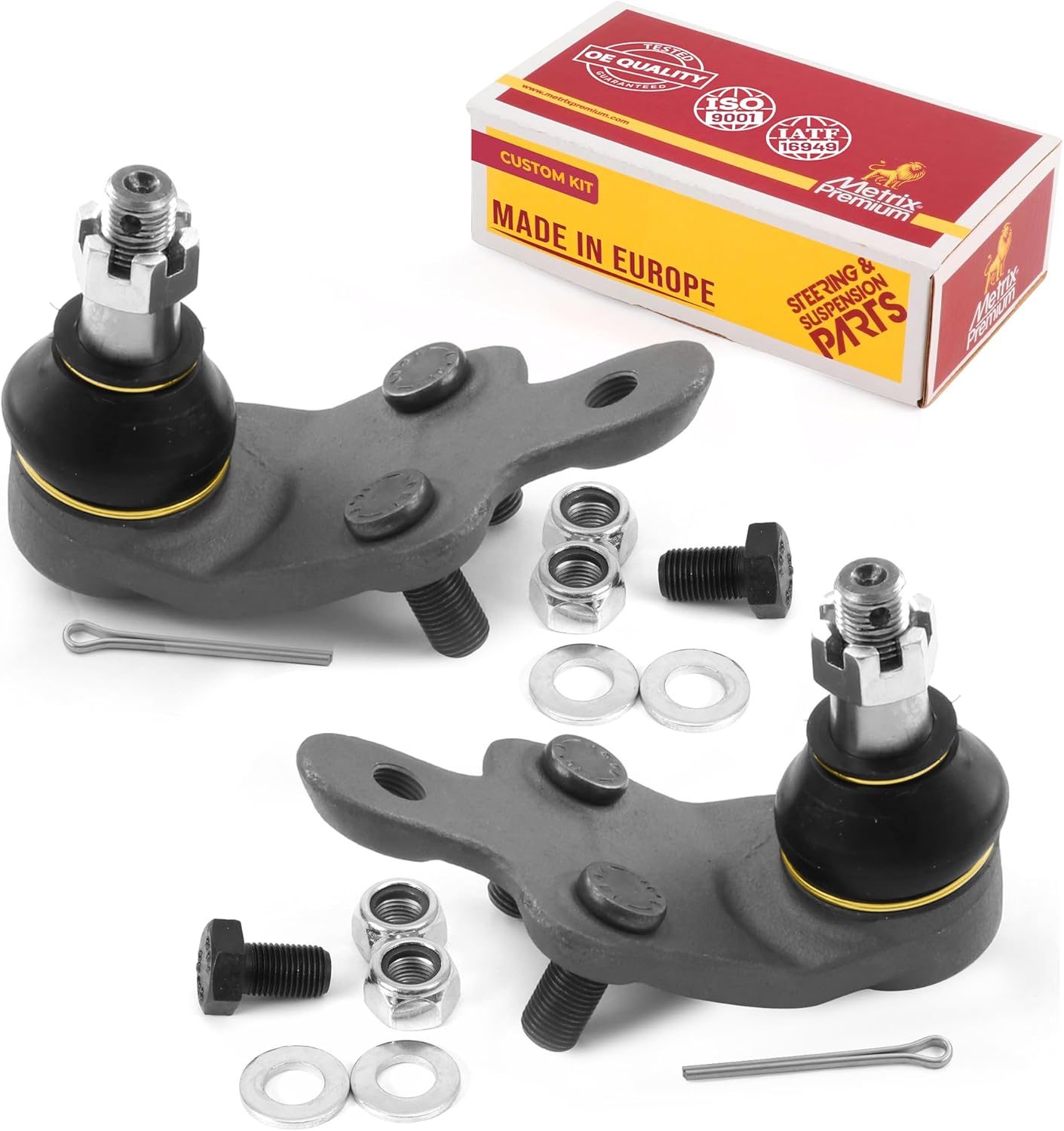
| Compatible models | 2013-2018 Lexus ES300h, 2007-2018 Lexus ES350, 2007-2017 Toyota Camry, 2005-2018 Avalon |
|---|---|
| Quantity | 2 (left and right) |
| Material | Steel |
| Design | Greasable; includes cotter pins |
| Manufacturer model | 99778MT |
This Metrix Premium front lower ball joint kit supplies left and right replacement joints engineered to match factory fit and movement for 2012–2017 Toyota Camry applications. The steel, greasable design and included cotter pins make it a straightforward swap during a front suspension service or when worn joints produce play and uneven tire wear. Metrix highlights heat-treated studs, corrosion-resistant coatings, and quality controls that aim to extend service life and tolerate harsh driving. The greasable cups let a technician or experienced DIYer refresh lubrication to help longevity. Expect typical installation steps: lift, remove the wheel, separate the old joint, press in the new unit, and check alignment. Limitations: this is a direct replacement lower ball joint set, not an adjustable or performance‑tuned unit, so it will restore factory steering feel rather than sharpen handling; professional press tools are usually required for safe installation and alignment afterward.
Best for: Drivers who want to restore tight steering and front-end stability on a performance-minded Camry by replacing worn lower ball joints with a durable, maintainable factory-style unit.
Less Ideal for: Drivers seeking adjustable or performance-oriented ball joints for modified suspension setups should consider specialized aftermarket performance joints instead.
- Matched left and right kit for complete front-lower replacement in one purchase
- Greasable design allows periodic lubrication to extend service life
- Steel construction and heat-treated stud for durable, road‑use strength
- Includes cotter pins for secure installation that meets common safety practice
- Not a performance or adjustable ball joint so handling characteristics remain factory-level
- Requires press tools or shop service for proper removal and installation
Verdict: A durable, greasable front lower ball joint kit that restores factory steering feel and reliability for 2012–2017 Toyota Camry front suspension.
RUIJU Front Lower Ball Joint Kit (K500043/K500044) — 2‑pc
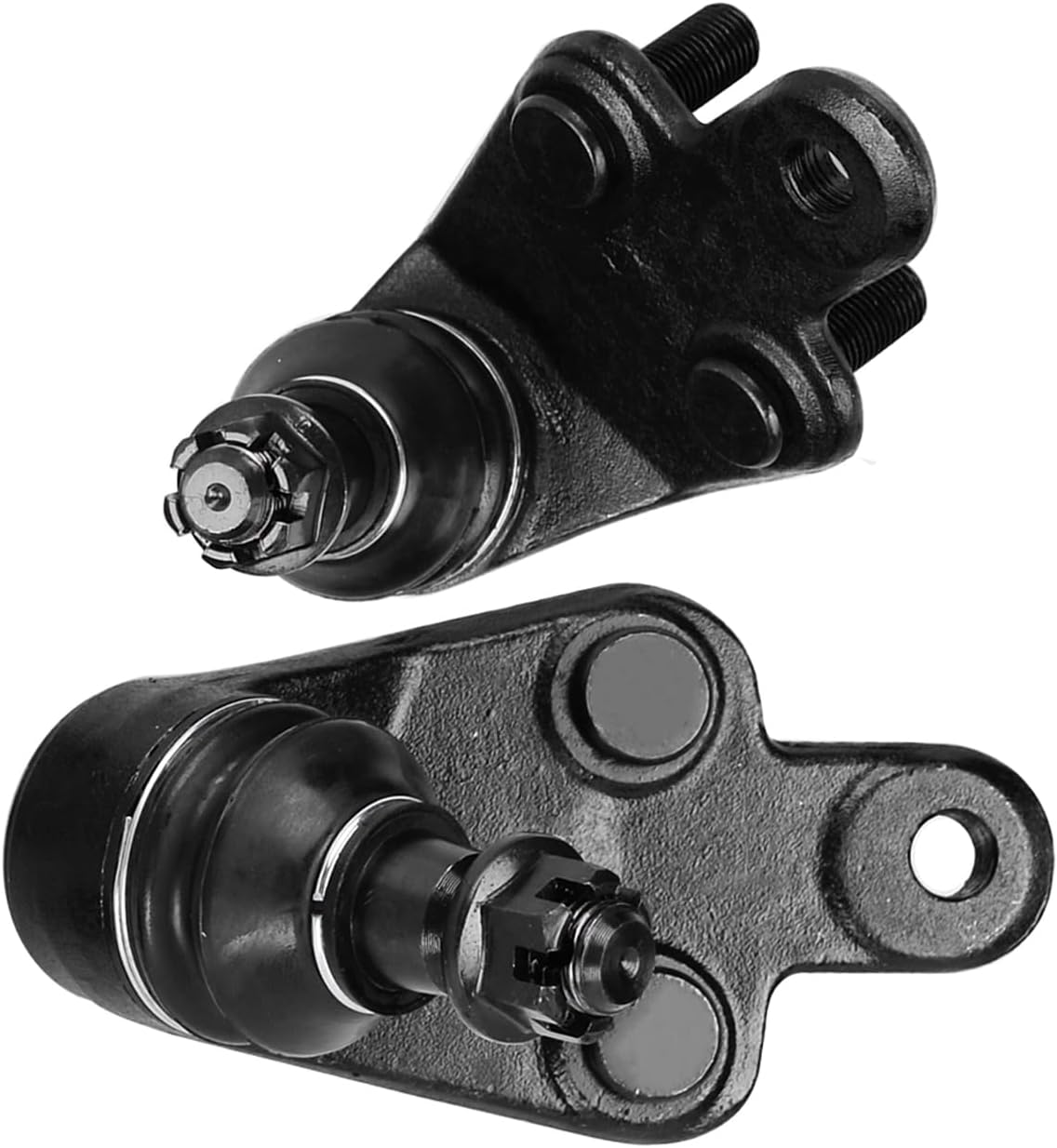
| Brand | RUIJU |
|---|---|
| Model | K500043 K500044 |
| Placement on Vehicle | Front Lower (Right & Left) |
This RUIJU kit supplies a pair of front lower ball joints intended as a factory-style replacement for compatible Camry models in the 2012–2017 window (2007–2012 US built models are noted). The parts are made from steel with a protective finish and arrive with the mounting hardware for direct installation on the lower control arm. In practice these act like standard replacement ball joints: they restore steering stability, reduce play and help eliminate clunking or uneven tire wear when the original joints have worn. Installation is straightforward for a mechanically comfortable DIYer using common suspension tools, though press or ball-joint removal tools may be required. Reviews report generally good fit and corrosion resistance, but a few buyers noted hardware quality and occasional need to source thicker nuts or check that both pieces are included. For owners who want a budget-friendly, ready-to-install replacement that closely matches factory fitment, this kit delivers sensible value; those needing premium lifetime performance or heavy-duty upgrades should consider higher-end alternatives.
Best for: A practical Camry owner focused on restoring safe steering and suspension behavior with a cost-effective, direct-replacement part they can install or have installed quickly.
Less Ideal for: Drivers seeking performance or heavy-duty suspension upgrades, or those who require extended-life aftermarket ball joints for high-mileage, towing, or track use should look at premium alternatives.
- Sold as a matched left and right pair for front lower position, simplifying replacement.
- Protective finish reduces corrosion risk for longer service life in typical driving conditions.
- Designed to match factory mounting points for straightforward, direct-fit installation on compatible Camry models.
- Some buyers reported included nuts and fasteners are thin and may need upgrading for secure installation.
- Not a heavy-duty or performance-oriented joint, so may wear sooner under aggressive driving or heavy loads.
Verdict: A budget-friendly matched front lower ball joint pair that restores factory steering feel and fitment for compatible Camry models.
ApplianPar Front Left & Right Lower Suspension Ball Joints (pair)

| Model | 43330-09810 |
|---|---|
| Replaces part numbers | 43330-09810, 43330-09330, 43340-09170, etc. |
| Package includes | Front left and front right ball joint |
These ApplianPar front lower ball joints come as a left and right pair intended to restore steering feel and front suspension geometry on compatible Toyota Camry and Avalon models and certain Lexus ES variants. Installers will use them when worn ball joints cause looseness, clunking, or uneven tire wear; the parts replace a range of OEM part numbers so fitment aligns with many factory replacements. The set appears to be cast and finished for direct bolt-in installation and includes both sides, which simplifies a two-wheel repair. Practically, the parts offer a budget-friendly way to refresh front-end components and get a responsive, tighter steering feel without buying dealer parts. Limitations are typical of value aftermarket parts: long-term durability and precise corrosion resistance may vary versus higher-end branded replacements, and professional installation or alignment check is recommended after replacement to ensure correct suspension geometry.
Best for: Buyers who prioritize an economical, no-frills repair to eliminate front-end play and restore steering feel on a 2012–2017 Camry without paying dealer prices.
Less Ideal for: Drivers seeking longest-lasting, premium materials or extended corrosion protection should consider higher-end branded replacement parts or upgraded performance options.
- Sold as a matched left and right pair for a complete front lower ball joint replacement.
- Direct replacement for multiple factory part numbers, simplifying fitment for listed Toyota and Lexus models.
- Affordable option that restores steering responsiveness and reduces front-end play.
- Simple bolt-in design suitable for standard repair workflows and professional installation.
- Long-term durability and corrosion protection are not documented and may be lower than premium branded parts.
- No explicit warranty information provided in the product details.
Verdict: A budget-minded matched pair that restores front-end stability and steering feel on the specified Camry model years.}
Detroit Axle Front Lower Ball Joints (2-pack) for 2012-2017 Toyota Camry

| Kit includes | 2x Front Lower Ball Joints |
|---|---|
| Compatible years | 2012-2017 Toyota Camry |
| Manufacturer | Detroit Axle |
| Manufacturer part number | K500043_K500044 |
These Detroit Axle front lower ball joints are a direct replacement set intended to restore steering connection and suspension stability on 2012-2017 Toyota Camry vehicles. Sold as a two-piece kit, the joints are made and tested to meet common aftermarket quality standards and include grease fittings for periodic maintenance. In practice they are used when worn ball joints cause steering play, popping noises, or uneven tire wear; installation typically requires pressing the old joints out of the control arm and pressing the new units in or using a ball-joint press. Reviewers report consistent fit and long service life on Camrys, and the manufacturer runs impact and fatigue testing to improve durability. Known limitations are that fit can vary across different hub/spindle tolerances on non-Camry applications and some technicians prefer specialty OEM-style parts for guaranteed perfect fit without pressing adjustments. Expect a reliable, serviceable replacement that returns factory steering feel when installed correctly but plan for standard press-and-torque installation steps.
Best for: A Camry owner who prioritizes restoring dependable steering and suspension performance with a serviceable replacement part and plans to maintain the joints over time.
Less Ideal for: Buyers who want a plug-and-play part they can install without a ball-joint press or those seeking parts designed for multiple vehicle makes and model ranges.
- Sold as a matched 2-piece kit to replace both front lower ball joints together
- Grease fittings allow periodic lubrication to extend service life
- Manufactured and tested for impact, wear, and fatigue to improve durability
- Multiple reviews report good fit and long mileage on Toyota Camry applications
- May require a press or professional tools for proper installation rather than a simple bolt-on job
- Some vehicle-specific fitments outside the 2012–2017 Camry range have reported dimensional mismatches
Verdict: A durable, serviceable two-piece front lower ball joint kit that reliably restores steering feel on 2012–2017 Toyota Camry models.
HHCM Front Lower Ball Joint Kit (K500043/K500044)

| Brand | HHCM |
|---|---|
| Model | K500043 K500044 |
| Manufacturer Part Number | K500043 K500044 |
| Compatible OEM Part Numbers | 4333009330, 4333009810, 4333039775, 4333039845, 4333039545, 4334009040, 4334009170, 4334039605 |
This HHCM front lower ball joint kit supplies two press-in replacement joints intended to restore steering stability and suspension geometry on compatible Toyota Camry, Avalon, and Lexus ES models. Installers press these into the control arm to replace worn lower joints; the kit arrives with the two joints and accompanying hardware and is sold as a left and right set. HHCM says the parts are built to factory-style tolerances and several buyer reports note straightforward fitment and improved steering feel after installation. Practical benefits include a ready-to-use pair for simultaneous replacement and generally reliable fit for alignment after installation. Limitations to watch for are the included nuts and retaining hardware, which some installers found inferior to factory fasteners, and versions with grease fittings may interfere with axle clearance on a few vehicles, requiring modification or different parts. This kit is a budget-friendly repair option but plan to use a press and verify the correct top-fitment if your vehicle uses a greaseable joint.
Best for: Buyers who want a dependable, ready-to-install replacement pair to restore front-end feel and avoid repeat visits to the shop, preferring a conservative repair rather than performance upgrades.
Less Ideal for: If you prefer OEM-specified fasteners or need a greasable joint that guaranteedly clears your axle, consider alternatives or aftermarket joints designed for grease fittings and upgraded hardware.
- Sold as a matched left and right front lower ball joint pair for one-stop replacement
- Manufactured to factory-style tolerances for straightforward fit and alignment
- Many buyers report easy installation and restored steering feel
- Includes replacement hardware for installation
- Included nuts and retaining hardware may be lower quality than factory fasteners
- Some units with grease fittings can conflict with axle clearance and require modification
Verdict: A practical, factory-tolerance front lower ball joint pair that lets you replace both sides at once and restore steering stability on compatible Camry-era Toyotas and Lexus ES models.
Choosing the Right 2012-2017 Toyota Camry Ball Joint: Key Factors to Consider
Fitment and OEM Compatibility
Correct fitment is the foremost concern for the 2012–2017 Toyota Camry because ball joints affect suspension geometry and wheel alignment. Using a part that matches the Camry's factory mounting points and bore sizes avoids additional machining, modifications, or the need for alignment beyond normal adjustment. If a ball joint does not seat properly or has incorrect stud length, it can introduce premature tire wear and unpredictable steering feel.
When choosing, check the specific fit notes for the year range and whether the part is intended for the front lower or upper position if applicable. Some Camry suspension subframes and control arms vary by trim and year; selecting a part explicitly listed for 2012–2017 Camry reduces the risk of poor fit.
Construction and Materials
Material quality and construction determine how long a ball joint will last under daily driving conditions. Look for hardened steel studs and robust bearing surfaces that resist deformation under load. Sealing is equally important: a durable dust boot and grease retention system keep contaminants out and lubricant in, slowing wear.
Corrosion-resistant coatings or plated surfaces help parts survive salted roads and humid climates common in many regions. Where available, components with replaceable grease fittings or sealed-for-life designs reflect different maintenance philosophies; choose according to whether you plan to service suspension components periodically.
Load Rating and Durability
Ball joints transfer steering and suspension loads; parts with inadequate load capacity may wear faster or fail under heavy use. Durability matters if you frequently carry weight, drive on rough roads, or encounter potholes. Components with proven service life or reinforced designs tend to resist accelerated wear from road shocks and repeated steering inputs.
Durability also ties into warranty and documented lifespan expectations. While warranties vary, parts designed with heavy-duty bearings or thicker housings are typically more resistant to collapse and long-term play, which is particularly important for maintaining safe handling on the Camry.
Symptoms and Intended Replacement Purpose
Match the part to the symptoms you are addressing. If you are replacing a ball joint due to wheel vibration or a clunk when hitting bumps, prioritize components designed to restore tight suspension tolerances and reduce free play. If the job is preventive maintenance, a higher-durability option may be justified even if the original shows only light wear.
Understanding whether the issue is in a front lower ball joint or an upper ball joint affects part selection. Some replacements are full assemblies that include mounting hardware, while others are press-in joints only. Choosing the correct style for the repair task avoids repeat labor and ensures the fix addresses the actual symptom.
Installation Method and Serviceability
Installation requirements influence labor time and cost. Press-in style joints generally require a ball joint press tool and sometimes removal of control arms, while bolt-in assemblies can save time on the bench. Consider whether you will DIY or use a shop: a DIYer should confirm that the needed tools such as a ball joint press tool or basic suspension tools are available and that the procedure matches the chosen part's installation type.
Also evaluate whether the joint is serviceable. Some designs allow grease fittings for periodic maintenance, which can extend life. If you prefer a sealed-for-life unit to avoid future greasing, ensure it meets your durability expectations prior to purchase.
Impact on Alignment and Tire Wear
Ball joints influence caster and camber limits through their effect on control arm position. Installing components that differ in stud length or overall height can change wheel alignment angles and accelerate tire wear. Choosing a part with factory-equivalent geometry helps keep alignment adjustments within standard ranges after replacement.
After replacement, it is best practice to have wheel alignment checked and corrected if necessary. This step safeguards tire life and steering behavior and ensures the new ball joints are functioning as intended on the Camry.
Common Ball Joint Symptoms on a 2012–2017 Camry
Several signs point to failing ball joints on a 2012–2017 Toyota Camry. The most common are a clunking or knocking noise over bumps, excessive play in the steering wheel, and uneven tire wear concentrated on the inner or outer edge. You may also notice a trembling or wheel vibration at certain speeds if the joint has developed significant play.
Symptoms often progress gradually. Early-stage wear can cause mild looseness and subtle steering wander, while advanced wear produces louder noises and a tendency for the vehicle to pull to one side. Inspecting suspension components for torn boots, grease leakage, or visible play helps confirm the diagnosis.
- Clunking over bumps or when turning
- Excessive steering play or wandering
- Uneven tire wear patterns
- Wheel vibration at speed
- Visible torn boot or grease leakage
Front Lower Vs Upper Ball Joint Roles
On the Camry, front lower and upper ball joints play different roles within the suspension. Lower joints typically bear greater vertical loads from the vehicle weight and absorb the majority of road shocks. Upper joints assist with steering articulation and alignment precision but usually experience lower vertical loads.
Because of their load roles, lower ball joints often wear sooner than upper joints. When diagnosing, determine which joint exhibits play and select the appropriate replacement type to match the original configuration and installation method.
- Lower joints handle most vertical loads
- Upper joints contribute to steering alignment
- Lower joints more likely to require earlier replacement
Tools and Prep for Replacing Camry Ball Joints
Replacing ball joints on a 2012–2017 Camry can be straightforward for a mechanically competent DIYer with the right tools. Commonly needed items include a ball joint press tool, torque wrench, jack stands, basic hand tools, and possibly a hammer and punch for stubborn components. A shop manual or repair guide with Camry-specific torque values and sequences is very helpful.
If the replacement is a press-in type, a proper ball joint press tool reduces the risk of damaging control arms or the new joint. For bolt-in assemblies, verify that included hardware is correct and that mounting surfaces are clean. After installation, always torque fasteners to manufacturer specifications and have an alignment checked to restore proper suspension geometry.
- Ball joint press tool for press-fit types
- Torque wrench and correct torque specs
- Jack stands and wheel chocks for safety
- Camry-specific repair data or manual
Maintenance Tips to Extend Ball Joint Life
Regular visual inspections help catch early signs of wear. Check boots for cracks or splits and look for grease seepage around the joint. If joints have grease fittings, periodic greasing according to service intervals replenishes lubricant and keeps contaminants out.
Avoid prolonged driving with worn suspension components. Addressing symptoms early prevents secondary damage to control arms and uneven tire wear. Keeping tires properly inflated and aligned also reduces extra lateral stress on ball joints, extending their service life on the Camry.
- Inspect boots and seals at regular intervals
- Grease serviceable joints per schedule
- Fix alignment and tire issues promptly
- Replace worn joints before other suspension parts fail
When to DIY Versus Professional Replacement
If you have the ball joint press tool, a torque wrench, and experience with suspension work, replacing a ball joint on your Camry can be a DIY job. Simple bolt-in assemblies reduce complexity and are more DIY-friendly. Press-in jobs require more care and the correct tooling to avoid damaging surrounding parts.
Choose a professional if you lack specialized tools, have limited suspension experience, or prefer guaranteed torque and alignment services. A shop can also spot related issues such as worn control arm bushings or tie rod ends that should be addressed at the same time.
- DIY if you have proper tools and experience
- Consider professional service for press-in replacements
- Have alignment performed after replacement
Still looking for the perfect fit?
Select your Toyota Camry configuration to see the most relevant Ball Joints recommendations
How We Chose the Best 2012-2017 Toyota Camry Ball Joint
We prioritized fitment accuracy, mechanical durability, and installation practicality when selecting the six ball joints featured for the 2012–2017 Toyota Camry. Primary evaluation criteria included correct factory-equivalent fit and mounting dimensions to ensure no suspension geometry or alignment compromises. We also weighed material and manufacturing quality such as bearing design, seals, and corrosion resistance because these determine long-term service life on typical roads.Next, we assessed expected wear characteristics under normal city and highway driving, focusing on load-bearing design and grease retention. Ease of installation was another key filter: designs compatible with common press-in procedures or bolt-in assemblies that reduce shop time rate higher. Noise and steering feel under simulated load scenarios were considered to judge whether a part would address symptoms like looseness or vibration.We excluded items without verified fit data for the 2012–2017 Camry, parts lacking basic corrosion protection, and components intended only for racing or off-road use where daily driving durability would be compromised. The final shortlist reflects parts that balance OEM-compatible fit, durability, and realistic installability for typical owners and technicians.
Our full evaluation process is outlined in our review methodology.
FAQ
How do I tell if the ball joint on my 2012–2017 Camry needs replacement?
Common indicators include clunking noises over bumps, excessive steering play, uneven tire wear, or wheel vibration. A visual inspection that finds a torn boot or grease leakage also suggests the joint should be replaced.
Can I replace a Camry ball joint myself?
You can if you have mechanical experience and the right tools such as a ball joint press tool and torque wrench. Bolt-in assemblies are easier for DIY; press-in replacements often require specialized tools and care.
Should I replace upper and lower ball joints at the same time?
It depends. If only one joint shows wear, replacing that one can be sufficient. However, replacing both sides on the same axle or both joints at a wheel can ensure consistent performance and reduce the chance of another failure soon after.
Will changing ball joints affect wheel alignment on my Camry?
Yes. Ball joints influence control arm position and alignment angles. After replacing ball joints, a wheel alignment is recommended to correct any camber or toe changes and prevent uneven tire wear.
How long do replacement ball joints typically last on a Camry?
Lifespan varies depending on driving conditions, load, and maintenance. Under normal driving, quality joints often last many years, but exposure to harsh roads or damaged boots can shorten life significantly.
Are there specific signs that require immediate replacement?
Severe play causing steering instability, a visible collapsed joint, or a torn boot with heavy grease loss are conditions requiring immediate replacement to maintain safe handling.
Final Verdict
When replacing ball joints on a 2012–2017 Toyota Camry, prioritize correct fitment, durable construction, and the installation method that matches your skills or shop capabilities. Addressing symptoms such as wheel vibration, clunking, or uneven tire wear early can prevent further suspension damage and restore safe handling. Balance the tradeoff between serviceability and sealed-for-life designs based on whether you plan routine maintenance.In short, choose a Camry-specific ball joint with factory-equivalent geometry and robust sealing. Arrange an alignment after installation and prefer options that match your expected driving conditions to maximize safety and longevity.
Explore More:
- Check out all Toyota Camry parts & accessories
- Explore Ball Joints Maintenance & Repair Guides
- Explore Suspension & Steering
- Browse all Auto Parts
