

Note: This article contains affiliate links. If you click on these links and make a purchase, I may earn a small commission at no extra cost to you. This helps support my research and content. Read my full affiliate disclosure here.
If you spend time driving a 2026 Ford Explorer in busy lots or tight streets, a quality backup camera can make reversing safer and less stressful. The right system improves low-light performance, reduces blind spots, and streamlines parking maneuvers specific to the Explorer's rear geometry.This guide shortlists seven top options for the 2026 Ford Explorer covering wired and wireless setups, license-plate and bumper-mount styles, and monitor choices. We evaluated each pick against image clarity, ease of installation, and features that matter for everyday reversing and parking. Read on to find the option that fits your driving habits and DIY comfort level.
Looking for other parts? See all Ford Explorer parts & accessories.
Top Picks at a Glance
| Best Overall Backup Camera Top all-around replacement with balanced clarity, durability, and fit. | A ABSOPRO Rear View Backup Camera for Ford Explorer / Lincoln Navigator / Aviator |  |
| Best Budget Backup Camera Low-cost replacement that restores camera function without extras. | EWOJUYE License Plate Backup Camera with 8 LED Night Vision, 170° Wide Angle |  |
| Best OEM‑fit Backup Camera Direct-replacement units built to match factory mounting and connectors. | Partuto Rear View Backup Camera for Ford Explorer 2020–2024 (LB5T19G490AA) |  |
| Best License‑plate Backup Camera Full-width license‑plate frame cameras with built-in LEDs and wide view. | YIMU License Plate Backup Camera with 7 LED Night Vision |  |
| Best Backup Camera Kit with Monitor Complete kits that include camera plus a dedicated display for easy setup. | ZEROXCLUB B7 Wired Backup Camera Kit with 7-inch 1080p Monitor |  |
| Best Waterproof Metal‑Body Backup Camera Heavy-duty metal housing and high IP rating for harsh environments. | PixelMan PMD2A-S 1080p Metal-Body Backup Camera |  |
1. A ABSOPRO Rear View Backup Camera for Ford Explorer / Lincoln Navigator / Aviator
Best Overall Backup Camera

| Placement on Vehicle | Rear |
|---|---|
| Voltage | 12V-24V |
| Visual Space | 170 Degree |
| Camera Resolution | 1920×1080 |
| Waterproof Rating | IP68 |
This rear view camera is a direct-fit replacement designed for the Ford Explorer 2020-2024 (also listed for certain Lincoln models) and is intended to restore or upgrade the vehicle's factory rear-vision system. It uses a color CMOS sensor with anti-fog HD glass and claims a 1920×1080 resolution and a 170 degree field of view for a wide, detailed image that helps with reversing and parking. The metal housing and IP68 rating mean it is built to survive rain, car washes, and harsh road conditions, and the seller notes night-vision capability for low-light garages and dusk driving. Installation is described as plug-and-play with the correct connector design for the listed part numbers, though no printed instructions are included so some buyers may want a how-to video or basic tech experience. This is an aftermarket accessory rather than a factory unit, so expect differences in finish and fitment tolerance versus a factory replacement but generally gain a clear, weatherproof backup camera suitable for daily reversing tasks on the Explorer 2020-2024.
Best for: Buyers who need a dependable, weatherproof replacement camera for routine reversing on a 2020–2024 Ford Explorer and value clearer image quality without extensive wiring work.
Less Ideal for: People seeking an exact factory-identical part finish or those who prefer a camera sold with printed installation instructions and hands-on technical support.
- Direct-fit replacement listed for Ford Explorer 2020-2024 compatibility
- High resolution 1920×1080 imaging with anti-fog glass for clearer daytime views
- Wide 170 degree field of view reduces blind spots when reversing
- IP68-rated metal housing for strong water and environmental resistance
- Plug-and-play connector design intended to simplify installation
- Aftermarket unit so finish and fit may differ from factory original and require minor adjustment
Verdict: Choose this slot if you want a dependable, well-rounded backup camera that balances image quality, weather resistance, and straightforward installation for everyday reversing tasks.
2. EWOJUYE License Plate Backup Camera with 8 LED Night Vision, 170° Wide Angle
Best Budget Backup Camera

| Compatible Devices | Car, Truck, SUV |
|---|---|
| Field Of View | 170 Degrees |
| Installation Type | Surface Mount |
| Built-In Media | Camera, mounting hardware, video and power cables |
| Ingress Protection | IP68 |
This license plate backup camera mounts in place of a standard plate frame and provides a straightforward wired video feed for reversing. It uses a 170° wide-angle lens to capture curbs and low obstacles and a dedicated image processor plus eight white LEDs to produce a clearer, more natural nighttime picture than basic LED arrangements. The metal frame feels tougher than plastic mounts and is rated IP68 against dust and water, so it holds up to road spray and seasonal weather. Installation is the usual plate-frame replacement: secure the frame, run the supplied video and power cables, and tie the power into the reversing light circuit. Expect a simple, utilitarian image without driver-assist overlays or wireless convenience, and plan for a hardwired 20 ft video cable run to reach the factory monitor. For a budget fit to a 2026 Ford Explorer, this gives a reliable reverse view without extra features or premium materials.
Best for: Buyers who want a low-cost, dependable way to restore a clear rear view on a 2026 Ford Explorer without needing advanced driver aids or wireless setups.
Less Ideal for: Drivers who want factory-style integrated features, wireless convenience, or advanced parking assist should consider higher-end or vehicle-specific modules.
- 170 degree wide-angle lens captures a broad rear field including low obstacles
- Eight white LEDs plus a dedicated processor improve low-light image clarity
- Metal license-plate frame offers better durability than typical plastic mounts
- IP68-rated sealing protects against dust and water for reliable outdoor use
- Includes necessary hardware and a 20 ft video cable for wired connection to a factory monitor
- Wired connection only so installation requires routing the video cable to the vehicle display
Verdict: Pick this when you need an inexpensive, no-frills backup camera that reliably restores a working rear view without advanced features or premium construction.
3. Partuto Rear View Backup Camera for Ford Explorer 2020–2024 (LB5T19G490AA)
Best OEM‑fit Backup Camera

| Vehicle fitment | Ford Explorer 2020-2024 |
|---|---|
| Resolution | 1920×1080 |
| Field of view | 170 Degrees |
| Sensor | CMOS |
| Waterproof rating | IP68 |
This Partuto camera is built as a plug-in replacement for the Ford Explorer (2020–2024), offering a factory-style mounting and connector design to simplify installation. It captures 1080p video with a 170 degree wide-angle lens and uses a CMOS sensor with anti-fog glass to deliver color images and usable low-light performance for reversing and parking. The camera is rated IP68 for weather resistance, so it should hold up in rain and road spray, and the listing notes straightforward wiring: power, ground, and a composite video output. Expect a near–OEM fit if your vehicle uses the listed OE number, which reduces modification time and preserves the factory look. Limitations include limited detail on connector pinouts and vehicle-specific harnesses, and support relies on matching the exact OE part number rather than universal adapters. Buyers should plan to verify connector compatibility before installation and may need minor adjustments to lens angle during setup.
Best for: Buyers who prioritize a plug-and-play replacement that matches factory mounting and wiring so installation is quick and keeps the stock appearance and function.
Less Ideal for: If you want higher-end image processing, parking guidelines, or a universal camera for many vehicle types, this direct-fit unit is not the best choice.
- Direct-fit design referencing OE part LB5T19G490AA for simplified replacement
- 1080p video with a 170 degree wide-angle lens for broad rear coverage
- IP68 waterproofing and anti-fog glass for reliable all-weather use
- CMOS sensor with color imaging and usable night performance
- Limited documentation about exact connector pinout and harness compatibility
Verdict: Use this slot if you need a plug-and-play replacement that matches original equipment form, wiring, and mounting to simplify installation and retain factory features.
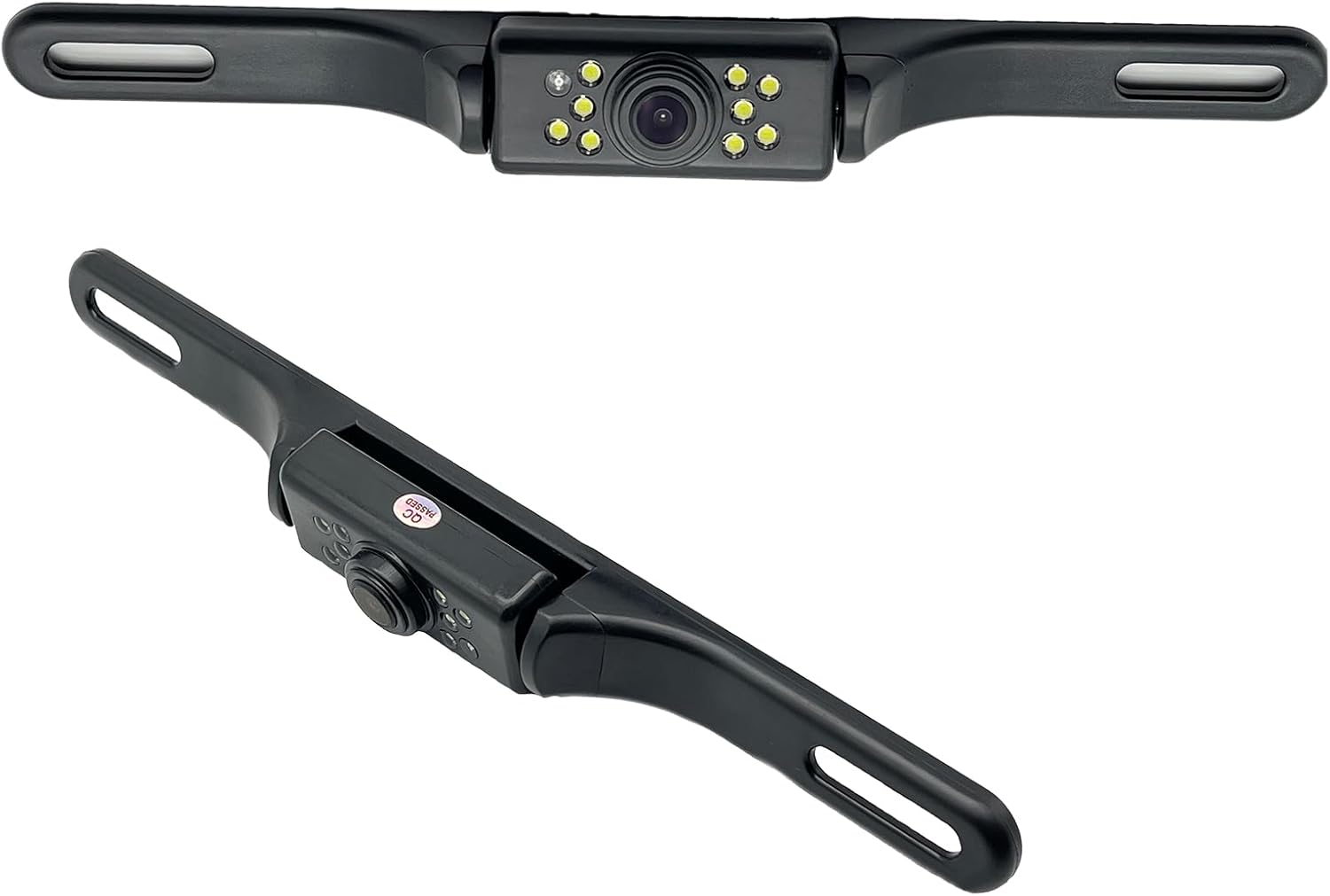
4. YIMU License Plate Backup Camera with 7 LED Night Vision
Best License‑plate Backup Camera
| Voltage | 12 Volts |
|---|---|
| Optical Sensor Technology | CMOS |
| Real Angle of View | 170 Degrees |
| Connector Type | RCA |
| Video Capture Resolution | 480p |
The YIMU license-plate backup camera is a surface-mount camera designed to replace or mount near a license plate and feed a wired monitor or factory-style screen via its 26 ft RCA cable. It uses a 1/3-inch CMOS sensor and a wide-angle lens (150 to 170 degrees) to expose a broad rear view useful for spotting low obstacles and cross-traffic while reversing. Built-in LED lights and a 0.1 lux rating improve color night visibility compared with simple infrared units, and the camera supports CVBS and switchable AHD outputs for higher-resolution displays when your monitor accepts AHD. Installation is straightforward for a wired setup: power to the reverse light and run the included video and power cables to the head unit. Important limitations are that it is a wired, RCA-based camera so integration with modern factory digital buses may need adapters, and image resolution is listed at 480p unless paired with an AHD-capable screen for up to 720p or 1080p. The IP69K rating and simple plate mounting make it durable and tidy for a vehicle like the Ford Explorer without cutting or tailgate modification.
Best for: Buyers who want a clean license-plate mount camera that improves rear visibility and adds integrated lighting without cutting or modifying the tailgate on their Explorer, and who are comfortable running a wired RCA connection to a monitor.
Less Ideal for: Drivers who need a wireless or direct digital integration solution with factory infotainment systems or who prefer built-in OEM-style cameras with vehicle-specific connectors.
- Wide 150–170 degree field of view reduces blind spots while reversing.
- Seven built-in LEDs provide full-color night illumination for better low-light visibility.
- Includes 26 ft RCA video cable and simple surface mount hardware for straightforward wired installation.
- Switchable CVBS/AHD output lets you use higher resolutions with compatible monitors.
- IP69K waterproof and shockproof design suited to exterior mounting.
- RCA wired connection may require adapters to work with modern digital factory screens.
- Base listed resolution is 480p unless used in AHD mode with a compatible display.
Verdict: Choose this option when you prefer a license‑plate–mounted camera that gives a wider field of view and integrated lighting without modifying the tailgate.
5. ZEROXCLUB B7 Wired Backup Camera Kit with 7-inch 1080p Monitor
Best Backup Camera Kit with Monitor

| Screen Size | 7 Inches |
|---|---|
| Video Capture Resolution | 1080p |
| Optical Sensor Technology | CMOS |
| Connector Type | 4-Pin |
| Voltage | 12 Volts |
This ZEROXCLUB B7 kit supplies a complete wired camera-and-monitor setup intended for vehicles that lack a factory screen. The system pairs a 7-inch 1080p LCD monitor with a wide-angle license-plate camera that has built-in LEDs for night visibility and an IP69K-rated housing for heavy-duty weather resistance. It is usually installed by mounting the camera to the plate area and routing the included 4-pin and power cables to the monitor or a 12V source; you can wire the red power lead to the reverse light for automatic activation or run continuous power from a cigarette socket. The monitor is designed to mount with a suction cup and the image can be flipped and parking grid lines adjusted to match vehicle fitment. Notable limits are that the camera only works with the supplied monitor and uses dedicated mini 4-pin/DC connectors rather than RCA, so integration with an existing head unit is not supported. Cable lengths are adequate for most SUVs but may require extensions on large vehicles.
Best for: Drivers who need a complete, plug-and-play upgrade to add a dedicated backup screen to a vehicle without a factory display and want a weatherproof wired camera that turns on with reverse or stays powered continuously.
Less Ideal for: Buyers seeking integration with an existing head unit or OEM-style dash installation should consider a camera designed for radio/head-unit input or hard-mount monitor solutions.
- Full kit includes 7-inch 1080p monitor and 1080p wide-angle camera for clear daytime and nighttime views
- IP69K waterproof rating and sealed housing for reliable performance in heavy rain and washdown conditions
- Selectable power wiring: reverse-light trigger or continuous 12V feed for flexible installation
- Adjustable parking guidelines and image flip make alignment to the vehicle simple
- Proprietary mini 4-pin/DC connector means the camera will not connect to generic RCA head units
- Monitor uses a suction-cup mount which may be less stable than a fixed dash bracket over time
Verdict: Select this pick when you want an all-in-one camera and monitor system for vehicles without a factory screen or for a quick plug-and-play upgrade.
6. PixelMan PMD2A-S 1080p Metal-Body Backup Camera
Best Waterproof Metal‑Body Backup Camera

| Video Capture Resolution | 1080p (AHD switchable) |
|---|---|
| Field Of View | 170 Degrees |
| Optical Sensor Technology | CMOS |
| Connector Type | RCA |
| Voltage | 12.0 |
The PixelMan PMD2A-S is a license-plate-style backup camera built around a 1/2.7in AHD sensor and a 170 degree wide-angle glass lens that can output up to 1080p on AHD-capable displays or standard HD on RCA monitors. It is designed for hidden or surface mounting using the included license-plate bracket or small surface bracket and connects via a long double-shielded RCA cable and power lead. The metal alloy housing and Nano waterproof seal are the standout features here, aimed at resisting water intrusion and temperature cycling so the camera keeps working through rain, car washes, and road grime. In normal reversing the camera gives a bright, color-rich image and improved night visibility over smaller-chip units, and the sturdy bracket design resists vibration and angle drift. Limitations are that it requires an in-dash or aftermarket monitor with an RCA input and that AHD 1080p requires a compatible screen to see the higher resolution; it is not intended for direct connection to dash cams or 24V truck electrical systems without additional adapters.
Best for: Buyers who prioritize a rugged, weatherproof rear camera that stays sealed and stable through regular wet conditions and wants clearer images than basic plastic-body units for everyday reversing on their vehicle.
Less Ideal for: Drivers who need plug-and-play wireless or USB-based camera solutions or who cannot add an RCA-compatible monitor should look at alternative systems that match their setup.
- Metal alloy housing with Nano waterproof sealing for strong resistance to water and temperature changes
- 1/2.7in AHD sensor and glass wide-angle lens for clearer, more color-accurate daytime and improved low-light images
- Supports HD and AHD switching so it can deliver 1080p on compatible monitors
- Includes two mounting brackets and a long double-shielded RCA cable for hidden or surface installation
- Sturdy rotating bracket design that holds angle under vibration
- Requires a monitor with an RCA input and will only show 1080p if the display supports AHD signal
Verdict: Buy this type when you need a rugged, weatherproof camera with a metal enclosure and high IP protection that holds up to rain, car washes, and road debris.
Choosing the Right 2026 Ford Explorer Backup Camera: Key Factors to Consider
Image Quality and Low-Light Performance
Clear image resolution and good low-light sensitivity are essential because you rely on the camera feed to judge distances and obstacles while reversing. Higher resolution helps you see small objects and people behind the vehicle, while sensors with strong low-light performance reduce glare and bloom from headlights and streetlights at night. Color fidelity can aid depth perception in daylight, and sharp edges in the image make it easier to align the vehicle when backing into tight spaces. Pay attention to dynamic range, which helps maintain detail in scenes with both bright and dark areas, such as a sunlit parking lot with shaded areas near the bumper.
For the 2026 Ford Explorer, the camera should provide a clear, usable image that complements the vehicle's factory mirrors and sensors. Cameras that advertise upgraded low-light imaging or wide dynamic range are often more reliable across a variety of parking conditions.
Field of View and Parking Guidelines
Field of view determines how much of the area behind the Explorer is visible. A wider field of view reduces blind spots but can introduce fisheye distortion that affects distance judgment. Look for a balance—typically a horizontal field of view between 120 and 170 degrees provides broad coverage while maintaining usable perspective for backing maneuvers. Adjustable or software-corrected guidelines are useful because they can match the Explorer's bumper offsets and help you center the vehicle in parking spaces.
Guidelines that are adjustable or removable let you tailor the display to common tasks like trailer hookup or parallel parking. For the Explorer's rear profile, ensure the mounting position and guideline calibration will not mislead distance estimates at the curb or when aligning to parking lines.
Mounting Type and Fitment
Mounting type affects both appearance and installation complexity. License plate-mounted cameras are minimally invasive and often simplest to install, while flush bumper or dedicated recess mounts give a cleaner look but may require trimming or locating OEM mounting points. Choose a mounting solution that accommodates the Explorer's rear bumper curvature and existing hardware. Consider whether the camera needs to sit higher or lower than the license plate to avoid obstruction from tow hitches or rear sensors.
Also think about cable routing and access to reverse-light wiring. Some mounts offer built-in harnesses or adapter plates that simplify fitment on the Explorer's rear fascia. Properly secured mounting reduces vibration and helps keep the image steady over bumps and washboard roads.
Wired Versus Wireless Connectivity
Wired connections typically provide the most reliable, low-latency video feed, which matters when you depend on the camera for precise reversing. Hardwired systems often tie into the vehicle's reverse-light circuit so the display triggers automatically when you shift into reverse. Wireless systems are easier to install and avoid long runs of video cable, but they can be subject to interference, signal dropouts, or latency depending on the environment and the quality of the transmitter/receiver.
For the Explorer, consider whether you value a cleaner, simpler install or the absolute reliability of a wired feed. If towing or aftermarket accessories are common on your vehicle, test the wireless pairing in those conditions and aim for solutions with robust signal encryption and frequency selection to reduce dropouts.
Monitor Integration and Display Options
How you view the camera feed matters for usability. Some systems integrate with an existing in-dash display if the Explorer's infotainment supports video input. Others include a standalone rearview mirror monitor or a dash-mounted screen. Each option has tradeoffs: in-dash integration looks seamless but may require adapters or professional installation, while dedicated monitors are easier to add but occupy cockpit space.
Consider screen size, resolution, and placement so the display does not obstruct your forward view. Features like split-screen for multiple camera inputs or adjustable brightness are helpful under changing lighting conditions. Also check trigger behavior so the display appears automatically and returns to normal operation once reversing is complete.
Durability and Weather Resistance
A backup camera must withstand road spray, salt, heat, and cold, so water and dust resistance ratings, corrosion-resistant housings, and protected connectors are important. Look for IP ratings that indicate protection from dust and intermittent or heavy water exposure. Impact-resistant housings and lens covers help prevent cracking from road debris. UV-stable plastics reduce yellowing and loss of clarity over time.
For owners of the 2026 Ford Explorer who drive in varied conditions, long-term reliability matters more than marginal feature differences. Components that resist corrosion and use sealed connections will reduce the need for future repairs or replacement.
Type of Camera Mounts and When to Choose Each
License plate mounts are the most common for easy DIY installations because they use existing fasteners and require minimal trimming. They are a strong choice if you want a quick upgrade and do not mind the camera sitting at license plate height.
Bumper or flush mounts offer a cleaner, factory-look finish and position the lens closer to the bumper line for potentially improved angle and less obstruction from hitches. These mounts often require locating a mounting pocket or cutting a small aperture in the fascia.
Mirror or dash-mounted monitors are useful when you cannot integrate with the factory display or want a portable solution. Choose a monitor type that best fits your cabin layout and driving habits.
- License plate mount: easiest install, visible at plate height
- Flush bumper mount: cleaner look, may require trim or shop fitment
- Mirror monitor: simple install, good for multi-vehicle portability
- In-dash integration: seamless appearance, may need adapter or pro install
Wiring Routes and Best Practices for the Explorer
Routing cables cleanly prevents rubbing on edges and exposure to heat or road debris. Start by running the video cable from the rear up through existing grommets or along the vehicle frame where wiring harnesses already travel. Use grommets and loom to protect the cable where it passes through metal or sharp edges.
Tap the reverse-light circuit for the trigger wire in locations that provide easy access without cutting factory wires unnecessarily. If you are unsure, locate the harness in the tail lamp assembly where access is straightforward and connectors are designed for service.
Secure all cable runs with zip ties and avoid tight bends near connectors. When installing a monitor in the cabin, route power wires through the dash or under trim panels to keep the installation tidy and reduce rattles.
- Use existing grommets and harness pathways where possible
- Protect cable entries with rubber grommets
- Avoid routing near exhaust components or high-heat zones
- Test camera and monitor before reassembling trim panels
Choosing a Camera That Works With Towing and Trailer Use
If you tow with your Explorer, think about camera placement so the view remains useful with a trailer attached. Higher mounts on the bumper or a license plate relocator can keep the camera from being blocked by a hitch or trailer coupler.
Some systems offer auxiliary trailer cameras or selectable viewing angles that help when aligning hitch balls or backing a trailer. Look for units that can switch between wide and zoomed views or that support an additional auxiliary input for a trailer-mounted camera.
Also verify that the mounting solution and wiring will not interfere with trailer wiring connectors and that the camera housing can withstand the added stress and spray from towing.
- Consider higher or offset mounting when towing frequently
- Look for systems with auxiliary inputs for trailer cameras
- Ensure wiring leaves access to trailer electrical connectors
Legal and Practical Considerations for Rear View Cameras
Many jurisdictions have rules about obstructing license plates and about aftermarket lighting and wiring. Ensure your chosen mount does not cover required plate information or conflict with local regulations. Use dedicated license-plate mounts that preserve plate visibility.
Practical considerations include avoiding camera positions that collect excessive dirt from road spray. Some housings include dirt-shedding designs or hydrophobic lens coatings that maintain clearer images after rain or highway driving.
Finally, consider how the camera integrates with any factory safety features to avoid confusion. A properly positioned camera should complement parking sensors and provide a consistent visual reference for depth perception.
- Avoid mounts that obscure license plate numbers
- Choose housings with dirt-shedding shape or lens coatings
- Confirm compatibility with existing sensors and lights
Basic Troubleshooting Tips After Installation
If the image is fuzzy or distorted, first check lens cleanliness and confirm the camera is securely fastened without vibration. Tighten mounting hardware and ensure the lens is free of film, condensation, or debris.
Intermittent signal or flicker typically points to a loose connection or damaged cable. Inspect connectors for corrosion and test continuity along the video cable. For wireless systems, check transmitter and receiver placement and pair settings.
If the display does not trigger when shifting into reverse, verify the trigger wire is properly connected to the reverse-light circuit and that the reverse lights function correctly. Use a multimeter if necessary to confirm voltage at the trigger point.
- Clean lens and tighten mount for fuzzy images
- Inspect cables and connectors for intermittent signals
- Confirm reverse trigger wiring and test with multimeter
Still looking for the perfect fit?
Select your Ford Explorer configuration to see the most relevant Backup Cameras recommendations
How We Chose the Best 2026 Ford Explorer Backup Camera
We applied a vehicle-focused evaluation to identify backup cameras suitable for the 2026 Ford Explorer and for Explorer owners who may own model years from 2020 to present. First, we prioritized image quality metrics that directly affect usability while reversing, including resolution, low-light sensitivity, and wide-angle coverage that matches the Explorer's rear profile. Second, we assessed installation complexity, separating solutions that use existing wiring and mounting points from those that require more invasive panel work. Third, we considered connectivity and latency for systems with wireless links or monitors, because a stable and low-latency feed is essential for safe maneuvering. Fourth, we reviewed durability factors such as weatherproof rating and lens protection for long-term reliability in varied climates.We excluded products that lack clear specification for vehicle mounting or that require vehicle modifications outside reasonable DIY or shop-level scope. Our final list emphasizes a balance of clarity, installation practicality, reliability, and features that matter to Explorer drivers, such as parking guidelines and monitor integration.
Our full evaluation process is outlined in our review methodology.
FAQ
Will a universal backup camera fit my 2026 Ford Explorer?
Many universal cameras can be mounted on the Explorer using license plate or bumper mounts, but fit varies by housing and bumper shape. Check mounting dimensions and plan cable routing to confirm compatibility before purchase.
Can I install a backup camera myself or do I need professional help?
Basic license plate and wireless systems are often installable by a competent DIYer with common tools. Hardwired, in-dash integrations, or flush bumper installs may require specialized tools or professional installation for a clean result.
Will a wireless backup camera be reliable on the Explorer?
Wireless systems can work well, especially for easier installation, but reliability depends on the transmitter quality and local interference. For maximum reliability and lowest latency, wired connections are generally preferable.
Do I need a separate monitor if my Explorer has an infotainment screen?
If your Explorer's infotainment supports a video input, you may be able to integrate the camera directly. Otherwise, a standalone mirror or dash monitor is a practical alternative that avoids modifying the factory system.
How do I keep the camera lens clear in bad weather?
Select housings with hydrophobic coatings or recessed designs that shed water and debris. Regular cleaning and parking position awareness also help maintain a clear view during rainy or snowy conditions.
Will adding a backup camera affect existing parking sensors?
A correctly installed camera should complement parking sensors rather than interfere. Avoid mounting locations that obstruct sensor fields and ensure wiring does not run over sensor connectors to prevent accidental damage.
Final Verdict
Prioritize clear imaging, reliable connectivity, and a mounting approach that fits the 2026 Ford Explorer's rear contours when choosing a backup camera. Decide between wired and wireless based on how much installation work you want to do and how critical low-latency video is for your parking needs.Balance features like adjustable guidelines and weather-resistant housings against installation complexity. If you value absolute reliability and low latency, opt for a wired system with professional integration. If ease of installation is paramount, a well-reviewed wireless or license-plate-mounted kit can deliver significant safety and convenience gains.
Explore More:
- Check out all Ford Explorer parts & accessories
- Explore Electronics
- Browse all Accessories
