

Note: This article contains affiliate links. If you click on these links and make a purchase, I may earn a small commission at no extra cost to you. This helps support my research and content. Read my full affiliate disclosure here.
If you tow with a 2011-2019 Ford Explorer, the right trailer brake controller makes a big difference to safety and drivability. A controller that matches your trailer's braking system and your towing habits helps you stop more predictably, reduces trailer sway, and lowers wear on both vehicle and trailer brakes.This guide rounds up the top shortlisted trailer brake controllers for the 2011-2019 Explorer and explains the practical differences between them. We evaluated braking performance, how they install in the Explorer, and usability while driving so you can pick a solution that fits your trailer and towing style. Read on for the key factors that matter and what to expect during installation and setup.
Looking for other parts? See all Ford Explorer parts & accessories.
Top Picks at a Glance
| Best Overall Trailer Brake Controller Top pick for balanced performance, reliability, and easy installation | Tekonsha Primus IQ Proportional Trailer Brake Controller |  |
| Best Budget Trailer Brake Controller Low-cost option that covers basic braking needs without extras | Timilge Proportional Trailer Brake Controller with LED Display (1–4 Axles) |  |
| Best Proportional Brake Controller Inertia-based units that match trailer braking to vehicle deceleration automatically | Tekonsha Brake-EVN Proportional Trailer Brake Controller |  |
| Best Time-Delay Brake Controller Simpler timed controllers that ramp brake power over a set interval | briidea BR-121 Time-Delay Trailer Brake Controller |  |
| Best Wireless / Portable Brake Controller Plug-in, portable or Bluetooth controllers that transfer between vehicles | CURT Echo 51180 Mobile Bluetooth Trailer Brake Controller |  |
| Best Plug-and-Play Brake Controller Kit Complete kits that include controller plus vehicle-specific wiring harness | CURT Venturer NEXT Time-Delay Electric Trailer Brake Controller |  |
1. Tekonsha Primus IQ Proportional Trailer Brake Controller
Best Overall Trailer Brake Controller

| Model | 90160 |
|---|---|
| Voltage | 12 Volts |
| Axles supported | 1-3 axles |
| Mounting | Snap-in dash clip |
| Display | LED |
The Tekonsha Primus IQ is a compact proportional brake controller built to provide smooth, automatic trailer braking based on how you apply the vehicle brakes. It installs under the dash and is commonly used with tow setups to control trailers with one to three axles. Key features include an internal inertia sensor for proportional braking, an easy-to-read LED display that shows diagnostics and settings, a power output knob, a three-level boost option for added stopping power, and a manual override. The unit is self-leveling within a 90-degree vertical range and includes a snap-in mounting clip and removable electrical connector for quick stowage when not in use. Practical benefits are predictable, trailer-responsive braking for everyday towing and an accessible interface for on-the-road adjustments. Limitations are that it covers up to three axles only and requires a compatible wiring harness or vehicle-specific adapter for plug-and-play installation on the 2011–2019 Ford Explorer models referenced in this article goal.
Best for: DIY-minded drivers who want a dependable, easy-to-use proportional controller for routine towing and who value clear diagnostics and straightforward installation on a 2011–2019 Ford Explorer.
Less Ideal for: Drivers who tow large multi-axle trailers, commercial haulers, or users who need networked or smartphone-configurable brake controllers should consider other options.
- Proportional braking via internal inertia sensor for smooth, trailer-responsive stops
- Clear LED display with real-time diagnostics and easy-to-read settings
- Three-level boost feature for extra braking power when hauling heavier loads
- Compact, snap-in dash mounting and removable connector for easy stowage
- Self-leveling design reduces the need for post-install adjustment
- Supports trailers with up to three axles only
Verdict: The go-to choice for DIYers who want a reliable, well-rounded controller that combines smooth proportional braking, clear diagnostics, and straightforward installation.
2. Timilge Proportional Trailer Brake Controller with LED Display (1–4 Axles)
Best Budget Trailer Brake Controller

| Supports | 1 to 4 axles |
|---|---|
| Display | LED digital voltage readout |
| Controls | Adjustable gain and boost |
| Wiring | Ports for vehicle-specific harness |
This Timilge proportional brake controller is a basic, functional unit for occasional towing. It senses the tow vehicle's deceleration and applies trailer braking proportionally, with adjustable gain and boost for firmer stops. The bright LED screen shows output voltage in real time so you can monitor and tweak settings while towing. It supports 1 to 4 axle trailers and offers wiring ports for vehicle-specific harnesses for faster installation and removal. In practical use it delivers smoother, more predictable stops than time-delay units, which helps reduce wear on trailer brakes and improves towing stability. Expect a simple feature set without advanced diagnostics, app control, or extensive customization. Build and mounting hardware are utilitarian rather than premium, so buyers should plan for a straightforward dashboard installation and occasional retuning when trailer load or road conditions change.
Best for: Buyers who tow infrequently and want a reliable, low-cost proportional controller that improves trailer braking over time-delay units without needing advanced features.
Less Ideal for: Drivers who tow heavy loads frequently, need factory-style integration into the vehicle, or want advanced tuning and telemetry should consider higher-end models.
- Proportional braking responds to vehicle deceleration for smoother, more controlled stops
- LED digital display shows voltage output so you can monitor performance in real time
- Adjustable gain and boost let you tailor braking intensity for different trailer loads
- Supports 1 to 4 axle trailers, covering most small to medium trailers
- Wiring ports accept vehicle-specific harnesses for quicker installation and removal
- Basic construction and controls compared with premium controllers that offer vehicle integration or advanced diagnostics
Verdict: Choose this if you need a functional, inexpensive controller that provides acceptable stopping control for occasional towing without premium features.
3. Tekonsha Brake-EVN Proportional Trailer Brake Controller
Best Proportional Brake Controller

| Compatible axles | 1-4 axles |
|---|---|
| Brake type | Proportional (inertia sensor) |
| Display | Digital LED |
| Manual control | Manual override lever |
| Warranty | Five-year limited warranty |
The Tekonsha Brake-EVN is a motion-sensing proportional brake controller designed to give smoother, more predictable trailer braking by mirroring how you apply the vehicle brakes. It installs with a plug-and-play wiring connector where available and mounts within easy reach of the driver. The unit uses an internal inertia sensor for proportional braking, offers a manual lever for immediate brake application, and includes boost levels to increase stopping power when towing heavier loads. A bright LED display reports real-time settings and diagnostics, and a power-save mode helps reduce battery draw when the trailer is not connected. Practical benefits include intuitive tuning with arrow buttons, quick disconnect for vehicle use when not towing, and compatibility with 1-4 axle trailer setups. Limitations are that some Ford Explorer model years may require the vehicle-specific Tekonsha harness for true plug-and-play installation and the wiring harness is sold separately, so budget for that and possible professional installation if you prefer not to wire it yourself.
Best for: Buyers who prioritize smooth, responsive trailer braking that closely follows vehicle braking behavior and want a compact, driver-accessible controller for everyday towing use with their 2011–2019 Ford Explorer.
Less Ideal for: Drivers who want a fully integrated factory-style controller with no additional harness purchases or those who never tow and prefer to avoid any wiring work.
- Proportional braking using an internal inertia sensor for smoother, more natural stops
- Bright digital LED display for real-time settings and diagnostics
- Manual override lever for applying trailer brakes independently in emergencies
- Plug-and-play removable connector where vehicle harnesses are available for faster installation
- Boost feature with multiple levels to increase braking power for heavier trailers
- Vehicle-specific wiring harness not included so additional purchase may be required
Verdict: This slot is for controllers with motion-sensing proportional operation that deliver smoother, more responsive trailer braking by mirroring the tow vehicle’s stops.
4. briidea BR-121 Time-Delay Trailer Brake Controller
Best Time-Delay Brake Controller

| Model | BR-121 |
|---|---|
| Axles supported | 1 to 4 braked axles (2-8 brakes) |
| Display | LCD digital display |
| Protections | Over-current, short-circuit, fault detection |
The briidea BR-121 is a time-delay trailer brake controller designed to give predictable, consistent brake application for light-duty and occasional towing. It installs with a plug-and-play wiring port and includes a versatile mounting bracket so you can fit it under the dash or in other orientations without affecting operation. The backlit LCD keeps gain and output voltage visible at a glance, and built-in protections monitor for overcurrent, short circuits, and faults to protect wiring and trailer brakes. Because it uses time-delay control rather than proportional sensing, it delivers the same ramp of braking power every time, which simplifies setup and troubleshooting. That makes it a straightforward option for drivers who tow intermittently and want reliable, repeatable performance. The main limitation is that it will not modulate braking based on vehicle deceleration, so it cannot match the smoother, more responsive feel of inertia or proportional controllers during varied driving conditions.
Best for: Buyers who want a simple, reliable time-delay controller that is easy to mount and straightforward to set up for occasional light towing of a Ford Explorer from 2011–2019.
Less Ideal for: Drivers who tow frequently with heavy loads or who want the smoothest, vehicle-reactive braking behavior should consider a proportional controller instead.
- Plug-and-play wiring port for faster, simpler installation
- LCD digital display shows gain and output voltage for easy monitoring
- Compatible with 1 to 4 braked axles (2 to 8 brakes) for common light trailers
- Built-in overcurrent, short-circuit and fault detection for added safety
- Uses time-delay operation so braking is not proportional to vehicle deceleration
Verdict: Pick a time-delay controller when you prefer a basic, consistent ramping brake output that’s easier to mount in any orientation and simpler to troubleshoot.
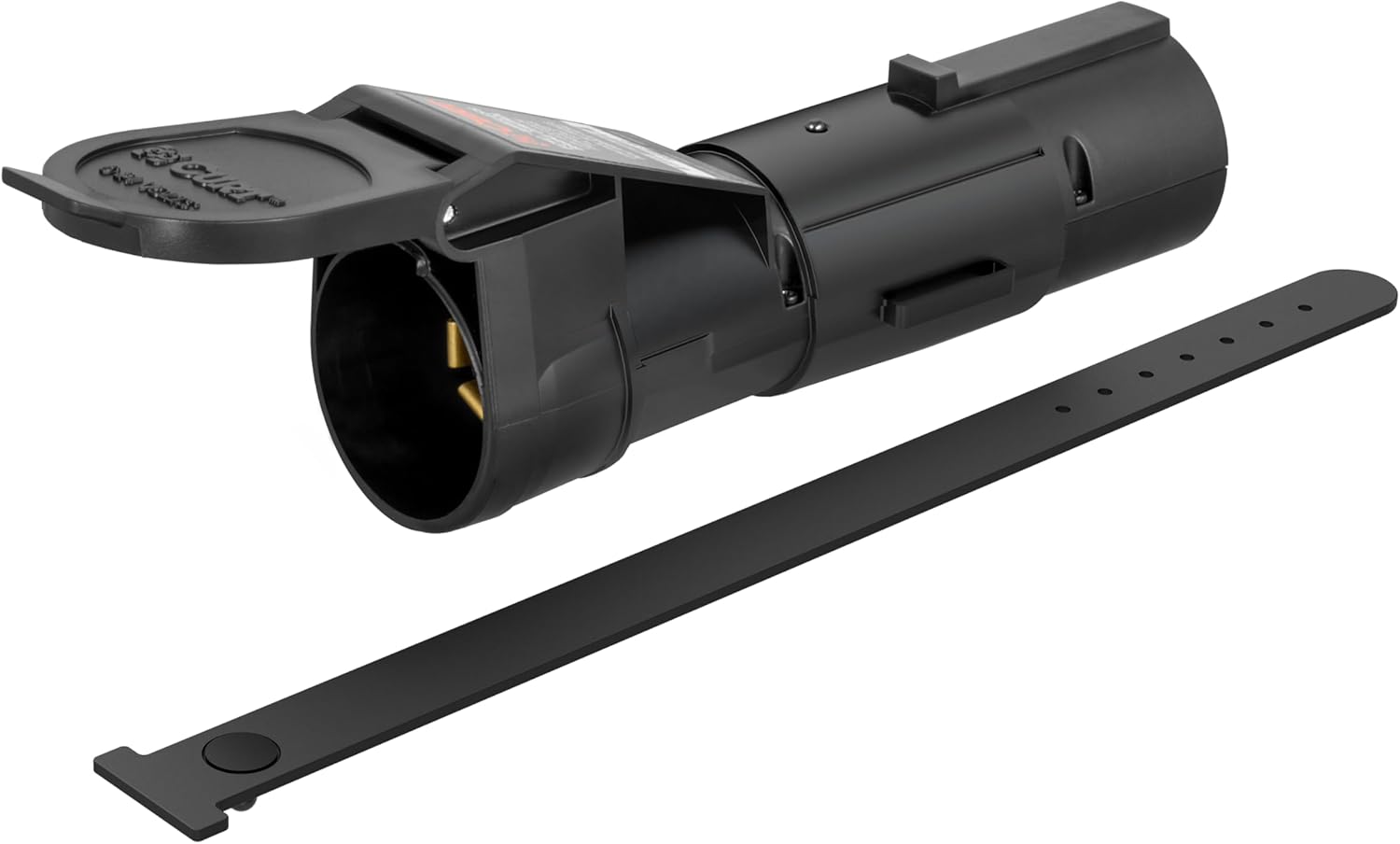
5. CURT Echo 51180 Mobile Bluetooth Trailer Brake Controller
Best Wireless / Portable Brake Controller
| Item model number | 51180 |
|---|---|
| Manufacturer | CURT |
| Connection | 7-way RV blade plug |
| Brake capacity | 2 to 4 electric brakes |
| Compatibility | Bluetooth smartphone app (iOS and Android) |
The CURT Echo mobile brake controller is a plug-and-play, 7-way insert that lets you control trailer braking from a smartphone using the OneControl Auto app. Designed for portable use, the Echo plugs into the vehicle side 7-way and the trailer plugs into the Echo so you can move the unit between rigs without hardwiring. It uses a tri-axis accelerometer and Bluetooth to provide proportional braking and offers features such as automatic calibration, multiple saved vehicle-trailer profiles, and manual brake activation from the app. The Echo is housed in a potted enclosure with a retention strap and locking tab to improve weather resistance and connector security, and it supports common towing systems including ABS, cruise control, and 2 to 4 electric brakes. Limitations include reliance on a smartphone for most controls and settings and the physical presence of a plug-in unit between the vehicle and trailer, which may be less tidy than an under-dash install for a dedicated Explorer. For drivers who need a transferable, easy-to-install controller for occasional towing or multiple vehicles, the Echo streamlines setup and operation without permanent wiring.
Best for: Drivers who need a portable, no-wiring brake controller they can move between vehicles and prefer managing settings from a phone while towing their Explorer.
Less Ideal for: Users who want a permanently mounted, factory-like dash controller or who prefer hardware controls for every function should consider a hardwired under-dash option.
- Truly plug-and-play 7-way design for easy transfer between vehicles
- Bluetooth smartphone control with app for profile saving and manual activation
- Tri-axis accelerometer enables proportional, responsive braking
- Potted enclosure and connector locking tab improve durability and secure connection
- Requires a smartphone and app for full control and configuration
Verdict: Ideal for drivers who move a controller between rigs—this category covers mobile, 7-way plug-in or smartphone-linked units that require no permanent dash wiring.
6. CURT Venturer NEXT Time-Delay Electric Trailer Brake Controller
Best Plug-and-Play Brake Controller Kit

| Vehicle electrical | 12-volt systems |
|---|---|
| Brake type compatibility | Electric and electric-over-hydraulic brakes |
| Brake capacity | Controls 2–6 brakes (1–3 axles) |
| Controller type | Time-delay (fully adjustable) |
The CURT Venturer NEXT is a slim, time-based brake controller that sits neatly under the dash and gives you control of electric trailer brakes from the cab. Designed to manage 2–6 brakes (1–3 axles), it lets you set gain and ramp time to match different trailer loads, and the LED ramp indicator with adjustable brightness makes it easy to monitor during day or night driving. Installation is straightforward and flexible since the unit can be mounted at any angle and the low-profile bracket helps clear tight dash space. Because it is time-delay based, setup is simpler with no leveling required and there are no internal moving parts to worry about. The main limitation is that it is a time-delay controller rather than proportional, so braking feel and responsiveness can be less precise compared with inertia-based units, especially when towing heavier loads or in stop-and-go traffic. For light to moderate towing where simplicity and compact fit matter most, it is a practical choice.
Best for: Buyers who prioritize a fast, tidy DIY install and an unobtrusive in-cab controller for routine towing of light to moderate trailers.
Less Ideal for: Drivers who regularly tow heavy loads, require the most precise brake modulation, or prefer proportional braking feedback should consider an inertia-style controller.
- Compact low-profile design preserves dash space and offers flexible mounting angles.
- Adjustable gain and ramp time let you tune braking for different trailer loads.
- LED ramp indicator with brightness control improves visibility day or night.
- Controls up to six trailer brakes (1–3 axles) for common small trailer setups.
- Time-delay operation gives less precise, less proportional braking feel compared with inertia-based controllers.
Verdict: Choose a plug-and-play kit when you want a controller bundled with a vehicle-specific harness for fastest, cleanest DIY installation and minimal splicing.
Choosing the Right 2011-2019 Ford Explorer Trailer Brake Controller: Key Factors to Consider
Control Type: Proportional Vs Time-Delayed
The controller's operating principle has a big effect on towing feel. Proportional controllers detect the vehicle's deceleration and apply trailer braking in proportion to that motion. That usually gives smoother, more natural braking and requires less driver tuning during use. For the 2011-2019 Ford Explorer, proportional control helps match braking to the SUV's weight and typical towing loads, reducing the risk of trailer push or abrupt lockups.
Time-delayed controllers apply a preset level of brake power over a timed interval after the driver presses the brake. They can be simpler and cheaper, and they let you fix maximum braking output, which can be useful for very light trailers or specific load cases. However, they usually need more manual adjustment to avoid either under-braking on heavy loads or over-braking that causes instability on the Explorer.
Installation and Wiring Compatibility
How the controller connects to the Explorer matters for installation time and long-term reliability. Many 2011-2019 Ford Explorer owners will have a factory tow package or an aftermarket 7-way connector; controllers that integrate with these harnesses require minimal splicing and are easier to mount. Check whether the unit needs a separate power wire routed to the battery or can draw from the vehicle's tow power circuit.
Wiring clarity is important. Clear instructions and color-coded leads reduce the risk of incorrect connections that can disable trailer brakes or damage vehicle electronics. Consider whether the controller's mounting hardware fits under the Explorer dash and whether routing the wiring interferes with airbags or other vehicle systems. Ease of removal can matter if you need to transfer the controller between vehicles.
In-Cab Controls and Ergonomics
You will interact with the controller during normal driving, so control layout and feedback matter. Well-designed in-cab controllers offer a simple manual override, an easy-to-read gain or sensitivity control, and a clear status indicator. For the Explorer, placement should allow you to reach controls without taking your eyes far off the road.
Consider how adjustments are made while towing. Some controllers use a single dial, others use multi-button menus or digital displays. A manual jog or boost feature is helpful when launching on a steep grade or when coupling an unbraked trailer. Ergonomics influence how quickly you can respond to changes in trailer behavior on highways or during emergency stops.
Adjustability for Different Trailer Weights
Owners of a 2011-2019 Explorer may tow a range of trailers from small utility trailers to heavier boat or camper trailers. A controller with wide adjustability lets you fine-tune braking to match the trailer's weight and the trailer's brake responsiveness. That reduces the chance of wheel lockup or insufficient braking force, both of which impact safety and wear.
Look for controllers with a clear adjustment range and repeatable settings. Some units store profiles or have presets for different trailers, which speeds setup when switching trailers. If you tow varied loads frequently, invest in a controller that offers precise, easily repeatable tuning rather than coarse steps.
Diagnostic Feedback and Safety Features
Good feedback reduces guesswork. Controllers that provide diagnostic information about trailer wiring continuity, short circuits, or brake connection status help detect wiring faults before they become a safety issue. For the Explorer, where factory wiring may be integrated with other vehicle systems, a unit that flags an open circuit or unexpected resistance simplifies troubleshooting.
Safety features like an accessible manual override, temperature protection for prolonged braking, and fade compensation are helpful when towing heavy loads or in mountainous terrain. These features give the driver options to respond to emergency conditions and maintain consistent braking performance over longer descents.
Durability and Resistance to Tow Environment
Trailer applications expose controllers to vibration, temperature swings, and occasional moisture during towing. A rugged housing, sealed electronics, and quality connectors reduce failures. The Explorer's typical uses include long highway trips and occasional off-highway launches, so durability extends service life and reliability.
Consider the warranty and the availability of replacement parts or mounting kits that fit the Explorer dash. Corrosion-resistant wiring terminals and robust mounting clamps matter if you tow throughout the year or in coastal climates where salt exposure is a concern.
Compatibility With 2011-2019 Explorer Tow Packages
The 2011-2019 Ford Explorer may be equipped with a factory tow package or an aftermarket 7-way connector. Confirming the vehicle's existing connector type and the presence of a tow power feed simplifies controller selection. Some controllers are designed to plug into a trailer brake controller harness that integrates directly with the Explorer's tow module, while others require a direct battery connection and additional fusing.
If your Explorer has the factory wiring harness, choose a controller that offers a compatible harness or adapter to avoid splicing. If using a universal install, plan routing for the power and output wires that keeps them clear of moving parts and heat sources. Properly secured wiring reduces electrical issues and ensures consistent trailer braking.
- Verify whether the vehicle has a factory tow harness or only tail-light wiring.
- Confirm that the controller's installation instructions include guidance for the Explorer year range.
- Use routed power with an inline fuse to protect the vehicle and controller circuits.
Mounting Locations and Driver Reach
Mounting the controller where you can reach it without excessive distraction is important. Common locations in the Explorer include under the dash to the left of the steering column, on the center console, or near the radio center stack. Ensure the chosen location does not block airbags, vents, or driver controls.
Consider the route for the output wire to the trailer connector and the need for a break-away switch or other safety devices. A tidy install with a secure mounting bracket reduces rattle and keeps the unit accessible for quick manual braking or adjustment.
- Test reach to the controller with normal driving posture before final mounting.
- Avoid mounting near heat sources or moving pedals.
- Keep the display visible enough to confirm status lights without looking down for long periods.
Setup and Tuning While Towing
Initial tuning often requires a short test tow. Start with conservative settings and perform gradual increases until trailer braking matches the Explorer's deceleration without feeling abrupt. Proportional controllers usually need minimal tuning, while time-delayed units will require setting the gain and timing to match trailer weight.
When tuning, run short braking tests at road speeds typical for your towing to confirm behavior in normal traffic. Pay attention to trailer stability, stopping distance, and whether the trailer wheels lock up. Make incremental adjustments and document settings that work for repeatable towing conditions.
- Always test with a safe empty road and a helper to observe trailer behavior.
- Record successful settings for each trailer you tow regularly.
- Check and re-tune after changing trailer load distribution or tire pressure.
Wiring Best Practices for Longevity
Use quality wire, proper gauge, and ring terminals to ensure a reliable connection between the controller, vehicle power, ground, and trailer output. Protect connections with heat-shrink tubing or sealed butt connectors, and secure wiring away from sharp edges or high-heat areas. Grounding to a clean metal surface on the Explorer frame or body improves signal reliability.
Labeling each wire during installation simplifies future troubleshooting and transfer to another vehicle. Regularly inspect connections at the trailer connector and controller for corrosion and retighten terminals as needed to keep the system functioning over time.
- Use an appropriately rated inline fuse at the battery connection.
- Avoid routing wires near exhaust components or under-suspension components without protection.
- Inspect wiring annually and after heavy towing trips.
Common Troubleshooting Steps
If the trailer brakes do not engage or behave inconsistently, start by checking power and ground at the controller and the trailer connector. Verify breaker and inline fuse status and look for damaged or corroded terminals. A wiring continuity check from the controller output to each trailer brake circuit can reveal open circuits or shorts.
Controller diagnostics and indicator lights can help isolate issues. If the unit reports a fault, consult the installation manual for fault codes and recommended fixes. Often, problems stem from poor grounding, loose connectors at the trailer plug, or a blown fuse in the vehicle or controller circuit.
- Check for battery voltage at the controller and trailer connector with the ignition on.
- Inspect the trailer's brake magnets and ground connections if brakes are weak or intermittent.
- Use the controller's manual override to confirm the controller can send output to the trailer.
Still looking for the perfect fit?
Select your Ford Explorer configuration to see the most relevant Trailer Brake Controllers recommendations
How We Chose the Best 2011-2019 Ford Explorer Trailer Brake Controller
Our selection focused on the features and real-world concerns that matter for 2011-2019 Ford Explorer owners who tow. We prioritized models that offer reliable brake modulation under common towing loads, straightforward in-cab controls, and options that work with electric trailer brakes used with Explorer towing setups. Key evaluation criteria included braking performance under varied loads, proportional response versus time-delayed control, installation complexity and wiring compatibility with Ford Explorer factory tow packages, user interface and adjustability, durability and environmental protection for tow use, and available safety features like manual override and diagnostics.We excluded controllers that require extensive vehicle modification beyond standard Explorer tow harnesses, units that lack adequate adjustability for a range of trailer weights, and designs that do not provide clear installation guidance for the 2011-2019 Explorer wiring. Our process emphasized controllers that offer meaningful differences in modulation and setup rather than marginal feature variations. The result is a set of seven options that reflect different tradeoffs between ease of installation, in-cab ergonomics, and braking performance.
Our full evaluation process is outlined in our review methodology.
FAQ
Do I need a trailer brake controller for towing with a 2011-2019 Ford Explorer?
If your trailer has electric brakes and the combined trailer weight requires trailer braking under local towing regulations, a brake controller is typically necessary. It gives you controlled braking power to the trailer and improves stopping performance compared with relying on the tow vehicle alone.
Can I install a controller without modifying the Explorer wiring?
Many controllers offer plug-in harnesses for vehicles with factory tow packages, which avoids major modification. If your Explorer lacks a factory harness, a universal install is possible but usually requires running a power lead to the battery and connecting the output to the trailer connector wiring.
Should I choose a proportional or time-delayed controller for the Explorer?
Proportional controllers generally provide smoother, more natural braking and are preferable if you tow varied loads. Time-delayed controllers can work well for lighter trailers or simple applications, but they may need more manual tuning to match heavier loads.
How often should I check the controller and wiring?
Inspect the controller mounting, power and ground connections, and trailer connector at least once a year and before long towing trips. Check for corrosion, loose terminals, and secure routing after heavy use or exposure to salt or water.
Will a controller affect the Explorer's warranty or electronics?
Properly installed controllers that use the factory tow harness and follow manufacturer electrical guidelines are unlikely to harm vehicle electronics. Avoid splicing into critical vehicle circuits and follow installation instructions to prevent interference with other systems.
Can a controller be moved between trailers or vehicles?
Many controllers are designed to be transferable, but ease of transfer depends on the wiring method. A plug-in harness or quick-disconnect wiring makes moving the unit between trailers or between Explorers much easier than a hardwired installation.
Final Verdict
Choosing the right trailer brake controller for a 2011-2019 Ford Explorer is about matching control type, adjustability, and installation approach to your towing habits. Prioritize a controller that offers dependable modulation and clear in-cab controls if you tow varied loads, or a simpler time-delayed unit if your towing is light and consistent. Ensure the unit integrates cleanly with your Explorer's wiring and that you can mount it within easy reach.Balance the tradeoffs between ease of installation and on-road performance when deciding. With the right controller and proper setup, you will get more predictable braking, reduced wear on both vehicle and trailer brakes, and greater confidence when towing.
Explore More:
- Check out all Ford Explorer parts & accessories
- Explore Electronics
- Browse all Accessories
