

Note: This article contains affiliate links. If you click on these links and make a purchase, I may earn a small commission at no extra cost to you. This helps support my research and content. Read my full affiliate disclosure here.
If you tow with a 2026 Ford Explorer, a quality trailer brake controller makes a major difference in safety and control. The right controller reduces nose dive, shortens stopping distances, and prevents trailer sway by synchronizing trailer braking with the vehicle. This guide shortlists seven top options that suit Explorer owners who tow campers, utility trailers, or light equipment under the 2020-present platform.We evaluated candidates for braking responsiveness, installation complexity, and in-cab usability so you can match a controller to how often and what you tow. Read on for a clear look at the key tradeoffs and installation considerations before choosing the best fit for your Explorer.
Looking for other parts? See all Ford Explorer parts & accessories.
Top Picks at a Glance
| Best Overall Trailer Brake Controller Top all-around controller with balanced features, reliability, and performance | Tekonsha Primus IQ Proportional Trailer Brake Controller |  |
| Best Budget Trailer Brake Controller Affordable controller that covers basic braking needs without frills | Lrichy 8507111 Time-Delay Trailer Brake Controller |  |
| Best Proportional Trailer Brake Controller Inertia-based controllers that match trailer braking to vehicle deceleration | REDARC Tow-Pro Liberty Proportional Trailer Brake Controller |  |
| Best Time-Delay Trailer Brake Controller Simple, time-based controllers that ramp brake power over a set interval | Tekonsha Brakeman IV Time-Delay Trailer Brake Controller |  |
| Best Wireless / Bluetooth Brake Controller Portable, app-enabled controllers that connect by Bluetooth or plug into 7-way | CURT Echo Mobile Bluetooth Trailer Brake Controller (Proportional) |  |
| Best Plug‑and‑Play Brake Controller Kit Complete kits that include controller plus vehicle-specific wiring harnesses | CURT Venturer NEXT Time-Delay Electric Trailer Brake Controller |  |
1. Tekonsha Primus IQ Proportional Trailer Brake Controller
Best Overall Trailer Brake Controller

| Model | 90160 |
|---|---|
| Voltage | 12 Volts |
| Axle compatibility | 1-3 Axles |
The Tekonsha Primus IQ is a straightforward proportional brake controller designed for predictable, smooth trailer braking during routine towing. It uses an internal inertia sensor to apply braking power in direct proportion to how you press the tow vehicle brakes, which helps avoid jerky stops and makes towing single- to three-axle trailers easier. Installation is driver-friendly thanks to a snap-in dash mount, plug-and-play port for two plug adapters, and a removable electrical connector so the unit can be stowed when not in use. The LED display reports settings and basic diagnostics, while a power output knob and a three-level boost let you add quick extra braking when hauling heavier loads. The unit self-levels within a 90-degree vertical range so it stays calibrated after mounting. Limitations include a basic LED readout rather than a full-color display and no wireless or smartphone configuration features, so advanced tuning options are limited compared with higher-end models.
Best for: Buyers who prioritize reliable, easy-to-use braking that provides smooth, predictable stops for everyday towing and occasional heavier loads.
Less Ideal for: Shoppers seeking advanced digital tuning, wireless control, or smartphone integration should consider higher-end controllers with those features.
- Proportional braking with internal inertia sensor for smooth, predictable stops
- Compact snap-in dash mount with removable connector for easy install and storage
- Three-level boost and manual override for extra stopping power when needed
- Simple LED display and self-diagnostic function for basic monitoring
- No smartphone app or wireless configuration for advanced tuning
Verdict: For the buyer who wants a reliable, well-rounded trailer brake controller that delivers smooth, predictable stopping power and easy controls for everyday towing.
2. Lrichy 8507111 Time-Delay Trailer Brake Controller
Best Budget Trailer Brake Controller

| Model | N8507111 |
|---|---|
| Manufacturer | Lrichy |
| Brakes supported | 2/4/6/8 brakes (1-4 axles) |
| Display | LED digital display |
The Lrichy 8507111 is a time-delay digital brake controller designed to give straightforward, budget-friendly trailer braking for occasional towing. It gradually ramps braking force at a fixed rate and includes an LED display for setting and diagnostics, plus a manual lever for instant trailer braking. Installation is made easier with included mounting brackets and a plug-and-play style port, and the unit can be mounted in any orientation. This controller works with trailers using 2, 4, 6, or 8 brakes (1–4 axles) so it covers a wide range of small to medium trailers. Because it is a time-delay unit rather than proportional, braking is consistent but not matched to vehicle deceleration, so it can feel less smooth during emergency stops or with lighter trailers. The product does not include vehicle-specific wiring harnesses, so plan to buy the proper harness for direct-fit installation on a Ford Explorer or to have wiring adapted by a shop. For drivers who tow occasionally and need a simple, affordable controller, this unit delivers necessary stopping power without extra complexity.
Best for: Buyers who want a low-cost, no-frills brake controller for occasional towing and value ease of installation and simple controls over advanced proportional braking behavior.
Less Ideal for: Frequent heavy haulers, owners who prioritize smooth, proportional braking, or those unwilling to add a vehicle-specific harness should consider proportional or higher-end units instead.
- Affordable and targeted at budget-minded buyers
- Clear LED display with basic diagnostics and adjustable settings
- Covers 2–8 brakes (1–4 axles) so it fits most small to mid-size trailers
- Includes mounting brackets and allows any-angle installation for flexible mounting
- Time-delay control does not modulate braking in proportion to vehicle deceleration
- Vehicle-specific plug-and-play harness is not included
Verdict: Choose this slot if you need a low-cost trailer brake controller that gives safe, functional braking for occasional towing without a high price tag.
3. REDARC Tow-Pro Liberty Proportional Trailer Brake Controller
Best Proportional Trailer Brake Controller

| Voltage | 12 Volts |
|---|---|
| Item model number | EBRH-ACCNA |
| Supports axle count | 1–2 axles |
The REDARC Tow-Pro Liberty is a motion-sensing proportional brake controller that applies trailer brakes in direct response to vehicle deceleration for seamless, on-road towing. It installs with a separate remote head and 3.3 foot cable for dash mounting and pairs with a universal pigtail or vehicle-specific wiring harness for a clean integration into modern vehicles. Notable features include Active Calibration and built-in sway control so braking feels smooth whether you are towing light loads or a small camper, and the dial-style remote head blends into the dash without taking much space. The unit supports one to two axles and is aimed at everyday towing on highways and local roads rather than heavy commercial use. Installation requires the correct harness for factory-style wiring and some users may prefer a model with larger displays or dedicated manual override for very heavy trailers. Tested for durability in harsh conditions, this controller is a durable, user-friendly choice for drivers who prioritize proportional braking performance and low-profile installation.
Best for: Drivers who want motion-based proportional braking for smoother, more controlled stops and who value a low-profile dash installation and durable, everyday towing performance.
Less Ideal for: Drivers who regularly tow very heavy trailers, need multi-axle commercial capability, or who prefer a controller with a large digital display and extensive on-screen feedback.
- True proportional braking via motion sensing for smoother, more natural stops
- Active Calibration and sway control improve stability with and without a trailer attached
- Compact remote head with dial-style control integrates neatly into the dash
- Supports 1–2 trailer axles, covering common small to medium towing setups
- Designed and stress-tested for durability in demanding conditions
- No large visual display which can make monitoring output less obvious at a glance
- Requires purchase of the vehicle-specific wiring harness for factory-style integration in some installations
Verdict: This pick is for drivers who want a proportional unit that uses motion sensing to apply trailer brakes in direct response to vehicle braking for smoother stops.
4. Tekonsha Brakeman IV Time-Delay Trailer Brake Controller
Best Time-Delay Trailer Brake Controller

| Model | 8507120 |
|---|---|
| Brake type | Time-delay digital controller |
| Axle support | 1-4 axles |
| Compatibility note | Works with electric and electric-over-hydraulic systems |
The Tekonsha Brakeman IV is a simple time-delay trailer brake controller intended for straightforward light towing. It senses when you apply the tow vehicle brakes and sends a ramped output to the trailer brakes at a fixed rate, with front-panel buttons to adjust overall power and sync aggressiveness plus a manual override lever for immediate braking. The unit includes diagnostics and short-circuit protection and can be mounted above or below the dash because its time-based operation does not require orientation. Plug-and-play wiring compatibility makes installation easier when a vehicle-specific harness is used. Practical benefits include predictable, repeatable braking feel and a compact footprint that keeps the dash tidy. Limitations are inherent to time-delay designs: braking is not proportional to trailer inertia, so it is best for light trailers or users who prefer a fixed ramp rather than proportional modulation for heavier loads. Vehicle-specific wiring harness is sold separately, so plan for that during installation.
Best for: Buyers who want a no-nonsense, easy-to-install brake controller that delivers predictable ramping braking for routine light towing and straightforward setups.
Less Ideal for: Drivers who tow heavy, variable-load trailers or who need the smoother, inertia-based modulation provided by proportional controllers should consider a proportional unit instead.
- Predictable, easy-to-set time-delay ramping suited to light-duty towing.
- Compact design that can be mounted above or below the dash without needing a specific orientation.
- Front-mounted controls and manual override allow quick on-the-road adjustment and immediate brake application.
- Built-in diagnostics and short-circuit protection help identify wiring issues and protect vehicle circuits.
- Time-delay control does not modulate braking based on trailer inertia, so it is less refined than proportional controllers for heavier or variable loads.
- Requires a vehicle-specific plug-and-play wiring harness which is sold separately.
Verdict: Opt for this time-delay controller when you prefer a straightforward, predictable ramping brake action that’s easy to set and works well for light-duty towing.
5. CURT Echo Mobile Bluetooth Trailer Brake Controller (Proportional)
Best Wireless / Bluetooth Brake Controller
| Compatibility | Industry-standard 7-way RV blade plug |
|---|---|
| Brake coverage | Operates 2–4 electric brakes (1–2 axles) |
| Connection | Bluetooth smartphone app control |
| Sensing | Triple-axis motion-sensing accelerometer |
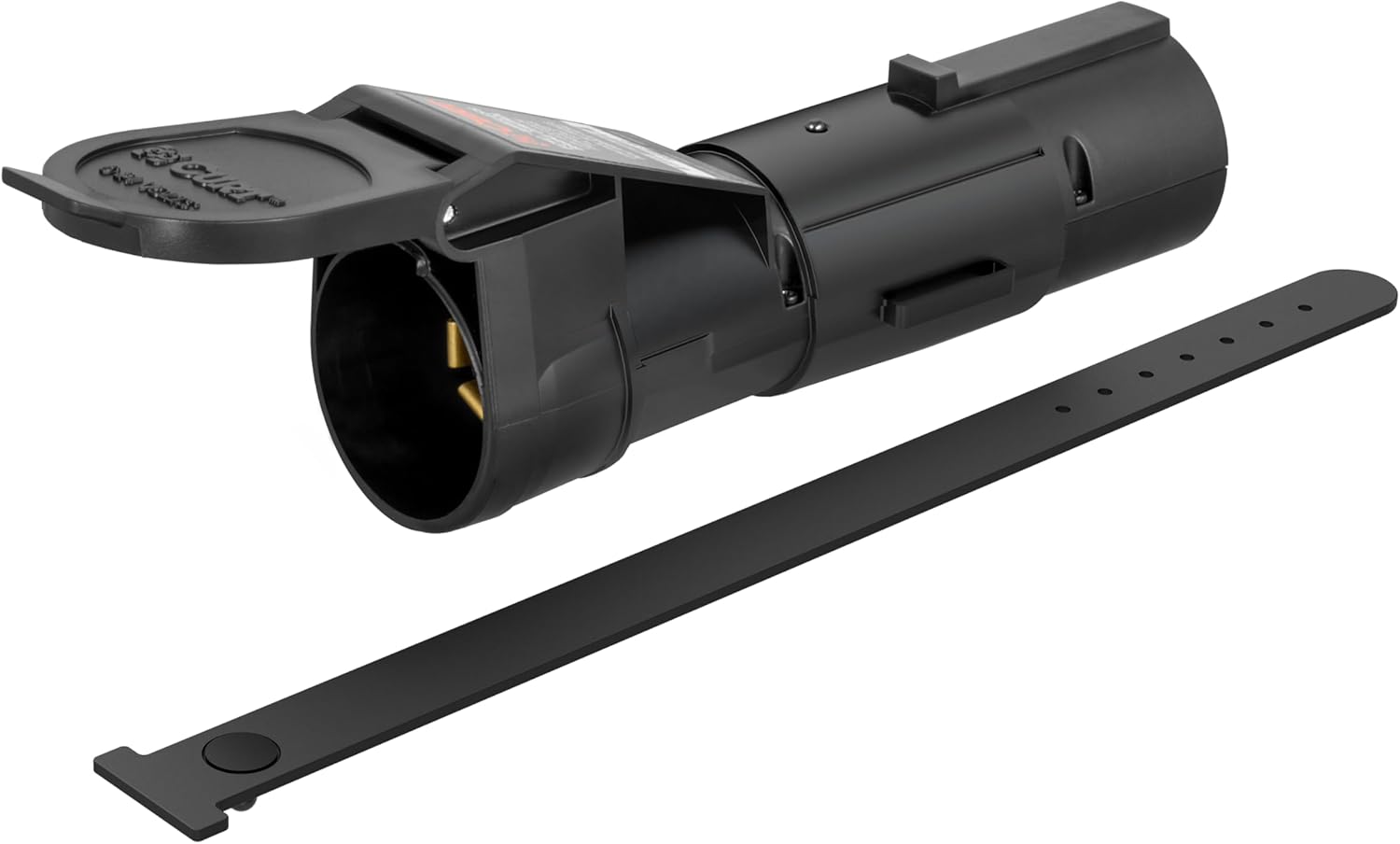
The CURT Echo Mobile is a plug-and-play, portable brake controller that connects to your vehicle’s 7-way RV blade and gives you full control of trailer braking through a smartphone app. It uses a triple-axis accelerometer for proportional braking, automatic calibration to simplify setup, and the OneControl Auto app to adjust sensitivity, maximum output, and save vehicle-trailer profiles. The Echo is built with a potted enclosure and a locking retention tab for the 7-way port so it resists moisture and vibration while remaining easy to move between vehicles. It supports one to two axles (two to four brakes), works with cruise control and ABS, and includes reverse-polarity and short-circuit protection. Because it is external and app-dependent, you need a compatible smartphone while towing and the unit occupies the vehicle’s 7-way connection instead of being mounted under-dash, which may be less tidy for permanent installations.
Best for: Buyers who need a quick, no-permanent-installation brake controller that can move between vehicles and be tuned from a phone for varied towing setups.
Less Ideal for: Users who prefer a permanently mounted, integrated in-cab controller or who lack a compatible smartphone should consider a hardwired under-dash unit instead.
- True plug-and-play portability for quick transfer between vehicles
- Bluetooth app control with adjustable sensitivity and saveable towing profiles
- Proportional braking via triple-axis accelerometer for smoother stops
- Durable potted enclosure and retention tab for reliable outdoor use
- Requires a smartphone and the app to access advanced controls
Verdict: Pick this wireless option if you want a portable or app‑controlled brake controller that installs quickly and is convenient for multi-vehicle use or temporary setups.
6. CURT Venturer NEXT Time-Delay Electric Trailer Brake Controller
Best Plug‑and‑Play Brake Controller Kit

| Controls | 2-6 brakes (1-3 axles) |
|---|---|
| System compatibility | 12-volt and electric-over-hydraulic |
| Display | LED ramp indicator with adjustable brightness |
| Mounting | Low-profile bracket, mount at any angle |
The CURT Venturer NEXT is a low-profile, time-based brake controller designed to give dependable cab-side control of electric trailer brakes. It controls 2 to 6 brakes (1 to 3 axles) with fully adjustable gain and ramp settings and an LED bar that shows ramp-up progress and brightness for day or night use. The unit is slim and mounts with a clearance-enhancing bracket so it stays unobtrusive on the dash or under it, and because it has no internal moving parts it can be installed at any angle. In practice it is useful for light- to medium-duty towing where simple, repeatable braking is desired rather than inertia-based modulation. Setup is straightforward and quick, though CURT recommends using a vehicle-specific wiring harness for plug-and-play installation (harness sold separately) so buyers who want the fastest, cleanest install should add that kit. The controller works with 12-volt systems and electric-over-hydraulic setups, but being time-based it does not dynamically modulate braking force like proportional controllers do, which can matter on heavier trailers or variable terrain.
Best for: Buyers who prioritize a compact, easy-to-use brake controller for everyday towing and want straightforward adjustable control without complex calibration, and who are prepared to add a vehicle-specific harness for the cleanest install.
Less Ideal for: Drivers who need the most refined, real-time brake modulation for heavy trailers or mountainous towing should consider a proportional controller instead.
- Slim, low-profile design preserves dash space and improves clearance
- Fully adjustable power and ramp time for tailoring braking feel
- LED ramp and brightness adjustment make monitoring easy day or night
- Compatible with electric and electric-over-hydraulic trailer brake systems
- Simple setup with no internal moving parts and versatile mounting angles
- Vehicle-specific wiring harness is sold separately for true plug-and-play installation
Verdict: This slot is for buyers who want a controller bundled with a vehicle-specific harness or kit for fastest, cleanest installation with minimal splicing.
Choosing the Right 2026 Ford Explorer Trailer Brake Controller: Key Factors to Consider
Braking Mode: Proportional Versus Time-Delayed
The controller's braking mode determines how closely trailer braking follows the Explorer's brake input. Proportional controllers use inertia sensing to apply trailer brakes in direct proportion to vehicle deceleration. That produces a more natural feel and reduces the likelihood of trailer lockup during sudden stops. For regular towing or heavier trailers, proportional control typically yields better stability and shorter stopping distances.
Time-delayed controllers apply a preset amount of brake power after a set delay when the tow vehicle brakes. They can be simpler and cheaper, and they allow fixed tuning for predictable loads. However, they can feel less smooth during varying traffic conditions and may require more manual tuning when towing different trailers. Choosing between these modes affects daily drivability and how often you need to reconfigure settings for different loads.
Output Power and Multi-Axle Support
Output power determines how much current the controller can send to trailer brakes and whether it supports multiple axles. Heavier trailers or those with multiple axles need controllers with higher output ratings and the ability to proportionally split current across brakes. Underpowered controllers can lead to insufficient braking, increased stopping distances, and uneven brake wear.
Verify the controller's rated amperage matches your trailer's combined brake magnet draw. For owners who switch between single- and tandem-axle trailers, adjustable output ranges and multi-axle support let you tune braking intensity to the trailer's weight and brake configuration without rewiring.
Installation and Wiring Accessibility
Installation complexity affects whether you can fit the controller yourself or need professional help. Some controllers are plug-and-play with a factory tow package connector on the Explorer, while others require running dedicated wiring, installing a junction box, or mounting a brake light hot lead and ground. Ease of access to the Explorer's wiring harness and fuse box can make the difference between a one-hour job and a multihour install.
Also consider whether the unit needs a separate power wire from the battery, an in-cab mounting location that does not obstruct controls, and clear wiring diagrams. If you prefer minimal dash alteration, in-cab plug-in controllers or units compatible with the Explorer tow module reduce installation time and potential wiring errors.
User Interface and In-Cab Controls
How the controller communicates with you matters for safe towing. Controllers with clear LED or digital readouts, ergonomic knobs or buttons, and accessible manual override levers let you adjust gain and apply trailer brakes without taking attention off the road. Some units include status indicators for faults, overheating, or disconnected brakes, which can prevent hazardous situations.
The ideal interface balances adjustability with simplicity. For frequent towing, easy-to-reach controls with tactile feedback are valuable. For occasional use, a compact unit with a simple gain knob and an effective manual override may be preferable. Consider whether the display remains readable in daylight and whether any calibration procedures are required before first use.
Compatibility With Explorer Tow Features
The Explorer's factory tow package and onboard electronics influence which controllers integrate smoothly. Some controllers are designed to interface with factory wiring and brake output modules, while others operate independently. Compatibility affects whether you need additional adapters, load resistors, or a separate battery feed to avoid tripping vehicle protection circuits.
Confirm that the controller plays well with the Explorer's trailer wiring and that any required adapters are available. Units that avoid drawing excessive ignition-switched current help maintain vehicle electronics reliability and reduce false fault codes. Proper compatibility reduces installation time and minimizes the chance of electrical issues during towing.
Reliability, Protection, and Durability
A trailer brake controller must withstand heat, vibration, and moisture typical of towing duty. Look for solid-state components, thermal protection to prevent overheating, and sealed housings or robust connectors. Protection features such as reverse polarity safeguards and overload cutoffs prevent damage to both the controller and the Explorer's wiring.
Durability also extends to the user interface and mounting hardware. A controller that loosens, loses calibration, or develops intermittent connections under vibration will degrade towing safety over time. Prioritizing units with strong build quality and thoughtful protection features reduces long-term maintenance and the chance of roadside failures.
Understanding Brake Controller Wiring in the Explorer
The 2026 Ford Explorer built on the 2020-present platform typically provides a trailer brake output or accessible wiring points for aftermarket controllers. When planning installation, identify the vehicle's tow connector and fuse panel locations so you can route power, ground, brake output, and a trailer charge line if needed.
Proper wiring reduces interference with the vehicle's electrical systems and avoids alarm codes. For nonplug controllers, use properly sized wiring and a fused power feed from the battery, and keep ground connections clean and secure. If the Explorer has a factory tow module, a plug-in controller or an adapter harness can greatly simplify the process.
- Confirm whether your Explorer has a pre-wired OEM tow connector before cutting or splicing wires.
- Use wire gauge that matches the required amperage to prevent voltage drop under heavy braking.
- Mount the controller in a location that keeps the wiring neat and allows easy access to controls.
Mounting Locations and In-Cab Ergonomics
Choosing a mounting spot in the Explorer cabin affects usability and safety. Common positions include under the dash near the steering column, on the center console side, or in a lower dash cubby. The controller should be reachable without stretching and not block airbags or controls.
Consider whether the unit's size interferes with knee clearance or passenger comfort. A low-profile unit may be less obtrusive but could sacrifice a large display. Think about which hand you will use to adjust the controller; symmetric placement may favor both driver and passenger access during setup.
- Test-fit the controller location before final mounting to ensure cable reach and visibility.
- Avoid locations exposed to heat vents or direct sunlight that could affect electronics or readability.
- Secure wiring with clamps to prevent rattles and wear over time.
Tuning Tips for Different Trailer Types
Each trailer requires slightly different gain or intensity settings depending on weight, cargo distribution, and brake condition. Start with conservative settings and perform low-speed braking tests in a safe area to observe trailer response. Increase gain in small increments until the trailer tracks the Explorer without lockups or excessive pull.
For heavy or fully loaded trailers, you may need higher initial gain and slower ramping to prevent abrupt stops. For light trailers, reduce gain to prevent the trailer from locking during mild deceleration. Keep a log of settings for each trailer you tow so you can quickly reapply preferred tuning.
- Test after towing the trailer empty and fully loaded; settings can change significantly.
- Recheck adjustment after long downhill runs since brakes heat and performance may vary.
- Use manual override sparingly to correct trailer sway; correct hitch weight and distribution should be the first fix.
Maintenance and Troubleshooting Checklist
Routine checks extend the life of both the controller and the trailer brakes. Inspect wiring connections for corrosion or fraying, ensure connectors remain tight, and verify the controller's firmware or calibration procedures if applicable. Pay attention to warning indicators on the controller and address any fault codes promptly.
Common problems include weak braking due to low output, uneven braking from worn magnets, and electrical faults from poor grounds. A systematic approach to troubleshooting—starting at the battery and working toward the trailer connectors—helps you isolate the issue without replacing components unnecessarily.
- Check trailer brake magnet resistance with an ohmmeter to detect weak coils.
- Verify battery voltage under load to ensure the controller receives stable power.
- Clean and secure ground points to prevent intermittent faults.
Legal and Safe Towing Practices for Explorer Owners
Different jurisdictions have rules about trailer brakes based on gross trailer weight and number of axles. For the 2026 Ford Explorer, ensure you comply with local requirements and use a controller that delivers adequate braking force for the trailer weight you tow. Proper brake controller settings help you meet stopping distance expectations used by enforcement or safety inspections.
Beyond legal compliance, follow safe towing practices such as maintaining correct tongue weight, checking tire pressures on both vehicle and trailer, and performing pre-trip brake checks. A well-tuned controller is one element in a broader safety system that includes proper load distribution, functional lights, and serviceable brakes.
- Know the trailer brake requirements in your state or province before towing.
- Perform a brake function test each time you hook up a trailer.
- Carry basic wiring repair tools and spare fuses for roadside fixes.
Still looking for the perfect fit?
Select your Ford Explorer configuration to see the most relevant Trailer Brake Controllers recommendations
How We Chose the Best 2026 Ford Explorer Trailer Brake Controller
We focused on attributes that matter specifically for 2026 Ford Explorer owners towing on the 2020-present platform. Each candidate had to demonstrate reliable control over electric trailer brakes, consistent proportional or time-delayed response, and compatibility with typical Explorer tow wiring and vehicle electrical capacity. We prioritized units with intuitive in-cab controls, clear feedback during braking, and durable build quality to handle road vibration and repeated use.Core evaluation criteria included braking performance (how smoothly and predictably the controller applies trailer brakes), installation complexity (hardwire vs. plug-in adapter, wiring accessibility in Explorer), vehicle integration (ability to work with factory tow packages and battery/alternator load), and user interface (ease of adjustment and readouts while driving). We also considered thermal and overload protection and whether the unit supported multiple axles and adjustable output for different trailer weights.Excluded from consideration were controllers that lack documented compatibility with the Explorer platform, units with unclear wiring requirements, and products without clear adjustment ranges for different trailer setups. The result is a focused list of controllers that balance performance, safety, and practicality for Explorer owners.
Our full evaluation process is outlined in our review methodology.
FAQ
Do I need a trailer brake controller for the 2026 Ford Explorer?
It depends on the trailer weight and local regulations. Heavier trailers typically require a controller to activate electric trailer brakes. Even when not legally required, a controller improves stopping control and reduces strain on the Explorer's brakes for safer towing.
Can I install a controller without cutting factory wiring?
Often you can if the Explorer has an OEM tow harness or dedicated connector. Many controllers offer plug-in adapters that use the factory tow module; otherwise you may need to run a fused power lead and connect to the brake output. Using adapter harnesses preserves factory wiring and reduces installation time.
Which controller mode is better for occasional towing?
For occasional towing a time-delayed controller can be simpler to set up and use, while a proportional controller provides smoother braking for varied conditions. If you tow different trailers rarely, a time-delayed unit with adjustable settings may be easier. Frequent or heavy towing favors proportional control.
How do I know if the controller is set correctly?
Conduct low-speed brake tests in a safe area and observe trailer behavior. The trailer should come to a stop without jackknifing or locking, and steering should remain stable. If the trailer pushes or lags behind, adjust gain gradually and retest until braking feels synchronized.
Will a controller drain my Explorer battery when not towing?
A properly installed controller should draw minimal or no power when the vehicle is off or when the controller is disabled. Ensure the unit has a fused ignition-switched connection or an on-off switch, and avoid wiring that keeps the controller powered continuously without need.
What should I do if the controller shows a fault while towing?
If a fault appears, find a safe place to stop and inspect wiring, connectors, and the trailer plug. Check fuses and grounds first. If you cannot restore operation, use manual braking and reduce speed until repairs can be made. Regular maintenance reduces the chance of in-trip faults.
Does the Explorer's factory tow package change controller choice?
Yes. A factory tow package that provides a brake output or harness can simplify installation and allow plug-in controllers. If your Explorer lacks the tow module, choose a controller that includes clear wiring instructions and appropriate power handling for your trailer.
Final Verdict
Choosing the right trailer brake controller for your 2026 Ford Explorer comes down to how often and what you tow. Prioritize braking mode and output capacity for heavier or frequent towing, and weigh installation complexity and in-cab ergonomics if you prefer an easier DIY fit. Compatibility with the Explorer tow wiring and solid protection features reduce the risk of electrical issues.If you want the smoothest, most natural braking response for varied loads, lean toward proportional controllers with sufficient amperage. If you tow lightly or infrequently, a simpler time-delayed unit with adjustable gain and straightforward installation can be a practical choice. Match the controller to your trailers, tune conservatively, and perform routine checks to keep towing safe.
Explore More:
- Check out all Ford Explorer parts & accessories
- Explore Electronics
- Browse all Accessories
