

Note: This article contains affiliate links. If you click on these links and make a purchase, I may earn a small commission at no extra cost to you. This helps support my research and content. Read my full affiliate disclosure here.
If you use your Subaru Forester for camping, tailgating, or weekend outings, the right awning turns side space into usable shelter. You want an awning that mounts securely to your Forester, resists weather, and sets up without fuss. This guide covers the top shortlisted awnings suited to the Subaru Forester and explains the features that matter most for on-vehicle camping and sun protection. Read on to see the practical differences in mounting style, fabric, and setup that influenced our picks.
Looking for other parts? See all Subaru Forester parts & accessories.
Top Picks at a Glance
| Best Overall The best all-around choice for most situations | VEVOR 6.6'x8.2' Roof-Rack Retractable Vehicle Awning |  |
| Best Quality Built to a higher standard if you want something more solid | JOYTUTUS Vehicle Roof Rack Pull-Out Awning, 8.2'x10' |  |
| Best Value The sweet spot between price and what you get | Napier Sportz Cove SUV Tailgate Tent with Awning |  |
| Best Budget The cheapest option that still gets the job done reliably | M KARMATER SUV Tailgate Tent with Three-Side Awning and Mesh |  |
| Highest Rated A top-rated pick with lots of positive feedback | SAMOUT Vehicle Roof-Rack Awning, 6.6ft x 10ft Ripstop Polyester |  |
| Most Popular A crowd favorite that many people choose with confidence | DANCHEL OUTDOOR Car Awning 4.9 x 6.5 ft Roof-Rack Pull-Out Sun Shelter |  |
| Best Seller A high-volume bestseller chosen again and again | HASIKA Versatility Teardrop Vehicle Awning Canopy |  |
VEVOR 6.6'x8.2' Roof-Rack Retractable Vehicle Awning

| Size coverage | 6.6 x 8.2 ft |
|---|---|
| Fabric type | Polyester ripstop |
| Waterproof rating | PU 10000mm |
| Operation mode | Manual |
| Projection distance | 8.2 Feet |
This VEVOR 6.6'x8.2' roof-rack awning mounts to Subaru Forester roof rails or crossbars and unfolds to create roughly 54 sq ft of sheltered space alongside the vehicle. It is typically used for campsite shade, overland stops, and roadside breaks; the manual retractable roller and telescoping support poles let two people set it up in a few minutes and roll it away when finished. The ripstop polyester with high PU rating and UV50+ blocks sun and light rain, while aluminum frame parts are anodized to resist corrosion for regular outdoor use. The kit includes mounting brackets, stakes, reflective guy lines, and a storage bag so Forester owners can fit it without chasing extra hardware. Expect practical value for weekend trips and family outings, but know the setup benefits from an assistant in windy conditions and the telescopic legs do not lock rigidly, so you should always stake or guy the corners. The awning is more budget-friendly than premium overland brands but is slightly lighter in fabric and hardware feel, so users seeking heavy-weather performance may prefer a heavier-duty option.
Best for: Practical Forester owners who want a balanced, cost-conscious awning for weekend camping, tailgates, and day trips and value easy storage and versatile mounting over hardcore weatherproofing.
Less Ideal for: Avoid this if you need a heavy-duty, stormproof awning for frequent backcountry overlanding or multi-day high-wind use where a more rigid, premium system is required.
- Large coverage area (about 54 sq ft) provides generous shade next to the Forester
- High PU waterproof rating and UV50+ fabric protect from sun and light rain
- Includes universal-style mounting hardware, stakes, reflective guy lines, and storage bag
- Anodized aluminum frame and twist-lock telescopic poles for quick setup and corrosion resistance
- Telescopic support legs do not lock firmly and require staking or guying for stability
- Setup and teardown are easier with two people, especially in wind
- Fabric and fittings are lighter than premium overland awnings, limiting performance in severe weather
Verdict: A roomy, budget-friendly roof-rack awning that fits a Forester well for shade and light-weather protection but is best for casual camping rather than extreme conditions.
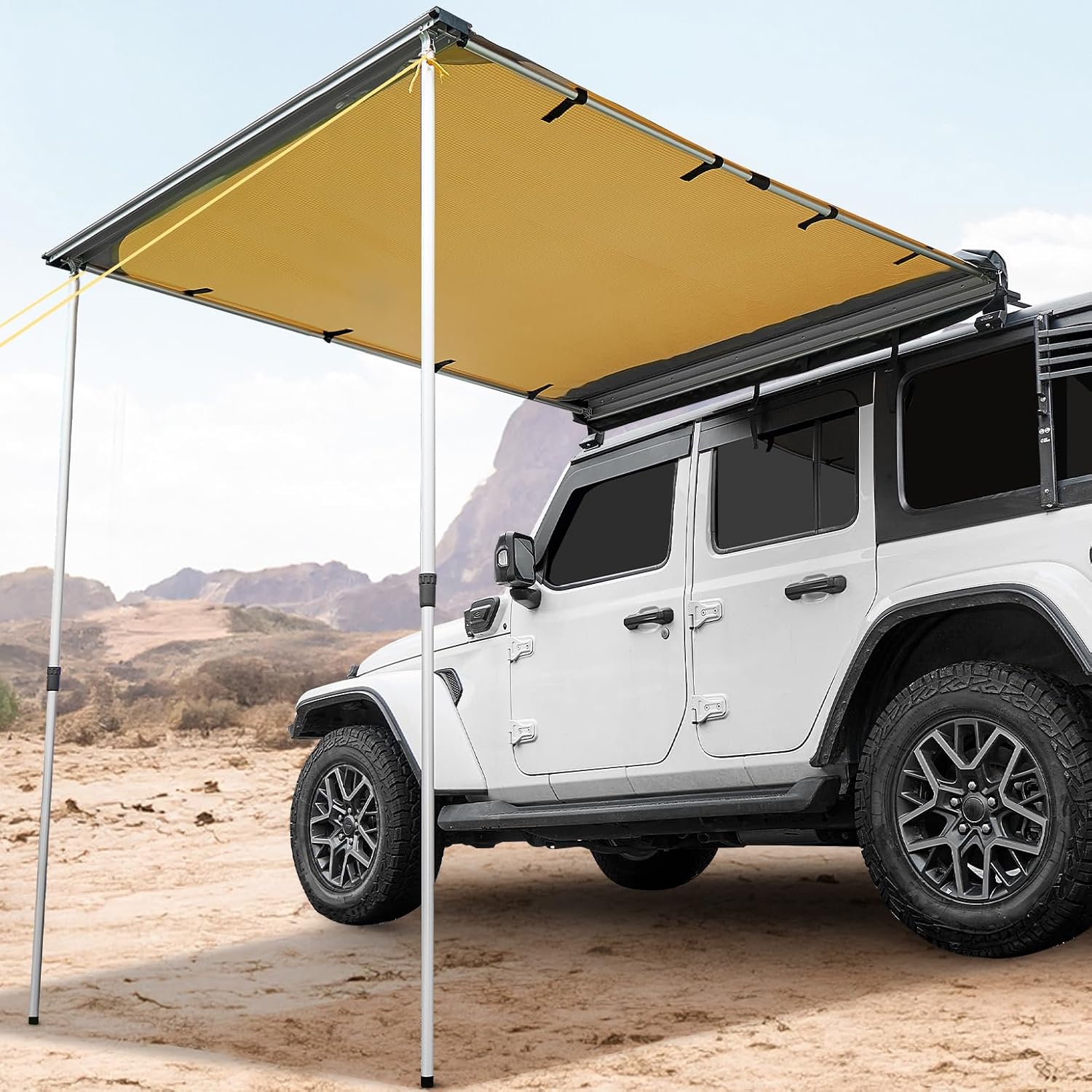
JOYTUTUS Vehicle Roof Rack Pull-Out Awning, 8.2'x10'
| Material | Polyester |
|---|---|
| Operation Mode | Manual |
| Projection Distance | 8.2 Feet |
| Size | 8.2' x 10' |
This JOYTUTUS roof-rack awning mounts to a rooftop rack and deploys as an 8.2 by 10 foot pull-out canopy to create shade and light weather protection for campsite setups next to a Subaru Forester. Installation uses the included L-shaped and flat brackets and bolts to attach to crossbars, and the telescopic support legs and side bars twist-lock for fast setup and teardown. The polyester fabric is described as waterproof and UV-resistant and has Velcro side panels and storage pockets for neat stowage. Practical benefits for Forester users include quick sun protection for tailgate camping, cooking, or a daytime shelter at trailheads, plus adjustable leg height for uneven forest terrain. Limitations to consider are the manual operation and relatively thin tension ropes and pole tubes reported by some users, which means you should anchor it properly and avoid high-wind conditions. Instructions are basic so expect a short learning curve for a secure roof-rack mount on the Forester.
Best for: Performance-oriented buyers who prioritize quick, functional shelter for outdoor activities and want a durable-looking awning to add shade and workspace to their Subaru Forester trips.
Less Ideal for: Avoid this awning if you plan frequent use in exposed, high-wind coastal or alpine conditions where a heavier, professionally rated awning system is required.
- Large 8.2'x10' coverage suitable for shade and gear staging next to the vehicle
- Telescopic legs and twist-locks enable fast one-person setup and compact storage
- Includes mounting brackets and hardware designed to attach to roof racks and crossbars
- Polyester canopy with waterproof and UV-resistant treatment for sun and light rain protection
- Included guy ropes and tensioners are basic and may need upgrading for strong anchoring
- Support poles are relatively slim compared with heavy-duty commercial awnings, so avoid heavy wind loads
Verdict: A strong-value roof-rack pull-out awning that gives Forester owners fast, sizable shade and easy one-person setup but needs careful anchoring in windy conditions.
Napier Sportz Cove SUV Tailgate Tent with Awning

| Material | Polyester |
|---|---|
| Min. Clearance | 2 Feet |
| Operation Mode | One pole set-up |
| Fits | Mid to Full Sized SUVs and Minivans |
The Napier Sportz Cove turns a Subaru Forester's open hatch into a quick car-camping shelter with an integrated awning that extends roughly two feet from the vehicle. It slips over the rear opening and secures with straps and anchor points so you can use the cargo area as a sleeping or lounging space while keeping bugs and rain out. Notable features include a large mesh door with a storm flap for ventilation and privacy, a one-pole set up intended for fast assembly, and a compact carry bag for storage. In everyday use the Cove makes overnighting at trailheads or tailgating easier by adding shade and modest covered outdoor space for two people. Expect straightforward setup on a Forester but plan for careful anchoring in wind; some users report pole stress in gusty conditions and the fabric overlaps the hatch area so you cannot drive with it attached. The product balances lightweight convenience and weather protection against the need for cautious installation in heavy wind and limited interior space compared with rooftop tents.
Best for: Practical optimizers who want an affordable, easy way to extend their Subaru Forester for occasional car camping, tailgating, and day trips without committing to a rooftop tent.
Less Ideal for: People who plan frequent multi-night backcountry trips in high wind or who need a permanent, larger sleeping platform should consider more robust roof-top or ground tents instead.
- Fast single‑pole setup that converts the Forester hatch into usable sleeping or storage space
- Integrated awning provides sun and rain protection for the rear area
- Large mesh door with storm flap offers ventilation and privacy
- Lightweight and packs into a small carry bag for easy storage in the Forester
- Designed for calm to moderate conditions; poles and seams can be stressed in strong winds
- Covers the exhaust area so you cannot run the engine for heat while attached
Verdict: A compact, budget-friendly hatch tent that makes the Forester usable for casual car camping but requires careful anchoring in windy conditions.
M KARMATER SUV Tailgate Tent with Three-Side Awning and Mesh

| Material | Polyester (210T) with PU coating |
|---|---|
| Includes | Poles, guy-lines, aluminum pegs |
| Ventilation | Three-sided mesh windows |
| Suggested capacity | 4-6 people |
| Min. clearance | 6 Feet |
This SUV tailgate tent attaches to an open hatch to create a sheltered, shady area behind your vehicle for camping, tailgating, or day use. It is designed for quick setup and includes poles, guy-lines, and aluminum pegs so you have everything needed on arrival. The three-sided mesh windows give strong cross-ventilation and insect protection while the large awning creates roughly a six-by-six foot shaded lounge area. Elastic sleeves and adjustable straps help the tent conform to the vehicle and improve wind resistance, and the dual-side zipper makes entry and exit straightforward. Practical benefits include easy storage, versatile configurations (fully open for airflow or zipped for privacy), and durable-feeling zippers and stakes for routine outdoor use. Limitations are the generic fit where some vehicles may need minor adjustments to remove gaps, and the supplied poles are serviceable but not as rigid as heavier-duty aftermarket replacements for very windy conditions.
Best for: Budget-conscious Subaru Forester owners who want an inexpensive, easy-to-store way to add sheltered living space behind the car for car camping, day trips, or tailgates.
Less Ideal for: Not the best choice for campers who need a heavy-duty, fully stormproof shelter or those who want a custom-fitted hard-shell solution for frequent overland use.
- Includes poles, guy-lines, and aluminum pegs so no extra parts are required to set up.
- Three-sided mesh windows provide ventilation and insect protection while preserving visibility.
- Large awning creates a usable shaded area suitable for lounging or group snacks.
- Elastic sleeves and adjustable straps improve fit and help resist wind on varied vehicle rear shapes.
- Fit is generic so some Forester rear shapes may need small adjustments or clips to eliminate gaps.
- Included poles are adequate for calm conditions but can feel underbuilt in sustained strong winds.
Verdict: A practical, low-cost hatchback awning that gives Forester owners quick shade and ventilation but may need minor fit tweaks and stronger poles for very windy conditions.
SAMOUT Vehicle Roof-Rack Awning, 6.6ft x 10ft Ripstop Polyester

| Material | Polyester, Ripstop |
|---|---|
| Shading Area | 66 ft² |
| Operation Mode | Manual |
| Projection Distance | 6.6 Feet |
| Min. Clearance | 4 Feet |
This SAMOUT roof-rack awning mounts to crossbars and rolls out to create a large 66 ft² sheltered area for shade and light weather protection. It is designed for manual operation from a compact cassette that straps to your roof rack and uses anodized telescoping poles with twist-locks to set height quickly. The ripstop polyester is rated UPF 50+ and PU 10000mm for strong sun protection and decent water resistance, and the included mounting brackets and hardware mean you can install it without fabricating a custom case. In practice the awning unrolls and secures with corner poles and Velcro attachments, packs up into a heavy-duty bag, and sets up in minutes with two people or carefully by one. Users report solid build quality and responsive manufacturer support, though you may need additional clamps or fasteners to attach it to Subaru Forester crossbars depending on bar profile. The main limitations are that it is manual, can require two people for the larger sizes, and needs proper anchoring in wind-prone conditions.
Best for: Reliability-focused buyers who prioritize a durable, factory-quality accessory that consistently provides shade and shelter on outdoor trips and work stops.
Less Ideal for: Buyers who need a motorized or single-person quick-deploy awning for frequent fast stops or who expect heavy-wind conditions without the ability to anchor it securely.
- Large 66 ft² coverage for strong shade and outdoor workspace.
- Ripstop polyester with UPF 50+ and PU 10000mm offers sun protection and water resistance.
- Anodized telescoping poles with twist-locks speed setup and height adjustment.
- Comes with mounting brackets and hardware for roof-rack installation.
- Packs into a compact heavy-duty carrying bag for storage and transport.
- Manual operation and larger sizes are easier with two people rather than one.
- Not a permanent windproof solution; needs stakes, guy lines, or ballast in gusty conditions.
- May require extra clamps or adapters to fit some crossbar profiles on the Forester.
Verdict: A well-built, roof-rack awning that delivers reliable shade and weather protection for Forester owners willing to do manual setup and use proper anchoring.
DANCHEL OUTDOOR Car Awning 4.9 x 6.5 ft Roof-Rack Pull-Out Sun Shelter

| Size | 4.9 x 6.5 ft |
|---|---|
| Fabric Type | 420D oxford |
| Projection Distance | 200 Centimeters |
| Min. Clearance | 6.5 Feet |
| Operation Mode | Manual |
This DANCHEL OUTDOOR roof-rack awning mounts to crossbars and rolls out manually to give about 32.5 square feet of sheltered space beside the vehicle. For Subaru Forester owners it functions as a quick shade solution for tailgates, campsite side cover, or a temporary rain break while changing gear. The 420D oxford canopy is treated for waterproofing and UPF50+ sun protection and the telescoping aluminum poles adjust height to fit uneven ground. Setup is straightforward after the initial mounting to the roof rack and one person can roll it out and secure the poles in a few minutes. The included carry bag and compact pack size make it easy to store on the Forester when not in use. Be mindful that it is a manual, small-footprint awning designed for light to moderate conditions; in high winds you will need guy lines and stakes and prolonged exposure to heavy storms can risk damage.
Best for: Convenience-driven buyers who prioritize fast, simple sun and rain protection during day trips and short campsites and want an accessory that is easy to carry and deploy with minimal tinkering.
Less Ideal for: Not a good fit for users who need large shaded living areas, extended all-weather protection, or who frequently camp in very windy exposed locations.
- Compact pack size that fits on a roof rack and stores easily in a Forester
- Waterproof 420D oxford fabric with UPF50+ for sun and light rain protection
- Lightweight aluminum frame and telescopic poles for quick single-person setup
- Simple manual roll-out design that deploys in about a minute once mounted
- Small footprint limits coverage compared with larger retractable awnings
- Requires proper mounting hardware and occasional additional fasteners for some roof rack setups
Verdict: A compact, easy-to-deploy roof-rack awning that gives Forester owners quick shade and light rain protection but is best for short trips and moderate weather.
HASIKA Versatility Teardrop Vehicle Awning Canopy

| Material | Rip-stop 210T polyester |
|---|---|
| Waterproof rating | 3000 mm |
| Frame material | Alloy steel |
| Floor area | 76 Square Feet |
| Occupancy | Four-or-more-person |
The HASIKA teardrop awning is a compact vehicle-mounted shelter designed to attach to the side or rear of a car or trailer to create a protected covered area for cooking, gear or social space. It sets up using an arched frame with adjustable poles, guy lines, stake bags and suction cups so you can run it from the roofline or tailgate and adjust the free end down to the ground for privacy. The fabric is rip-stop 210T polyester with a 3000 mm waterproof rating and mesh vents to improve airflow in warm weather and reduce wind load when opened. Buyers will appreciate how small it packs and how it converts the Forester into a quick shade or rain shelter for 3 to 4 people, but some supplied hardware is basic: users commonly replace the suction cups, ropes and pegs for stronger aftermarket pieces when using it in wind. Setup instructions are minimal so first assembly may take longer and very windy locations require careful anchoring or additional ballast.
Best for: Risk-averse mainstream buyers who prioritize practical, low‑complexity camping gear that transforms their Subaru Forester into a weatherproof shade or rain shelter for family outings and short trips.
Less Ideal for: Those who need a heavy-duty, permanent awning solution for long-term exposure or frequent high-wind coastal and alpine use should consider a sturdier hard‑mount awning instead.
- Vehicle-specific mounting style converts a Subaru Forester into usable sheltered space without carrying a full canopy
- Rip-stop 210T polyester with 3000 mm waterproof rating offers reliable rain protection for short exposures
- Arched frame and adjustable poles let you stand and use the covered area for cooking or storing gear
- Packs down compactly so it fits easily in a Forester cargo area for road trips and events
- Included suction cups, guy lines and pegs are lightweight and many users replace them for stronger anchors
- Instruction documentation is sparse so first-time setup can be slower without an online tutorial
- Not intended for prolonged exposure to high winds without additional anchoring or heavier hardware
Verdict: A compact, waterproof vehicle awning that makes the Subaru Forester a versatile shelter for casual camping, but plan to upgrade the anchoring hardware for windy conditions.
Choosing the Right Subaru Forester Awning: Key Factors to Consider
Mounting Compatibility
Mounting compatibility determines whether an awning can be attached safely to your Subaru Forester and how much hardware modification is needed. Confirm whether the awning is designed for roof rails, crossbars, or a dedicated rack system and what weight limits the vehicle's roof or rack can handle.
An awning that uses universal clamps or adjustable brackets is generally easier to fit, but you still need to check clearance and attachment points. Poorly matched mounting hardware can lead to excessive movement, wear, or even detachment in wind. Consider also whether the awning allows fast removal and stowage without specialized tools if you plan to alternate between uses frequently.
Fabric and Weather Resistance
The fabric's denier, coating, and waterproof rating affect how well the awning sheds rain and resists UV degradation. Higher-denier fabrics and durable waterproof coatings perform better over time, especially if you camp in rainy or sunny conditions often.
Look for materials treated for UV resistance and mold prevention, since prolonged sun and moisture exposure are common. Fabric weight also influences pack size and ease of handling during setup. Balance durability against portability based on how often you expect to deploy the awning.
Setup Speed and User-Friendliness
How quickly you can deploy and stow the awning impacts daily usability. Some systems offer quick-release clamps, telescoping arms, or gas-strut assists that reduce setup time, while others require more manual assembly and adjustments.
Consider whether one person can set the awning up alone or if you typically have help. Intuitive tensioning systems and clear instructions reduce frustration at campsites. Faster setup is especially valuable in poor weather when you need shelter quickly.
Packed Size and Weight
Packed size and weight affect how you transport and store the awning on a Forester. Heavier, bulkier units may require stronger crossbars or a dedicated roof rack and can be harder to lift onto the vehicle.
If you store the awning on the roof long-term, consider wind load and its effect on fuel economy. Lighter, more compact awnings are easier to remove and stow inside a garage or cargo area when not in use. Choose a balance that fits your storage options and physical ability to handle the unit.
Coverage and Orientation
Coverage area and the awning's mounting orientation determine how much usable sheltered space you get and where shade will fall relative to the vehicle. Different widths and extension lengths influence whether the awning will protect seating areas, kitchens, or gear zones.
Also think about whether you need a side- or rear-facing configuration and whether the awning offers adjustable pitch to adapt to sun angle or rain runoff. Larger coverage is useful for group activities but often adds weight and wind exposure, so match size to typical use scenarios.
Accessories and Modularity
Accessories such as side walls, insect nets, awning gutters, and extension poles can expand functionality and comfort. Modular attachments let you customize the sheltered area for sleeping, cooking, or dining without needing a separate tent.
Check whether accessories are included or sold separately and how they attach to the primary awning. Compatibility and ease of integration matter because poorly designed accessories can complicate setup or reduce weather resistance. Consider also replacement parts availability for long-term maintenance.
Which Awning Style Fits a Subaru Forester Lifestyle
Subaru Forester owners use awnings for a wide range of outdoor activities, from day trips and beach shade to multi-night backcountry camps. Picking the right style depends less on the vehicle nameplate and more on how you plan to use the awning. Compact, easy-to-deploy options suit weekend beach runs and tailgates while larger, more robust setups make sense for extended overland-style trips.
Below are the common awning styles you will encounter and how they translate to the Forester. Each description notes the practical trade-offs so you can match an awning to your typical outings.
- Retractable vehicle awning — Quick to open and close, these are ideal for short stops and frequent relocation. They minimize packing time and work well for day use from roadside parking or short camping sessions.
- Side awning for van (side-mount style applied to an SUV) — Offers good side coverage and privacy. On a Forester this style gives a protected living area adjacent to the vehicle without occupying much ground footprint.
- Overland awning — Built for heavier duty and extended exposure. If you plan rougher roads and longer stays, an overland-style awning provides extra durability and accessory options.
- Portable vehicle awning — Freestanding and easy to move off the vehicle. These give flexibility to reposition shade independent of where the Forester is parked.
- Sun shade awning for car — Lightweight fabric solutions focused on blocking sun and heat. Best for beach days or hot climate day use.
- Truck mounted awning (adapted concept) — Though designed for trucks, similar heavy-duty mechanisms are available in compact forms suitable for a Forester when extra robustness is needed.
- Vehicle awning and car awning for camping — General-purpose designs that balance coverage and pack size. Good choices for mixed-use owners who need both dayshade and overnight shelter.
Practical Setup and Packing Workflow for Forester Owners
A predictable and repeatable setup routine reduces frustration and makes you more likely to use an awning regularly. Tailor a simple workflow to the Forester's size and typical parking scenarios so deployment is smooth whether you are by a lakeshore or in a crowded trailhead.
Think in three stages: preparation before leaving the road, arrival-deploy sequence, and pack-down before driving. Small changes to where you keep tools and straps in the Forester will save time and keep the vehicle interior organized.
- Preparation: Stow needed hardware in a single bag that lives in the cargo area. Include guylines, stakes, a mallet, and a short set of tools for attachments.
- Arrival: Park with the awning side clear of obstacles and people flow. Lower the rear cargo hatch if it helps staging or blocks wind from behind.
- Deploy: Unfasten the awning from its vehicle mounts while one person stabilizes the free end. Use pre-attached poles or telescoping arms and tension the fabric before staking.
- Pack-down: Dry the awning fabric if possible. Fold along the original seams and secure with straps. Tight, tidy packing prevents fabric abrasion in the Forester's cargo area.
Site Selection, Orientation, and Footprint Planning
Where you park determines how useful the awning will be. On a compact SUV like the Forester, consider both the vehicle footprint and available room for a sheltered activity area. A well-chosen spot reduces stress and avoids conflicts with other campers or vehicles.
Orientation affects sun protection, privacy, and wind exposure. Use simple rules of thumb to decide which side of the vehicle to deploy and how much ground space you will need for furniture, cooking, and pathways.
- Face the awning away from afternoon sun to maximize shade in the late day, or orient toward open sky for morning sun if you want light while keeping rain out.
- Park so one side of the Forester is clear to fully extend the awning without blocking a trail, road, or neighbor campsites.
- Plan for a 6 to 10 foot clearance from the vehicle to the outer edge of the awning depending on the awning length you carry. Clear walkways and avoid low branches.
- If ground space is limited, choose a configuration that uses the Forester as the windbreak, keeping the awning shorter and positioning chairs and cook gear between vehicle and fabric.
Wind, Weather, and On-trail Safety Protocols
Even without discussing fabric choices in detail, it is important to manage wind and changing weather proactively. The Forester's relatively low profile helps reduce overall wind load compared with taller rigs, but awnings still act as sails and must be secured and used within safe limits.
Establish simple decision rules for when to leave the awning set up and when to stow it quickly. Practice a two-minute pack-up drill so you can respond rapidly if gusts or storms arrive.
- Check forecast windows and monitor clouds and wind before committing to a long setup; if winds are expected to rise, favor a compact setup or a portable vehicle awning that you can move quickly.
- Use multiple anchor points and cross-bracing where possible. Guy lines anchored to heavy objects or buried stakes reduce the chance of surprise failures.
- When on soft or sandy ground, increase stake angle and use sand anchors or weight bags to improve hold.
- If visibility is low or you must leave the site unattended, consider stowing the awning entirely to avoid damage or liability issues.
Maintenance, Cleaning, and Long-term Storage for Forester Owners
Proper care extends an awning's usable life and keeps your Forester cargo area clean and damage-free. Regular maintenance also prevents common issues that cause premature wear or fabric staining.
Focus on light, frequent maintenance rather than infrequent heavy cleaning. Address small problems early and follow a simple seasonal routine so the awning is always ready when you need it.
- After each trip, air the awning fully if it was used in wet conditions. Preventing mildew is easier than removing it later.
- Brush off dirt and salt before folding. For stubborn spots, use mild soap and water and avoid aggressive scrubbing that can strip coatings.
- Inspect mounting hardware for corrosion or looseness during routine oil changes or monthly vehicle checks. Replace worn straps or buckles before they fail during deployment.
- Store the awning in a breathable bag or cover stored in the Forester's cargo area or under-seat space. Avoid tightly compacting damp fabric for long periods.
- Keep a small repair kit in the vehicle: fabric tape, spare grommets, a short length of cord, and a multi-tool. Small fixes at the trailhead often prevent abandoned setups.
Trail, Legal, and Neighborly Considerations when Using an Awning
Using an awning from a Subaru Forester can change how you interact with public land rules, private campgrounds, and other visitors. Take a moment to understand local rules and adopt practices that minimize impact and reduce the chance of disputes.
Simple, courteous habits preserve access for everyone and keep your outings low-stress.
- Check campground or trailhead rules for allowable footprint, occupancy limits, and whether awnings are permitted at the site. Some managed areas restrict gear that alters the ground or blocks others.
- Avoid blocking access roads, fire lanes, or common areas. Position the Forester so the awning does not extend into shared spaces.
- Be mindful of noise and lighting when using an awning in the evening. Awnings increase usable living area and can inadvertently extend disturbance if behavior is not adjusted.
- On public lands, follow Leave No Trace principles: minimize ground disturbance when anchoring, pack out all debris, and avoid permanent modifications to vegetation or soil.
How We Chose the Best Subaru Forester Awning
We focused on awnings that are specifically compatible with a compact crossover like the Subaru Forester and that balance ease of use with weather resistance. Key evaluation criteria included mounting system compatibility with roof rails or crossbars, fabric durability and waterproofing, ease and speed of setup, packed size and weight for roof- or rack-mounted transport, and accessory options such as side panels and integrated gutters. We also considered wind handling and hardware quality because these affect real-world stability. Products were excluded if they required major vehicle modification, were designed only for much larger trucks, or lacked adequate instructions for installation on small SUVs. The resulting list highlights awnings that meet practical installation constraints, perform well in typical outdoor conditions, and offer a reasonable combination of portability and coverage.
Our full evaluation process is outlined in our review methodology.
FAQ
Will any awning fit my Subaru Forester?
Not every awning will fit without checking mounting requirements. Look for products that list compatibility with roof rails or crossbars similar to those on your Forester. Universal clamps and adjustable brackets increase the chance of a good fit, but confirm weight limits and clearance before purchase.
How difficult is camping awning installation on a small SUV?
Installation difficulty varies, but many awnings designed for SUVs aim for straightforward attachment to existing rails or crossbars. Some setups can be completed by one person in moderate time, while others are faster with two people. Pay attention to the tools required and the clarity of the included instructions.
Can an awning withstand wind and rain?
Most awnings are designed to handle light to moderate rain and mild wind when properly anchored and tensioned. Fabric quality and hardware strength affect performance in harsher conditions. Users often need to lower or take down the awning in strong winds to prevent damage.
Are side panels or screens necessary?
Side panels and screens are not always necessary but they add privacy, improve weather protection, and cut wind. They are helpful if you plan to use the awning for sleeping or cooking. Consider breathability and insect protection when choosing panels.
How do I choose the right size awning?
Choose size based on how much sheltered space you need and where you will position the awning relative to the vehicle. Consider coverage for seating or gear, and balance that with added weight and wind exposure. Smaller awnings are easier to handle, while larger ones offer more usable space.
Final Verdict
Prioritize mounting compatibility, fabric durability, and ease of setup when choosing an awning for a Subaru Forester. Those factors most directly affect safety, longevity, and everyday usability.Balance coverage against packed weight and wind susceptibility, and consider accessory options if you want more modular sheltered space. Focusing on the criteria above will help you pick an awning that fits your Forester and suits the way you camp or recreate.
Explore More:
- Check out all Subaru Forester parts & accessories
- Explore Exterior Accessories
- Browse all Accessories
